Table of Contents
Summer nights shouldn’t come with a soundtrack of grumbling compressors and whirring fans that disturb your sleep or annoy your neighbors. If you’ve ever received a knock on the wall or a polite note about the noise from your window unit, you know the frustration well. It’s a classic dilemma: desperately needing cooling relief during a heatwave while simultaneously becoming the source of tension in your living space. The good news? Modern window air conditioning technology has made significant strides in tackling this exact problem, moving far beyond the noisy behemoths of the past. Understanding how noise is generated and what truly makes a unit quiet is the first step toward finding a peaceful, cool sanctuary.
Gone are the days when “quiet operation” was merely a marketing buzzword with little substance. Today’s engineering focuses on tangible solutions that address vibration, airflow turbulence, and compressor noise at the source. This isn’t just about comfort; it’s about respecting shared living environments, whether you’re in an apartment building, a dense neighborhood, or even just trying not to wake light-sleeping family members. Choosing the right unit and installing it correctly can transform your AC from a disruptive nuisance into a virtually unnoticed background hum. Let’s dive into the science and practical strategies for finding a window AC that keeps the peace as effectively as it keeps you cool.
Top 10 Window Air Conditioners
Detailed Product Reviews
1. Amazon Basics 5000-BTU Small Window Air Conditioner, Up to 150 Sqf, Window AC Units with Cool and Fan Functions, Washable Filter, Adjustable Window Kit, Intuitive Mechanical Controls, White

Overview: This budget-friendly 5000-BTU window AC targets small spaces up to 150 sq. ft., like bedrooms or home offices. It delivers essential cooling and fan functionality with straightforward mechanical controls.
What Makes It Stand Out: Its standout feature is simplicity—intuitive dials for temperature (7 settings), fan speeds (2), and 2-way airflow direction eliminate complexity. The washable filter and quiet 56 dB operation support usability, while the adjustable window kit fits standard openings (23"-36" wide).
Value for Money: Excelling as a no-frills, entry-level unit, it undercuts competitors on price without sacrificing core functionality. Ideal for renters or those needing temporary cooling, though it lacks modern perks like remotes or smart features found in pricier models.
Strengths and Weaknesses: Strengths: Affordable, easy installation, washable filter, quiet for its class. Weaknesses: Basic controls (no remote), limited to very small rooms, mechanical dials feel dated, no energy-saving modes.
Bottom Line: A reliable, cost-effective solution for cooling tiny spaces where advanced features aren’t a priority—perfect for budget-conscious buyers needing straightforward performance.
2. Amazon Basics 6000-BTU Window Air Conditioner, Up to 250 Sqf, Window AC Units with Cool and Fan Functions, Washable Filter, Adjustable Window Kit, Digital Temperature Display, Remote Control, White

Overview: Stepping up from the 5000-BTU model, this 6000-BTU unit cools spaces up to 250 sq. ft. It retains core Amazon Basics simplicity while adding modern touches like a remote and digital display.
What Makes It Stand Out: The inclusion of a remote control and digital thermostat (vs. mechanical dials in Product 1) significantly enhances convenience. It maintains the same washable filter, 56 dB quiet operation, and adjustable window kit but covers larger areas—ideal for medium bedrooms or dens.
Value for Money: Offers exceptional bang for buck by bridging the gap between basic and premium. The remote and digital interface justify its slight price bump over Product 1, outperforming similarly priced units lacking these features.
Strengths and Weaknesses: Strengths: Remote control, digital display, effective for mid-sized rooms, washable filter, quiet. Weaknesses: Still lacks smart features/Eco Mode, basic energy efficiency, no auto-restart after power outages.
Bottom Line: Highly recommended for those needing to cool medium spaces affordably—delivers modern conveniences like remote operation without straying into premium pricing.
3. Midea 10,000 BTU U Shaped Smart Inverter Window Air Conditioner - Cools 450 Sq Ft, Ultra Quiet with Open Window Flexibility - Alexa/Google Assistant Compatible - 35% Energy Savings, Remote (Updated)
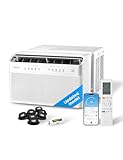
Overview: This innovative 10,000-BTU unit reimagines window ACs with a U-shaped design, targeting large rooms (up to 450 sq. ft.) while prioritizing quietness and smart connectivity.
What Makes It Stand Out: Its U-shape allows windows to remain partially open for ventilation and unobstructed views—a game-changer. ENERGY STAR-certified with 35% energy savings via inverter tech, ultra-quiet 32 dBA operation, and full smart control (app/voice) set it apart from traditional units.
Value for Money: Pricier upfront, but energy savings and smart features deliver long-term value. The unique open-window flexibility justifies the cost for tech-savvy users or those prioritizing noise reduction and view preservation.
Strengths and Weaknesses: Strengths: Revolutionary U-design, exceptional quietness, 35% energy savings, smart controls, open-window capability. Weaknesses: Higher initial cost, complex installation vs. standard units, limited window compatibility (13.75" min height).
Bottom Line: A premium, future-proof choice for large spaces where quiet operation, energy efficiency, and smart integration outweigh the steeper price tag—ideal for discerning homeowners.
4. Frigidaire 5,000 BTU Window-Mounted Air Conditioner, Cools Up to 150 Sq. Ft., Quiet Operation, Effortless Temperature Control, 2 Fan Speeds, Auto Restart, White

Overview: Frigidaire’s 5000-BTU model focuses on user-friendly cooling for compact areas (150 sq. ft.), emphasizing quiet operation and reliability with thoughtful convenience features.
What Makes It Stand Out: The standout element is its ultra-quiet 52 dBA performance—among the quietest in its class. Auto Restart after power outages and a long power cord eliminate common frustrations, while Effortless Temperature Control maintains consistent settings.
Value for Money: Priced moderately above Amazon Basics, it justifies the cost with superior noise reduction and reliability. Better suited for light-sleepers or noise-sensitive environments than budget alternatives.
Strengths and Weaknesses: Strengths: Extremely quiet (52 dBA), auto restart, long power cord, easy filter access. Weaknesses: No remote control, only 2 fan speeds, basic energy efficiency, mechanical controls lack modern flair.
Bottom Line: The top pick for quiet cooling in small rooms—worth the slight premium over Amazon Basics if noise is a critical factor for bedrooms or offices.
5. Frigidaire 8,000 BTU Window Air Conditioner with Remote Control, Cools Up to 350 Sq. Ft., Quiet Operation, Eco Mode, 3 Fan Speeds, Auto Restart, White

Overview: Targeting larger spaces (up to 350 sq. ft.), this 8,000-BTU Frigidaire unit combines robust cooling with advanced efficiency features like Eco Mode and smart scheduling.
What Makes It Stand Out: Eco Mode and Sleep Mode optimize energy use, while Clean Filter alerts and a remote enhance usability. The 54 dBA quiet operation, 3 fan speeds, and 6-way airflow provide adaptable comfort unmatched by basic models.
Value for Money: Excellent mid-tier value—Eco Mode cuts long-term costs, and features like Dry Mode (dehumidifying) add versatility. Outperforms similarly priced units with its energy-smart design and comprehensive controls.
Strengths and Weaknesses: Strengths: Energy-saving modes, remote control, Clean Filter alerts, quiet, Dry Mode. Weaknesses: Higher BTU requires larger windows, no smart connectivity, slightly pricier than entry-level 8,000-BTU units.
Bottom Line: Highly recommended for medium-to-large rooms where energy efficiency and user-friendly features (like Eco Mode) are priorities—delivers premium functionality without smart-tech premiums.
6. LG 5000 BTU Window Air Conditioner with Remote, Easy Mechanical Control Ultra-Quiet Compact-size Cools 150 Sq.Ft. for Small Room, Washable Filter AC Unit Easy Installation White LW5025R

Overview:
This compact LG window AC unit delivers targeted cooling for spaces up to 150 sq. ft., ideal for small bedrooms or offices. Its ultra-quiet operation and straightforward mechanical controls prioritize simplicity and efficiency in tight spaces.
What Makes It Stand Out:
The LW5025R excels with its ultra-compact design fitting narrow windows (21"-35" wide), making it rare for tiny rooms. The included EZ Mount kit simplifies DIY installation, while the washable slide-out filter ensures easy maintenance. Its Eco-friendly R32 refrigerant and Energy Save function enhance sustainability without sacrificing core cooling performance.
Value for Money:
Priced competitively for its class, it offers excellent value for renters or those needing basic cooling in confined areas. While lacking advanced features like programmable timers, its durability, low noise (critical for sleep), and washable filter reduce long-term costs compared to cheaper units with disposable filters.
Strengths and Weaknesses:
Strengths: Effortless installation; exceptionally quiet; simple, reliable mechanical controls; compact footprint; washable filter.
Weaknesses: Limited to 150 sq. ft.; no sleep mode or timer; basic remote without thermostat; only two fan speeds restrict customization.
Bottom Line:
A superb no-frills solution for cooling very small rooms reliably and quietly. Best for budget-conscious buyers prioritizing ease of use and maintenance over smart features.
7. Frigidaire 6,000 BTU Window Air Conditioner and Dehumidifier, 115V, Cools up to 250 Sq. Ft. for Apartment, Dorm Room, Small/Medium Rooms, with Remote Control, White

Overview:
Frigidaire’s 6,000 BTU unit tackles cooling and dehumidification for rooms up to 250 sq. ft., targeting apartments, dorms, and medium bedrooms. It combines solid cooling power with moisture control for humid climates.
What Makes It Stand Out:
The standout feature is its integrated dehumidifier (1.3 pints/hour), crucial for muggy environments. The remote’s built-in thermostat auto-adjusts temperature based on your location, not the unit—a rarity. The programmable timer and sleep mode further enhance comfort automation.
Value for Money:
Justifying its mid-range price, it delivers dual functionality (AC + dehumidifier) often found in pricier models. The washable filter with alert light cuts maintenance costs, while energy-efficient operation lowers bills versus less advanced 6K BTU units.
Strengths and Weaknesses:
Strengths: Effective dehumidification; remote thermostat; intuitive timer/sleep modes; robust 250 sq. ft. coverage; filter alert.
Weaknesses: Installation kit feels flimsy; noise levels slightly higher than competitors in high fan mode; remote battery life could be better.
Bottom Line:
Highly recommended for humid regions or smaller apartments needing both cooling and moisture control. Its smart remote and dehumidifier justify the investment for year-round comfort.
8. LG 6,000 BTU Window Air Conditioner, 115V, Cools 250 Sq.Ft. for Bedroom, Den, Living Room, Quiet Operation, with Remote, 2 Cooling & Fan Speeds, 2-Way Air Deflection, Auto Restart, White

Overview:
LG’s LW6017R is a refined 6,000 BTU unit engineered for quiet, reliable cooling in medium rooms (up to 250 sq. ft.), featuring enhanced usability and resilience for bedrooms or home offices.
What Makes It Stand Out:
Its ultra-quiet operation (52dB in low mode) is exceptional for sleep-sensitive environments. Auto Restart after power outages and 2-way air deflection add convenience, while the slide-out washable filter simplifies upkeep. Three fan speeds provide nuanced airflow control.
Value for Money:
Priced fairly for its premium quietness and reliability features, it outperforms budget 6K BTU models. The auto-restart and durable build reduce hassle, offering long-term savings versus units requiring manual resets or frequent service.
Strengths and Weaknesses:
Strengths: Industry-leading quiet performance; auto restart; versatile 2-way airflow; easy filter access; reliable cooling for 250 sq. ft.
Weaknesses: Only two cooling modes (lacks dedicated “dry” mode); remote lacks thermostat; basic digital display.
Bottom Line:
An outstanding choice for noise-averse users needing dependable medium-room cooling. Prioritize this if sleep quality and low maintenance are non-negotiable.
9. GE Window Air Conditioner Unit, 5,000 BTU for Small Rooms up to 150 sq ft. with Manual Adjustable Fan and Cooling Settings, Perfect for Small Bedroom or Living Room, Easy Install Kit Included, White

Overview:
This GE model is a no-nonsense, mechanical-control AC for cooling spaces up to 150 sq. ft., targeting users who prefer tactile dials over digital interfaces in small bedrooms or offices.
What Makes It Stand Out:
It’s a rarity: a fully manual unit with no digital display or remote. This simplicity ensures reliability (fewer electronics to fail) and ease of use for tech-averse buyers. The fixed chassis and included EZ Mount kit streamline installation in standard double-hung windows.
Value for Money:
As one of the most affordable 5K BTU units, it’s ideal for temporary setups or minimalists. Zero reliance on remotes/batteries and a washable filter keep ownership costs near zero, though it lacks energy-saving modes.
Strengths and Weaknesses:
Strengths: Extremely simple, intuitive controls; highly reliable; budget-friendly; low-noise operation; includes full install kit.
Weaknesses: No remote, timer, or smart features; only 10 temp settings limit precision; basic cooling modes; not suitable for larger rooms.
Bottom Line:
Choose this if you value rugged simplicity and low cost over modern conveniences. Perfect for guest rooms, workshops, or buyers avoiding digital complexity.
10. Whirlpool 8,000 BTU Window Air Conditioner with Dehumidifier, 115V, Window AC for Rooms up to 350 Sq. Ft., Living Room, Bedroom, or Apartment, with 3 Speeds, Remote Control, and 24H Timer, White
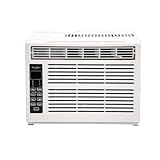
Overview:
Whirlpool’s powerful 8,000 BTU unit cools spaces up to 350 sq. ft. (like living rooms or master bedrooms) while dehumidifying aggressively (1.8 pints/hour), targeting larger or humid environments.
What Makes It Stand Out:
Its high-capacity cooling and dehumidification stand out for larger areas. The 24-hour programmable timer, 8-way directional louvers, and eco/sleep modes offer granular control. Auto-restart and a filter alert enhance user-friendliness.
Value for Money:
Despite a higher upfront cost, it delivers exceptional value for sizable rooms where undersized units struggle. The robust dehumidifier reduces mold risk, and energy-efficient modes offset electricity costs, outperforming weaker 8K BTU competitors.
Strengths and Weaknesses:
Strengths: Powerful 350 sq. ft. coverage; strong dehumidification; comprehensive timer/sleep modes; excellent airflow direction; sturdy build.
Weaknesses: Loudest unit in this list (60dB+ in high mode); requires larger windows (min. 14.5" height); slightly bulky design.
Bottom Line:
A top pick for large or humid rooms needing serious cooling power. Worth the investment if you prioritize coverage and dehumidification over ultra-quiet operation.
Understanding the Source of Air Conditioner Noise
Before tackling solutions, it’s crucial to pinpoint exactly where that annoying noise originates. It’s rarely just one culprit; multiple components working together (or against each other) create the overall sound profile you hear inside and outside your home.
The Compressor: The Heart of the Hum
The compressor is often the loudest single component, responsible for circulating refrigerant. Traditional reciprocating compressors create significant vibration and low-frequency noise as pistons move. Newer rotary or scroll compressors operate more smoothly, generating less inherent vibration and a lower-pitched, often less intrusive hum. The mounting system isolating the compressor from the unit’s chassis is equally critical – poor isolation transmits vibration directly to the window frame and wall.
Fan Dynamics: From Whir to Whoosh
Both the indoor evaporator fan (pulling air over the cold coil) and the outdoor condenser fan (exhausting heat) contribute significantly to noise levels. Blade design is paramount; aerodynamically optimized blades reduce turbulence and the “whooshing” sound. Motor quality matters too – brushless DC (BLDC) motors operate much more quietly and efficiently than older AC induction motors, especially at lower speeds. The speed at which fans operate (often tied to cooling demand) directly impacts perceived noise.
Vibration Transmission: The Silent Amplifier
Even if internal components are relatively quiet, vibration can turn your entire window frame and wall into a sounding board. This happens when the unit isn’t properly secured, when mounting brackets lack adequate dampening, or when there are gaps between the unit and the window opening allowing the chassis to rattle. Vibration isolation pads placed strategically between the unit and the sill can make a dramatic difference, absorbing energy before it transfers to the structure.
Decoding Noise Ratings: Beyond the Decibel Number
Manufacturers provide noise level specifications, but understanding what those numbers mean in your real-world environment is key. Simply comparing decibel (dB) figures on a spec sheet can be misleading without context.
Why Decibels Alone Don’t Tell the Whole Story
A unit rated at 50 dB might sound significantly louder or more annoying than another unit also rated at 50 dB. This is because dB ratings are often measured under ideal, controlled laboratory conditions (like anechoic chambers) that don’t replicate the reflective surfaces and resonance of a typical room or building. More importantly, decibels measure intensity, not perception. Human ears are more sensitive to mid and high frequencies (like a whine) than low rumbles at the same dB level.
The Critical Role of Frequency Spectrum
The type of noise matters immensely. A low-frequency rumble (common from compressors) might register at a certain dB level but feel less intrusive and travel through walls more easily, bothering neighbors in adjacent units. A high-pitched whine (often from fans or cheap motors) at the same dB level can be far more irritating inside your own room. Look for units that emphasize not just low overall dB, but specifically reduced mid/high-frequency noise. Some advanced models even provide frequency spectrum charts in technical documentation.
Measuring Real-World Performance
Consider seeking out independent reviews that test units in simulated home environments, paying attention to descriptions of the character of the noise (e.g., “deep hum,” “annoying whistle,” “smooth whoosh”). Pay particular attention to noise levels reported at the lowest fan speed setting, as this is often the setting used for maintaining comfort once the room is cooled, and where noise differences between units become most apparent.
Installation: Your Secret Weapon for Silence
Often overlooked, proper installation is arguably more critical to achieving quiet operation than the unit’s inherent noise rating. A poorly installed quiet unit can be noisier than a standard unit installed perfectly.
The Paramount Importance of a Tight, Stable Fit
Gaps around the unit are major noise culprits. Air leakage allows sound waves to escape directly into the room and surrounding structure, and causes the unit itself to vibrate against the window frame. Use high-quality, flexible foam insulation panels or specialized window AC installation kits designed to fill every gap snugly without putting stress on the unit. Ensure the unit is perfectly level both side-to-side and front-to-back; a tilted unit can cause internal components to vibrate excessively.
Strategic Vibration Dampening Techniques
Don’t rely solely on the unit’s internal mounts. Place dense, closed-cell rubber or specialized acoustic foam vibration isolation pads under the unit on the window sill. Ensure mounting brackets (if used) are tightened securely but also incorporate rubber grommets or pads where metal contacts metal or the building structure. This breaks the path for vibration transmission.
Optimizing Airflow Paths for Quieter Operation
Restricting airflow forces fans to work harder and spin faster, dramatically increasing noise. Ensure the outdoor side has ample clearance (check the manual, often 12-18 inches) from walls, shrubs, or obstructions. Similarly, ensure indoor vents aren’t blocked by furniture or curtains. Clean or replace air filters regularly – a clogged filter strangles airflow, making the fan motor labor noisily.
Key Features That Genuinely Reduce Noise
When evaluating units, focus on specific engineering features proven to mitigate noise at its source, rather than vague promises of “quiet” operation.
Inverter Technology: The Smooth Operator
While often associated with energy savings, inverter-driven compressors are a major noise reducer. Instead of the compressor cycling on and off at full blast (creating loud startup surges and abrupt stops), an inverter compressor runs continuously at variable speeds. It ramps up smoothly only as much as needed, eliminating the jarring “thump” of startup and maintaining a remarkably consistent, lower noise level, especially during mild weather or when maintaining temperature.
Advanced Fan Motor & Blade Engineering
Look for units explicitly mentioning “brushless DC” (BLDC) fan motors. These are significantly quieter and more efficient than traditional AC motors, particularly at lower speeds. Aerodynamic blade design is equally important; curved, swept-back blades or blades with serrated trailing edges disrupt airflow turbulence that creates high-pitched noise. Some high-end models utilize multi-speed or variable-speed fan control specifically optimized for quiet operation on lower settings.
Enhanced Internal Acoustic Treatment
Quality varies widely. Top-tier units incorporate strategic sound-absorbing materials inside the chassis, lining panels near the compressor and fans. This isn’t just thin foam; it’s often dense, specialized acoustic insulation designed to absorb specific noise frequencies before they escape the unit housing. Check product descriptions for mentions of “acoustic insulation,” “sound-dampening panels,” or “noise-reduction lining.”
Smart Design for Vibration Isolation
Beyond basic rubber mounts, look for units featuring dual-stage or multi-point vibration isolation systems. These often combine specialized rubber grommets with springs or other dampening materials at multiple contact points between the compressor/fan assemblies and the outer casing. This layered approach prevents vibrations from resonating through the entire unit structure.
Operational Strategies for Minimizing Perceived Noise
Even with the best unit and installation, how you use your air conditioner impacts the noise you experience daily.
Mastering Fan Speed Settings
The highest fan speed is almost always the loudest. Once the room reaches your desired temperature, switch to a lower fan speed setting. Modern units often have a “Quiet” or “Sleep” mode that automatically reduces fan speed (and sometimes compressor output) after the initial cooling phase, prioritizing minimal noise over maximum cooling power. This mode is often the single most effective setting for nighttime quiet.
Strategic Temperature Management
Setting the thermostat significantly lower than necessary forces the compressor to run harder and longer, increasing noise. Aim for a comfortable but not frigid temperature (e.g., 74-78°F / 23-25.5°C). Using ceiling fans in conjunction allows you to set the thermostat a few degrees higher while maintaining comfort, reducing overall AC runtime and noise.
Leveraging Timers and Smart Features
Use programmable timers or smart features to cool the room before you need quiet (e.g., during the day while you’re out), then have the unit switch to a quiet maintenance mode as you settle in for the evening or night. Avoid having the unit kick on at full blast when you’re trying to sleep or relax.
Environmental Factors Influencing Noise Perception
The sound your AC makes interacts with your specific living space, affecting how noticeable it is to you and others.
Room Acoustics and Layout
Hard surfaces (bare floors, walls, large windows) reflect sound, making noise seem louder and linger longer. Soft furnishings (rugs, curtains, upholstered furniture) absorb sound, dampening the perceived noise level inside your room. Consider the layout; a unit installed in a narrow hallway or against a shared wall will transmit sound more effectively to adjacent rooms or units than one in a large, open, carpeted living room with many soft surfaces.
Building Construction Matters
Older buildings with single-pane windows and less insulation transmit sound much more readily between units than modern, well-insulated constructions. The type of wall (stucco, brick, wood frame) also affects how vibration travels. Understanding your building’s structure helps set realistic expectations and highlights where installation dampening is even more critical.
Outdoor Conditions and Placement
Wind direction can carry outdoor unit noise towards neighboring windows. Placing the unit on the leeward side of the building (protected from prevailing winds) can sometimes help. Also, units mounted high on a building face may project noise downwards towards patios or lower windows, while ground-level units might direct noise towards adjacent properties. Consider the path sound takes from your unit to sensitive areas.
Maintenance: Keeping the Quiet Going
A unit that starts quiet can become noisy over time without proper care. Regular maintenance preserves both performance and noise levels.
Filter Hygiene: The First Line of Defense
A clogged air filter is the most common cause of increasing noise over a season. Restricted airflow makes the fan motor work harder, spin faster, and become significantly louder. Check filters monthly during peak season and clean or replace them according to the manufacturer’s schedule (usually every 1-3 months). It’s the simplest, most cost-effective quieting measure.
Coil Cleanliness for Smooth Operation
Dirt and debris buildup on the indoor evaporator coil and outdoor condenser coil impedes heat transfer. This forces the compressor to work longer and harder to achieve the desired cooling, increasing both energy use and operational noise. Gently clean the outdoor coil fins with a garden hose (power off!) annually. Indoor coils may require professional cleaning every few years.
Checking for Loose Components
Over time, vibration can loosen screws, panels, or brackets. Periodically (safely, with the unit off) check that all external panels are securely fastened and that mounting brackets haven’t shifted. Listen for any new rattles or buzzes that might indicate a loose part vibrating against the chassis.
Setting Realistic Expectations for “Quiet”
Understanding what “quiet” realistically means for a window AC prevents disappointment and helps you evaluate units fairly.
Physics Has Limits
Window air conditioners are inherently mechanical devices moving air and refrigerant. There will always be some sound – a low hum, a gentle whoosh of air. True silence is physically impossible. Focus on finding a unit where the noise is unobtrusive, blends into background sounds, and doesn’t cause complaints.
Context is Everything
A noise level acceptable in a large, busy urban apartment might be too loud for a quiet bedroom in a suburban house. Consider your specific sensitivity, the time of day you need quiet most (especially nighttime), and the proximity of neighbors. What’s “quiet enough” is highly personal and situational.
Comparing Against the Alternative
Remember the alternative to AC noise is often sweltering, sleepless heat. A well-chosen, properly installed unit producing a low, consistent hum is frequently a vastly preferable trade-off for most people seeking relief, especially when compared to the disruptive noise of older models or poorly maintained units.
The Long-Term Value of Investing in Quiet
Choosing a unit designed for low noise isn’t just about immediate comfort; it offers significant long-term benefits that justify potentially higher upfront costs.
Enhanced Quality of Life and Well-being
Consistent, restful sleep is foundational to health and happiness. Eliminating disruptive AC noise leads to deeper, uninterrupted sleep, reducing stress and improving mood and daytime focus. The ability to relax in your own home without constant mechanical distraction contributes significantly to overall peace of mind.
Preserving Relationships in Shared Spaces
In apartments, condos, or close-knit neighborhoods, noise is a frequent source of conflict. An excessively loud AC unit can strain relationships with neighbors, landlords, or even family members. Investing in a genuinely quiet unit demonstrates consideration and prevents potentially awkward or damaging disputes, fostering a more harmonious living environment.
Potential for Higher Resale or Rental Value
For property owners, offering units equipped with modern, quiet appliances can be a subtle but attractive selling or rental point. Tenants increasingly value amenities that contribute to a peaceful living experience, and quiet operation is a tangible feature that sets a property apart.
Future-Proofing Your Purchase
Technology continues to evolve, and understanding emerging trends helps you make a choice that stays relevant.
The Evolution of Inverter Dominance
While once premium, inverter compressor technology is rapidly becoming standard in mid-to-high-end window units due to its dual benefits of quietness and efficiency. Prioritizing inverter models ensures you’re getting current, forward-looking technology that will likely remain the benchmark for years.
Smart Integration for Noise Management
Future units will increasingly leverage smart sensors and AI to optimize noise dynamically. Imagine a unit that automatically detects when you’re trying to sleep (via schedule or connected devices) and shifts to its absolute quietest operational profile, or one that adjusts fan speed based on real-time ambient noise levels in the room to stay below a perceptible threshold.
Material Science Advancements
Ongoing research into lighter, stronger composite materials and more effective acoustic damping foams will continue to shrink the physical size of units while further reducing vibration and noise transmission. Look for brands consistently innovating in chassis design and internal component mounting.
Frequently Asked Questions
Frequently Asked Questions
How can I tell if a window AC unit is truly quiet before buying? Focus on detailed reviews mentioning noise character (low hum vs. high whine) and specific dB ratings at low fan speed. Look for units emphasizing inverter compressors, BLDC fan motors, and acoustic insulation. Avoid relying solely on manufacturer “as low as” claims.
Is a lower decibel rating always quieter in practice? Not necessarily. Two units at 50 dB can sound different due to frequency (pitch). A low 50 dB rumble might be less noticeable than a mid/high-frequency 50 dB whine. Real-world reviews describing the sound quality are crucial.
Can I make my existing noisy window AC quieter without replacing it? Yes, often significantly. Ensure a perfect, gap-free installation with quality insulation. Add vibration isolation pads under the unit. Clean or replace the air filter immediately. Check for and tighten any loose panels or brackets. Ensure outdoor airflow isn’t obstructed.
Does inverter technology really make window ACs quieter? Absolutely. Inverter compressors eliminate the loud startup surge and run continuously at variable speeds, avoiding the noisy on/off cycling of traditional units. This results in a much more consistent, lower noise level, especially during temperature maintenance.
Why is my AC louder at night? Several factors: Quieter ambient nighttime noise makes the AC more noticeable. Lower outdoor temperatures can cause the unit to cycle differently. Humidity changes might affect operation. Also, you’re more sensitive to noise when trying to sleep.
Do quieter window AC units cost significantly more? Generally, yes. Units with advanced noise-reduction features (inverters, BLDC motors, premium insulation) command a premium over basic models. However, the price gap is narrowing as technology trickles down, and the long-term value in comfort and neighbor relations often justifies the cost.
How important is the installation for noise compared to the unit itself? Installation is critically important, often as impactful as the unit’s inherent noise level. A quiet unit installed poorly (gaps, no vibration pads, tilted) will be noisy. A standard unit installed perfectly can be remarkably quiet. Never skimp on proper installation.
What’s the quietest setting to run my AC for sleeping? “Sleep” or “Quiet” mode is specifically designed for this. It typically reduces fan speed significantly after the initial cooldown and may slightly raise the set temperature over time, minimizing noise output throughout the night.
Can soundproofing my room help block AC noise? Yes, but it’s less effective than fixing the source (the unit/installation). Adding heavy curtains, rugs, and upholstered furniture absorbs sound inside your room, reducing reverberation. However, it won’t stop noise transmission through walls to neighbors – proper unit installation and dampening are key for that.
How often does maintenance impact AC noise levels? Very frequently. A dirty air filter is the #1 cause of increasing noise over a season. Clogged coils also force the unit to work harder and louder. Monthly filter checks/cleanings and annual coil cleanings are essential for maintaining quiet operation.
See Also
- 10 Window Air Conditioners That Solve Installation Frustrations in 2026
- How to Solve Overheating Bedrooms with the 10 Best Compact Window Air Conditioners in 2026
- 10 Window Air Conditioners That Solve Installation Hassles in 2026
- How to Solve Overheating Rooms with the 10 Best Low Profile Window Air Conditioners in 2026
- How to Solve Hot Nights with the 10 Best Low Profile Window Air Conditioners in 2026