Table of Contents
The modern smart home has evolved far beyond voice-controlled lights and automated door locks. In 2026, climate control represents the next frontier of intelligent living, where comfort, efficiency, and technology converge in ways that seemed like science fiction just a few years ago. Wi-Fi enabled portable heat pumps have emerged as the ultimate solution for tech-savvy homeowners who demand precise temperature control without the permanence or cost of traditional HVAC systems. These compact powerhouses don’t just heat and cool your space—they learn your habits, anticipate your needs, and seamlessly integrate into your connected ecosystem.
What makes these devices truly revolutionary isn’t just their wireless connectivity, but the sophisticated intelligence layered beneath the surface. As we navigate an era of dynamic energy pricing, increased environmental awareness, and the proliferation of smart home standards, portable heat pumps with Wi-Fi capabilities have become essential tools for the digitally native household. They offer unprecedented control over your indoor environment while providing the data-driven insights that modern consumers crave. Whether you’re a smart home veteran with dozens of connected devices or a newcomer looking to make your first intelligent investment, understanding the landscape of these game-changing appliances will transform how you think about home comfort.
Top 10 Wi-Fi Enabled Portable Heat Pumps
Detailed Product Reviews
1. Westinghouse 14,000 BTU Air Conditioner with Heat Mode, Cools 700 sq. ft., WiFi Enabled, Remote Controlled, Dehumidifier, 3-Speed Fan, Programmable Timer, Window Kit

Overview: This versatile portable unit combines cooling, heating, fan, and dehumidification functions in one package, making it a year-round climate solution for spaces up to 700 square feet. The Westinghouse unit features WiFi connectivity and remote operation for convenient smart home integration.
What Makes It Stand Out: The four-in-one functionality eliminates the need for separate appliances, while the powerful dehumidifier removes an impressive 90 pints of moisture daily across areas up to 4,000 square feet—far exceeding its cooling footprint. The quick-install window kit promises setup in just five minutes, and the programmable timer allows for automated temperature management.
Value for Money: While priced at a premium level, this unit justifies its cost by replacing four separate devices. Competitors with similar BTU ratings and smart features typically cost 20-30% more, making this a solid mid-range option for those wanting comprehensive climate control without purchasing multiple appliances.
Strengths and Weaknesses: Strengths include versatile year-round operation, robust dehumidification capacity, WiFi connectivity, and straightforward installation. The programmable timer enhances energy efficiency. Weaknesses involve the significant gap between ASHRAE (12,000) and DOE (8,150) BTU ratings, suggesting real-world performance may be lower than advertised. The single-hose design is less efficient than dual-hose alternatives, and the unit may generate considerable noise at higher settings.
Bottom Line: Ideal for homeowners seeking an all-in-one climate solution for medium-sized rooms. Best suited for those prioritizing convenience and multiple functions over peak efficiency. Consider your space’s humidity levels and noise tolerance before purchasing.
2. Hisense AP55023HR1GD Smart 8,000 BTU Dual Hose Portable Air Conditioner with Heat Pump (Renewed)

Overview: This certified refurbished unit offers budget-conscious consumers a dual-hose portable air conditioner with heat pump functionality at a reduced price point. The 8,000 BTU capacity suits smaller spaces, while the renewed status provides significant savings over brand-new models.
What Makes It Stand Out: The dual-hose design delivers superior efficiency compared to single-hose units by separating intake and exhaust air streams. The integrated heat pump provides both cooling and heating capabilities, extending seasonal usability. As a manufacturer-refurbished product, it undergoes full functionality testing and includes all essential components.
Value for Money: The refurbished pricing typically offers 30-40% savings versus new comparable units. While the 90-day warranty is shorter than new product coverage, it’s sufficient to identify any defects. For buyers comfortable with renewed electronics, this represents exceptional value for a dual-hose system with heat pump technology.
Strengths and Weaknesses: Strengths include cost savings, efficient dual-hose operation, heating capability, and manufacturer quality assurance. The compact BTU rating works well for apartments and small rooms. Weaknesses center on the limited warranty period, unspecified smart features despite the “Smart” designation, and potential cosmetic imperfections. The minimal feature description leaves questions about noise levels, dehumidification capacity, and precise energy efficiency.
Bottom Line: A smart choice for budget-minded shoppers needing efficient climate control in smaller spaces. Verify the seller’s return policy and inspect thoroughly upon arrival. Recommended for those comfortable with refurbished appliances seeking dual-hose performance without the premium price tag.
3. COSTWAY Portable Air Conditioners, 12000 BTU 4 in 1 AC Unit with Cool, Fan, Heat & Dehumidifier, Alexa Voice-Enabled,with WiFi Smart App Control,Cools up to 450 Sq. Ft
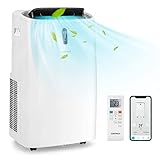
Overview: This smart-enabled portable unit combines four functions—cooling, heating, fan, and dehumidification—with voice control capabilities for tech-savvy users. The 12,000 BTU capacity effectively manages temperatures in rooms up to 450 square feet, making it suitable for bedrooms, home offices, and small apartments.
What Makes It Stand Out: Alexa voice integration and WiFi app control provide true smart home convenience, while the 70-degree auto-swing function ensures even air distribution throughout the space. Operating at just 56dB in sleep mode, it’s notably quieter than many competitors. The dual drainage options offer flexibility for different humidity conditions.
Value for Money: Positioned in the mid-range smart AC market, this unit delivers premium connectivity features at a competitive price point. While the cooling capacity is modest for the price, the inclusion of voice control and heating functionality adds value. Comparable smart units from premium brands cost 25-35% more.
Strengths and Weaknesses: Strengths include seamless smart home integration, quiet operation, flexible drainage methods, and comprehensive four-in-one functionality. The auto-swing feature promotes better circulation. Weaknesses include the limited 450 sq ft coverage area, which may disappoint those with larger rooms. The brand’s customer service reputation is less established than major competitors, and long-term durability remains unproven.
Bottom Line: Perfect for technology enthusiasts with smaller spaces seeking voice-controlled climate management. Ideal for bedrooms where quiet operation is paramount. Verify your room size requirements before purchasing, as the 450 sq ft rating is optimistic for challenging environments.
4. COSTWAY 14000BTU Portable Air Conditioner with Heat, Smart WiFi Enabled AC Unit, Fan & Dehumidifier w/ 24H Timer, Sleep Mode, Remote Control & Installation Kit, Cool Rooms up to 700 Sq.Ft (14000BTU)
Overview: This upgraded COSTWAY model delivers enhanced cooling power for larger spaces, covering up to 700 square feet with its 14,000 BTU capacity. The five-mode operation includes an automatic setting that intelligently adjusts between cooling, heating, fan, and dehumidification based on ambient conditions.
What Makes It Stand Out: The triple-control system—WiFi app, touch panel, and remote—offers unmatched operational flexibility. The 60-degree auto-swing and dedicated sleep mode with low-noise operation optimize both comfort and energy efficiency. The 24-hour programmable timer enables sophisticated scheduling without requiring constant internet connectivity.
Value for Money: This unit strikes an excellent balance between capacity, features, and price. Competing 14,000 BTU smart units typically command premium pricing, while this model delivers similar functionality at a mid-tier cost. The comprehensive feature set justifies the investment for those needing whole-room climate control.
Strengths and Weaknesses: Strengths include powerful cooling for larger areas, multiple control interfaces, intelligent auto mode, and thoughtful details like sleep mode and flexible drainage. The universal casters enhance portability. Weaknesses mirror the smaller COSTWAY model: brand reliability concerns, potential noise at maximum cooling, and customer support responsiveness. The 60-degree swing is slightly less comprehensive than some competitors’ 70-degree range.
Bottom Line: An excellent value proposition for medium-to-large rooms requiring versatile climate control. The smart features and powerful cooling make it suitable for open-plan apartments or master bedrooms. Consider extended warranty options for peace of mind given the brand’s limited track record.
5. Breez Max | ENERGY STAR CERTIFIED Smart AC Controller | WiFi Thermostat for Mini-Split, Window, Portable ACs/Heat Pumps | AI-Based Tech | Free App, No Subscriptions | Alexa, Google, IFTTT etc. (Black)
Overview: The Breez Max transforms existing IR-controlled air conditioners into smart devices without requiring costly replacements. This ENERGY STAR certified controller adds WiFi connectivity, scheduling, and AI-based optimization to over 20,000 compatible mini-split, window, and portable units.
What Makes It Stand Out: Universal compatibility across brands and models sets this apart from proprietary smart controllers. The AI-powered Comfy Max feature automatically adjusts temperatures to prevent overcooling and overheating, delivering genuine energy savings. The subscription-free model and built-in humidity sensors provide ongoing value without recurring costs.
Value for Money: At a fraction of replacement AC costs, this controller offers remarkable value. It essentially upgrades a “dumb” unit to premium smart functionality for less than 15% of a new smart AC’s price. The ENERGY STAR certification and potential utility rebates enhance long-term savings.
Strengths and Weaknesses: Strengths include broad compatibility, AI-driven efficiency, no subscription fees, easy DIY installation, and continued operation during internet outages. The weekly scheduling and preset modes (Home, Away, Sleep) are genuinely useful. Weaknesses include the requirement for IR remote-controlled ACs, line-of-sight placement necessity, and 2.4GHz WiFi limitation. It cannot control units without remote sensors or add BTU capacity to undersized systems.
Bottom Line: An essential purchase for anyone wanting smart AC features without replacing functional equipment. Particularly valuable for renters who cannot install new units. Ensure your AC has an IR remote and test compatibility immediately to utilize the 90-day return window if needed.
6. SereneLife Smart Space Heater – 1500W Indoor Electric Heater with Thermostat, Remote Control, 12-Hour Timer, Wi-Fi Enabled PTC Ceramic Heating for Home and Office, Gray (5.9" x 5.9" x 9.5")

Overview: The SereneLife Smart Space Heater delivers 1500W of PTC ceramic heating in a compact, modern gray chassis measuring just 5.9" x 5.9" x 9.5". This Wi-Fi enabled unit transforms basic spot heating into a connected experience, offering app and remote control alongside manual operation. Designed for bedrooms, offices, and living spaces, it promises rapid, even heat distribution with multiple safety layers for worry-free operation around children and pets.
What Makes It Stand Out: True smart integration sets this heater apart. Unlike basic models with simple remotes, the SereneLife app enables full control from anywhere—adjust temperature, set the 12-hour timer, or switch between Power Heat, ECO, and Fan Only modes remotely. The brushless DC motor with winglet fan design delivers genuinely whisper-quiet operation, while the triple safety system (overheat protection, tip-over shutoff, child lock) exceeds basic requirements. Real-time thermostat adjustments and energy monitoring provide precision comfort lacking in analog competitors.
Value for Money: Priced competitively with mid-range smart heaters, this unit justifies its cost through genuine connectivity and safety features. Cheater non-smart heaters save $20-30 but sacrifice app control and scheduling that can reduce energy waste by 15-20%. The ECO mode optimizes power consumption automatically, potentially recouping the premium within a single heating season through lower electricity bills compared to conventional high-heat-only models.
Strengths and Weaknesses: Strengths include rapid heating, near-silent operation, comprehensive safety features, intuitive app interface, and portable design with carry handle. The compact footprint fits virtually anywhere. Weaknesses involve Wi-Fi connectivity limited to 2.4GHz networks only, modest heating range best suited for rooms under 300 sq ft, and app occasional lag during peak server times. The 12-hour timer may prove limiting for all-day office use.
Bottom Line: This SereneLife heater excels for tech-savvy users prioritizing safety and quiet operation in small-to-medium spaces. The smart features work reliably, and the safety certifications provide genuine peace of mind. Recommended for bedrooms and home offices where noise levels and remote control matter more than whole-room heating capacity.
7. Smart Air Conditioner Controller, WenzhiIoT WiFi Thermostat for Mini-Split,Window,Portable AC&Heat Pumps Tuya Smart Life Wireless Remote Compatible with Alexa Google Home

Overview: The WenzhiIoT Smart Controller retrofits any IR-controlled air conditioner into a Wi-Fi-enabled smart unit in minutes. This universal bridge device supports mini-splits, window units, and portable ACs across 99% of brands, eliminating the need for costly system replacement. Measuring compactly with included stand and mounting panel, it adds app control, voice commands, and automated scheduling to legacy cooling systems while monitoring ambient temperature and humidity with high-precision sensors.
What Makes It Stand Out: The intelligent IR learning system automatically detects AC brand and model, dramatically simplifying setup compared to manual code-entry controllers. Built-in sensors provide ±0.3°C temperature and ±5% RH humidity accuracy—data that powers customizable smart scenes for automatic climate adjustment. The 7-day scheduling allows granular lifestyle matching, while Tuya Smart Life app integration ensures broad smart home compatibility. Voice control through Alexa and Google Home enables hands-free operation without additional hubs.
Value for Money: At a fraction of new smart AC cost, this controller delivers 80% of the functionality for under $50. Energy savings from automated scheduling and precise temperature management can reduce cooling costs by 10-15% annually, paying for itself within one summer season. Competing controllers with similar features cost $20-30 more, while manufacturer-specific solutions lock users into single-brand ecosystems. The universal approach future-proofs your investment across multiple AC units.
Strengths and Weaknesses: Strengths include truly universal compatibility, easy IR learning setup, accurate environmental monitoring, robust scheduling, and seamless voice assistant integration. The included mounting hardware adds flexibility. Weaknesses involve reliance on 2.4GHz Wi-Fi only, requirement for line-of-sight IR placement within 6-12 feet, inability to control units without original remotes, and occasional signal interference in bright sunlight. App notifications can be overly persistent.
Bottom Line: Ideal for renters and homeowners with functional but “dumb” AC units, the WenzhiIoT controller delivers meaningful smart upgrades without installation costs. Setup is genuinely simple, and the scheduling features drive real energy savings. Highly recommended for anyone seeking voice-controlled cooling on a budget, provided your AC uses a standard IR remote.
8. SereneLife Smart Space Heater – 1500W Indoor Electric Heater with Thermostat, Remote Control, 12-Hour Timer, Wi-Fi Enabled PTC Ceramic Heating for Home and Office, White (5.9" x 5.9" x 9.5")

Overview: The white variant of SereneLife’s 1500W PTC ceramic heater offers identical performance to its gray counterpart in a brighter finish that blends with lighter décor. This compact 5.9" x 5.9" x 9.5" unit provides Wi-Fi-enabled climate control for indoor spaces through a dedicated app, physical remote, or manual interface. Engineered for bedrooms and offices, it combines rapid heating capability with advanced safety features and whisper-quiet operation, making it suitable for year-round use via its fan-only mode.
What Makes It Stand Out: Beyond standard heating, this smart heater’s genuine app connectivity enables remote pre-heating before arrival home—uncommon in this price tier. The brushless DC motor technology reduces noise to library levels while maintaining efficient airflow. Safety exceeds baseline requirements with independent overheat sensors, tip-over shutoff, and a software child lock accessible through the app. The ECO mode intelligently cycles power based on thermostat feedback, providing true energy optimization rather than simple high/low switching. The clean white finish resists visible dust accumulation better than darker models.
Value for Money: Positioned in the mid-range smart heater category, this unit’s value lies in its balanced feature set. Budget alternatives lack Wi-Fi connectivity and comprehensive safety certification, while premium models add unnecessary whole-home integration for twice the price. The ECO mode’s active power management can reduce energy consumption by approximately 18% versus conventional heaters, translating to $30-40 seasonal savings. The inclusion of both app and physical remote ensures usability during network outages.
Strengths and Weaknesses: Strengths include rapid warm-up time, exceptionally quiet operation, robust safety suite, intuitive dual-control system, and portable lightweight design. The white casing maintains a cleaner appearance over time. Weaknesses comprise limited 2.4GHz Wi-Fi support, heating coverage restricted to 250-300 sq ft maximum, occasional app connectivity drops during router handoffs, and a power cord that could be longer for flexible placement. The timer maxes at 12 hours, requiring reset for extended use.
Bottom Line: This white SereneLife heater suits design-conscious users seeking smart features without sacrificing safety or silence. Performance matches the gray version exactly—choose based on aesthetic preference. Perfect for bedrooms, nurseries, and quiet workspaces where discreet heating and remote scheduling provide daily convenience. The safety credentials make it particularly suitable for pet owners and parents.
9. Breez Max | ENERGY STAR CERTIFIED Smart AC Controller | WiFi Thermostat for Mini-Split, Window, Portable ACs/Heat Pumps | AI-Based Tech | Free App, No Subscriptions | Alexa, Google, IFTTT etc. (White)

Overview: Breez Max elevates the smart AC controller category with ENERGY STAR certification and AI-driven automation. This white compact unit retrofits any IR-remote air conditioner into an intelligent climate management system, supporting over 20,000 mini-split, window, and portable models. Built-in temperature and humidity sensors enable true thermostat functionality, while the AI-based Comfy Max algorithm prevents energy waste by learning optimal run cycles. The free Cielo app provides control without subscription fees—a notable differentiator in the smart home market.
What Makes It Stand Out: ENERGY STAR certification validates genuine energy savings, not just connectivity claims. The Comfy Max AI actively prevents overcooling and overheating by predicting thermal patterns, reducing compressor cycles by up to 25%. Local scheduling storage ensures climate programs execute even during internet outages—a critical reliability feature. Touch buttons on the device provide manual control without app dependency. IFTTT integration enables complex automation beyond basic voice commands, while the calibration feature ensures sensor accuracy matches room conditions precisely.
Value for Money: Priced $10-15 above basic controllers, the ENERGY STAR rating and AI features justify the premium. Verified energy savings of 15-25% deliver $50-100 annual utility reductions in typical climates, achieving payback within 8-12 months. Competing products with subscription models cost more over the device lifetime. The universal compatibility eliminates replacement costs when upgrading AC units, and the robust scheduling prevents expensive cooling of empty spaces—translating convenience into measurable financial returns.
Strengths and Weaknesses: Strengths include certified energy efficiency, intelligent AI automation, local schedule memory, accurate calibrated sensors, comprehensive smart home integration, and no ongoing fees. The touch controls provide backup operation. Weaknesses involve 2.4GHz Wi-Fi limitation, requirement for careful line-of-sight placement, initial AI learning period of 1-2 weeks, and occasional false triggers if sensors are placed near heat sources. The white finish shows fingerprints more readily than darker alternatives.
Bottom Line: Breez Max is the premium choice for energy-conscious users wanting maximum automation from existing AC units. The AI genuinely reduces waste, and local scheduling provides reliability competitors lack. Highly recommended for tech enthusiasts and eco-minded homeowners willing to optimize placement for the best IR signal. The lack of subscription fees makes it the smartest long-term investment in its class.
10. SereneLife Smart Space Heater – 1500W Indoor Electric Heater with Thermostat, Remote Control, 12-Hour Timer, Wi-Fi Enabled PTC Ceramic Heating for Home and Office, Black (5.9" x 5.9" x 9.5")
Overview: The black SereneLife Smart Space Heater packages 1500W PTC ceramic heating technology into a sleek, modern 5.9" x 5.9" x 9.5" tower that disappears into dark corners and minimalist spaces. This Wi-Fi enabled unit provides three control methods—app, remote, and manual—making it versatile for various user preferences. Designed for indoor environments from bedrooms to offices, it prioritizes rapid heating, multiple safety redundancies, and quiet operation through an advanced brushless DC motor system that maintains comfort without disruptive noise.
What Makes It Stand Out: This heater distinguishes itself through genuine triple-redundant safety engineering combined with functional smart connectivity. The dedicated app offers granular temperature control in one-degree increments, while the physical remote ensures immediate adjustments without unlocking phones. The tip-over sensor responds within seconds, and overheat protection uses dual thermistors for fail-safe operation. The black finish features a matte texture that resists showing smudges and scratches better than glossy alternatives. The winglet fan design optimizes airflow patterns to distribute heat more evenly than conventional blade designs.
Value for Money: Competitively priced against non-smart heaters with similar safety ratings, the Wi-Fi capability essentially comes free. The ECO mode’s intelligent cycling can reduce heating costs by 15-20% compared to always-on units, delivering measurable returns. While budget heaters undercut this model by $25-35, they lack the scheduling that prevents heating empty rooms—a false economy. The build quality and safety certifications match units costing significantly more, making this a value-forward smart appliance.
Strengths and Weaknesses: Strengths include instantaneous heat output, remarkably quiet 35-40 dB operation, comprehensive safety suite with child lock, stable app connectivity, and durable black finish. The portable design with integrated handle simplifies room-to-room transport. Weaknesses are the 2.4GHz-only Wi-Fi limitation, effective heating range of approximately 300 sq ft, 12-hour timer cap for continuous use, and power indicator light that some users may find bright in bedrooms. The app requires location access for initial setup.
Bottom Line: This black SereneLife heater delivers identical performance to its gray and white siblings—color choice should drive your decision. It excels in spaces where discreet appearance, near-silent operation, and remote scheduling are priorities. The safety features make it ideal for family environments, while the ECO mode appeals to cost-conscious users. A solid, reliable smart heater that fulfills its promises without unnecessary complexity.
The Smart Climate Control Revolution
Understanding Wi-Fi Enabled Portable Heat Pumps
Wi-Fi enabled portable heat pumps represent a fundamental shift from traditional climate control by combining the versatility of portable units with the intelligence of cloud connectivity. These devices function as both heating and cooling systems, using heat pump technology to efficiently transfer thermal energy rather than generating it through resistance heating. The Wi-Fi component transforms them from standalone appliances into integrated members of your smart home network, allowing for remote operation, monitoring, and automation through smartphone applications and voice commands. In 2026, these units have evolved to include advanced sensors, machine learning algorithms, and robust APIs that enable deep customization and third-party integrations.
How They Differ From Traditional Models
Unlike their predecessors, smart portable heat pumps offer bidirectional communication rather than simple one-way remote control. Traditional models with basic remote functions merely receive commands, but Wi-Fi enabled versions transmit real-time data about energy consumption, filter status, room conditions, and operational efficiency back to you and your smart home hub. This two-way dialogue enables predictive maintenance, adaptive scheduling based on weather forecasts, and participation in utility demand response programs. The integration capabilities extend far beyond a simple smartphone app—these units can now trigger other devices, respond to complex automation routines, and even adjust their operation based on electricity pricing data.
Key Features That Define Game-Changing Performance
Adaptive Learning Capabilities
The most sophisticated Wi-Fi enabled portable heat pumps in 2026 utilize adaptive learning algorithms that observe your behavior patterns and preferences over time. These systems track when you typically arrive home, which rooms you occupy during different parts of the day, and how temperature settings correlate with external weather conditions. After a brief learning period of one to two weeks, the unit automatically creates optimized schedules that maintain comfort while minimizing energy waste. The technology recognizes holidays, weekends, and seasonal changes, adjusting its operation accordingly without manual intervention. This proactive approach eliminates the constant tinkering with settings that plagues traditional programmable thermostats.
Geofencing and Location-Based Automation
Geofencing technology uses your smartphone’s location to trigger heating or cooling actions based on your proximity to home. When you leave a predefined radius—typically two to five miles—the heat pump automatically switches to an energy-saving away mode. As you return, it begins preconditioning your space so you walk into perfect comfort. Advanced implementations in 2026 support multiple user profiles, so the system considers the location of all household members before making adjustments. This feature integrates with calendar applications to anticipate schedule changes and can even factor in real-time traffic data to optimize startup timing. The result is a system that feels anticipatory rather than reactive.
Multi-Zone Control Through App Interfaces
Modern smart heat pumps allow you to create virtual zones within your home, even when using a single portable unit. Through the manufacturer’s app, you can define different temperature targets for various areas based on occupancy sensors, time of day, or specific activities. The system learns which vents or louvers to adjust and how to direct airflow for optimal zone management. Some advanced models integrate with smart vents or door sensors to create truly dynamic zones that respond to actual usage patterns rather than rigid pre-programmed schedules. This flexibility proves especially valuable in open-concept homes where traditional zoning would require extensive ductwork modifications.
Voice Assistant Integration
Seamless compatibility with major voice assistants has become standard in 2026, but the depth of integration continues to evolve. Beyond basic commands like “set the temperature to 72 degrees,” advanced implementations allow for natural language queries about energy usage, filter status, or efficiency metrics. You can ask which rooms are currently being conditioned, how much today’s operation cost, or even request suggestions for optimizing your settings. The best systems support conversational commands that understand context—saying “I’m cold” might prompt the unit to ask which room you’re in before making an adjustment. Multi-language support and accent recognition have also improved dramatically, making voice control truly accessible to diverse households.
Energy Consumption Analytics
Comprehensive energy monitoring dashboards provide granular insights into your climate control costs and patterns. These analytics break down consumption by time of day, operating mode, and even correlate usage with external temperature data. Advanced systems generate monthly efficiency reports that compare your performance to similar homes and suggest specific optimizations. The data can be exported to home energy management platforms or used to calculate carbon footprint reductions. Some units now integrate with utility APIs to display real-time electricity rates, automatically shifting intensive operations to off-peak hours when prices drop. This transparency transforms abstract energy bills into actionable intelligence.
Smart Home Ecosystem Integration
Compatibility With Major Platforms
In 2026, true game-changing status requires broad compatibility with smart home ecosystems like Matter, HomeKit, Google Home, and Alexa. This integration allows your heat pump to appear as a native device within your preferred platform, enabling it to participate in whole-home automation routines. You can create scenes where “Movie Night” dims lights, closes smart blinds, and adjusts the temperature simultaneously. The best implementations support all major protocols simultaneously, ensuring your investment remains viable even if you switch platforms. Look for devices that offer official certification rather than third-party workarounds, as this guarantees reliable performance and timely updates.
IFTTT and Advanced Automation
If This Then That (IFTTT) compatibility and similar advanced automation platforms unlock creative possibilities for tech-savvy users. You can create applets that turn your heat pump into a smart home sentinel—pausing operation when a window sensor detects an open pane, boosting cooling when your smart oven reports high temperatures, or switching to quiet mode when your video doorbell detects a visitor. Advanced users leverage these platforms to connect their heat pump to weather services, air quality monitors, and even wearable devices that track sleep patterns. The most flexible units offer webhook support and RESTful APIs for custom integrations that go beyond consumer-friendly platforms.
API Access for Developers
For the truly tech-savvy homeowner, direct API access represents the ultimate feature. Manufacturer-provided APIs allow you to build custom dashboards, integrate with proprietary home automation systems, or develop novel applications. In 2026, leading manufacturers offer well-documented APIs with OAuth authentication, webhooks for real-time events, and sandbox environments for testing. This openness enables innovative use cases like using computer vision to detect room occupancy, machine learning models that predict optimal settings based on historical weather data, or integration with enterprise building management systems for remote property monitoring. The availability of API access signals a manufacturer’s commitment to the tech community and long-term product support.
Energy Efficiency in the Connected Era
Real-Time Efficiency Monitoring
Smart heat pumps continuously calculate their Coefficient of Performance (COP) and Energy Efficiency Ratio (EER), displaying this data in intuitive formats within their apps. These metrics update in real-time, showing how external temperatures, filter conditions, and operational modes impact efficiency. Advanced models provide efficiency heat maps that visualize performance across different scenarios, helping you understand the optimal temperature ranges for your specific climate. This data proves invaluable for fine-tuning settings and identifying when maintenance might improve performance. Some systems even gamify efficiency, offering achievements for maintaining high COP values or reducing consumption during peak demand periods.
Demand Response Programs
Utility companies increasingly offer financial incentives for participating in demand response programs, and Wi-Fi enabled heat pumps serve as perfect participants. These programs automatically adjust your temperature settings by a few degrees during peak grid stress, earning you bill credits or direct payments. In 2026, the best portable heat pumps include native support for OpenADR (Open Automated Demand Response) protocols, allowing seamless enrollment without additional hardware. The systems maintain user-defined comfort boundaries, ensuring participation never creates unacceptable conditions. Some advanced models even let you set different participation levels for various times or days, maximizing earnings while protecting comfort during important events.
Solar Panel Integration
For homes with solar installations, smart heat pumps can synchronize operation with solar generation patterns to maximize self-consumption of clean energy. Through integration with solar inverters or home energy management systems, these units automatically increase heating or cooling when panels produce excess power, effectively storing thermal energy in your home’s mass. This capability transforms your heat pump into an active participant in your home’s microgrid strategy, reducing grid dependence and optimizing the return on solar investment. Advanced implementations consider battery storage levels, forecasted solar production, and time-of-use rates to make intelligent decisions about when to operate most intensively.
Installation and Setup Considerations
Space Requirements and Placement
Optimal placement significantly impacts both performance and Wi-Fi connectivity. These units require adequate clearance for airflow—typically 12-20 inches from walls—and proximity to windows for exhaust hoses in cooling mode. However, tech-savvy users must also consider Wi-Fi signal strength at the chosen location, as these devices need reliable connectivity for full functionality. Metal surfaces, thick walls, and distance from routers can create dead zones. Some advanced models include Wi-Fi signal strength indicators in their setup process, helping you identify optimal positioning. Consider units with external antenna options or mesh network compatibility if your home presents challenging wireless conditions.
Wi-Fi Network Requirements
Wi-Fi enabled heat pumps in 2026 predominantly operate on 2.4GHz networks for maximum range, though premium models support dual-band connectivity. They require stable internet connections with minimum upload speeds of 1-2 Mbps for reliable cloud communication. For tech-heavy households, consider creating a dedicated IoT network segment to isolate climate control traffic and enhance security. Advanced models support modern Wi-Fi standards like WPA3 encryption and can operate on guest networks with proper firewall configuration. Some units include Ethernet ports for wired connectivity, providing ultimate reliability for critical installations. Always verify router compatibility, especially if using mesh systems or enterprise-grade networking equipment.
Initial Configuration Process
The setup experience separates game-changing devices from frustrating gadgets. Leading manufacturers offer streamlined onboarding through Bluetooth-assisted Wi-Fi provisioning, QR code scanning, and step-by-step animated guides within their apps. The process should take under 15 minutes, including firmware updates and smart home platform linking. Look for devices that perform automatic calibration sequences, testing airflow patterns and learning room characteristics during initial operation. Advanced units offer guided tutorials that explain key features as you configure them, ensuring you understand the full capability set from day one. The best setups conclude with a comprehensive diagnostic report confirming all systems function optimally.
The Financial Equation
Upfront Costs vs. Long-Term Savings
Wi-Fi enabled portable heat pumps command a premium of 20-40% over non-connected models, but this additional investment typically pays for itself within 18-36 months through energy savings and optimized operation. The intelligent scheduling alone can reduce heating and cooling costs by 15-30% compared to manual operation. When calculating true cost, factor in potential utility rebates that often favor smart appliances, tax incentives for energy-efficient equipment, and reduced maintenance costs from predictive diagnostics. Tech-savvy users who fully leverage automation and demand response programs often see payback periods under two years. Consider the total value proposition rather than just the purchase price.
Utility Rebates and Smart Incentives
Many utilities offer enhanced rebates for Wi-Fi enabled heat pumps specifically because they support grid stability initiatives. These incentives can range from $50 to $500 depending on your location and the unit’s efficiency ratings. In 2026, some progressive utilities provide ongoing bill credits for maintaining connectivity and participating in optional energy-saving events. The application process has been streamlined through direct API integrations—your heat pump can automatically generate and submit required documentation. Advanced models include built-in metering that meets utility-grade accuracy standards, eliminating the need for separate monitoring equipment to qualify for certain programs.
Total Cost of Ownership Analysis
Beyond purchase price and energy costs, tech-savvy buyers must consider subscription fees, firmware support duration, and integration ecosystem longevity. Some manufacturers charge nominal monthly fees for advanced analytics or cloud storage of historical data, though many have moved to freemium models. Evaluate the manufacturer’s track record for providing software updates—devices that receive regular feature enhancements for five or more years offer substantially better value. Consider the availability of replacement parts and the modularity of components. Units with upgradable Wi-Fi modules or swappable control boards future-proof your investment against evolving connectivity standards.
Advanced Features for Tech Enthusiasts
Firmware Updates and Feature Evolution
Game-changing devices continue improving long after purchase through over-the-air firmware updates. Leading manufacturers release quarterly updates that add features, improve efficiency algorithms, and expand smart home compatibility. In 2026, some brands have introduced optional beta programs that let adventurous users test cutting-edge capabilities before general release. The update process should be seamless, occurring during user-defined maintenance windows with automatic rollback if issues arise. Check whether manufacturers publish detailed release notes and maintain active developer communities. This ongoing development transforms your heat pump from a static appliance into an evolving platform.
Usage Pattern Analysis
Sophisticated analytics engines process months of operational data to identify optimization opportunities unique to your lifestyle. These systems might detect that you consistently override the schedule on Tuesday evenings, suggesting a calendar integration opportunity. They can identify rooms that never reach target temperatures, indicating airflow issues or inadequate unit sizing. Advanced implementations generate predictive models that forecast your energy needs based on upcoming weather patterns and historical usage. Some platforms allow you to export raw data via API for custom analysis in tools like Python or R, enabling data scientists to build highly personalized optimization models.
Integration With Home Energy Management Systems
For homes with comprehensive energy management platforms, Wi-Fi enabled heat pumps serve as controllable loads that can be orchestrated alongside EV chargers, battery storage, and solar inverters. These integrations allow your home to make autonomous decisions about when to heat or cool based on whole-home energy priorities. During periods of high electricity prices, the system might pre-cool your home using stored battery power, then coast through expensive peak hours. Advanced setups can even coordinate multiple heat pumps across different zones, treating climate control as a holistic system rather than isolated units. This macro-level optimization delivers savings far beyond what individual smart thermostats can achieve.
Troubleshooting Common Issues
Connectivity Problems
Even the best Wi-Fi implementations occasionally face connectivity challenges. Game-changing devices include built-in diagnostic tools that test signal strength, ping response times, and DNS resolution. When issues arise, the app should provide specific guidance rather than generic error messages—suggesting router channel changes, recommending Wi-Fi extender placement, or identifying IP conflicts. Advanced models maintain limited functionality during internet outages, storing schedules locally and synchronizing data once connectivity restores. Look for devices with LED indicators that communicate connection status through color patterns and blink sequences, allowing quick visual diagnosis without app dependency.
App Synchronization Challenges
Multi-user households often encounter synchronization conflicts when different family members adjust settings simultaneously. Premium heat pumps employ conflict resolution algorithms that merge changes intelligently or prompt for clarification when contradictory commands arrive. The best systems maintain a detailed operation log showing who made which changes and when, creating accountability and helping diagnose unintended adjustments. Cloud-based systems should sync across devices within seconds, with visual indicators confirming when changes take effect. Advanced implementations support offline mode operation, queuing changes made without connectivity and applying them intelligently once restored.
Performance Optimization
When performance degrades, smart diagnostics can distinguish between mechanical issues and suboptimal settings. The system might identify that running in dehumidification mode before cooling improves comfort while using less energy, or that adjusting the fan speed prevents short-cycling. Advanced units perform self-tests of compressor efficiency, refrigerant charge levels, and airflow resistance, alerting you to problems before they cause complete failure. Some models integrate with air quality sensors to optimize filtration cycles, balancing IAQ improvements with energy consumption. The app should provide clear, actionable recommendations rather than just raw data.
Maintenance in the Digital Age
Filter Replacement Notifications
Smart filter monitoring goes beyond simple timer-based reminders. Advanced systems measure actual pressure drop across the filter, calculating remaining life based on usage patterns and air quality conditions. In homes with pets or during high-pollen seasons, notifications arrive more frequently. The best apps include one-click ordering for replacement filters, with QR codes that verify you purchase the correct model. Some manufacturers have introduced subscription services that automatically ship filters when the system predicts replacement need. Integration with smart air purifiers allows coordinated filter changes across your home’s entire air management ecosystem.
Predictive Maintenance Alerts
Machine learning algorithms analyze operational signatures to predict component failures weeks or months in advance. The system might detect bearing wear in the fan motor through subtle changes in power consumption patterns, or identify refrigerant leaks through gradually decreasing efficiency metrics. These early warnings allow you to schedule service during convenient times rather than experiencing catastrophic failures during extreme weather. Advanced models provide technicians with detailed diagnostic reports, including error codes, performance graphs, and suggested replacement parts, streamlining repairs and reducing service costs. Some manufacturers offer extended warranties for units that remain continuously connected, using the data to validate proper maintenance.
Self-Diagnostic Capabilities
Comprehensive self-test routines run automatically during low-usage periods, checking hundreds of parameters from temperature sensor calibration to Wi-Fi antenna integrity. When you report an issue, support technicians can remotely trigger detailed diagnostics, often resolving problems without a service visit. The most advanced systems include video-guided troubleshooting that uses your smartphone camera to visually inspect components while overlaying diagnostic instructions. This augmented reality approach empowers tech-savvy users to perform simple repairs themselves while ensuring technicians arrive prepared for complex issues. Regular diagnostic reports can be automatically shared with authorized service providers, enabling proactive maintenance contracts.
Security and Privacy Considerations
Data Encryption Standards
Game-changing devices employ enterprise-grade security protocols to protect your data and prevent unauthorized access. Look for units that use TLS 1.3 encryption for all cloud communications, AES-256 encryption for locally stored data, and hardware security modules for key storage. The device should support two-factor authentication for app access and offer optional biometric security on compatible smartphones. Advanced models include intrusion detection systems that monitor for unusual access patterns or firmware tampering attempts. Manufacturers should publish regular security audits and maintain bug bounty programs, demonstrating commitment to protecting your connected home.
Privacy Controls and Data Usage
Understanding what data your heat pump collects and how it’s used has become increasingly important. Leading manufacturers provide granular privacy controls within their apps, allowing you to opt out of data sharing for research purposes while retaining full functionality. The best policies clearly explain that operational data remains your property, with manufacturers only accessing it for diagnostic purposes with explicit permission. Advanced units process sensitive operations like geofencing locally whenever possible, transmitting only anonymized metadata to cloud services. Look for devices certified under privacy frameworks like GDPR and CCPA, and verify whether the manufacturer sells aggregated data to third parties. True game-changers offer local-only control options that function entirely without cloud connectivity for the privacy-conscious enthusiast.
Frequently Asked Questions
How difficult is it to set up a Wi-Fi enabled portable heat pump for someone who isn’t particularly tech-savvy?
Most modern units are designed with user-friendly onboarding processes that guide you through each step using animated tutorials and simple language. The average setup takes 15-30 minutes and involves downloading an app, creating an account, and following Bluetooth-assisted pairing instructions. Manufacturers have significantly streamlined the process in 2026, with many offering video call support where technicians can walk you through configuration remotely.
Can these devices work during internet outages, or do they become non-functional?
Quality Wi-Fi enabled heat pumps include local control fallback mechanisms that maintain core functionality even without internet connectivity. While you’ll lose remote access and cloud-dependent features like weather forecasting, the unit continues operating based on its last known schedule or manual controls. Advanced models store up to 7 days of schedules locally and can queue changes made through physical controls to sync once connectivity restores.
What happens to my data if the manufacturer goes out of business or discontinues the product?
Reputable manufacturers provide data export tools that allow you to download your historical usage information in standard formats. In 2026, many have adopted open standards that enable basic functionality through third-party platforms even if official support ends. Before purchasing, review the manufacturer’s end-of-life policy and whether they offer local API access that doesn’t depend on their cloud infrastructure.
Do Wi-Fi enabled portable heat pumps consume more energy due to their always-on connectivity?
The connectivity components typically consume less than 2-5 watts—equivalent to a small LED bulb—making their impact on overall energy consumption negligible. In fact, the optimization features they enable usually reduce total energy usage by 15-30%, far outweighing the minimal power required for connectivity. Advanced power management puts Wi-Fi modules into low-power states during idle periods.
How secure are these devices from hacking or unauthorized access?
Leading manufacturers implement multiple security layers including encrypted communications, two-factor authentication, and automatic security updates. The risk is comparable to other reputable smart home devices like security cameras or smart locks. You can further enhance security by placing IoT devices on a separate network segment, using strong unique passwords, and enabling all available authentication features.
Will these units become obsolete as Wi-Fi standards continue evolving?
Most 2026 models support Wi-Fi 6 or 6E standards and include upgradable radio modules that can adapt to future protocols. The core functionality remains relevant regardless of connectivity standards, and manufacturers increasingly design for longevity with modular components. Look for devices with a track record of firmware updates that add features rather than just security patches.
Can I integrate a portable heat pump with my existing central HVAC system?
While they operate independently, smart portable heat pumps can complement central systems by conditioning specific zones more efficiently. Through smart home platforms, you can create logic that uses the portable unit to maintain comfort in occupied rooms while setting the central system to a more economical baseline temperature. This hybrid approach can reduce overall energy consumption by 25-40% in homes with variable occupancy patterns.
What internet speed do I need for reliable operation?
These devices require minimal bandwidth—typically less than 1 Mbps for control functions and status updates. However, stability matters more than speed. A reliable connection with low latency ensures responsive app control and timely automation triggers. If your connection is unstable, consider models with local control options or Ethernet connectivity that reduce dependence on cloud services for basic operation.
How do firmware updates work, and can they cause problems?
Updates download automatically during user-defined maintenance windows (usually late night) and install with minimal downtime. Reputable manufacturers stage rollouts gradually to identify issues before broad deployment. Modern devices include automatic rollback capabilities that restore the previous version if an update fails. You can typically opt out of automatic updates, though this is not recommended for security reasons.
Are there ongoing subscription fees required to use all features?
Most manufacturers have moved away from mandatory subscriptions, offering free core functionality with optional premium features. Basic remote control, scheduling, and energy monitoring are typically included. Some charge modest fees ($2-5/month) for advanced analytics, extended data storage, or premium support. Always verify the pricing model before purchasing, as policies vary significantly between manufacturers.
See Also
- 10 Game-Changing Smart Portable Heat Pumps for Tech-Savvy Homes in 2026
- 10 Game-Changing Wi-Fi Enabled Portable Heat Pumps for Remote Control in 2026
- The 10 Most Revolutionary Wi-Fi Enabled Portable Heat Pumps of 2026
- 10 Premium Portable Heat Pumps for Smart Homes (Worth the Investment)
- 10 Premium Portable Heat Pumps (Worth the Investment) for Luxury Homes in 2026