Table of Contents
As we move toward a more sustainable future, eco-friendly homes are no longer just a trend—they’re becoming the standard for conscious living. One of the simplest yet most impactful upgrades you can make is switching to washable AC filter kits. Not only do they dramatically reduce landfill waste from disposable filters, but they also cut down on recurring household expenses and improve your indoor air quality year-round. For homeowners planning their 2026 sustainability goals, understanding the evolving technology behind these reusable systems is the first step toward making an informed decision.
The market for washable air conditioning filters has exploded with innovation, offering features that go far beyond basic reusability. From advanced antimicrobial coatings to smart sensors that alert you when cleaning is needed, today’s options are engineered for peak performance and convenience. But with so many variables to consider—MERV ratings, material composition, frame durability, and compatibility with your existing HVAC system—choosing the right kit can feel overwhelming. This comprehensive guide breaks down everything you need to know to select the perfect washable AC filter solution for your eco-friendly home without getting lost in technical jargon.
Top 10 Washable AC Filter Kits
Detailed Product Reviews
1. REair 20x20x1 Air filter Pro Kit, Washable and Reusable Air Filter 20x20x1 for AC HVAC Furnace, MERV 8 Air Filters Machine Washable & Dryer Friendly, AC Furnace Air Filter, Include 2 Filters&1 Frame

Overview: The REair 20x20x1 Pro Kit offers a complete reusable filtration solution for standard HVAC systems. This comprehensive package includes two washable filters and a durable snap-on metal frame, designed to replace disposable filters in residential and light commercial applications. With a MERV 8 rating, it captures 90% of airborne particles while maintaining optimal airflow.
What Makes It Stand Out: The kit’s standout feature is its complete system approach. Unlike competitors selling filters alone, REair provides a sturdy metal frame ensuring perfect fit and longevity. The 100% polyester 3D mesh utilizes natural electrostatic properties to attract contaminants like a magnet. The company backs this with an impressive five-year lifespan claim and a one-year replacement guarantee.
Value for Money: At approximately 60 disposable filters per REair unit, the math is compelling. While the upfront investment exceeds single-use alternatives, break-even occurs within 12-18 months for most households. The included storage case and rotating two-filter system mean zero downtime during cleaning cycles.
Strengths and Weaknesses: Strengths include superior MERV 8 filtration, durable construction, machine washability, and exceptional warranty coverage. Weaknesses involve higher initial cost and the maintenance responsibility of monthly washing. The polyester mesh may degrade slightly over five years of repeated washing.
Bottom Line: This premium kit suits eco-conscious homeowners seeking long-term savings and reduced waste. For those willing to perform regular maintenance, it delivers excellent air quality with a compelling total cost of ownership advantage.
2. REair 20x30x1 Air filter Pro Kit, Washable and Reusable Air Filter 20x30x1 for AC HVAC Furnace, MERV 8 Air Filters Machine Washable & Dryer Friendly, AC Furnace Air Filter, Include 2 Filters&1 Frame

Overview: The REair 20x30x1 Pro Kit adapts the company’s premium reusable filtration system for larger HVAC installations. This package addresses the needs of bigger residential systems, commercial spaces, or installations requiring extended filter coverage. The kit includes two washable MERV 8 filters and a robust snap-on metal frame designed for the 20x30x1 standard.
What Makes It Stand Out: This larger format maintains all the advantages of its smaller sibling: electrostatic polyester 3D mesh technology, machine washability, and a five-year lifespan promise. The snap-on metal frame prevents the warping common in plastic alternatives, ensuring consistent performance across the broader surface area. The rotating two-filter system becomes even more valuable at this size.
Value for Money: For larger systems requiring 20x30x1 filters, disposable costs escalate significantly. This reusable solution multiplies savings, potentially replacing 60+ disposable filters over its lifetime. The investment pays back faster for commercial users or homeowners with high air circulation needs.
Strengths and Weaknesses: Strengths include excellent MERV 8 performance, durable metal frame construction, and comprehensive warranty support. The larger surface area captures more contaminants without restricting airflow. Weaknesses include the same higher upfront cost and maintenance requirements as the smaller version. Users must ensure their system can accommodate the frame dimensions.
Bottom Line: Ideal for larger residential or light commercial applications, this kit delivers the same eco-friendly benefits and long-term value as the standard size. It’s a smart investment for spaces requiring maximum air throughput and filtration efficiency.
3. REair 14x25x1 Air filter Pro Kit, Washable and Reusable Air Filter 14x25x1 for AC HVAC Furnace, MERV 8 Air Filters Machine Washable & Dryer Friendly, AC Furnace Air Filter, Include 2 Filters&1 Frame

Overview: The REair 14x25x1 Pro Kit brings premium reusable filtration to compact HVAC systems, apartments, and spaces requiring smaller filter dimensions. This complete kit includes two MERV 8 washable filters and a metal snap-on frame, offering the same environmental benefits and performance as its larger counterparts in a space-efficient package.
What Makes It Stand Out: The 14x25x1 size fills a crucial gap for smaller residential units, mobile homes, and specialized applications where standard sizes won’t fit. It retains the company’s signature electrostatic polyester mesh technology and robust metal frame construction. The five-year lifespan guarantee and one-year replacement policy demonstrate confidence across all sizes.
Value for Money: While smaller filters cost less individually, the per-unit savings ratio remains consistent—approximately 60 disposable filters equivalent. For apartment dwellers or those with compact systems, this represents substantial waste reduction and cost elimination over time. The rotating system ensures continuous filtration.
Strengths and Weaknesses: Strengths include perfect sizing for compact systems, high MERV 8 filtration, durable construction, and full warranty coverage. The machine-washable design simplifies maintenance. Weaknesses involve the premium price point relative to disposable alternatives and the commitment to regular cleaning schedules. Some may find the frame adds minimal bulk.
Bottom Line: A top-tier choice for smaller HVAC systems where space constraints demand the 14x25x1 size. It delivers professional-grade filtration with impressive long-term savings, making it perfect for eco-minded users in apartments or compact homes.
4. 20x30x1 Reusable Air Filter Cut To Compatible with Furnace & Air Conditioner Washable Reusable High Air Flow Polyester Fiber Filter Media, 2 Pack (20" x 30" x 0.7" actual)

Overview: This 20x30x1 Reusable Air Filter offers a budget-conscious alternative to premium reusable systems. Sold as a two-pack without a frame, these cut-to-fit filters provide flexibility for various HVAC, furnace, and air conditioner applications. With a MERV 5 rating, they target basic filtration needs while emphasizing adaptability and value.
What Makes It Stand Out: The cut-to-fit design distinguishes this product, allowing users to trim filters to non-standard sizes for RVs, workshops, or custom installations. The two-pack configuration ensures a backup is always available. High airflow polyester fiber media prioritizes system efficiency over maximum filtration, suitable for environments where airflow restriction is a primary concern.
Value for Money: This represents the most economical entry into reusable filtration. The absence of a frame and lower MERV rating significantly reduces cost. For users needing basic dust control in garages, workshops, or older systems, the value proposition is strong. However, the lower filtration efficiency means less protection for sensitive environments.
Strengths and Weaknesses: Strengths include exceptional affordability, cut-to-fit versatility, high airflow design, and the practical two-pack. Weaknesses are the lower MERV 5 rating, lack of structural frame, and potentially shorter lifespan compared to premium alternatives. The thinner 0.7-inch depth may not seal as effectively in all systems.
Bottom Line: Best suited for utility applications, workshops, RVs, or as a temporary solution. While not ideal for primary residential HVAC filtration, it excels where flexibility and airflow trump maximum particle capture. A practical choice for budget-minded users with basic needs.
5. Ubeesize Reusable Air Filter 20x30x1, High Air Flow Furnace Filters Cut to Fit Air Conditioner MERV 6 Replacement for HVAC RV Washable AC Filter (Actual Size 20x30x0.5 inch)

Overview: The Ubeesize Reusable Air Filter 20x30x1 positions itself as a mid-tier solution balancing performance and versatility. This cut-to-fit filter features MERV 6-rated filtration and includes 24 Velcro pieces for secure installation. Designed for HVAC, RV, and workshop use, it offers improved particle capture over basic options while maintaining adaptability.
What Makes It Stand Out: The included Velcro fastening system solves a common problem with cut-to-fit filters—ensuring a tight, stable seal without a rigid frame. The MERV 6 rating strikes a practical balance, capturing more allergens than MERV 5 while preserving airflow. The 0.5-inch actual depth works in tight spaces where thicker filters won’t fit.
Value for Money: Priced between premium framed kits and basic cut-to-fit options, this filter delivers solid value. The Velcro system eliminates the need for separate framing solutions. For users with multiple filter locations or non-standard sizes, the cut-to-fit design multiplies utility across several applications from one purchase.
Strengths and Weaknesses: Strengths include the innovative Velcro mounting system, balanced MERV 6 performance, and versatile sizing. The washable design supports repeated use. Weaknesses include the lack of a rigid frame, potentially less durable construction than premium brands, and the need to manually secure Velcro pieces. The 2-3 month cleaning recommendation suggests more frequent maintenance.
Bottom Line: An excellent compromise for users needing customization without sacrificing moderate filtration. Perfect for RVs, workshops, rental properties, or as a supplemental filter. The Velcro system adds genuine value, making it a smart choice for those prioritizing flexibility and ease of installation.
6. CoreCarbon 20x30x1 Cut To Fit Furnace & Air Conditioner Washable Reusable High Air Flow Polyester Fiber Filter Media, Made in USA (20" x 30" x .75" actual)

Overview: The CoreCarbon Cut-To-Fit Filter Media offers a versatile, washable solution for HVAC systems. This 20" x 30" x .75" polyester pad provides a customizable alternative to disposable filters, allowing users to cut exact sizes for their furnace or air conditioner needs. Made in the USA with UL 900 classified material, it promises reliable performance and environmental benefits through reusability.
What Makes It Stand Out: Its cut-to-fit design eliminates the frustration of finding obscure filter sizes, making it ideal for older or uncommon HVAC units. The washable polyester construction can be rinsed and reused multiple times, reducing landfill waste and long-term costs. The UL 900 classification ensures it meets safety standards for HVAC applications, while its .75-inch thickness balances airflow with particle capture efficiency.
Value for Money: At approximately $15-20 for a single sheet, this filter media delivers exceptional long-term value. One sheet can replace 6-8 standard filters depending on cutting requirements, translating to significant savings over disposable options. While the initial investment exceeds a single disposable filter, the ability to create multiple custom sizes and wash/reuse for 2-3 years makes it highly economical for homeowners with non-standard filter dimensions.
Strengths and Weaknesses: Strengths include customizable sizing, Made in USA quality, UL certification, environmental friendliness, and high airflow. Weaknesses involve DIY cutting effort, lower filtration than pleated MERV-rated filters, potential for uneven cuts affecting seal, and the .75" thickness not meeting all 1" filter requirements. Requires careful drying to prevent mold.
Bottom Line: Ideal for owners of older HVAC systems or unusual filter sizes who prioritize cost savings and environmental impact over maximum filtration. Best suited as a pre-filter or for households without severe allergy concerns. Not recommended for those needing high MERV ratings or wanting zero-maintenance solutions.
7. 15.7" x 59" Extra Large Cuttable Air Conditioner Filters - Cut to Fit Carbon Pad Air Purifier Filters, Washable Reusable Foam Pad Pre Filter Roll for Air Filters AC Window Unit Charcoal Sheet

Overview: This extra-large carbon foam filter roll provides a cut-to-fit pre-filter solution for various air appliances. Measuring 15.7" x 59" with 5/16" thickness, this washable charcoal-impregnated foam captures large particles, pet hair, and odors before they reach your main filter. Designed for window AC units, air purifiers, and range hoods, it extends the life of primary filtration systems while reducing household odors.
What Makes It Stand Out: The generous dimensions allow creating multiple filters from one sheet, while the 5/16" thickness provides substantial particle blocking compared to thinner alternatives. Its activated carbon component addresses odors and VOCs, not just physical debris. The universal cut-to-fit design eliminates compatibility concerns, and the washable construction supports reuse for several months with proper care.
Value for Money: Priced around $12-15, this roll can produce 4-6 standard window AC filters, costing approximately $2-3 per filter. Compared to monthly disposable pre-filters at $5-8 each, it pays for itself within 2-3 months. The 1-2 month replacement recommendation balances cost savings with performance, though diligent cleaners may extend this further through gentle washing.
Strengths and Weaknesses: Strengths include large size, odor-reducing carbon, substantial thickness, versatility across appliances, and cost-effectiveness. Weaknesses involve vacuum-packaging requiring 2-3 day rebound time, frequent replacement needed for optimal performance, limited to large particle capture only, and potential for carbon dust if not properly rinsed. May restrict airflow more than thinner options.
Bottom Line: Excellent value for pet owners and those needing odor control in window AC units or air purifiers. The rebound period requires planning, but the performance justifies the wait. Best used as a pre-filter supplement rather than primary filtration. Perfect for households wanting disposable convenience with reusable economy.
8. SV66133 Washable HRV Air Exchanger MERV8 Filter Kit - Size : 11 x 9 Inches - 2 Pieces

Overview: The SV66133 MERV 8 Filter Kit delivers OEM-quality filtration specifically for Broan AI series HRV/ERV units. This two-piece kit includes both a flat green MERV 8 filter and a bent filter, each precisely sized at 10-3/4" x 8-3/4". Designed for heat recovery ventilators, it captures dust, pollen, and pet dander while maintaining proper airflow in fresh air exchange systems.
What Makes It Stand Out: As an OEM replacement, it guarantees perfect fit and performance for compatible Broan and Nutone models. The MERV 8 rating provides superior filtration to standard foam filters, capturing particles as small as 3 microns. The inclusion of both flat and bent filters addresses the unique dual-filter design of many HRV units, ensuring complete system replacement in one purchase without compatibility guesswork.
Value for Money: At $25-30 for the pair, this kit represents typical OEM pricing. While more expensive than generic alternatives, the guaranteed compatibility and MERV 8 performance justify the premium. Each filter lasts 3-6 months when properly maintained, making annual costs comparable to disposable options but with superior filtration. The washable feature extends lifespan further, enhancing long-term value.
Strengths and Weaknesses: Strengths include exact OEM specifications, MERV 8 filtration, perfect fit for compatible units, dual-filter inclusion, and washable construction. Weaknesses involve limited model compatibility, higher initial cost than generics, and the need for gentle cleaning to maintain filter integrity. Not suitable for non-HRV applications or standard furnace systems.
Bottom Line: Essential purchase for Broan/Nutone AI series owners wanting guaranteed performance and proper fit. The MERV 8 rating significantly improves indoor air quality compared to stock foam filters. While pricier than universal options, the precision and peace of mind warrant the investment. Washable design adds long-term value for maintenance-conscious homeowners.
9. 15.7" x 27.6" Extra Large Cuttable Air Conditioner Filters - Cut to Fit Carbon Pad Air Purifier Filters, Washable Reusable Foam Pad Pre Filter Roll for Air Filters AC Window Unit Charcoal Sheet
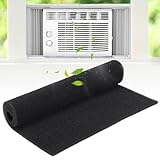
Overview: This 15.7" x 27.6" carbon foam filter roll offers a more manageable size for households needing cut-to-fit pre-filtration. The charcoal-impregnated foam captures large particles, pet hair, and odors while protecting primary filters in window AC units, air purifiers, and other appliances. At 5/16" thick, it provides substantial filtration without excessive airflow restriction.
What Makes It Stand Out: The compact roll size suits smaller households or single-unit applications, reducing waste compared to larger sheets. Its activated carbon formulation targets both particulate matter and gaseous pollutants like smoke and VOCs. The 5/16" thickness strikes an ideal balance between capture efficiency and airflow, while the universal cut-to-fit design eliminates size compatibility issues.
Value for Money: Typically priced at $10-12, this roll can create 2-3 standard filters at roughly $4 per unit. This represents 50% savings over monthly disposable pre-filters. The 1-2 month replacement cycle ensures consistent performance, though careful cleaning can extend usability. For single-unit households, this size prevents material waste while maintaining cost-effectiveness.
Strengths and Weaknesses: Strengths include optimal size for small households, odor-reducing carbon layer, substantial thickness, universal compatibility, and washable reuse. Weaknesses involve required rebound period after unpacking, limited to large particle pre-filtration, carbon dust potential, and monthly replacement recommendation that may deter some users. Single-roll packaging lacks backup supply.
Bottom Line: Perfect for apartment dwellers or single-room applications needing odor and particle pre-filtration. The smaller dimensions reduce storage concerns while delivering the same carbon benefits as larger versions. Plan for the rebound period and monthly maintenance. Excellent supplement to existing filtration systems, particularly in pet-friendly or smoking households where odor control is prioritized.
10. SDRZJX 2-Pack MERV-8 Washable Air Filter Kit 10-3/4 X 8-3/4 Inch Compatible with Broan Nutone AI Series Ventilators B110H65RS B110H65RT Replace#: SV66133

Overview: The SDRZJX 2-Pack MERV-8 Filter Kit provides aftermarket replacement filters for Broan, Nutone, Venmar, and VanEE HRV/ERV systems. Measuring 10-3/4" x 8-3/4", this kit includes one flat green MERV 8 filter and one uniquely arched bent filter. The sturdy frame maintains shape through multiple cleaning cycles, capturing dust, lint, and pet hair while preserving system efficiency.
What Makes It Stand Out: This kit boasts exceptional compatibility across multiple HRV brands and models, covering extensive Broan/Nutone AI series plus Venmar and VanEE equivalents. The arched bent filter design increases surface area for better particle capture and airflow distribution. The robust frame construction prevents warping during washing, ensuring consistent performance through repeated use cycles.
Value for Money: At $18-22 for two filters, this aftermarket kit undercuts OEM pricing by 25-30% while maintaining MERV 8 performance. Covering 20+ specific model numbers maximizes value for multi-unit properties or uncertain model identification. With proper washing, each filter serves 6-12 months, delivering annual costs below disposable alternatives while providing superior filtration.
Strengths and Weaknesses: Strengths include broad model compatibility, MERV 8 rating, durable non-warping frame, increased surface area on bent filter, and significant cost savings over OEM. Weaknesses involve aftermarket status potentially voiding warranties, slightly less precise fit than OEM in some units, and requires careful washing to maintain MERV rating. Limited to specific HRV/ERV dimensions.
Bottom Line: Outstanding alternative to expensive OEM filters for compatible HRV/ERV systems. The extensive compatibility list and durable construction make it a smart choice for cost-conscious homeowners. Performance matches OEM specifications at a fraction of the price. Verify exact model numbers before purchasing, and follow washing instructions carefully. Highly recommended for those comfortable with aftermarket parts.
Why Washable AC Filters Are the Future of Sustainable Home Cooling
Washable AC filters represent a fundamental shift in how we approach indoor climate control and environmental responsibility. Unlike their disposable counterparts that contribute to thousands of tons of landfill waste annually, reusable filters can last five to ten years with proper care. This longevity translates into significant resource conservation, from the raw materials used in manufacturing to the energy consumed in production and distribution cycles. For eco-conscious homeowners, this single change creates a ripple effect of positive environmental impact while maintaining—or even improving—air filtration performance.
The financial benefits are equally compelling. While the initial investment is higher, a quality washable filter kit typically pays for itself within 12-18 months when you factor in the cost of monthly disposable replacements. Over its lifetime, you could save hundreds of dollars that would otherwise be spent on single-use filters. This combination of ecological and economic advantages makes washable filters an essential component of any truly sustainable home design.
The Hidden Environmental Cost of Disposable Filters
Most homeowners don’t realize that standard disposable filters contain non-biodegradable synthetic fibers and plastic frames that can persist in landfills for centuries. Each year, millions of these filters are discarded, creating a waste stream that’s completely avoidable. Washable filters eliminate this cycle entirely, reducing your household’s carbon footprint and aligning with zero-waste lifestyle principles.
Long-Term ROI for Budget-Conscious Families
When you calculate the cumulative cost of purchasing disposable filters every 30-90 days, the math becomes clear. A family spending $15-25 per filter every two months will invest $90-150 annually. A durable washable system, priced between $50-120, becomes a net financial win by the second year while continuing to deliver value for years beyond.
Understanding MERV Ratings and Washable Filter Performance
MERV (Minimum Efficiency Reporting Value) ratings are the industry standard for measuring filter effectiveness, and they’re crucial when evaluating washable options. These ratings range from 1 to 20, with higher numbers indicating finer filtration capability. For residential eco-friendly homes, the sweet spot typically falls between MERV 8 and MERV 13, capturing everything from pollen and dust mites to mold spores and pet dander without overtaxing your HVAC system.
It’s important to note that not all washable filters achieve the same MERV ratings as disposables, but 2026’s advanced manufacturing techniques have closed this gap significantly. Modern electrostatic washable filters can now reach MERV 11-13 ratings, making them suitable for households with allergy sufferers or respiratory sensitivities while maintaining excellent airflow.
Balancing Filtration and Energy Efficiency
Higher MERV ratings aren’t always better. Filters that are too dense can restrict airflow, forcing your HVAC system to work harder and consume more energy—counteracting your eco-friendly goals. The key is finding a washable filter that offers high filtration efficiency without creating excessive pressure drop. Look for designs that specifically advertise optimized airflow characteristics alongside their MERV rating.
Testing Standards to Trust
Reputable manufacturers submit their washable filters to independent testing through organizations like ASHRAE or AHAM. These certifications ensure that the MERV rating advertised is accurate and consistent across the product’s lifespan. Always verify that any filter you’re considering has documented third-party testing rather than just manufacturer claims.
Key Features to Look for in 2026’s Washable Filter Kits
The latest generation of washable AC filters includes features that make maintenance easier and performance more reliable than ever before. Antimicrobial treatments infused directly into the filter media prevent bacterial and mold growth during humid months, a common concern with reusable filters. Reinforced aluminum or stainless steel frames resist corrosion and warping, ensuring a tight seal that prevents unfiltered air from bypassing the system.
Some cutting-edge kits now incorporate color-changing indicators that visually signal when cleaning is required, taking the guesswork out of maintenance schedules. Others include proprietary coating technologies that enhance dust capture while making the washing process more effective. When shopping for your 2026 upgrade, prioritize these advanced features that extend both convenience and longevity.
Frame Construction and Durability
The frame is the backbone of any washable filter. Cheap plastic frames may crack after repeated washings, while quality metal frames with reinforced corners maintain their shape for years. Look for powder-coated finishes that resist rust and include sturdy handles for easy removal and installation.
Media Layer Technology
Multi-layer filter media represents the gold standard in 2026. These systems combine a pre-filter layer for large particles, an electrostatic core for fine contaminants, and sometimes a carbon layer for odor control. This graduated filtration approach maximizes efficiency while making cleaning more straightforward, as each layer can be addressed separately.
Material Matters: Comparing Washable Filter Media Types
Not all washable filter materials perform equally, and understanding the differences is critical for matching a filter to your specific needs. Polyester mesh is the most common and affordable option, offering good durability and decent filtration for general household use. These filters typically achieve MERV 8-10 ratings and are ideal for homes without severe allergy concerns.
For superior performance, consider filters made from woven polypropylene or proprietary synthetic blends. These materials can achieve higher MERV ratings while remaining highly washable. Some premium options use a combination of electrostatically charged fibers that actively attract particles like a magnet, dramatically improving capture rates without increasing density.
Electrostatic vs. Mechanical Filtration
Electrostatic washable filters use static charge to attract particles, making them highly effective for their density. However, this charge can diminish over time and with washing. Mechanical filters rely purely on physical barrier filtration and maintain consistent performance throughout their lifespan. Many 2026 hybrid designs combine both principles for optimal results.
Antimicrobial and Antiviral Additives
Advanced filter media now incorporates permanent antimicrobial agents that don’t wash away. These additives inhibit the growth of microorganisms that can thrive on accumulated debris. For households prioritizing health alongside sustainability, this feature provides an extra layer of protection that’s particularly valuable during flu season or in humid climates.
Sizing and Compatibility: Getting the Perfect Fit
An improperly sized filter is worse than no filter at all, as gaps around the edges allow unfiltered air to circulate through your system. Standard sizes like 16x20, 20x25, and 14x24 inches are readily available, but many eco-friendly homes use custom or unusual dimensions. Before purchasing any washable kit, measure your existing filter slot precisely—length, width, and depth—to ensure a snug fit.
Check your HVAC system’s specifications for maximum recommended filter thickness. While most residential systems accommodate 1-inch filters, some high-efficiency units are designed for 4-inch or even 6-inch filters, which offer more surface area and longer intervals between cleanings. Never force a thicker filter into a system not designed for it, as this can cause serious damage.
Measuring Your Filter Slot Correctly
Remove your current filter and measure the actual slot dimensions, not just the filter itself. Add 1/8-inch to your measurements for a proper fit that allows easy insertion and removal. If your slot is an odd size, many manufacturers offer custom sizing services for their washable filters.
System Compatibility Checkpoints
Verify that your HVAC system’s blower motor can handle the static pressure of a washable filter. Older units may struggle with denser filters. Consult your system’s manual or an HVAC professional before upgrading, especially if your unit is more than 10 years old. Some modern washable kits include pressure relief features specifically designed for older systems.
Installation Made Simple: What to Expect
Quality washable AC filter kits are engineered for homeowner-friendly installation, requiring no special tools or professional assistance. Most designs feature universal orientation arrows that indicate proper airflow direction, eliminating common installation errors. The process typically takes less than two minutes: remove the old disposable filter, slide the washable filter into place with the arrow pointing toward the blower motor, and secure any retaining clips.
Some premium kits include installation accessories like flexible foam gaskets that create an airtight seal around the filter frame, preventing bypass air. These gaskets are particularly valuable in systems with slightly oversized filter slots or in homes where maximum filtration efficiency is paramount. The best kits also provide clear, laminated instruction cards that you can keep near your HVAC unit for quick reference.
Directional Flow Indicators
Understanding airflow direction is crucial for filter performance. The arrow printed on the filter frame must point toward the blower motor and away from the return air duct. Installing backward reduces efficiency and can cause the filter media to load unevenly, shortening its effective lifespan between cleanings.
Sealing and Bypass Prevention
Even a perfectly sized filter can allow air to bypass around the edges if the slot isn’t properly sealed. Quality kits include compressible foam tape or brush seals that adhere to the filter frame, filling any gaps. This simple addition can improve overall system efficiency by 15-20% by ensuring all air passes through the filter media.
Maintenance Routines for Maximum Longevity
The key to maximizing both performance and lifespan is establishing a consistent cleaning schedule based on your home’s specific conditions. For most households, cleaning every 30-60 days during peak cooling and heating seasons is sufficient. However, homes with pets, smokers, or high dust levels may require monthly maintenance. The beauty of washable filters is that you can clean them as often as needed without incurring additional costs.
Develop a simple maintenance calendar that aligns with other household tasks. Many eco-conscious homeowners clean their filters on the first of each month or coordinate with utility bill cycles as a reminder. The actual cleaning process is straightforward: rinse with water, apply a mild detergent if needed, gently agitate to remove embedded debris, and allow to dry completely before reinstallation.
The Proper Washing Technique
Never use high-pressure water, which can damage delicate filter fibers. Instead, use a gentle stream from a shower head or garden hose with a spray nozzle set to low pressure. Wash from the clean side out to push debris away from the filter media. For heavily soiled filters, soak in a solution of warm water and mild dish soap for 15 minutes before rinsing.
Drying Protocols to Prevent Mold
Complete drying is non-negotiable. Even slightly damp filters can harbor mold and mildew, which then circulate through your home. Allow at least 24 hours of air drying in a well-ventilated area. Some homeowners keep a second washable filter on hand to rotate during cleaning, ensuring their system never runs without filtration while the primary filter dries.
Cost Analysis: Long-Term Savings Breakdown
When evaluating the true cost of washable filters, look beyond the initial purchase price to the total cost of ownership over a five-year period. A quality washable filter kit priced at $80-120 will replace 30-60 disposable filters during that timeframe, representing $450-900 in savings on filter purchases alone. Factor in reduced waste disposal costs and the environmental dividend, and the value proposition becomes undeniable.
Energy savings add another layer of financial benefit. A clean, properly maintained washable filter maintains optimal airflow, reducing the workload on your HVAC blower motor. This efficiency gain typically translates to 3-5% reduction in cooling and heating costs, which can amount to $50-150 annually depending on your climate and energy rates.
Hidden Costs of Disposable Filters
Beyond the purchase price, disposable filters incur indirect costs. The time spent purchasing and storing replacement filters, the fuel for trips to the hardware store, and the environmental guilt of contributing to landfill waste all have value. Washable filters eliminate these intangible costs while providing superior peace of mind.
ROI Timeline for Different Households
Single-person households without pets might see full ROI in 18-24 months, while large families with multiple pets could break even in under a year due to more frequent disposable filter changes. The ROI calculation should also include the extended lifespan of your HVAC equipment, as cleaner operation reduces wear and tear on critical components.
Environmental Impact: Beyond Just Reusability
The sustainability benefits of washable filters extend far beyond reducing landfill waste. Manufacturing a single long-lasting washable filter requires fewer raw materials and less energy than producing dozens of disposables. The carbon footprint associated with packaging, transportation, and retail distribution is dramatically lower when you purchase one product instead of many over several years.
Many eco-conscious manufacturers now use recycled materials in their filter frames and incorporate biodegradable packaging for their kits. Some even offer take-back programs at the end of the filter’s life, ensuring the materials are properly recycled rather than discarded. When selecting your filter, investigate the company’s full environmental commitment, not just the reusability of the product itself.
Water Usage Considerations
A common concern is whether the water used for cleaning offsets the environmental benefits. The reality is that cleaning a filter uses approximately 5-10 gallons of water every two months—far less than the water footprint of manufacturing and disposing of multiple disposable filters. Using captured rainwater or greywater for cleaning can further reduce this impact.
Lifecycle Assessment Data
Independent lifecycle analyses show that washable filters generate 85-90% less environmental impact over a five-year period compared to disposable alternatives. This calculation includes manufacturing, transportation, use, and end-of-life disposal, making washable filters one of the highest-impact eco-upgrades you can make for your home.
Common Mistakes to Avoid When Switching to Washable Filters
Transitioning from disposable to washable filters involves a learning curve, and several common pitfalls can undermine your experience. The most frequent error is inadequate cleaning frequency—treating a washable filter like a permanent filter that never needs attention. This leads to restricted airflow, reduced efficiency, and potential HVAC strain. Another mistake is using harsh chemicals or pressure washers that degrade the filter media and reduce its effectiveness.
Improper drying is another critical error that can introduce mold into your system. Never reinstall a filter that feels even slightly damp to the touch. Additionally, some homeowners make the mistake of purchasing based solely on price, opting for bargain filters with weak frames that warp after a few wash cycles, creating bypass gaps that defeat the purpose of filtration.
Overcleaning and Media Degradation
While regular cleaning is essential, excessive washing can wear down filter fibers. If you clean more frequently than necessary, you may reduce the filter’s lifespan. Find the sweet spot for your home’s conditions rather than defaulting to weekly cleanings out of an abundance of caution.
Ignoring System Compatibility
Installing a high-MERV washable filter in an older HVAC system not designed for the resistance can cause blower motor failure or frozen coils. Always check your system’s specifications or consult a professional. Some systems may require a system upgrade or modification to accommodate premium washable filters safely.
Smart Features and IoT Integration in Modern Filter Kits
The integration of smart technology into washable AC filters represents one of the most exciting developments for 2026. Embedded pressure sensors can monitor airflow restriction in real-time, sending alerts to your smartphone when cleaning is needed based on actual performance rather than calendar estimates. Some systems even integrate with whole-home energy monitors to show you exactly how filter condition impacts your HVAC efficiency.
LED indicator lights built directly into the filter frame provide at-a-glance status updates, glowing green when the filter is clean and functioning optimally, yellow when performance is degrading, and red when immediate cleaning is required. These visual cues are especially helpful for households where multiple family members share maintenance responsibilities.
App Connectivity and Data Tracking
Advanced filter kits now pair with mobile apps that track cleaning cycles, monitor indoor air quality trends, and provide personalized maintenance recommendations based on your home’s specific particle load. This data helps you optimize cleaning schedules and can even alert you to unusual air quality events like nearby wildfires or high pollen days.
Integration with Smart Home Ecosystems
Leading washable filter systems can now communicate with smart thermostats like Nest or Ecobee, automatically adjusting fan cycles when the filter detects increased resistance. This synergy maximizes both filtration effectiveness and energy efficiency, creating a truly intelligent home climate control system that adapts to real-time conditions.
Health Benefits for Allergy Sufferers
For individuals with allergies, asthma, or other respiratory conditions, washable filters offer unique health advantages beyond standard filtration. The ability to clean filters more frequently without cost penalty means you can maintain peak allergen capture continuously during high-pollen seasons. This is particularly beneficial in spring and fall when allergen levels fluctuate dramatically.
The consistent performance of quality washable filters ensures that allergen levels remain low throughout the filter’s life, unlike disposable filters that degrade in efficiency as they load up. Some advanced washable filters also incorporate activated carbon layers that remove volatile organic compounds (VOCs) and odors, creating a more comprehensive air purification solution that benefits sensitive individuals.
Capturing the Smallest Particles
While early washable filters struggled with particles smaller than 10 microns, 2026’s electrostatic and multi-layer designs effectively capture particles as small as 0.3 microns. This includes many bacteria, fine dust, and smoke particles that trigger respiratory symptoms. For severe allergy sufferers, pairing a high-MERV washable filter with a standalone HEPA air purifier creates a layered defense strategy.
Maintaining Consistent Air Quality
Disposable filters lose efficiency as they load with debris, meaning air quality actually worsens just before you change them. Washable filters, cleaned on a regular schedule, maintain consistent performance. This predictability is invaluable for health management, allowing you to breathe easier knowing your filtration isn’t gradually failing between maintenance cycles.
Warranty and Support Considerations
A robust warranty signals manufacturer confidence in their washable filter’s durability and performance. Leading brands now offer 5-10 year warranties that cover frame integrity, media performance, and even include replacement if the filter fails to maintain its rated MERV level after repeated washings. This protection ensures your investment is secure and provides recourse if the product doesn’t perform as advertised.
Customer support quality is equally important. Companies that specialize in washable filters typically offer detailed cleaning guides, video tutorials, and responsive customer service to help you troubleshoot any issues. Some even provide maintenance reminder services via email or text, helping you protect your investment through proper care.
What Warranties Should Cover
Read warranty terms carefully. Quality warranties cover manufacturing defects, frame warping, and media degradation under normal use. They should also specify the expected number of wash cycles (typically 100-150) before performance begins to decline. Be wary of warranties with excessive exclusions or requirements for professional cleaning.
Support Resources to Look For
The best manufacturers maintain online knowledge bases with FAQs, cleaning demonstration videos, and downloadable maintenance schedules. Some offer live chat support during business hours and active user communities where you can exchange tips with other eco-conscious homeowners. This ecosystem of support dramatically improves the ownership experience.
Seasonal Adjustments and Performance Optimization
Your washable filter’s performance needs vary throughout the year, and adjusting your maintenance strategy accordingly maximizes both efficiency and lifespan. During high-use summer months, check your filter every three weeks, as increased air conditioning cycles pull more debris through the system. In mild spring and fall seasons, you might extend cleaning intervals to 8-10 weeks when the system runs less frequently.
Winter presents unique challenges, as heating cycles can dry out filter media, making it more brittle. Handle filters gently during cold months and consider slightly more frequent light cleanings rather than aggressive deep cleanings. For homes in wildfire-prone areas, keep a spare filter on hand during fire season, as you may need to clean weekly when smoke events occur.
Preparing for Peak Allergy Seasons
Mark your calendar to clean filters 2-3 days before expected high pollen counts in your area. This proactive approach ensures maximum filtration when you need it most. Many weather apps now include pollen forecasts, making it easier to time your maintenance for optimal allergy relief.
Winter Heating Considerations
Heating systems often recirculate more indoor air, concentrating dust and pet dander. Increase cleaning frequency during winter months and consider running your fan on low continuously to maintain air circulation through the filter, even when heating cycles are less frequent. This maintains consistent air quality despite reduced system operation.
Making the Transition: A Step-by-Step Guide
Switching to washable filters requires more than just buying a product—it involves changing your maintenance mindset and establishing new routines. Start by purchasing your washable filter during a mild weather month when you can afford a day without filtration if needed. Clean your HVAC system’s filter slot thoroughly before installation, vacuuming out any dust accumulation that could contaminate your new filter.
Run your system with the new washable filter for one week, then check it to establish a baseline for how quickly it loads in your specific environment. This initial observation period helps you calibrate a realistic cleaning schedule. Document the installation date and set up digital reminders for your first few cleaning cycles until the routine becomes habitual.
The First 90 Days: Establishing Your Baseline
During the first three months, inspect your filter every two weeks to understand your home’s particle load. Take photos to track accumulation patterns. This data helps you determine whether you need to adjust your cleaning schedule and provides valuable insight into your indoor air quality trends.
Building a Maintenance Ritual
Integrate filter cleaning into existing household routines. Some homeowners clean filters on the same day they pay monthly bills; others coordinate with lawn watering or other regular tasks. The key is consistency. Store cleaning supplies—mild detergent, a soft brush, and drying racks—in a designated spot to streamline the process.
Frequently Asked Questions
How often should I realistically clean my washable AC filter?
Most homes need cleaning every 30-60 days during active heating/cooling seasons, but pet owners or allergy sufferers may need monthly maintenance. Check your filter monthly for the first year to establish your home’s specific pattern.
Will switching to a washable filter void my HVAC warranty?
No, using a properly sized and maintained washable filter will not void your warranty. In fact, keeping filters clean helps your system run more efficiently. Just ensure the filter’s MERV rating doesn’t exceed your system’s specifications.
Can I use my garden hose to clean the filter?
Yes, but use a gentle spray setting, not high pressure. High-pressure water can damage the filter media. A shower head on a flexible hose often provides the perfect pressure for thorough but safe cleaning.
How do I know if my washable filter is completely dry?
The filter should feel completely dry to the touch with no cool spots. Allow at least 24 hours of air drying in a well-ventilated area. When in doubt, wait another few hours—installing even a slightly damp filter risks mold growth.
What’s the typical lifespan of a quality washable filter?
With proper care, expect 5-10 years of service. Premium filters with metal frames and reinforced media often last the full decade, while budget options may need replacement after 5-7 years of regular use.
Are washable filters as effective as high-end disposable filters?
Modern washable filters with MERV 11-13 ratings perform comparably to premium disposables for most residential needs. They may capture slightly fewer ultra-fine particles (0.3-1 micron) but excel at the larger particles that affect most allergy and asthma sufferers.
Can I put my washable filter in the dishwasher?
Never use a dishwasher. The high heat and harsh detergents will destroy the filter media and any electrostatic properties. Always hand wash with mild soap and lukewarm water as directed by the manufacturer.
What should I do if my filter gets damaged?
Small tears can sometimes be repaired with filter-specific mending kits, but significant damage compromises performance. Contact the manufacturer—many offer discounted replacement programs within the warranty period, even for user-caused damage.
Do washable filters work with heat pumps and mini-splits?
Yes, but ensure you’re purchasing the correct type. Heat pumps and ductless systems often require specialized filter designs. Check your system’s manual or consult with the filter manufacturer to confirm compatibility before purchasing.
How do I dispose of a washable filter at the end of its life?
Many manufacturers have recycling programs for their metal frames. The filter media itself is typically not recyclable due to the embedded particles. Contact your local waste management authority for guidance, or return it to the manufacturer if they offer an end-of-life take-back program.
See Also
- 10 Must-Have Washable AC Filter Kits for Sustainable Homes in 2026
- 10 Best Value Washable AC Filter Kits for Long-Term Savings in 2026
- 10 Most Durable Washable AC Filter Kits Based on Real User Reviews in 2026
- 10 Best Value AC Filter Kits for Large Homes in 2026
- 10 Best AC Filter Kits for Improved Indoor Air Quality This Year