Table of Contents
Imagine staring at your thermostat app while stuck in traffic, realizing you forgot to adjust the AC before leaving home. The thought of arriving to a sweltering house – or worse, wasting energy cooling empty rooms – is enough to make anyone sweat. As global temperatures climb and home automation becomes less of a luxury and more of a necessity, the humble window air conditioner is undergoing a remarkable transformation. No longer just a box humming in the pane, today’s smart window units are evolving into intelligent climate guardians, seamlessly integrating with the connected ecosystems we rely on daily. They promise not just cool air, but control, efficiency, and peace of mind that adapts to your life, not the other way around.
This shift isn’t merely about convenience; it’s a response to real-world challenges. Rising energy costs demand smarter consumption, unpredictable weather patterns require responsive climate management, and our increasingly mobile lives demand appliances that keep pace. Smart window air conditioners are stepping up, moving far beyond basic on/off commands. They’re leveraging AI for predictive cooling, integrating deeply with voice assistants and security systems, and providing granular data to help homeowners understand and optimize their energy use like never before. Choosing the right one, however, requires understanding the nuances of this rapidly evolving technology landscape – it’s about finding the intelligent features that genuinely enhance your home life without adding unnecessary complexity.
Top 10 Smart Window Air Conditioners
Detailed Product Reviews
1. Midea 10,000 BTU U Shaped Smart Inverter Window Air Conditioner - Cools 450 Sq Ft, Ultra Quiet with Open Window Flexibility - Alexa/Google Assistant Compatible - 35% Energy Savings, Remote (Updated)
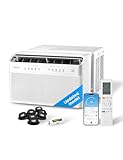
Overview:
This ENERGY STAR-certified 10,000 BTU smart inverter AC cools spaces up to 450 sq. ft. Its innovative U-shaped design enables unique functionality while prioritizing quiet operation and energy efficiency for mid-sized rooms.
What Makes It Stand Out:
The U-shape design is revolutionary, allowing windows to remain partially open for fresh air and unobstructed views—unlike traditional units. It’s exceptionally quiet (32 dBA, 10x quieter than conventional models) and achieves 35%+ energy savings via inverter technology. Full smart integration (app, Alexa, Google Assistant) and an anti-theft window lock add significant convenience and safety.
Value for Money:
Priced higher than basic units, it justifies cost through long-term savings (35%+ on energy bills) and premium features. ENERGY STAR certification ensures verified efficiency, while the smart controls and open-window flexibility offer utility absent in competitors at similar price points.
Strengths and Weaknesses:
Strengths: Ultra-quiet operation; open-window capability; robust smart features; significant energy savings; easy installation bracket. Weaknesses: Higher upfront cost; R32 refrigerant may complicate servicing; requires Wi-Fi for full functionality.
Bottom Line:
Ideal for tech-savvy users prioritizing quiet, efficiency, and fresh-air access in medium rooms. The premium price delivers exceptional long-term value and innovation, making it a top-tier choice despite the initial investment.
2. Amazon Basics 6000-BTU Window Air Conditioner, Up to 250 Sqf, Window AC Units with Cool and Fan Functions, Washable Filter, Adjustable Window Kit, Digital Temperature Display, Remote Control, White

Overview:
A budget-friendly 6,000 BTU window AC designed for rooms up to 250 sq. ft., offering essential cooling and fan functions with straightforward mechanical operation for small spaces like bedrooms or offices.
What Makes It Stand Out:
Its simplicity and affordability stand out, featuring a washable filter for easy maintenance, 7 temperature settings, and a digital display. The adjustable window kit ensures compatibility with most standard windows, and the included remote adds basic convenience without smart complexity.
Value for Money:
An excellent value for cost-conscious buyers needing reliable, no-frills cooling. It undercuts smart/inverter models significantly while covering core needs—cooling, fan modes, and filter maintenance—making it perfect for occasional use or secondary spaces.
Strengths and Weaknesses:
Strengths: Very affordable; simple installation; washable filter; quiet enough (56 dB) for sleep; remote control. Weaknesses: No smart features; limited to 250 sq. ft.; basic mechanical controls; higher noise than inverter models.
Bottom Line:
A practical, economical solution for small rooms where smart features or ultra-quiet operation aren’t priorities. Highly recommended for renters or budget-focused users needing dependable basic cooling.
3. Midea 8,000 BTU U Shaped Smart Inverter Window Air Conditioner - Cools 350 Sq Ft, Ultra Quiet with Open Window Flexibility - Alexa/Google Assistant Compatible - 37% Energy Savings, Remote (Updated)
Overview:
This 8,000 BTU smart inverter AC targets spaces up to 350 sq. ft., combining Midea’s signature U-shaped design with ENERGY STAR efficiency and 37%+ energy savings for compact living areas.
What Makes It Stand Out:
The U-shape enables open-window ventilation and view preservation—a rarity in window ACs—while inverter technology ensures whisper-quiet operation (32 dBA) and class-leading 37% energy reduction. Smart app/voice control and anti-theft window locking further differentiate it from conventional units.
Value for Money:
Though pricier than non-inverter models, its energy savings (37%+) and durability offset the cost over time. The smart features and open-window flexibility provide unique utility, justifying the investment for efficiency-focused users in smaller-medium rooms.
Strengths and Weaknesses:
Strengths: Unmatched quietness; open-window access; 37%+ energy savings; seamless smart integration; easy installation. Weaknesses: Premium cost; R32 refrigerant limitations; overkill for very small rooms.
Bottom Line:
The best choice for eco-conscious consumers in 250–350 sq. ft. spaces who value quiet operation, fresh air access, and smart controls. A worthwhile upgrade from standard ACs despite the higher price.
4. Midea 12,000 BTU U Shaped Smart Inverter Window Air Conditioner - Cools 550 Sq Ft, Ultra Quiet with Open Window Flexibility - Alexa/Google Assistant Compatible - 35% Energy Savings, Remote (Updated)
Overview:
A powerful 12,000 BTU smart inverter AC engineered for larger rooms up to 550 sq. ft., leveraging Midea’s U-shaped design to deliver quiet, efficient cooling with window-open flexibility.
What Makes It Stand Out:
It uniquely combines high-capacity cooling (550 sq. ft.) with the U-shape’s open-window advantage and inverter-driven quietness (32 dBA). Achieving 35%+ energy savings despite its power, it retains full smart compatibility and anti-theft security—uncommon in large-room window units.
Value for Money:
Commands a premium but offers elite efficiency (ENERGY STAR certified) and smart features scaled for bigger spaces. Long-term energy savings and the absence of comparable open-window-capable competitors justify the cost for spacious areas.
Strengths and Weaknesses:
Strengths: Powerful yet efficient; open-window functionality; ultra-quiet; robust smart controls; clean filter indicator. Weaknesses: Highest price in the lineup; heavy unit; installation may challenge DIYers.
Bottom Line:
The definitive solution for large rooms needing potent, quiet, and energy-smart cooling without sacrificing fresh air access. A premium investment that delivers unmatched versatility for its class.
5. Amazon Basics 5000-BTU Small Window Air Conditioner, Up to 150 Sqf, Window AC Units with Cool and Fan Functions, Washable Filter, Adjustable Window Kit, Intuitive Mechanical Controls, White

Overview:
This entry-level 5,000 BTU AC is tailored for very small spaces (up to 150 sq. ft.), providing basic cooling and fan modes with minimal-frills mechanical controls for closets, tiny bedrooms, or offices.
What Makes It Stand Out:
Its compact size, affordability, and plug-and-play simplicity cater to ultra-small rooms where larger units would be inefficient. The washable filter and adjustable window kit ensure easy setup and maintenance without smart tech overhead.
Value for Money:
Exceptional value for minimal cooling needs. Costs significantly less than smart or higher-BTU models while reliably serving its niche—ideal for temporary use, rentals, or supplementary cooling where advanced features are unnecessary.
Strengths and Weaknesses:
Strengths: Extremely affordable; simple mechanical controls; lightweight; easy installation; quiet enough (56 dB) for small spaces. Weaknesses: No remote/smart features; limited to 150 sq. ft.; basic functionality only.
Bottom Line:
Perfect for cooling compact areas on a tight budget. Highly recommended for dorms, tiny rooms, or as a secondary unit where no-nonsense, economical performance is key. Skip if you need smart features or larger coverage.
6. Smart 6000 BTU Window Air Conditioner with WiFi, Window AC Unit with Remote & App Control, Timer Function & Easy Install Kit, for Rooms Up to 350 Square Feet, 115V/60Hz, White

Overview:
This smart 6000 BTU window AC unit targets small to medium rooms (up to 350 sq ft) with WiFi connectivity, app/voice control, and multi-functional cooling. Designed for bedrooms or offices, it emphasizes quiet operation and user-friendly maintenance.
What Makes It Stand Out:
Its standout feature is seamless SmartHQ app integration, enabling remote temperature adjustments and compatibility with Alexa/Google Assistant. The ultra-quiet 50 dB operation and automatic sleep mode (gradually raising temperature overnight) enhance comfort. The slide-out washable filter simplifies cleaning without disassembly, while triple functionality (cooling, dehumidification, fan) adds versatility.
Value for Money:
Priced competitively for a smart AC, it justifies cost through long-term energy savings from precise app-controlled scheduling and efficient cooling. The included easy-install kit and robust feature set undercut pricier smart alternatives, though non-smart models may be cheaper upfront.
Strengths and Weaknesses:
Strengths: Reliable app control; exceptionally quiet; easy filter access; covers larger rooms (350 sq ft) than rivals; simple installation. Weaknesses: WiFi setup can be finicky; dehumidification mode is less powerful than dedicated units; no eco-mode for energy conservation.
Bottom Line:
Ideal for tech-savvy users seeking quiet, app-controlled cooling for rooms up to 350 sq ft. Its ease of use and strong feature set make it a top smart AC pick despite minor connectivity quirks.
7. LG 6000 BTU Window Air Conditioner[2024 New] Remote Control, WiFi Enabled works with LG ThinQ, Alexa, Hey Google, Washable Filer Ultra-Quiet Cools Small Room up to 250 Sq.Ft AC Unit White LW6024RSMX
![LG 6000 BTU Window Air Conditioner[2024 New] Remote Control, WiFi Enabled works with LG ThinQ, Alexa, Hey Google, Washable Filer Ultra-Quiet Cools Small Room up to 250 Sq.Ft AC Unit White LW6024RSMX](https://m.media-amazon.com/images/I/413TfrPt3wL._SL160_.jpg)
Overview:
LG’s 2024 WiFi-enabled 6000 BTU unit cools spaces up to 250 sq ft, targeting small bedrooms or offices. It combines LG ThinQ app control, voice compatibility, and user-focused design for accessible smart cooling.
What Makes It Stand Out:
The LG ThinQ ecosystem integration offers refined app functionality (like usage tracking) beyond basic controls. Its standout trait is the intuitive LCD panel with physical buttons—a rarity in smart ACs—ensuring usability during WiFi outages. The EZ Mount kit simplifies installation in double-hung windows (21–35" width).
Value for Money:
Premium pricing aligns with LG’s reliability and the convenience of dual control (app + physical panel). While covering smaller rooms (250 sq ft) than competitors, the R32 eco-friendly refrigerant and 30-day filter alerts justify costs for eco-conscious buyers seeking longevity.
Strengths and Weaknesses:
Strengths: Physical control panel backup; seamless ThinQ/Alexa integration; R32 refrigerant; straightforward filter access. Weaknesses: Limited to 250 sq ft coverage; slightly louder (52 dB) than rivals; app occasionally lags during peak use.
Bottom Line:
A dependable choice for LG ecosystem users prioritizing physical controls alongside smart features. Best for compact rooms under 250 sq ft, though larger spaces require higher BTU models.
8. Windmill Window Air Conditioner - Quiet & Smart, Easy Install, Voice-Enabled, Remote & App Control AC Unit - 6,000 BTU

Overview:
Windmill’s 6000 BTU AC reimagines compact cooling with a focus on energy efficiency and angled airflow. Designed for rooms up to 300 sq ft, it targets eco-conscious users seeking quiet, tool-free installation.
What Makes It Stand Out:
Its unique 45° cooling angle distributes air more evenly than standard units, reducing hot spots. Double-insulating side panels minimize energy leakage—a rarity in this class. The Windmill Air app (rated highly for stability) and dual filtration (mesh + optional carbon filter) elevate air quality and convenience.
Value for Money:
Mid-range pricing is justified by significant energy savings from insulation and inverter-like efficiency. No-tools installation saves professional setup costs, while the carbon filter add-on (sold separately) enhances value for allergy sufferers. Beats generic brands in long-term utility savings.
Strengths and Weaknesses:
Strengths: Revolutionary angled airflow; best-in-class insulation; intuitive app; ultra-quiet (45 dB); tool-free setup. Weaknesses: Carbon filter is an extra purchase; app lacks geofencing; coverage maxes at 300 sq ft.
Bottom Line:
A standout for energy efficiency and innovative design. Highly recommended for medium rooms where quiet operation and lower bills are priorities, despite minor accessory limitations.
9. Hisense 6,000 BTU Smart Inverter Window Air Conditioner, 3 modes (Cooling, Fan, Dehumidifier), Easy Installation,Ultra Quiet, 24.5% more Energy Saving, 2 Years Warranty

Overview:
Hisense leverages inverter technology in this ENERGY STAR-certified 6000 BTU unit, promising 24.5% energy savings for rooms up to 250 sq ft. It targets budget-aware users seeking certified efficiency without sacrificing smart features.
What Makes It Stand Out:
The inverter compressor is its crown jewel—delivering consistent temperatures, whisper-quiet operation (<48 dB), and verified energy savings. ENERGY STAR certification and a rare 2-year warranty (vs. standard 1 year) underscore reliability. App control works smoothly with Alexa/Google.
Value for Money:
Exceptional value due to inverter efficiency cutting electricity bills long-term. The 2-year warranty reduces ownership risk, and straightforward installation lowers setup costs. Undercuts pricier inverter brands while matching their core benefits.
Strengths and Weaknesses:
Strengths: Industry-leading 24.5% energy savings; near-silent operation; strong warranty; easy filter removal. Weaknesses: App interface feels dated; dehumidifier mode is slow; room coverage (250 sq ft) trails competitors.
Bottom Line:
The top choice for energy conservation and durability. Perfect for small rooms where long-term savings outweigh basic app aesthetics, backed by a confidence-inspiring warranty.
10. Midea 5,000 BTU 150 Sq ft Mechanical Window Air Conditioner, Black (Renewed)

Overview:
This renewed Midea unit offers basic 5,000 BTU cooling for tiny spaces (up to 150 sq ft) with purely mechanical controls. Sold refurbished, it targets budget-focused buyers needing no-frills, reliable cooling for dorms or small offices.
What Makes It Stand Out:
As a renewed model, it delivers significant cost savings (typically 20–30% off new) with full functionality restored. Its simplicity—manual dials, no apps—ensures zero connectivity issues. Compact size fits narrow windows (23–36" wide), ideal for constrained spaces.
Value for Money:
Unbeatable value under $150. Renewed units undergo rigorous testing, making them safer than third-party refurbished options. While lacking smart features, the mechanical reliability and low price suit renters or secondary spaces where advanced tech is unnecessary.
Strengths and Weaknesses:
Strengths: Extremely affordable; zero learning curve; durable mechanical controls; quiet for its class (53 dB). Weaknesses: Limited to 150 sq ft; no remote/app; reduced lifespan vs. new units; only 90-day warranty.
Bottom Line:
A pragmatic solution for cooling very small rooms on a tight budget. Best for users prioritizing simplicity and cost over smart features, though new models are preferable for primary living spaces.
Why Smart Window AC is Essential in Modern Home Automation
The Convergence of Climate Control and Connected Living
Home automation is no longer confined to lights and locks; it’s fundamentally about creating environments that respond intuitively to our needs. Smart window air conditioners are a critical piece of this puzzle, acting as dynamic climate regulators within the connected home ecosystem. They move beyond isolated operation, communicating with other smart devices to create cohesive, responsive living spaces. Picture your AC automatically adjusting when your smart blinds detect intense afternoon sun, or powering down entirely when your security system confirms the house is empty. This level of contextual awareness transforms cooling from a manual chore into an integrated, intelligent home function.
Addressing Energy Challenges with Intelligence
Soaring energy bills and environmental concerns make efficient cooling non-negotiable. Modern smart window units tackle this head-on with sophisticated energy management features far beyond simple programmable timers. They utilize learning algorithms to understand your occupancy patterns, optimizing cooling schedules to avoid wasting power on empty rooms. Real-time energy monitoring provides actionable insights, showing exactly how much power your AC consumes during peak hours versus off-peak times. Some even integrate with utility provider programs to automatically adjust settings during grid stress events, potentially earning you rebates while contributing to grid stability. This intelligence turns your AC into a strategic tool for responsible energy consumption.
Enhancing Comfort Through Personalized Adaptation
True comfort isn’t just about a specific temperature; it’s about a personalized environment that adapts seamlessly. Smart window ACs leverage sensors and connectivity to achieve this. Advanced models incorporate humidity sensors alongside temperature readings, allowing them to manage perceived comfort more effectively – cooling less aggressively on dry days and focusing more on dehumidification during muggy spells. Geofencing capabilities use your smartphone’s location to start cooling just before you arrive home, ensuring perfect comfort the moment you walk in the door, without running unnecessarily all day. This shift from static settings to dynamic, personalized climate control represents a significant leap forward in home comfort.
Key Features That Define Modern Smart ACs
Core Connectivity Protocols and Ecosystem Compatibility
The foundation of any smart AC is its ability to communicate reliably. Understanding the connectivity landscape is crucial. Wi-Fi remains the most common, enabling direct control via smartphone apps and integration with broader home networks. However, newer standards like Matter over Thread are gaining significant traction, promising enhanced security, lower power consumption, and crucially, better interoperability across different smart home brands (like Apple Home, Google Home, and Amazon Alexa ecosystems). When evaluating options, prioritize units supporting the latest secure protocols to ensure long-term compatibility and avoid potential obsolescence as home automation standards evolve.
Advanced Control Interfaces Beyond the App
While smartphone apps are essential, the best smart ACs offer diverse control avenues. Robust voice control integration with major assistants (Alexa, Google Assistant, Siri via HomeKit) allows for hands-free adjustments – “Hey Google, set the living room to 72 degrees” is infinitely more convenient than fumbling for your phone. Physical interfaces on the unit itself remain important for basic operation during power fluctuations or network outages; look for intuitive displays and responsive buttons. Some models even offer limited control via wearable devices, adding another layer of seamless interaction for tech-savvy users.
Intelligent Scheduling and Adaptive Learning Capabilities
Gone are the days of rigid, one-size-fits-all schedules. The most valuable smart features involve adaptation. Units with true learning capabilities observe your manual adjustments over days or weeks, gradually building a schedule that aligns with your actual habits, not just your initial programming. Advanced scheduling goes beyond simple on/off times, allowing for nuanced routines – like slightly higher temperatures during typical work hours that automatically adjust downward 30 minutes before your estimated return time based on historical patterns. This adaptive intelligence minimizes manual intervention while maximizing comfort and efficiency.
Precision Climate Management Sensors
Effective smart cooling relies on accurate environmental awareness. Look beyond basic temperature sensors. Units incorporating multiple sensors – including precise humidity sensors and sometimes even occupancy/motion detection – gather richer data to make smarter decisions. High-quality humidity sensing is vital for managing muggy conditions effectively without overcooling, directly impacting perceived comfort and energy use. Some premium models even feature ambient light sensors to adjust operation based on sunlight intensity through the window, further refining the cooling strategy for optimal results.
Integration Capabilities Within Your Smart Home
Seamless Voice Assistant Synergy
Deep integration with voice platforms is non-negotiable for a truly smart experience. Evaluate how smoothly the AC works within your chosen ecosystem. Can you create custom voice commands beyond basic temperature changes? (e.g., “Alexa, activate movie night cooling”). Does it respond reliably even when other devices are active? Compatibility with routines is key – the ability to trigger AC adjustments as part of a larger “Good Morning” or “Leaving Home” routine significantly enhances the connected home experience. Ensure the integration feels native, not like a clunky add-on.
Triggering Actions with Other Smart Devices
The real power of home automation lies in devices working together. A smart window AC should be able to react to inputs from other sensors and systems. For instance, it could automatically activate when a smart window sensor detects the window is closed after cleaning, or increase cooling intensity if a smart thermostat in an adjacent room reports rising temperatures. Integration with smart vents can help balance temperatures across zones, while coordination with security systems enables full “away mode” energy savings. This level of interoperability transforms your AC from a standalone appliance into an active participant in your home’s automated ecosystem.
Utilizing Home Automation Platforms and Routines
Platforms like Apple Home, Google Home, and Samsung SmartThings act as central command centers. A well-integrated smart AC should appear as a native device within these platforms, allowing you to include it effortlessly in complex automations. Can you set up a routine where the AC turns on 15 minutes before your smart coffee maker starts, based on your alarm time? Or have it adjust based on local weather forecasts pulled into your home system? Robust platform integration unlocks the potential for highly personalized, context-aware climate control that anticipates your needs.
Critical Considerations for Energy Efficiency and Cost
Understanding True Energy Impact Beyond the SEER Rating
While the Seasonal Energy Efficiency Ratio (SEER) is a standard benchmark, smart features significantly influence real-world consumption. A unit with a slightly lower SEER but excellent occupancy-based scheduling and geofencing might outperform a higher-SEER model running constantly. Look for units that provide detailed energy usage reports within their apps, breaking down consumption by time of day or operational mode. This granular data is invaluable for identifying waste and optimizing settings. Remember, the smartest features are those that actively reduce runtime without sacrificing comfort.
Leveraging Off-Peak Energy Rates and Utility Programs
Many utilities offer time-of-use (TOU) pricing, where electricity costs vary significantly throughout the day. Smart ACs equipped with scheduling that accommodates these variable rates are essential for cost savings. The best units allow you to input your specific TOU schedule, automatically shifting intensive cooling to the cheapest off-peak hours whenever possible, while still maintaining baseline comfort. Furthermore, investigate compatibility with utility demand response programs; some smart ACs can receive signals during peak grid stress and temporarily adjust settings (within user-defined limits) in exchange for bill credits, turning energy conservation into direct savings.
The Long-Term Value of Data-Driven Optimization
The true efficiency payoff often comes over time through data analysis. Regularly reviewing the energy consumption patterns provided by your smart AC app reveals insights you’d never get from a traditional unit. You might discover that setting the temperature just 2 degrees higher between 2-5 PM saves significant energy with minimal comfort impact, or that running the fan longer after the compressor shuts off improves air circulation efficiently. This ongoing feedback loop empowers you to make increasingly informed adjustments, maximizing the return on your investment through continuous, data-backed optimization of your cooling strategy.
Navigating Installation and Practical Realities
Assessing Window Suitability and Unit Sizing
Smart features cannot compensate for a poorly sized or incorrectly installed unit. Accurate sizing based on room square footage, ceiling height, window orientation, and local climate is paramount – an oversized unit will short-cycle, wasting energy and failing to dehumidify properly, while an undersized one will struggle endlessly. Carefully measure your window opening against the unit’s required dimensions, including the necessary clearance for side panels and mounting brackets. Consider the window type (double-hung, sliding, casement) and ensure the unit’s design accommodates it securely. Don’t let smart capabilities distract from these fundamental physical requirements.
Understanding Smart Installation Requirements
Adding “smart” introduces new considerations. Ensure your home Wi-Fi signal is strong and stable at the window location – weak signals lead to unreliable control and missed schedules. Some units require a constant power source for the smart module, meaning they cannot be plugged into a standard switch-controlled outlet (a common setup for traditional window ACs). Verify the electrical circuit can handle the unit’s load, especially if other appliances share the circuit. Factor in the need for a secure, weatherproof installation; smart components don’t make the unit immune to water damage from improper sealing.
Managing Firmware Updates and Long-Term Support
Smart appliances are essentially computers, requiring regular firmware updates for security patches, bug fixes, and new features. Investigate the manufacturer’s track record: How frequently are updates released? How long is software support guaranteed? Is the update process seamless and automatic, or does it require user intervention? Poor update practices can leave your device vulnerable or render features obsolete quickly. Prioritize brands known for robust, long-term software commitment to ensure your investment remains secure, functional, and potentially even gains capabilities over its lifespan.
Future-Proofing Your Smart Cooling Investment
Evaluating the Matter Protocol Advantage
Matter, the new unified smart home standard, is designed to solve interoperability headaches. Units certified for Matter over Thread offer significant future-proofing benefits. They promise easier setup, enhanced security through standardized encryption, and crucially, guaranteed compatibility across major ecosystems (Apple, Google, Amazon, etc.), regardless of which platform you choose now or switch to later. While Wi-Fi-only models are common, investing in Matter support significantly reduces the risk of your AC becoming a “smart island” if you change your primary home hub or if ecosystem standards shift dramatically in the coming years.
Prioritizing Security Architecture
Smart devices are potential entry points for cyber threats. Scrutinize the manufacturer’s security approach. Look for units utilizing end-to-end encryption for all communications, regular security audits, and a clear vulnerability disclosure policy. Does the device require a strong, unique password? Is it part of a network that allows segmentation (placing IoT devices on a separate Wi-Fi network)? Given the increasing sophistication of home network attacks, robust, transparent security practices are not optional for any smart appliance, especially one as fundamental as climate control.
Considering Expandability and Ecosystem Growth
Your smart home will evolve. Consider how the AC fits into that trajectory. Does the manufacturer offer other compatible smart home products (thermostats, sensors) that could create a more cohesive system later? Is the unit designed to leverage emerging AI capabilities for even smarter climate prediction? While you don’t need to buy into a single brand’s entire ecosystem, choosing an AC from a company actively innovating in home automation suggests a greater likelihood of future feature enhancements and deeper integrations as the technology matures beyond 2026.
Frequently Asked Questions
Frequently Asked Questions
How difficult is it to install a smart window AC compared to a traditional one? Installation complexity is primarily determined by the physical fit and mounting, which is identical for smart and traditional units. The main difference is ensuring a strong, reliable Wi-Fi signal at the window location for the smart features to function properly, which might require a Wi-Fi extender in some homes.
Will a smart window AC work with my existing voice assistant (like Alexa or Google Home)? Most modern smart window ACs support integration with major voice platforms. However, you must verify compatibility with your specific assistant and ecosystem (e.g., Apple HomeKit, Google Home, Amazon Alexa) before purchasing, as support can vary between models and brands.
Can smart ACs really save me money on my energy bill? Yes, potentially significantly. Features like occupancy-based scheduling, geofencing, and integration with time-of-use electricity rates allow the unit to run only when and as much as needed, avoiding wasted energy cooling empty spaces. Detailed energy monitoring also helps you identify further savings opportunities.
Do I need a special hub or bridge for a smart window AC? Most modern smart window ACs connect directly to your home Wi-Fi network and do not require a separate hub. However, units utilizing the Thread protocol (often alongside Matter) might work best with a compatible Thread border router, which is increasingly built into modern smart home hubs and some Wi-Fi routers.
How reliable are the smart features if my Wi-Fi goes down? Basic cooling functionality (on/off, temperature adjustment via the physical unit) usually remains operational during a Wi-Fi outage. However, remote control via the app, voice assistant commands, geofencing, and scheduling reliant on internet connectivity will be unavailable until the network is restored.
Are smart window ACs more expensive to repair than traditional models? Potentially, due to the added electronic components and connectivity modules. Repairs might require technicians familiar with smart home technology. However, the prevalence of these units is increasing, which should gradually improve technician familiarity and potentially stabilize repair costs over time.
Can I control the AC for multiple rooms with one app if I have several units? Yes, most smart AC apps allow you to add and manage multiple units within the same household. You can typically control each unit individually or create groups for simultaneous adjustments (e.g., “Cool All Bedrooms”).
How secure are smart window ACs against hacking? Security varies by manufacturer. Prioritize units from reputable brands that emphasize strong, end-to-end encryption, regular security updates, and transparent security practices. Using a separate Wi-Fi network for IoT devices adds an extra layer of security for your main home network.
Do smart features significantly increase the unit’s energy consumption? The smart module itself consumes a small amount of additional standby power (typically minimal, like a small LED indicator). However, the energy saved through intelligent features like optimized scheduling and occupancy detection usually far outweighs this tiny increase, resulting in a net positive energy saving.
Will these units still function effectively in 5 or 10 years as technology changes? Future functionality depends heavily on the manufacturer’s commitment to software updates and support. Choosing units supporting open standards like Matter significantly improves longevity and compatibility as home automation ecosystems evolve, making obsolescence less likely than with proprietary systems.
See Also
- 10 Best Smart Window Air Conditioners for Home Automation in 2026
- The 10 Ultimate Best Smart Wall Air Conditioners for Home Automation in 2026
- 10 Must-Have Smart Portable Air Conditioners for Home Automation in 2026
- The 10 Best Smart Portable Air Conditioners for Home Automation in 2026
- 10 Must-Have Smart Portable Air Conditioners for Ultimate Comfort in 2026