Table of Contents
When Jack Frost starts nipping at your garage door, that workshop you’ve meticulously organized becomes nothing more than a frigid storage unit. Every DIY enthusiast knows the frustration of numb fingers struggling to hold a wrench or the way cold temperatures can ruin paint finishes and adhesive applications. Radiant garage heaters have revolutionized how we think about workspace comfort, delivering targeted warmth that feels like sunshine on a winter morning rather than the dusty, drying blast of forced-air systems.
As we look toward 2026, the technology behind these workshop workhorses has evolved dramatically, incorporating smart features, enhanced safety protocols, and efficiency ratings that would make previous generations seem primitive. Whether you’re a weekend warrior restoring classic cars or a professional contractor needing reliable heat for year-round productivity, understanding what separates exceptional radiant heaters from mediocre units can save you thousands in energy costs and countless hours of discomfort. This comprehensive guide walks you through everything you need to know to make an informed decision without getting burned by marketing hype.
Top 10 Radiant Garage Heaters
Detailed Product Reviews
1. Shinic 2 Packs Electric Garage Heaters, 1500W/750W Ceiling Mounted Heater Radiant Heaters with Halogen Light, 90 Degree Rotation, 5 Mode Settings, Space Heater for Garage, Shop, Large Room and Patio
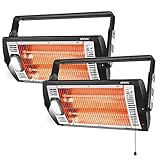
Overview: This dual-pack ceiling-mounted radiant heater system delivers targeted warmth for large spaces. Each unit features dual quartz tubes that provide instant infrared heat, warming objects and people directly rather than heating air. The 1500W maximum output (750W on low) makes these suitable for garages, workshops, and patios. Ceiling installation saves floor space while the 90° rotation allows precise heat direction. The integrated halogen work light adds functionality for dim environments.
What Makes It Stand Out: The two-pack configuration offers exceptional value for covering multiple zones or larger areas. Five mode settings provide versatility beyond competitors: low heat, high heat, low heat with light, high heat with light, and off—all controlled via pull string. The radiant quartz technology delivers immediate warmth without preheating, while the adjustable brackets enable customized installation angles. This combination of dual units and flexible operation modes creates a comprehensive heating solution.
Value for Money: Purchasing two heaters in one package costs significantly less than buying units separately. For workshops or garages exceeding 500 square feet, this dual-system approach eliminates cold spots more effectively than a single high-powered unit. Comparable single heaters retail for $80-120, making this bundle a smart investment for multi-bay garages or separate work areas. The inclusion of mounting hardware and work lights adds $40+ in value.
Strengths and Weaknesses: Pros: Excellent dual-unit value; versatile five-mode operation; space-saving ceiling design; instant radiant heat; integrated work lighting. Cons: Pull-string control only (no remote); requires electrical installation; halogen bulbs may need replacement; not weatherproofed for exposed outdoor use.
Bottom Line: Ideal for large garages or multi-zone workshops, this two-pack delivers professional-grade heating at consumer pricing. The dual-unit approach provides superior coverage compared to single-heater solutions.
2. Shinic Electric Garage Heaters with Remote Control, 1500W/750W Ceiling Mounted Radiant Quartz Heater with Work Light, 90° Rotation, 5 Mode Settings, Electric Heater for Garage, Shop, Patio Large Room

Overview: This ceiling-mounted radiant heater combines infrared quartz technology with modern convenience. The 1500W dual-tube design delivers instant, directional heat perfect for garages, workshops, and patios. The 90° adjustable angle targets warmth precisely where needed, while the integrated halogen work light illuminates projects. Unlike basic models, this unit includes a remote control for effortless operation from across the room.
What Makes It Stand Out: The remote control elevates convenience significantly—adjust heat settings or lighting without climbing ladders or reaching for pull strings. Enhanced safety features include automatic overheat shutoff, ETL certification, metal housing, and a grounded three-prong plug. The five-mode system (low/high heat with/without light) offers flexibility for varying conditions. Ceiling mounting preserves valuable floor space in crowded work areas.
Value for Money: Priced competitively for a remote-equipped model, this heater balances premium features with affordability. Remote functionality typically adds $15-25 to competitor models, yet this unit remains in the mid-range price bracket. The comprehensive safety certifications and metal construction justify the cost over budget alternatives that use plastic components. For users prioritizing convenience and safety, the value proposition is strong.
Strengths and Weaknesses: Pros: Remote control convenience; robust safety features; ETL listed; metal housing; five operating modes; space-saving design. Cons: Single unit coverage limited to 200-300 sq ft; remote requires line-of-sight; halogen light consumes extra power; installation requires basic electrical knowledge.
Bottom Line: The remote control and enhanced safety make this the best choice for users wanting convenience without compromising on security. Perfect for single-zone heating in garages or workshops where easy adjustments matter.
3. DR. INFRARED HEATER Portable Infrared Indoor and Outdoor Space Heater for Patio, Garage, Commercial & Residential With Remote Control, Without Thermostat, Black

Overview: This versatile IP55-rated heater bridges indoor and outdoor heating needs with portable convenience. Delivering 1500W maximum output across three settings (900W, 1200W, 1500W), it uses infrared technology with a high-efficiency aluminum reflector. The included mounting brackets allow wall or ceiling installation, while the weatherproof design withstands elements. Standard 120V operation makes it plug-and-play for most locations.
What Makes It Stand Out: The IP55 weatherproof rating distinguishes this from garage-only competitors, enabling patio, deck, and open-air restaurant use. The specialized mirror aluminum reflector achieves 90% reflectivity, maximizing heat direction and efficiency. Three power settings provide finer temperature control than typical dual-setting models. Portability combined with mounting flexibility offers unmatched versatility—use it freestanding or permanently installed.
Value for Money: While priced at a premium, the indoor/outdoor capability essentially provides two heaters in one. Dedicated outdoor heaters often cost $200+ without matching this unit’s reflector efficiency. For property owners needing seasonal patio heating and year-round garage warmth, this eliminates purchasing separate units. The commercial-grade build quality ensures longevity, offsetting initial cost over time.
Strengths and Weaknesses: Pros: Weatherproof IP55 rating; three power settings; high-efficiency reflector; versatile mounting; portable design; remote included. Cons: No built-in thermostat; black finish shows dust; higher price point; requires weatherproof outlet for outdoor use; reflector needs periodic cleaning.
Bottom Line: The ultimate choice for users needing both indoor garage heating and outdoor patio warmth. The weatherproof design and efficient reflector justify the premium for versatile, year-round use.
4. Comfort Zone 1500W Ceiling Mounted Dual Quartz Radiant Heater – Infrared Workshop Heater with 90° Adjustable Tilt, Built-in Halogen Light & Pull String Control – Overheat Protection, Black

Overview: This ceiling-mounted infrared heater from established brand Comfort Zone delivers targeted radiant warmth using dual quartz tubes. The 1500W output (750W low setting) provides immediate heat for garages and workshops. A 90° tilting bracket directs warmth precisely, while the integrated 25W G9 halogen bulb offers independent lighting. Pull-string control ensures simple, reliable operation without complex electronics.
What Makes It Stand Out: Comfort Zone’s reputation for durable workshop equipment instills confidence in longevity. The independent light operation allows illumination without heat waste during warmer months. Overheat protection adds safety peace of mind. The focused design prioritizes core functionality over gimmicks—this is a straightforward, reliable heating tool. The black finish resists workshop grime better than lighter colors.
Value for Money: Positioned in the budget-to-mid-range tier, this heater offers brand reliability without premium pricing. While lacking multiple modes or remote control, it delivers essential features at 15-20% less than feature-heavy competitors. For users wanting proven performance over bells and whistles, the cost savings are meaningful. Replacement parts are widely available through Comfort Zone’s distribution network.
Strengths and Weaknesses: Pros: Trusted brand reputation; independent light control; overheat protection; simple pull-string reliability; competitive price; durable metal construction. Cons: Only two heat settings; no remote control; limited adjustability compared to five-mode models; halogen bulb generates heat even when light-only is desired.
Bottom Line: A reliable, no-frills choice from a trusted brand. Perfect for users prioritizing durability and simplicity over advanced features. Delivers consistent performance at an accessible price point.
5. Electric Garage Heaters for Indoor Use, 1500W/750W Ceiling Mounted Radiant Quartz Heater with Work Light, 90° Rotation, 5 Mode Settings, Electric Heater for Garage, Shop, Patio Large Room
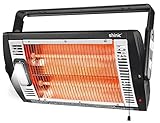
Overview: This ceiling-mounted radiant heater delivers efficient infrared warmth for indoor spaces. The 1500W dual-quartz design provides instant directional heating for garages, workshops, and large rooms. Five modes—including low/high heat with or without halogen lighting—offer versatile operation via pull-string control. The 90° adjustable angle targets heat precisely while preserving floor space. Enhanced safety features make it suitable for continuous use.
What Makes It Stand Out: Comprehensive safety engineering sets this apart: automatic overheat shutoff at 176°F with audible alarm, grounded three-prong plug, sturdy metal safety grill, and ETL listing. The five-mode system provides more options than standard two-setting models, allowing heat-only, light-only, or combined operation. Long-lasting quartz elements ensure durability in demanding workshop environments. The metal construction throughout enhances both safety and longevity.
Value for Money: This single-unit heater offers strong value for safety-conscious buyers. While priced similarly to basic models, the extensive safety certifications and metal construction exceed budget alternatives’ quality. The five-mode versatility adds functionality typically found in premium units. For users needing reliable indoor heating without outdoor features, it avoids paying for unnecessary weatherproofing.
Strengths and Weaknesses: Pros: Extensive safety features; ETL certified; metal safety grill; five operating modes; overheat alarm; durable quartz elements; space-saving design. Cons: No remote control; indoor-use only; pull-string may be inconvenient for high ceilings; halogen light adds to electricity costs; installation requires tools and electrical access.
Bottom Line: An excellent single-unit solution for indoor workshops and garages where safety is paramount. The robust protection features and versatile modes make it a smart, secure heating investment.
6. Briza Infrared Electric Patio Heater - Indoor/Outdoor Heater - Portable Wall/Garage Heater - 1500W - use with Stand - Mount to Ceiling/Wall)
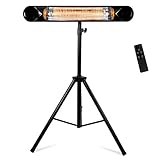
Overview: The Briza Infrared Electric Patio Heater offers versatile heating solutions for both indoor and outdoor spaces. This 1500W unit features carbon infrared technology that mimics solar warmth, heating objects directly rather than the air. It includes mounting hardware for walls or ceilings, plus an adjustable tripod stand for portable use.
What Makes It Stand Out: True dual-functionality sets this heater apart. The IP55 weatherproof rating ensures year-round durability against rain, snow, and dust. A remote control allows effortless operation of power, timer, and heat levels from anywhere in your space. The built-in tip-over sensor automatically shuts off the unit if knocked over, providing crucial safety for active households.
Value for Money: Priced competitively with premium patio heaters, the Briza justifies its cost through exceptional versatility. Comparable units often lack the tripod stand option or remote control functionality. The IP55 rating and carbon infrared technology deliver durability and efficiency that budget alternatives can’t match, making it a sound investment for four-season use.
Strengths and Weaknesses: Strengths include versatile mounting options, robust weatherproofing, convenient remote operation, and advanced safety features. The carbon infrared technology provides efficient, clean heat without drying the air. Weaknesses are the 1500W output may struggle in very large open areas, and the tripod could be unstable in high winds outdoors.
Bottom Line: The Briza excels for those needing flexible indoor/outdoor heating. It’s ideal for patios, garages, or workshops where portability and weather resistance matter. If you want one heater that adapts to multiple spaces year-round, this is your best choice.
7. DR. INFRARED HEATER Portable Infrared Indoor and Outdoor Space Heater for Patio, Garage, Commercial & Residential With Remote Control, With Thermostat, Black

Overview: This DR. INFRARED HEATER unit delivers precise climate control for diverse environments. The 1500W heater features a digital display with corded thermal probe for accurate temperature sensing, making it suitable for patios, garages, greenhouses, and commercial spaces. Multiple mounting options provide installation flexibility.
What Makes It Stand Out: The integrated digital thermostat with thermal probe offers precision rarely found in portable heaters, automatically maintaining desired temperatures. IP55 water resistance enables reliable outdoor operation. The extruded dual-layer aluminum construction optimizes heat retention while protecting against humidity. USA-based customer support and ETL certification ensure quality assurance.
Value for Money: While priced above basic models, this heater delivers professional-grade features worth the premium. The accurate temperature control prevents energy waste, potentially offsetting the higher upfront cost. Dual heat settings (1000W/1500W) provide operational flexibility that cheaper single-setting units lack, making it economical for varied applications.
Strengths and Weaknesses: Strengths include precise digital temperature control, durable aluminum construction, versatile mounting (wall, ceiling, or chain), and excellent customer support. The infrared technology efficiently heats objects directly. Weaknesses involve the corded sensor probe which may limit placement options, and the higher price point may deter casual users.
Bottom Line: Perfect for users requiring exact temperature maintenance, especially greenhouse operators or workshop enthusiasts. The robust build and precise controls justify the investment for those who prioritize performance over basic heating. Skip this if you just need simple spot heating.
8. Homeleader ETL Portable Radiant Heater, 1250W/1500W Indoor Space Heater, Rapid Heating with Adjustable Thermostat, Perfect for garages, workshops, Warehouses, White
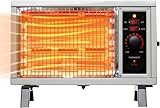
Overview: The Homeleader Portable Radiant Heater provides compact, lightweight heating for confined spaces. This 1500W max unit features two heat settings and an adjustable thermostat in an all-metal body weighing just 4.1 pounds. Its small footprint makes it ideal for offices, garages, and workshops where space is premium.
What Makes It Stand Out: Remarkable portability defines this heater. At 16.1 x 7.1 x 9.6 inches and 4.1 pounds, it’s exceptionally easy to transport between locations. The all-metal construction ensures durability despite the light weight. Automatic overheat and tip-over protection provide essential safety without adding bulk or complexity.
Value for Money: This budget-friendly heater offers excellent value for targeted spot heating. While lacking advanced features like remote controls or digital displays, it delivers core functionality at a fraction of premium heater prices. The dual wattage settings (1250W/1500W) provide some energy-saving flexibility that basic single-setting competitors don’t offer.
Strengths and Weaknesses: Strengths include extreme portability, lightweight design, safety protections, and simple operation. The metal body withstands workshop conditions. Weaknesses are the lower 1250W setting may be underpowered for larger spaces, and the basic thermostat lacks precision. It’s not weatherproofed for outdoor use.
Bottom Line: Ideal for users needing personal warmth in small indoor areas. It’s perfect for office desks, small garage corners, or supplemental workshop heating. Choose this for simplicity and portability, but look elsewhere for whole-room heating or outdoor applications.
9. BEYOND HEAT Electric Garage Heater 120V, 750/1500W Ceiling Mount Space Heater for Garage, Shop, Patio with 90° Adjustable Tilt, Dual Quartz Radiant, Safety Metal Grille and Overheat Protection, 1-Pack
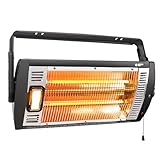
Overview: The BEYOND HEAT Electric Garage Heater offers targeted radiant heating in a space-saving ceiling-mount design. This 1500W unit features dual quartz tubes that directly warm people and objects below. The 90° adjustable tilt and integrated halogen light add functionality for workshops, garages, and indoor spaces up to ETL safety standards.
What Makes It Stand Out: Ceiling mounting liberates valuable floor space while providing overhead warmth exactly where needed. The dual-function design includes an adjustable halogen light that operates independently from the heating elements. A durable pull-string switch controls two heat settings, and the metal safety grille prevents accidental contact with hot quartz tubes.
Value for Money: As a specialized ceiling-mount unit, it competes favorably with similar workshop heaters. The integrated light eliminates needing separate fixtures, adding value. While less versatile than portable models, its dedicated design and robust safety features justify the price for permanent installation scenarios where floor space is critical.
Strengths and Weaknesses: Strengths include space-saving design, dual quartz heating elements, integrated lighting, comprehensive safety features, and adjustable angle. The pull-string is reinforced against fraying. Weaknesses are the permanent ceiling installation limits portability, and the lack of remote control requires manual operation. It’s not weatherproof for exposed outdoor use.
Bottom Line: Perfect for workshops and garages needing permanent, overhead heating solutions. The integrated light and adjustable angle make it ideal for workbench applications. Don’t buy this if you need portable heating or outdoor weather resistance.
10. Comfort Zone Portable Indoor Radiant Space Heater, 1500 watts, Adjustable Thermostat, All Metal Body, Wire Element, Overheat Protection, Radiant Heat, Ideal for Home, Garage, or Workshop, White

Overview: The Comfort Zone Portable Radiant Heater delivers straightforward, reliable heating in a classic all-metal design. This 1500W unit features dual heat settings (750W/1500W) and an adjustable thermostat for simple temperature management. Its wire element construction and safety features make it a practical choice for home, garage, or workshop use.
What Makes It Stand Out: Simplicity and reliability are this heater’s hallmarks. The manual thermostat provides intuitive control without complex electronics that can fail. The power indicator light clearly shows operation status, and the automatic overheat protection offers essential safety. The all-metal body withstands rugged workshop environments.
Value for Money: This heater offers exceptional value for budget-conscious buyers seeking basic functionality. Priced below feature-rich models, it delivers core heating performance without premium costs. The dual wattage settings provide energy-saving options that single-setting economy heaters lack, making it cost-effective for intermittent use.
Strengths and Weaknesses: Strengths include simple operation, durable metal construction, dual heat settings, effective overheat protection, and affordable pricing. It’s lightweight enough for basic portability. Weaknesses include initial burn-off odor/smoke during first use, lack of remote control or digital features, and no tip-over protection mentioned. It’s not suitable for outdoor use.
Bottom Line: An excellent choice for those wanting no-frills, dependable heating. It’s ideal for occasional garage use, supplemental home heating, or workshop spot warming. If you prioritize simplicity and value over advanced features, this heater delivers reliable performance without breaking the bank.
Understanding Radiant Heating Technology for Workshops
How Radiant Heat Differs from Convection Heating
Radiant heating operates on a fundamentally different principle than the convection heaters that dominate big-box stores. Instead of warming the air and hoping it circulates effectively, radiant systems emit infrared energy that travels in straight lines until it strikes an object—your workbench, tools, or even your body—and converts to heat at the point of contact. This direct transfer eliminates the frustrating temperature stratification where hot air gathers at the ceiling while your feet freeze. In a drafty garage environment where air leaks are inevitable, radiant heat provides consistent comfort regardless of air movement, making it exponentially more efficient for spaces that aren’t hermetically sealed.
The Science Behind Infrared Radiation
The infrared spectrum sits just below visible light, and modern workshop heaters harness this invisible energy through carefully engineered heating elements. These elements, typically quartz tubes or metallic coils, reach temperatures between 500-1500°F and emit wavelengths optimized for human comfort and rapid warm-up times. The key innovation in 2026 models involves wavelength tuning that maximizes absorption by common workshop materials—metal tools, wooden benches, concrete floors—while minimizing reflection. This means less energy wasted bouncing around the space and more heat going exactly where you need it.
Benefits of Radiant Heat in Garage Environments
Workshops present unique heating challenges: poor insulation, frequent door openings, and the need for spot heating rather than whole-space conditioning. Radiant heaters excel in these conditions because they don’t waste energy heating volumes of air that will instantly escape when you open the garage door. They also don’t stir up dust and debris like fan-forced units, keeping your finishes cleaner and your lungs happier. For woodworkers, the gentle warmth won’t cause wood movement or drying cracks like aggressive heating systems might. Metalworkers appreciate that radiant heat won’t oxidize sensitive components the way combustion heaters can.
Key Types of Radiant Garage Heaters
Electric Infrared Heaters
Electric models dominate the residential workshop market for good reason. They require no venting, produce zero emissions, and activate instantly with the flip of a switch. Modern electric heaters utilize either short-wave or long-wave infrared technology, with short-wave providing more intense, directional heat for focused work areas, while long-wave creates a gentler, more ambient warmth. The 2026 market has seen significant improvements in element longevity, with many units now rated for 10,000+ hours of operation. Installation flexibility is another major advantage, as these can be ceiling-mounted, wall-hung, or used as portable units depending on your workflow needs.
Natural Gas and Propane Models
For larger workshops or those with existing gas lines, combustion-based radiant heaters offer substantially lower operating costs in most regions. These units burn fuel to heat a radiant tube or ceramic surface that then emits infrared energy. The critical distinction lies in venting requirements—while some newer models boast 99.9% efficiency and can be vent-free in well-ventilated spaces, most require proper exhaust systems to prevent carbon monoxide buildup. Propane units provide portability for contractors working on remote sites, though you’ll need to factor in tank rental costs and refill logistics. The BTU output of gas models typically exceeds electric counterparts, making them ideal for spaces over 800 square feet.
Portable vs. Fixed Installation Units
Your work style should dictate this choice. Portable radiant heaters on sturdy wheeled bases allow you to direct heat precisely where you’re working, whether that’s under a car chassis or at a sanding station. They typically plug into standard 120V outlets, though higher-output models may need 240V. Fixed installations—ceiling or wall-mounted—free up valuable floor space and provide consistent zone heating without cords underfoot. The 2026 trend favors hybrid approaches: permanently mounted units with adjustable louvers or swivel mounts that let you redirect heat as projects move around the shop.
Low-Intensity vs. High-Intensity Tube Heaters
This classification primarily applies to gas-fired units but is crucial for workshop applications. Low-intensity tube heaters run cooler (around 600-800°F) and stretch across ceiling spaces, providing gentle, even heating over large areas. They’re ideal for woodworking shops where consistent ambient temperature matters. High-intensity models operate at much higher temperatures (up to 1600°F) from a compact source, creating a powerful heat beam for spot applications. Auto restoration bays often benefit from high-intensity units positioned over lift areas, while assembly benches might do better with low-intensity coverage.
Critical Features to Evaluate in 2026
Heating Capacity and BTU Ratings
Oversizing a heater wastes money and creates uncomfortable hot spots, while undersizing leaves you cold and frustrated. For electric models, you’ll see wattage ratings—roughly 10 watts per square foot serves as a baseline for moderately insulated garages. Gas models list BTU output, with 20-30 BTUs per square foot being standard. However, these rules of thumb crumble without considering ceiling height, insulation quality, and local climate. A 500-square-foot workshop in Minnesota requires nearly double the capacity of the same space in Tennessee. Always calculate your specific needs using cubic footage and heat loss factors rather than relying on manufacturer square footage claims.
Coverage Area and Wattage Considerations
The relationship between wattage and effective coverage isn’t linear. A 1500-watt heater won’t heat twice the area of a 750-watt unit—heat disperses following the inverse square law, meaning intensity drops dramatically with distance. For workshops with high ceilings, you need more power to overcome the increased distance to your work zone. Modern heaters combat this with parabolic reflectors that focus infrared energy into a tighter beam, effectively increasing coverage without boosting power consumption. Look for units with adjustable reflectors or multiple element banks that can be independently controlled for true zone heating flexibility.
Thermostat Precision and Smart Controls
Gone are the days of binary on/off thermostats that create temperature swings of 10 degrees. 2026’s best radiant heaters feature PID controllers that modulate power output to maintain setpoints within 1-2 degrees. Smart integration has become standard rather than luxury—Wi-Fi connectivity allows you to pre-warm your workshop before you even pour your morning coffee. More importantly, smart systems learn your usage patterns and automatically adjust schedules, potentially cutting energy waste by 30%. Look for models compatible with broader smart home ecosystems if you want voice control or integration with other workshop automation.
Build Quality and Corrosion Resistance
Garage environments are brutal on equipment. Moisture, chemical fumes, and temperature extremes conspire to destroy poorly constructed heaters. Examine housing materials—powder-coated steel offers decent protection, but stainless steel or aluminum housings with epoxy finishes withstand the test of time. Heating elements should be sealed against moisture ingress, particularly if you wash vehicles in the space or live in humid climates. The junction boxes and wiring connections need weatherproofing ratings of at least IP44. Don’t overlook the quality of mounting hardware; flimsy brackets fail when subjected to vibration from power tools or garage door openers.
Safety Certifications and Auto-Shutoff Mechanisms
Any heater worth considering in 2026 carries UL or ETL certification, but dig deeper into specific safety features. Tip-over switches on portable units should be robust enough to trigger reliably without false alarms from minor bumps. Overheat protection needs redundant sensors—if one fails, a backup should still shut down the unit before temperatures reach dangerous levels. For gas models, oxygen depletion sensors are non-negotiable. The latest innovation includes thermal imaging sensors that detect overheating components before they fail catastrophically, providing an extra layer of protection for workshops filled with flammable materials.
Installation Requirements and Considerations
Electrical Demands and Circuit Requirements
Electric radiant heaters pull serious amperage, and nothing kills a heater faster than inadequate wiring. A 240-volt, 5000-watt unit draws over 20 amps and requires a dedicated circuit with 10-gauge wire minimum. Many DIYers make the mistake of tapping into existing garage circuits already burdened with power tools, leading to nuisance tripping and voltage drops that reduce heater efficiency. Before purchasing, map your electrical panel’s available capacity. If you’re planning multiple heaters or a high-output unit, consider whether your service panel needs upgrading. The cost of a new 240V circuit installation often exceeds the heater price, so factor this into your budget early.
Ventilation Needs for Combustion Models
Gas-fired heaters consume oxygen and produce combustion byproducts, making proper ventilation life-or-death critical. Even “vent-free” models require adequate air exchange—typically one square inch of free air opening per 1000 BTUs. For vented models, follow manufacturer specifications for duct sizing and termination points exactly. Improper venting can cause backdrafting, where exhaust spills into your workspace instead of exiting outside. In tightly sealed modern garages, consider installing a dedicated combustion air intake that ducts fresh air directly to the heater, preventing it from stealing oxygen you need to breathe. Carbon monoxide detectors should be installed at breathing height, not near the ceiling, and hardwired with battery backup.
Mounting Options: Ceiling, Wall, or Portable
Ceiling mounting keeps the heater out of your way and provides the most even heat distribution across the floor plane. However, it requires solid structural support—most heaters weigh 30-50 pounds and need mounting to joists, not just drywall. Wall mounting positions heat closer to your work area but can create uncomfortable intensity if you’re working directly in the beam. The sweet spot for many workshops is mounting on a side wall, angled downward toward the primary work zone. Portable units offer ultimate flexibility but consume floor space and present cord management challenges. Some innovative 2026 designs feature ceiling-mounted tracks that allow you to slide the heater along a rail system, combining the benefits of fixed and portable installations.
Professional Installation vs. DIY Approaches
Electric heaters under 3000 watts often fall within DIY territory for handy homeowners comfortable with basic wiring. Anything beyond that, or any gas installation, warrants professional involvement. Licensed electricians ensure proper wire gauge, secure connections, and code-compliant grounding that prevents shock hazards. Gas fitters not only guarantee safe connections but also handle permit requirements and inspections that protect your insurance coverage. The modest installation fee pales compared to the cost of a garage fire or carbon monoxide poisoning. Many manufacturers now require professional installation to maintain warranty coverage, so read the fine print before you start drilling holes.
Energy Efficiency and Operating Costs
Understanding Efficiency Ratings
Electric heaters are technically 100% efficient at converting electricity to heat, but that tells only half the story. The real efficiency question is how effectively that heat reaches you versus escaping through walls or ceiling. Look for radiant efficiency percentages that indicate what portion of energy emits as usable infrared versus being lost as convection heat warming air near the unit. Gas heater ratings include both combustion efficiency (how completely fuel burns) and radiant efficiency. Modern condensing gas heaters can achieve 95%+ combustion efficiency, while ceramic radiant systems might convert 60-70% of that heat into infrared energy. The rest becomes warm air, which isn’t necessarily wasted in extremely cold climates.
Cost Comparison: Electric vs. Gas Models
Operating cost calculations require looking beyond fuel type to your local utility rates. In most regions, natural gas costs 30-70% less per BTU than electricity, making gas heaters cheaper to run despite lower equipment efficiency. Propane costs vary wildly—sometimes competitive with natural gas, sometimes approaching electric rates. However, electric heaters shine in partially heated scenarios. If you only run heat for a few hours on weekend mornings, electric’s instant on/off capability and lack of standby losses can make it more economical than gas systems that waste fuel during warm-up cycles. Use online calculators that factor in your specific utility rates, expected usage hours, and climate data for accurate projections.
Zoning Strategies for Large Workshops
Heating a 1200-square-foot garage to 70 degrees when you’re only using a 200-square-foot corner is financial madness. Modern radiant heaters enable true zoning through strategic placement and independent controls. Install a high-intensity unit over your primary workbench and a lower-output tube heater for general ambient warmth. Smart thermostats can create schedules that warm the whole space for major projects but maintain minimal background heat for tool protection. Some advanced systems use occupancy sensors to direct heat only where you’re actively working, potentially cutting energy use by half. Consider your typical workflow patterns—if you always start at the workbench before moving to assembly tables, sequence your heaters to follow your movement.
Insulation’s Impact on Performance
Even the most powerful heater can’t overcome inadequate insulation—it just burns money faster. Before investing in heating equipment, address the building envelope. Air sealing is priority one; a 1/8-inch gap around a garage door can leak as much heat as a missing brick. Wall insulation should meet at least R-13 standards, while ceilings need R-30 or better. Don’t forget the garage door itself—insulated models with thermal breaks pay for themselves within two heating seasons. Radiant heat behaves differently than convective systems; it warms surfaces directly, so insulating those surfaces (particularly concrete floors with rigid foam underneath) dramatically improves perceived comfort and reduces required heater output.
Safety Protocols for Workshop Environments
Clearance Requirements and Combustible Materials
Radiant heaters operate at extremely high surface temperatures, creating ignition risks if positioned too close to flammable materials. The general rule mandates at least 3 feet of clearance in all directions, but this varies by model intensity. Check your specific heater’s manual—some high-intensity units require 6+ feet of separation. In workshops, this means carefully mapping where lumber, cardboard, rags, and chemical containers typically accumulate. Install physical barriers like sheet metal shields if maintaining clearance proves challenging. Never mount heaters directly above workbenches where sawdust or solvent vapors might concentrate. The infrared beam itself can ignite materials at surprising distances, so consider the entire radiation pattern, not just the physical unit dimensions.
Carbon Monoxide Monitoring
Any combustion heater, even “vent-free” models with oxygen depletion sensors, requires continuous carbon monoxide monitoring. Install detectors at breathing height (4-5 feet from floor) within 10 feet of the heater but not directly in its airflow. Hardwired units with battery backup and digital readouts provide the best protection. The latest generation of smart CO detectors connect to your phone, alerting you to dangerous levels even when you’re not in the shop. Remember that CO is cumulative—low-level exposure over hours can be as dangerous as brief high concentrations. Symptoms mimic the flu (headache, nausea, dizziness), so if you feel unwell while heating, get to fresh air immediately and check your detectors.
Overheat Protection Systems
Quality heaters include multiple redundant safety systems. Primary sensors monitor element temperature and shut down power if limits are exceeded. Secondary thermal fuses provide a one-time failsafe that permanently disables the unit if temperatures reach dangerous levels, preventing fire even if primary controls fail. Some 2026 models incorporate predictive algorithms that detect abnormal resistance patterns in heating elements, shutting down before overtemperature occurs. Test these systems annually by temporarily blocking airflow (for fan-assisted models) or covering the element briefly with a non-flammable object to trigger the sensor. If the heater doesn’t shut off, retire it immediately.
Child and Pet Safety Features
If your garage doubles as a mudroom or your workshop shares space with a home gym, child safety becomes paramount. Look for heaters with cool-touch housings that remain safe to touch even during operation—though the radiant beam itself remains dangerous. Lockable controls prevent curious fingers from adjusting settings. Tip-over switches should trigger from any angle, not just front-to-back falls. For households with pets, elevate portable units to prevent contact with wagging tails or climbing cats. Some models include motion sensors that reduce output when movement is detected nearby, providing an extra layer of protection for unpredictable workshop visitors.
Smart Technology Integration
Wi-Fi Connectivity and Mobile App Control
The ability to pre-heat your workshop from your smartphone has evolved from luxury to expectation. Modern apps do far more than basic on/off control—they provide real-time power consumption data, element health diagnostics, and maintenance reminders. Geofencing capabilities can automatically start heating when you’re five minutes from home, ensuring perfect temperature upon arrival. Look for systems that maintain local control even if internet service fails; you don’t want to be locked out of heat during a storm-induced outage. App quality varies dramatically between manufacturers, so read recent reviews focusing on connectivity reliability and user interface design rather than just feature lists.
Voice Assistant Compatibility
“Alexa, warm up the workshop to 68 degrees” represents the new normal in 2026. Voice control proves particularly valuable when your hands are covered in grease or you’re carrying materials into the space. Integration with broader smart home ecosystems allows for sophisticated automation—your heater can coordinate with smart lighting to create “work mode” scenes or integrate with security systems to shut down when the alarm is armed. However, treat voice control as a convenience layer, not the primary interface. You need reliable physical controls or app access for times when voice recognition fails or privacy concerns arise.
Scheduling and Automation Capabilities
Sophisticated scheduling goes beyond simple timer functions. The best systems learn your patterns, recognizing that you typically work Saturdays from 8 AM to 3 PM but occasionally have Tuesday evening projects. They pre-heat accordingly while minimizing energy waste during predictable absence periods. Integration with weather forecasts allows the heater to compensate for extreme cold snaps automatically. Some systems even sync with your calendar, checking for “workshop time” blocks and ensuring the space is ready. For multi-user workshops, individual profiles can maintain different temperature preferences and schedules.
Energy Usage Tracking
Real-time energy monitoring transforms how you understand heating costs. Instead of guessing based on monthly bill fluctuations, you can see exactly how many kilowatt-hours each heating session consumes. This data helps optimize scheduling—maybe that Sunday morning warm-up costs $2.50, prompting you to combine tasks and reduce frequency. Gas models with smart controls can track BTU consumption and compare it against local fuel costs, projecting monthly expenses with surprising accuracy. Some systems integrate with utility time-of-use rates, automatically shifting heating to off-peak hours when electricity costs half as much.
Maintenance and Longevity
Routine Cleaning Procedures
Dust and debris are radiant heaters’ mortal enemies, coating reflectors and reducing efficiency by 20-30% within months. Monthly cleaning should include vacuuming reflector surfaces with a soft brush attachment and wiping down housing exteriors. Never use compressed air, which can force particles into electrical connections. For gas models, clean burner orifices annually with specialized brushes—never use metal objects that could enlarge the precision-drilled holes. Inspect and clean fan blades on forced-air models quarterly; imbalance from dust buildup causes premature bearing failure. Always disconnect power and allow complete cool-down before maintenance.
Component Inspection Schedules
Quarterly inspections should focus on wiring connections, which loosen from thermal cycling and vibration. Check for discoloration on terminals, indicating overheating. Inspect heating elements for sagging or distortion, which changes radiation patterns and creates hot spots. Gas units need combustion chamber inspection for soot buildup, suggesting incomplete burning and potential CO production. Test safety controls monthly by temporarily defeating normal operation (like blocking airflow) and verifying shutdown occurs. Keep a logbook of inspections; patterns of recurring issues often predict imminent failure, allowing planned replacement during non-critical periods.
Warranty Considerations for 2026
Warranty terms reveal manufacturer confidence in their product. Element warranties have extended significantly, with many now covering 5-10 years compared to the 1-2 year standards of 2020. Pay attention to pro-rating schedules—some “lifetime” warranties reimburse only a fraction of replacement cost after the third year. Labor coverage is the hidden gem; a failed heater is useless if you must pay $200 for a service call. Read exclusion clauses carefully—many warranties void if the heater isn’t professionally installed or if used in “commercial” environments, which can include serious home workshops. Extended warranties from retailers often duplicate manufacturer coverage, so compare terms before purchasing.
Common Failure Points and Prevention
Heating elements fail from thermal stress, particularly when power cycles rapidly. Minimize this by using smart controls that ramp power gradually rather than slamming full voltage. Electrical connections corrode in humid garage environments; dielectric grease on terminals prevents this. For gas models, thermocouples that sense pilot flames are frequent failure points; annual cleaning and gentle handling during maintenance extends their life. Fan motors in forced-air units die from dust infiltration; if your model has bearing zerks, lubricate them annually. Reflector degradation from UV exposure and oxidation reduces effectiveness; polishing with appropriate compounds restores performance. The most preventable failure is physical damage from impacts—position heaters where ladders, lumber, and vehicle doors can’t strike them.
Sizing Your Heater Correctly
Calculating Cubic Footage
Square footage misleads; cubic footage determines heating load accurately. Measure length × width × ceiling height. A 20×24 foot garage with 10-foot ceilings contains 4,800 cubic feet, requiring significantly more power than the same footprint with 8-foot ceilings. But don’t stop there—calculate the volume of any unheated adjacent spaces like attic storage or crawlspaces that share walls, as they’ll steal heat. For workshops with open rafters, use the peak height rather than wall height. These calculations form the basis for proper sizing, but they’re just the starting point for accurate heat loss analysis.
Accounting for Heat Loss Factors
Every building component leaks heat at different rates. Multiply your cubic footage by these modifiers: uninsulated walls (1.5), R-13 walls (1.0), uninsulated ceiling (1.8), R-30 ceiling (1.0), single-pane windows (1.2 each), garage door (1.4), concrete floor (1.1). Add modifiers for air changes: tight construction (0.9), average (1.0), leaky (1.3). Finally, apply your climate zone factor: southern zones (0.7), moderate (1.0), northern (1.4), extreme (1.8). The resulting number gives you a realistic BTU or wattage requirement. This methodical approach prevents the common mistake of oversizing by 50-100%, which wastes money upfront and reduces efficiency through excessive cycling.
Climate Zone Considerations
Your geographic location dramatically impacts heater selection. In mild climates, a modest radiant heater provides comfort by offsetting chill rather than battling deep cold. These users can prioritize spot heating over whole-space warming. Northern climates demand robust systems with rapid recovery after door openings—high-intensity models that can quickly rewarm surfaces. Mountain regions face unique challenges: thin air reduces combustion efficiency in gas models by up to 20%, while increased solar gain through windows can create overheating issues on sunny winter days. Coastal areas must prioritize corrosion resistance against salt air, while desert locations need heaters with excellent dust sealing. Research your specific climate’s heating degree days to understand how many hours annually your heater will run at full capacity.
Supplemental vs. Primary Heating
Be honest about your expectations. A 1500-watt portable unit cannot serve as primary heat for a 600-square-foot workshop in Chicago winters—it will run continuously and never reach comfortable temperatures. Supplemental heaters work best when they boost an existing heat source or provide comfort in mild conditions. If you need primary heating, size for the coldest expected temperature, not average winter days. Consider a dual-stage approach: a smaller radiant heater for quick warm-ups during shoulder seasons, supplemented by a larger system for deep winter. This strategy reduces runtime on your main heater, extending its lifespan while providing flexibility for varying conditions.
Making Your Final Decision
Budget Planning and Value Assessment
The cheapest heater is rarely the most economical. A $200 unit that dies in two years costs more than a $600 heater lasting ten. Calculate total cost of ownership: purchase price + estimated annual operating costs × expected lifespan. Factor in installation expenses, which can range from $0 for a plug-in portable to $2000+ for a vented gas system. Consider productivity value—if a $1500 heater system lets you work comfortably 200 additional hours annually, what’s that worth? For professionals, the math is clear: better heat equals more billable hours. Hobbyists should weigh the cost against alternative uses of that money, but remember that a cold workshop often becomes a wasted space.
Return Policies and Trial Periods
Some retailers now offer 30-day satisfaction guarantees on heaters, recognizing that specifications don’t tell the whole story. This trial period is invaluable—nothing reveals a heater’s true character like a week of actual use. Does the thermostat cycle too frequently? Is the fan noise intrusive during phone calls? Does the mounting system feel secure? Keep all packaging and documentation during the trial. Be aware of restocking fees, which can reach 20% of purchase price. Online purchases often include free return shipping, but heavy heaters may require you to pay freight back to the warehouse. Local retailers sometimes offer more flexible return terms for store credit, which could be advantageous if you need to exchange for a different size.
Environmental Impact Considerations
Your heating choice has carbon implications. Electric heaters are only as clean as your grid—if your electricity comes from coal, a high-efficiency gas heater may have a lower carbon footprint. Conversely, in hydroelectric or renewable-heavy regions, electric is the eco-friendly choice. Propane burns cleaner than natural gas but requires energy-intensive transport. Consider the embodied energy of the heater itself—heavier units with more metal have higher manufacturing footprints but longer lifespans that amortize that cost. Some manufacturers now offer take-back programs for recycling old units. For the environmentally conscious, heat pumps paired with radiant floor systems provide the ultimate low-carbon solution, though at significantly higher upfront cost.
Future-Proofing Your Investment
Technology evolves rapidly, but a quality heater should serve you for 15-20 years. Choose models with modular designs that allow element replacement even if that specific element becomes obsolete. Ensure smart features can be updated via firmware rather than requiring hardware replacement. Consider power flexibility—units that accept both 120V and 240V give you installation options if you move or upgrade your electrical service. For gas models, verify compatibility with both natural gas and propane through simple orifice changes, preserving resale value and relocation flexibility. The most important future-proofing? Buy more capacity than you currently need. A slightly oversized heater running at 70% capacity lasts longer and gives you room to expand your workshop without replacing the entire system.
Frequently Asked Questions
How much does it cost to run a radiant garage heater per month?
Monthly costs vary dramatically based on heater size, local utility rates, insulation quality, and usage patterns. A typical 5000-watt electric heater running 40 hours weekly at $0.12/kWh costs about $96 monthly. Gas models might run $30-50 for the same usage at current natural gas prices. However, poor insulation can double these costs, while smart scheduling might reduce them by 30%. Calculate your specific scenario using the heater’s wattage or BTU rating, your actual usage hours, and your local fuel costs for an accurate estimate.
Can I install a radiant heater myself or do I need a professional?
Portable electric heaters under 1500 watts require no special installation—just plug them in. Hardwired electric units over 3000 watts demand electrical permits and knowledge of local codes; DIY is possible if you’re experienced with 240V wiring. All gas heater installations require professional licensed gas fitters in most jurisdictions, both for safety and insurance compliance. Improper installation voids warranties and creates liability issues. When in doubt, hire a professional—the installation cost is minor compared to the risks of carbon monoxide poisoning or electrical fire.
What’s the difference between infrared and radiant heating?
The terms are often used interchangeably, but technically, infrared is a type of radiant heating. Radiant heating refers to any system that transfers heat through electromagnetic waves rather than heating air. Infrared specifically uses wavelengths in the infrared spectrum. For practical purposes in garage heaters, they describe the same technology. Both warm objects and people directly without significantly heating the intervening air, making them ideal for drafty workshop environments.
How long do radiant garage heaters typically last?
Quality electric heaters last 15-20 years with proper maintenance. Heating elements may need replacement every 8-12 years depending on usage. Gas heaters have similar lifespans for the main unit, but components like thermocouples and ignition systems might require service every 5-7 years. Commercial-grade units often outlast residential models due to heavier construction. The biggest factor in longevity isn’t the heater itself but environmental conditions—excessive moisture, chemical exposure, and power surges dramatically reduce lifespan.
Will a radiant heater damage my car’s paint or rubber components?
Properly installed and sized radiant heaters pose minimal risk to vehicles. The key is maintaining adequate distance—never position high-intensity units closer than 3 feet from a vehicle’s surface. Long-wave infrared is gentler than short-wave and less likely to cause issues. Modern automotive finishes are baked at much higher temperatures during manufacturing than any garage heater produces. However, concentrated heat on specific areas for extended periods could theoretically affect rubber seals or plastic trim. Use common sense: if the surface feels uncomfortably hot to your hand, it’s too hot for your car.
Do radiant heaters work in uninsulated garages?
They work but inefficiently. Radiant heat warms objects, not air, so you’ll feel warmth on your skin even in a drafty space. However, without insulation, heat escapes rapidly through walls and ceiling, requiring the heater to run continuously. This creates a temperature gradient where you feel warm directly in the heater’s path but cold elsewhere. For occasional use, a radiant heater makes an uninsulated garage tolerable. For regular workshop use, invest in insulation first—it’s cheaper than buying an oversized heater and pays for itself through energy savings within 2-3 heating seasons.
Can I use a radiant heater to keep my garage above freezing for tool protection?
Absolutely, and this is one of their best applications. Set the thermostat to 40-45°F to prevent rust and protect finishes without wasting energy on human comfort. Electric models excel here because they can maintain low temperatures efficiently without the standby losses of keeping a pilot light burning. The direct object warming prevents condensation on tool surfaces better than warming air alone. For this purpose, position the heater to focus on your tool storage areas rather than trying to heat the entire volume. Smart thermostats can alert you if temperatures drop below your setpoint, protecting against freeze damage during power outages.
Are vent-free gas heaters safe for workshops?
Vent-free gas heaters carry inherent risks that require careful management. They consume oxygen and produce water vapor, which can lead to condensation and rust issues in tightly sealed spaces. While oxygen depletion sensors provide protection, they can fail. Most safety organizations recommend against vent-free heaters in sleeping areas, but workshops are acceptable if you maintain proper clearances and ventilation. Install multiple CO detectors and never run the heater overnight or unattended. For most workshop applications, direct-vent or electric models provide greater peace of mind and are worth the additional cost.
How do I calculate the right size heater for my workshop?
Start with cubic footage (length × width × height). Multiply by your insulation factor (1.5 for poor, 1.0 for average, 0.7 for excellent insulation). Apply your climate multiplier (0.7 for mild, 1.0 for moderate, 1.4 for cold, 1.8 for extreme climates). The result gives you approximate BTU needs for gas heaters or watts for electric (divide BTUs by 3.41 to convert). Then add 10% for each major air leak (poor door seal, unsealed windows) and subtract 10% if you only need spot heating rather than whole-space comfort. This methodical approach prevents the common 50% oversizing mistake.
What’s the best placement for a radiant heater in a workshop?
Mount ceiling units 8-10 feet high, angled to direct heat toward your primary work zone while avoiding direct exposure to vehicles or flammable storage. Wall-mounted units work best on side walls, angled downward at 45 degrees toward the center of the shop. Avoid positioning directly over workbenches where dust and vapors concentrate. For portable units, place them 3-4 feet away from your work area, directing heat across your body rather than straight at you to avoid uncomfortable intensity. Always maintain manufacturer-specified clearances from combustibles, and consider your typical workflow—mount where the heater won’t be blocked by projects, vehicles, or material storage.
See Also
- 10 Premium Heavy Duty Garage Heaters for Workshops (Worth the Investment)
- 10 Top-Rated Radiant Garage Heaters According to Experts in 2026
- Top 10 Best Garage Heaters for Cold Climate Workshops in 2026
- How to Choose the 10 Best Garage Heaters for Winter Workshops in 2026
- 10 Best Ceiling Mounted Garage Heaters for High-Ceiling Workshops in 2026