Table of Contents
Winter mornings can feel endless when your space stubbornly clings to the chill. You want warmth that’s both effective and gentle, without the blast of dry air or the constant hum of a fan heater disrupting your peace. Oil-filled radiators have quietly become a cornerstone of comfortable, efficient heating for precisely this reason—they deliver consistent, ambient warmth that feels natural, not forced. Unlike their noisy counterparts, these units operate silently, making them ideal for bedrooms, home offices, or any space where tranquility matters as much as temperature.
What truly sets oil-filled heaters apart is their unique approach to heat distribution. They don’t generate heat instantly like electric coils; instead, they warm a specialized thermal fluid that gradually releases stored warmth long after the unit cycles off. This results in a remarkably even temperature without sudden spikes or drops, reducing energy waste and creating a cozy environment that feels inherently safer around children or pets. As energy efficiency becomes increasingly crucial, understanding how to choose and use one of these reliable workhorses ensures you’re not just buying heat, but investing in sustainable comfort tailored to your living space.
Top 10 Oil-Filled Heaters
Detailed Product Reviews
1. PELONIS Radiator Heater for Large Space, Electric Oil Filled Radiator, Dual Knobs, 1500W, Quiet Space Heater, 3 Modes, Tip-over Protection

Overview:
This 1500W oil-filled radiator heater targets large spaces with rapid heating and quiet operation. Its dual-knob control system manages temperature and power modes, while portability features cater to multi-room use. Designed for safety-conscious households, it prioritizes gentle, dryness-free warmth without fans.
What Makes It Stand Out:
The heater’s fanless design ensures whisper-quiet performance, ideal for bedrooms or offices. Dual knobs simplify mode selection (600W/900W/1500W), and four heavy-duty casters with a front handle enhance mobility. The oil-based heating avoids air dryness, a key differentiator from forced-air units.
Value for Money:
Priced competitively for its 1500W capacity, it outperforms budget heaters in energy efficiency through adjustable modes. Though lacking digital features, its durability and lower long-term energy costs justify the investment versus cheaper, noisier alternatives.
Strengths and Weaknesses:
Strengths: Exceptionally quiet; effective whole-room heating; robust safety (tip-over/overheat protection); easy portability.
Weaknesses: Basic analog controls limit precision; slower initial heat-up than fan heaters; no timer or remote.
Bottom Line:
A reliable, no-frills heater for those prioritizing quiet operation and safety in large spaces. Best for users seeking straightforward, energy-efficient warmth without smart features.
2. Pelonis Oil Filled Radiator Heater for Large Space, 2025 Upgraded, Space Heaters with 1500W Quiet Warmth Radiant Heater, 3 Heating Modes, Overheat & Tip-Over Protection, Adjustable Thermostat, Black

Overview:
Pelonis’ 2025-upgraded black radiator heater delivers silent, efficient warmth for large areas using 1500W power and advanced thermal oil technology. Its modern design integrates seamlessly into home decor while emphasizing safety and user-friendly operation.
What Makes It Stand Out:
Seven fins and high-conductivity oil boost heat efficiency by 32%, ensuring faster, even 360° warmth. ETL-certified safety components (cord, plug) and a minimalist aesthetic set it apart. The adjustable thermostat and silent operation cater to comfort-focused users.
Value for Money:
Justified by its premium safety standards and efficiency gains, it competes well against mid-range heaters. The lack of digital extras keeps costs reasonable, offering superior reliability for the price compared to generic brands.
Strengths and Weaknesses:
Strengths: Rapid, uniform heating; impeccable safety certifications; near-silent performance; elegant design.
Weaknesses: No timer or remote; basic knob controls; black finish may show dust.
Bottom Line:
An excellent upgrade for safety and efficiency seekers. Highly recommended for living rooms or offices where quiet, consistent heat and build quality matter most.
3. hykolity Electric Oil Filled Radiator, 1500W Portable Full Room Radiant Space Heater with Adjustable Thermostat, Remote, Led Display, Child Lock, Overheat & Tip-Over Protection, 24H Timer, Grey

Overview:
This feature-rich 1500W oil radiator combines smart functionality with safety for whole-room heating. It includes remote control, a 24-hour timer, and eco-mode algorithms, targeting tech-savvy users needing precise temperature management.
What Makes It Stand Out:
The remote, LED display, and 24H timer offer unmatched convenience. Eco-mode uses smart algorithms to maintain steady temps, while V-0 flame-retardant materials and child lock enhance safety. Seven fins ensure efficient 360° heat dispersion.
Value for Money:
Priced slightly higher for its tech extras, it’s a strong value for those wanting automation. Savings from the timer and eco-mode offset the cost over time, outperforming basic models in long-term utility.
Strengths and Weaknesses:
Strengths: Intuitive multi-control (remote/touch/display); excellent safety suite; energy-saving eco-mode; quiet operation.
Weaknesses: Touchscreen prone to smudges; wheels less durable than Pelonis; grey finish shows scuffs.
Bottom Line:
Ideal for families or remote workers needing customizable, hands-off heating. Worth the premium for its smart features and robust safety, despite minor build quirks.
4. Pelonis Oil Filled Radiator Heater for Large Space, 2025 Upgraded, Space Heaters with 1500W Quiet Warmth Radiant Heater, 3 Heating Modes, Overheat & Tip-Over Protection, Adjustable Thermostat, White

Overview:
Identical to Product 2 but in white, this 2025-upgraded Pelonis heater offers silent, efficient warmth for large spaces. It leverages thermal oil and seven fins for even heating, with a focus on safety and minimalist home integration.
What Makes It Stand Out:
The white finish blends discreetly into light decor, while 32% improved heat efficiency and ETL-certified safety components ensure reliability. Adjustable thermostat and silent operation make it ideal for noise-sensitive environments.
Value for Money:
Matches Product 2’s value proposition: premium safety and efficiency at a mid-tier price. The color variant doesn’t affect cost, making it equally cost-effective for those preferring neutral aesthetics.
Strengths and Weaknesses:
Strengths: Uniform 360° heating; rigorous safety standards; near-silent; sleek white design.
Weaknesses: No timer/remote; basic controls; white surface requires frequent cleaning.
Bottom Line:
A top pick for users wanting a discreet, high-efficiency heater. Choose this over Product 2 if white aligns better with your interior—performance is identical.
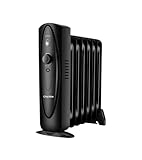
5. Oil Filled Radiator Heater,Oil Heater with Adjustable Thermostat,Electric Radiator Heater with Overheat Safety,Mini Portable Space Heater,700W
Overview:
This compact 700W oil radiator targets small to medium rooms with lightweight portability and essential safety features. Its minimalist design focuses on affordability and ease of storage for supplemental heating needs.
What Makes It Stand Out:
Extreme portability (lightweight, small footprint) and simple thermostat control cater to tight spaces like dorms or offices. Auto-shutoff at 45° tilt and overheat protection prioritize safety in a budget-friendly package.
Value for Money:
Exceptional for its price point, offering core oil-heater benefits without frills. It’s significantly cheaper than 1500W models but suited only for small areas, making it a smart secondary heater.
Strengths and Weaknesses:
Strengths: Ultra-portable; affordable; reliable safety features; easy storage.
Weaknesses: Underpowered for large rooms; no multiple heat modes; basic analog controls; slow heat-up.
Bottom Line:
Perfect as a supplemental heater for small spaces where portability and safety are paramount. Avoid for large rooms, but highly recommended for budget-conscious users needing localized warmth.
6. DREO Radiator Heater, Dual Knobs, 8 Safety Protection, 1500W Electric Space Heaters for Indoor Use Large Room, Energy Saving, Quiet Oil Filled Radiator for Bedroom, Adjustable Thermostat

Overview: The DREO Radiator Heater is a 1500W oil-filled space heater designed for large indoor rooms, emphasizing rapid, even heating and robust safety. Its M-shaped fin design and dual-knob control system target energy efficiency without fan noise. What Makes It Stand Out: Its dual knobs allow precise adjustment of both heat output (600W/900W/1500W) and temperature, coupled with an auto thermostat that reportedly cuts energy use by 60%. The 8-layer safety suite—including tip-over and auto temperature limiter—is notable, alongside the fanless operation that prevents air dryness. Value for Money: Priced mid-range, it delivers strong value for those prioritizing safety and silent operation. While competitors offer digital timers, DREO’s focus on mechanical simplicity and significant energy savings through its thermostat makes it a cost-effective choice for steady, uninterrupted heating. Strengths and Weaknesses: Strengths: Exceptionally quiet; excellent safety coverage; effective energy-saving thermostat; even heat distribution via M-fins. Weaknesses: Lacks digital timer or remote; basic mechanical controls feel dated; no power memory after outages. Bottom Line: A reliable, safe heater ideal for bedrooms or living rooms where silent, dry-air-free warmth is essential. Best for users seeking straightforward, energy-conscious operation without smart features.
7. Hykolity Oil Filled Radiator Heater for Large Room, 1500W Electric Oil Space Heater with 7 Extra-Wide M-Shaped Fins, ECO Mode, 24H Timer, Power Memory, Overheat & Tip-Over Protection for Home Office

Overview: Hykolity’s 1500W oil radiator heater combines high-efficiency heating (92.3% boost claimed) with smart energy management for large rooms. It features M-shaped fins for even warmth and targets eco-conscious users via ECO mode and precise climate control. What Makes It Stand Out: Its intelligent 24/7 climate control uses smart algorithms to maintain set temperatures (50°F–95°F) without fluctuations. The 24-hour timer, power memory (retains settings after outages), and triple overheat protection elevate it beyond basic models, offering true “set-and-forget” convenience. Value for Money: Slightly premium-priced, but justifies cost with advanced features like real-time energy optimization and power memory. For frequent users, ECO mode’s tailored consumption (600W/900W/1500W) promises long-term utility savings, outperforming simpler heaters. Strengths and Weaknesses: Strengths: Superior temperature stability; valuable power memory; comprehensive 7-layer safety; effective ECO mode. Weaknesses: No remote control; setup requires navigating digital menus; M-fins, while efficient, don’t significantly outperform rivals. Bottom Line: Highly recommended for tech-savvy users wanting automated, efficient heating in offices or bedrooms. The power memory and precise ECO mode make it a top pick for reliability and energy savings.
8. Amazon Basics Portable Oil Radiator Heater for Indoor Use, 3 Heat Settings, Over-Heat Protection, ETL-certified Safety, 7 Oil-Filled Steel Fins, 1500W, 11"D x 14.8"W x 25.2"H, Black

Overview: Amazon Basics delivers a no-frills 1500W oil-filled radiator heater focused on portability and essential safety. It covers rooms up to 144 sq ft with quiet, consistent heat via seven oil-filled fins and three manual power settings. What Makes It Stand Out: Its standout feature is simplicity: affordable, ETL-certified safety (tip-over and overheat protection), and smooth-rolling casters for effortless room-to-room movement. The oil retains heat after shutdown, extending warmth passively. Value for Money: Exceptional value as a budget entry. At a lower price point than competitors, it covers core needs—safe, silent heating and mobility—without wasting money on unused smart features. Ideal for occasional use or small spaces. Strengths and Weaknesses: Strengths: Very affordable; highly portable; genuinely silent operation; reliable basic safety. Weaknesses: Only heats up to 144 sq ft; lacks thermostat, timer, or energy modes; basic controls feel utilitarian. Bottom Line: The go-to choice for cost-conscious buyers needing dependable, portable warmth in small spaces. Skip if you require precise temperature control or large-room coverage, but perfect for dorms or supplemental heating.
9. hykolity 1500W Oil Filled Radiato with Remote, Digital Thermostat,24H Timer Electric Heater with 3 Power & ECO Digital Led Display, Overheat & Tip-Over Protection, ETL-certified For Indoor Black

Overview: This Hykolity model integrates digital convenience into a 1500W oil radiator heater, featuring remote control, a digital thermostat, and ECO mode. It targets users wanting tech-enhanced comfort without sacrificing safety or quiet operation. What Makes It Stand Out: The triple-control system (remote, touch screen, LED display) and 24H timer offer unmatched flexibility. ECO mode maintains set temps efficiently, while 360° wheels and a handle enhance portability—making it versatile for multi-room use. Value for Money: Priced competitively for its tech suite. The remote and digital precision justify the cost versus basic models, especially for those managing multiple rooms. ECO mode’s energy savings offset the premium over non-digital heaters over time. Strengths and Weaknesses: Strengths: Excellent user control options; responsive digital thermostat; strong portability; effective ECO mode. Weaknesses: Remote can be finicky; “child lock” is basic; M-fins offer marginal dispersion gains over competitors. Bottom Line: A smart investment for users prioritizing convenience and precise climate control. The remote and digital features make it ideal for bedrooms or offices where hands-free adjustments matter most.
10. PELONIS Radiator Heater for indoor use Large Room with Remote, Thermostat & LED Display, Quiet Oil Filled Heater with 5 Temperature Settings, Overheat & Tip-Over Protection, Silver

Overview: The PELONIS radiator heater offers 1500W oil-based warmth with digital refinement, including five fixed temperature presets (65°F–85°F), a remote, and quiet operation. It balances user-friendly tech with essential safety for medium to large rooms. What Makes It Stand Out: Its five pre-set temperatures (uncommon in rivals) allow instant comfort customization, while the LCD screen and remote simplify adjustments. The 10-hour timer and 360° caster wheels enhance usability for targeted, portable heating. Value for Money: Solid mid-tier value. The preset temps and remote add convenience over knob-based models, though it lacks advanced ECO modes. The 1-year warranty is standard, but the heater excels as a reliable, fuss-free option for consistent warmth. Strengths and Weaknesses: Strengths: Intuitive temperature presets; quiet and portable; clear LCD display; dependable safety features. Weaknesses: Only 10-hour timer (vs. 24H in others); no true energy-saving mode; presets limit fine-tuning. Bottom Line: Best for users wanting quick, preset warmth without complex programming. Choose it for bedrooms or living rooms where simplicity and remote access trump advanced energy management.
Understanding How Oil-Filled Heaters Work
The Science Behind Silent, Steady Warmth
Oil-filled heaters rely on a simple yet brilliant principle: electrical resistance heats a high-grade thermal oil sealed within metal columns or fins. This oil doesn’t burn or deplete; it simply absorbs and retains heat efficiently. Once warmed, natural convection (thermosiphon effect) circulates the heated oil, transferring warmth to the radiator’s surface, which then radiates heat into the room. Crucially, the oil acts as a thermal reservoir, meaning the unit continues emitting heat even after the thermostat turns off, smoothing out temperature fluctuations.
Why Thermal Oil Is the Secret Ingredient
The thermal fluid inside these heaters isn’t ordinary oil—it’s specifically engineered for high heat capacity and stability. This allows it to store significantly more heat per unit volume than air or water, enabling consistent output without constant electrical cycling. Because the oil never boils off or requires refilling, the system remains maintenance-free for its entire lifespan. This sealed design also eliminates combustion risks, making it inherently safer than fuel-burning alternatives.
Key Features to Evaluate Before Buying
Determining the Right Size for Your Space
Heater sizing isn’t about physical dimensions but heating capacity, measured in watts. A general rule is 10 watts per square foot of space. For a standard 150-square-foot room, look for a 1,500-watt model. Undersized units struggle to warm adequately, running constantly and increasing energy costs, while oversized heaters cycle too frequently, wasting power. Always consider room insulation, ceiling height, and window quality—poorly insulated areas may need 12-15 watts per square foot.
Wattage Controls and Energy Efficiency
Adjustable wattage settings (e.g., 750W/1,500W) offer critical flexibility. Lower settings suffice for mild weather or well-insulated rooms, cutting electricity use by up to 50%. Look for models with precise thermostats that maintain your desired temperature without overshooting. Units with programmable timers or eco-modes can further optimize energy consumption by reducing heat during unoccupied hours. Remember, all electric heaters are 100% efficient at point-of-use, but smart features prevent unnecessary usage.
Essential Safety Mechanisms to Prioritize
Overheat Protection: A Non-Negotiable Feature
Every quality oil-filled heater includes an automatic overheat shutoff sensor. This critical component detects abnormal internal temperatures—often caused by blocked airflow or placement near curtains—and instantly cuts power. Never compromise on this feature; it’s your primary defense against fire hazards. Verify the unit meets UL, ETL, or CSA safety certifications, which mandate rigorous testing of these mechanisms.
Tip-Over Switches and Cool-to-Touch Exteriors
A reliable tip-over switch immediately deactivates the heater if it’s knocked over, preventing contact with flammable surfaces. Equally important is a cool-to-touch exterior casing, especially vital in households with children or pets. While the radiator fins get warm during operation, the outer shell should remain safe to brush against accidentally. Test this feature in-store if possible, or check detailed product specifications online.
Design and Usability Considerations
Portability Without Compromising Stability
Most units include integrated handles and caster wheels for easy movement between rooms. However, prioritize stability—wheels should lock securely to prevent unintended rolling, and the base should be wide enough to resist tipping. Lightweight models (under 30 lbs) offer easier maneuverability, but heavier units often provide superior heat retention. Consider whether you need frequent relocation or a semi-permanent placement.
Noise Levels and Aesthetic Integration
One of the biggest advantages of oil-filled heaters is near-silent operation—no fans mean only occasional faint ticking sounds as metal expands and contracts with temperature changes. This makes them perfect for light sleepers. Design-wise, modern units come in slim profiles, vertical towers, or horizontal styles that blend with décor. Avoid bulky designs if space is tight; some fold-flat models tuck neatly against walls.
Advanced Functions for Enhanced Comfort
Programmable Timers and Digital Thermostats
Precision thermostats let you set exact temperatures (e.g., 68°F or 72°F), avoiding the guesswork of manual dials. Programmable timers allow scheduling—warm your bedroom before waking or heat your living room ahead of returning home. Advanced models offer 24-hour or 7-day programming, adapting to your routine while preventing “all-night” operation when unnecessary.
Remote Controls and Smart Connectivity
While not essential, remote controls add convenience for adjusting settings from your couch. Emerging smart features (Wi-Fi/app control) enable remote activation and integration with home automation systems. These can optimize usage through learning algorithms but increase cost; weigh the convenience against your budget and whether you’ll truly utilize these features consistently.
Optimizing Placement for Maximum Effectiveness
Strategic Positioning for Even Heat Distribution
Place your heater near exterior walls or under windows—the coldest spots in a room—to counteract drafts. Ensure at least 3 feet of clearance from furniture, curtains, or bedding to maintain airflow and safety. Avoid corners where heat can become trapped; central locations promote better convection currents. Never place it in high-traffic pathways where it might be bumped.
Avoiding Common Placement Mistakes
Never operate an oil-filled heater in bathrooms unless explicitly rated for damp locations—standard models aren’t designed for moisture exposure. Keep it away from doorways where frequent opening causes heat loss. Also, don’t place it directly against walls; a slight gap (1-2 inches) allows rear convection. Remember, these heaters warm people and objects radiantly, so position it where occupants sit, not tucked far away in a closet.
Maintenance and Longevity Tips
Simple Cleaning Routines for Peak Performance
Dust buildup on fins drastically reduces efficiency. Unplug the unit and let it cool completely before wiping surfaces with a dry microfiber cloth monthly. For stubborn dust, use a soft brush attachment on a vacuum cleaner. Never use water, chemicals, or compressed air, which can damage components or force debris deeper into the fins. Check intake vents periodically for blockages.
Ensuring Long-Term Reliability
Oil-filled heaters require almost no maintenance due to their sealed design. However, store them properly in dry, cool spaces during off-seasons—never in unheated garages where condensation could form. If storing vertically, lay it flat for 24 hours before reuse to let oil redistribute. Listen for unusual noises during operation; persistent loud ticking might indicate internal issues warranting professional inspection.
Comparing Heating Technologies for Informed Decisions
Oil-Filled vs. Ceramic Heaters: When to Choose Which
Ceramic heaters use a fan to blow air over a hot ceramic plate, providing rapid but localized warmth. They’re better for quick spot-heating small areas but create noise and dry air. Oil-filled radiators excel in sustained, whole-room heating with silent operation and humidity retention. Choose ceramic for garages or workshops needing instant heat; opt for oil-filled in living spaces where comfort and quiet are priorities.
Oil-Filled vs. Infrared Heaters: Understanding the Difference
Infrared heaters emit directional radiant heat (like sunlight), warming objects directly in their path without heating the air. They’re efficient for personal use but leave areas outside the beam cold. Oil-filled units heat the surrounding air gradually, creating uniform ambient warmth ideal for enclosed rooms. Infrared suits drafty spaces or patios; oil-filled is superior for consistent indoor comfort.
Realistic Expectations for Performance
Heat-Up Time and Sustained Warmth Cycles
Patience is key—oil-filled heaters take 15-30 minutes to reach full output as the thermal fluid warms. This isn’t a flaw but a feature enabling stable temperatures. Once heated, they maintain comfort longer after shutdown than fan-based systems. Avoid constantly adjusting thermostats; allow 30-60 minutes for the room to respond to settings changes for accurate assessment.
Humidity and Air Quality Considerations
Unlike forced-air systems, oil-filled heaters don’t reduce indoor humidity or circulate dust/allergens since there’s no fan. This preserves air quality and prevents that “stuffy” feeling. However, they don’t add moisture either—use a separate humidifier in very dry climates if needed. Their gentle convection minimizes air movement, making them ideal for allergy sufferers.
Cost Analysis: Upfront vs. Long-Term Value
Evaluating Purchase Price Against Operational Savings
While oil-filled heaters may cost slightly more upfront than basic fan heaters, their energy-saving features (thermostats, timers) often lower long-term running costs. A $100-$200 investment in a quality unit with precise controls can save significantly over a cheaper model that lacks efficiency features. Calculate potential savings: a 1,500W heater running 5 hours daily at $0.15/kWh costs ~$1.13/day; reducing runtime by 2 hours saves $0.45 daily.
When an Oil-Filled Heater Offers the Best ROI
These units shine in scenarios requiring prolonged, consistent heating—like bedrooms overnight or home offices during work hours. Their ability to maintain temperature without constant cycling makes them more economical than fan heaters in these situations. For supplemental heating in frequently used rooms, the ROI becomes clear within one or two heating seasons through reduced central heating usage.
Environmental Impact and Sustainability
Energy Source Considerations
All electric heaters rely on your grid’s energy mix. If your electricity comes from renewables (solar, wind), oil-filled heaters become a low-carbon solution. Pairing them with off-peak timers leverages cheaper, greener nighttime energy in some regions. While not “green” by default, their efficiency minimizes waste compared to less controlled heating methods.
Durability and End-of-Life Factors
Built with robust metal components and no moving parts (except thermostats), oil-filled heaters often last 10+ years with basic care—far exceeding cheaper alternatives. Their sealed oil poses no environmental hazard during use or disposal. Look for brands offering repair services or take-back programs to extend lifespan and reduce e-waste, enhancing their eco-credentials.
Frequently Asked Questions
How long do oil-filled heaters typically last?
With proper care, quality oil-filled heaters often operate reliably for 10 to 15 years. Their simple design, lack of fans, and sealed thermal system minimize wear, making them among the longest-lasting portable heater types available.
Can I leave an oil-filled heater running unattended?
While modern units have multiple safety features (tip-over switch, overheat protection), it’s generally advised not to leave any space heater running unattended or while sleeping. Always follow manufacturer guidelines and never bypass safety mechanisms.
Do oil-filled heaters dry out the air like other heaters?
No. Since they don’t use a fan to blow air, they don’t reduce indoor humidity levels or create that “dry heat” feeling common with forced-air systems. This helps maintain more comfortable air quality, especially in winter.
Are oil-filled heaters expensive to operate?
Operating cost depends on your electricity rate and usage patterns. Their efficiency comes from maintaining stable temperatures without constant cycling. Using thermostats and timers strategically can make them more economical than less controlled heating methods for sustained warmth.
Why is my heater making ticking noises?
Ticking is normal and caused by metal expanding/contracting as the unit heats up or cools down. It’s not a malfunction. However, loud buzzing or clicking could indicate electrical issues and should be checked by a professional.
Can I use an extension cord with an oil-filled heater?
It’s strongly discouraged. Heaters draw high current, and most extension cords can’t handle the load safely, risking overheating or fire. Always plug directly into a wall outlet rated for the heater’s wattage (usually 15A+).
Do I need to refill the oil inside the heater?
No. The thermal oil is permanently sealed within the unit during manufacturing. It doesn’t evaporate, burn, or deplete. Refilling isn’t possible or necessary—attempting to open the unit voids safety certifications and creates hazards.
How do I know if my heater is the right size for my room?
Calculate room square footage (length x width). Multiply by 10 for average insulation (e.g., 12x12 ft room = 144 sq ft x 10 = 1,440W). Add 10-20% for poor insulation, high ceilings, or drafty spaces. Match this to the heater’s max wattage.
Are oil-filled heaters safe for homes with pets?
Yes, especially models with cool-to-touch exteriors and tip-over protection. The absence of exposed heating elements reduces burn risks. Still, position it where pets can’t knock it over or block airflow, and supervise initial use.
Can oil-filled heaters be used in garages or workshops?
Only if specifically rated for unheated/damp locations. Standard indoor models aren’t designed for extreme cold or moisture, which can affect thermostat accuracy and safety mechanisms. Always check the manufacturer’s environment specifications.
See Also
- 10 Top-Rated Space Heaters with Oil According to Experts in 2026
- 10 Top-Rated Indoor Radiator Heaters According to Heating Experts in 2026
- 10 Top-Rated Tower Heaters According to Heating Experts in 2026
- 10 Top-Rated Small Ceramic Heaters According to Heating Experts in 2026
- 10 Top-Rated Ceramic Heaters According to Heating Experts in 2026