Table of Contents
Ever stood shivering in a room while staring at a thermostat that just won’t cooperate? You’re not alone. For homes relying on electric baseboard heaters, wall heaters, or radiant floor systems, the right thermostat isn’t just a convenience—it’s the command center for your entire comfort experience. Line voltage thermostats, designed specifically for these higher-power 120V or 240V heating systems, operate differently than the low-voltage models common with forced-air furnaces. Choosing poorly can mean uneven heating, sky-high energy bills, or constant frustration fumbling with outdated controls. Understanding what truly matters in these specialized devices is the first step toward consistent, cost-effective warmth.
Diving into the world of line voltage thermostats can feel overwhelming. Marketing jargon abounds, and it’s easy to assume all thermostats function the same way. The reality? These units handle significantly more electrical current directly, demanding specific safety features, compatibility checks, and control logic. Skip the critical considerations, and you risk everything from a simple wiring mismatch to a potential fire hazard. This guide cuts through the noise, focusing solely on the essential features, installation realities, and performance factors you must evaluate to make a smart, safe, and satisfying purchase for your unique heating setup. Forget fleeting rankings; let’s build your knowledge foundation.
Top 10 Line Voltage Thermostats
Detailed Product Reviews
1. Honeywell TL7235A1003 Line Volt Pro Non-Programmable Digital Thermostat with Electronic Temperature Control, 240-Volt

Overview:
This Honeywell thermostat offers straightforward digital control for 240V line-voltage heating systems like baseboards. Designed for simplicity, it replaces basic manual thermostats with enhanced readability and quiet operation, targeting users seeking reliable, no-frills temperature management without programming complexity.
What Makes It Stand Out:
The on-demand backlight ensures visibility in any lighting, while soundproofed operation eliminates the distracting “click” common in older models. The clear heating indicator provides instant visual confirmation when the system is active, enhancing user confidence in its operation.
Value for Money:
Priced affordably for a digital upgrade, it delivers core electronic precision over mechanical alternatives. While lacking smart features, the energy-efficient electronic control and noise reduction justify its cost for users prioritizing durability and ease of use over automation.
Strengths and Weaknesses:
Strengths: Intuitive non-programmable interface; quiet performance; robust build quality; easy installation for 240V systems. Weaknesses: No scheduling or remote access; limited to 240V; lacks modern connectivity; basic display without customization.
Bottom Line:
Ideal for renters or homeowners wanting a reliable, silent digital thermostat for electric heating without programming. It’s a cost-effective, hassle-free upgrade for simple setups, though tech-savvy users may find it too basic.
2. Dr. Infrared Heater DR-001 Wall Thermostat 4 wires single or Double poles 120-277V 3360-7756W, White.
Overview:
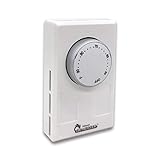
This versatile Dr. Infrared thermostat supports a wide voltage range (120V–277V) and high-wattage loads, making it suitable for residential and commercial electric heating systems. Its wall-flush design and mechanical simplicity cater to users needing robust, universal compatibility without digital complexity.
What Makes It Stand Out:
Unmatched voltage flexibility (up to 277V) and massive wattage capacity (7,756W at 277V) accommodate diverse heaters. Double terminals ensure a definitive OFF position, while the large, dual-scale knob (°C/°F) enables effortless manual adjustments even with gloves.
Value for Money:
Excellent for high-voltage/commercial applications where few competitors operate. The rugged build and universal compatibility justify a mid-range price, especially for facilities managers needing one thermostat for multiple heater types.
Strengths and Weaknesses:
Strengths: Exceptional voltage/wattage range; intuitive mechanical control; durable flush-mount design; dual °C/°F dials; positive OFF switch. Weaknesses: No digital display or programming; bulkier than smart thermostats; limited to manual operation; lacks energy-saving features.
Bottom Line:
A top pick for commercial spaces or high-voltage residential systems requiring dependable, manual temperature control. Avoid if seeking automation, but perfect for no-nonsense, heavy-duty heating management.
3. Honeywell TL8230A1003 Electric Heat Digital 7 Day Programmable Thermostat
Overview:
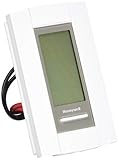
Honeywell’s programmable thermostat delivers energy-conscious control for 240V electric heating. With a 7-day scheduling capability and precision temperature management, it targets homeowners aiming to reduce bills through automated routines without sacrificing comfort.
What Makes It Stand Out:
The 7-day customizable programming supports distinct weekday/weekend schedules for up to 20% energy savings. Early Start technology ensures rooms hit target temps exactly on time, while the backlit display and silent operation enhance usability.
Value for Money:
Competitively priced for its energy-saving potential. The ±1°F accuracy and programmability offer tangible bill reductions, making it a smarter long-term investment than non-programmable models despite a modest upfront cost.
Strengths and Weaknesses:
Strengths: Significant energy savings via scheduling; precise temperature control; quiet operation; clear backlit display; reliable Honeywell build. Weaknesses: Limited to 240V systems; no Wi-Fi/smart features; setup may confuse tech-averse users; basic interface.
Bottom Line:
Highly recommended for cost-conscious users with electric heating who want automated savings. It’s a practical, efficient upgrade over manual thermostats but falls short for those needing remote access.
4. Mysa Smart Thermostat LITE - Line Voltage Electric Baseboard Heater Thermostat 120V/240V | DIY Install | HomeKit, Alexa, Google | Wi-Fi Programmable | App Control
Overview:
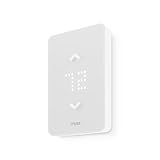
Mysa LITE brings smart functionality to line-voltage heaters (120V–240V), enabling app control, scheduling, and energy reporting. Designed for DIY installation, it targets tech-savvy homeowners seeking to modernize baseboard heating with voice assistants and no subscription fees.
What Makes It Stand Out:
True plug-and-play smart features: full HomeKit/Alexa/Google integration, custom scheduling, and monthly energy reports—all with a free, no-subscription app. The 15-minute DIY install (4-wire) and dual-voltage support eliminate common smart thermostat barriers.
Value for Money:
Premium-priced but justified by substantial energy savings (up to 26%) and zero ongoing costs. Outperforms pricier competitors by including all features upfront, making it a cost-effective smart solution for electric heating.
Strengths and Weaknesses:
Strengths: No subscription fees; seamless smart integrations; significant energy savings; easy DIY install; detailed usage reports. Weaknesses: Only functions as single-pole (despite dual-pole mention); Wi-Fi dependency; app required for full features; limited to electric heat.
Bottom Line:
The best smart thermostat for electric baseboard owners. Its DIY ease, robust app, and genuine energy savings deliver exceptional value—essential for modern, efficient heating control.
5. Stelpro Single Pole Line Voltage Thermostat, Mechanical 240 Volts, Compatible with Most Heating Products (Electric Baseboards, Wall Fan Heaters or Commercial Fan-Forced Heaters), (SWT1F) White

Overview:
Stelpro’s SWT1F is a no-frills mechanical thermostat for 240V electric heating systems. With a simple dial interface and broad compatibility, it serves as a durable, low-cost solution for baseboards or fan heaters in homes or offices.
What Makes It Stand Out:
Its universal fit spans baseboards, fan heaters, and commercial units, while the molded plastic body blends discreetly into any decor. The mechanical dial offers immediate, tactile temperature adjustments without batteries or programming.
Value for Money:
Exceptionally affordable for reliable mechanical operation. Ideal for budget installations or secondary spaces where digital features are unnecessary, offering long-term value through simplicity and minimal maintenance.
Strengths and Weaknesses:
Strengths: Wide heater compatibility; ultra-simple 2-wire installation; durable construction; silent operation; cost-effective. Weaknesses: No digital display or precision control; zero energy-saving features; manual-only operation; prone to calibration drift over time.
Bottom Line:
A dependable, economical choice for straightforward heating control in garages, rentals, or supplemental zones. Skip if you need scheduling or accuracy, but perfect for bare-bones functionality.
6. Honeywell Home CT410B Manual 4 Wire Premium Baseboard/Line Volt Thermostat CT410B1017

Overview: The Honeywell CT410B is a straightforward, non-programmable line-voltage thermostat designed exclusively for electric baseboard, convector, and compatible fan-forced heaters (120-240V). It features manual bimetal temperature control within a 40°F-80°F range, prioritizing simplicity and reliability for basic heating needs without scheduling.
What Makes It Stand Out: Its standout feature is the double-line break with a positive OFF position, ensuring complete circuit disconnection for safety and energy savings when not in use. The bimetal sensor provides dependable, maintenance-free operation without batteries, appealing to users seeking a “set and forget” solution for supplementary or primary electric heat.
Value for Money: Priced modestly, it delivers excellent value for those needing a no-frills, durable mechanical thermostat. While lacking programmability, it undercuts digital models significantly and avoids subscription costs or complex setups, making it ideal for rental properties, garages, or simple installations where scheduling isn’t required.
Strengths and Weaknesses: Strengths: Extremely reliable bimetal operation; simple, intuitive manual dial; positive OFF for safety; easy 4-wire installation; wide voltage compatibility. Weaknesses: Non-programmable (no energy savings from scheduling); limited temperature range (max 80°F); basic design lacks modern features like digital display or remote access.
Bottom Line: A superb choice for users prioritizing reliability, safety, and simplicity over smart features. If you need basic, hands-off control for electric heat without programming, the CT410B offers exceptional durability and value at its price point.
7. Cadet Double Pole Mechanical Wall Thermostat for Electric Heaters (Model: T522-W), 22 Amp, White

Overview: The Cadet T522-W is a robust, double-pole (4-wire) mechanical thermostat built for 120/240V electric baseboard and wall heaters up to 22 amps. It operates via a simple twist dial for manual temperature adjustment, featuring a positive OFF position and color-coded wiring to streamline installation.
What Makes It Stand Out: Its standout feature is the user-friendly color-coded wiring (red/black for line, blue/yellow for load), significantly reducing installation errors for DIYers or technicians. The double-pole design ensures complete circuit disconnection at OFF, enhancing safety and energy efficiency compared to single-pole alternatives.
Value for Money: Offering solid value for its modest cost, the T522-W excels as a reliable replacement or new installation for standard electric heating zones. It’s more affordable than programmable models while providing essential safety (double-pole) and easier setup than many competitors, ideal for budget-conscious homeowners or landlords.
Strengths and Weaknesses: Strengths: Intuitive color-coded wiring; positive OFF safety feature; durable mechanical construction; wide voltage compatibility (120/240V); simple twist-dial operation. Weaknesses: Non-programmable (no scheduling); basic aesthetic; limited temperature control precision; not suitable for fan-forced heaters with inductive loads.
Bottom Line: Highly recommended for straightforward electric heating control where ease of installation, safety, and reliability are paramount. It’s a cost-effective, no-nonsense solution perfect for replacing old thermostats or new baseboard heater setups.
8. Lux ELV4 Line Voltage Programmable 5-2 Day Thermostat; 1 Heat, Line Voltage Only

Overview: The Lux ELV4 is a programmable line-voltage thermostat designed specifically for resistive electric heating systems (120-240V). It offers 5-2 day scheduling (separate weekday/weekend programs), four adjustable periods per day, and temporary override functionality, targeting energy-conscious users.
What Makes It Stand Out: Its key differentiator is true line-voltage programmability with a 5-2 day schedule and temporary hold, enabling significant energy savings by automatically reducing heat during absences. The front-access battery compartment and low-battery indicator ensure uninterrupted operation, a rarity in this category.
Value for Money: While pricier than mechanical thermostats, the ELV4 justifies its cost through potential energy savings from optimized scheduling. It’s a smarter investment than basic models for primary living spaces, though overkill for infrequently used rooms. Competes well with similar programmable units on features.
Strengths and Weaknesses: Strengths: Energy-saving 5-2 day programming; temporary override; clear screen; battery backup with indicator; positive OFF switch; UL approved. Weaknesses: Not compatible with fan-assisted heaters (inductive loads); programming interface can be less intuitive than smart thermostats; requires batteries; higher upfront cost than manual models.
Bottom Line: An excellent choice for maximizing efficiency in rooms with regular occupancy patterns. If you want automated scheduling for electric baseboards and can confirm compatibility, the ELV4 delivers strong value through long-term energy savings.
9. Stelpro Double-Pole Line Voltage Mechanical Wall Thermostat – 22A (120–277V), Durable Plastic Housing, Adjustable Dial, Non‑Programmable, 50–90°F Range (SWT2F) – White
Overview: Stelpro’s SWT2F is a versatile double-pole mechanical thermostat supporting an exceptionally wide voltage range (120-277V) for 22A electric heaters. It features a smooth adjustable dial (50°F-90°F), a durable low-profile design, and is certified for residential or commercial use with baseboards, fan units, or commercial heaters.
What Makes It Stand Out: The standout feature is its broad 120-277V compatibility, making it uniquely suitable for commercial/industrial settings or unusual residential voltages where most thermostats fail. The double-pole design ensures full power cutoff, and its robust CSA/UL-certified construction promises longevity in demanding environments.
Value for Money: Priced competitively for its heavy-duty build and voltage flexibility, it offers outstanding value in commercial applications or high-voltage residential systems. While over-specified for standard 120/240V homes, its durability and safety features justify the cost for critical or high-use installations.
Strengths and Weaknesses: Strengths: Unmatched 120-277V compatibility; double-pole safety shutoff; durable commercial-grade housing; clear mechanical dial; CSA/UL certified; 1-year warranty. Weaknesses: Non-programmable; narrower temp range (50°F min) than some; overkill/expensive for standard 120/240V homes; no digital features.
Bottom Line: The top recommendation for commercial electric heating or non-standard voltage systems. For standard homes, consider only if prioritizing maximum durability and safety—otherwise, simpler models may suffice. A specialist’s reliable workhorse.
10. Robertshaw DPST Line Voltage Electric Heat Thermostat 802
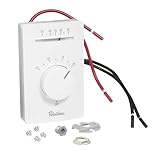
Overview: The Robertshaw 802 is a double-pole, single-throw (DPST) mechanical thermostat engineered for 120-240V electric heating systems like baseboards and radiant heaters. It emphasizes safety with a positive OFF switch and delivers reliable bimetal temperature control with +/-2°F accuracy.
What Makes It Stand Out: Its core strength is the DPST design with a definitive positive OFF position, guaranteeing complete system shutdown for enhanced safety and energy conservation. The bimetal sensor ensures precise, battery-free operation, while J-box compatibility simplifies mounting and installation in standard electrical boxes.
Value for Money: Positioned as a mid-range replacement thermostat, it provides strong value through robust safety features and dependable performance. It’s slightly pricier than basic single-pole models but justifies the cost for the critical safety of full circuit disconnection, ideal for primary heating zones.
Strengths and Weaknesses: Strengths: True DPST positive OFF for safety; accurate +/-2°F bimetal control; J-box ready for easy install; wide compatibility with electric heaters; simple, reliable operation. Weaknesses: Non-programmable; basic functionality; no temperature display; limited to resistive loads (not for fan heaters); minimal aesthetic appeal.
Bottom Line: Highly recommended for users prioritizing safety and reliability in standard electric heating setups. If you need a trustworthy, safety-focused mechanical thermostat for baseboards, the 802 is a solid, no-compromise choice.
Understanding Line Voltage Systems and Their Thermostats
How Line Voltage Heating Differs from Low Voltage Systems
Line voltage systems power electric resistance heaters—like baseboards or radiant panels—directly using the same household current (120V or 240V) that runs your oven or dryer. This is fundamentally different from low-voltage systems (typically 24V) used with gas furnaces or heat pumps, which rely on a transformer and relay to control the main unit. Line voltage thermostats must safely switch this higher current on and off, requiring heavier-duty internal components and specific wiring configurations. Confusing the two types leads to dangerous installation errors or non-functional systems.
The Core Function: Direct Power Control
Unlike low-voltage thermostats that send a signal to a separate control board, line voltage thermostats act as the actual switch for the heater. When you adjust the temperature setting, the thermostat’s internal relay physically connects or disconnects the high-voltage power flowing directly to your heater. This direct control means the thermostat’s build quality, amperage rating, and safety certifications are non-negotiable factors for reliable and safe operation over years of daily use.
Why Compatibility is Non-Negotiable
Not all line voltage thermostats work with all electric heaters. You must match the thermostat’s voltage rating (120V, 240V, or dual-voltage) and amperage capacity (usually 15A, 20A, or 30A) precisely to your heater’s specifications. Overloading a thermostat by exceeding its amp rating is a major fire risk. Additionally, single-pole thermostats control one hot wire (common for 120V), while double-pole thermostats interrupt both hot wires (essential for 240V safety). Always verify compatibility with your specific heater model and electrical circuit before purchasing.
Essential Features to Prioritize in Your Selection
Precision Temperature Sensing and Control
Accurate ambient temperature reading is paramount. Look for thermostats with high-quality internal sensors placed away from internal heat sources (like the relay) and external influences (like direct sunlight or drafts near the thermostat body). Advanced models offer adaptive algorithms that learn how your room heats up and cools down, preventing the common “temperature swing” problem where the room feels too hot or too cold before the thermostat reacts. Consistent, precise control directly impacts comfort and energy use.
Programmability: Tailoring Heat to Your Life
Basic manual thermostats require constant adjustment. Programmable models let you set automatic temperature schedules aligned with your daily routine—lowering heat while you sleep or at work, then warming the space before you wake or return home. This simple automation is one of the most effective ways to reduce energy consumption without sacrificing comfort. Ensure the programming interface is intuitive; complex menus defeat the purpose and lead users to abandon the schedule.
Smart Capabilities: Convenience and Insights
Smart line voltage thermostats offer remote control via smartphone apps, geofencing (adjusting heat based on your location), and integration with voice assistants or broader smart home systems. Crucially, they provide detailed energy usage reports, helping you identify patterns and potential savings. However, verify robust Wi-Fi reliability and long-term platform support—no one wants a “smart” thermostat that becomes a costly paperweight because the manufacturer discontinued its app.
Physical Design and User Interface Matters
Don’t underestimate usability. Consider the display: Is it bright enough for dim rooms? Does it show the current temperature clearly alongside the setpoint? Is the interface (buttons, touch screen, dial) easy to use, especially for elderly family members? The physical footprint must fit your existing wall box or mounting location. A sleek design is nice, but intuitive operation and readability are essential for daily satisfaction and preventing accidental overrides.
Installation Considerations You Can’t Overlook
Electrical Safety: The Absolute Priority
Working with line voltage is inherently dangerous. If you are not a licensed electrician or lack significant experience with household wiring, hire a professional. Incorrect wiring can cause electrocution, fire, or damage to your heating system. Ensure the circuit breaker is OFF and verified with a voltage tester before touching any wires. Matching wire colors (black to black, red to red, white to white, ground to ground) is critical, but always confirm with a wiring diagram specific to your thermostat model and heater type.
Matching Wire Types and Terminal Capacity
Line voltage thermostats use thicker gauge wires (typically 12-14 AWG) compared to low-voltage systems. Verify that the thermostat’s screw terminals can securely clamp these larger wires. Loose connections cause arcing, overheating, and fire. Some modern thermostats feature spring-clamp terminals, which are easier and often more secure than traditional screw terminals, especially for DIYers (though professional installation is still strongly advised for line voltage).
Physical Space and Mounting Requirements
Measure your existing wall cavity. Some digital or smart thermostats are deeper than older mechanical models and may not fit flush in shallow electrical boxes, especially in older homes. Ensure there’s adequate space behind the thermostat for the wiring to fold neatly without strain. Consider the thermostat’s location—it should be on an interior wall, away from direct heat sources, drafts, windows, or doors, for accurate temperature sensing.
Load Calculation: Don’t Exceed Capacity
This is critical. Add up the total wattage of all heaters controlled by a single thermostat. Divide the total watts by the system voltage (120V or 240V) to get the total amperage draw. This number must be less than the thermostat’s maximum amperage rating (e.g., a 20A thermostat can handle up to 2400W on 120V or 4800W on 240V). Exceeding this rating will destroy the thermostat and create a fire hazard. When in doubt, consult an electrician.
Optimizing Performance and Efficiency
Leveraging Scheduling for Maximum Savings
Programmability isn’t just a feature; it’s your primary tool for reducing costs. Studies consistently show that properly configured setback schedules (lowering temps by 7-10°F for 8 hours daily) can save up to 10% on heating bills annually. Set lower temperatures during sleeping hours and when the house is empty. Avoid drastic temperature changes; a gradual adjustment is more efficient than cranking the heat to “override” a large setback.
The Role of Adaptive Recovery Features
Basic programmable thermostats simply turn the heat on at the scheduled time. Advanced models use “adaptive recovery” – they learn how long your specific heater takes to warm the space from the setback temperature to your desired comfort level. Instead of blasting heat at full power right at the scheduled time (causing a spike in usage), it starts heating earlier at a lower intensity for a smoother, more energy-efficient transition to your target temperature.
Monitoring Usage to Identify Opportunities
Smart thermostats provide granular data on when and how much energy your heaters consume. Analyze these reports. Are certain rooms consistently using more power? Is heating running unnecessarily when you’re away? This insight allows you to adjust schedules, investigate potential drafts or insulation issues in specific zones, or even consider adding zoning for greater control over individual room temperatures, further optimizing overall system efficiency.
Maintaining Your Thermostat for Longevity
While simpler than low-voltage systems, line voltage thermostats still need care. Periodically (yearly) turn off the circuit breaker and gently vacuum any dust buildup around the unit and inside the cover. Dust can insulate components and cause overheating. Visually inspect wires for signs of melting, brittleness, or looseness (only when power is OFF!). A quick wipe of the display keeps it readable. This minimal maintenance prevents premature failures and ensures accurate operation.
Troubleshooting Common Line Voltage Thermostat Issues
No Power or Unresponsive Display
First, check the circuit breaker—it’s the most common culprit. Ensure it’s fully in the “ON” position (sometimes it trips to a middle position). If the breaker trips immediately when reset, there’s likely a short circuit in the heater or wiring—call an electrician. Verify the thermostat’s power source; some smart models require a neutral wire (white) for constant power, which older installations might not have.
Heater Runs Continuously (Won’t Turn Off)
This dangerous situation usually indicates a failed internal relay welded shut. Turn off the circuit breaker immediately. Do not attempt to use the thermostat. The unit must be replaced. This is a critical safety failure requiring prompt attention to prevent overheating of the heater or wiring.
Heater Won’t Turn On or Cycles Erratically
Check all wire connections at both the thermostat and the heater terminals for tightness. A loose wire is a frequent cause. Verify the thermostat’s heat anticipator setting (if it has one—common on older mechanical models); incorrect settings cause short cycling. For digital models, check for error codes on the display and consult the manual. Ensure the setpoint temperature is actually higher than the current room temperature.
Inaccurate Temperature Readings
The thermostat might be located poorly—near a heat source, in direct sunlight, or on an exterior wall. Relocating it (by an electrician) may be necessary. Some models allow a small temperature calibration offset in the settings menu to compensate for minor sensor inaccuracies. Clean dust from the sensor area (power OFF first). If the discrepancy is large and consistent, the sensor may be faulty, requiring replacement.
Frequently Asked Questions
Frequently Asked Questions
Can I replace my old mechanical line voltage thermostat with a modern digital one?
Yes, in most cases, as long as the voltage, amperage rating, and pole configuration (single or double) match your system. Ensure the new thermostat fits the wall box and that you have the necessary wires (including a neutral wire for many smart models).
Is it safe to install a line voltage thermostat myself?
Working with line voltage (120V/240V) carries significant electrocution and fire risk. Unless you are highly experienced and comfortable with household electrical work, hiring a licensed electrician is strongly recommended and often required by local code.
Why does my new thermostat feel warm to the touch?
Some warmth is normal due to the electrical current passing through it, especially during heating cycles. However, excessive heat (too hot to touch comfortably) indicates an overloaded circuit, loose wiring, or a failing thermostat—turn off the breaker and consult an electrician immediately.
Do I need a neutral wire for a smart line voltage thermostat?
Most smart thermostats require a neutral (white) wire to provide constant power for the Wi-Fi radio and screen. Older line voltage installations often lack a neutral at the thermostat location. An electrician may need to run a new cable or use a specialized power extender kit if a neutral isn’t present.
Can one thermostat control multiple electric heaters in different rooms?
Yes, but only if the combined wattage of all heaters connected to that single thermostat circuit is within the thermostat’s maximum amperage rating. Calculate total watts / voltage = total amps, and ensure this is less than the thermostat’s rating (e.g., 20A max).
What’s the difference between single-pole and double-pole thermostats?
Single-pole (SPST) interrupts one hot wire (120V circuits). Double-pole (DPST) interrupts both hot wires (essential for 240V circuits for full safety shutdown). Using a single-pole on 240V is dangerous and violates electrical code.
Why does my heater short-cycle (turns on and off too frequently)?
Common causes include an incorrectly set heat anticipator (on older thermostats), a thermostat location exposed to drafts or direct heat, an oversized heater for the space, or sometimes a failing thermostat sensor. Check placement and settings first.
Are line voltage thermostats more expensive to operate than low-voltage ones?
The thermostat itself consumes negligible power. Operating cost depends entirely on the efficiency of your electric heaters and your usage patterns. The thermostat’s role is to control that usage effectively via programming and features.
Can I use a standard low-voltage thermostat with my electric baseboard heaters?
Absolutely not. Low-voltage thermostats cannot handle the high current of line voltage heaters. Attempting this will destroy the thermostat, likely cause a fire, and void any safety certifications. Always use a thermostat specifically rated for line voltage.
How often should I replace my line voltage thermostat?
Mechanical thermostats may last 15-20 years but become less accurate over time. Digital units typically last 10-15 years. Replace immediately if you notice erratic behavior, excessive heat, buzzing sounds, or if it fails to control the heater properly. Upgrading for better features and efficiency is also a valid reason.
See Also
- 10 Top-Rated Low Voltage Thermostats According to HVAC Experts in 2026
- 10 Top-Rated Learning Thermostats According to Experts in 2026
- 10 Top-Rated Touchscreen Thermostats According to Experts in 2026
- The 10 Most Revolutionary Line Voltage Thermostats of 2026
- 10 Top-Rated Thermostat Covers According to HVAC Experts in 2026