Table of Contents
Upgrading your commercial or industrial space with ceiling fans can dramatically improve air circulation and energy efficiency, but the mounting system you choose is just as critical as the fan itself. Drop ceiling fan mounts have evolved significantly over the past few years, with 2026 bringing new engineering standards that prioritize safety, durability, and ease of installation. Whether you’re retrofitting an older building or planning new construction, understanding these mounting systems will help you make a decision that stands the test of time.
This comprehensive guide walks you through everything you need to know about selecting the right drop ceiling fan mount for your specific application. We’ll explore the key features that separate premium mounting solutions from basic options, discuss installation best practices, and highlight the safety certifications that matter most. By focusing on the technical specifications and performance indicators that HVAC professionals prioritize, you’ll be equipped to evaluate any mounting system on the market without relying on brand-specific claims.
Top 10 Drop Ceiling Fan Mounts
Detailed Product Reviews
1. Arlington FBRS420SC-1 Steel Fan and Fixture Fan Mounting Box for Suspended Ceiling, 70-pound capacity, Metallic, 1-Pack

Overview:
The Arlington FBRS420SC-1 is a heavy-duty steel mounting box engineered specifically for suspended ceiling installations. With a 70-pound fan rating and preset 24-inch grid configuration, this commercial-grade solution eliminates assembly headaches while providing robust support for both fans and light fixtures in drop ceiling environments.
What Makes It Stand Out:
This product’s breakable mounting clips allow installers to lower the box position for ceiling tiles that extend below the grid—a nuanced feature rarely found in standard braces. The no-assembly design means all adjustment screws ship parked in place, preventing lost hardware on job sites and saving valuable installation time significantly.
Value for Money:
At approximately $30-40 per unit, the FBRS420SC-1 commands a premium over basic residential braces but delivers commercial UL certification and specialized suspended ceiling functionality. For contractors working regularly on office buildings or basements with drop ceilings, the time saved on assembly justifies the cost versus piecing together generic components.
Strengths and Weaknesses:
- Strengths: Commercial-grade 70 lb rating, no assembly required, adjustable for tile depth, UL and CSA certified for safety
- Weaknesses: Heavy at 5.55 lbs, limited to suspended ceilings only, higher price point than standard residential options
Bottom Line:
Ideal for commercial contractors and homeowners with drop ceilings who need a code-compliant, ready-to-install solution without assembly frustrations. The specialized design justifies its premium pricing for suspended ceiling applications specifically.
2. Westinghouse 0110000 Saf-T-Brace for Ceiling Fans, 3 Teeth, Twist and Lock,Silver(Pack of 1)

Overview:
Westinghouse’s Saf-T-Brace is a trusted industry standard for ceiling fan installation, featuring a patented twist-and-lock mechanism that secures between joists. Supporting up to 150 pounds for fixtures on 16-inch centers, this versatile brace accommodates heavy chandeliers and ceiling fans with equal confidence in residential settings.
What Makes It Stand Out:
The three-tooth twist-lock design provides audible and tactile confirmation of proper engagement, eliminating guesswork during installation. Six integrated knockouts and an included Romex connector demonstrate thoughtful engineering, while the Saf-T-Cap protects wires during drywall work—a hallmark of professional-grade equipment that speeds up projects.
Value for Money:
Priced around $25-35, the Saf-T-Brace carries a modest brand premium but includes all necessary hardware and connectors that competitors often omit. The 15.5 cubic inch box depth meets most residential needs, and the weight ratings exceed typical DIY requirements, making it a long-term investment for multiple projects.
Strengths and Weaknesses:
- Strengths: Exceptional 150 lb fixture capacity on 16" centers, trusted brand reputation, complete hardware kit included, twist-lock security
- Weaknesses: Fan capacity drops to 70 lbs, reduced fixture capacity on 24" centers, shallower box than some alternatives
Bottom Line:
A reliable choice for homeowners and electricians installing heavy fixtures on standard joist spacing. The Westinghouse name and comprehensive kit make it worth the slight premium for peace of mind and proven performance.
3. Tandefio 2 Pcs Adjustable Ceiling Fan Bracket Ceiling Mounting Bracket Electrical Box for Fans and Light Fixtures, 14.7 Inches in Length

Overview:
The Tandefio two-pack delivers exceptional value for DIY enthusiasts tackling multiple room installations. Each 14.7-inch bracket extends to 24 inches, providing flexibility for various joist configurations while including twelve mounting screws—enough hardware for both units without additional purchases.
What Makes It Stand Out:
This homeowner-focused bundle recognizes that most residential projects involve more than one fixture. The welded box-to-arm construction ensures stability without complex assembly, while the free-moving box design along the pole simplifies positioning during installation—a practical feature that non-professionals will appreciate when working overhead.
Value for Money:
Typically priced under $25 for two units, this offering costs less than a single premium brace while providing double the coverage. For basement renovations or whole-house updates, the per-unit cost drops below $12.50, representing significant savings over name-brand alternatives without sacrificing fundamental functionality for standard residential fans.
Strengths and Weaknesses:
- Strengths: Excellent value with two brackets included, extends to 24 inches, multi-room convenience, straightforward installation
- Weaknesses: Brand recognition concerns, unspecified weight certifications, basic finish quality may not match premium options
Bottom Line:
Perfect for budget-conscious homeowners managing multiple installations. While lacking premium brand assurance, the quantity and functionality make it an unbeatable value for DIY whole-home projects where cost efficiency is paramount.
4. Therwen 2 Pcs Ceiling Fan Brace Electrical Box 14.25 to 22.5 Inch Adjustable Electrical Box and Support Bar Fan Mounting Bracket for Summer Light Fixtures Installations (Gray)
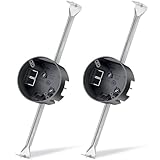
Overview:
Therwen’s gray-finished two-pack offers a material hybrid approach with PPO electrical boxes and galvanized iron support bars. Adjusting from 14.25 to 22.5 inches, these braces target the sweet spot between compact design and adequate span for most residential joist spacing applications.
What Makes It Stand Out:
The 20 cubic inch box volume exceeds many competitors, providing extra wire space for complex installations. The combination of corrosion-resistant galvanized iron with thermoplastic PPO boxes creates a modern material pairing that balances durability with electrical insulation properties not found in all-metal designs.
Value for Money:
Positioned in the $20-30 range for two units, Therwen delivers mid-tier pricing with above-average box volume and decent material quality. The two-pack configuration remains cost-effective for multi-room projects, though the slightly shorter maximum span may limit some applications compared to full 24-inch alternatives.
Strengths and Weaknesses:
- Strengths: Generous 20 cu in box capacity, hybrid material construction, two-unit value pack, corrosion-resistant finish
- Weaknesses: 22.5-inch maximum span limits some layouts, mounting screws not included, limited brand history
Bottom Line:
A smart compromise for DIYers wanting more wire space without premium pricing. The material combination and box volume make it suitable for moderately complex residential installations where standard 15 cu in boxes feel cramped.
5. RACO RETRO-BRACE 936 1.5-in. Deep Ceiling Fan Box for Old Work 2.5-in. Knockouts, Old Work Electrical Box, Adjustable Brace, and Mounting Bracket for Ceiling Light Fixtures & Chandelier Fans

Overview:
The RACO RETRO-BRACE 936 addresses the unique challenges of renovation work, allowing tool-free expansion from 16 to 24 inches in existing ceilings. Specifically engineered for old work applications, it supports 70-pound fans or 110-pound light fixtures while preserving original architectural details.
What Makes It Stand Out:
Tool-free adjustment represents a game-changer for retrofit projects where ceiling access is limited. Unique mounting feet and snap-on bracket facilitate installation through a small ceiling cutout, while the up-front ground screw simplifies electrical connections in tight spaces—thoughtful details that demonstrate professional trade experience.
Value for Money:
At $35-45, this specialized brace commands premium pricing but eliminates costly ceiling demolition. For restoration projects where preserving plaster or decorative ceilings is paramount, the time and damage saved justify every penny versus traditional new-work braces requiring extensive access and repair work.
Strengths and Weaknesses:
- Strengths: Tool-free 16-24" adjustment, old work design preserves ceilings, 110 lb light fixture rating, cULus certified
- Weaknesses: Highest price point, specialized application limits versatility, deeper learning curve for novices
Bottom Line:
The essential choice for renovation professionals and homeowners restoring vintage homes. Its old work design justifies the premium by preventing ceiling damage and reducing installation time dramatically in retrofit scenarios.
6. Fan Mounting Box, Ceiling Fan Mounting Bracket, Ceiling Fan Mounting Box, Ceiling Fan Mounting Kit, Fan Mounting Bracket, Fits cathedral Ceiling Angles of 80° or Up, White,1-Pack

Overview: This specialized fan mounting box addresses the challenge of installing ceiling fans and light fixtures on extremely steep cathedral ceilings. Designed for unfinished vaulted spaces, it accommodates angles up to 80 degrees and beyond, providing a secure, centered mounting solution where standard boxes simply won’t work. The 14.5 cubic-inch capacity offers sufficient wiring space while maintaining a compact 6.36" x 8" x 8" profile that doesn’t overwhelm the ceiling plane.
What Makes It Stand Out: The extreme angle capability is this product’s defining feature—most mounting solutions max out at 45 degrees, making this essential for dramatically pitched ceilings. Its impressive weight capacity supports fans up to 70 pounds and fixtures up to 200 pounds, exceeding typical residential requirements. The paintable white plastic construction allows custom color matching, while the included NM cable connector and installation hardware streamline setup.
Value for Money: For homeowners with steep cathedral ceilings, this niche product justifies its cost by solving a problem that generic mounting boxes cannot. While slightly pricier than standard options, it eliminates the need for custom carpentry work, potentially saving hundreds in labor costs. Comparable solutions for extreme angles are rare, giving this product strong value in its specialized category.
Strengths and Weaknesses: Strengths include exceptional angle accommodation, high weight ratings, straightforward installation on open ceilings, and paintable finish. The comprehensive hardware kit adds convenience. However, it requires a 2x4 frame (not included) and only works with unfinished ceilings, limiting remodeling applications. The plastic construction, while durable, may not match the premium feel of metal alternatives. Its specialized nature makes it overkill for standard flat or moderately angled ceilings.
Bottom Line: This mounting box is an excellent solution for new construction with dramatically pitched cathedral ceilings exceeding 45 degrees. It’s not versatile enough for general use, but if you’re dealing with extreme angles, it’s practically indispensable. Ensure your ceiling is unfinished and you have framing materials before purchasing.
7. VIVO Universal Adjustable 2 x 2 feet Drop Ceiling Projector Mount, Suspended Drop-in Ceiling Tile Projection Mounting Kit, for Office Home or School, White, MOUNT-VP07DP
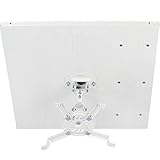
Overview: This innovative projector mount seamlessly integrates into standard 2’ x 2’ suspended ceiling grids, replacing an entire tile for clean, professional installation without drilling. Designed for offices, classrooms, and home theaters, it supports projectors up to 29.7 pounds with universal compatibility. The steel construction provides durability while maintaining a low profile that blends with existing ceiling aesthetics.
What Makes It Stand Out: The patented no-drill design is revolutionary—simply swap out a ceiling tile rather than penetrating structural elements. Adjustable mounting arms accommodate projector hole patterns up to 12.5 inches diagonally, covering most consumer and commercial models. The exceptional articulation range (-15° to +15° tilt and swivel plus full 360° rotation) ensures perfect image alignment from any position. Integrated cable management holes keep HDMI and power cords organized and professional-looking.
Value for Money: For drop ceiling environments, this mount eliminates costly structural modifications and professional installation fees, often paying for itself in saved labor costs. While standard mounts might be cheaper initially, they require additional hardware and ceiling reinforcement. The all-in-one design and quick-release hooks provide convenience that justifies the modest price premium over basic fixed mounts.
Strengths and Weaknesses: Major strengths include tool-free grid installation, broad projector compatibility, precise adjustability, and clean cable routing. The steel plate offers reliable support without ceiling damage. However, it’s limited to 2’ x 2’ grid systems (not 2’ x 4’), and the 29.7-pound capacity excludes heavier commercial projectors. The white finish may not match off-white or acoustic tile colors. It also requires an existing drop ceiling, making it unsuitable for drywall installations.
Bottom Line: Ideal for anyone with 2’ x 2’ drop ceilings seeking a non-destructive, professional projector mounting solution. The VIVO MOUNT-VP07DP excels in commercial and educational settings where ceiling integrity and flexibility are paramount. Verify your projector’s weight and mounting pattern before purchasing to ensure compatibility.
8. Sealproof Fan Brace - Electrical Box and Support Bar for Ceiling Fans and Light Fixtures, New Installations and Remodels

Overview: The Sealproof Fan Brace provides a robust solution for securely mounting ceiling fans and light fixtures to joists in both new construction and remodeling projects. This adjustable support bar spans 16 to 24 inches, accommodating standard residential joist spacing. Rated for fans up to 70 pounds and fixtures up to 150 pounds on 16-inch centers, it delivers professional-grade stability that eliminates wobble and ensures safety.
What Makes It Stand Out: Its dual-purpose design excels in both attic-accessible new builds and finished-ceiling remodels, offering rare versatility. The integrated electrical box features four conduit knockouts for flexible wiring options, while the included protection cap prevents debris entry during installation or painting. The bar’s engineered truss compatibility broadens its application beyond traditional stick framing, making it suitable for modern construction methods.
Value for Money: This brace offers exceptional value by combining a support bar and electrical box in one unit, eliminating separate component purchases. Competitors often require buying additional hardware for remodel applications, but Sealproof’s design works universally. The heavy-duty construction prevents costly fan replacements due to inadequate support, and its adjustability means one product covers multiple joist spacing scenarios, reducing inventory needs for contractors.
Strengths and Weaknesses: Key strengths include wide joist span adjustability, high weight ratings, new construction and remodel versatility, and thoughtful extras like the protection cap. Attic access makes installation straightforward. However, retrofitting through a finished ceiling requires a hole large enough for the entire box assembly, which can be challenging. Weight capacity drops to 90 pounds for fixtures on 24-inch centers, potentially limiting some heavy chandeliers. The basic steel construction lacks corrosion resistance coatings found on premium alternatives.
Bottom Line: An excellent choice for DIYers and professionals seeking a reliable, versatile fan mounting solution. The Sealproof Fan Brace is particularly valuable for remodelers who need a product that adapts to existing conditions. Ensure you have adequate ceiling access for installation and verify your fixture’s weight against the appropriate joist spacing rating.
9. TEBTEOTEK Universal Sloped Ceiling Fan Adapter for Angled Ceiling Up to 45° (Black)
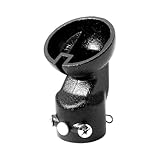
Overview: This sloped ceiling adapter enables standard ceiling fans to mount securely on angled ceilings from flat up to 45 degrees. Constructed from heavy-duty steel, the TEBTEOTEK adapter works specifically with 1-inch diameter downrods and mounting brackets featuring a 1.7-inch inner diameter. The black finish provides a neutral aesthetic that blends with most fan motor housings and ceiling environments while maintaining structural integrity.
What Makes It Stand Out: The reinforced steel construction offers superior durability compared to plastic alternatives that can crack under fan torque. Its universal design compatibility covers most standard ceiling fan brands, eliminating brand-specific adapter hunting. The straightforward installation process requires minimal tools, and the included hardware ensures you won’t need additional trips to the hardware store. The clean, minimalist design doesn’t add visual bulk to your fan installation.
Value for Money: Steel adapters typically command a premium over plastic versions, but the enhanced durability and safety justify the modest price increase. This single adapter works across multiple fan brands, reducing future purchase needs if you replace your fan. While cheaper plastic options exist, they often fail within a few years, making this a wise long-term investment that prevents costly fan damage or hazardous detachments.
Strengths and Weaknesses: Strengths include robust steel construction, broad compatibility with standard fan components, and straightforward installation. The black finish resists visible dust and wear. However, the strict compatibility requirements—1-inch downrods and 1.7-inch bracket ID—demand careful measurement before purchase. It’s limited to 45-degree slopes, insufficient for steeper cathedral ceilings. The black color may clash with white or brass fan finishes, and it adds a small amount of drop to your fan height, which matters in low-clearance rooms.
Bottom Line: A reliable, heavy-duty solution for sloped ceiling fan installations within its 45-degree limit. The TEBTEOTEK adapter is ideal for homeowners with moderately angled ceilings who prioritize durability over cost. Carefully verify your existing fan’s downrod diameter and mounting bracket size before ordering to ensure compatibility. For steeper angles, consider alternative solutions.
10. Therwen 4 Pieces Adjustable Fan Electrical Box Brace for Ceiling Fans and Light Fixtures Ceiling Fan Mounting Bracket, 14.2 Inches in Length

Overview: This four-pack of adjustable ceiling fan mounting brackets provides a cost-effective solution for multiple fixture installations throughout a home or commercial space. Each 14.2-inch welded assembly combines a support arm with a 3.54-inch electrical box that slides along the pole for flexible positioning. The set includes eight screws, offering a complete hardware solution for several projects without repeated hardware store visits.
What Makes It Stand Out: The multi-pack quantity delivers exceptional value for contractors or whole-home renovations, eliminating per-unit packaging waste and bulk pricing. The sliding box design allows fine-tuning of fixture placement relative to joist location, a flexibility rarely found in fixed-position braces. Welded construction ensures alignment integrity during installation, preventing the wobbling that can occur with bolt-together designs. The universal sizing suits both residential bedrooms and commercial canteens alike.
Value for Money: Purchasing four brackets together significantly reduces per-unit cost compared to individual buys, making this economical for multi-room projects. While premium single braces might offer higher weight capacities, these provide adequate support for standard ceiling fans and light fixtures in most applications. The included screws add incremental savings, and the versatility across residential and commercial settings maximizes return on investment for property owners managing multiple units.
Strengths and Weaknesses: Strengths include bulk packaging value, adjustable positioning, welded durability, and broad application range. The standardized size works in most common scenarios. However, the 14.2-inch length may not accommodate wider joist spans found in some construction. The product description lacks specific weight capacity ratings, requiring cautious use with heavy fixtures. Welded construction, while sturdy, limits adjustability compared to telescoping designs. The unspecified material composition makes corrosion resistance uncertain in humid environments.
Bottom Line: An excellent bulk option for contractors or homeowners undertaking multiple ceiling fan installations. The Therwen four-pack offers practical functionality at an attractive price point. Verify your joist spacing and fixture weights fall within appropriate limits before purchasing. For single installations or heavy-duty commercial fans, consider higher-spec individual units instead.
Understanding Drop Ceiling Fan Mounts
What Are Drop Ceiling Fan Mounts?
Drop ceiling fan mounts are specialized structural components designed to securely suspend ceiling fans from dropped or suspended ceiling systems. Unlike standard ceiling installations that anchor directly into joists, these mounts must bridge the gap between the structural ceiling above and the drop ceiling grid below while maintaining stability. They typically consist of adjustable hangers, support boxes, and vibration-dampening elements that work together to create a safe, code-compliant installation.
Why Proper Mounting Matters for Safety and Performance
The mounting system is literally the foundation of your ceiling fan installation. A subpar mount can lead to wobbling, excessive noise, premature motor failure, and in worst-case scenarios, catastrophic detachment. In commercial settings where fans often span 60 inches or more and weigh over 50 pounds, the mount must handle dynamic loads that increase significantly during operation. Proper mounting ensures optimal blade clearance, minimizes vibration transfer to the ceiling grid, and maintains the fan’s warranty coverage.
Key Features of Top-Rated Mounts in 2026
Weight Capacity Ratings
Premium drop ceiling mounts in 2026 clearly specify both static and dynamic load capacities. Static capacity refers to the dead weight of the fan when stationary, while dynamic capacity accounts for the additional forces generated during operation. Look for mounts rated for at least 150% of your fan’s total weight to ensure a safety margin. Modern systems often support 75-150 pounds depending on the configuration, with heavy-duty options exceeding 200 pounds for industrial applications.
Vibration Dampening Technology
Advanced mounts now incorporate multi-stage vibration isolation that prevents fan oscillations from transferring to the ceiling grid. This typically includes rubber isolation pads, spring-loaded assemblies, or polymer bushings that absorb harmonic frequencies. Effective dampening not only reduces noise but also protects the ceiling tile and grid structure from long-term fatigue damage. The best systems isolate vibrations across multiple axes, not just vertical movement.
Adjustable Height Mechanisms
Ceiling height variations and fan size differences require flexible mounting solutions. Top-rated systems offer tool-free height adjustment within a 12-24 inch range, allowing precise positioning without disassembling the mount. Look for positive-locking mechanisms that won’t slip over time and measurement markings that ensure level installation. Some advanced models include micro-adjustment capabilities for fine-tuning blade clearance.
Universal Compatibility Features
The most versatile mounts accommodate various fan types, from standard 3-blade residential styles to large-diameter industrial models. Universal mounting plates with multiple bolt patterns and adapter options eliminate the need for manufacturer-specific hardware. In 2026, leading designs also integrate with smart fan systems, providing conduit pathways for control wiring without compromising structural integrity.
Material Durability Standards
Corrosion resistance and material strength define longevity in mounting hardware. Premium options use galvanized steel with powder-coated finishes or stainless steel construction for humid environments. The gauge of metal matters—look for 12-gauge steel minimum for the main support structure, with thicker materials for spans over 48 inches. Welded joints should be continuous and ground smooth to prevent stress concentration points.
Types of Drop Ceiling Fan Mounting Systems
Standard Box Mounts
Box mounts integrate a junction box with the support structure, providing both electrical connection points and physical mounting. These work best for lighter fans in standard 2x2 or 2x4 ceiling grid systems. The box itself becomes part of the load-bearing assembly, distributing weight across multiple grid intersections. Modern box mounts include expandable side brackets that grip the grid tees securely without requiring access above the ceiling.
Adjustable Bar Hangers
Bar hanger systems span between structural ceiling members, creating a independent support framework that bypasses the drop ceiling grid entirely. This approach is ideal for heavy fans or situations where grid integrity is questionable. The hanger bars telescope to fit various joist spacing and include threaded rods or chains for height adjustment. In 2026, many feature integrated leveling indicators and pre-drilled mounting points for seismic restraints.
T-Grid Ceiling Systems
T-grid specific mounts clamp directly onto the ceiling tee bars without requiring structural ceiling access. These specialized brackets use a combination of set screws and compression plates to create a secure connection. The best designs distribute load across multiple tee intersections and include reinforcement plates that prevent tee rotation or deformation. They’re particularly valuable for data centers, retail spaces, and offices where ceiling access is limited.
Retrofit Solutions for Existing Ceilings
Retrofit mounts address the challenge of adding fans to ceilings that weren’t designed for them. These systems often include reinforcement brackets that install from below, spreading load across several ceiling tiles and grid sections. Some innovative designs use tension rods that press against the structural ceiling above, creating compression support without invasive installation. For 2026, expect to see more “no-access” solutions that can be installed entirely from the room side.
Installation Considerations
Assessing Your Ceiling Structure
Before selecting any mount, evaluate the structural ceiling above. Determine joist spacing, material (wood vs. steel), and the condition of the overhead structure. The drop ceiling grid itself must be inspected for levelness, connection integrity, and load-bearing capacity. Check if the grid is properly anchored to walls and whether cross tees are correctly installed. A structural engineer’s assessment is recommended for fans exceeding 100 pounds or installations in older buildings.
Tools and Equipment Needed
Professional installation requires more than basic hand tools. You’ll need a laser level for accurate positioning, a stud finder capable of detecting metal framing, and torque wrenches to ensure proper fastener tension. For electrical work, have fish tape, wire strippers, and a voltage tester rated for commercial circuits. Safety equipment includes fall protection if working from lifts, eye protection, and cut-resistant gloves when handling ceiling grid components.
Professional vs. DIY Installation
While smaller fan installations might tempt DIY approaches, commercial drop ceiling mounts demand professional expertise. Licensed electricians understand NEC requirements for junction box placement and wiring methods. HVAC contractors ensure proper fan-to-mount compatibility and balance. The installation also requires knowledge of local building codes, seismic requirements, and fire rating preservation. Professional installation typically includes load testing and warranty documentation that DIY efforts lack.
Common Installation Mistakes to Avoid
The most frequent error is underestimating the dynamic load, leading to undersized mounting hardware. Another mistake is failing to isolate the mount from the grid, which transfers vibration and noise throughout the ceiling system. Improper electrical box support violates code and creates fire hazards. Over-tightening fasteners can strip threads or deform mounting plates, while under-tightening leads to gradual loosening. Always follow the manufacturer’s torque specifications and use thread-locking compounds where specified.
Safety Standards and Certifications
UL Listing Requirements
Underwriters Laboratories (UL) listing is non-negotiable for ceiling fan mounts. The UL 1598 standard covers luminaires and specifically addresses ceiling fan support. In 2026, look for mounts that carry both UL and cUL listings for North American compliance. The listing should specifically state “for ceiling fan support” rather than general-purpose mounting. Some mounts also carry UL 244A for ceiling grid systems, indicating they’ve been tested as an integrated assembly.
NEC Compliance for 2026
The National Electrical Code updates for 2026 include stricter requirements for junction box support in drop ceilings. Article 314 specifically addresses box installation, requiring independent support for any box exceeding 6 pounds. This means your mount must support both the fan and the electrical box separately. The code also mandates specific wiring methods for plenum spaces above drop ceilings, often requiring conduit or plenum-rated cable where the mount penetrates the ceiling plane.
Load Testing Protocols
Reputable manufacturers provide load test documentation showing their mounts exceeded minimum safety factors. Ask for test data showing static load tests at 3-4 times the rated capacity and dynamic testing that simulates years of operation. The tests should include side-load scenarios that mimic accidental impact or seismic activity. Some manufacturers now include RFID tags on mounts that link to digital test certificates accessible via smartphone.
Performance Factors
Airflow Optimization
The mount’s stability directly impacts fan performance. A rigid, vibration-free mount allows the fan to maintain optimal blade pitch and rotation speed without wobble-induced efficiency loss. The drop distance affects airflow patterns—too close to the ceiling creates a “choked” effect, while too low reduces effective coverage. Premium mounts include airflow optimization guides that recommend mounting heights based on fan diameter and ceiling height combinations.
Noise Reduction Capabilities
Beyond vibration dampening, advanced mounts incorporate acoustic isolation that prevents fan motor noise from amplifying through the ceiling cavity. This includes decoupled mounting surfaces and sound-absorbing gaskets. In noise-sensitive environments like offices or recording studios, look for mounts with published noise reduction coefficients (NRC). The best systems can reduce perceived noise by 3-5 decibels compared to standard mounts.
Stability at High Speeds
Large-diameter fans operating at high speeds generate significant gyroscopic forces. Quality mounts feature anti-rotation pins or keyed connections that prevent the fan from twisting on its mounting. Some include secondary safety cables that engage if the primary mount fails. For industrial settings, consider mounts with dynamic braking compatibility that manages deceleration forces when fans shut down abruptly.
Cost Analysis and Value
Price Ranges and What They Include
Entry-level drop ceiling mounts suitable for residential-style fans start around $50-75, typically including basic hardware but requiring separate electrical boxes. Mid-range commercial mounts run $150-300 and include integrated junction boxes, vibration dampening, and tool-free adjustment. Heavy-duty industrial systems can exceed $500 but provide seismic certification, extended weight capacity, and comprehensive installation kits. Price correlates with material thickness, adjustability range, and included safety features.
Long-Term Value Considerations
The cheapest mount rarely offers the best value. Factor in installation labor costs—a mount that’s difficult to install can double your total expense. Consider longevity; a $300 mount that lasts 20 years costs less annually than a $100 mount requiring replacement after 5 years. Energy efficiency also matters; stable mounts reduce fan motor strain, potentially extending motor life by 30-40%. Warranty coverage that includes both the mount and any ceiling damage from failure provides additional value.
Warranty Coverage Expectations
Top-tier mounts come with 10-25 year structural warranties that cover material defects and workmanship. Some manufacturers offer lifetime warranties for the mounting hardware itself, though electrical components typically carry shorter coverage. Read warranty terms carefully—many void coverage if not installed by certified professionals. The best warranties include performance guarantees, promising to replace the mount and cover associated damages if rated loads are exceeded within specifications.
Maintenance and Longevity
Routine Inspection Guidelines
Inspect mounts annually for signs of corrosion, loose fasteners, or stress cracks. Check that vibration isolation components haven’t compressed or degraded. For fans operating continuously, increase inspection frequency to semi-annual. Look for ceiling tile distortion around the mount, which indicates load distribution problems. Document inspections with photos to track changes over time. Any mount showing rust, stripped threads, or deformation should be replaced immediately, regardless of age.
Cleaning Best Practices
Dust accumulation on mounting hardware can trap moisture and accelerate corrosion. Clean mounts during fan maintenance using a dry brush or compressed air. Avoid liquid cleaners that could drip into electrical components. For greasy environments like commercial kitchens, use degreaser applied to a cloth, never sprayed directly. Check that cleaning hasn’t disturbed any vibration dampening materials or loosened fasteners afterward.
When to Replace Your Mount
Replace mounts after any seismic event or if the fan experiences significant impact. Upgrade mounts when replacing fans with heavier or larger models, even if the original mount seems adequate. Most manufacturers recommend replacement after 15-20 years in normal commercial environments, or 10 years in harsh conditions. If you notice increased vibration, noise, or wobble that balancing doesn’t correct, the mount may have developed internal fatigue not visible externally.
Future Trends in 2026 and Beyond
Smart Home Integration Features
Emerging mounts include built-in sensors that monitor vibration, temperature, and load in real-time. These IoT-enabled systems alert facility managers to potential issues before failure occurs. Some integrate with building management systems to automatically adjust fan speed based on occupancy or temperature, with the mount providing the data connection point. Expect to see mounts with embedded RFID or NFC tags for digital maintenance logging becoming standard by late 2026.
Sustainable Materials
Environmental considerations are driving innovation in mount construction. Recycled steel with low-VOC powder coatings reduces environmental impact. Some manufacturers now offer take-back programs where old mounts are recycled into new products. Bio-based polymer dampening components provide effective vibration isolation without petroleum-derived materials. Look for mounts with Environmental Product Declarations (EPD) that quantify lifecycle environmental impact.
Advanced Engineering Innovations
Computational fluid dynamics (CFD) is being used to design mounts that minimize airflow obstruction in the ceiling plenum. New alloys offer higher strength-to-weight ratios, reducing shipping costs and installation strain. 3D-printed prototype testing allows rapid iteration of designs that optimize stress distribution. By 2026, expect to see mounts with adaptive dampening that automatically adjusts to fan speed changes, providing optimal isolation across all operating ranges.
Frequently Asked Questions
What weight capacity do I need for my ceiling fan mount?
Calculate your fan’s total weight including blades, motor, and any light kits, then add 50% for dynamic loads during operation. For a 50-pound fan, choose a mount rated for at least 75 pounds. For commercial applications, select mounts rated for 100+ pounds to accommodate future upgrades and ensure safety margins.
Can I install a drop ceiling fan mount without accessing the structural ceiling?
Yes, several retrofit systems install entirely from below using compression or clamping mechanisms. However, these are generally limited to lighter fans under 35 pounds. For heavier installations, at least minimal access above the ceiling is needed to verify structural integrity and make secure connections.
How far should my fan hang from the ceiling?
For optimal airflow, the fan blades should be 8-12 inches below the ceiling for standard 8-10 foot ceilings. In rooms with higher ceilings, maintain at least 7 feet of clearance from the floor. The mount’s adjustability range should accommodate these requirements while keeping the fan stable.
Do I need a special electrical box with a drop ceiling fan mount?
Most premium mounts include an integrated, fan-rated electrical box. If yours doesn’t, you must use a box specifically rated for ceiling fan support (not just lighting). The box needs independent support separate from the ceiling grid, typically attached directly to the mount structure.
How do I know if my drop ceiling grid can support a fan?
Standard ceiling grids are not designed for point loads like fans. The grid must be reinforced, and the load must be transferred to the structural ceiling above. Have a professional evaluate the grid’s condition, connection integrity, and whether it’s properly anchored to perimeter walls.
What’s the difference between static and dynamic load ratings?
Static load is the dead weight when the fan is off. Dynamic load accounts for rotational forces, vibration, and gyroscopic effects during operation, which can increase effective weight by 30-50%. Always ensure the mount’s dynamic rating exceeds your fan’s total weight.
Are there fire rating concerns when installing fan mounts in drop ceilings?
Yes, penetrations through fire-rated ceiling assemblies must be addressed. Use fire-rated ceiling boxes and seal any gaps with approved firestop materials. The mount should not compromise the ceiling’s fire rating. Check local codes, as requirements vary by jurisdiction and building type.
How often should I inspect my ceiling fan mount?
Perform visual inspections annually, checking for corrosion, loose fasteners, or ceiling tile deformation. For fans running continuously or in harsh environments, inspect semi-annually. Always inspect after any building impact, seismic activity, or if you notice increased vibration or noise.
Can I reuse a drop ceiling fan mount when replacing my fan?
Only if the new fan’s weight and mounting pattern are compatible with the existing mount. Inspect the mount thoroughly for wear, and replace any vibration dampening components. When in doubt, replace the mount—it’s inexpensive compared to the risk of failure with a new, potentially heavier fan.
What certifications should I look for when buying a mount?
Prioritize UL listing specifically for ceiling fan support (UL 1598). For commercial installations, also look for UL 244A if it’s a grid-integrated system. Ensure compliance with NEC Article 314 for electrical box support. In seismic zones, verify the mount meets ASCE 7 standards for earthquake resistance.
See Also
- 10 Top-Rated Fan Mounting Brackets According to HVAC Experts in 2026
- 10 Top-Rated Ceiling Fans According to HVAC Experts in 2026
- 10 Game-Changing Drop Ceiling Fan Mounts for Commercial Spaces in 2026
- 10 Top-Rated Digital Tower Fans According to HVAC Experts in 2026
- 10 Expert-Recommended Drop Ceiling Fan Mounts for Commercial Spaces in 2026