Table of Contents
As energy costs continue to climb and environmental awareness deepens, the quest for smart, efficient home heating solutions has never been more urgent. In 2026, infrared space heaters are emerging as a game-changer—not just for their instant warmth but for their remarkable ability to slash energy consumption without sacrificing comfort. Unlike traditional convection heaters that waste energy heating the air, infrared models target objects and people directly, mimicking the sun’s natural heating process. This means you’re not burning electricity to warm empty space, a feature that’s becoming essential as households seek ways to reduce bills and carbon footprints in an increasingly climate-conscious world.
Imagine stepping into a chilly room and feeling warmth within seconds, without waiting for the entire space to heat up. That’s the magic of infrared technology, and it’s evolving rapidly to meet modern efficiency demands. But with so many options flooding the market, how do you cut through the noise to find a heater that truly delivers on its energy-saving promises? This guide cuts to the heart of what matters, focusing on the key features and innovations that define truly efficient infrared heating in 2026. We’ll demystify the jargon, spotlight critical design elements, and arm you with practical knowledge to make a choice that’s both eco-friendly and wallet-friendly—no hype, just actionable insights.
Top 10 Infrared Space Heaters
Detailed Product Reviews
1. Dr Infrared Heater DR-968 Portable Space Heater, 1500-Watt, Cherry
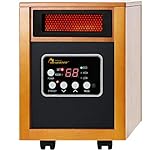
Overview: The Dr Infrared Heater DR-968 is a portable 1500W dual-system space heater designed for large rooms, combining infrared quartz tube and PTC heating elements to deliver 5200 BTU. Its 19-lb chassis includes caster wheels, a 12.5-amp power draw, and essential safety features like tip-over and overheat protection. What Makes It Stand Out: Its standout feature is the dual-heating system, claiming 60% more heat output than competitors. The 39 dB noise level ensures near-silent operation, while the 12-hour timer, electronic thermostat (50–85°F), and included remote control enhance usability. Lifetime filter and cherry finish add practicality and style. Value for Money: Priced mid-range, it justifies cost through robust build quality, versatility for large spaces, and energy-saving auto modes. While pricier than basic ceramic heaters, its hybrid efficiency and durability offer better long-term savings than cheaper single-element alternatives. Strengths and Weaknesses: Strengths: Exceptional heating capacity for large rooms; very quiet operation; reliable safety systems; convenient mobility. Weaknesses: Slightly heavy (19 lbs); 72-inch cord limits placement flexibility; higher initial cost than entry-level models. Bottom Line: Ideal for large rooms needing powerful, quiet, and consistent heat. Its hybrid technology and safety features make it a worthwhile investment for those prioritizing performance over budget buys.
2. DREO Space Heater, 1500W Electric Heaters for Indoor Use with Thermostat, 70° Oscillation, 8 Safety Protections, 5 Modes, Remote, 12H Timer, Quiet Portable Heater for Office, Bedroom, Large Room

Overview: The DREO 1500W ceramic heater targets indoor use in spaces up to 270 sq. ft., featuring ETL-certified safety, 70° oscillation, and ultra-quiet 34 dB operation. It includes smart thermostat control, 5 heat modes, and an intuitive remote. What Makes It Stand Out: Its whisper-quiet 34 dB performance (library-level noise) and 70° oscillation system—rated for 750,000+ cycles—distribute heat 20% more evenly than standard heaters. The ECO mode intelligently adjusts between 1000W–1500W to optimize energy use without manual input. Value for Money: Competitively priced, it excels in energy efficiency and comfort. The oscillation and noise reduction justify a slight premium over non-oscillating models, while ETL certification ensures reliability that offsets cheaper, uncertified alternatives. Strengths and Weaknesses: Strengths: Exceptionally quiet; wide oscillation for even heating; strong safety suite (8 protections); precise ECO mode. Weaknesses: Limited to 270 sq. ft.; requires direct wall outlet (no extension cords); remote lacks backlighting. Bottom Line: A top choice for bedrooms or offices where silence and uniform warmth are critical. Its smart features and safety make it a highly recommended, energy-conscious pick for small-to-medium rooms.
3. SONBION Radiant Space Heater, Portable Electric Heater, Infrared Heaters for Indoor Use, Halogen Heater for Garage Office, Foldable Holder, Overheat and Tip-over Protection, ETL Listed

Overview: The SONBION radiant heater uses infrared quartz technology for silent, targeted warmth, ideal for garages, offices, or personal spaces. Weighing lightly with a foldable holder, it emphasizes safety (tip-over/overheat shut-off) and skin-friendly heat. What Makes It Stand Out: True silent operation (no fan) and instant radiant heat differentiate it, avoiding dry air issues. The 7,000+ hour lifespan and 95% energy-to-heat conversion claim cater to eco-conscious users seeking maintenance-free, localized warmth without noise disruption. Value for Money: Budget-friendly upfront, it delivers excellent value for spot heating needs. While less suited for whole-room warming, its longevity and zero noise cost savings offset pricier oscillating models for focused use cases like desks or workbenches. Strengths and Weaknesses: Strengths: Completely silent; energy-efficient for personal heating; compact and portable; gentle on skin. Weaknesses: Limited to direct-line heating (ineffective for large rooms); no thermostat or timer; lower BTU output than fan-assisted heaters. Bottom Line: Best for personal or supplemental heating in small zones. Prioritize this if silence and instant spot warmth matter most, but avoid for whole-room solutions.
4. DR. INFRARED HEATER DR-978 New Upgraded Dual Heating Hybrid Portable Infrared Space Heater, 1500W with Remote

Overview: The DR-978 is an upgraded hybrid infrared heater merging PTC and infrared systems for enhanced output. Certified for safety (UL/cUL), it targets families with child/pet-friendly design, a 50–86°F thermostat, and 12-hour timer. What Makes It Stand Out: Its larger, low-noise blower pushes higher air volume than predecessor models while maintaining quiet operation. The completely enclosed heating elements eliminate burn risks, and the dual-system design ensures rapid, efficient warmth without exposed coils. Value for Money: Positioned at a premium, it justifies cost through superior safety for households, robust hybrid heating, and quiet performance. It outperforms single-technology heaters in speed and coverage, offering better longevity than budget infrared units. Strengths and Weaknesses: Strengths: Safe for kids/pets; powerful hybrid heating; very quiet; precise temperature control. Weaknesses: Higher price point; no oscillation; remote lacks advanced programming. Bottom Line: A premium, family-safe choice for efficient whole-room heating. Recommended for homes needing reliable, child-friendly warmth, though oscillation fans might prefer alternatives.
5. OSTBA 6-Element Infrared Cabinet Heater, 1500W Space Heater for Indoor Use, Box Heater with Thermostat 41–95°F, ECO Mode, Remote, 12H Timer, Tip-Over & Overheat Protection

Overview: The OSTBA 6-element infrared cabinet heater delivers whole-room warmth for spaces up to 1,000 sq. ft. Its box-style design includes a digital thermostat, ECO mode, and remote control, targeting large areas like basements or open-plan living spaces. What Makes It Stand Out: Six infrared elements paired with a quiet fan ensure even heat distribution across large zones. The extensive 41–95°F thermostat range, child lock, and ECO mode (auto-adjusting 1000W–1500W) provide unparalleled customization for energy savings in expansive rooms. Value for Money: Excellent value for large-space heating, outperforming smaller heaters that struggle beyond 300 sq. ft. Its ECO mode reduces long-term costs, making it cost-effective versus running multiple units—ideal for drafty or high-ceilinged areas. Strengths and Weaknesses: Strengths: Exceptional coverage (up to 1,000 sq. ft); precise temperature control; strong energy savings via ECO mode; child lock safety. Weaknesses: Bulky cabinet design; fan noise slightly higher than premium infrared models; remote requires line-of-sight. Bottom Line: The premier choice for heating large rooms efficiently. Highly recommended for basements or open layouts where broad, consistent warmth and energy efficiency are priorities.
6. BLACK+DECKER Infrared Radiant Quartz Tower Heater, 1500W Space Heater with Adjustable Thermostat, Portable Heater with 2 Settings, Personal Heater for Home and Office, BHTI06, Black

Overview: The BLACK+DECKER BHTI06 is a compact, 1500W infrared tower heater designed for personal space heating in homes or offices. It utilizes dual quartz tubes paired with a fan for quick, targeted warmth and features basic manual controls.
What Makes It Stand Out: Its standout features are the ultra-portable 5-lb design and essential safety suite, including cool-touch housing, tip-over shutdown, and overheat protection. The dual heat settings (750W/1500W) and manual thermostat offer straightforward, reliable operation without digital complexity.
Value for Money: Priced affordably, it delivers core infrared heating functionality effectively for small spaces. While lacking advanced features like timers or remotes, it outperforms cheaper fan heaters in warmth quality and safety, making it a sensible budget pick for occasional use.
Strengths and Weaknesses: Strengths: Extremely lightweight and portable; robust safety features; heats up almost instantly; quiet operation. Weaknesses: No timer or remote; basic manual dials feel dated; fan noise is noticeable on high; limited to personal-space coverage (not whole rooms).
Bottom Line: An excellent entry-level option for localized warmth where portability and safety are priorities. Ideal for desks, small bedrooms, or drafty spots, but skip if you need automation or whole-room heating.
7. DR. INFRARED HEATER DR-123 Indoor Portable Space Heater with Remote Control, 1500W Dual Heating, 4 Wheels for Mobility, Programmable Timer, Thermostat, Ultra Quiet, Coffee
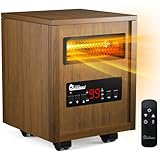
Overview: The DR-123 combines infrared quartz and PTC fan-forced heating in a premium, ultra-quiet portable unit. It targets whole-room comfort with smart controls, mobility, and advanced safety for home or office use.
What Makes It Stand Out: Dual Heating Technology provides faster, more even warmth than pure infrared models, while the whisper-quiet <45dB operation and 4 smooth-rolling casters enable seamless room-to-room movement. The remote, 12-hour timer, and Eco mode (auto-adjusting for energy savings) add exceptional convenience.
Value for Money: Priced higher than basic models, it justifies cost through superior engineering. The lifetime filter, precise digital thermostat (30°F–99°F), and dual-heating efficiency reduce long-term energy use, offering strong ROI for frequent, whole-room heating needs.
Strengths and Weaknesses: Strengths: Exceptionally quiet; excellent heat distribution; intuitive remote/timer; robust safety certifications; energy-saving Eco mode. Weaknesses: Remote requires separate batteries; casters lack locks; PTC element may feel less “instant” than pure infrared; premium price.
Bottom Line: A top-tier investment for those seeking quiet, efficient, and versatile whole-room heating. Highly recommended for bedrooms or living areas where comfort and convenience outweigh minor cost concerns.
8. Infrared Space Heater 3 Mode 1500W Electric heater with 6 Quartz Infrared Element Child Lock Timer Remote for Indoor Use WEWARM

Overview: This WEWARM heater offers 1500W infrared warmth with three heat modes (1000W/1500W/ECO) and targets large rooms up to 300 sq. ft. It emphasizes user-friendly tech like remote operation and child safety.
What Makes It Stand Out: The inclusion of a child lock and 6 quartz elements enhances safety and heating breadth. The 12-hour programmable timer and LED-backlit remote provide hands-off control, while the ECO mode promises energy savings by auto-adjusting to maintain set temps (50°F–90°F).
Value for Money: Competitively priced for its feature set, it outperforms no-frills heaters with automation. The child lock adds family-friendly value, though build quality may not match premium brands. Ideal for cost-conscious buyers needing smart features in medium-sized rooms.
Strengths and Weaknesses: Strengths: Child lock enhances safety; effective ECO mode; generous timer; remote simplifies use; cool-touch exterior. Weaknesses: Timer programming can be unintuitive; quartz elements may degrade over time; no overheat indicator; lacks thermostat precision of digital models.
Bottom Line: A practical, feature-rich choice for families or renters wanting automated, safe heating in living spaces. Best for those prioritizing timer/remote functions over absolute build refinement.
9. Comfort Zone Space Heaters for Indoor Use, Portable Electric Heater, Adjustable Thermostat, Infrared Heat, Quartz Tower Space Heater with 2 Heat Settings, Bedroom Heater, Black

Overview: Comfort Zone’s slim tower heater delivers focused infrared warmth via dual quartz tubes, targeting 200–300 sq. ft. spaces like bedrooms with a blend of efficiency and minimalist aesthetics.
What Makes It Stand Out: Its standout trait is the space-saving, elegant black tower design that blends into décor. Top-mounted knobs offer tactile, tool-free control for thermostat and heat settings (high/low), while fan-assisted dispersion improves room coverage beyond typical radiant heaters.
Value for Money: Positioned as a mid-range option, it balances style and core functionality. The durable metal housing and effective safety features (tip-over/overheat shutoff) provide reliability comparable to costlier models, though it lacks digital perks like remotes.
Strengths and Weaknesses: Strengths: Sleek, compact footprint; intuitive manual controls; strong safety suite; effective for personal zones; quiet fan assistance. Weaknesses: No timer or remote; thermostat lacks precision; heat is directional (best for direct line-of-sight); limited to smaller rooms.
Bottom Line: A stylish, no-nonsense heater perfect for bedrooms or offices where aesthetics and simplicity matter. Choose this over bulkier models if you value discreet operation and easy dials over smart features.
10. DR. INFRARED HEATER Portable Infrared Indoor and Outdoor Space Heater for Patio, Garage, Commercial & Residential With Remote Control, Without Thermostat, Black

Overview: This rugged DR. INFRARED model is uniquely rated for indoor/outdoor use (IP55), targeting patios, garages, or commercial spaces with 1500W infrared heat and wall/ceiling mounting capability.
What Makes It Stand Out: Its outdoor versatility is unmatched—IP55 certification withstands dust and moisture, while the high-reflectivity aluminum mirror maximizes heat throw. The remote control and three power settings (900W/1200W/1500W) enable flexible zone heating in open areas.
Value for Money: Premium-priced but essential for outdoor heating. The included mounting hardware and commercial-grade durability justify cost for patios or workshops, though it’s overkill for standard indoor use due to the missing thermostat.
Strengths and Weaknesses: Strengths: True indoor/outdoor versatility; powerful directional heat; easy remote operation; robust mounting options; efficient reflector design. Weaknesses: No thermostat limits indoor precision; not energy-efficient for enclosed rooms; minimal safety features beyond tip-over; loud fan outdoors.
Bottom Line: The definitive choice for patios, garages, or semi-enclosed spaces. Avoid for primary indoor heating—it’s a specialized tool that excels exactly where most heaters fail.
Understanding Infrared Heating Technology
How Infrared Heaters Work Differently
Infrared heaters operate by emitting electromagnetic radiation that heats objects, surfaces, and people directly—not the air around them. This contrasts sharply with conventional heaters that rely on convection, which circulates warm air and often loses heat through drafts or poor insulation. Because infrared targets thermal mass (like your sofa or body), it eliminates the energy drain of constantly reheating air that escapes through windows or doors. The result? Faster perceived warmth with less electricity, making it ideal for spot heating in frequently used rooms.
The Science Behind Energy Efficiency
At its core, infrared efficiency stems from physics: radiation transfers heat with minimal loss, especially in well-insulated spaces. Modern units convert over 90% of electricity into usable infrared waves, with little wasted as standby power or fan noise. This high conversion rate means lower kilowatt-hour consumption compared to older heating methods. Plus, since infrared doesn’t dry out the air, you’ll often feel comfortable at lower thermostat settings—saving energy while maintaining cozy, natural-feeling heat.
Key Features for Maximum Energy Savings
Wattage and Heating Capacity
Choosing the right wattage is critical; too high, and you’ll overpay for unnecessary power, too low, and the heater struggles inefficiently. Match wattage to your room size—typically 10 watts per square foot—but adjust for ceiling height and insulation quality. A 1,500-watt unit suits most standard living areas, but energy-savvy models now include adjustable power settings (like 750W or 1,000W modes) to fine-tune output based on real-time needs, preventing energy waste during milder weather.
Thermostat Precision and Programmability
A precise thermostat avoids the “on-off” cycling that plagues basic heaters, where units blast full power until the room is too hot, then restart from cold. Look for digital thermostats with 0.5°F accuracy and programmable schedules that align with your routine—like lowering heat overnight or during work hours. Advanced models even learn your habits over time, automatically optimizing runtime to minimize idle electricity use while keeping you comfortable.
Timer Functions for Smart Usage
Timers prevent accidental all-night operation, a common energy drain. Opt for units with 1–12 hour countdown timers or 24-hour scheduling, allowing you to set exact “on” periods for when you’re home. Some integrate with smartphone apps for remote adjustments, so you can turn off a forgotten heater from your office, ensuring you only use energy when it’s truly needed.
Design Elements That Impact Efficiency
Reflector Quality and Design
The reflector’s role is often underestimated—it directs infrared waves toward your space instead of losing them backward. High-efficiency models use parabolic or polished aluminum reflectors that focus heat up to 30% more effectively than basic flat designs. This targeted beam means faster warmth in your immediate area, reducing the need for higher wattage and cutting runtime by up to 20% in practical use.
Heating Element Types
Quartz, ceramic, and carbon fiber elements each have efficiency trade-offs. Quartz heats instantly but cools quickly, ideal for short bursts. Carbon fiber offers deeper, more even heat penetration with slightly better energy conversion over time, while ceramic retains warmth longer after shutdown. For consistent efficiency, carbon fiber is gaining traction in 2026 for balancing responsiveness and sustained output without frequent reboots.
Portability vs. Fixed Installation
Portable heaters offer flexibility but often sacrifice efficiency due to smaller reflectors or less precise thermostats. Fixed-wall or ceiling-mounted units, though less versatile, provide superior directional control and integration with home systems. If portability is key, prioritize compact designs with sturdy bases and cord storage to avoid tripping hazards that lead to accidental shutdowns—and wasted energy.
Advanced Technologies to Look For
Smart Home Integration
Heaters that sync with Alexa, Google Home, or smart thermostats enable voice or app-based control, but the real efficiency win comes from automation. Set geofencing to activate only when you’re near home, or pair with occupancy sensors that turn off heat when a room is empty. These features prevent “always-on” scenarios, potentially saving 10–15% on seasonal heating costs through behavioral nudges alone.
Energy Monitoring Features
Built-in energy trackers display real-time and cumulative electricity use, turning abstract consumption into tangible data. Some models even estimate cost based on local utility rates, helping you identify usage spikes. This transparency encourages mindful operation—like switching to a lower setting when you see a 20% jump in consumption—and makes it easier to compare efficiency across seasons.
Adaptive Heating Systems
Cutting-edge units now feature environmental sensors that auto-adjust output based on ambient temperature, humidity, or even sunlight through windows. If a room warms naturally midday, the heater reduces power instead of fighting free heat. This dynamic response eliminates manual tweaks and tailors energy use to actual conditions, a subtle but powerful efficiency booster for variable climates.
Safety Features That Also Save Energy
Overheat Protection Mechanisms
Automatic shut-offs when internal temps exceed safe limits aren’t just safety-critical—they prevent energy waste from overheating cycles. Modern sensors detect blockages (like furniture too close to the unit) and throttle power before full shutdown, maintaining warmth at lower, safer levels instead of rebooting from zero. This avoids the 300–500 watt surge typical of cold restarts.
Tip-Over Switches and Their Role
A tip-over switch instantly cuts power if the heater falls, but it also curbs accidental runtime. Units that shut down during movement—like when bumped by pets—stop wasting energy on unoccupied spaces. For efficiency, ensure the switch resets quickly once upright; delayed recovery can trigger unnecessary full-power restarts.
Cool-to-Touch Exteriors
While primarily a safety upgrade, cool exteriors reduce heat loss to the surroundings. If the casing stays near room temperature, more energy goes into targeted infrared radiation rather than warming the heater itself. This design nuance can improve effective output by 5–10%, especially in prolonged use.
Making the Right Choice for Your Space
Calculating Your Room’s Heating Needs
Don’t guess—calculate. Multiply room length by width for square footage, then multiply by 10 for baseline watts (e.g., 150 sq ft = 1,500W). But adjust for variables: add 10% for high ceilings, 20% for poor insulation, or subtract 15% for sunlit rooms. This precision ensures you buy only the capacity you need, avoiding the energy drain of oversized units cycling inefficiently.
Considering Ceiling Height and Insulation
Standard heaters assume 8-foot ceilings, but vaulted or industrial spaces require stronger output. Infrared’s directional nature helps here—mount units higher to beam heat downward—but pair with insulation checks first. Drafty windows or thin walls can negate efficiency gains, so seal gaps before investing in any heater. Infrared excels in well-insulated zones but struggles in leaky spaces where heat escapes rapidly.
Placement Strategies for Optimal Efficiency
Position heaters 3–6 feet from seating areas, angled toward occupants, not walls. Avoid corners where reflectors lose effectiveness, and never block the front with furniture. In open layouts, place units near entry points (like doorways) to heat people entering the space, not the entire square footage. Strategic placement can reduce runtime by 25% by focusing warmth exactly where it’s used.
The Environmental Impact of Your Choice
Reducing Carbon Footprint with Efficient Heating
Every kilowatt-hour saved with an efficient infrared heater translates to lower fossil fuel reliance, especially in grid-dependent regions. By using 30–50% less energy than baseboard heaters for the same comfort, these units directly cut household CO2 emissions. In 2026, choosing ENERGY STAR-certified models amplifies this impact, as they meet strict third-party efficiency benchmarks verified for real-world savings.
Long-Term Energy Consumption Trends
As renewable energy adoption grows, infrared heaters align perfectly with off-peak solar or wind power usage. Their instant-on nature lets you capitalize on low-cost, green electricity windows (e.g., midday solar surges) without waiting for slow-convection systems to ramp up. Over a decade, this synergy could reduce heating-related emissions by up to 40% compared to legacy systems.
Frequently Asked Questions
How much can I save annually with an energy-efficient infrared heater?
Most households save 20–40% on supplemental heating costs versus conventional space heaters, translating to $50–$150 yearly depending on usage and local electricity rates. Savings rise further when replacing central heating in unused rooms.
Do infrared heaters work well in drafty rooms?
They’re less affected by drafts than convection heaters since they heat objects, not air. However, severe drafts still carry away radiant warmth—seal windows first for best results, and use the heater in well-contained zones.
Can I use an infrared heater as my primary heat source?
Yes, but only in small, well-insulated spaces (under 200 sq ft). For whole-home heating, combine with central systems via zone heating to avoid overloading circuits or inflating costs.
Are higher-wattage infrared heaters less efficient?
Not inherently—efficiency depends on how well the unit directs heat. A 1,500W model with a premium reflector can outperform a poorly designed 1,000W unit. Always prioritize build quality over wattage alone.
How do I verify a heater’s energy claims?
Look for independent certifications like ENERGY STAR or ETL marks, which require third-party testing. Avoid vague terms like “energy-saving” without specific efficiency metrics in the product specs.
Do infrared heaters consume less power when using timers?
Yes—timers prevent extended idle operation. A unit running 4 hours with a timer uses less energy than one left on 8 hours manually, even at the same wattage setting.
Why is thermostat accuracy important for efficiency?
Inaccurate thermostats cause frequent cycling (e.g., heating to 72°F when set to 70°F), wasting 10–15% extra energy. Digital sensors with ±1°F precision maintain consistent temps with minimal power fluctuations.
Can smart features really cut energy use?
Absolutely—geofencing and occupancy sensors reduce “ghost load” (heating empty rooms) by 20–30%. Even basic scheduling via apps can save 10% by aligning heat with your routine.
Are infrared heaters safe for continuous use overnight?
Only if equipped with overheat protection, tip-over switches, and cool exteriors. Never leave non-certified models unattended; for overnight use, choose units with automatic shutoff timers as a backup.
How does room insulation affect infrared efficiency?
Poor insulation lets radiant heat escape through walls, forcing the heater to work harder. Infrared is 30% more efficient in insulated rooms—you’ll feel warmth faster and maintain it with less energy input.
See Also
- 10 Game-Changing Infrared Garage Heaters for Energy Efficiency in 2026
- 10 Best Space Heaters with Oil for Energy Efficiency in 2026
- 10 Best Infrared Space Heaters for Instant Heat in 2026
- The 10 Most Revolutionary Infrared Space Heaters of 2026
- How Infrared Space Heaters Work: The Science Behind Instant, Targeted Warmth