Table of Contents
Summer heatwaves are no longer just uncomfortable—they’re becoming financially draining. As temperatures climb year after year, many homeowners find themselves staring at shockingly high electricity bills, wondering how a single season could cost so much. That familiar hum of an aging window unit straining against the heat isn’t just annoying; it’s quietly draining your wallet, often without providing the consistent, comfortable cooling you actually need. The frustration of uneven temperatures, constant noise, and unexpected spikes on your energy statement is all too real for millions.
But what if your air conditioner could be part of the solution, not the problem? The good news is that significant advancements in cooling technology, particularly through the rigorous Energy Star certification program, are making it possible to stay cool without sacrificing your budget or the environment. Energy Star isn’t just a label; it represents a substantial leap in efficiency, backed by independent verification. Choosing the right Energy Star-certified window unit means investing in smarter technology designed to deliver powerful, reliable cooling while dramatically reducing the energy consumption that drives up your bills and impacts the planet. Understanding what truly makes these units stand out is the first step toward a cooler, more economical summer.
Top 10 Energy Star Window Air Conditioners
Detailed Product Reviews
1. Midea 10,000 BTU U Shaped Smart Inverter Window Air Conditioner - Cools 450 Sq Ft, Ultra Quiet with Open Window Flexibility - Alexa/Google Assistant Compatible - 35% Energy Savings, Remote (Updated)
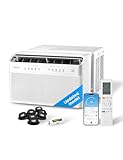
Overview: This 10,000 BTU ENERGY STAR-certified window AC cools spaces up to 450 sq. ft. Its U-shaped design uniquely integrates with your window frame, enabling operation while allowing the window to open partially for fresh air and unobstructed views. It features smart connectivity, ultra-quiet performance, and significant energy efficiency. What Makes It Stand Out: The revolutionary U-shape design is its hallmark, permitting window opening—a rarity in window units—enhancing ventilation and safety via an anti-theft lock. It delivers exceptional quietness (as low as 32 dBA, 10x quieter than conventional units) and boasts over 35% energy savings through DC inverter technology. Full smart control via app, voice assistants (Alexa/Google), and remote adds modern convenience. Value for Money: Priced higher than basic units, it justifies cost through premium features: substantial long-term energy savings, unique open-window flexibility, superior noise reduction, and smart integration. For those prioritizing quiet operation, energy efficiency, and modern conveniences in a medium-sized room, it offers strong long-term value despite the initial investment. Strengths and Weaknesses: Strengths: Ultra-quiet operation; unique open-window capability; significant energy savings; robust smart features; ENERGY STAR certified; easy installation bracket. Weaknesses: Higher upfront cost than non-inverter models; requires Wi-Fi for full smart functionality; limited to specific window sizes (22"-36" width). Bottom Line: An excellent, innovative choice for homeowners seeking a quiet, efficient, and feature-rich solution for medium rooms, especially valuing the ability to keep windows partially open. The premium price is justified by its unique benefits and energy savings.
2. Midea 8,000 BTU U Shaped Smart Inverter Window Air Conditioner - Cools 350 Sq Ft, Ultra Quiet with Open Window Flexibility - Alexa/Google Assistant Compatible - 37% Energy Savings, Remote (Updated)
Overview: Targeting smaller spaces (up to 350 sq. ft.), this ENERGY STAR-certified 8,000 BTU unit shares Midea’s innovative U-shaped design. It enables window opening for fresh air, operates ultra-quietly, and leverages inverter technology for notable energy savings, alongside full smart home integration and app control. What Makes It Stand Out: The defining U-shape allows safe window opening during use—uncommon in window ACs—improving air quality and view preservation. It achieves remarkable quietness (32 dBA) and claims over 37% energy savings versus standard units, the highest percentage in the Midea U series. Seamless control via app, remote, or voice commands (Alexa/Google) enhances usability. Value for Money: While commanding a premium over basic 8,000 BTU models, its value lies in exceptional energy efficiency (potentially lowering bills significantly), the unique open-window feature, whisper-quiet operation ideal for bedrooms, and smart capabilities. It’s a worthwhile investment for efficiency-conscious users in smaller rooms. Strengths and Weaknesses: Strengths: Unmatched quiet operation; window-open flexibility; highest claimed energy savings (37%); comprehensive smart controls; ENERGY STAR leadership; straightforward installation. Weaknesses: Premium cost; Wi-Fi dependency for smart features; identical window size constraints (22"-36" width) as other U-series models. Bottom Line: Highly recommended for small to medium rooms where quietness, energy savings, and the ability to ventilate with an open window are priorities; the slightly higher efficiency claim makes it a compelling option in its class.
3. Amazon Basics 5000-BTU Small Window Air Conditioner, Up to 150 Sqf, Window AC Units with Cool and Fan Functions, Washable Filter, Adjustable Window Kit, Intuitive Mechanical Controls, White

Overview: This budget-friendly 5,000 BTU unit is designed for very small spaces (up to 150 sq. ft.), like compact bedrooms or offices. It offers essential cooling and fan functions with mechanical dials, a washable filter, and a simple installation kit, focusing on core functionality without advanced features. What Makes It Stand Out: Its primary appeal is affordability and simplicity. The intuitive mechanical controls eliminate app dependencies, and the included adjustable window kit ensures compatibility with standard windows (23"-36" wide). The washable filter aids basic maintenance, making it accessible for users seeking no-frills cooling. Value for Money: Exceptional value for those needing minimal cooling in tiny rooms on a tight budget. While lacking smart tech or ultra-quiet specs, its low price point, reliable basic cooling, and included installation components provide solid functionality where advanced features aren’t necessary. Strengths and Weaknesses: Strengths: Very affordable; simple mechanical controls; easy installation with included kit; washable filter; adequate for very small rooms; low noise (56 dB) for its class. Weaknesses: Limited to small spaces; no smart features or remote; basic cooling performance; higher noise level compared to inverter models; manual controls only. Bottom Line: A practical, cost-effective solution for cooling very small spaces where simplicity and low cost outweigh the need for smart features or ultra-quiet operation; ideal for temporary or secondary room use.
4. Amazon Basics 6000-BTU Window Air Conditioner, Up to 250 Sqf, Window AC Units with Cool and Fan Functions, Washable Filter, Adjustable Window Kit, Digital Temperature Display, Remote Control, White

Overview: Stepping up to cool rooms up to 250 sq. ft., this 6,000 BTU model adds a digital display and remote control to the Amazon Basics lineup. It retains core features like washable filters and adjustable panels but targets slightly larger spaces with enhanced convenience over its 5,000 BTU sibling. What Makes It Stand Out: The inclusion of a remote control and digital temperature display distinguishes it from the base 5,000 BTU model, offering more convenience. It maintains the budget-friendly focus with reliable cooling, fan modes, and straightforward installation for small-to-medium rooms, balancing basic functionality with minor modern touches. Value for Money: Offers good value for small-to-medium room cooling needs at an accessible price. The remote and digital display add meaningful convenience over the 5k model without a significant cost jump, making it a smart upgrade for those wanting slightly more control while avoiding smart-tech premiums. Strengths and Weaknesses: Strengths: Affordable; includes remote control & digital display; washable filter; fits standard windows; quiet enough (56 dB) for basic use; simple setup. Weaknesses: Still lacks smart connectivity; noise level higher than inverter units; basic energy efficiency; no open-window feature; limited to medium rooms. Bottom Line: A sensible choice for budget-conscious buyers needing reliable cooling and basic convenience features (remote, digital display) in rooms up to 250 sq. ft., where smart tech isn’t a requirement.
5. Midea 12,000 BTU U Shaped Smart Inverter Window Air Conditioner - Cools 550 Sq Ft, Ultra Quiet with Open Window Flexibility - Alexa/Google Assistant Compatible - 35% Energy Savings, Remote (Updated)
Overview: The largest in Midea’s U-series, this 12,000 BTU model cools expansive areas up to 550 sq. ft. It retains the signature U-shaped design for open-window operation, ENERGY STAR certification, ultra-quiet inverter technology, and full smart home integration, scaling premium features to larger rooms. What Makes It Stand Out: It uniquely combines high cooling capacity (for larger rooms) with the U-shape’s open-window flexibility and anti-theft lock—virtually unheard of in higher-BTU window units. Maintaining ultra-quiet operation (32 dBA) and 35%+ energy savings at this capacity is exceptional. Smart controls via app, voice, and remote ensure comprehensive management. Value for Money: Commands a premium price but delivers exceptional value for large-room cooling. The energy savings potential, noise reduction, and unique open-window capability offset the cost over time, especially compared to less efficient traditional 12k BTU units. The smart features add lasting convenience. Strengths and Weaknesses: Strengths: Powerful cooling for large spaces; maintains ultra-quiet operation; unique window-open feature; significant energy savings; robust smart controls; ENERGY STAR certified; clean filter indicator. Weaknesses: Highest price point in the series; requires compatible window size (22"-36"); Wi-Fi needed for smart functions; heavier unit may complicate installation. Bottom Line: The top recommendation for large rooms needing efficient, quiet, and innovative cooling; its ability to combine high capacity with open-window flexibility and smart tech makes it a standout premium solution worth the investment.
6. LG 5000 BTU Window Air Conditioner with Remote, Easy Mechanical Control Ultra-Quiet Compact-size Cools 150 Sq.Ft. for Small Room, Washable Filter AC Unit Easy Installation White LW5025R

Overview:
This compact LG window AC unit targets small spaces up to 150 sq. ft., offering essential cooling with user-friendly mechanical controls and a remote. Designed for bedrooms or offices, it prioritizes simplicity and quiet operation.
What Makes It Stand Out:
Its ultra-quiet performance (as low as 44dB in sleep mode) and true plug-and-play installation with an EZ Mount kit are key highlights. The washable dust filter and straightforward LCD panel with temperature/fan-speed adjustments via remote enhance usability without app dependency.
Value for Money:
Priced accessibly, it delivers reliable cooling for tight budgets. While lacking smart features, its energy-saving mode and R32 refrigerant justify the cost versus basic non-inverter competitors, especially for renters needing temporary solutions.
Strengths and Weaknesses:
Strengths: Effortless setup; exceptionally quiet; durable mechanical controls; low maintenance with slide-out filter.
Weaknesses: Limited to 150 sq. ft.; no app/smart integration; fewer cooling modes than premium models.
Bottom Line:
Ideal for renters or small rooms prioritizing simplicity and silence. A cost-effective, no-frills solution for basic cooling needs without smart tech overhead.
7. Hisense 6,000 BTU Smart Inverter Window Air Conditioner, 3 modes (Cooling, Fan, Dehumidifier), Easy Installation,Ultra Quiet, 24.5% more Energy Saving, 2 Years Warranty

Overview:
Hisense’s inverter-driven 6,000 BTU unit cools spaces up to 250 sq. ft. with ENERGY STAR-certified efficiency. It emphasizes energy savings, quiet operation, and versatile modes (cooling, fan, dehumidifier) for eco-conscious users.
What Makes It Stand Out:
Advanced inverter technology slashes energy use by 24.5% versus conventional units while maintaining consistent temperatures. The triple-mode functionality and whisper-quiet operation (<50 dB) outshine budget alternatives, supported by a 2-year warranty.
Value for Money:
Though pricier than non-inverter models, its long-term electricity savings offset the initial cost. ENERGY STAR certification ensures proven efficiency, making it a smart investment for frequent users seeking bill reductions.
Strengths and Weaknesses:
Strengths: Exceptional energy savings; ultra-quiet; dehumidifier mode; easy installation; washable filter.
Weaknesses: No smart app/voice control; limited to smaller rooms; basic remote only.
Bottom Line:
A top pick for energy efficiency and reliability in modest spaces. Worth the premium for users prioritizing lower bills and quiet, maintenance-friendly cooling.
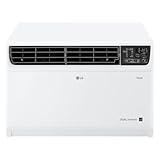
8. LG 14,000 BTU DUAL Inverter Smart Window Air Conditioner, 115V, Cools 800 Sq. Ft. for Bedroom, Living Room, Apartment, Quiet Operation, ENERGY STAR®, works with LG ThinQ, Amazon Alexa and Hey Google
Overview:
LG’s powerhouse 14,000 BTU DUAL Inverter AC dominates large rooms (up to 800 sq. ft.) with smart connectivity, whisper-quiet operation, and robust energy savings. It’s engineered for spacious living areas demanding premium performance.
What Makes It Stand Out:
LG ThinQ app and voice control (Alexa/Google) enable remote management, while DUAL Inverter tech achieves 35% better efficiency than ENERGY STAR standards. Lo-decibel operation (44dB) and R32 refrigerant set benchmarks for quiet, eco-friendly cooling.
Value for Money:
High upfront cost is justified by substantial energy savings and smart convenience. Outperforms similarly sized units in efficiency and noise reduction, offering long-term value for tech-savvy households with large spaces.
Strengths and Weaknesses:
Strengths: Industry-leading smart features; exceptional energy efficiency; near-silent; powerful for large rooms; washable filter.
Weaknesses: Expensive; complex setup for non-tech users; bulky for small windows.
Bottom Line:
The definitive choice for large spaces needing smart, silent, and efficient cooling. A premium investment that delivers unparalleled convenience and performance.
9. 8,000 BTU Window Air Conditioner,Cool Rooms Up to 350 Sq.Ft.,Smart Window AC Unit with Smartphone App or Remote Control,3 Fan Mode,Sleep&ECO Mode,Washable Filter,for Bedroom Apartment Office,New R32

Overview:
This versatile 8,000 BTU smart AC cools mid-sized rooms (up to 350 sq. ft.) with app/remote control, balancing modern features and affordability for apartments or offices.
What Makes It Stand Out:
Dual control via smartphone app and physical remote offers unmatched flexibility. Eco Mode, Sleep Mode, and three fan speeds optimize comfort and efficiency, while R32 refrigerant ensures eco-friendly operation.
Value for Money:
Competitively priced for a smart unit, it bridges the gap between basic and premium models. Energy savings from ECO/Sleep modes justify the cost versus non-smart alternatives, especially for tech-oriented users.
Strengths and Weaknesses:
Strengths: Reliable app connectivity; intuitive ECO/Sleep modes; washable filter; strong cooling for size; eco-friendly R32.
Weaknesses: App can be glitchy; noise slightly higher than LG/Hisense; limited smart ecosystem integration.
Bottom Line:
An excellent mid-range smart AC for medium rooms. Best for users wanting app control without the premium price tag of top-tier brands.
10. Frigidaire 6,000 BTU Window Air Conditioner with Remote Control, Cools Up to 250 Sq. Ft., Quiet Operation, Eco Mode, 3 Fan Speeds, Auto Restart, White

Overview:
Frigidaire’s 6,000 BTU unit cools spaces up to 250 sq. ft. with a focus on user-friendly features like auto restart, Eco Mode, and library-quiet operation (52 dBA), ideal for bedrooms.
What Makes It Stand Out:
Auto restart after power outages and 6-way directional airflow provide unique convenience. Eco Mode optimizes energy use, while Clean Filter alerts simplify maintenance—features rarely bundled at this price point.
Value for Money:
Offers standout features for its cost, outperforming rivals with similar BTU ratings. The 24-hour timer and Dry Mode add versatility, making it a high-value pick for budget-conscious buyers seeking reliability.
Strengths and Weaknesses:
Strengths: Auto restart; precise airflow control; effective Eco/Sleep modes; quiet; intuitive remote.
Weaknesses: No app/smart capabilities; filter alerts occasionally inaccurate; basic design.
Bottom Line:
A superb value-driven workhorse for small-to-medium rooms. Perfect for users prioritizing practicality, quietness, and energy savings without smart tech.
Understanding the Energy Star Advantage for Window ACs
What Energy Star Certification Really Means
Energy Star certification isn’t a vague marketing term; it’s a strict, government-backed standard administered by the EPA. For a window air conditioner to earn this label, it must undergo rigorous independent testing and exceed federal efficiency requirements by a significant margin—typically 7-15% more efficient than standard models. This isn’t about minor tweaks; it signifies a fundamental design optimized for moving the maximum amount of cool air using the absolute minimum electricity. The certification process is stringent and ongoing, ensuring units maintain their efficiency throughout their lifespan.
Beyond the Label: Tangible Benefits for Homeowners
The immediate benefit of choosing Energy Star is a noticeable reduction in your cooling costs, often saving homeowners 10-15% annually on air conditioning expenses compared to older, non-certified units. However, the advantages extend further. These units often incorporate superior components—like advanced compressors and optimized fan systems—that result in quieter operation, more consistent temperature control, and reduced strain on your home’s electrical system. Over time, the cumulative savings on your electricity bill can significantly offset the initial purchase price, making it a financially sound long-term investment.
How Energy Star Standards Evolve
Energy Star isn’t static. The program regularly updates its efficiency benchmarks to reflect technological progress and push the industry toward even greater sustainability. This means newer Energy Star-certified models available today (and looking ahead to 2026) are demonstrably more efficient than units certified just a few years ago. Staying informed about the current version of the Energy Star specification ensures you’re getting the absolute best efficiency available on the market at the time of your purchase.
Key Efficiency Metrics You Must Understand
Demystifying EER and CEER
Two critical numbers dictate a window AC’s efficiency: the Energy Efficiency Ratio (EER) and the Combined Energy Efficiency Ratio (CEER). EER measures cooling output (in BTUs) divided by power input (in watts) under specific, high-temperature test conditions. CEER, a newer standard, provides a more comprehensive picture by factoring in energy consumed during standby and off modes over an entire year. For Energy Star certification, minimum CEER thresholds are mandated and are significantly higher than standard models. Generally, a higher CEER number translates directly to lower operating costs.
Why BTU Rating and Room Size Are Intertwined
Selecting the correct cooling capacity, measured in British Thermal Units (BTUs), is paramount for efficiency. An oversized unit will cycle on and off too frequently, wasting energy during startup and failing to properly dehumidify the air, leading to a clammy feel. An undersized unit will run constantly, struggling to cool the space and driving up energy use. Calculating the right BTU requires considering not just room square footage, but also ceiling height, window size and orientation, insulation quality, number of occupants, and even heat-generating appliances in the space. Energy Star units perform best when perfectly matched to the room they serve.
The Impact of Climate Zone on Efficiency
The efficiency gains promised by Energy Star can vary slightly depending on your geographic location and typical summer temperatures. Units operating in extremely hot and humid climates may experience slightly different real-world efficiency compared to milder zones due to the increased workload. However, the core design principles of Energy Star units—superior components and optimized engineering—ensure they deliver significant savings across all climate zones compared to non-certified models. Always check if the unit’s specifications mention performance in your specific climate zone.
Sizing and Installation: The Foundation of Efficiency
Accurate Room Measurement Techniques
Guessing the room size is a recipe for inefficiency. Precisely measure the length and width of the space, multiply them to get square footage, and don’t forget to account for unusual layouts, vaulted ceilings, or adjacent rooms that share airflow. Online BTU calculators provided by reputable sources (like energy.gov) are valuable tools, but input your exact measurements and conditions for the most reliable estimate. Overlooking a large south-facing window or a home office packed with electronics can lead to significant under-sizing.
Critical Installation Factors for Peak Performance
Even the most efficient Energy Star unit will waste energy if installed poorly. A secure, level fit in the window frame is non-negotiable to prevent air leaks that let cooled air escape and hot, humid air infiltrate. Proper sealing around the entire unit with included foam or accordion panels is crucial. Ensure the unit is tilted slightly backward (as per manufacturer instructions) to allow proper condensate drainage. Blocking the air intake or exhaust vents, even partially with curtains or furniture, forces the unit to work harder and drastically reduces efficiency.
Avoiding Common DIY Installation Pitfalls
While window AC installation is often a DIY project, common mistakes sabotage efficiency. Failing to remove all shipping brackets or tape restricts airflow. Not supporting the unit adequately risks damage and leaks. Ignoring the tilt requirement leads to water leakage inside your home. Using inadequate or improperly applied insulation around the unit creates significant thermal bridges. Taking the time to meticulously follow the manufacturer’s installation guide, potentially supplementing with video tutorials from trusted home improvement sources, is essential for maximizing the Energy Star benefits.
Advanced Features Enhancing Energy Savings
Smart Thermostats and Scheduling Capabilities
Modern Energy Star units often integrate sophisticated thermostatic controls far beyond simple on/off switches. Programmable 24-hour or 7-day timers allow you to set the unit to cool only when needed—cooling the bedroom before bedtime or the living room in the evening, and raising the temperature when the house is empty. Some models feature “sleep” modes that gradually adjust the temperature overnight for comfort and savings. These features prevent wasteful cooling of unoccupied spaces.
Inverter Technology Explained Simply
While more common in mini-splits, inverter technology is increasingly appearing in high-end window units. Unlike traditional compressors that simply turn on at full blast and then shut off, inverter compressors can modulate their speed. They run continuously at varying capacities to precisely match the cooling demand. This eliminates the high energy surge of frequent startups, maintains a more stable temperature, reduces wear and tear, and delivers significant energy savings, especially during shoulder seasons or in moderately warm conditions.
Eco Modes and Adaptive Intelligence
Look for specific “Eco” or “Energy Saver” modes. These intelligent settings often work by allowing the fan to cycle off once the set temperature is reached, only running when the compressor needs to activate again, rather than running the fan constantly. Some advanced units use sensors to detect room occupancy or ambient light levels to automatically adjust operation for optimal efficiency. These features automate savings without requiring constant manual adjustment.
Fan-Only and Dehumidify Functions
The ability to run the fan independently of the compressor is surprisingly useful. On mild, humid days, using just the fan can circulate air and provide a cooling breeze without engaging the energy-intensive cooling cycle. Similarly, dedicated dehumidify modes run the compressor at a lower speed specifically to remove moisture from the air, which can make a room feel significantly cooler without drastically lowering the temperature setting—another smart way to save energy while improving comfort.
Long-Term Value and Environmental Impact
Calculating True Payback Period
While Energy Star units may carry a slightly higher upfront cost than basic models, the payback period through reduced energy bills is often shorter than many expect—frequently within 1-3 cooling seasons, depending on usage and local electricity rates. To calculate your potential savings, compare the CEER ratings: a unit with a CEER of 12.0 will use significantly less energy than one rated at 10.5 for the same cooling output. Multiply the estimated annual kWh savings by your electricity cost per kWh to see the dollar impact.
Durability and Reliability Advantages
Energy Star certification often correlates with higher build quality. Manufacturers investing in the engineering required to meet stringent efficiency standards typically use better components—more robust compressors, higher-grade coils, improved fan motors—that not only save energy but also enhance the unit’s longevity and reliability. Fewer breakdowns and a longer operational life mean less frequent replacement, adding to the long-term value proposition.
Reducing Your Carbon Footprint
The environmental benefit is substantial. Residential air conditioning is a major contributor to peak electricity demand, often met by fossil fuel power plants. By choosing a highly efficient Energy Star unit, you directly reduce your household’s greenhouse gas emissions associated with cooling. Over the lifespan of the unit, this reduction can be equivalent to taking a car off the road for several months. It’s a tangible step toward more sustainable home energy use.
Maintenance Practices for Sustained Efficiency
The Non-Negotiable Filter Cleaning Routine
A clogged air filter is the single biggest enemy of efficiency and airflow. Dust and debris restrict airflow, forcing the compressor to work much harder and longer to achieve the desired temperature, significantly increasing energy consumption. Check the filter monthly during peak cooling season and clean or replace it according to the manufacturer’s instructions—typically every 2-4 weeks for reusable filters, or as needed for disposable ones. It’s the simplest, most impactful maintenance task.
Coil Cleaning: When and How
The evaporator coil (inside) and condenser coil (outside) are critical for heat exchange. When coated in dust and grime, their ability to absorb and release heat plummets, drastically reducing efficiency. While internal coil cleaning often requires professional servicing, you can safely clean the accessible exterior condenser coil fins annually. Turn off power, remove the outer grille, and gently vacuum or brush away debris. For internal coils, schedule professional maintenance every 2-3 years, especially if you notice reduced cooling or icing.
Ensuring Unobstructed Airflow Year-Round
Regularly check that nothing is blocking the intake vents (usually on the sides or bottom of the unit) or the exhaust vent (at the back). Trim back vegetation growing near the exterior portion. Keep indoor furniture, curtains, or stored items well away from the front of the unit. Even a small obstruction forces the fan motor to work harder, wasting energy. A quick visual check before and during the cooling season takes seconds but preserves efficiency.
Looking Ahead: Future-Proofing Your Purchase
Anticipating Regulatory Changes
Energy efficiency standards for appliances, including room air conditioners, are continually being strengthened by federal and state regulators. Purchasing a current Energy Star-certified unit ensures you’re ahead of the curve, meeting or exceeding the strictest requirements likely to be mandated in the near future. This can be particularly important regarding refrigerants; newer, more environmentally friendly refrigerants are becoming standard, and Energy Star units are at the forefront of this transition.
Integration with Smart Home Ecosystems
The trend toward connected homes is accelerating. Many newer Energy Star window units offer Wi-Fi connectivity, allowing control via smartphone apps, voice assistants (like Alexa or Google Assistant), and integration into broader smart home energy management systems. This enables features like remote scheduling, energy usage tracking, and coordination with smart thermostats in other parts of the house for holistic energy savings. Consider if this level of control aligns with your future home automation plans.
Prioritizing Repairability and Parts Availability
While not always highlighted, the longevity of a unit depends partly on the availability of replacement parts and service support. Reputable brands that invest in Energy Star certification typically have stronger service networks and longer parts availability. Consider researching the brand’s reputation for customer support and parts longevity before purchasing, as this impacts the total cost of ownership over the unit’s lifespan.
Frequently Asked Questions
How much can I realistically save with an Energy Star window AC compared to an older model?
Significant savings are typical. Energy Star units use about 7-15% less energy than standard new models, but the difference compared to units 10+ years old can be dramatic—often 20-40% lower operating costs. The exact amount depends on your local electricity rates, usage patterns, and the efficiency of your old unit, but payback on the initial cost difference usually occurs within a few cooling seasons.
Is it worth upgrading if my current window AC still works?
If your existing unit is over 8-10 years old, upgrading to Energy Star is almost always financially and environmentally worthwhile. Older units lose efficiency over time, use outdated (and often less environmentally friendly) refrigerants, and lack modern features. The energy savings, improved comfort, quieter operation, and reduced environmental impact typically justify the replacement cost relatively quickly.
Can I install an Energy Star window AC myself, or do I need a professional?
Most window AC installations are designed as DIY projects. If you carefully follow the manufacturer’s instructions for sizing, securing the unit, and sealing gaps, you can achieve an efficient and safe installation. However, if you have a non-standard window, significant security concerns, or lack confidence in handling the unit’s weight and electrical connections, professional installation is recommended to ensure optimal performance and safety.
Does a higher BTU rating always mean higher energy consumption?
Not necessarily. A correctly sized unit (right BTU for the room) will be more efficient than an oversized or undersized one. An oversized unit cycles on and off frequently, wasting energy during startup surges and failing to dehumidify properly. An undersized unit runs constantly, struggling to cool and using more energy overall. Matching the BTU precisely to your room’s needs is the key to maximizing efficiency, regardless of the absolute BTU number.
How important is the CEER rating compared to the older EER rating?
CEER is the more comprehensive and relevant metric for modern purchasing decisions. While EER measures efficiency under peak load conditions, CEER includes energy used during standby and off modes over an entire year, reflecting real-world usage much more accurately. Energy Star certification is now based primarily on CEER thresholds. Always prioritize the CEER number when comparing new units.
Do Energy Star window ACs cool as effectively as standard models?
Yes, absolutely. Energy Star certification ensures the unit meets or exceeds minimum cooling performance standards while being significantly more energy-efficient. They deliver the same cooling capacity (BTUs) as comparable non-certified models but achieve it using less electricity. You get identical cooling power with lower operating costs.
Are there specific maintenance tasks unique to Energy Star models?
The core maintenance (filter cleaning, coil cleaning, ensuring airflow) is essential for all window ACs to maintain efficiency. However, because Energy Star units are engineered for peak performance, neglecting maintenance can have a more pronounced negative impact on their efficiency gains compared to a standard unit. Sticking to a rigorous maintenance schedule is crucial to realizing the full energy-saving potential.
Can using a smart thermostat with my Energy Star window AC save even more energy?
While window ACs typically have built-in thermostats, smart plug integration or compatible Wi-Fi models offer enhanced scheduling and control. Programming setbacks when you’re asleep or away, or using geofencing to turn the unit on only as you approach home, can prevent unnecessary runtime. However, ensure any smart plug is rated for the AC’s high starting current to avoid damage.
Will an Energy Star window unit work efficiently in a very hot climate?
Yes, Energy Star units are designed and tested to deliver their rated efficiency across various climate zones. While extreme heat (consistently above 100°F) will challenge any air conditioner and may slightly reduce real-world efficiency compared to milder conditions, Energy Star models still perform significantly better and use less energy than non-certified units under the same demanding conditions.
How do I verify a unit is genuinely Energy Star certified?
Always look for the official blue Energy Star label on the product packaging and within the product specifications online or in-store. The most reliable method is to search the official Energy Star Certified Products database on the energystar.gov website. Simply entering the brand and model number will confirm certification status and provide the unit’s exact CEER rating and other key details. Never rely solely on manufacturer claims without verifying through the official database.
See Also
- The 10 Best Energy Star Window Air Conditioners for Lower Electricity Bills in 2026
- The 10 Best Energy Star Window Air Conditioners for Lower Electric Bills in 2026
- 10 Affordable Energy Star Window Air Conditioners That Don’t Sacrifice Quality in 2026
- 10 Best Value Energy Star Window Air Conditioners for Families in 2026
- Stop High Energy Bills with the 10 Best Energy Efficient Window Air Conditioners This Year