Table of Contents
Tired of watching your energy bills climb higher each month while your home comfort remains inconsistent? You’re not alone. Many homeowners unknowingly waste significant energy—and hard-earned cash—simply because their heating and cooling systems lack intelligent control. An outdated or non-programmable thermostat operates blindly, running your HVAC system at full blast regardless of whether you’re home, asleep, or away on vacation. This constant, unoptimized operation isn’t just inefficient; it strains your equipment, shortens its lifespan, and creates uncomfortable temperature swings that leave you reaching for extra blankets or cranking the AC unnecessarily. The good news? A strategic upgrade to the right programmable thermostat can transform this energy drain into a model of efficiency, putting you firmly in control of both comfort and cost.
Think of your thermostat as the brain of your home’s climate system. When it’s smart and well-programmed, it works seamlessly in the background, adjusting temperatures precisely when needed and dialing things back during unoccupied hours. This isn’t about sacrificing comfort for savings; it’s about achieving optimal comfort while minimizing waste. Modern programmable options go far beyond simple timers, offering intuitive interfaces, adaptive learning, and even remote access via your smartphone. By understanding the key features and considerations outlined in this guide, you’ll be empowered to choose a thermostat that perfectly aligns with your lifestyle, home setup, and energy-saving goals, turning that monthly energy bill from a source of dread into a testament to your smart investment.
Top 10 Programmable Thermostats
Detailed Product Reviews
1. New! Honeywell Home Programmable Thermostat, Single-Stage, 1 Heat/1 Cool Compatibility, 5-2 Day Schedule, X2P, White, RTH20B

Overview:
The Honeywell RTH20B is a reliable, entry-level programmable thermostat designed for single-stage heating and cooling systems (1H/1C). It replaces older models like the RTH2300 and RTH221, offering straightforward temperature control for homeowners seeking basic automation without complexity.
What Makes It Stand Out:
Its standout features include customizable 5-2 day scheduling (separate weekday/weekend programs), a large, clear backlit display, and practical extras like filter-change reminders and an extended low-heat setpoint (32°F). The Honeywell UWP wall plate simplifies installation and future upgrades, reducing long-term hassle.
Value for Money:
Priced affordably, it delivers excellent value for users with simple HVAC needs. While lacking touchscreen tech, it outperforms non-programmable alternatives in energy savings and offers more flexibility than 7-day identical-program models like the RTH221B, making it a cost-effective upgrade.
Strengths and Weaknesses:
Strengths: Easy DIY installation, intuitive scheduling, reliable performance, filter reminders, and future-proof wall plate. Weaknesses: No touchscreen, limited to 5-2 scheduling (no 7-day customization), and basic display compared to premium models. Not ideal for multi-stage systems.
Bottom Line:
A solid, budget-friendly choice for homeowners with conventional single-stage systems who want essential programmability. Its simplicity, reliability, and upgrade-friendly design make it a smart buy for straightforward HVAC setups.
2. Honeywell Home RTH7600D 7-Day Programmable Touchscreen Thermostat, White

Overview:
The Honeywell RTH7600D is a step-up programmable thermostat featuring a responsive touchscreen and advanced 7-day scheduling. Tailored for single-stage systems (1H/1C), it automates temperature adjustments for optimal comfort and energy efficiency throughout the week.
What Makes It Stand Out:
The large, backlit touchscreen is its crown jewel, displaying real-time and set temperatures simultaneously. It offers granular 7-day programming (4 periods/day), automatic Daylight Saving Time adjustments, and flexible hold settings (temporary/permanent) for absences, enhancing user convenience significantly.
Value for Money:
Justifying its mid-range price, it provides premium usability without smart features. The intuitive interface reduces programming errors, and energy-saving potential surpasses basic thermostats. Competitors at this tier often lack its responsive screen or scheduling depth, making it a compelling value.
Strengths and Weaknesses:
Strengths: Excellent touchscreen interface, precise 7-day customization, energy-saving holds, auto DST adjustment, and clear display. Weaknesses: No Wi-Fi/smart capabilities, limited to single-stage systems, and slightly steeper learning curve than non-touch models.
Bottom Line:
Highly recommended for users prioritizing detailed scheduling and modern usability in a non-smart thermostat. Its balance of advanced features, ease of use, and reliability makes it ideal for energy-conscious households with conventional HVAC.
3. Heagstat 5-1-1 Day Programmable Thermostat for Home Conventional Single-Stage Systems, up to 1 Heat/ 1 Cool, (with White Backlight)

Overview:
The Heagstat H705 is a budget-focused 5-1-1 programmable thermostat (separate weekday/weekend schedules) for single-stage 1H/1C systems. It targets cost-conscious users needing basic automation but demands careful compatibility verification before purchase.
What Makes It Stand Out:
It emphasizes precise +/-1°F temperature control within a 44°F–90°F range and includes filter/battery reminders. The 5-1-1 structure (4 daily periods: wake, leave, return, sleep) offers more flexibility than 7-day identical models at a low price point.
Value for Money:
Extremely affordable, but value hinges entirely on correct system compatibility. It undercuts Honeywell equivalents but lacks their refined interfaces and installation support. Only a good deal if your wiring matches its strict 2–5 wire requirement—otherwise, it’s a costly misfire.
Strengths and Weaknesses:
Strengths: Low cost, accurate temperature control, clear scheduling structure, and essential reminders. Weaknesses: Critical compatibility limitations (excludes multi-stage, heat pumps, and line-voltage systems), no touchscreen, and ambiguous installation guidance risking DIY errors.
Bottom Line:
Proceed with extreme caution. Only consider if your system exactly matches its narrow compatibility specs and you’re comfortable with technical installation. Otherwise, spend slightly more for Honeywell’s reliability and user support.
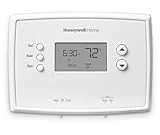
4. Honeywell Home RTH221B1039 RTH221B Programmable Thermostat, White
Overview:
The Honeywell RTH221B is a no-frills, 7-day identical-program thermostat for single-stage 1H/1C systems. It’s designed for users who prefer one consistent schedule all week, prioritizing simplicity over customization.
What Makes It Stand Out:
Its standout trait is unparalleled ease of use: set one schedule (4 daily periods: wake, leave, arrive, sleep), and it repeats identically every day. The bright digital display and one-touch temperature adjustment make it accessible, especially for less tech-savvy users or secondary homes.
Value for Money:
As one of the most affordable programmable thermostats, it offers strong value for minimalistic needs. It costs less than 5-2 or 7-day customizable models but sacrifices scheduling flexibility. Beats non-programmable stats in energy savings while avoiding complexity.
Strengths and Weaknesses:
Strengths: Ultra-simple programming, reliable performance, easy DIY install, battery-change reminders, and robust build quality. Weaknesses: Cannot customize weekends separately, no backlight, limited to identical daily schedules, and basic display.
Bottom Line:
Perfect for renters, vacation homes, or users wanting “set-and-forget” automation without weekly adjustments. If you need weekday/weekend differences, look elsewhere—but for pure simplicity, it’s unmatched.
5. Suuwer 5-1-1 Day Programmable Thermostats for Home 1 Heat/ 1 Cool Conventional Single-Stage Systems

Overview:
The Suuwer S705 is a 5-1-1 programmable thermostat (separate weekday/weekend schedules) for conventional single-stage 1H/1C systems. Like the Heagstat H705, it offers budget automation but requires meticulous compatibility checks.
What Makes It Stand Out:
It includes niche technical features like adjustable heat/cool swing (0.2°F–2°F) and selectable 5-minute compressor delay protection. The 5-1-1 scheduling (4 daily periods) and filter/battery reminders add practicality for hands-on users.
Value for Money:
Competitively priced, yet value is conditional. The compressor delay feature appeals to HVAC enthusiasts, but Honeywell offers better build quality and support at similar prices. Only economical if your wiring fits its 2–5 wire limit and you need its specific technical tweaks.
Strengths and Weaknesses:
Strengths: Low cost, compressor delay setting, precise swing control, and clear scheduling. Weaknesses: Severe compatibility restrictions (excludes multi-stage, heat pumps, line-voltage), high DIY risk, and sparse customer support compared to Honeywell.
Bottom Line:
A risky pick for non-experts. Choose only if you’ve verified wiring compatibility and need its technical features. For most users, Honeywell’s RTH20B provides greater reliability and peace of mind at a comparable price.
6. Sensi Smart Thermostat, 100 Years Of Expertise, Wi-Fi, Data Privacy, Programmable, Easy DIY Install, Works With Alexa, Energy Star Certified, Mobile App, ST55
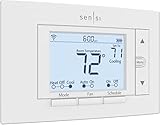
Overview: The Sensi Smart Thermostat combines modern smart-home functionality with strong privacy commitments. Designed for straightforward DIY installation without typically requiring a C-wire, it integrates with major HVAC systems and offers remote control via its mobile app while prioritizing user data security. ENERGY STAR certification underscores its efficiency focus.
What Makes It Stand Out: Sensi’s standout feature is its explicit privacy protection policy—refusing to sell user data to third parties, a rare transparency in smart thermostats. Its truly tool-free DIY installation, aided by an in-app level and clear instructions, lowers barriers for non-technical users. ENERGY STAR-verified energy savings (up to 23%) and proactive HVAC health reports with maintenance alerts further differentiate it.
Value for Money: Priced competitively against mid-range smart thermostats, Sensi delivers excellent value through its no-C-wire flexibility, robust privacy stance, and genuine energy-saving potential. While lacking a touchscreen, its app functionality and Alexa compatibility match pricier models, making it a cost-effective choice for privacy-conscious homeowners seeking simplicity.
Strengths and Weaknesses: Strengths: Unmatched data privacy policy; effortless DIY installation; significant energy savings potential; comprehensive HVAC monitoring; works without C-wire. Weaknesses: Basic physical interface (no touchscreen); app can feel less polished than competitors; limited smart-home ecosystem depth beyond Alexa.
Bottom Line: Highly recommended for users prioritizing data privacy and hassle-free installation. Sensi excels as a reliable, energy-efficient smart thermostat that delivers core functionality without compromising security, justifying its price for most standard HVAC setups.
7. Honeywell Home RTH6580WF Wi-Fi 7-Day Programmable Thermostat, White

Overview: Honeywell’s RTH6580WF is a versatile Wi-Fi thermostat offering seven-day programmability, remote access via dedicated apps, and broad smart-home compatibility. It targets users seeking energy savings through scheduling without complex setup, featuring a clear backlit display and straightforward operation for everyday comfort management.
What Makes It Stand Out: Dual-app support (Total Connect Comfort and Honeywell Home) provides flexibility for remote control, while compatibility with Alexa, Google Assistant, and Cortana ensures wide smart-home integration. ENERGY STAR certification validates its efficiency, and the large, intuitive display with physical buttons simplifies manual adjustments—ideal for users wary of touchscreens.
Value for Money: Positioned as a mid-tier option, it offers strong value through proven Honeywell reliability, genuine energy savings from precise scheduling, and extensive voice assistant support. It undercuts premium touchscreen models while delivering comparable core functionality, making it a sensible upgrade from basic thermostats.
Strengths and Weaknesses: Strengths: Excellent voice assistant compatibility; user-friendly physical interface with backlit display; dual-app remote access; ENERGY STAR certified; reliable DIY installation. Weaknesses: Apps can feel fragmented; no advanced features like humidity sensing; limited customization compared to higher-end models.
Bottom Line: A top pick for those wanting reliable Wi-Fi control, easy scheduling, and seamless voice integration without frills. Its balance of simplicity, compatibility, and energy efficiency makes it a worthwhile investment for most households.
8. New! Honeywell Home Programmable Thermostat, Single-Stage, 1 Heat/1 Cool Compatibility, Flexible Schedule, X2P, White, RTH21B

Overview: The Honeywell RTH21B is a no-frills, non-Wi-Fi programmable thermostat designed for single-stage HVAC systems. It emphasizes customizable scheduling, easy installation, and user-friendly operation with a large display, targeting budget-conscious homeowners seeking basic automation without smart features.
What Makes It Stand Out: Its flexibility shines through multiple scheduling options (7-day, 5-1-1, 5-2, or non-programmable) and swappable accent panels for aesthetic customization. The UWP wall plate simplifies installation and future upgrades, while features like filter reminders and a low-heat setpoint (32°F) cater to practical comfort needs in standard setups.
Value for Money: Exceptional value for users who don’t need Wi-Fi or app control. At an entry-level price, it outperforms basic models with robust scheduling versatility, clear display readability, and Honeywell’s trusted reliability. It’s ideal for rentals, secondary homes, or as a backup unit where smart features are unnecessary.
Strengths and Weaknesses: Strengths: Highly flexible scheduling; simple, tool-free installation; large, clear display; customizable aesthetics; affordable price. Weaknesses: Lacks Wi-Fi/smart capabilities; no touchscreen or advanced features (e.g., humidity display); limited to single-stage systems.
Bottom Line: Highly recommended for straightforward, cost-effective temperature automation. If remote access isn’t needed, the RTH21B delivers exceptional ease of use and scheduling depth at a minimal price point.
9. Honeywell Home RTH8560D 7 Day Programmable Touchscreen Thermostat

Overview: The Honeywell RTH8560D is a premium programmable touchscreen thermostat offering intuitive scheduling, a vibrant display, and Smart Response Learning for optimized comfort. It targets users wanting a blend of modern aesthetics, user-friendly programming, and enhanced environmental monitoring without full smart-home connectivity.
What Makes It Stand Out: The standout feature is its crystal-clear, cool-blue backlit touchscreen displaying indoor temperature and humidity—rare in non-Wi-Fi models. Smart Response Learning auto-adjusts pre-heating/cooling for precise schedule adherence, while customizable 7-day/weekend programming and prominent filter reminders enhance daily usability and system maintenance.
Value for Money: Justifies its higher price (vs. non-touch models) with the premium display, humidity sensing, and learning technology. Though lacking Wi-Fi, it offers more intuitive control and data visibility than basic programmables, making it a solid investment for tech-savvy users prioritizing in-room experience over app control.
Strengths and Weaknesses: Strengths: Beautiful, informative touchscreen with humidity readout; Smart Response Learning for accurate scheduling; easy-to-navigate menus; clear filter reminders; sleek design. Weaknesses: No Wi-Fi or remote access; limited smart-home integration; higher cost than non-touch programmables.
Bottom Line: An excellent choice for those seeking an elegant, high-functionality thermostat with advanced scheduling and environmental feedback. Ideal if you prioritize a premium in-home interface over app-based control.
10. Programmable Thermostat for Home,Conventional Single-Stage Systems,5-1-1 Day Programmable Digital Energy-Saving Thermostat,up to 1 Heat/1 Cool Compatible with Gas System,White Backlight

Overview: This budget-friendly programmable thermostat delivers essential 5-1-1 scheduling for conventional single-stage HVAC systems. It focuses on core energy-saving automation with a simple interface, targeting users with compatible setups seeking an affordable, no-nonsense upgrade from manual thermostats.
What Makes It Stand Out: Its broad compatibility with gas, oil, electric, and radiant systems (excluding heat pumps with aux/emergency heat) makes it versatile for older homes. Factory pre-set energy-saving programs simplify setup, while features like adjustable temperature differential, °C/°F conversion, and front-load batteries enhance practicality for basic system optimization.
Value for Money: Unbeatable value for specific, compatible systems. At a very low cost, it provides reliable programmability and energy savings where Wi-Fi isn’t needed. However, its value hinges entirely on confirming system compatibility—purchasers must verify their HVAC type against the detailed exclusion list.
Strengths and Weaknesses: Strengths: Extremely affordable; wide compatibility with conventional systems; easy 30-minute DIY install; clear backlight display; useful energy-saving presets. Weaknesses: Critical compatibility limitations (excludes many modern systems); basic interface; no advanced features (humidity, learning); risks of incorrect installation if compatibility overlooked.
Bottom Line: Recommended only after confirming HVAC compatibility. For eligible systems, it’s a highly cost-effective way to gain basic scheduling and energy savings, but incompatible setups will lead to frustration. Always verify your system first.
Understanding Programmable Thermostat Fundamentals
What Exactly Does “Programmable” Mean for Home Comfort?
A programmable thermostat allows you to set customized temperature schedules based on your daily and weekly routines. Instead of manually adjusting the temperature multiple times a day, you define periods like “Wake,” “Away,” “Home,” and “Sleep,” each with its ideal temperature setting. The thermostat then automatically executes this schedule, ensuring your home is comfortable when you need it and conserving energy when you don’t. This fundamental shift from reactive to proactive control is the cornerstone of significant energy savings.
Core Benefits Beyond Lower Energy Bills
While reducing heating and cooling costs is the most obvious advantage, programmable thermostats offer a suite of benefits. Enhanced comfort through consistent temperature management is a major perk, eliminating the frustration of returning to a sweltering or freezing house. They also reduce wear and tear on your HVAC system by preventing unnecessary cycling, potentially extending its operational life. Furthermore, many models provide valuable usage reports, giving you insights into your energy consumption patterns and highlighting further optimization opportunities.
How Programmable Thermostats Achieve Energy Savings
The savings mechanism is elegantly simple: energy is only expended when truly needed for comfort. During “Away” periods, the thermostat allows temperatures to drift towards an energy-saving setpoint (e.g., cooler in winter, warmer in summer), significantly reducing the workload on your HVAC system. Similarly, during sleep hours, a slightly adjusted temperature maintains comfort while saving energy. The U.S. Department of Energy estimates that properly setting back your thermostat 7-10 degrees Fahrenheit for 8 hours a day can yield energy savings of up to 10% annually on heating and cooling.
Essential Compatibility Checks Before Buying
Verifying Your HVAC System Type is Crucial
Not all thermostats work with every heating and cooling system. You must determine if you have a standard forced-air system, a heat pump (which requires specific wiring like O/B terminals), a boiler system for hydronic (hot water) heating, or a multi-stage system. Installing an incompatible thermostat can lead to improper operation, system damage, or safety hazards. Consult your current thermostat’s wiring or your HVAC system’s manual, or seek advice from a qualified technician before purchasing.
The Critical Importance of the C-Wire (Common Wire)
Many advanced programmable and smart thermostats require a constant 24-volt power source, typically provided by a “C-wire” (common wire) connected to your HVAC system’s control board. Older homes or simpler systems might lack this wire, relying solely on power-stealing from other wires, which can be unreliable and cause issues like screen dimming or Wi-Fi dropouts. Check your existing thermostat’s wiring carefully; if a blue or black wire is connected to a terminal labeled “C,” you’re likely good to go. If not, you may need an adapter kit or professional installation.
Understanding Voltage Requirements (Line vs. Low Voltage)
Most residential central HVAC systems use low-voltage thermostats (24V), which are the standard for programmable models. However, some electric baseboard heaters, older systems, or certain radiant floor systems operate on line voltage (120V or 240V). Using a low-voltage thermostat on a line-voltage system is dangerous and will cause damage. Ensure the thermostat you select explicitly matches the voltage requirements of your specific heating or cooling equipment.
Decoding Programming Styles and Flexibility
Fixed Schedule vs. Adaptive Programming Options
Basic programmable thermostats often use fixed schedules: you set specific times and temperatures for each day of the week (e.g., 6:30 AM Wake, 8:30 AM Away). More advanced models offer greater flexibility, like “Smart Response” or “Adaptive Recovery” technology, which learns how long your system takes to reach a set temperature and starts heating or cooling early enough to hit your desired temperature exactly at the scheduled time, avoiding premature running. Some even adjust schedules automatically based on occupancy patterns.
The Value of Multiple Daily Setpoints
How many distinct temperature periods you can program per day significantly impacts potential savings and comfort. Basic models might only offer 2-4 periods (e.g., Wake, Away, Home, Sleep). More sophisticated units provide 6 or more programmable transitions, allowing for finer control. This is especially valuable for complex schedules – perhaps a mid-morning warm-up before working from home, a cooler setting during peak afternoon sun, and a gradual cooldown before bedtime. More setpoints mean the thermostat can mirror your life more closely.
Vacation Mode and Temporary Overrides Explained
Life isn’t always predictable. A robust programmable thermostat includes features to handle exceptions gracefully. “Temporary Hold” lets you manually adjust the temperature for the current period without erasing your entire schedule (e.g., keeping it warmer for a few hours on a chilly spring morning). “Permanent Hold” overrides the schedule until you change it back. “Vacation Mode” is essential; it lets you set a single, energy-saving temperature for an extended period while you’re away, ensuring frost protection in winter or preventing excessive heat buildup in summer, without losing your regular programming.
Smart Features and Connectivity Considerations
Wi-Fi Connectivity: More Than Just Remote Access
While controlling your home’s temperature from your phone while at the grocery store is convenient, Wi-Fi connectivity offers deeper benefits. It enables automatic software updates for new features and security patches, provides detailed energy usage reports via an app, allows geofencing (using your phone’s location to automatically switch to “Away” mode when you leave), and integrates with broader smart home ecosystems for automated routines (e.g., “Good Morning” scene that adjusts lights and temperature).
Understanding Geofencing Capabilities
Geofencing uses your smartphone’s GPS to create a virtual boundary around your home. When your phone exits this boundary, the thermostat automatically switches to “Away” mode. When it re-enters, it begins warming or cooling to reach your “Home” temperature just as you arrive. This eliminates the guesswork of manual scheduling if your routine varies, ensuring you never pay to condition an empty house. Check if the thermostat relies solely on your phone’s location (most common) or offers multi-user geofencing for households.
Voice Control and Smart Home Ecosystem Integration
Compatibility with platforms like Amazon Alexa, Google Assistant, Apple HomeKit, or Samsung SmartThings adds hands-free convenience (“Hey Google, set the living room to 72 degrees”). More importantly, deep integration allows your thermostat to be part of complex automations – triggering your HVAC system based on other sensor data (like opening a window) or coordinating with your security system (arming the alarm could automatically set an Away schedule). Verify compatibility with your existing smart home devices.
Energy Usage Reporting and Insights
Advanced thermostats track your heating and cooling run time, often breaking it down by day or week. Some translate this into estimated energy consumption or cost based on your local utility rates. These reports are invaluable for understanding your usage patterns, verifying the impact of schedule changes, and identifying potential HVAC issues (like unusually long run times indicating a system problem). Look for clear, actionable data presentation within the companion app.
Installation and Usability Factors
Assessing DIY Installation Feasibility
Replacing a basic thermostat can be a straightforward DIY project for those comfortable with simple electrical work: turning off power at the breaker, labeling existing wires, connecting them to the new thermostat’s terminals, and mounting the unit. However, complexities arise with missing C-wires, unfamiliar HVAC systems, integrating with complex multi-stage setups, or dealing with older wiring. If unsure, professional installation ensures safety, correct operation, and often preserves HVAC warranties. Many retailers offer affordable installation services.
Evaluating Interface Design and User Experience
The best features are useless if the thermostat is frustrating to use. Consider the interface: Is the touchscreen responsive? Are physical buttons available for ease of use? Is the display clear and readable in low light? How intuitive is the menu navigation for setting schedules or adjusting settings? A complex interface might lead to improper programming or frequent overrides, negating potential savings. Look for models praised for simplicity, especially if multiple household members will interact with it.
Maximizing Energy Efficiency and Savings
Crafting an Effective Temperature Schedule
The key to savings is setting appropriate “Away” and “Sleep” temperatures. The U.S. Department of Energy recommends setting your thermostat to 68°F (20°C) when awake and at home in winter, and lowering it while asleep or away. In summer, aim for 78°F (25.5°C) when home, and higher when away. Every degree you adjust for 8 hours can save about 1% on your bill. Start with modest adjustments (1-2 degrees) and gradually increase as comfort allows. Avoid drastic setbacks that force your system to work excessively hard to recover.
Leveraging Advanced Scheduling for Peak Demand Times
Some utility companies offer time-of-use (TOU) pricing, where electricity costs more during peak demand hours (e.g., hot summer afternoons). A programmable thermostat allows you to pre-cool your home slightly before peak rates begin and then minimize AC usage during the most expensive times, shifting energy consumption to off-peak, lower-cost periods without sacrificing overall comfort.
Avoiding Common Programming Mistakes That Waste Energy
Several pitfalls undermine savings: setting “Away” temperatures too close to “Home” settings (minimizing savings), using frequent manual overrides that disrupt the schedule, programming overly complex schedules that are hard to maintain, or forgetting to adjust the schedule for seasonal changes or daylight saving time. Regularly review your schedule and usage reports to ensure it aligns with your actual occupancy and is optimized for current conditions.
Frequently Asked Questions
Frequently Asked Questions
How much can I realistically save with a programmable thermostat? Savings vary based on climate, utility rates, current habits, and proper programming, but the U.S. Department of Energy estimates potential savings of about 10% annually on heating and cooling bills with proper use (7-10°F setbacks for 8 hours daily). Actual results depend heavily on consistent and appropriate scheduling.
Do I need a smart thermostat, or is a basic programmable sufficient? Basic programmable thermostats offer significant savings through manual scheduling. Smart thermostats add convenience (remote access, geofencing) and advanced features (adaptive recovery, detailed reports) that can optimize savings further, especially for irregular schedules. Choose based on your budget, tech comfort, and need for automation.
Can a programmable thermostat work with my old furnace or AC unit? Compatibility is key. Most programmable thermostats work with standard low-voltage (24V) systems common in homes built in the last few decades. Older millivolt systems (common in some gas wall heaters) or line-voltage systems (baseboards) require specific thermostat types. Always verify compatibility with your specific HVAC equipment.
What’s the difference between “Auto” and “Heat/Cool” modes? “Auto” means the fan only runs when heating or cooling is actively needed. “On” keeps the fan running constantly. “Heat/Cool” (or “Auto Changeover” on heat pumps) automatically switches between heating and cooling modes to maintain a set temperature range, useful in spring/fall. Using “Auto” for the fan saves energy compared to “On”.
How do I know if my schedule is optimized for savings? Review any energy usage reports from your thermostat app. Look for long run times during “Away” periods, which indicate inefficient scheduling. Compare monthly energy bills before and after installation (accounting for weather differences). Gradually adjust setback temperatures and monitor the impact on both comfort and usage.
Is it hard to program a new thermostat? Modern thermostats, especially smart models, are designed for user-friendliness with guided setup and intuitive apps. Basic programmables might have steeper learning curves but often come with clear templates. If programming feels overwhelming, look for models with “smart” scheduling that learns from your adjustments or offers pre-set schedules.
Can a programmable thermostat help if I have allergies? Indirectly, yes. By reducing unnecessary HVAC runtime, you minimize the circulation of dust and allergens. More importantly, consistent humidity control (if your system includes a dehumidifier/humidifier managed by the thermostat) can create a less hospitable environment for dust mites and mold.
What does “Adaptive Recovery” or “Smart Response” actually do? These features learn how long your specific HVAC system takes to heat or cool your home to a desired temperature. Instead of starting exactly at your scheduled time (which might leave you waiting), it calculates the optimal start time to reach your target temperature precisely when you want it, avoiding wasted runtime while ensuring comfort.
Why does my new thermostat keep saying “In Recovery”? This indicates the thermostat is using its Adaptive Recovery feature. It started heating or cooling earlier than your scheduled time because it calculated that was necessary to reach your desired temperature exactly at the scheduled time, based on current conditions and system performance. It’s working as intended for optimal comfort.
Do I need a professional to install a programmable thermostat? If replacing an existing low-voltage thermostat of the same type (e.g., standard for standard, heat pump for heat pump) and you have a C-wire, DIY is often feasible. If you lack a C-wire, have a complex system (multi-stage, dual fuel), are unsure about wiring, or feel uncomfortable with electrical work, professional installation is highly recommended for safety and proper function.
See Also
- Stop Wasting Energy with the 10 Best Energy Saving Thermostats This Year
- Stop Wasting Energy with the 10 Best Wi-Fi Enabled Thermostat Remotes This Year
- Stop Manual Adjustments with the 10 Best Programmable Thermostats This Year
- 10 Best WiFi Thermostats for Energy Savings This Year
- Stop Overheating Rooms with the 10 Best Multi-Room Thermostats This Year