Table of Contents
That creeping chill near your doorframe isn’t just uncomfortable—it’s literally money slipping through the cracks. Every winter, homeowners collectively lose hundreds of dollars in heating costs through gaps that often measure less than a quarter-inch. Expandable door seals represent one of the most cost-effective solutions in your energy efficiency toolkit, adapting to your door’s unique contours while creating an airtight barrier against the elements.
Unlike traditional weatherstripping that maintains a fixed shape, expandable seals dynamically respond to pressure, temperature changes, and door movement. This comprehensive guide walks you through everything you need to know about selecting, installing, and maintaining these ingenious devices. You’ll discover how to evaluate different expansion mechanisms, understand material performance in various climates, and avoid common installation pitfalls that compromise effectiveness.
Top 10 Expandable Door Seals
Detailed Product Reviews
1. Duck Max Strength Expanding Foam Seal for Doors and Windows, .5 in. x .5 in. x 20 ft., Expands to Fit Uneven Gaps up to 1/2 Inch Thick, Cut to Size, Black, 1-Roll (Pack of 1)

Overview:
Duck Max Strength Expanding Foam Seal is a specialized weatherstripping solution designed for doors and windows. This 20-foot roll of black foam tape measures 0.5 inches square but expands to fill gaps up to 1/2 inch thick. The self-adhesive design creates powerful seals against cold weather while providing year-round insulation benefits against drafts, dust, insects, and pollen.
What Makes It Stand Out:
The expansion capability is the key differentiator here. Unlike static foam tapes, this product actively expands to conform to uneven gaps, creating a custom-fit seal. The premium adhesive backing ensures strong bonding to clean surfaces, while the ability to fill variable gaps from 1/8" to 1/2" makes it incredibly versatile for irregular door and window frames that standard tapes can’t properly seal.
Value for Money:
At approximately $10-15 for a 20-foot roll, this represents solid mid-range value. The expansion feature means you use less material than traditional foam, as it grows to fill space. Compared to basic non-expanding options, you’re paying a modest premium for superior gap-filling performance and professional-grade sealing that can reduce energy bills year-round.
Strengths and Weaknesses:
Pros: Expands to fill uneven gaps; 20-foot length covers multiple windows; Strong seasonal insulation; Easy cut-to-size application; Premium adhesive backing
Cons: Requires careful surface prep; Temperature-sensitive installation (>50°F); Limited to black color; May over-expand in tight spaces
Bottom Line:
Duck Max Strength Expanding Foam Seal is an excellent choice for homeowners battling drafty windows and doors with irregular gaps. The expansion technology delivers superior sealing performance, making it worth the extra effort in surface preparation. Ideal for moderate to large gaps where standard foam tapes fall short.
2. Pangda 2 Rolls 1-1/2 Inch W x 1-1/2 Inch H Expandable Foam Weatherstripping with Adhesive Expandable Foam Density Closed Cell Tape Seal for Uneven Gaps Doors Windows, Black
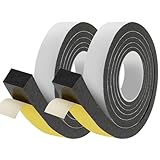
Overview:
Pangda’s Expandable Foam Weatherstripping comes in a two-roll pack, each measuring 1.5 inches wide and tall by 8 feet long. This black closed-cell foam tape features an adhesive backing and expands to fill uneven gaps around doors and windows. The generous dimensions make it suitable for larger sealing projects where substantial gaps compromise energy efficiency.
What Makes It Stand Out:
The substantial 1.5-inch profile provides excellent coverage for significant gaps, while the expandable nature ensures a tight seal even on irregular surfaces. The ultra-strong adhesive backing is specifically engineered for long-term durability, and the closed-cell construction offers superior weather resistance compared to open-cell alternatives. The foam compresses by 80% while maintaining waterproof integrity.
Value for Money:
Two rolls totaling 16 feet for around $15-20 delivers competitive value. The expandable design means you need less material to achieve a complete seal, effectively stretching your investment. When factoring in the energy savings from reduced HVAC loss, this weatherstripping pays for itself within a single season, making it economically smart for drafty homes.
Strengths and Weaknesses:
Pros: Large 1.5" dimensions for big gaps; Expandable for custom fit; Strong permanent adhesive; Closed-cell waterproof design; Energy-efficient compression
Cons: May be too thick for standard gaps; Limited total length (16 ft); Black only; Requires precise cutting for clean installation
Bottom Line:
Pangda’s weatherstripping excels for substantial gaps and irregular openings where standard tapes fail. The expandable closed-cell design and robust adhesive make it ideal for exterior doors and older windows. While potentially overkill for minor drafts, it’s a cost-effective solution for significant air leaks and energy loss.
3. Foam Strips with Adhesive, 1 Inch Wide X 1 Inch Thick, Neoprene Weather Stripping High Density Closed Cell Foam Tape Seal for Doors and Windows Insulation, Total 13 Feet Long(6.5ft x 2 Rolls)

Overview:
This neoprene foam tape kit includes two rolls measuring 1 inch wide by 1 inch thick, totaling 13 feet of sealing material. Made from high-density closed-cell CR foam, this weatherstripping is designed for extreme temperature resistance from -50°C to 150°C. The versatile black foam works for doors, windows, HVAC systems, and various industrial applications beyond typical residential use.
What Makes It Stand Out:
The exceptional temperature range and neoprene construction set this apart from standard polyurethane foams. This material resists oil, corrosion, and weathering while providing flame retardant properties. The high-density closed-cell structure delivers professional-grade sealing for both residential and commercial applications where environmental resistance is critical for long-term performance.
Value for Money:
At $12-18 for 13 feet of premium neoprene, this offers excellent value for demanding applications. Standard foam tapes can’t match the chemical resistance or temperature tolerance. For garages, workshops, or extreme climates, the durability justifies the slightly higher cost per foot compared to basic options, making it a long-term investment.
Strengths and Weaknesses:
Pros: Extreme temperature resistance (-50°C to 150°C); Oil and chemical resistant; Flame retardant; High-density closed-cell; Versatile industrial-grade material
Cons: Limited 13-foot total length; 1" thickness may be excessive for some gaps; Adhesive strength varies by surface; No expansion capability
Bottom Line:
This neoprene foam tape is the professional’s choice for harsh environments and specialized applications. While over-specified for typical home use, it’s unbeatable for garages, workshops, or extreme climates. The temperature and chemical resistance make it a long-term investment rather than a seasonal fix, ideal for demanding conditions.
4. 2 Rolls Foam Weather Stripping with Adhesive,1-1/2 Inch W x 1-1/2 Inch H Black High Density Weather Stripping Door Seal, 7.9 Feet Total Length Foam Tape Seal Strip for Uneven Gaps in Doors and Windows

Overview:
This two-roll foam weatherstripping package provides 7.9 feet total length of 1.5-inch square black polyurethane tape. Designed for uneven gaps in doors and windows, this high-density closed-cell foam offers windproof and soundproofing benefits. The strong single-sided adhesive ensures permanent fixation without leaving residue upon removal, making it renter-friendly.
What Makes It Stand Out:
The combination of substantial dimensions and sound-dampening properties differentiates this product. While most weatherstripping focuses solely on air sealing, this tape actively reduces noise transmission. The windproof design creates an effective barrier against drafts, while the high-resilience foam maintains its shape under compression for consistent performance.
Value for Money:
Two rolls for approximately $10-15 positions this as a budget-friendly option for targeted applications. The shorter total length (7.9 feet) makes it suitable for single-door or small window projects rather than whole-house sealing. For noise reduction combined with draft sealing, it delivers specialized value that standard weatherstripping cannot match.
Strengths and Weaknesses:
Pros: Excellent soundproofing capabilities; Windproof seal; High-resilience foam; Strong adhesive without residue; Versatile beyond windows/doors
Cons: Very limited total length (7.9 ft); May require multiple packs for larger projects; 1.5" profile too large for some gaps; Polyurethane less durable than neoprene
Bottom Line:
Ideal for apartment dwellers or homeowners prioritizing noise reduction alongside draft sealing. The limited length restricts it to small projects, but the sound-dampening performance is impressive for the price. Choose this for bedroom doors, media rooms, or urban environments where noise is as problematic as air leaks.
5. PATIKIL Smoke Fire Seal Strip, 16.4 Feet Expandable Door Seal Tape Self Adhesive Graphite Rubber Composite Material for Fire Rated Windows Steel Doors, 0.39" W x 0.08" T, Red

Overview:
The PATIKIL Smoke Fire Seal Strip is a specialized safety product measuring 16.4 feet long, 0.39 inches wide, and 0.08 inches thick. This red graphite rubber composite tape features self-expanding properties when exposed to heat, designed specifically for fire-rated windows and steel doors. The adhesive backing enables simple installation without specialized tools for critical safety applications.
What Makes It Stand Out:
This is a life-safety device, not just weatherstripping. The intumescent graphite material expands up to 10 times its size when temperatures exceed 200°C, creating a fire and smoke barrier. Unlike standard seals, this meets fire code requirements for rated openings, making it essential for commercial buildings and safety-conscious homeowners who prioritize protection over insulation.
Value for Money:
At $20-25 for 16.4 feet, this is premium-priced but invaluable for its purpose. Standard weatherstripping becomes hazardous in fires, but this strip actively prevents smoke and fire spread. The cost is negligible compared to potential life safety benefits and code compliance requirements for commercial properties, making it a non-negotiable investment.
Strengths and Weaknesses:
Pros: Fire-rated intumescent material; Expands under heat to seal gaps; 16.4-foot length; Strong adhesive; Easy installation
Cons: Very narrow profile (0.39"); Not for weather sealing; Over-specified for standard residential use; Red color limited to safety applications
Bottom Line:
This is a mandatory safety upgrade for fire-rated doors and windows, not a general-purpose draft seal. For commercial properties or homes with steel fire doors, it’s non-negotiable. Don’t substitute standard foam for this critical application. For regular weatherstripping needs, choose a different product entirely.
6. Holikme Weather Stripping Door Seal Strip 33 Feet, Sealing Sticker Sealing Tape for Door Draft Stopper Adhesive for Doors, Suitable for Windows, Doors

Overview: The Holikme Weather Stripping Door Seal Strip delivers an impressive 33 feet of coverage with a generous 1.8-inch width designed to bridge gaps up to 1.2 inches. This versatile sealing tape targets energy loss around windows and doors, creating an effective barrier against drafts, noise, dust, and insects. Made from non-toxic, temperature-resistant material, it promises year-round performance without compromising indoor air quality.
What Makes It Stand Out: The exceptional length and width combination sets this apart from standard weatherstripping. The ultra-strong adhesive backing ensures permanent placement, while the material’s homogenous construction means consistent performance throughout. Its multi-functional design addresses not just temperature control but also acoustic dampening and pest prevention in one solution.
Value for Money: With 33 feet per roll, this product offers substantial coverage for multiple doors and windows at a competitive price point. Compared to purchasing several shorter rolls, the extended length reduces waste and provides flexibility for larger projects, making it particularly cost-effective for whole-home weatherproofing.
Strengths and Weaknesses: Pros include generous dimensions, robust adhesive strength, non-toxic composition, and versatile application. The 24-hour curing requirement demands patience during installation. The 1.8-inch width may prove excessive for narrow gaps, requiring careful measurement and trimming.
Bottom Line: An excellent choice for comprehensive home sealing projects. The extended length and robust construction make it ideal for homeowners tackling multiple areas, though plan for the curing time and measure gaps carefully to ensure proper fit.
7. Benory 20Ft T-Shaped Silicone Weather Stripping Seal, Door Seal Tape for Doors and Windows, Blocks Cold Drafts and Reduces Noise

Overview: The Benory T-Shaped Silicone Weather Stripping Seal provides a 20-foot solution for draft and noise reduction using premium silicone construction. The unique T-profile design creates a superior seal compared to flat tapes, while double-sided adhesive ensures secure attachment to both frame and door surfaces. This product targets renters and homeowners seeking quick, effective gap sealing.
What Makes It Stand Out: The T-shaped profile delivers enhanced sealing performance by creating multiple contact points, effectively blocking drafts that slip past conventional flat strips. Silicone’s inherent durability withstands temperature extremes without cracking or degrading, while the double-sided adhesive system provides fail-safe installation in under three minutes.
Value for Money: Silicone weatherstripping typically commands a premium over foam alternatives, and this product positions itself in the mid-range. The 20-foot length adequately covers 2-3 standard doors, offering reasonable value for the material quality and specialized profile, though shorter than some competitors.
Strengths and Weaknesses: Pros include durable silicone construction, innovative T-shape design, rapid installation, and effective draft blocking. The 20-foot length may prove insufficient for larger projects requiring multiple rolls. The T-profile, while effective, requires specific gap geometry to function optimally and may not compress as readily as foam in irregular spaces.
Bottom Line: Perfect for targeted draft elimination in standard doorways. The silicone durability and clever T-design justify the moderate premium, making it ideal for those prioritizing longevity over maximum coverage.
8. PATIKIL Smoke Fire Seal Strip, 16.4 Feet Expandable Door Seal Tape Self Adhesive Graphite Rubber Composite Material for Fire Rated Windows Steel Doors, 0.39" W x 0.08" T, Grey

Overview: The PATIKIL Smoke Fire Seal Strip serves a critical safety function distinct from typical weatherstripping. This 16.4-foot graphite rubber composite tape measures just 0.39 inches wide and expands automatically when exposed to heat, creating a fire barrier for rated windows and steel doors. Designed for life-safety applications, it blocks smoke and gases during emergencies.
What Makes It Stand Out: The intumescent property—expansion under heat—provides passive fire protection unavailable in conventional seals. This specialized feature makes it essential for fire-rated assemblies where code compliance matters. The strong adhesive ensures reliable placement while promising clean removal without residue during replacement.
Value for Money: As a safety device rather than comfort upgrade, its value derives from code compliance and life protection, not energy savings. The price reflects specialized materials and certification requirements. For fire-rated doors and windows, it’s a necessary investment; for standard weatherproofing, it’s over-specified and expensive.
Strengths and Weaknesses: Pros include critical fire safety expansion, strong adhesion, residue-free removal, and specialized application. The narrow 0.39-inch width and thin 0.08-inch profile limit its use to specific fire door gaps. The 16.4-foot length is modest, and the material offers minimal insulation benefit under normal conditions.
Bottom Line: Essential for fire-rated door and window assemblies requiring smoke sealing. Not suitable for general weatherproofing needs. Purchase only if fire code compliance is your primary goal, as standard weatherstripping better addresses drafts and energy loss.
9. Kikerike Self Adhesive Foam Tape Weatherstrip 1In x 1/8In x 40Ft High Density Foam Insulation Strips Seal Weather Stripping with Strong Adhesive for Door and Window Sound Isolation Soundproofing

Overview: The Kikerike Self-Adhesive Foam Tape delivers exceptional versatility in a 40-foot roll of high-density neoprene foam. Measuring 1 inch wide and 1/8 inch thick, this weatherstrip handles extreme temperatures from -50°C to 150°C while providing multi-functional sealing for doors, windows, furniture, and automotive applications. The CR foam construction ensures durability across diverse environments.
What Makes It Stand Out: The remarkable 40-foot length combined with an impressive temperature range distinguishes this product. Its multi-purpose design addresses weatherproofing, sound isolation, vibration dampening, and even flame retardancy. The high-density foam maintains compression recovery better than standard polyethylene alternatives, ensuring long-term seal integrity.
Value for Money: Offering double the length of many competitors at a similar price point, this represents outstanding value. The versatility across residential, automotive, and industrial applications maximizes return on investment, eliminating the need for multiple specialized products.
Strengths and Weaknesses: Pros include extreme length, wide temperature tolerance, high-density construction, and broad application range. The 1/8-inch thickness may prove inadequate for gaps exceeding 3/16 inch, requiring multiple layers. Foam durability, while improved, still falls short of silicone for high-traffic areas. Adhesive performance varies on textured surfaces.
Bottom Line: An exceptional all-purpose sealing solution for those needing flexibility across multiple projects. The length and temperature rating make it ideal for garages, workshops, and varied applications, though measure gap depth carefully before purchasing.
10. VelTherm Weather Stripping Polyurethane Heat Insulation & Windproof for Door & Window Gap Sealing,0.25in When Compressed, Easy to Install, Expandable & Elastic Weather Stripping Door Seal

Overview: VelTherm’s Polyurethane Weather Stripping brings premium closed-cell foam technology to door and window sealing. The 13-foot roll features a unique 1-inch square profile that compresses to 0.25 inches, creating an exceptionally tight seal. This high-elastic material blocks wind, insulates temperature, reduces noise, and prevents water intrusion while rebounding to maintain performance.
What Makes It Stand Out: The compression-expansion mechanism allows the foam to fill irregular gaps with superior contact pressure, outperforming static-profile seals. Polyurethane’s closed-cell structure prevents moisture absorption and maintains thermal insulation value. The material’s elasticity ensures it rebounds after compression, solving the common problem of permanent foam deformation.
Value for Money: Positioned as a premium option, the price per foot exceeds foam tape but delivers enhanced performance. The 13-foot length suits focused applications rather than whole-house projects. For energy-conscious homeowners targeting problematic leaks, the investment pays dividends through improved HVAC efficiency.
Strengths and Weaknesses: Pros include premium polyurethane construction, excellent compression rebound, superior sealing performance, and strong adhesive. The 13-foot length limits coverage, making it expensive for large-scale use. The 1-inch uncompressed profile may prove too bulky for tight-clearance doors, requiring trimming. Polyurethane costs more than basic foam alternatives.
Bottom Line: Ideal for high-performance sealing of critical air leaks. The compression technology and durable material justify the premium for energy-focused upgrades, though budget-conscious buyers may prefer longer, less expensive rolls for basic draft blocking.
Understanding Expandable Door Seals
What They Are and How They Work
Expandable door seals are flexible weatherstripping components designed to compress and expand based on door position and environmental conditions. When your door closes, these seals compress to fill irregular gaps, then recover their original shape when opened. This dynamic action creates a variable barrier that traditional rigid weatherstripping simply cannot match. The expansion mechanism typically involves cellular foam structures, bellows designs, or hybrid materials that combine rigidity with flexibility.
The Science Behind Heat Loss at Doors
Doors account for up to 11% of a home’s total air leakage, with heat transfer occurring through three primary mechanisms: conduction through the door material, convection through air gaps, and radiation from the door surface. Expandable seals primarily combat convection by eliminating the pressure differential that drives air exchange. Even a 1/8-inch gap around a standard door can leak as much air as a 6-inch square hole in your wall when windy conditions create negative pressure.
Types of Expandable Door Seals
Compression Seals
Compression seals feature dense foam or rubber that squishes firmly when the door closes. These work best for consistent, moderate gaps and typically mount on the door stop or jamb. The material’s cellular structure contains countless tiny air pockets that resist heat flow while maintaining shape memory. High-quality compression seals recover to 90% of their original thickness after thousands of compression cycles.
Magnetic Seals
Magnetic seals incorporate flexible magnetic strips that adhere to metal door frames or striker plates. The magnetic attraction pulls the seal tightly against the surface, creating uniform contact pressure. These excel on metal doors and frames but require proper alignment to function correctly. The magnetic force typically measures between 0.5 and 2 pounds per linear inch, sufficient to overcome minor warping.
Inflatable Weatherstripping
Inflatable seals represent the premium tier, using air-filled tubes that expand when the door closes. Some advanced models feature manual or automatic inflation systems that pressurize the tube on-demand. These provide the most customizable seal but require more complex installation and occasional maintenance to check for leaks in the inflation system.
Foam Tape Varieties
Foam tape seals offer the simplest expandable solution, featuring adhesive-backed cellular foam in various thicknesses and densities. Closed-cell foam resists moisture better than open-cell varieties, while high-density options provide superior durability. The tape compresses easily but may develop compression set faster than molded profiles.
V-Strip or Tension Seals
V-strip seals create a spring-like action using folded vinyl or metal that flexes when compressed. The “V” shape provides two contact points and excellent recovery characteristics. These install easily in door jambs and work particularly well for sealing the gap between the door and frame on the hinge side.
Key Features to Evaluate
Material Quality and Durability
Material selection directly impacts longevity and performance. EPDM rubber withstands temperature extremes from -40°F to 250°F without cracking. Silicone offers superior UV resistance for doors receiving direct sunlight. Thermoplastic elastomers balance flexibility with tear resistance. Avoid low-grade vinyl that becomes brittle in cold weather or sticky in heat.
Expansion Mechanisms
Evaluate how the seal returns to its original shape. Memory foam formulations recover slowly but create excellent seals. Spring-loaded designs provide immediate recovery but may fatigue over time. Hybrid systems combine foam cores with reinforced outer skins for the best of both worlds. Consider your door’s closing force—overly aggressive expansion can make doors difficult to latch.
Adhesive vs. Mechanical Installation
Adhesive-backed seals install quickly but require pristine surface preparation. Mechanical fasteners (staples, nails, screws) provide more secure long-term attachment, especially on rough surfaces. Some premium systems use both methods, with adhesive for initial placement and mechanical fasteners for permanent security. Climate matters—adhesives fail in extreme cold or moisture.
Temperature Range Compatibility
Check the manufacturer’s specified operating range. Cold-climate seals must remain flexible at sub-zero temperatures without stiffening. Hot-climate versions need to resist softening and adhesive degradation. For four-season regions, choose all-temperature formulations rated from -20°F to at least 150°F. The seal’s expansion coefficient should match your typical temperature swing.
Compression and Recovery Rates
Quality seals compress to 30-50% of their original thickness without bottoming out. Recovery rate matters for doors that see frequent use—look for 80% recovery within 5 seconds of opening. Test this by compressing a sample with your finger; it should bounce back quickly without leaving a permanent indentation.
Measuring and Sizing Your Door
Tools You’ll Need
Gather a steel measuring tape, flashlight, feeler gauges or credit cards, straight edge, and notepad. A digital caliper helps measure gap width precisely. For uneven floors, use a level to identify high and low points. Take photos of gap variations with a ruler for reference when shopping.
Measuring Door Jambs and Frames
Measure gap width at six points: top left, top right, middle left, middle right, bottom left, and bottom right. Check hinge-side gaps separately from latch-side gaps. Note the largest gap measurement—your seal must accommodate this without over-compressing smaller gaps. Measure jamb depth to ensure the seal profile doesn’t interfere with door operation.
Accounting for Door Swing and Clearance
In-swinging doors require seals that mount on the frame without interfering with the door’s path. Out-swinging doors need surface-mounted seals that can withstand weather exposure. Pocket doors demand ultra-low-profile seals. Consider threshold height—some seals integrate with door sweeps for complete coverage. Account for 1/8-inch clearance minimum to prevent binding.
Installation Methods Explained
Surface Preparation Steps
Clean all mounting surfaces with denatured alcohol to remove oils and old adhesive residue. Sand painted surfaces lightly to create tooth for adhesive bonding. Fill deep cracks or gouges with wood filler and sand smooth. Prime bare wood to prevent moisture absorption that could loosen adhesive. Allow surfaces to dry completely—24 hours in humid conditions.
Step-by-Step Adhesive Application
Cut seal material slightly long, then trim after test-fitting. Apply steady pressure when pressing adhesive-backed seals into place, working from center outward to avoid air bubbles. Use a J-roller or rubber mallet to ensure full contact. Avoid stretching the material during installation, which reduces thickness and effectiveness. For corner joints, miter cut at 45 degrees for seamless appearance.
Mechanical Fastening Techniques
For nail-on seals, pre-drill holes to prevent splitting, especially near ends. Space fasteners every 4-6 inches, closer at corners. Set nail heads slightly below the surface without crushing the seal base. Screw-mounted systems allow for seasonal adjustment—don’t overtighten, which restricts expansion. Staple guns work for fabric-backed seals but require consistent depth control.
Common Installation Mistakes to Avoid
Never install seals in temperatures below 50°F or above 90°F—adhesive won’t cure properly. Avoid butting ends tightly; leave 1/16-inch gap for thermal expansion. Don’t install over old weatherstripping remnants. Never paint foam seals—the paint seals the cells and prevents expansion. Check door operation frequently during installation to catch binding early.
Benefits Beyond Energy Savings
Noise Reduction Capabilities
A properly installed expandable seal can reduce noise transmission by 5-10 decibels. The same air gaps that leak heat also transmit sound. Dense foam and rubber materials absorb acoustic energy, particularly mid-to-high frequencies like traffic noise or neighbor conversations. For maximum soundproofing, combine seals with door bottom sweeps and threshold plates.
Pest Prevention
Insects and rodents exploit gaps as small as 1/4-inch. Expandable seals create a physical barrier that most pests cannot penetrate. The compression force and material density matter—soft foam may allow chewing, while reinforced rubber deters rodents. Some materials incorporate natural pest deterrents like cedar oil or bittering agents.
Moisture and Draft Control
Beyond heat, seals block moisture-laden air that causes condensation and mold. This proves especially valuable in humid climates or near bathrooms and kitchens. By equalizing pressure, seals reduce the “wind tunnel” effect that forces drafts through your home. The result is more consistent humidity levels and fewer hot or cold spots.
Improved Indoor Air Quality
Sealing door gaps helps contain indoor pollutants and prevents outdoor contaminants from entering. This benefits allergy sufferers by reducing pollen infiltration. In wildfire-prone areas, seals help keep smoke particles outside. The key is using low-VOC materials that don’t off-gas chemicals into your living space.
Troubleshooting Common Issues
When Seals Won’t Adhere Properly
Poor adhesion usually stems from surface contamination or temperature issues. Remove the seal, clean with adhesive remover, and re-prep the surface. For stubborn cases, apply a primer specifically designed for weatherstripping adhesive. In cold weather, warm both surfaces with a hair dryer before application. Consider switching to mechanical fasteners if adhesion repeatedly fails.
Dealing with Uneven Gaps
Tapered shims behind the seal can compensate for out-of-plumb door frames. Install multiple seal profiles—thicker where gaps are larger, standard where they’re smaller. Adjustable threshold plates complement side seals for comprehensive coverage. For severely warped doors, address the root cause before relying on seals as a band-aid.
Addressing Compression Set
When seals stay compressed and don’t recover, they’ve reached their fatigue life. Replace them with higher-density materials rated for more compression cycles. For doors that stay closed for days, consider seals with slower recovery but better long-term resilience. Rotate between two seal profiles seasonally to extend lifespan.
Seasonal Adjustment Strategies
Some advanced seal systems allow you to adjust compression force. Loosen screws slightly in summer to reduce wear, then tighten in winter for maximum seal. Inflatable systems let you vary pressure based on weather conditions. For fixed seals, supplemental foam tape can boost performance during extreme cold snaps without permanent installation.
Maintenance and Longevity
Cleaning Your Door Seals
Vacuum seals monthly using a soft brush attachment to remove dust and debris. Wipe with a damp cloth and mild soap—avoid petroleum-based cleaners that degrade rubber. For mildew, use a 10% bleach solution, then rinse thoroughly. Lubricate compression seals annually with silicone spray to maintain flexibility. Inspect for tears or compression set every season change.
When to Replace vs. Repair
Replace seals that show permanent deformation, cracking, or adhesive failure. Repair small tears with weatherstripping-specific adhesive patches. If the seal pulls away but remains pliable, clean and re-glue with fresh adhesive. Consider replacement when energy bills creep up despite adjustments. Most quality seals last 5-10 years with proper maintenance.
Winterization Checklist
Before cold weather hits, close doors on a piece of paper and tug—if it slides out easily, your seal needs attention. Check for daylight visible around the closed door. Feel for drafts with a damp hand. Verify latch operation isn’t impeded by overly compressed seals. Apply silicone lubricant to prevent freezing adhesion. Consider adding storm door seals for extreme climates.
Cost and Value Considerations
Price vs. Performance Balance
Basic foam tape costs pennies per foot but may need annual replacement. Mid-range rubber seals run $1-3 per foot and typically last 5+ years. Premium inflatable systems cost $5-10 per foot but offer superior adjustability and can last decades. Calculate cost per year rather than upfront expense. A $30 seal lasting 10 years beats a $5 seal replaced yearly.
Long-Term ROI Calculations
Measure your door’s air leakage with a blower door test or DIY smoke pencil. Each cubic foot per minute (CFM) of air leakage costs approximately $1-2 annually in heating/cooling. If seals reduce leakage by 50 CFM, you save $50-100 per year. A $40 seal pays for itself in under a year. Factor in rebates—many utilities offer weatherization incentives that cover 50-100% of material costs.
Environmental and Efficiency Impact
Energy Star Considerations
While individual seals don’t carry Energy Star ratings, they contribute to whole-door performance. Pair seals with Energy Star certified doors for maximum efficiency. The DOE estimates proper weatherstripping can improve door performance by 15-30%. Document your improvements for potential home energy audits and certification programs like LEED for Homes.
Sustainable Material Options
Look for seals made from recycled rubber or bio-based foams derived from soy or castor oil. Some manufacturers use reclaimed EPDM from automotive seals. Avoid PVC-based products that release dioxins when manufactured. Cradle-to-cradle certified options exist for environmentally conscious homeowners. Properly installed seals reduce your carbon footprint more than many high-tech solutions.
Frequently Asked Questions
How do I know if my expandable door seal is working properly? Close your door on a dollar bill at several points around the frame. If you can pull the bill out with slight resistance, the seal is compressing correctly. If it slides out easily, you need more compression. If you can’t pull it out at all, the seal may be over-compressed, making the door hard to close.
Can expandable door seals be used on any door material? Yes, but installation methods vary. Wood doors accept both adhesive and mechanical fasteners. Metal doors require specialized adhesives or magnetic seals. Fiberglass doors need careful surface prep to prevent delamination. Glass doors often use compression seals mounted on frames rather than the door itself. Always check material compatibility before purchasing.
What’s the difference between expandable seals and standard weatherstripping? Standard weatherstripping maintains a fixed profile and relies on precise gap measurement. Expandable seals dynamically adjust to varying gap widths and door movement. This makes them more forgiving of imperfect installations and better suited for older homes where settling has created uneven gaps. They typically cost more but perform better in real-world conditions.
How often should I replace my door seals? Quality expandable seals last 5-10 years depending on climate, door usage, and material grade. Inspect annually and replace when you notice permanent flattening, cracking, loss of flexibility, or increased drafts. Doors exposed to direct sunlight or extreme temperatures may need replacement every 3-5 years. Foam tape varieties typically require replacement every 1-3 years.
Will expandable seals make my door harder to close? Properly selected and installed seals add minimal closing resistance—typically 1-3 pounds of force. If your door becomes significantly harder to close, the seal is likely too thick or over-compressed. Adjust by trimming thickness, loosening mechanical fasteners, or switching to a lower-density material. The goal is a firm seal, not a weight-lifting challenge.
Can I install expandable door seals myself or should I hire a professional? Most homeowners can install adhesive-backed foam tape and simple compression seals with basic tools. Complex systems like inflatable seals or doors requiring extensive adjustment benefit from professional installation. If you’re comfortable with measuring, cutting, and using a drill, you can handle 90% of installations. Budget 1-2 hours for your first door.
Do expandable door seals work for soundproofing? Yes, they significantly reduce noise transmission by sealing air gaps that carry sound waves. Dense rubber seals perform best, potentially reducing noise by 5-10 decibels. For maximum soundproofing, combine seals with solid-core doors, acoustic door sweeps, and threshold seals. They won’t block all noise but make a noticeable difference, especially for high-frequency sounds.
What’s the best expandable seal for extreme cold climates? Choose EPDM rubber seals rated to -40°F with high compression recovery. Avoid foam tapes that stiffen and lose adhesion in extreme cold. Magnetic seals work well if you have metal frames. Consider dual-seal systems with both compression and V-strip components for redundancy. Inflate-on-demand systems let you increase pressure during cold snaps for maximum performance.
Can expandable seals help with moisture problems? Absolutely. By blocking humid outdoor air, seals reduce condensation on interior surfaces and prevent moisture-driven mold growth. In coastal or humid climates, choose closed-cell foam or rubber that won’t absorb moisture. Ensure your door has proper flashing and drainage above—seals manage air, not bulk water from rain.
Are there fire-rated expandable door seals? Yes, intumescent seals expand when exposed to heat, sealing gaps during fires. These are different from weather seals but can serve both purposes. Look for seals tested to ASTM E2010 standards. Fire-rated seals are required for doors between garages and living spaces in many jurisdictions. They remain compressed normally but expand 5-10 times their size when temperatures exceed 200°F.
See Also
- Stop Heat Loss with the 10 Best Thermal Curtains This Year
- 10 Essential Expandable Door Seals Every Homeowner Needs in 2026
- How to Choose the 10 Best Expandable Door Seals for Wide Gaps in 2026
- The 10 Most Revolutionary Expandable Door Seals of 2026
- The 10 Best Thermal Door Draft Stoppers Every Renter Needs This Year