Table of Contents
Ever settled into your favorite armchair in a spacious living room, only to feel a persistent chill creeping up your legs despite the thermostat reading a comfortable 70 degrees? You’re not imagining things—those stubborn cold spots in large, open areas are a common frustration, turning your cozy sanctuary into a patchwork of temperatures. Drafty windows, high ceilings, poor insulation, or simply the physics of air movement can leave certain zones feeling more like a brisk autumn morning than a warm indoor haven. It’s enough to make you layer up with blankets while the rest of the room feels perfectly fine, wasting energy and comfort in the process.
The good news? Effectively banishing these chilly pockets doesn’t require a complete HVAC overhaul. Modern space heaters, when chosen and deployed strategically, are remarkably adept at targeting those specific trouble zones. But navigating the maze of options—ceramic, infrared, oil-filled, convection—can feel overwhelming, especially when you need power and precision for expansive spaces. This guide cuts through the noise, focusing squarely on the features, technologies, and practical considerations that truly matter for tackling cold spots in large rooms. Forget generic lists; we’re diving deep into how to select and use a heater that delivers consistent, efficient warmth exactly where you need it most.
Top 10 Space Heaters for Large Rooms
Detailed Product Reviews
1. DREO Space Heater, 1500W Electric Heaters for Indoor Use with Thermostat, 70° Oscillation, 8 Safety Protections, 5 Modes, Remote, 12H Timer, Quiet Portable Heater for Office, Bedroom, Large Room

Overview:
This 1500W ceramic heater targets medium-sized rooms (up to 270 sq.ft.) with rapid heating and ETL-certified safety. Ideal for bedrooms or offices, it combines PTC ceramic tech with smart features like thermostat control and quiet operation.
What Makes It Stand Out:
Its standout features include library-quiet 34dB operation (12% quieter than competitors) and a 70° oscillation system that boosts coverage by 20%. The exclusive trackball mechanism ensures whisper-quiet, even heat distribution. ECO mode intelligently adjusts wattage (1000W–1500W) to maintain temperature efficiently.
Value for Money:
Priced competitively, it justifies cost through 8-layer safety protections (tip-over, overheat, V0 flame-retardant materials) and energy-saving ECO mode. Outperforms budget heaters in noise reduction and coverage while matching premium models’ safety standards.
Strengths and Weaknesses:
Strengths: Exceptional quietness; precise thermostat; wide oscillation; strong safety suite; effective for 270 sq.ft.
Weaknesses: Requires direct wall outlet (no extension cord use); oscillation range narrower than some rivals.
Bottom Line:
A top-tier choice for safety-conscious users needing quiet, efficient heating in medium rooms. Highly recommended for bedrooms or offices where noise and reliability matter most.
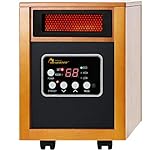
2. Dr Infrared Heater DR-968 Portable Space Heater, 1500-Watt, Cherry
Overview:
This dual-system heater merges infrared quartz and PTC ceramic tech to heat large rooms efficiently. Rated for 5200 BTU, it includes caster wheels for mobility and targets spaces where rapid, broad warmth is essential.
What Makes It Stand Out:
The dual heating system delivers 60% more heat than standard models, combining infrared’s instant warmth with PTC’s convection efficiency. Its high-pressure blower operates at 39dB—unusually quiet for powerful heating—and covers expansive areas effectively.
Value for Money:
While pricier than basic ceramic heaters, the infrared-PTC synergy offers faster heating and energy savings in larger spaces. Lifetime filter and sturdy build justify the investment for users prioritizing durability and performance over minimalism.
Strengths and Weaknesses:
Strengths: Dual-system heating excels in large rooms; quiet operation; caster wheels enhance portability; robust safety protections.
Weaknesses: Bulky (19 lbs); limited thermostat range (50–85°F); remote lacks backlighting.
Bottom Line:
Ideal for drafty basements or open-plan areas needing aggressive heating. Best for users valuing raw power and mobility over compact design or ultra-precise temperature control.
3. DREO Space Heater for Large Room, 23 Inch Electric Heaters for Indoor Use, 8 Safe Protection Tower, 70° Oscillation, PTC Ceramic with Thermostat and Remote, Quiet, 12H Timer, Bedroom, Office

Overview:
Engineered for rooms up to 250 sq.ft., this 23-inch tower heater doubles airflow via dual DC motors and a 25% larger heating plate. It emphasizes safety and energy efficiency with ETL certification and child-lock features.
What Makes It Stand Out:
It uniquely combines dual motors for 10ft/s airflow (heating in 2 seconds) with 40% energy savings via ECO mode. Precise 1°F temperature increments (41–95°F) and 70° oscillation ensure tailored comfort in large spaces.
Value for Money:
Offers premium features like 8 safety protections and whisper-quiet operation at a mid-range price. Outperforms similarly priced models with superior airflow speed and energy savings, making it cost-effective for frequent use.
Strengths and Weaknesses:
Strengths: Rapid heating; exceptional energy efficiency; precise temp control; extensive safety suite; cool-touch housing.
Weaknesses: Slightly shorter cord (6 ft); oscillation less smooth than higher-end models.
Bottom Line:
A compelling pick for large rooms where speed and efficiency matter. Recommended for families seeking safe, powerful heating without premium pricing.
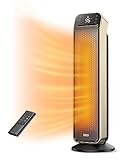
4. DREO Space Heater Indoor, 25" 11.5ft/s Fast Portable Room Heater with Remote and Thermostat, 3 Modes, Overheating & Tip-Over Protection, Electric Heaters for Indoor Use Large Room, Bedroom, Gold
Overview:
This 25-inch gold-finished heater uses “hyperamics” thermal design for ultra-fast 11.5ft/s heat dispersion. Covering 100–270 sq.ft., it prioritizes silent operation and precision control for bedrooms or quiet offices.
What Makes It Stand Out:
Its 25dB noise level (near-silent) and extended impeller for doubled heat range are unmatched. The 45° tip-over protection and 1°F thermostat precision cater to users needing disturbance-free, tailored warmth in large spaces.
Value for Money:
Priced above mid-range competitors, it delivers exceptional value through near-silent operation and hyper-efficient heating. The 4-mode versatility (including fan mode) and ETL safety certifications justify the cost for noise-sensitive environments.
Strengths and Weaknesses:
Strengths: Near-silent operation; rapid 2-second heat-up; precise 1°F control; elegant design; versatile modes.
Weaknesses: Gold finish attracts dust; remote requires separate batteries.
Bottom Line:
Perfect for light sleepers or home offices. A premium investment for those prioritizing tranquility and speed, highly recommended despite minor cosmetic quirks.
5. Space Heater, WINHL 17 Inches Electric Heaters for Indoor Use with Thermostat and Remote, 70°Oscillation, 12H Timer, 5 Modes, 1500W PTC Ceramic Fast Safety Heat for Office Bedroom Home

Overview:
A versatile 17-inch ceramic heater with 700W/1000W/1500W settings for rooms up to 270 sq.ft. It balances affordability with essential features like thermostat control, oscillation, and ETL safety certifications.
What Makes It Stand Out:
Its triple-wattage flexibility (700W–1500W) allows fine-tuned energy use for varying needs, from mild winter days to deep cold. The 12H timer and remote (batteries not included) enhance convenience without premium pricing.
Value for Money:
The most budget-friendly option here, offering core functionality at an accessible price. While less advanced than DREO models, its year-round usability (fan mode included) and solid safety suite provide reliable value for occasional users.
Strengths and Weaknesses:
Strengths: Affordable; simple triple-wattage control; includes fan mode; strong safety features; compact design.
Weaknesses: Louder (39dB); less precise thermostat; remote lacks battery inclusion.
Bottom Line:
A practical entry-level heater for small spaces or supplemental use. Recommended for cost-conscious buyers needing basic, safe heating without advanced tech.
6. DREO Space Heater Large Room, 30" Electric Heaters with Remote, 120° Oscillation, Adjustable Thermostat, 5 Heat & 3 Fan levels, 8 Safety Protections, 25dB Quiet, 1-12H Timer, Heater for Office, Black

Overview: The DREO 30" ceramic space heater delivers targeted warmth for large rooms up to 300 sq. ft., featuring advanced thermal design and versatile operation modes for home or office use. Its focus on quiet performance and safety makes it suitable for bedrooms.
What Makes It Stand Out: Its standout features include an exceptionally wide 120° oscillation range (exceeding competitors), industry-leading 25dB near-silent operation ideal for sleep, and a unique combination of 5 heat levels plus 3 fan-only settings. The Hyperamics thermal tech promises efficient heating and up to 50% energy savings in ECO mode.
Value for Money: Priced competitively in the mid-premium range, it justifies cost through superior oscillation coverage, unmatched quietness, and comprehensive ETL-certified safety (8 protections). While pricier than basic models, the added features offer tangible benefits for frequent users seeking comfort and safety.
Strengths and Weaknesses: Strengths: Ultra-quiet operation; widest oscillation (120°); versatile heat/fan modes; robust safety suite; precise thermostat. Weaknesses: Requires stable voltage for optimal performance; remote lacks backlight; no explicit mention of energy usage metrics beyond claims.
Bottom Line: An excellent investment for those prioritizing silence and wide-area warmth in large rooms. Its safety features and oscillation range make it highly recommended for bedrooms and offices, despite minor voltage sensitivity.
7. Hykolity Space Heater Large Room, 30" Electric Heaters for Indoor Use with Thermostat and Remote,70° Oscillation, 24H Timer, 1500W Fast Heating Portable Heaters for Office, Bedroom, Home - Silver

Overview: This Hykolity 30" ceramic heater offers rapid 1500W heating for spaces up to 300 sq. ft., emphasizing precise temperature control and user-friendly operation with a remote and 24-hour timer, targeting bedrooms and offices.
What Makes It Stand Out: It distinguishes itself with 1°F thermostat precision (50-95°F range), a room-filling 70° oscillation, and four distinct modes (H1/H2/FA/ECO). The ECO mode’s auto-adjustment and memory function for settings enhance convenience and energy efficiency.
Value for Money: Positioned affordably, it delivers strong value via accurate temperature control, solid safety features (ETL-certified), and practical extras like a mute function. It undercuts premium brands while matching core functionality, ideal for budget-conscious buyers needing reliability.
Strengths and Weaknesses: Strengths: Exceptional thermostat precision; intuitive ECO mode; useful memory function; comprehensive safety; 24H timer. Weaknesses: Oscillation range narrower than some rivals (70° vs 120°); no fan-only mode specified; silver finish may show dust.
Bottom Line: A highly practical, cost-effective choice for users seeking precise, hands-off temperature management. Best suited for medium-large rooms where exact climate control matters more than maximum oscillation width.
8. PELONIS Radiator Heater for Large Space, Electric Oil Filled Radiator, Dual Knobs, 1500W, Quiet Space Heater, 3 Modes, Tip-over Protection

Overview: The PELONIS oil-filled radiator provides gentle, consistent heat for large areas using 1500W power and thermal oil, operating silently without a fan. Its classic design suits bedrooms, living rooms, or offices needing draft-free warmth.
What Makes It Stand Out: As a fanless oil heater, it achieves true whisper-quiet operation—unmatched by ceramic models. The dual knobs offer simple 600W/900W/1500W mode selection for energy savings, while the oil reservoir ensures residual heat after shutdown, avoiding dry air.
Value for Money: An economical long-term solution; slightly higher upfront cost than basic ceramics is offset by lower noise disruption and efficient zone heating. The 3-mode energy control and durable construction provide excellent durability, especially for continuous use.
Strengths and Weaknesses: Strengths: Completely silent operation; gentle, non-drying heat; energy-saving dual-power modes; stable on casters; simple controls. Weaknesses: Slow initial heat-up; bulkier/heavier than ceramic heaters; limited safety features (no child lock); no remote or digital thermostat.
Bottom Line: Highly recommended for light sleepers or those sensitive to noise and dry air. Ideal as a supplementary heater in bedrooms where instant heat isn’t critical, but sustained quiet comfort is paramount.
9. Space Heaters Indoor Use, 26" 12ft/s Electric Heater with Remote, 1500W Electric Heaters with 75°Oscillation, 1-12H Timer, PTC Electric Heater for Large Room, Bedroom Home Office

Overview: This 26" PTC ceramic heater delivers fast, targeted warmth for rooms up to 300 sq. ft. at 12 ft/s, combining strong safety features with quiet operation (35dB) for versatile indoor use in homes or offices.
What Makes It Stand Out: Its 12 ft/s rapid heating speed and 75° oscillation provide quick coverage, while the wide 41°F-95°F thermostat range (1°F precision) in ECO mode ensures personalized comfort. Robust V0 flame-retardant build and ETL certification enhance safety credibility.
Value for Money: Offers solid mid-range value with fast heating, precise digital control, and comprehensive safety (child lock, tip-over protection). Competes well against pricier models by including key features like a 12H timer without significant compromises.
Strengths and Weaknesses: Strengths: Very fast heat delivery; precise temperature control; strong safety suite; effective oscillation; quiet enough for bedrooms. Weaknesses: 35dB slightly noisier than top rivals (e.g., DREO’s 25dB); no fan-only mode; outdoor use claim seems impractical for electric heater.
Bottom Line: A reliable, feature-packed option for quick room heating with excellent safety. Recommended for living areas or bedrooms where speed and precision outweigh absolute silence, especially for families with children.
10. DREO Space Heaters for Indoor Use, 16 Inch Fast Heating Portable Heaters with Remote, 12H Timer, 70° Oscillation, Overheat Protection, Safety Heat, Large PTC Ceramic Electric for Bedroom Home Office

Overview: DREO’s compact 16" ceramic heater prioritizes rapid, quiet warmth for spaces up to 250 sq. ft., featuring Hyperamics Tech for fast heat (11.6 ft/s) and a focus on bedroom-safe operation with its ultra-quiet 34dB design.
What Makes It Stand Out: Its standout elements are the impressive 11.6 ft/s heating speed in a smaller form factor, the exceptionally quiet 34dB operation via brushless DC motor, and the Shield360° safety system (including 24H auto-off). The precise 41-95°F digital thermostat adds refinement.
Value for Money: Priced accessibly for its tech, it offers excellent value through speed, near-silent performance, and robust ETL-listed safety. It undercuts larger DREO models while delivering core benefits, making it ideal for smaller rooms or supplemental heating.
Strengths and Weaknesses: Strengths: Very fast localized heating; extremely quiet; compact yet powerful; comprehensive Shield360° safety; precise thermostat. Weaknesses: Smaller coverage (250 sq. ft.) than 30" models; 70° oscillation less wide than some; no fan-only setting.
Bottom Line: A top pick for bedrooms or small offices needing quick, unobtrusive heat. Its blend of speed, silence, and safety makes it highly recommended where space is limited but comfort is non-negotiable.
Understanding Cold Spots in Large Rooms
Why Large Spaces Challenge Standard Heating
Large rooms present unique heating hurdles due to their volume and layout. Central HVAC systems often struggle to circulate air evenly across vast distances, leading to significant temperature stratification where heat rises and pools near high ceilings, leaving floor level uncomfortably cool. Open floor plans, multiple windows, or exterior walls can create persistent drafts that standard heating can’t counteract locally, resulting in those frustrating cold zones far from vents.
The Physics of Targeted Warmth
Effective cold spot solutions rely on understanding heat transfer principles. Convection heaters warm the air itself, which then circulates—a process that can be slow and uneven in large spaces. Radiant heaters (like infrared), however, emit direct electromagnetic waves that heat objects and people in their line of sight almost instantly, bypassing the need to warm the entire air mass first. This makes radiant technology particularly efficient for zonal heating where immediate, focused comfort is the goal, without waiting for air currents to redistribute warmth.
Key Heater Types for Large Room Challenges
Convection Heaters: Steady Ambient Warmth
Convection heaters work by drawing in cool air, heating it via an element (like ceramic coils), and then circulating the warmed air back into the room. They excel at gradually raising the overall ambient temperature in a contained space. For large rooms, look for powerful models with strong fans and wide oscillation to push heated air further and distribute it more broadly, though they may take longer to noticeably impact a specific cold spot directly.
Radiant/Infrared Heaters: Instant Directional Heat
Radiant heaters, particularly infrared models, are often the secret weapon against localized cold spots. They emit invisible infrared radiation that travels in straight lines, warming solid objects (like your sofa, desk, or even your body) directly upon contact, much like sunlight. This provides near-instantaneous warmth exactly where the heater is pointed, making them ideal for spot-heating a drafty seating area or a chilly corner without needing to heat the entire room volume first.
Oil-Filled Radiators: Silent, Long-Lasting Comfort
Oil-filled radiators use electricity to heat thermal oil sealed within their columns; the hot oil then radiates heat steadily into the room. They provide gentle, convective warmth with minimal noise (no fan) and continue emitting heat for a while after turning off. While slower to warm up initially, their sustained output can be beneficial for maintaining a more consistent temperature in a large zone once heated, though they lack the pinpoint instant heat of infrared for immediate cold spot relief.
Micathermic Heaters: Combining Convection and Radiant
Micathermic heaters utilize mica stone panels that heat up rapidly. They combine radiant heat (from the hot surface) with convection (as air passes over the panels). This dual approach offers relatively quick warmth with good coverage. Their slim profile is often space-saving, and they tend to operate quietly. For large rooms, their ability to provide both direct radiant heat and some air circulation makes them a versatile contender for tackling uneven temperatures.
Essential Features for Large Room Effectiveness
Sufficient Heating Power (BTU/Wattage)
This is non-negotiable. Underpowered heaters simply cannot overcome the heat loss in large spaces or effectively warm the air volume around a cold spot. Calculate the required wattage: a common rule of thumb is 10 watts per square foot for moderately insulated rooms. For a 300 sq ft cold zone within a large room, you’d need at least 3,000 watts. Always prioritize slightly higher capacity over lower to ensure the heater isn’t perpetually running at max without solving the problem.
Intelligent Thermostats and Controls
A basic on/off switch is inadequate. A precise, adjustable thermostat (ideally digital) allows you to set and maintain your desired temperature in the targeted area, preventing energy waste from overheating. Look for models with multiple heat settings (e.g., 750W/1500W) for finer control. Programmable timers or smart features (Wi-Fi/app control) add convenience, letting you pre-warm the spot before you enter the room.
Effective Airflow Management
How the heater moves warm air is critical for coverage. Wide-angle oscillation (60 degrees or more) is essential to spread warmth across a broader area of the cold spot zone, rather than just a narrow beam. Powerful, multi-speed fans significantly enhance a convection heater’s ability to push warm air further into the room’s depth. Directional vents allow you to angle the airflow precisely where it’s needed most.
Strategic Placement and Portability
The heater’s location relative to the cold spot and room layout is paramount. Ideally, position it to intercept drafts (e.g., near a window) or directly face the seating area needing warmth. Ensure it has ample clearance (as per manual) on all sides for safety and optimal airflow. Consider weight, handle design, and cord length; you may need to reposition it seasonally or for different activities. Models with casters offer the easiest repositioning in large rooms.
Safety Considerations for Powerful Heating
Non-Negotiable Safety Certifications
Never compromise on safety, especially with high-wattage units. Look for current certification marks from recognized independent testing laboratories like ETL, UL, or CSA prominently displayed. These indicate the heater has passed rigorous electrical and fire safety tests. Avoid uncertified heaters, regardless of price or features—they pose significant fire and shock risks.
Critical Safety Mechanisms
Robust safety features are mandatory. A tip-over switch automatically cuts power if the heater is knocked over. Overheat protection shuts the unit down if internal components reach unsafe temperatures, crucial for preventing fires near furniture or curtains. Cool-touch exteriors, especially on the front grill and housing, are vital for households with children or pets, minimizing burn risks even during operation.
Clearance and Environmental Safety
Strictly adhere to the manufacturer’s specified clearance distances (usually 3 feet or more) from combustible materials like furniture, drapes, bedding, and paper. Never place a heater under a desk or in a cramped corner where airflow is restricted. Ensure the room has adequate ventilation, especially for fuel-burning models (though electric is standard for indoor spot heating). Keep cords completely clear of foot traffic to prevent tripping hazards.
Maximizing Efficiency and Comfort
Optimizing Heater Placement Strategy
Placement isn’t random. For radiant heaters, point them directly at the people or objects in the cold zone for immediate effect. Convection heaters work best positioned to take advantage of natural air currents—often lower to the ground to draw in cool air, or angled to push warm air across the floor towards the draft source. Experiment; sometimes moving the heater just a few feet can dramatically improve its effectiveness on the specific cold spot.
Leveraging Room Layout and Insulation
Address the root causes where possible. Use draft stoppers on doors, apply weatherstripping to leaky windows, or add thermal curtains to reduce heat loss at the source of the cold spot. Rugs on hardwood or tile floors can significantly reduce radiant heat loss from the floor up. While not always feasible, improving insulation in problem areas provides a more permanent solution that makes any space heater’s job easier and more efficient.
Complementing, Not Replacing, Your Main System
Think of a space heater as a precision tool, not your primary heat source. Use it to supplement your central heating only in the specific zone that’s cold, while potentially lowering the overall thermostat setting. This targeted approach (“zone heating”) can actually save energy compared to cranking up the whole-house heat just to warm one uncomfortable spot, making your entire heating strategy smarter and more cost-effective.
Installation and Operational Best Practices
Electrical Requirements and Circuit Safety
High-wattage heaters (1500W+) demand dedicated circuits. Plugging them into an overloaded circuit or using extension cords (a major fire hazard) can trip breakers or cause wiring damage. Always plug directly into a wall outlet. Check your home’s circuit breaker panel to identify suitable outlets on their own circuit, especially for units exceeding 1000W. When in doubt, consult an electrician.
Routine Maintenance for Peak Performance
Dust buildup is the enemy of efficiency and safety. Regularly vacuum the intake and output grills (with the heater unplugged and cool) to ensure unobstructed airflow. Wipe down the exterior with a damp cloth. For fan-assisted models, gently clean fan blades if accessible per the manual. Inspect the power cord periodically for damage. Proper maintenance ensures the heater runs efficiently, quietly, and safely for years.
Realistic Expectations and Usage Patterns
Understand what your heater can realistically achieve. It won’t instantly turn an unheated garage into a tropical paradise, nor will it compensate for massive heat loss in a poorly insulated room. Use it strategically: turn it on when you enter the room for the targeted area, and turn it off when you leave. Pairing it with behavioral changes (like wearing warmer socks in that spot) enhances comfort without over-reliance on the appliance.
Frequently Asked Questions
Frequently Asked Questions
How do I know if a heater is powerful enough for my large room’s cold spot? Calculate based on square footage: aim for 10 watts per square foot of the area you specifically want to warm (e.g., your seating zone). For a 200 sq ft cold spot, you’d need roughly 2000 watts. If the heater runs constantly on its highest setting without making the spot comfortable, it’s underpowered.
Can space heaters really eliminate cold spots without making the whole room too hot? Yes, that’s the key advantage of targeted heating. By focusing warmth only on the uncomfortable zone using radiant heat or strategic convection, you maintain a lower overall room temperature while making the specific spot feel warm, avoiding overheating other areas.
Are infrared heaters safer than fan heaters for homes with kids or pets? Both types can be safe with proper features. Prioritize models with cool-touch exteriors, tip-over switches, and overheat protection regardless of type. Infrared heaters often have hotter surface temperatures on the heating element itself (though usually shielded), while fan heaters have moving parts. Safety certifications and features matter more than the core technology.
Is it safe to leave a space heater running overnight in a large bedroom? Generally, it’s not recommended to leave any space heater unattended or running while sleeping. The risk of fire, even with safety features, increases significantly during unattended operation. Use them to pre-warm the room before bed, then turn them off.
Will a space heater significantly increase my electricity bill? Used strategically for zone heating (only in the occupied cold spot, not the whole house), it can be cost-effective. However, running a high-wattage heater constantly in a large area will add noticeably to your bill. Efficiency comes from using it only when and where needed, potentially allowing you to lower your main thermostat.
What’s the biggest mistake people make when trying to heat large rooms with cold spots? The most common error is buying an underpowered heater. A 750W unit might be fine for a small office but is completely inadequate for a drafty corner of a 400 sq ft living room. Always size up based on the specific area needing correction, not the entire room’s square footage.
Do I need a special outlet for a high-wattage space heater? Yes. Heaters drawing 1500 watts (12.5 amps) require a standard 15-amp circuit but should be the only major appliance plugged into that outlet. Avoid power strips or extension cords entirely—they are fire hazards. Plug directly into a wall outlet on a dedicated circuit if possible.
Can space heaters help with dampness or mold in a cold corner? While they won’t directly solve moisture problems, warming a cold, damp spot can help reduce condensation (which leads to mold) by keeping surfaces above the dew point. However, addressing the underlying moisture source (leaks, poor ventilation) is essential; a heater alone isn’t a mold solution.
Why does my space heater make a clicking noise when it turns on or off? This is usually normal thermal expansion and contraction. As metal heating elements and housings heat up, they expand slightly, causing a soft click. Similarly, they contract as they cool down after turning off. Loud buzzing or persistent clicking could indicate an issue, but occasional soft clicks are typical.
How often should I clean my space heater for optimal performance and safety? Vacuum the intake and output grills at least once a month during heavy use to prevent dust buildup. Wipe down the exterior weekly. Perform a more thorough inspection (checking for internal dust, cord condition) at the start of each heating season. Always unplug and let the heater cool completely before cleaning.
See Also
- How to Solve Cold Spots with the 10 Best Hydronic Baseboard Heaters in 2026
- 10 Electric Fireplace Heaters That Solve Cold Spots in 2026
- 10 Premium Electric Space Heaters (Worth the Investment) for Large Living Rooms
- How to Solve Cold Spots with the 10 Best Baseboard Ceramic Heaters in 2026
- 10 Best Value Electric Space Heaters for Large Rooms in 2026