Table of Contents
Stuffy rooms, lingering odors, and that uncomfortable feeling of stagnant air are telltale signs your home is suffering from poor air circulation. When indoor air becomes trapped and stale, it doesn’t just affect comfort—it can impact your health, increase energy costs, and create moisture problems that lead to mold growth. Many homeowners struggle with this issue, especially during transitional seasons when it’s not quite hot enough for air conditioning but not cool enough to keep windows closed. The solution isn’t always cranking up your HVAC system; often, it’s about moving air more intelligently through your living space.
Whole house fans offer a powerful, energy-efficient way to transform your home’s atmosphere by replacing stale indoor air with fresh outdoor air in minutes. Unlike ceiling fans that simply move air around a single room, or air conditioners that recirculate the same cooled air, these systems create a complete air exchange throughout your entire home. As we look toward 2026, advances in motor technology, smart controls, and aerodynamic design have made these fans more effective and quieter than ever before. Understanding how to select and implement the right system for your specific needs can mean the difference between another year of uncomfortable summers and enjoying a consistently fresh, cool living environment.
Top 10 Whole House Fans for Air Circulation
Detailed Product Reviews
1. Air King 20" 1/6 HP Whole House Window Fan with 3-Speeds and Storm Guards for Circulation and Exhausting Air, 9166, Black

Overview: The Air King 9166 is a robust 20-inch window fan engineered for whole-house air circulation and exhaust. Featuring a 1/6 HP motor with three speeds, this unit delivers powerful airflow through powder-coated steel blades and grill housed in a durable ABS body. The permanently lubricated motor ensures low-maintenance operation, while the innovative Storm Guard feature allows you to close the window behind the fan for security and weather protection.
What Makes It Stand Out: The Storm Guard functionality sets this fan apart from standard window units, enabling you to maintain window security when the fan is not in use. Its heavy-duty steel construction far exceeds the durability of plastic competitors, making it suitable for continuous operation. The 1/6 HP motor provides genuine whole-house ventilation capability rather than just single-room cooling, and the powder-coated finish resists corrosion for years of reliable service.
Value for Money: Priced competitively for a heavy-duty window fan, the Air King offers substantial savings compared to running air conditioning. The durable metal construction and permanently lubricated motor translate to years of reliable service, while the 1-year limited warranty provides basic protection. For those seeking simple, powerful ventilation without complex installation, this represents solid mid-range value that pays for itself through reduced cooling costs.
Strengths and Weaknesses: Strengths include exceptional durability, powerful airflow, low-maintenance motor, and the unique Storm Guard feature. The powder-coated steel construction ensures longevity. Weaknesses involve basic manual controls without remote operation, potential noise at high speed, and limited energy efficiency compared to modern EC motors. Installation requires a suitable window opening and may not suit all home aesthetics.
Bottom Line: The Air King 9166 excels as a no-frills, heavy-duty window fan for homeowners prioritizing durability and raw power over smart features. It’s ideal for whole-house ventilation in moderate climates or as a supplement to existing cooling systems, offering reliable performance that justifies its cost.
2. Weiworld Through the Wall HEPA Ventilation Fan- Ultra Quiet EC Motor Wall Vent Fan with WiFi/Remote Control, Brings Fresh Air In and Exhausts Stale Air Out for Bedroom, Basement, Attic

Overview: The Weiworld through-wall ventilation fan is a sophisticated air exchange system designed to improve indoor air quality by bringing fresh outdoor air in while exhausting stale air. Unlike traditional fans, this unit features a triple filtration system including HEPA, pre-filter, and carbon filters, making it ideal for bedrooms, basements, and home offices where air purity is paramount. The through-wall design eliminates complex ductwork requirements.
What Makes It Stand Out: The integrated HEPA filtration system is the star feature, capturing fine particles and allergens that standard fans simply recirculate. WiFi connectivity with Tuya Smart App integration and included remote control offer modern convenience, allowing you to adjust settings from anywhere. The ultra-quiet EC motor operates at noise levels suitable for nighttime use, while three operational modes (intake, exhaust, circulation) provide unmatched versatility for year-round use.
Value for Money: While commanding a premium price point, this fan delivers value through improved air quality and energy efficiency. The EC motor reduces electricity costs significantly, and the HEPA system can decrease reliance on separate air purifiers. Filter replacement costs should be factored into long-term ownership, but for health-conscious users or those in polluted areas, the investment is justified through tangible health benefits and reduced HVAC strain.
Strengths and Weaknesses: Strengths include superior air filtration, smart controls, whisper-quiet operation, and flexible installation options. The adjustable duct simplifies through-wall installation. Weaknesses involve higher upfront cost, ongoing filter replacement expenses, and more complex installation requiring wall penetration. Coverage is limited to single rooms rather than whole-house solutions, and effectiveness depends on outdoor air quality.
Bottom Line: This Weiworld unit is perfect for those prioritizing air quality and smart functionality in specific rooms. It’s a premium solution that justifies its cost through health benefits and advanced features, though installation complexity may require professional help. Ideal for bedrooms, basements, or any space where clean air is essential.
3. QA-Deluxe 5500 Energy Efficient Whole House Fan – Low Voltage Plug & Play, 2-Speed Wall Switch & Timer, Removable Grille – 10-Year Warranty – Up to 3400 sq ft (2-Story) & 2400 sq ft (1-Story)
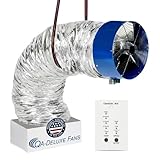
Overview: The QA-Deluxe 5500 is a professional-grade whole house fan designed to cool entire homes efficiently by drawing cool outdoor air through windows and exhausting hot air through attic vents. This powerful system moves 5,500 CFM, effectively cooling two-story homes up to 3,400 square feet or single-story homes up to 2,400 square feet. The plug-and-play low voltage design installs easily between standard 16" to 24" on-center joists without structural modifications.
What Makes It Stand Out: The R-5 insulated damper system prevents heat transfer and hot attic air backflow when the unit is idle, a critical feature missing in many competitors that eliminates winter heat loss. The 10-year motor warranty and 3-year parts warranty demonstrate exceptional manufacturer confidence. Being assembled in the USA with a tool-free removable grille for maintenance, it combines quality construction with practical design. The Title 24 compliance makes it suitable for California installations.
Value for Money: Though representing a significant initial investment, the QA-Deluxe 5500 delivers outstanding long-term value. It can reduce air conditioning costs by 50-90% in suitable climates, often paying for itself within 2-3 cooling seasons. The extensive warranty coverage minimizes risk, while the durable construction ensures decades of service. Compared to central AC installation, it’s a fraction of the cost with substantially lower operating expenses.
Strengths and Weaknesses: Strengths include massive energy savings, superior warranty, insulated damper preventing heat backflow, and straightforward installation. The high-performance airflow quickly cools entire homes. Weaknesses include requiring adequate attic ventilation (4.5 sq ft minimum), being ineffective in humid climates, and needing open windows for operation. Some users may need professional installation assistance.
Bottom Line: For homeowners in arid or temperate climates seeking dramatic energy savings, the QA-Deluxe 5500 is an exceptional investment. Its quality construction, innovative damper design, and industry-leading warranty make it the gold standard for whole-house cooling solutions that deliver both performance and peace of mind.
4. Centric Air QA-Deluxe 5500 Energy Efficient Whole House Fan – Plug & Play, 2-Speed Temperature/Timer Remote Control, Removable Grille – 10-Warranty – Up to 3400 sq ft (2-Story) & 2400 sq ft (1-Story)

Overview: The Centric Air QA-Deluxe 5500 is essentially the same powerful whole house fan system as the standard QA-Deluxe 5500, delivering 5,500 CFM to cool homes up to 3,400 square feet. The key differentiator is the inclusion of a wireless remote control with temperature and timer functions, allowing you to operate the fan from anywhere in your home without needing to access a wall switch. It maintains the same plug-and-play installation and robust construction.
What Makes It Stand Out: The wireless remote transforms the user experience, enabling convenient speed adjustments and scheduling without running to the control switch. This is particularly valuable for multi-story homes where the fan control might be located in an inconvenient hallway or upstairs. Otherwise, it retains all flagship features: the R-5 insulated damper, easy installation between 16" to 24" joists, and the same impressive 10-year motor warranty with 3-year parts coverage.
Value for Money: This variant commands a modest premium over the wall-switch model, but the convenience factor justifies the extra cost for most users. The ability to adjust settings remotely encourages more efficient use, potentially enhancing energy savings. Considering the total investment in a whole house fan system, the additional cost for remote functionality is minimal and well-spent, especially for elderly users or those with mobility concerns.
Strengths and Weaknesses: Strengths mirror the standard model: exceptional energy efficiency, insulated damper preventing heat backflow, easy installation, outstanding warranty, plus added remote convenience. The remote includes temperature sensing and timer functions. The only notable weakness is the possibility of misplacing the remote, though manual backup controls likely exist. It shares the same climate limitations and attic ventilation requirements as its sibling model.
Bottom Line: Choose this remote-enabled version over the wall-switch model unless you specifically prefer hardwired controls. The convenience of remote operation enhances the already excellent value proposition of the QA-Deluxe 5500 system, making it the recommended option for most homeowners seeking whole-house cooling with modern convenience.
5. Dreo Fan for Bedroom, 12 Inches, 70ft Powerful Airflow, 28db Quiet Table Air Circulator Fans for Whole Room, 120° Adjustable Tilt, 3 Speeds, Desktop Fan for Home, Office, Kitchen

Overview: The Dreo 12-inch table fan is a compact yet surprisingly powerful air circulator designed for personal spaces and small rooms. Utilizing WingBoost technology with deep-pitched blades and aerodynamic design, it propels air up to 70 feet while maintaining a whisper-quiet 28dB noise level at low speed. This makes it ideal for bedrooms, offices, and kitchens where quiet operation is essential. The lightweight design includes a convenient handle for easy portability.
What Makes It Stand Out: For its size, the 70-foot airflow range is exceptional, rivaling much larger fans. The integration of NACA technology and bionic design reduces turbulence and noise while maximizing efficiency. Its versatility stands out—you can use it as a desktop fan, wall-mount it using the built-in handle, or easily move it between rooms. The 120-degree adjustable tilt and three speed settings provide flexible directional control, while the removable grille simplifies cleaning.
Value for Money: This fan occupies the sweet spot between cheap, ineffective desk fans and expensive air circulators. It significantly boosts HVAC efficiency by distributing conditioned air more evenly, potentially lowering energy bills. The durable construction and easy-to-clean design ensure long-term value at an accessible price point. For personal cooling needs, it delivers premium performance without the premium cost.
Strengths and Weaknesses: Strengths include ultra-quiet operation, impressive airflow for size, portability, energy efficiency, and simple maintenance. The stable base prevents tipping. Weaknesses include limited coverage suitable only for single rooms, basic 3-speed manual control without smart features, and inability to replace whole-house cooling solutions. The 12-inch size may be insufficient for large living spaces or open floor plans.
Bottom Line: The Dreo fan excels as a quiet, powerful personal cooling solution or HVAC supplement. It’s perfect for bedrooms, offices, or targeted spot cooling, offering excellent performance and value for its category. Don’t expect whole-house cooling, but for personal comfort and air circulation, it’s an outstanding choice that outperforms its compact size.
6. QA-Deluxe 6500 Energy Efficient Whole House Fan – Plug & Play, 2-Speed Temperature/Timer Remote Control, Removable Grille – 10-Year Warranty – Up to 4400 sq ft (2-Story) & 3000 sq ft (1-Story)

Overview: The QA-Deluxe 6500 is a powerful whole house fan designed to cool large homes efficiently by drawing in fresh outdoor air and expelling hot attic air. Engineered for residences up to 4,400 square feet (two-story) or 3,000 square feet (single-story), this unit delivers 6,500 CFM of airflow while maintaining energy-conscious operation that significantly reduces air conditioning dependency.
What Makes It Stand Out: This fan’s plug-and-play design fits between standard 16" to 24" on-center joists without requiring additional framing, simplifying installation. The included wireless remote with timer functionality offers convenient speed control and automated operation from anywhere in your home. Its R-5 insulated damper prevents thermal transfer when inactive, while the 10-year motor warranty and 3-year parts warranty provide exceptional long-term protection. Proudly assembled in the USA, it meets California Title 24 compliance at 4,478 CFM.
Value for Money: While the initial investment exceeds basic models, the QA-Deluxe 6500 delivers substantial ROI through reduced cooling costs and exceptional warranty coverage. The energy savings versus central air conditioning typically recoup costs within 2-3 cooling seasons. Competing units with similar specifications and American assembly often cost 20-30% more, making this a mid-range price point for premium features.
Strengths and Weaknesses: Strengths include impressive coverage area, intelligent remote/timer controls, superior insulation, tool-free installation, and industry-leading warranty. The R-5 damper effectively blocks attic heat infiltration. Weaknesses include the unit’s substantial 28.5" depth requiring adequate attic space, and the significant CFM reduction for California compliance may disappoint some buyers in that market.
Bottom Line: Ideal for homeowners seeking powerful, intelligent cooling for large spaces without complex installation. The combination of remote convenience, thermal efficiency, and robust warranty makes it a top-tier choice for substantial energy savings and whole-home comfort.
7. Quietcool QC CL-7000 RF Classic Advanced Whole House Fan with Wireless Control - Up to 6924 CFM - Two Speed - Covers up to 3,462 SQFT - 10 Year Warranty - Removable Grille

Overview: The Quietcool QC CL-7000 RF represents the upper echelon of whole house ventilation, engineered to cool and ventilate homes up to 3,470 square feet. This advanced system moves an impressive 6,924 CFM on high speed, rapidly exchanging hot indoor air with cool evening breezes to slash air conditioning costs while maintaining whisper-quiet operation.
What Makes It Stand Out: Quietcool’s signature design emphasizes noise reduction while maximizing airflow efficiency. The wireless RF control eliminates wiring complexities, allowing flexible placement and operation from any room. Its R5 insulated damper doors create an exceptional thermal barrier during off-seasons, preventing heat loss and maintaining energy integrity. The two-speed PSC motor provides reliable performance at 1,147 watts high and 794 watts low, optimizing power consumption based on cooling needs.
Value for Money: Positioned in the premium segment, the CL-7000 justifies its price through superior engineering and decade-long warranty protection. The energy savings compared to conventional AC systems typically offset the investment within 2-3 years for average usage. While competing fans offer similar CFM ratings, Quietcool’s reputation for durability and noise reduction provides tangible value that budget alternatives cannot match.
Strengths and Weaknesses: Strengths include exceptional airflow capacity, quiet operation, robust R5 insulation, reliable PSC motor technology, and comprehensive 10-year warranty. The wireless control adds convenience without installation headaches. Weaknesses include higher power consumption than EC motor alternatives and limited speed options compared to variable-speed models. The unit requires substantial attic ventilation (approximately 6-7 square feet) which may necessitate additional vent installation.
Bottom Line: Perfect for large homes in hot climates where rapid cooling is essential. The CL-7000 delivers professional-grade ventilation with proven reliability. If budget permits and noise levels are a priority, this fan offers one of the best performance-to-sound ratios in its class.
8. AC Infinity CLOUDWAY Whole House EC Fan S12, 1600 CFM with Remote 10-Speed Wireless Fan Controller, 12” Ceiling Mount House Attic Vent, Exhaust Home Ventilation System

Overview: The AC Infinity CLOUDWAY S12 revolutionizes whole house ventilation with precision EC motor technology in a compact 12-inch design. Delivering 1,604 CFM, this unit targets smaller homes or zone cooling applications where granular speed control and whisper-quiet operation outweigh raw power requirements.
What Makes It Stand Out: The 10-speed wireless controller with memory backup offers unprecedented airflow customization, allowing users to fine-tune ventilation to exact comfort levels. The PWM-controlled EC motor operates at just 62 dBA while consuming significantly less energy than traditional PSC motors. Its compact dimensions (12.3" x 17.7" x 14.1") enable installation in tight attic spaces where larger units cannot fit. The intelligent controller remembers settings after power outages, eliminating reprogramming hassles.
Value for Money: This fan commands a premium price for its advanced EC motor and sophisticated controls, yet delivers exceptional value through energy savings and operational flexibility. While 1,600 CFM units with basic PSC motors cost 30-40% less, the S12’s variable speed capability and near-silent operation justify the upcharge for noise-sensitive households. The dual ball bearing design ensures longevity that cheaper sleeve-bearing alternatives cannot match.
Strengths and Weaknesses: Strengths include ultra-quiet EC motor, precise 10-speed control, compact footprint, energy efficiency, and durable dual ball bearings. The memory backup feature adds practical convenience. Weaknesses include limited coverage area (suitable for ~1,500 sq ft maximum), lower total airflow than similarly priced PSC models, and the 12" duct size may restrict installation options. The premium cost may deter budget-conscious buyers seeking maximum CFM per dollar.
Bottom Line: Best suited for small to medium homes or targeted cooling zones where noise control is paramount. The S12 excels in technical sophistication and user experience. If you prioritize quiet operation and granular control over maximum airflow, this EC fan represents the future of residential ventilation.
9. Quietcool QC CL-3100 RF Classic Advanced Whole House Fan with Wireless Control - Up to 3126 CFM - Two Speed - Covers up to 1,608 SQFT - 10 Year Warranty - Removable Grille

Overview: The Quietcool QC CL-3100 RF delivers targeted whole house ventilation for smaller residences up to 1,610 square feet. This compact yet capable unit generates 3,126 CFM on high speed, providing efficient cooling and air exchange while maintaining the quiet operation and reliability that defines the Classic Advanced series.
What Makes It Stand Out: Engineered specifically for modest-sized homes, the CL-3100 optimizes energy efficiency with a low-draw 299-watt PSC motor that consumes minimal electricity while delivering robust airflow. The wireless RF remote eliminates complex wiring, enabling simple DIY installation and convenient operation from any location. Its R5 insulated damper system provides superior thermal protection during winter months, preventing heat loss through the ceiling grille. The removable grille facilitates easy cleaning and maintenance access.
Value for Money: This model occupies the sweet spot for small home owners, priced competitively against generic brands while offering Quietcool’s proven engineering and 10-year warranty. The ultra-low power consumption yields immediate utility savings, often paying for itself within a single cooling season in hot climates. Compared to window units or portable ACs, it provides whole-home comfort at a fraction of the operating cost.
Strengths and Weaknesses: Strengths include exceptional energy efficiency, quiet operation, reliable PSC motor, robust R5 insulation, and comprehensive warranty coverage. The wireless control adds modern convenience without installation complexity. Weaknesses include limited speed options (two-speed only), modest CFM output unsuitable for larger spaces, and the unit still requires adequate attic ventilation (approximately 3 square feet) which may challenge some installations.
Bottom Line: The perfect solution for small homes, condos, or apartments seeking energy-efficient whole house cooling. The CL-3100 RF combines Quietcool’s quality with right-sized performance. If your space falls within its coverage range, this fan offers unbeatable efficiency and value.
10. Master Flow GAF 6000 CFM 30" Belt-Drive Deluxe Whole House Fan, 1/3 HP Motor, 2-Speed Wall Switch, Energy Efficient Ventilation for Homes upto 3000 sq. ft. - 30BWHFS

Overview: The Master Flow GAF 6000 CFM belt-drive whole house fan delivers traditional ventilation power for homes up to 3,000 square feet. This 30-inch unit employs a robust 1/3 HP permanent split-capacitor motor and belt-drive mechanism to move substantial air volumes, providing reliable cooling performance for budget-conscious homeowners.
What Makes It Stand Out: The belt-drive design isolates motor vibration, contributing to quieter operation than direct-drive alternatives in its price class. The included two-speed wall switch provides simple, reliable control without battery-dependent remotes. Its timer compatibility (model WHT36, sold separately) enables automated operation for energy-conscious users. The unit’s straightforward installation and proven motor technology appeal to homeowners prioritizing function over fancy features.
Value for Money: This fan represents exceptional value in the high-CFM category, typically priced 25-35% below comparable belt-drive competitors. The permanent split-capacitor motor ensures reliable, long-lasting performance with minimal maintenance requirements. While lacking advanced features like wireless controls or insulated dampers, the core ventilation performance rivals premium brands at a fraction of the cost, making it ideal for practical buyers.
Strengths and Weaknesses: Strengths include powerful 6,000 CFM airflow, durable belt-drive system, reliable PSC motor, quiet operation for its class, and exceptional affordability. The wall-mounted switch ensures consistent operation without remote signal issues. Weaknesses include lack of insulated damper (sold separately), no wireless control, basic two-speed functionality, and timer requires additional purchase. The 30-inch size demands significant attic space and substantial ventilation area (minimum 5 square feet).
Bottom Line: An excellent choice for homeowners seeking maximum airflow per dollar without frills. The Master Flow GAF 6000 delivers reliable, powerful ventilation at an unbeatable price point. If you prioritize performance and value over advanced features, this belt-drive workhorse deserves serious consideration.
Understanding Poor Air Circulation in Modern Homes
Today’s homes are built tighter than ever before, with advanced insulation and weather-sealing that trap conditioned air inside. While this improves energy efficiency, it creates a significant drawback: minimal natural air exchange. Without proper ventilation, indoor air pollutants, moisture, and heat accumulate, creating an environment that feels uncomfortable despite temperature controls.
The Stack Effect and Indoor Air Stagnation
The stack effect describes how hot air rises and becomes trapped in upper levels while cooler air remains below, creating temperature stratification. This phenomenon explains why your upstairs bedrooms feel stifling while the basement stays chilly. Poor circulation exacerbates this natural process, preventing the mixing of air layers and forcing your cooling system to work harder to maintain consistent temperatures throughout the house.
Health Implications of Stagnant Indoor Air
Indoor air can be up to five times more polluted than outdoor air, according to environmental studies. When circulation is poor, allergens, volatile organic compounds from furniture and cleaning products, and excess humidity concentrate in your living spaces. This can trigger respiratory issues, aggravate allergies, and create that characteristic “stale” smell that no amount of surface cleaning seems to eliminate.
What Whole House Fans Actually Do
Whole house fans are designed to pull cool, fresh outdoor air through open windows and expel hot, stale indoor air through your attic vents. This creates a complete air exchange that can lower indoor temperatures by 10-20 degrees within an hour, depending on outdoor conditions. The system works by creating negative pressure inside your home, which draws in fresh air naturally.
The Basic Mechanics of Air Exchange
A powerful fan mounted in your ceiling (typically in a central hallway) draws air upward into the attic space. This incoming air displaces the hot air that has accumulated in your living areas and pushes it out through gable, ridge, or soffit vents. The process continues as long as windows remain open and the fan operates, creating a continuous flow of fresh air.
How They Differ from Other Ventilation Options
Unlike attic fans that only ventilate the attic space, whole house fans cool your living areas directly. They also operate differently from power ventilators or exhaust fans by moving much larger volumes of air—typically measured in cubic feet per minute (CFM). This high-volume, low-speed approach creates a gentle breeze throughout the entire home rather than concentrated gusts in specific areas.
Types of Whole House Fans Available in 2026
The market has evolved significantly, offering several distinct designs that cater to different home configurations and noise sensitivity levels. Understanding these categories helps narrow your search to systems that align with your priorities.
Traditional Direct-Drive Models
These time-tested units feature a motor that directly spins the fan blades, typically mounted on a frame that installs between ceiling joists. They’re generally the most affordable option and work well in homes where attic space is plentiful and noise isn’t a primary concern. Modern versions include improved blade designs and variable speed controls that weren’t available in older models.
Belt-Drive Systems for Quieter Operation
Belt-drive fans separate the motor from the fan assembly using a pulley system, which significantly reduces vibration transfer and noise. The motor can be mounted away from the living space, making these ideal for homes where the fan will be installed near bedrooms or quiet areas. While slightly more expensive, the noise reduction often justifies the cost for many homeowners.
Compact Mini-Fans for Smaller Homes
For homes under 1,500 square feet or those with limited attic access, compact models offer a space-saving solution. These units move less air than full-sized fans but can be installed in tighter spaces and often require less structural modification. Some models are designed to fit between 16-inch on-center joists without any framing changes.
Key Features to Evaluate Before Buying
When comparing options, certain features distinguish basic models from those that will serve you well for decades. Pay attention to these specifications rather than getting caught up in marketing claims.
Airflow Capacity and CFM Ratings
CFM (cubic feet per minute) indicates how much air the fan moves. A good rule of thumb: you’ll need 2-3 CFM per square foot of living space. However, don’t automatically choose the highest CFM—oversized fans can create excessive noise and may require more venting than your attic provides. Calculate your home’s volume (square footage multiplied by average ceiling height) to determine appropriate capacity.
Variable Speed Control Options
Single-speed fans are becoming obsolete. Modern systems offer two-speed, three-speed, or fully variable controls that let you adjust airflow based on conditions. Low speeds work perfectly for mild evenings, while high speeds tackle the hottest days. Look for units with wall-mounted switches or remote controls for convenient operation.
Insulation and Sealing Features
When not in use, whole house fans create a large opening in your ceiling that can leak heated air in winter and hot attic air in summer. Quality models include insulated doors or shutters that automatically close when the fan is off. Some advanced units feature R-value ratings of 10 or higher, effectively sealing this thermal weak point.
Sizing Your Whole House Fan Correctly
An undersized fan won’t move enough air to create a cooling effect, while an oversized unit can cause pressure imbalances and excessive noise. Proper sizing requires more than just matching your home’s square footage.
Calculating Your Home’s Air Volume
Measure each room’s length, width, and ceiling height, then multiply to get cubic footage. Add all rooms together for total home volume. Divide this number by the desired air changes per hour (typically 30-60) to determine required CFM. This calculation ensures the fan can replace your home’s air within a reasonable timeframe.
Attic Ventilation Requirements
Your attic needs sufficient exhaust vents to handle the air the fan pushes into it. Calculate your attic’s net free vent area (NFVA) by measuring all vents and subtracting any obstructions. Most manufacturers recommend 1 square foot of vent area per 750 CFM of fan capacity. Insufficient venting forces the fan to work harder and reduces its effectiveness.
Climate Zone Considerations
Homes in dry climates can use larger fans more frequently, while humid regions require more careful timing to avoid drawing in moist air. Coastal areas need corrosion-resistant components, and regions with cool nights but hot days benefit most from whole house fans. Factor your local weather patterns into sizing decisions.
Installation Location and Structural Factors
Where you install your fan dramatically affects its performance and your satisfaction. Consider accessibility, noise transmission, and air distribution patterns before making a decision.
Central vs. Zonal Placement Strategies
The traditional approach places one large fan in a central hallway ceiling, pulling air from all rooms simultaneously. However, larger homes or multi-story layouts might benefit from two smaller fans in different zones. This approach provides better coverage and allows you to cool only occupied areas, saving energy.
Ceiling Height and Attic Clearance
Most whole house fans require at least 24-30 inches of vertical clearance in the attic. Low-profile models exist for tight spaces, but they often sacrifice some performance. Measure your attic’s clearance carefully, accounting for roof pitch and any ductwork or wiring that might interfere with installation.
Structural Reinforcement Needs
Large fans can weigh 50-100 pounds and vibrate during operation. Your ceiling joists may need reinforcement to support this load safely. Some installations require a plywood platform or additional framing. Factor these structural modifications into your budget and timeline.
Energy Efficiency and Operating Costs
One of the primary advantages of whole house fans is their low operating cost compared to air conditioning. Understanding efficiency metrics helps you maximize these savings.
Wattage Draw vs. Airflow Efficiency
Modern ECM (electronically commutated motor) fans use 70-90% less electricity than traditional PSC motors. Compare watts per CFM to identify truly efficient models. A quality fan might move 4,000 CFM while consuming only 200 watts—less than three standard light bulbs.
Integration with Smart Home Systems
2026 models increasingly offer Wi-Fi connectivity and smart home integration. These features allow you to program operation based on indoor/outdoor temperature differentials, humidity levels, or time of day. Automated controls ensure you never forget to turn the fan on during prime cooling hours or off when temperatures rise.
Utility Incentives and Rebates
Many utility companies offer rebates for whole house fan installation because they reduce grid strain during peak hours. Check with your local provider before purchasing—some incentives require specific efficiency certifications or professional installation to qualify.
Noise Levels and Sound Mitigation
Early whole house fans earned a reputation for being loud, but modern engineering has dramatically reduced noise levels. Understanding decibel ratings and noise sources helps you choose a whisper-quiet system.
Decibel Ratings Explained
Manufacturers typically list noise levels in decibels (dB) at various speeds. For reference, a refrigerator hums at about 40 dB, while normal conversation is around 60 dB. Quality modern fans operate at 45-55 dB on low speed—quiet enough for bedrooms. Be skeptical of ratings below 40 dB, as these may be misleading or measured under ideal conditions.
Vibration Isolation Techniques
Noise often comes from vibration transferring through framing, not just the fan itself. Look for models with rubber isolation mounts, flexible duct connections, or suspended mounting systems. Some premium fans use acoustic housings that dampen sound before it penetrates your living space.
Blade Design and Aerodynamic Advances
Newer blade profiles, inspired by aerospace engineering, move more air with less turbulence. This reduces the “whooshing” sound that plagued older models. Curved, multi-wing blades are generally quieter than traditional paddle-style designs at equivalent CFM ratings.
Budget Considerations and Cost Factors
Whole house fan costs vary widely based on type, features, and installation complexity. Establishing a realistic budget prevents disappointment and ensures you factor in all associated expenses.
Equipment Price Ranges
Basic direct-drive models typically start around $300-500, while premium belt-drive or ECM motor fans range from $800-1,500. Compact units fall in the middle at $400-700. Remember that price often correlates with noise level, efficiency, and longevity—skimping upfront can cost more in energy bills and replacements.
Professional Installation vs. DIY
Installing a whole house fan requires electrical work, framing modifications, and precise sealing. Professional installation typically adds $300-600 to the project cost but ensures warranty compliance and proper operation. DIY installation is possible for handy homeowners but requires comfort working in attics and with electrical circuits.
Long-Term ROI and Payback Period
Most homeowners recoup their investment through reduced air conditioning costs within 2-4 years. In climates with cool nights, the payback period can be even shorter. Factor in both energy savings and potential HVAC equipment lifespan extension when calculating return on investment.
Maintenance Requirements and Longevity
Like any mechanical system, whole house fans require periodic maintenance to operate efficiently and last their expected 15-20 year lifespan. Understanding these needs before purchase helps you choose a low-maintenance design.
Motor and Bearing Care
Direct-drive motors typically require no maintenance, while belt-drive systems need occasional belt tension checks and replacements every 5-7 years. Look for permanently lubricated bearings to eliminate annual oiling chores. ECM motors have longer lifespans than traditional induction motors but may be more expensive to replace if they fail.
Cleaning and Dust Management
Fan blades accumulate dust and debris, which reduces efficiency and can become unbalanced. Choose models with easily accessible blades for cleaning. Some fans include filters or screens that prevent large debris from entering the living space but require periodic washing.
Seasonal Shutdown Procedures
In winter, you must seal and insulate the fan opening to prevent heat loss. Quality models include automatic insulated shutters, but you should still verify they close completely. Some homeowners add a removable insulated box in the attic for extra protection during the coldest months.
Common Installation Mistakes to Avoid
Even quality fans underperform when installed incorrectly. Learning from others’ mistakes saves you time, money, and frustration.
Undersized Attic Venting
The most frequent error is inadequate exhaust venting. When the fan pushes air into the attic faster than vents can release it, pressure builds up, forcing conditioned air back into your living space through light fixtures and gaps. Always install additional vents if your attic’s NFVA is insufficient.
Poor Ceiling Seal and Insulation
Gaps around the fan housing create air leaks that undermine efficiency. Use high-quality weatherstripping and seal all edges with expanding foam or caulk. The insulated door must fit snugly without gaps when closed.
Electrical Circuit Overloading
Whole house fans draw significant current at startup. They require dedicated 15- or 20-amp circuits, depending on the model. Overloading an existing circuit can cause breakers to trip or create fire hazards. Have an electrician verify your electrical panel has capacity before installation.
Integrating with Existing HVAC Systems
Whole house fans work best as part of a comprehensive home climate strategy. Understanding how they interact with your current heating and cooling systems maximizes overall efficiency.
Thermostat Coordination Strategies
Never run a whole house fan simultaneously with air conditioning—it wastes energy by expelling cooled air. Install an interlock switch that prevents both systems from operating at once. Smart thermostats can be programmed to switch between cooling modes based on outdoor temperature and humidity.
Complementary Dehumidification
In humid climates, timing is crucial. Run the fan during the lowest humidity hours (typically early morning) and avoid operation during muggy periods. Some homeowners pair whole house fans with portable dehumidifiers to maintain comfort without air conditioning.
Zoning with Multiple Units
Large homes can benefit from installing separate fans for different floors or zones. This allows targeted cooling of occupied areas while leaving unused spaces alone. Zone control systems can automate this process, directing airflow where it’s needed most.
Seasonal Usage Strategies for Maximum Benefit
Getting the most from your whole house fan requires adapting your usage patterns to seasonal weather patterns. A strategic approach extends your comfortable temperature range and minimizes energy costs.
Spring and Fall Optimization
These shoulder seasons offer the greatest opportunity for whole house fan use. Open windows on opposite sides of the house to create cross-ventilation, and run the fan during the coolest parts of the day. This can delay or eliminate air conditioning needs for weeks or months.
Summer Night Cooling Strategy
In hot climates, use the fan to pre-cool your home overnight when temperatures drop. Close windows early in the morning before outdoor temperatures rise, trapping the cool air inside. This thermal mass effect can keep your home comfortable until afternoon, reducing air conditioning runtime.
Winter Air Quality Management
While primarily a cooling device, you can use your whole house fan on mild winter days to flush out indoor pollutants. Run it for 10-15 minutes with windows open to exchange stale air without significantly impacting indoor temperature. This occasional use improves winter air quality without heat loss.
Troubleshooting Performance Issues
Even well-installed systems can develop problems over time. Knowing how to diagnose common issues prevents unnecessary service calls and maintains optimal performance.
Insufficient Cooling Effect
If the fan runs but you don’t feel a cooling breeze, check that enough windows are open (typically 3-4 windows, 4-6 inches each). Verify the attic vents aren’t blocked by insulation or debris. The fan may also be undersized for your home or operating on too low a speed for current conditions.
Excessive Noise or Vibration
New noises often indicate loose mounting hardware, debris hitting the blades, or bearing wear. Check that all screws are tight and the fan is properly balanced. If the fan has always been noisy, it may be undersized and running at maximum speed constantly, or your attic may need additional sound dampening.
Backdrafting Concerns
In rare cases, whole house fans can backdraft combustion appliances like water heaters or furnaces by creating negative pressure. Ensure your home has adequate make-up air and consider installing a barometric damper if you have atmospherically vented appliances. Modern sealed-combustion appliances eliminate this risk entirely.
Frequently Asked Questions
How do I know if my home has enough attic ventilation for a whole house fan?
Calculate your attic’s total net free vent area (NFVA) by adding the open area of all gable, ridge, and soffit vents. Most building codes require 1 square foot of NFVA per 750 CFM of fan capacity. If you’re unsure, a home energy auditor can measure this accurately. Insufficient venting is the most common cause of poor fan performance.
Can I install a whole house fan myself, or do I need a professional?
DIY installation is possible if you’re comfortable with electrical work, framing, and attic navigation. You’ll need basic carpentry skills to cut the ceiling opening and potentially reinforce joists. However, professional installation ensures proper sizing, electrical safety, and warranty compliance. Many manufacturers require professional installation for warranty coverage.
Will a whole house fan increase my heating bills in winter?
Only if improperly sealed. Quality models include insulated, automatic shutters that close when the fan is off, creating an effective air barrier. For extra protection, build a removable insulated box in the attic to cover the fan during winter months. Properly sealed, the impact on heating costs is negligible.
How loud are modern whole house fans compared to older models?
Contemporary fans are dramatically quieter—typically 50-70% less noise than models from 20 years ago. Belt-drive fans and those with ECM motors operate at 45-55 dB on low speed, comparable to a quiet conversation. Direct-drive fans are louder but still much improved. Always check the decibel rating at various speeds before purchasing.
What’s the difference between a whole house fan and an attic fan?
Whole house fans cool your living space by pulling fresh outdoor air through windows and expelling indoor air through the attic. Attic fans only ventilate the attic space itself, removing trapped hot air but not directly cooling living areas. Whole house fans address indoor comfort; attic fans primarily protect roof structures and reduce heat buildup above insulation.
How many windows do I need to open when running the fan?
Open 3-5 windows approximately 4-6 inches each, located in rooms you want to cool most. Opening too many windows reduces airflow velocity through each opening, while too few creates excessive negative pressure. Experiment to find the balance that provides comfortable airflow without drafts. Windows should be on the coolest side of the house for best results.
Can I use a whole house fan in a humid climate?
Yes, but timing is critical. Run the fan when outdoor humidity is lowest—typically early morning and late evening. Avoid operation during the day when humidity peaks. Some homeowners use hygrometers to monitor indoor/outdoor humidity and only operate the fan when outdoor absolute humidity is lower than indoor levels. Pairing with a dehumidifier can extend usability.
How long does a whole house fan typically last?
With proper maintenance, expect 15-20 years of service. Belt-drive fans may need belt replacement every 5-7 years. ECM motors last longer than traditional induction motors but cost more to replace. Regular cleaning and seasonal maintenance significantly extend lifespan. Units with thermal overload protection prevent motor burnout during extreme conditions.
Do whole house fans work with vaulted or cathedral ceilings?
They can, but installation is more complex. You’ll need a remote-mounted fan connected to the ceiling grille via ductwork, as there’s no traditional attic space above. These specialized installations cost more but provide the same cooling benefits. Ensure the ductwork is properly sized and insulated to maintain efficiency.
What maintenance is required to keep my fan running efficiently?
Clean the fan blades and grille quarterly with a damp cloth to remove dust. Check belt tension annually on belt-drive models. Verify that insulated shutters seal completely when closed. Lubricate bearings if not permanently sealed. Inspect attic vents yearly to ensure they’re clear of debris. Test the fan each spring before cooling season begins.
See Also
- The 10 Ultimate Best Floor Rechargeable Fans for Whole-Room Circulation in 2026
- The 10 Ultimate Best Whole House Fans for Attic Cooling in 2026
- The 10 Most Revolutionary Whole House Fans of 2026
- 10 Best Whole House Fans for Energy Efficiency in 2026
- 10 Floor Fans That Solve Overheating in Workshops in 2026