Table of Contents
Have you ever found yourself layering up in the living room while simultaneously wiping sweat in the kitchen, all within the same house? This frustrating temperature inconsistency isn’t just a minor annoyance—it’s a sign that your HVAC system is working overtime to heat or cool spaces unevenly, driving up energy bills and compromising comfort. Modern homes, with their open floor plans, sunrooms, or multi-story layouts, often battle these microclimate wars. The culprit? Traditional single-zone thermostats that treat your entire house as one uniform space, ignoring how sunlight, occupancy, and room usage create wildly different thermal needs from room to room. Enter the era of intelligent climate control, where smart thermostats have evolved beyond basic scheduling to actively solve these zoning dilemmas—no ductwork overhaul required.
Gone are the days when “zoning” meant expensive, hardwired systems installed only during construction. Today’s advanced smart thermostats leverage wireless sensors, AI-driven analytics, and seamless integration to create personalized comfort zones that adapt in real time. Whether you’re dealing with a chilly basement office, a sun-drenched nursery, or an unused guest room, these devices transform how your HVAC system allocates energy—prioritizing occupied spaces while dialing back on empty ones. As energy costs climb and eco-conscious living becomes essential, mastering temperature zoning isn’t just about luxury; it’s a strategic move toward a smarter, more sustainable home. Let’s unpack how to choose the right system to eliminate hot and cold spots for good.
Top 10 Smart Thermostats
Detailed Product Reviews
1. Amazon Smart Thermostat – Save money and energy - Works with Alexa and Ring - C-wire required

Overview:
This ENERGY STAR-certified thermostat simplifies upgrading from traditional models, leveraging Alexa integration to automate home comfort while reducing energy consumption. It requires a C-wire for installation and focuses on seamless ecosystem compatibility with Amazon devices.
What Makes It Stand Out:
Its standout feature is creating “comfort zones” using Echo devices or Amazon’s Air Quality Monitor for presence-based temperature adjustments. Direct Alexa control for scheduling (home/away/sleep modes) and post-purchase rebate guidance via email enhance user convenience and savings potential.
Value for Money:
Priced competitively, it justifies cost through EPA-estimated $50 annual energy savings and accessible utility rebates. While C-wire dependency may add installation complexity, the long-term savings and Alexa-centric automation offer solid ROI for Amazon ecosystem users.
Strengths and Weaknesses:
Strengths: Intuitive Alexa voice control; effective energy-saving automation; clear rebate support. Weaknesses: Mandatory C-wire excludes some older homes; limited third-party assistant compatibility (Alexa/Ring only); requires Amazon account for full features.
Bottom Line:
Ideal for Alexa households seeking effortless energy savings, though C-wire requirements may deter some. A practical, cost-effective smart thermostat if your system is compatible.
2. ecobee Smart Thermostat Essential - Energy Star Certified programmable Wi-Fi Thermostat - Works with Siri, Alexa, and Google Assistant

Overview:
The ecobee Essential is an ENERGY STAR-certified thermostat promising up to 23% annual savings on heating/cooling. It supports major voice assistants and features a color touchscreen, targeting users prioritizing broad compatibility and DIY installation.
What Makes It Stand Out:
Its standout trait is 85% HVAC system compatibility, aided by a free online checker. Unlike competitors, it includes a Power Extender Kit (PEK) option for C-wire-free setups (sold separately), and free software updates ensure longevity without extra costs.
Value for Money:
At mid-range pricing, it delivers exceptional value through broad compatibility, multi-assistant support (Siri/Google/Alexa), and energy savings. The optional PEK avoids costly electrician visits, though the kit’s separate purchase slightly inflates initial cost.
Strengths and Weaknesses:
Strengths: Universal voice assistant support; robust compatibility; user-friendly app for energy tracking. Weaknesses: PEK not included (adds expense); touchscreen less premium than Nest; limited smart-sensor features vs. ecobee’s higher-tier models.
Bottom Line:
A versatile, future-proof choice for multi-assistant households. Its DIY-friendly design and energy savings justify the price, especially for C-wire-free setups with the PEK.
3. Google Nest Thermostat - Smart Thermostat for Home - Programmable Wifi Thermostat - Snow

Overview:
This ENERGY STAR-certified Nest Thermostat (Snow finish) automates temperature control to save energy, working without a C-wire in most homes. It integrates with the Google Home app for scheduling and remote adjustments.
What Makes It Stand Out:
“Savings Finder” proactively suggests schedule tweaks for extra efficiency, while automatic away-mode activation prevents energy waste. Its C-wire-free design (for compatible systems) simplifies installation, and the minimalist aesthetic suits modern interiors.
Value for Money:
Priced moderately, it offers strong value via energy savings and utility rebates. The no-C-wire advantage reduces installation hurdles, though incompatible systems may need accessories, potentially increasing costs.
Strengths and Weaknesses:
Strengths: Sleek design; effective auto-scheduling; robust app integration; no C-wire needed for most setups. Weaknesses: Limited voice assistant support (Google only); requires app for full configuration; no physical lock feature.
Bottom Line:
A stylish, efficient pick for Google ecosystem users. Its ease of use and energy insights make it worthwhile, but check compatibility first to avoid accessory costs.
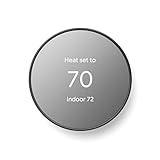
4. Google Nest Thermostat - Smart Thermostat for Home - Programmable Wifi Thermostat - Charcoal
Overview:
Identical to the Snow model but in Charcoal, this ENERGY STAR thermostat automates heating/cooling to cut energy use. It functions without a C-wire in most setups and syncs with the Google Home app for remote control.
What Makes It Stand Out:
Beyond core features like away-mode automation and remote temperature adjustments, its dual-band Wi-Fi (2.4/5 GHz) ensures reliable connectivity. The Charcoal finish offers a bolder aesthetic option while retaining all Snow model functionalities.
Value for Money:
Priced the same as Snow, it provides equal value with identical energy-saving potential. The color choice adds customization without cost premium, though rebate eligibility and C-wire requirements remain unchanged.
Strengths and Weaknesses:
Strengths: Premium matte finish; seamless Google integration; dual-band Wi-Fi stability; no C-wire needed typically. Weaknesses: No physical controls for manual override; app-dependent setup; lacks multi-assistant support.
Bottom Line:
Choose Charcoal for its sophisticated look without sacrificing functionality. It’s a top-tier Google-compatible thermostat, but ensure system compatibility to leverage its no-C-wire advantage.
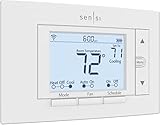
5. Sensi Smart Thermostat, 100 Years Of Expertise, Wi-Fi, Data Privacy, Programmable, Easy DIY Install, Works With Alexa, Energy Star Certified, Mobile App, ST55
Overview:
The Sensi ST55 emphasizes privacy and simplicity, featuring ENERGY STAR-certified energy savings with Alexa compatibility. It boasts easy DIY installation and traditional thermostat aesthetics, targeting privacy-conscious users.
What Makes It Stand Out:
Its defining trait is ironclad privacy—Sensi pledges not to sell user data. The “no wall patching” design fits standard thermostat cutouts, and built-in HVAC monitoring provides maintenance alerts (e.g., filter changes), setting it apart from basic competitors.
Value for Money:
Budget-friendly pricing, coupled with 23% potential HVAC savings and no C-wire requirement for most systems, delivers excellent value. Privacy assurances and maintenance features add intangible worth for cautious consumers.
Strengths and Weaknesses:
Strengths: Unmatched data privacy; tool-free DIY install; HVAC health reports; traditional interface. Weaknesses: Basic app compared to Nest/ecobee; limited smart-zone capabilities; Alexa-only voice control.
Bottom Line:
A privacy-focused, user-friendly thermostat ideal for DIYers. Its maintenance tools and no-C-wire flexibility make it a standout budget option, though tech enthusiasts may crave advanced features.
6. ecobee Smart Thermostat Premium with Smart Sensor and Air Quality Monitor - Programmable Wifi Thermostat - Works with Siri, Alexa, Google Assistant

Overview:
The ecobee Smart Thermostat Premium bundles advanced climate control with health-conscious features. ENERGY STAR certified and designed for DIY installation, it includes a SmartSensor to balance room temperatures and a built-in air quality monitor, targeting comprehensive home comfort and efficiency.
What Makes It Stand Out:
Its standout features include the included SmartSensor (valued at $50) for multi-room temperature balancing, real-time air quality tracking with actionable tips, and seamless integration with ecobee’s Smart Doorbell Camera for door monitoring. Premium metal construction, radar-based occupancy sensing, and cinematic display elevate its user experience beyond basic thermostats.
Value for Money:
Priced higher than entry models, it justifies cost through bundled extras (SmartSensor, PEK, Trim Kit) and long-term savings—up to 26% annually on HVAC bills. The air quality focus adds unique health value, though budget buyers might find alternatives sufficient for core temperature control.
Strengths and Weaknesses:
Strengths: Excellent room-to-room comfort via SmartSensor; comprehensive air quality insights; robust smart home compatibility; premium build quality; DIY-friendly install kit. Weaknesses: Higher upfront cost; air quality features may be overkill for some; requires compatible HVAC system (check online).
Bottom Line:
Ideal for health-conscious homeowners seeking premium comfort and air quality insights, this thermostat delivers exceptional value through bundled features and energy savings, warranting its investment for those prioritizing holistic indoor environments.
7. meross Smart Thermostat for Home, WiFi Thermostat Works with Matter, Alexa, Apple Home, Google Assistant, App & Voice Control, 7x24h Scheduling, Energy Saving, C-Wire Required

Overview:
The meross Smart Thermostat emphasizes seamless Matter protocol integration for unified smart home control. Supporting 95% of HVAC systems (excluding baseboard heaters), it offers precise scheduling, energy tracking, and remote management via app, targeting tech-savvy users seeking ecosystem flexibility.
What Makes It Stand Out:
Its Matter certification enables local, low-latency control via Apple Home, Alexa, Google, and SmartThings without cloud dependency—reducing app clutter. The 7x24 scheduling and detailed HVAC usage analytics in the meross app provide granular energy management unmatched by simpler models.
Value for Money:
Competitively priced, it excels for Matter adopters by future-proofing smart home setups. Energy savings (via usage tracking and scheduling) offset costs, but the mandatory C-wire requirement may necessitate professional installation for some, adding hidden expenses.
Strengths and Weaknesses:
Strengths: True Matter support for streamlined control; intuitive app with energy usage insights; flexible scheduling; strong voice assistant compatibility; affordable. Weaknesses: C-wire essential (no PEK included); incompatible with baseboard/millivolt systems; app interface less polished than premium brands.
Bottom Line:
A top pick for Matter-centric homes, this thermostat delivers excellent interoperability and energy insights at a fair price, though verify C-wire compatibility first to avoid installation hurdles.
8. Honeywell Home RTH9585WF1004 Wi-Fi Smart Color Thermostat, 7 Day Programmable, Touch Screen, Energy Star, Alexa Ready, Gray

Overview:
Honeywell’s RTH9585WF blends customizable aesthetics with utility-focused efficiency. This ENERGY STAR-certified thermostat features a vibrant color touchscreen, 7-day programming, and utility rebate eligibility, catering to users prioritizing personalization and energy incentives.
What Makes It Stand Out:
The standout feature is décor-friendly color customization (15+ hues), rare among competitors. Deep utility program integration—like demand-response participation for bill credits—and a bright, intuitive touchscreen enhance its appeal for rebate-seeking households.
Value for Money:
Mid-priced with strong utility savings potential (via rebates and demand-response), it offers tangible ROI. The color personalization adds subjective value, but lacks air quality sensors or multi-room sensors found in pricier models like ecobee.
Strengths and Weaknesses:
Strengths: Attractive color customization; seamless utility program enrollment; easy-to-read touchscreen; reliable Alexa integration; ENERGY STAR savings. Weaknesses: No built-in sensors for multi-room comfort; C-wire required; no Matter support; limited smart home ecosystem depth.
Bottom Line:
Best for style-conscious users focused on utility rebates and straightforward scheduling, this thermostat delivers solid performance and personalization, though it lags in advanced smart features.
9. Smart Thermostat for House, 4.3 Inches WiFi Thermostat Compatible with Alexa and Google Assistant, 7day x 8period Programmable Control Programmable, C-Wire Required

Overview:
The EdgeAnt Smart Thermostat offers budget-friendly programmability with 7-day/8-period scheduling. Designed for compatible HVAC systems, it emphasizes energy savings (up to 25%) via app tracking and voice control, targeting cost-conscious users needing core smart features.
What Makes It Stand Out:
Its ultra-flexible 7-day/8-period scheduling allows precise temperature adjustments per time slot, surpassing basic daily presets. Real-time energy usage monitoring in the EdgeAnt app provides actionable savings data, appealing to eco-focused households.
Value for Money:
Among the most affordable listed, it delivers strong value for basic automation and energy tracking. However, strict compatibility limits (C-wire mandatory; excludes baseboard/humidifiers) may deter users with complex systems, narrowing its audience.
Strengths and Weaknesses:
Strengths: Highly granular scheduling; clear energy usage analytics; budget price; Alexa/Google voice control; easy app interface. Weaknesses: Very narrow compatibility (verify online); no advanced features like air quality; requires C-wire; limited ecosystem integration.
Bottom Line:
A capable entry-level option for compatible systems, it’s ideal for users seeking scheduling precision and energy tracking without premium frills, but confirm wiring compatibility before purchasing.
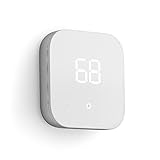
10. Like-New Amazon Smart Thermostat – ENERGY STAR certified, DIY install, Works with Alexa – C-wire required
Overview:
Amazon’s refurbished Smart Thermostat offers certified pre-owned reliability with Alexa integration. ENERGY STAR-rated and DIY-installable, it focuses on effortless comfort via voice control and utility rebates, targeting Alexa-centric homes seeking affordability.
What Makes It Stand Out:
Its unique strength is creating “comfort zones” using Echo devices or Air Quality Monitors for automatic temperature adjustments based on room presence—leveraging existing Amazon hardware. Alexa-driven automatic programming simplifies setup for non-tech users.
Value for Money:
As a refurbished model with full warranty, it provides significant savings over new units while retaining ENERGY STAR efficiency (avg. $50/year savings). Rebate assistance adds value, though refurbished status may concern some buyers despite certification.
Strengths and Weaknesses:
Strengths: Lowest price point (refurbished); seamless Alexa comfort zoning; easy DIY install; ENERGY STAR savings; rebate support. Weaknesses: Refurbished only (no new option); requires C-wire; limited to Alexa ecosystem; no display customization or air quality features.
Bottom Line:
Perfect for Alexa households wanting affordable, hands-off comfort, this certified refurbished thermostat delivers core efficiency and unique zoning at a compelling price, ideal for budget-focused smart home adopters.
Understanding Temperature Zoning Fundamentals
What Temperature Zoning Really Means for Homeowners
Temperature zoning divides your home into distinct areas (or “zones”) that can be heated or cooled independently. Unlike single-thermostat setups, this approach acknowledges that your sunroom gains heat faster than a north-facing bedroom or that your home office needs consistent warmth while the living room stays cooler during daytime hours. Modern smart thermostats achieve this by communicating with wireless room sensors and motorized dampers in ducts, ensuring each zone receives only the conditioned air it needs—without requiring a complete HVAC replacement.
Why Traditional Thermostats Fail at Zoning Challenges
Conventional thermostats operate on a one-size-fits-all principle, triggering your entire HVAC system whenever one area hits the target temperature. This leads to energy waste as your furnace or AC battles to stabilize spaces with varying insulation, window exposure, or occupancy. For example, cooling an empty attic bedroom just because the thermostat sits nearby squanders 20–30% more energy. Smart zoning solutions eliminate this inefficiency by focusing resources where people actually are, using data rather than guesswork.
The Science Behind Smart Zoning Efficiency
Effective zoning relies on three pillars: precise environmental sensing, dynamic system control, and behavioral adaptation. Advanced units deploy machine learning to analyze patterns—like how your morning routine heats the kitchen faster than other rooms—and adjust zones preemptively. They also factor in external variables such as humidity, outdoor temperature swings, and even local weather forecasts to optimize damper positions and HVAC run times. This transforms your system from a blunt instrument into a responsive, room-by-room climate manager.
Critical Features for Effective Zoning Solutions
Multi-Zone Management Capabilities
Look for thermostats supporting at least four independent zones, with expandability for larger homes. True zoning leaders allow you to name zones (e.g., “Master Suite” or “Kids’ Wing”), set unique schedules per zone, and establish priority rules—like ensuring the nursery maintains 72°F before adjusting less critical areas. Avoid limited systems that only “suggest” adjustments without direct damper control.
Advanced Sensor Technology and Placement
The accuracy of room sensors determines zoning success. Prioritize models with humidity-compensated temperature readings and motion detection to confirm occupancy. Placement matters: sensors should avoid direct sunlight, vents, or electronics that distort readings. Some premium units even use infrared occupancy sensing to detect body heat, ensuring zones aren’t cooled unnecessarily when empty.
Adaptive Learning for Personalized Comfort
Beyond preset schedules, top-tier thermostats learn from your manual overrides and occupancy patterns over weeks. If you consistently lower the living room temperature after dinner, the system anticipates this and adjusts zones proactively. This reduces the “set-and-forget” fatigue of traditional programmable thermostats while accommodating lifestyle changes like remote work days.
Energy Monitoring with Zone-Specific Breakdowns
Detailed energy reports should show consumption per zone, not just whole-house totals. This transparency helps identify problem areas—like a poorly insulated zone guzzling 40% of heating costs—so you can address root causes. Some units even estimate carbon footprint reductions, turning abstract efficiency into tangible environmental impact.
Seamless Remote and Voice Control
Manage zones from anywhere via mobile apps with intuitive drag-and-drop interfaces. Voice control integration (through major smart home platforms) should allow zone-specific commands like “Hey [Assistant], cool the kitchen to 70°.” Ensure the system maintains functionality during internet outages via local processing.
Installation and System Compatibility Insights
HVAC System Assessment Checklist
Before purchasing, verify your HVAC can support zoning. Key factors include: compatibility with motorized dampers (required for ducted systems), minimum airflow requirements to prevent compressor damage, and transformer capacity for added electrical load. Older single-stage systems may need upgrades, while multi-stage or variable-speed units integrate more smoothly.
Wiring Requirements Simplified
Zoning-capable thermostats often need additional wires for damper control beyond standard 24V setups. Newer models increasingly use low-voltage wireless bridges to avoid invasive rewiring. If DIY isn’t your strength, opt for systems with color-coded wiring guides and compatibility checkers—many manufacturers offer free pre-purchase consultations.
Professional Installation Versus DIY Feasibility
Complex zoning installations (involving duct dampers or electrical work) typically warrant professional help to avoid HVAC damage. However, thermostat-only setups with wireless sensors are often DIY-friendly. Always check if installation voids warranties—some brands require certified technicians for zoning configurations.
Integration with Existing Dampers and Ductwork
For ducted systems, confirm whether your home has pre-installed dampers or if new ones are needed. Smart thermostats communicate with these dampers via relays or RF signals to open/close airflow paths. In ductless mini-split systems, zoning is inherent—you’ll need a thermostat that coordinates multiple indoor units as separate zones.
Optimizing Comfort Through Automation
Geofencing for Dynamic Zone Activation
This feature uses your smartphone’s location to detect when you’re heading home and pre-conditions only occupied zones. More advanced implementations activate “away mode” per zone—cooling the home office while you work remotely but reducing output in unused bedrooms—saving energy without sacrificing readiness.
Weather-Responsive Climate Adaptation
Top systems pull hyperlocal weather data to adjust zones preemptively. If a heatwave is forecast, they might pre-cool thermal-mass-heavy zones during off-peak electricity hours. Similarly, they’ll reduce heating in sun-facing rooms during bright winter afternoons, using solar gain as a free heat source.
Customizable Scheduling for Lifestyle Fluidity
Move beyond rigid “weekday/weekend” schedules. Look for thermostats allowing unique zone profiles for holidays, guest visits, or seasonal shifts—like setting the guest room to 68°F only when family is visiting. Some even sync with calendar apps to auto-adjust during vacations.
Smart Home Ecosystem Synergy
True zoning potential unlocks when your thermostat shares data with other devices. Imagine smart blinds closing in sun-drenched zones to reduce cooling load, or occupancy data triggering lights only in conditioned areas. Prioritize open-platform compatibility (like Matter protocol) to avoid vendor lock-in.
Evaluating Cost and Long-Term Value
Upfront Investment Versus Energy Savings Timeline
Zoning-capable thermostats cost more upfront ($250–$400 vs. $150 for basic models), but ROI comes from targeted energy use. Most homeowners recoup costs in 1–3 years via reduced consumption—especially in homes with 3+ zones. Calculate your break-even point using historical utility bills and zone-specific usage reports.
Utility Rebates and Tax Incentive Opportunities
Many utilities offer rebates for ENERGY STAR-certified zoning systems, sometimes covering 20–50% of costs. Federal tax credits (like the Inflation Reduction Act incentives) may also apply for efficiency upgrades. Always check local programs before purchasing—some require specific certification labels.
Longevity and Upgrade Pathways
Aim for thermostats with modular designs: replaceable sensors, user-upgradable firmware, and backward-compatible damper controllers. Avoid proprietary ecosystems that could become obsolete if the company discontinues support. Five-year minimum software support guarantees should be non-negotiable.
Environmental Impact Beyond Your Wallet
Zoning directly reduces carbon emissions by minimizing HVAC runtime. A well-tuned system can cut household heating/cooling emissions by 15–25%, equivalent to taking a car off the road for months. This sustainability angle often qualifies systems for green building certifications like LEED.
Future-Proofing Your Climate Control Investment
Over-the-Air Update Reliability
Firmware updates should deliver new zoning features (like AI occupancy prediction) without manual intervention. Verify update frequency—leaders push enhancements quarterly—and whether updates require cloud dependency, which risks functionality during outages.
Emerging Tech: AI Predictive Zoning
Next-gen systems analyze years of usage data alongside utility grid demands to shift zone conditioning to off-peak times automatically. Some even collaborate with neighbors in “virtual power plant” programs, earning you credits by slightly delaying non-urgent zone adjustments during grid stress.
Scalability for Home Evolution
Choose systems supporting additional zones via add-on sensors—critical if you’re planning a basement remodel or sunroom addition. Avoid hard limits (e.g., “max 4 zones”) that force full system replacement later. Modular expansion keeps costs predictable.
Frequently Asked Questions
Can I add zoning to my existing HVAC without new ductwork?
Yes—wireless room sensors paired with a smart thermostat enable “virtual zoning” by adjusting run times per area based on occupancy. For true airflow control, retrofit motorized dampers into existing ducts (no new ducts needed), though professional installation is recommended.
How many zones do I realistically need for a typical home?
Most homes benefit from 2–4 zones: common areas (living/dining), private areas (bedrooms), and specialty spaces (basement/sunroom). Start with high-impact zones like rooms with chronic comfort issues—adding more later is usually feasible.
Will smart zoning work with my heat pump system?
Absolutely. Modern zoning thermostats are designed for heat pumps, including variable-speed models. They prevent short-cycling by managing zone demands intelligently and often include defrost cycle coordination to maintain efficiency.
Do I need a C-wire for zoning-capable thermostats?
While some models use power-stealing technology, a C-wire (common wire) is strongly recommended for reliable damper control and sensor communication, especially in multi-zone setups. Retrofit kits exist if your system lacks one.
Can zoning reduce humidity problems in certain rooms?
Yes—by conditioning zones only when needed, you avoid overcooling (which causes excess moisture) or undercooling (leading to mugginess). Pair with a thermostat that monitors humidity per zone for balanced dehumidification.
How do zoning systems handle simultaneous heating and cooling needs?
Most HVAC systems can’t heat and cool simultaneously. Advanced thermostats prioritize based on user settings (e.g., cooling takes precedence during summer afternoons) or alternate zones in rapid cycles too fast to notice temperature swings.
Are there zoning solutions for homes without central HVAC?
Ductless mini-split systems inherently support zoning—each indoor head is a separate zone. Smart thermostats can coordinate multiple heads, while radiator-based systems use smart TRVs (thermostatic radiator valves) with zone-capable controllers.
Will smart zoning increase my HVAC maintenance needs?
Not significantly. Motorized dampers require minimal upkeep (annual check recommended), and reduced runtime on your main system often extends its lifespan. Systems with usage analytics even alert you to emerging issues like airflow imbalances.
Can I control individual zones while away from home?
Yes—reliable mobile apps let you adjust any zone remotely. Some offer “guest access” so family members can modify their personal zones without affecting the whole-house schedule.
What happens during a power outage with zoned systems?
Quality thermostats have battery backups (24+ hours) to preserve settings. Upon power return, they resume zone schedules automatically—no manual reprogramming. Critical zones (like server rooms) can be prioritized in outage-recovery sequences.
See Also
- 10 Smart Thermostats That Solve Uneven Room Temperatures in 2026
- 10 Smart Thermostat Remotes That Solve Temperature Inconsistencies in 2026
- 10 Smart Thermostats That Solve Inconsistent Room Temperatures in 2026
- Why Voice-Controlled Smart Thermostats Are Revolutionizing Home Comfort in 2026
- 10 Best Budget Smart Thermostats Under $100 for First-Time Buyers