Table of Contents
Imagine lying in bed on a warm summer night, finally ready to drift off to sleep, only to have your peace shattered by the relentless hum and clatter of your old HVAC system. Or picture trying to concentrate during an important video call while your living room unit whirs like a small jet engine. For countless homeowners, disruptive noise isn’t just an annoyance—it’s a daily intrusion that fractures focus, ruins relaxation, and even impacts health. The good news? Modern heating and cooling technology has evolved dramatically, with quiet mini split systems emerging as a transformative solution. No longer must we sacrifice tranquility for comfort; today’s innovations prioritize silence without compromising performance, turning chaotic spaces into serene sanctuaries.
The quest for quieter indoor environments has never been more critical. As open-concept living gains popularity and remote work becomes standard, background noise from HVAC systems can undermine productivity, sleep quality, and overall well-being. Historically, mini splits already offered advantages over traditional ducted systems—like zoning capabilities and energy efficiency—but early models often fell short on noise control. Fast forward to now, and engineering breakthroughs have redefined expectations. Manufacturers are embedding acoustic science into every component, from compressors to fan blades, ensuring that “heating and cooling” no longer translates to “distracting and disruptive.” Whether you’re renovating a bedroom, equipping a home office, or upgrading a rental property, understanding how to select a genuinely quiet system is the first step toward reclaiming your peace.
Top 10 Quiet Mini Split Systems
Detailed Product Reviews
1. 19 SEER2 Ultra-Quiet Mini Split AC | 9000 BTU 3-in-1 Cooling/Heating/Dehumidifier | 115V Inverter Heat Pump | 42dB Whisper Operation | 10ft Pre-Charged Line Set | White Modern Design

Overview:
This 9,000 BTU mini-split system delivers versatile climate control for spaces up to 450 sq. ft., combining cooling, heating, and dehumidification in one energy-efficient unit. Designed for DIY installation with a pre-charged 10ft line set and standard 115V plug, it targets homeowners seeking quiet, year-round comfort without ductwork.
What Makes It Stand Out:
Its standout features include ultra-quiet 23 dB sleep-mode operation (library-quiet), reliable all-weather performance from -4°F to 122°F, and gold-fin anti-corrosion coils for durability. The 3-in-1 functionality replaces multiple appliances, while the 30% energy savings via inverter technology and rapid temperature adjustment enhance practicality.
Value for Money:
Priced competitively for its class, it offers significant savings over hiring professional installers, thanks to the DIY-ready kit. Compared to single-function units, the all-in-one design eliminates the need for separate heaters or dehumidifiers, justifying its cost through long-term energy efficiency and versatility.
Strengths and Weaknesses:
Strengths: Exceptionally quiet operation; robust cold-weather heating; simple DIY setup; durable anti-corrosion components; energy-efficient inverter. Weaknesses: Limited to smaller rooms (450 sq. ft.); no smart/wireless controls; basic remote lacks advanced scheduling.
Bottom Line:
Ideal for bedrooms or home offices needing whisper-quiet, year-round climate control. Its DIY accessibility and reliability make it a top value for small-space comfort, though tech-focused users may miss smart features.
2. 9000 BTU Mini Split AC w/Remote Control19 SEER2 Cools Up to 450 Sq. Ft,Ductless Inverter Mini Split System w/0.75 Ton Heat Pump Pre-Charged & Installation Kit, Ultra-Quiet

Overview:
This 9,000 BTU mini-split provides comprehensive climate management for 450 sq. ft. areas, featuring six operational modes and ETL/AHRI certification. It emphasizes user convenience with a backlit remote and promises energy savings via inverter technology, targeting versatile residential or light commercial use.
What Makes It Stand Out:
With six modes (including Eco, Auto, and Health with PM2.5 filtration), it surpasses basic models. The -4°F heating capability, 50-foot airflow reach, and 23 dB quiet operation stand out. Unique additions like negative-ion air purification and a 10-second auto-off remote display enhance usability.
Value for Money:
The inclusion of advanced features like self-diagnosis, automatic cleaning, and health-focused air quality at a mid-range price offers strong value. However, professional installation is mandatory (unlike DIY kits), adding upfront costs that slightly offset savings from its 35% energy efficiency.
Strengths and Weaknesses:
Strengths: Extensive mode selection; excellent air purification; robust cold-weather performance; comprehensive remote; strong energy savings. Weaknesses: Requires professional installation; no smart connectivity; ships in two boxes (potential delays); limited to 450 sq. ft.
Bottom Line:
A feature-rich choice for health-conscious users prioritizing air quality and precise control. While installation costs reduce initial savings, its durability and multi-mode functionality deliver solid long-term value for small to medium rooms.
3. IDEALHOUSE 24,000 BTU Mini Split Air Conditioner and Heat Pump, 21 SEER2 Ultra Quiet 208-230V Ductless AC with WiFi & Alexa Control, Cools/Heats up to 1500 Sq.Ft, Easy Installation Kit

Overview:
This high-capacity 24,000 BTU system cools and heats large spaces up to 1,500 sq. ft. with 21 SEER2 efficiency. Featuring WiFi/Alexa integration and ultra-quiet operation, it targets open-plan homes, workshops, or commercial areas needing powerful, smart climate control.
What Makes It Stand Out:
Its 1,500 sq. ft. coverage and 40% energy savings via advanced inverter tech are exceptional. Smart controls (app/voice), whisper-quiet 28 dB operation, and double-layer sound insulation differentiate it. The pre-charged line set simplifies installation for large-area comfort.
Value for Money:
Though pricier upfront, the energy savings and expansive coverage justify the cost for large spaces. Comparable units often lack WiFi or similar SEER ratings, making this a cost-effective investment for reducing long-term utility bills in sizable rooms.
Strengths and Weaknesses:
Strengths: Massive coverage (1,500 sq. ft.); significant energy savings; seamless smart controls; very quiet; robust heating/cooling. Weaknesses: Professional installation required; no eco-refrigerant; ships in two packages; higher initial cost.
Bottom Line:
A premium solution for large rooms demanding smart, efficient climate control. Its power and connectivity make it worth the investment for spacious areas, though DIY enthusiasts should note the professional install requirement.
4. Comfort Temps Energy-Saving 12000 BTU / 220V Ductless Mini Split AC/Heating System – 20 SEER, Pre-Charged, Quiet & Comfortable Mini Split with WiFi& Complete Easy Install Kit (Elite Series)

Overview:
This 12,000 BTU (220V) unit delivers year-round comfort for 550–1,000 sq. ft. spaces with 20 SEER2 efficiency. It combines geolocation-enabled WiFi, ultra-quiet operation, and eco-friendly refrigerant, targeting eco-conscious homeowners seeking smart, spacious climate control.
What Makes It Stand Out:
Key highlights include geolocation pre-cooling, 7-speed fan customization, and R454B refrigerant (low global warming potential). The 5-year warranty and subzero heating capability (-4°F) with auto-defrost ensure reliability, while the complete install kit supports partial DIY efforts.
Value for Money:
The eco-refrigerant and geolocation tech add premium value, though professional refrigerant balancing is needed. Energy savings and the 5-year warranty offset the cost versus basic models, making it ideal for those prioritizing sustainability and long-term savings in medium-large rooms.
Strengths and Weaknesses:
Strengths: Environmentally friendly refrigerant; geolocation smart features; excellent warranty; quiet 7-speed operation; strong cold-weather performance. Weaknesses: Partial DIY only (pro for refrigerant); 220V requirement; no Alexa integration details; ships in two boxes.
Bottom Line:
A top eco-friendly pick for medium-large spaces wanting smart, sustainable comfort. The geolocation and R454B refrigerant offer future-proof value, but voltage requirements may limit some installations.
5. Mountman 12000 BTU Mini Split AC/Heating System,19 SEER2 110/120V Energy Efficient Ductless Inverter System,Cools Up to 750 Sq.Ft with Pre-Charged Condenser,Heat Pump & Installation Kits

Overview:
This 12,000 BTU mini-split cools spaces up to 750 sq. ft. using 110/120V power, featuring R32 refrigerant and inverter technology. It emphasizes user-friendly operation with Turbo Boost, ECO Mode, and self-cleaning functions, targeting budget-conscious homeowners needing efficient, quiet comfort.
What Makes It Stand Out:
Its 110V compatibility (uncommon for 12k BTU units) enables easy setup in standard outlets. Standout traits include R32 refrigerant (lower environmental impact), auto-defrost to -4°F, and specialized modes like Sleep (26 dB) and ECO (30% savings). Washable filters and self-cleaning enhance maintenance ease.
Value for Money:
The 110V design eliminates electrical upgrades, reducing installation costs. Energy savings from inverter tech and ECO Mode, plus durable R32 refrigerant, offer strong ROI versus non-inverter models. It’s a cost-effective balance of performance and affordability for medium rooms.
Strengths and Weaknesses:
Strengths: 110V plug-and-play setup; eco-friendly R32 refrigerant; intuitive remote with auto-off display; robust self-maintenance features; quiet Sleep Mode. Weaknesses: No smart/WiFi capabilities; limited to 750 sq. ft.; basic timer functions; remote lacks backlight.
Bottom Line:
An excellent budget-friendly choice for apartments or bedrooms needing efficient, low-maintenance comfort. The 110V compatibility and eco-refrigerant make it accessible and sustainable, though tech-savvy users may miss smart features.
6. VEVOR Mini Split Air Conditioner, 9000 BTU 115V Fast Cooling & Heating, 19 SEER2 High Efficiency Energy Saving, Quiet Inverter System for 450 Sq.Ft Coverage Area, Easy to Maintain, for Home, Office

Overview: This 9,000 BTU mini-split delivers year-round climate control for spaces up to 450 sq. ft., combining inverter-driven efficiency with quiet operation for homes or offices.
What Makes It Stand Out: Its 19 SEER2 rating and eco-friendly R32 refrigerant maximize energy savings while reducing environmental impact. The versatile 4-in-1 functionality (cooling, heating, fan, dry) and ultra-quiet operation (as low as 28 dB) with Sleep/Mute modes are ideal for bedrooms. Self-cleaning at 135°F and a washable filter simplify maintenance.
Value for Money: Priced competitively for entry-level ductless systems, it offers robust efficiency and essential features without premium smart tech. It undercuts pricier models while covering smaller areas effectively, though it lacks AHRI certification for verified output.
Strengths and Weaknesses:
Pros: Excellent quietness for sleep; easy filter access; R32 refrigerant’s low GWP; effective humidity control.
Cons: Limited to 450 sq. ft. (less coverage than rivals); no Wi-Fi/smart controls; self-cleaning requires manual activation.
Bottom Line: A reliable, budget-friendly choice for compact rooms needing silent, efficient heating and cooling—ideal for bedrooms or home offices under 450 sq. ft.
7. 9000 BTU Mini Split Air Conditioner & Heat Pump, 115V Wall Mount Ductless Inverter AC/Heating System - 19 SEER2, Ultra Quiet, Suitable for 500 Sq.Ft, Installation Kits

Overview: Designed for U.S. households, this 9,000 BTU ENERGY STAR-certified mini-split cools/heats spaces up to 500 sq. ft. using 115V standard outlets, eliminating complex wiring.
What Makes It Stand Out: AHRI certification guarantees performance accuracy, while R32 refrigerant and 19 SEER2 efficiency cut energy bills by up to 36% versus window units. Auto Defrost works down to -4°F, and 25–35 dB operation rivals library quietness. The included installation kit and 24-hour timer add convenience.
Value for Money: Strong value with verified efficiency (AHRI) and cold-climate reliability. The ENERGY STAR savings justify its price against uncertified competitors, though smart features are absent.
Strengths and Weaknesses:
Pros: AHRI-certified output; exceptional cold-weather heating; ultra-quiet; easy 115V setup; comprehensive installation kit.
Cons: No Wi-Fi/app control; remote-only operation; slightly noisier than top-tier models at max fan.
Bottom Line: A top pick for reliable, efficient climate control in 500 sq. ft. spaces—especially valuable for cold regions needing certified heating performance.
8. VEVOR Mini Split Air Conditioner, 12,000 BTU AC / 12,500 BTU Heat, 115V 19 SEER2 High Efficiency Energy Saving, Quiet Inverter System for 750 Sq.Ft Coverage Area, Easy to Maintain, for Home, Office

Overview: Scaling up capacity, this VEVOR model offers 12,000 BTU cooling and 12,500 BTU heating for larger areas (up to 750 sq. ft.) with inverter efficiency and quiet operation.
What Makes It Stand Out: Doubles the coverage of smaller units while retaining 19 SEER2 efficiency and R32 refrigerant. The 4-in-1 functionality, 28 dB quietness with display-off mode, and 135°F self-cleaning cater to open-plan living areas or offices.
Value for Money: Justifies a moderate price premium over 9k BTU models by covering ~65% more space. Savings from high efficiency offset initial costs faster in medium-sized rooms, though it lacks smart features.
Strengths and Weaknesses:
Pros: High heating capacity (12,500 BTU); spacious 750 sq. ft. coverage; whisper-quiet sleep mode; washable filter.
Cons: No AHRI certification; limited to 115V (restricting very large rooms); basic remote control only.
Bottom Line: Best for medium-sized rooms needing powerful, silent heating/cooling—opt for this over smaller units if covering 500–750 sq. ft. efficiently.
9. Comfort Temps Ultra-Efficient 24000 BTU/220V Mini Split – 23 SEER for Lower Energy Bills– Pre-Charged, Ductless, Quiet & Comfortable Mini Split AC/Heating System|WiFi & Easy Install Kit (Pro Series)
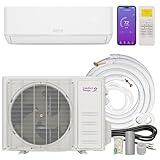
Overview: A premium 24,000 BTU system for large spaces (750–1,500 sq. ft.), featuring 23 SEER2 efficiency, Wi-Fi control, and cold-climate resilience down to subzero temperatures.
What Makes It Stand Out: Industry-leading 23 SEER2 rating and ENERGY STAR certification maximize savings. Wi-Fi with geolocation, Alexa/Google compatibility, and a 7-speed fan enable smart customization. R454B refrigerant’s ultra-low GWP and pre-charged 16.4 ft. line set simplify eco-conscious installation.
Value for Money: Higher upfront cost is offset by exceptional long-term savings (23 SEER2) and smart features. The included pro-install kit adds value, but 220V requirement may increase electrical costs.
Strengths and Weaknesses:
Pros: Best-in-class efficiency; advanced Wi-Fi controls; cold-weather reliability (-20°C); eco-friendly refrigerant; comprehensive 5-year warranty.
Cons: Requires 220V circuit (professional electrical work); refrigerant balancing needs HVAC tech; premium pricing.
Bottom Line: Worth the investment for large spaces prioritizing energy savings, smart control, and cold-climate performance—ideal for eco-conscious homeowners.
10. YITAHOME 12000 BTU Mini Split Air Conditioner Heat Pump System, Wifi Enabled 20 SEER2 115V Inverter Ductless AC Cool Up to 750 Sq. Ft, Compatible with Alexa, Complete Installation Kit, White

Overview: This 12,000 BTU Wi-Fi-enabled mini-split cools/heats up to 750 sq. ft. with 20 SEER2 efficiency, targeting tech-savvy users seeking air purification and smart integration.
What Makes It Stand Out: Alexa compatibility and “HEALTH mode” (negative ions, PM2.5 removal) distinguish it from basic models. ETL/AHRI certification ensures reliability, while 41 dB quietness and 5°F low-temperature operation suit diverse climates. The complete kit includes mounting hardware.
Value for Money: Balances smart features and certifications at a mid-range price. ENERGY STAR-like efficiency (20 SEER2) offers solid savings, though R410A refrigerant is less eco-friendly than R32/R454B.
Strengths and Weaknesses:
Pros: Air purification tech; Alexa/Wi-Fi control; AHRI-certified; wide temp range (5°–118°F); washable filter.
Cons: R410A refrigerant (higher GWP); 41 dB is noisier than competitors; 5°F heating limit (less cold resilience); no auto-defrost spec.
Bottom Line: A smart, health-focused option for 750 sq. ft. spaces—choose this if air quality and app control matter more than ultra-quiet operation or extreme cold heating.
Understanding Noise in HVAC Systems
The Science Behind Sound Measurement
HVAC noise is quantified in decibels (dB), but understanding these numbers requires context. A whisper registers around 30 dB, while normal conversation hits 60 dB—most older systems operate between 50–70 dB, easily penetrating walls. Modern quiet mini splits target 19–25 dB at low speeds, blending into ambient room noise. Crucially, perceived loudness doubles every 10 dB increase, so a 25 dB unit isn’t just “a bit” quieter than a 35 dB one; it’s perceived as half as loud. Always compare dB ratings at identical operating capacities, as noise escalates during high-demand cycles.
Common Culprits of Excessive Noise
Vibrations from unbalanced components, turbulent airflow through poorly designed ducts (or lack thereof), and compressor rattling are frequent offenders. In mini splits, the outdoor unit’s location relative to windows or thin walls amplifies issues, while indoor units suffer from loose mounting brackets or refrigerant line vibrations. Even installation errors—like inadequate leveling—create harmonic resonance that turns subtle hums into intrusive drones. Addressing these root causes matters more than chasing the absolute lowest dB number.
Why Mini Splits Outperform Traditional Systems
Without ductwork, mini splits eliminate a major noise conduit. Ducts act like megaphones, carrying blower motor sounds throughout the house. Mini splits deliver air directly into zones, shortening airflow paths and reducing turbulence. Their compact indoor units also avoid the high-velocity blasts common in forced-air systems, operating at gentler, more consistent speeds. This inherent design advantage, combined with targeted engineering, makes achieving library-quiet operation not just possible but increasingly standard.
Key Features That Contribute to Quiet Operation
Inverter-Driven Efficiency and Silence
Inverter compressors modulate speed based on real-time demand instead of cycling on/off like conventional units. This eliminates the jarring “startup surge” noise and maintains near-constant low-speed operation. At partial load—where systems run 80% of the time—inverters hum at barely audible levels. Look for models emphasizing “ultra-low” inverter ranges, as these sustain whisper-quiet performance during mild weather when noise sensitivity peaks.
Aerodynamic Fan and Blower Design
Blade shape and motor placement drastically affect sound. Curved, asymmetrical blades reduce vortex shedding (a major turbulence source), while brushless DC motors operate cooler and smoother than older AC types. Some units incorporate “swept-back” impellers that slice through air silently, and strategic shrouding minimizes airflow eddies. These subtle tweaks, often invisible to consumers, can lower noise by 3–5 dB—a perceptible difference in quiet rooms.
Advanced Vibration Dampening Techniques
Rubber grommets, spring isolators, and composite mounting plates absorb mechanical vibrations before they transfer to walls or ceilings. High-end systems use multi-stage dampening: internal compressor mounts combined with external anti-vibration pads. For outdoor units, mass-loaded bases counteract low-frequency rumble. Never overlook this—it turns potential rattles into imperceptible pulses, especially critical for units mounted near bedrooms.
Acoustic Enclosures and Insulation
Strategic insulation around compressors and fan housings traps sound waves. Open-cell foams absorb high frequencies, while mass-loaded vinyl barriers block low-end vibrations. Some units feature “sound skirts” that redirect noise upward, away from occupied spaces. This isn’t just foam padding; it’s engineered acoustic architecture that targets specific dB ranges without impeding heat exchange efficiency.
Evaluating Sound Levels During Selection
Decoding Manufacturer Specifications
Beware of “as low as” dB claims—they often reflect ideal lab conditions at minimal output. Scrutinize full-load and part-load ratings across all fan speeds. A system rated at 22 dB (low) / 38 dB (high) is more honest than one touting “20 dB” without context. Also, check if ratings include both indoor and outdoor units; outdoor noise impacts patios or adjacent rooms and is frequently underreported.
Real-World Testing vs. Theoretical Data
Specifications rarely capture how noise interacts with your home’s acoustics. Request a live demo in a showroom setting that mimics your room size, or ask installers for client references with similar layouts. Pay attention to tonal qualities—some units emit a high-pitched whine that bothers sensitive ears more than a deeper hum at the same dB level. If possible, measure noise yourself using a smartphone app during operation.
Considering Multi-Mode Operation Scenarios
A bedroom needs near-silent low-speed performance at night, while a kitchen may tolerate slightly higher noise during cooking. Assess how smoothly the system transitions between modes. Units with abrupt speed changes create distracting “noise spikes,” whereas progressive ramping maintains acoustic comfort. Prioritize models offering customizable fan curves via apps, letting you manually suppress noise during critical hours.
Installation Factors That Influence Noise
Strategic Indoor Unit Placement
Mount units high on walls (away from direct ear level) and avoid corners where sound reflects and amplifies. Ensure at least 12 inches of clearance above the unit for unobstructed airflow—restricted intake grilles cause turbulent “whooshing.” In multi-story homes, placing indoor units above living areas (not bedrooms) prevents noise from traveling downward through floors. Never install above a bed or desk; side-wall mounting is acoustically superior.
Outdoor Unit Positioning and Isolation
Distance is your ally: position outdoor units at least 10 feet from windows, decks, or shared walls. Use dense landscaping (like evergreen hedges) as natural sound barriers—but maintain 24-inch clearance for airflow. Critical tip: install outdoor units on concrete pads with vibration-absorbing pads, never directly on wood decks where resonance magnifies noise. For townhomes, confirm local regulations about shared-wall installations to avoid neighbor disputes.
Refrigerant Line and Electrical Considerations
Tightly secured, insulated refrigerant lines prevent “oil hammer” vibrations during compressor cycling. Lines should have gentle bends—not sharp kinks—to avoid refrigerant turbulence noise. Use anti-vibration clamps every 3–4 feet, and insulate lines where they penetrate walls. Additionally, dedicated electrical circuits prevent electromagnetic interference that can cause buzzing in control boards. Cutting corners here risks introducing noise the system itself doesn’t generate.
Maintenance for Long-Term Quiet Performance
Preventing Debris-Related Noise
Dust buildup on fan blades creates imbalance and turbulence. Clean indoor air filters monthly and schedule annual professional coil cleanings. Outdoor units choked with leaves or dirt strain the compressor, increasing operational noise. Trim foliage within 18 inches of the unit, and use protective covers only during extreme winter downtime—never while operating.
Securing Loose Components Proactively
Vibrations gradually loosen screws, brackets, and panels. During bi-annual maintenance, technicians should check mounting hardware, refrigerant line fasteners, and internal components. Listen for new rattles after storms or seismic activity; even minor shifts can initiate harmonic noise. A quick tightening often resolves what might seem like a defective unit.
Refrigerant Charge and System Calibration
Undercharged or overcharged systems force compressors to work harder, amplifying noise. Only certified technicians should adjust refrigerant levels using manifold gauges—not guesswork. An optimally charged system runs quieter and more efficiently. If noise suddenly increases, refrigerant imbalance is a likely culprit worth investigating before assuming component failure.
Advanced Technologies Enhancing Quietness
AI-Powered Adaptive Operation
Emerging systems use microphones and machine learning to detect ambient noise (like a TV or conversation) and automatically adjust fan speeds to stay below auditory thresholds. Others learn occupancy patterns to pre-cool rooms silently before peak hours. This “context-aware” tech ensures the system fades into the background rather than dictating your environment.
Multi-Stage Compression for Seamless Transitions
Beyond basic inverters, dual-rotary or triple-screw compressors divide workloads across stages, eliminating the loud “kick-in” of single-stage units. At low demand, only one stage operates quietly; during heatwaves, additional stages engage smoothly. This granularity maintains near-constant noise levels across temperature ranges, avoiding disruptive surges.
Eco-Friendly Sound-Absorbing Materials
Sustainable innovations like recycled PET felt insulation or plant-based foams now rival traditional materials in acoustic performance. These non-toxic alternatives absorb mid-to-high frequencies effectively while supporting green building standards. Bonus: they resist mold in humid climates, preventing the musty odors that sometimes accompany damp insulation.
Room-Specific Quietness Strategies
Optimizing for Restful Bedrooms
Prioritize ultra-low dB ratings (under 22 dB) and “sleep mode” features that gradually reduce fan speed after bedtime. Avoid ceiling cassettes if possible—wall-mounted units directed away from the bed minimize direct airflow noise. For light sleepers, consider systems with delayed startup timers to prevent sudden noise upon waking.
Creating Focused Home Office Zones
In workspaces, consistent low-frequency hums are less distracting than intermittent sounds. Choose units with steady inverter operation and avoid models with frequent defrost cycles (which create clicking noises). Position indoor units away from desks, and use ceiling mounts in open offices to disperse sound upward. Noise-canceling white noise machines can complement but shouldn’t replace quiet hardware.
Managing Sound in Open-Concept Areas
Large, hard-surfaced rooms amplify noise reflections. Install units closer to thermal loads (e.g., near windows) to reduce runtime, and select models with wider airflow dispersion to avoid high-velocity “jets.” Pair with acoustic panels or bookshelves to break up sound waves. In kitchens, ensure the unit isn’t mounted above cooking areas where grease accelerates filter clogging and noise.
Balancing Cost and Quiet Performance
Understanding the Quietness Premium
Entry-level quiet systems may cost 15–20% more than standard models, but premium ultra-quiet variants can reach 30–40% higher. This reflects R&D in acoustics engineering and specialized components. However, the premium often pays back through energy savings (quiet systems tend to be more efficient) and avoided costs like soundproofing retrofits or health impacts from chronic noise stress.
Hidden Savings Beyond the Purchase Price
Noisy systems drive behavioral workarounds—like leaving doors open to distant units or using space heaters—that inflate energy bills. A genuinely quiet mini split encourages zoning discipline, cutting costs by 20–30%. Also, consider resale value: homes marketed with “silent climate control” attract premium buyers, especially in noise-sensitive urban areas.
Avoiding False Economy Choices
Cheapest units often cut acoustic corners—thinner housings, basic mounts, or weaker inverters—that lead to louder operation and shorter lifespans. Investing in robust vibration control and reputable brands typically ensures quieter long-term performance. Always factor in professional installation; a $500 “discount” on a unit becomes irrelevant if improper setup adds 10 dB of avoidable noise.
Environmental and Efficiency Synergies
How Quiet Design Boosts Energy Performance
Noise-reduction features often align with efficiency: aerodynamic fans move more air per watt, inverters avoid wasteful on/off cycling, and tight seals prevent energy leaks. A system engineered for silence usually excels in SEER/HSPF ratings too—quietness isn’t a luxury add-on but a hallmark of holistic optimization.
Refrigerant Innovations with Acoustic Benefits
Newer refrigerants like R-32 operate at lower pressures than older R-410A, reducing compressor strain and associated noise. While primarily adopted for lower global warming potential, these compounds enable smoother, quieter thermodynamic cycles. Always verify refrigerant compatibility with local regulations and technician expertise.
Sustainable Manufacturing’s Role in Acoustics
Brands prioritizing lifecycle sustainability often integrate noise-conscious design early—using recycled metals that dampen vibrations or modular parts that simplify quiet replacements. Supporting these companies accelerates industry-wide acoustic improvements, turning consumer choices into catalysts for quieter neighborhoods.
Making Your Informed Decision
Building a Personalized Quietness Checklist
List non-negotiables: maximum dB threshold for bedrooms, must-have features like sleep mode, and space constraints. Note dealbreakers—e.g., no outdoor unit on a shared balcony. This prevents showroom overwhelm and focuses discussions with installers on your actual needs, not marketing hype.
Partnering with the Right Professionals
Choose installers certified by multiple manufacturers (not just one brand) who discuss acoustics proactively. Ask: “How do you minimize vibration transfer?” or “Can you provide references for quiet installations in homes like mine?” Their approach to mounting, line routing, and testing reveals more than product catalogs ever will.
Future-Proofing Against Noise Evolution
Technology advances rapidly—today’s “quiet” may be tomorrow’s “average.” Prioritize systems with modular components (like upgradable control boards) and Wi-Fi connectivity for firmware updates that refine noise algorithms. Also, verify warranty coverage for sound-related issues; comprehensive protection signals manufacturer confidence.
Frequently Asked Questions
What decibel level is considered truly quiet for a bedroom?
True bedroom quietness typically requires indoor units operating below 22 dB on low speed—comparable to rustling leaves. This ensures the system stays below ambient nighttime noise (like a clock ticking at 20 dB), preventing sleep disruption. Always verify this rating applies to your room’s required cooling capacity.
Can installation errors make even a quiet system noisy?
Absolutely. Improper mounting on hollow walls, unsecured refrigerant lines, or an unlevel outdoor pad can add 10+ dB of avoidable noise. Professional installation focusing on vibration isolation is non-negotiable for achieving lab-rated quietness in real homes.
Do quieter systems cost significantly more to operate?
No—quieter models often run more efficiently due to advanced inverters and aerodynamics. While purchase price may be higher, energy savings typically offset this within 2–3 years, especially in climates requiring year-round operation.
How does outdoor unit noise affect neighbors in attached homes?
In townhouses or duplexes, outdoor unit placement is critical. Units should face away from shared walls, with barriers like fences or shrubs. Some municipalities have noise ordinances (e.g., under 55 dB at property lines), so discuss placement with your installer to avoid disputes.
Are there specific features to request for open-plan living areas?
Yes: prioritize wide, low-velocity airflow dispersion to avoid localized “wind noise,” and ensure the system has seamless speed transitions. Ceiling-mounted cassettes often outperform wall units here by distributing air more evenly without directional blasts.
Can I reduce noise from an existing mini split without replacement?
Often—clean filters/coils, tighten mounting hardware, add vibration pads to outdoor units, or insulate refrigerant lines. However, if the compressor itself is loud due to age or design, replacement may be the only solution for significant improvement.
Does “quiet mode” compromise heating or cooling effectiveness?
Not if properly engineered. True quiet modes use extended runtime at low speeds rather than reduced capacity, maintaining consistent temperatures. Avoid gimmicky modes that sacrifice performance—reputable brands preserve efficiency while silencing operation.
How do I compare noise levels between different brands fairly?
Focus on part-load dB ratings (e.g., 50% capacity) at identical room sizes, not “as low as” claims. Request third-party test reports if available, and prioritize real-user reviews mentioning consistent quietness over time, not just initial impressions.
Are ducted mini splits quieter than standard wall units?
Not necessarily—long duct runs can introduce turbulence noise. However, short, well-insulated ducts with variable-speed blowers may offer quieter distribution in multi-room setups. For single zones, wall units generally achieve lower minimum noise levels.
What maintenance tasks prevent noise escalation over time?
Bi-annual professional tune-ups to check refrigerant charge, clean coils, and secure components are essential. Monthly filter changes and keeping outdoor units debris-free also prevent strain-induced noise, extending the system’s quiet lifespan.
See Also
- 10 Quiet Mini Split Systems That Solve Noise Problems in 2026
- 10 Best Quiet Mini Split Systems for Bedrooms This Year
- Ducted Mini Split Systems vs. Traditional HVAC: Which Delivers Better Comfort and Savings?
- 10 Quiet Mini Split Systems for Bedrooms: Expert Picks for 2026
- 10 Affordable Quiet Mini Split Systems That Don’t Sacrifice Performance in 2026