Table of Contents
Imagine lying in bed, finally ready to drift off after a long day, only to be kept awake by the persistent hum of your cooling system. Or trying to concentrate on an important video call while your mini-split’s fan cycles on with an intrusive whir. For many homeowners, especially those in bedrooms, home offices, or open-concept living spaces, noise pollution from HVAC systems isn’t just an annoyance—it’s a genuine disruption to peace, productivity, and rest. As our homes become multi-functional sanctuaries for work, relaxation, and sleep, the demand for truly quiet climate control has shifted from a luxury to a non-negotiable necessity. The good news? Technological advancements are rapidly closing the gap between powerful cooling and serene silence.
Gone are the days when “quiet operation” simply meant a system slightly less obtrusive than a jet engine. Today’s leading mini-split innovations focus on near-silent performance through sophisticated engineering, transforming how we experience indoor comfort. Understanding what truly makes a system quiet—beyond just decibel ratings on a spec sheet—is crucial for making an informed decision. It’s not just about the numbers; it’s about the technology, installation precision, and design choices that collectively create an environment where you forget the system is even running. Let’s dive deep into the features and considerations that separate genuinely peaceful systems from those that merely claim to be quiet.
Top 10 Quiet Mini Split Systems
Detailed Product Reviews
1. 19 SEER2 Ultra-Quiet Mini Split AC | 9000 BTU 3-in-1 Cooling/Heating/Dehumidifier | 115V Inverter Heat Pump | 42dB Whisper Operation | 10ft Pre-Charged Line Set | White Modern Design

Overview: This 9,000 BTU ductless mini-split system delivers year-round climate control for spaces up to 450 sq. ft. Running on standard 115V, it combines cooling, heating, and dehumidification in one energy-efficient package with whisper-quiet operation.
What Makes It Stand Out: Its 115V compatibility eliminates the need for dedicated circuit installation, making DIY setup significantly easier than 230V models. The 23 dB sleep mode and robust all-weather durability (-4°F operation) cater perfectly to bedrooms and home offices seeking silent, reliable comfort.
Value for Money: Priced competitively for its SEER2 19 efficiency, the included pre-charged 10ft line set and tool-free installation kit reduce setup costs. It saves 30% on energy versus conventional ACs, justifying the investment for small-space owners prioritizing ease of installation.
Strengths and Weaknesses: Pros: True plug-and-play 115V setup; exceptional quietness; handles extreme cold; gold-fin corrosion protection. Cons: Limited to smaller rooms (450 sq. ft.); lacks smart/WiFi features; 10ft line set may require extension for some layouts.
Bottom Line: An outstanding choice for renters or homeowners seeking a straightforward, ultra-quiet, and energy-efficient solution for single-room climate control without electrical upgrades; ideal where 115V simplicity is paramount.
2. 19 SEER2 Ultra-Quiet Mini Split AC | 9000 BTU 3-in-1 Cooling/Heating/Dehumidifier | 230V Inverter Heat Pump | 42dB Whisper Operation | 10ft Pre-Charged Line Set | White Modern Design
Overview: Identical in core functionality to Product 1 but designed for 230V circuits, this 9,000 BTU mini-split serves 450 sq. ft. spaces with inverter-driven cooling, heating, and dehumidification, featuring library-quiet operation down to 23 dB.
What Makes It Stand Out: The 230V configuration delivers slightly higher efficiency potential under heavy loads and is standard for dedicated HVAC circuits in many homes. It retains the same extreme-temperature resilience (-4°F heating) and ultra-quiet performance, appealing to permanent installations.
Value for Money: While requiring a 230V outlet (potentially needing an electrician), it offers identical energy savings (30%) and durability as Product 1. The value shines for homeowners with existing 230V infrastructure, avoiding adapter costs long-term despite higher initial setup complexity.
Strengths and Weaknesses: Pros: Optimized for permanent installations; handles high-demand cooling efficiently; same rugged build and quiet operation as 115V model. Cons: DIY installation is harder without existing 230V circuit; not suitable for standard outlets; minor cost premium over 115V version.
Bottom Line: Best for homeowners with accessible 230V circuits seeking maximum efficiency and longevity; choose this over Product 1 only if 230V is readily available, as the voltage requirement adds installation hurdles otherwise.
3. Oylus Mini Split Ac/Heating System - 12000 BTU Ductless Mini Split Air Conditioner with Heat Pump, 19 SEER2 115V Energy Efficient Ac Unit Up to 750 Sq.Ft with Installation Kit

Overview: This 12,000 BTU (1-ton) 115V mini-split system covers larger areas up to 750 sq. ft., offering cooling, heating, and dehumidification with SEER2 19 efficiency and HSPF2 8.5 heating performance.
What Makes It Stand Out: The standout feature is its higher capacity (12,000 BTU cooling/12,500 BTU heating), ideal for open-plan living areas. The extended heating range (down to 19.4°F) and strong energy savings (36% reduction) differentiate it from smaller units, despite identical voltage to Product 1.
Value for Money: It commands a higher price but delivers proportional value for larger spaces, eliminating the need for multiple units. The included installation kit and solid efficiency ratings make it cost-effective versus purchasing two smaller systems, though professional setup is recommended.
Strengths and Weaknesses: Pros: Covers significantly larger areas; strong heating performance; intuitive remote with timer; energy savings exceed competitors. Cons: Slightly noisier (42dB standard); redundant feature listing in specs; heating range limited below 19.4°F.
Bottom Line: A compelling upgrade for medium-sized rooms or open layouts needing robust single-unit coverage; prioritize this over 9,000 BTU models if your space exceeds 500 sq. ft. and energy efficiency is critical.
4. ComfortTemps Elite Series - Energy-Saving 9000 BTU Mini Split 110V – 19 SEER, Pre-Charged, Ductless, Quiet & Comfortable Mini Split AC/Heating System with WiFi & Complete Easy Install Kit

Overview: This 9,000 BTU 115V mini-split integrates smart technology with core climate control for spaces up to 400 sq. ft., featuring WiFi, geolocation, and ultra-quiet 7-speed fan operation alongside standard cooling/heating.
What Makes It Stand Out: The comprehensive smart features—remote app control, geofencing, and voice assistant compatibility—elevate it above basic models. The use of eco-friendly R454B refrigerant and 5-year warranty further enhance its premium positioning.
Value for Money: Priced higher due to smart capabilities, it justifies cost through long-term convenience and energy monitoring. The complete install kit (16.4ft lines) reduces setup fees, though refrigerant work requires a pro. Ideal for tech-savvy users valuing automation.
Strengths and Weaknesses: Pros: Best-in-class smart controls; eco-conscious refrigerant; exceptionally quiet with 7 fan speeds; strong cold-weather performance. Cons: Shorter line set may need extension; app setup can be finicky; higher upfront cost.
Bottom Line: The top pick for smart-home integration and eco-conscious buyers willing to pay more for convenience; skip if you prefer simple manual control or have very tight budget constraints.
5. Oylus 9000 BTU Mini Split Ac/Heating System - 19 SEER2 Precharged Inverter Mini Split AC Unit with Heat Pump, 115V Energy Efficient Ductless AC Unit Up to 450 Sq.Ft with Installation Kit
Overview: A budget-friendly 9,000 BTU 115V mini-split targeting 450 sq. ft. areas, emphasizing quiet operation (42dB), energy savings (36%), and basic remote-controlled comfort with sleep mode optimization.
What Makes It Stand Out: Its ultra-quiet sleep mode (42dB) and dedicated temperature adjustment throughout the night specifically target undisturbed rest. The focus on simplicity—remote control, timer, and auto modes—makes it accessible for non-tech users.
Value for Money: Offers the lowest entry price among 9,000 BTU units reviewed, with solid energy savings (36%) and included installation kit. Represents excellent value for buyers prioritizing quiet, reliable operation over smart features or extreme cold-weather performance.
Strengths and Weaknesses: Pros: Very affordable; exceptional sleep-mode quietness; easy remote operation; good energy savings. Cons: Less durable build than premium models; heating range limited (19.4°F+); no WiFi/smart capabilities.
Bottom Line: A smart buy for cost-conscious buyers needing basic, whisper-quiet climate control in bedrooms or offices; avoid if you require smart features or live in sub-zero climates regularly.
6. Kinetheme 12000BTU Mini Split AC/Heating System, 17 SEER2 115V Inverter Air Conditioner Cools/Heats Up to 750 Sq.Ft, Complete Installation Kit

Overview:
The Kinetheme 12000BTU Mini Split offers versatile cooling and heating for spaces up to 750 sq. ft., targeting bedrooms, living rooms, and home offices. It leverages inverter technology for energy efficiency and includes a complete installation kit, though professional setup is mandatory for warranty coverage.
What Makes It Stand Out:
Rapid temperature adjustment (30 seconds for cooling, 60 for heating) and a robust 17 SEER2 rating are key highlights. The eco-friendly R32 refrigerant, self-cleaning function, and auto-defrost capability down to -4°F ensure reliability in extreme climates. Five working modes and a 24-hour timer enhance user customization.
Value for Money:
Priced competitively for its capacity, the Kinetheme justifies cost through energy savings (vs. traditional ACs) and reduced maintenance needs. The included installation kit adds value, though professional installation fees are an extra consideration. It outperforms budget units in longevity and cold-climate performance.
Strengths and Weaknesses:
Strengths: Exceptional speed, strong cold-weather operation, AHRI-certified efficiency, low environmental impact (R32), and self-maintenance features. Weaknesses: Requires licensed installation (no DIY option), limited to 750 sq. ft., and lacks smart connectivity like WiFi.
Bottom Line:
Ideal for medium rooms needing fast, reliable year-round comfort in variable climates. Its energy efficiency and durability make it a sound investment despite the installation requirement, especially for users prioritizing performance over smart features.
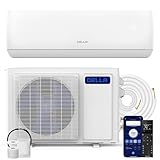
7. DELLA Motto Series 9100 BTU 20.5 SEER2 115V Mini Split AC, Cools Up to 400 Sq.Ft, Works with Alexa and Wifi, Ductless Inverter System Air Conditioner, Pre-Charged Heat Pump and 16ft Kits
Overview:
The DELLA Motto Series targets smaller spaces (up to 400 sq. ft.) with its 9100 BTU capacity and industry-leading 20.5 SEER2 efficiency. It emphasizes smart integration via Alexa/WiFi and includes a pre-charged 16ft installation kit for streamlined setup (professional installation recommended).
What Makes It Stand Out:
The ultra-quiet 27 dB operation and smart “I Feel” sensor—which adjusts airflow based on remote temperature readings—are exceptional. The 4D airflow (up/down/left/right), eco-mode, and R32 refrigerant boost comfort and sustainability, while AHRI certification validates its efficiency claims.
Value for Money:
Its premium SEER2 rating promises significant energy savings, offsetting the higher upfront cost over time. Smart features add convenience, but the limited 400 sq. ft. coverage may necessitate multiple units for larger homes, affecting long-term value for bigger spaces.
Strengths and Weaknesses:
Strengths: Class-leading quietness, intuitive smart sensor, excellent energy efficiency, and comprehensive modes (turbo, dry, etc.). Weaknesses: Narrow coverage area, R32 refrigerant availability challenges for servicing, and mandatory professional installation.
Bottom Line:
A top choice for compact rooms where whisper-quiet operation and precise temperature control are priorities. Best suited for tech-savvy users willing to invest in efficiency, though its size limitations reduce versatility for larger areas.
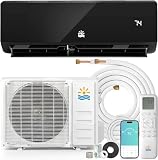
8. Oylus Mini Split Ac/Heating System - 18000 BTU Mini Split Air Conditioner with Heat Pump Wifi Enabled Inverter, 21 SEER2 230V Energy Efficient Precharged Split Ac Unit Up to 1250 Sq.Ft
Overview:
The Oylus 18000 BTU system delivers high-capacity cooling/heating for large areas (up to 1,250 sq. ft.) with 21 SEER2 efficiency. It combines robust cold-weather performance (down to -13°F) with modern conveniences like WiFi control and a 230V power setup.
What Makes It Stand Out:
Unmatched cold-climate resilience (-13°F operation) and the highest SEER2 rating (21) in this comparison set it apart. Built-in WiFi enables remote management, while the anti-direct airflow design prevents uncomfortable drafts. The R454B refrigerant offers eco-friendly operation.
Value for Money:
Justifies its premium price with exceptional energy savings, expansive coverage, and reliability in freezing temperatures. The WiFi integration eliminates the need for third-party smart hubs, adding convenience without extra costs. Ideal for users seeking long-term savings in variable climates.
Strengths and Weaknesses:
Strengths: Superior cold-weather performance, industry-best SEER2, smart app control, and even airflow distribution. Weaknesses: Requires 230V circuit (not 115V), lacks detailed noise metrics, and no mention of a self-cleaning function.
Bottom Line:
Highly recommended for large rooms or open-plan spaces in regions with harsh winters. Its efficiency, smart features, and extreme-temperature capability deliver outstanding value despite the voltage requirement.
9. VEVOR Mini Split Air Conditioner, 12,000 BTU AC / 12,500 BTU Heat, 115V 19 SEER2 High Efficiency Energy Saving, Quiet Inverter System for 750 Sq.Ft Coverage Area, Easy to Maintain, for Home, Office

Overview:
This VEVOR 12,000 BTU unit provides balanced cooling (12k BTU) and heating (12.5k BTU) for 750 sq. ft. spaces, featuring 19 SEER2 efficiency and user-friendly maintenance. It targets homeowners seeking simplicity and quiet operation.
What Makes It Stand Out:
The 135°F self-cleaning function and removable washable filter simplify upkeep, while Sleep/Mute modes ensure near-silent (28 dB) nighttime operation. Its versatile 4-in-1 design (cooling, heating, fan, dry) adapts to seasonal needs without compromising energy efficiency.
Value for Money:
Offers excellent mid-range value with solid efficiency (19 SEER2) and practical features at a competitive price. The focus on easy maintenance reduces long-term costs, though it lacks smart connectivity found in pricier models. Best for budget-conscious buyers prioritizing reliability.
Strengths and Weaknesses:
Strengths: Hassle-free maintenance, ultra-quiet operation, strong heating capacity, and multi-function versatility. Weaknesses: No WiFi/smart controls, limited to 750 sq. ft., and fewer advanced climate modes (e.g., no auto-defrost details).
Bottom Line:
A dependable, low-maintenance solution for medium-sized rooms. Perfect for users who value simplicity and quiet performance over smart features, making it a smart buy for cost-effective, year-round comfort.
10. Air Conditioner, 24000 BTU Ductless Mini Split AC, Heating System, 19 SEER2, 208-230v, Cools, Heats 1500 Sq.Ft, Smart WiFi, Voice Control, Ultra Quiet 41 DB

Overview:
The VEVOR 24,000 BTU Mini Split is a powerhouse engineered for large spaces (up to 1,500 sq. ft.), featuring 19 SEER2 efficiency, smart WiFi, and extreme-temperature resilience (-4°F to 140°F). It includes a full installation kit across two packages.
What Makes It Stand Out:
Its massive coverage, negative ion air purification (“HEALTH mode”), and 50-foot 4D airflow circulation are unique. Operating down to -4°F and up to 140°F ensures year-round reliability, while voice control and WiFi integration offer modern convenience. The 41 dB noise level is impressive for its capacity.
Value for Money:
High upfront cost is offset by energy savings (25% vs. traditional ACs), air purification benefits, and suitability for garages/basements. The included 13ft copper lines add value, though professional installation remains essential. Justifiable for large or multi-use spaces.
Strengths and Weaknesses:
Strengths: Exceptional coverage, air purification, wide operating range, and smart features. Weaknesses: 208-230V requirement limits installation flexibility, ships in separate packages, and 41 dB is louder than smaller units.
Bottom Line:
The premier choice for expansive areas needing robust cooling/heating and air quality control. Despite voltage constraints, its power, smart integration, and durability make it indispensable for large homes or commercial zones.
Understanding Noise in Mini-Split Systems
Noise in mini-splits isn’t a single factor but a symphony of potential disturbances. Recognizing the sources is the first step toward finding silence.
Decoding Decibel Ratings and What They Really Mean
Manufacturer decibel (dB) ratings are essential starting points, but context is critical. A claim of “as low as 19 dB” often refers only to the indoor unit under specific, ideal conditions (like lowest fan speed in heating mode). Real-world operation, especially on higher cooling settings, can be significantly louder. Always look for dB ranges across multiple fan speeds and operating modes, not just the best-case scenario. Remember, a 3 dB increase represents a doubling of perceived loudness to the human ear, so small numerical differences matter immensely in quiet spaces.
Common Culprits: Compressors, Fans, and Airflow
The outdoor unit’s compressor is historically the loudest component, generating low-frequency rumble. Indoor unit noise typically comes from the evaporator fan motor and air moving through the ductless head. Turbulence caused by sharp bends in refrigerant lines, improper mounting, or obstructed airflow around the units can also create unexpected whistles, vibrations, or rattles that amplify perceived noise levels beyond the unit’s inherent capabilities.
The Human Ear Factor: Perceived Loudness vs. Measurement
Decibels measure sound pressure, but human perception of loudness is subjective and frequency-dependent. Low rumbles (like compressor noise) often feel more intrusive and travel through walls more easily than higher-pitched fan sounds, even at the same dB level. This is why two systems with identical dB ratings can feel drastically different in your living room. Pay attention to descriptions of sound quality (e.g., “smooth,” “muted hum”) alongside the numbers.
Key Technologies Enabling Ultra-Quiet Operation
Modern engineering tackles noise at its source through integrated solutions, moving far beyond simple mufflers.
Inverter-Driven Compressor Innovation
Advanced inverter technology is foundational for quiet operation. Unlike older systems that cycle compressors fully on/off (creating loud startup surges and uneven cooling), modern inverters allow the compressor to run continuously at precisely the required speed. This eliminates the jarring “thump” of startup and maintains a remarkably consistent, low-level operational hum, often imperceptible in daily life. The smoother the speed modulation, the quieter the overall system.
Intelligent Fan Motor Design and Control
Brushless DC (BLDC) fan motors are significantly quieter and more energy-efficient than traditional AC motors. Paired with sophisticated algorithms, these motors can adjust speed in micro-steps, avoiding the abrupt jumps that cause noise spikes. Look for features like “silent fan mode” or “night mode” which prioritize ultra-low speeds specifically for minimal sound output during critical quiet hours, even if it means slightly longer runtime cycles.
Advanced Sound Dampening Materials and Housing
Strategic use of sound-absorbing materials within the indoor and outdoor unit housings is crucial. High-density acoustic foams, vibration-dampening rubber mounts isolating internal components, and specially designed cabinet geometries that deflect and absorb sound waves all contribute. The outdoor unit’s base pan might incorporate anti-vibration pads, while indoor units often feature insulated front panels and streamlined internal airflow paths to minimize turbulence noise.
Optimized Airflow Engineering
How air moves through the system is paramount. Curved, wide-airflow fan blades reduce turbulence and vortex noise. Smooth internal ducting within the indoor head, free of sharp corners or constrictions, ensures air glides silently. Some systems employ multi-directional airflow patterns that distribute air more gently across the room at lower velocities, reducing the “whoosh” associated with high-speed discharge.
Installation: The Critical Factor for Achieving Quiet Performance
Even the quietest system can become a noise nuisance with poor installation. Precision here is non-negotiable.
Mounting Stability: Eliminating Vibration Transfer
Indoor units must be mounted on a perfectly level, solid surface (studs, not just drywall) using manufacturer-specified brackets. Any looseness creates vibration that resonates through walls and ceilings. Outdoor units require a stable, vibration-isolated platform (concrete pad with anti-vibration pads, not just ground contact). Loose mounting bolts are a frequent, easily fixable source of rattling.
Refrigerant Line and Electrical Wiring Considerations
Refrigerant lines must be properly secured with adequate, non-metallic insulation and clamped at regular intervals to prevent “oil canning” (vibrations in the lines). Excessively long or kinked lines increase strain on the compressor and can cause abnormal noises. Electrical wiring should be neatly bundled and secured away from moving parts to avoid buzzing.
Strategic Placement Within Your Space
Location matters immensely. Avoid mounting indoor heads directly above beds, desks, or seating areas where falling air or sound is most noticeable. Position outdoor units away from bedroom windows, patios, and neighbor boundaries, adhering to local setback regulations. Consider prevailing wind directions; wind blowing into the outdoor unit’s discharge can create loud whistling.
Design Features That Enhance the Quiet Experience
Beyond core technology, thoughtful design elements contribute to a serene user experience.
Remote Control and App Functionality for Silent Management
The ability to adjust settings silently is vital. Look for remotes with backlighting that doesn’t click loudly and smartphone apps allowing you to change modes or temperatures without any physical interaction or sound from the unit itself. Features like scheduling “Quiet Night Mode” to activate automatically prevent disruptive manual adjustments.
Minimalist Aesthetics and Discreet Operation
Visually unobtrusive designs often correlate with quieter operation. Slim profiles, hidden displays (or displays that turn off completely), and subtle color schemes help the unit fade into the background, reducing subconscious awareness of its presence and operation. A unit you barely notice is psychologically quieter.
Automatic Clean and Maintenance Alerts
Dust buildup on filters or coils forces fans to work harder, increasing noise. Systems with robust self-cleaning functions (like hydrophilic coatings that cause condensate to wash away debris) and clear, quiet maintenance alerts help maintain optimal, quiet performance over the system’s lifespan without noisy manual interventions.
Environmental and Usage Factors Impacting Noise Levels
Your home and habits play a role in how quiet a system feels to you.
Room Acoustics and Layout Influence
Hard surfaces (tile, glass, bare walls) reflect and amplify sound, while soft furnishings (rugs, curtains, upholstered furniture) absorb it. An open floor plan carries sound further than compartmentalized rooms. Understanding your space’s acoustics helps set realistic expectations; the same dB level might be noticeable in a tiled bathroom but disappear in a carpeted, furnished living room.
Operating Mode and Temperature Settings
Systems are inherently louder on maximum cooling or heating capacity. Setting temperatures closer to the outdoor ambient reduces the workload and thus the noise. Using “Quiet Mode” features or scheduling avoids high-demand periods during quiet hours. Remember, a system working efficiently at a moderate setting is often quieter than one struggling at maximum output.
External Conditions: Wind, Temperature, and Humidity
High ambient temperatures force the outdoor unit to work harder, increasing compressor and fan speed (and noise). Strong winds can cause outdoor units to whine if not properly shielded (but never fully enclosed). High humidity can sometimes create subtle condensation sounds inside the indoor unit, which are normal but might be noticeable in absolute silence.
Evaluating “Quiet” Claims: What to Ask Your Installer
Don’t take marketing at face value. Arm yourself with the right questions.
Request Real-World Performance Data
Ask for dB ratings at multiple fan speeds for both heating and cooling modes, specifically for the indoor unit. Inquire if they have units installed in similar environments (bedrooms, studios) and if clients reported any noise issues. Manufacturer spec sheets often list best-case scenarios; real-world testimonials are invaluable.
Understand the Specific Quiet Technologies Included
Don’t settle for “it’s quiet.” Ask how: What type of inverter compressor? Does it have BLDC fan motors? What sound dampening materials are used? Does it offer a dedicated ultra-quiet night mode? Specific answers indicate the installer understands the technology, not just the sales pitch.
Clarify Installation Protocols for Noise Minimization
Confirm the installer follows best practices: vibration isolation pads for the outdoor unit, precise leveling of the indoor head, proper line set securing, and strategic placement consultation. Ask if they offer a post-installation noise check and adjustment period. A quality installer knows installation is half the battle for quiet operation.
Investing in Long-Term Quiet Comfort
Choosing a quiet mini-split is an investment in daily well-being, not just cooling.
The True Value of Silent Operation
Consider the cumulative impact: undisturbed sleep leading to better health, focused work without auditory distraction, peaceful meditation or reading time, and the simple luxury of a home that feels truly calm. This intangible value far outweighs a marginal price difference between a noisy and a genuinely quiet system. Peace of mind has a measurable quality-of-life return.
Future-Proofing Your Comfort
Prioritize systems with robust inverter technology and modular design. These are more likely to remain efficient and quiet as technology evolves and your needs change (e.g., adding zones later). Avoid bargain systems lacking advanced noise-reduction features; they often become sources of frustration requiring premature replacement.
Warranty Coverage Related to Performance and Noise
Review warranty terms carefully. Does coverage include parts and labor for noise-related issues stemming from manufacturing defects? Some premium warranties offer longer coverage specifically for the inverter compressor, the heart of quiet operation. Understand what constitutes a “noise problem” under warranty versus normal operation.
Frequently Asked Questions
How quiet is “quiet enough” for a bedroom?
For uninterrupted sleep, aim for indoor units rated at 21 dB or lower on their quietest setting. This is comparable to a whisper or rustling leaves. Remember, low-frequency hum can be more disruptive than higher-pitched sounds at the same dB level, so inverter technology is key.
Can a mini-split be completely silent?
No HVAC system is truly silent; physics dictates some sound from moving air and components. However, the quietest modern systems achieve sound levels so low (low 20s dB) that they blend into background noise and become imperceptible during normal activity or sleep in a typical room.
Why does my mini-split get louder at night?
Cooler nighttime temperatures can cause the outdoor unit to cycle more frequently or run at higher speeds initially to reach the setpoint, potentially increasing noise. Ensure “Quiet Mode” or “Night Mode” is activated, which restricts the outdoor unit’s fan speed and compressor output for minimal sound after dark.
Do quieter systems cost significantly more?
Systems with advanced noise-reduction technologies (premium inverters, BLDC motors, enhanced dampening) often have a higher initial cost. However, the price gap has narrowed considerably. View it as an investment; the long-term comfort and potential energy savings often justify the premium over basic, noisier models.
Can poor installation make a quiet system noisy?
Absolutely. Improper mounting (causing vibration), unsecured refrigerant lines (causing rattling), or incorrect placement (e.g., near a window) can easily add 5-10 dB or more of noise, negating the unit’s inherent quiet design. Expert installation is mandatory for achieving promised noise levels.
Does the outdoor unit noise travel far?
Outdoor unit noise (primarily compressor hum) travels farther and penetrates walls more easily than indoor unit fan noise, especially low-frequency sounds. Proper placement away from windows and neighbors, plus vibration isolation, is critical. Modern inverter compressors significantly reduce this issue compared to older fixed-speed units.
Will a “quiet” system still work effectively in extreme heat?
Yes. Advanced inverter technology allows quiet systems to ramp up capacity efficiently when needed. While they will be louder on maximum output during a heatwave than on mild days, they remain significantly quieter than non-inverter systems at equivalent cooling levels due to smoother operation.
How do I compare dB ratings between different brands?
Focus on the indoor unit’s rating at the same operating condition (e.g., cooling mode, medium fan speed, 95°F outdoor temp). Be wary of ratings only provided for “silent mode” or heating. Look for the range (min to max dB) rather than just the lowest number. Independent testing reports (if available) offer the most reliable comparisons.
Can regular maintenance keep my system quiet?
Yes. Clean air filters and coils ensure optimal airflow, preventing the fan from straining and creating excess noise. Lubricating moving parts (if applicable) and checking for loose components during annual maintenance helps sustain quiet operation. Neglect is a common cause of increasing noise over time.
Is a ducted mini-split inherently quieter than a ductless head?
Ducted systems can be quieter at the air discharge point since ductwork absorbs some sound, but the central air handler unit itself may generate similar or slightly more noise than a ductless head. The key is proper duct design (avoiding sharp turns, sufficient size) and installing the air handler in a remote location like a basement or closet, away from living spaces.
See Also
- 10 Quiet Mini Split Systems That Solve Noisy HVAC Problems in 2026
- Stop Noise Disturbances with the 10 Best Quiet Mini Split Systems This Year
- 10 Best Quiet Mini Split Systems for Bedrooms This Year
- 10 Quiet Mini Split Systems for Bedrooms: Expert Picks for 2026
- 10 Affordable Quiet Mini Split Systems That Don’t Sacrifice Performance in 2026