Table of Contents
Summer heat used to mean wrestling with clunky dials and praying your ancient window unit didn’t conk out mid-heatwave. Today, the landscape has transformed dramatically. Premium smart window air conditioners aren’t just about cooling anymore; they represent a sophisticated integration of climate control into the very fabric of modern, connected living. For the tech-savvy homeowner, these units offer a compelling promise: effortless comfort, intelligent energy management, and seamless control that fits effortlessly into a digitally orchestrated lifestyle. It’s less about surviving the sweltering months and more about mastering your environment with unprecedented ease and insight.
Gone are the days when an air conditioner was merely a box humming in the window. The premium smart window AC market has matured, moving far beyond basic remote controls to deliver genuinely intelligent features that anticipate needs and adapt to your life. Investing in one of these advanced units signifies a commitment to not just comfort, but to a smarter, more efficient, and ultimately more enjoyable home experience. While the upfront cost is higher than standard models, the potential savings on energy bills, the convenience of remote management, and the sheer peace of mind they provide make them a compelling consideration for those seeking the pinnacle of residential cooling technology. Understanding what truly defines “premium” in this space is key to making a worthwhile investment.
Top 10 Smart Window Air Conditioners
Detailed Product Reviews
1. Midea 10,000 BTU U Shaped Smart Inverter Window Air Conditioner - Cools 450 Sq Ft, Ultra Quiet with Open Window Flexibility - Alexa/Google Assistant Compatible - 35% Energy Savings, Remote (Updated)
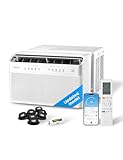
Overview:
This ENERGY STAR-certified 10,000 BTU inverter AC cools spaces up to 450 sq. ft. Its standout U-shaped design redefines window AC functionality, prioritizing quiet operation (32 dBA), energy efficiency, and smart connectivity while enabling window openness during use.
What Makes It Stand Out:
The U-configuration uniquely allows windows to remain partially open for fresh air and unobstructed views, unlike conventional units. Its inverter technology delivers 35% energy savings versus non-inverter models and operates 10x quieter. Full Wi-Fi integration enables app control, scheduling, and voice commands via Alexa/Google Assistant, complemented by an anti-theft window lock.
Value for Money:
Priced higher than basic units, it justifies cost through significant long-term energy savings (35%+) and premium features. The ENERGY STAR certification and R32 refrigerant enhance eco-credentials. For frequent users in moderate climates, reduced electricity bills offset the initial investment faster than competitors.
Strengths and Weaknesses:
Strengths: Exceptionally quiet (32 dBA); window-open flexibility; robust smart features; substantial energy savings; secure installation. Weaknesses: Higher upfront cost; complex installation for non-standard windows; limited to 22"-36" widths; app reliability may vary.
Bottom Line:
Ideal for tech-savvy users prioritizing silence, energy efficiency, and fresh-air access in medium-sized rooms. Despite the premium price, its operational savings and unique design make it a top-tier choice for discerning buyers seeking modern comfort.
2. Amazon Basics 6000-BTU Window Air Conditioner, Up to 250 Sqf, Window AC Units with Cool and Fan Functions, Washable Filter, Adjustable Window Kit, Digital Temperature Display, Remote Control, White

Overview:
A no-frills 6,000 BTU unit designed for rooms up to 250 sq. ft., this Amazon Basics model delivers essential cooling with straightforward functionality. It targets budget-conscious buyers needing reliable, basic climate control for bedrooms or small offices.
What Makes It Stand Out:
Its value lies in simplicity and affordability. The washable filter promotes air quality maintenance, while the adjustable window kit ensures compatibility with standard windows (23"-36" wide). Digital temperature display and remote control add convenience rarely matched at this price point.
Value for Money:
Exceptional for entry-level buyers. It undercuts smart/inverter models significantly while covering core needs: effective cooling, basic fan modes, and easy filter access. The $200-$250 price range offers the lowest barrier to entry for functional window ACs in its class.
Strengths and Weaknesses:
Strengths: Very affordable; simple installation; washable filter; remote included; quiet enough (56 dB) for sleep. Weaknesses: No smart features or energy savings tech; higher noise than inverter models; limited cooling capacity; basic mechanical controls feel dated.
Bottom Line:
A solid, economical pick for small spaces where smart features and ultra-quiet operation aren’t priorities. Best for renters or infrequent users seeking dependable, low-cost cooling without advanced tech overhead.
3. Midea 8,000 BTU U Shaped Smart Inverter Window Air Conditioner - Cools 350 Sq Ft, Ultra Quiet with Open Window Flexibility - Alexa/Google Assistant Compatible - 37% Energy Savings, Remote (Updated)
Overview:
Midea’s 8,000 BTU U-shaped inverter AC cools up to 350 sq. ft. with a focus on near-silent operation (32 dBA) and energy conservation. It shares the innovative U-design of its siblings but is optimized for slightly smaller spaces, retaining all core smart and efficiency features.
What Makes It Stand Out:
The U-structure enables open-window ventilation and view preservation while cooling—a rarity in window ACs. Achieving 37% energy savings (exceeding competitors), it’s ENERGY STAR certified. Smart controls via app/voice and the anti-theft window lock enhance usability and security beyond typical models.
Value for Money:
Priced moderately above budget units, it excels for long-term use. The 37% energy reduction significantly lowers running costs, especially in extended cooling seasons. For 350 sq. ft. spaces, it’s more efficient than oversizing with a 10k BTU unit, maximizing cost-effectiveness.
Strengths and Weaknesses:
Strengths: Industry-leading quietness; window-open capability; exceptional energy efficiency; comprehensive smart integration; easy installation. Weaknesses: Premium cost; window size constraints (22"-36"); no physical thermostat; R32 refrigerant requires certified servicing.
Bottom Line:
The optimal balance for small-to-medium rooms needing whisper-quiet, efficient cooling with modern conveniences. Highly recommended for eco-conscious users wanting to save on bills without sacrificing comfort or fresh air access.
4. Midea 12,000 BTU U Shaped Smart Inverter Window Air Conditioner - Cools 550 Sq Ft, Ultra Quiet with Open Window Flexibility - Alexa/Google Assistant Compatible - 35% Energy Savings, Remote (Updated)
Overview:
This 12,000 BTU powerhouse cools spaces up to 550 sq. ft. while maintaining Midea’s signature U-shaped design benefits. It combines high-capacity performance with inverter-driven efficiency, targeting larger rooms where conventional ACs struggle with noise and energy use.
What Makes It Stand Out:
It scales the U-design’s advantages—window openness, 32 dBA quietness, and anti-theft security—to accommodate larger areas. The 35% energy savings (verified by ENERGY STAR) and smart controls (app/voice) prevent the high power draw typical of 12k BTU units, making it uniquely efficient for its class.
Value for Money:
Worth the investment for spacious areas. While pricier than non-inverter 12k BTU units, its energy savings offset costs faster, especially in hot climates. Avoids the inefficiency of running two smaller units, providing unified, powerful cooling without compromising on noise or features.
Strengths and Weaknesses:
Strengths: High cooling capacity with low noise; maintains window functionality; 35% energy reduction; robust smart ecosystem; clean filter indicator. Weaknesses: Heaviest model in the lineup; installation requires sturdy brackets; higher initial cost; limited to double/single-hung windows.
Bottom Line:
A premium solution for large rooms demanding powerful yet unobtrusive cooling. If you need to cool 450-550 sq. ft. efficiently and quietly, this is the definitive inverter upgrade over traditional window units.
5. Amazon Basics 5000-BTU Small Window Air Conditioner, Up to 150 Sqf, Window AC Units with Cool and Fan Functions, Washable Filter, Adjustable Window Kit, Intuitive Mechanical Controls, White

Overview:
This compact 5,000 BTU unit targets tiny spaces (up to 150 sq. ft.), like dorm rooms or home offices. It strips cooling down to essentials: basic temperature control, a washable filter, and simple installation, positioning itself as the most accessible entry point into window ACs.
What Makes It Stand Out:
Its extreme affordability and minimalist design cater to minimal cooling needs. The mechanical dials (no digital display) and lack of remote simplify operation for users avoiding tech complexity. The adjustable window kit and washable filter deliver core functionality without bells and whistles.
Value for Money:
Unbeatable for micro-spaces on a tight budget. At under $200, it’s ideal for short-term use or infrequent cooling needs. While lacking energy-saving tech, its low BTU rating inherently uses less power than larger models, keeping operational costs minimal despite no inverter efficiency.
Strengths and Weaknesses:
Strengths: Lowest price point; effortless setup; reliable for very small rooms; durable mechanical controls; washable filter included. Weaknesses: No remote or smart features; higher noise (56 dB) than inverter models; limited cooling capacity; basic air direction control.
Bottom Line:
Perfect for closets, tiny bedrooms, or temporary setups where cost and simplicity trump advanced features. Choose this only if your space is under 150 sq. ft. and you prioritize affordability over quietness or tech integration.
6. Smart 6000 BTU Window Air Conditioner with WiFi, Window AC Unit with Remote & App Control, Timer Function & Easy Install Kit, for Rooms Up to 350 Square Feet, 115V/60Hz, White

Overview: This smart 6000 BTU window AC unit targets small to medium rooms (up to 350 sq. ft.) with WiFi connectivity, app control via SmartHQ, and compatibility with Alexa and Google Assistant. It includes a remote, timer, sleep mode, and an easy-install kit for single or double-hung windows. Designed for bedrooms or apartments, it emphasizes quiet operation and multi-functionality. What Makes It Stand Out: Its standout feature is seamless smart integration, allowing remote temperature adjustments and monitoring via app from anywhere. The ultra-quiet 50 dB operation and adaptive sleep mode (gradually raising temp overnight) enhance comfort. The slide-out washable filter and triple functionality (cooling, dehumidification, 3-speed fan) add practical versatility. Value for Money: Priced mid-range, it justifies cost with robust smart features often found in pricier models. While competitors like LG cover smaller areas (250 sq. ft.), its claimed 350 sq. ft. capacity offers better coverage potential. The included install kit and energy-efficient operation further bolster value for tech-savvy users. Strengths and Weaknesses: Strengths: Excellent smart controls; very quiet; easy filter access; versatile modes; broad window compatibility. Weaknesses: 350 sq. ft. cooling claim may be optimistic in humid climates; app setup can occasionally glitch; sleep mode adjustments lack granular control. Bottom Line: A top pick for smart home enthusiasts seeking quiet, app-controlled cooling for medium rooms. Its balance of tech, usability, and solid performance makes it a worthwhile investment despite minor coverage overstatements.
7. LG 6000 BTU Window Air Conditioner[2024 New] Remote Control, WiFi Enabled works with LG ThinQ, Alexa, Hey Google, Washable Filer Ultra-Quiet Cools Small Room up to 250 Sq.Ft AC Unit White LW6024RSMX
![LG 6000 BTU Window Air Conditioner[2024 New] Remote Control, WiFi Enabled works with LG ThinQ, Alexa, Hey Google, Washable Filer Ultra-Quiet Cools Small Room up to 250 Sq.Ft AC Unit White LW6024RSMX](https://m.media-amazon.com/images/I/413TfrPt3wL._SL160_.jpg)
Overview: LG’s 2024 6000 BTU window AC is engineered for compact spaces up to 250 sq. ft., featuring WiFi via ThinQ app, voice control (Alexa/Google), and a user-friendly LCD panel. It includes a washable filter, remote, and EZ Mount kit, prioritizing ease of use for bedrooms or small offices. What Makes It Stand Out: The ThinQ app delivers reliable remote control and scheduling, while the intuitive physical interface simplifies adjustments without the app. Its Eco-friendly R32 refrigerant and “Check Filter” alert enhance sustainability and maintenance. The compact design fits narrower windows (21"-35" width). Value for Money: Competitive pricing for LG’s trusted build quality and smart integration. Though it cools a smaller area than some rivals (250 vs. 350 sq. ft.), the refined ThinQ ecosystem, R32 refrigerant efficiency, and included accessories justify the cost for reliability-focused buyers. Strengths and Weaknesses: Strengths: Seamless ThinQ app experience; excellent physical controls; R32 refrigerant is eco-friendly; straightforward installation; effective washable filter. Weaknesses: Limited to 250 sq. ft., less suitable for larger rooms; no sleep mode customization; voice control occasionally lags. Bottom Line: Ideal for those prioritizing brand reliability and a polished smart experience in small rooms. Its efficient operation and user-centric design offer strong value, though coverage is modest.
8. Windmill Window Air Conditioner - Quiet & Smart, Easy Install, Voice-Enabled, Remote & App Control AC Unit - 6,000 BTU

Overview: Windmill’s 6000 BTU AC unit focuses on quiet, efficient cooling for rooms up to 350 sq. ft., featuring app/voice control, a unique 45° airflow design, and tool-free installation. It targets users seeking minimalist setup and premium comfort without complex assembly. What Makes It Stand Out: The angled 45° airflow ensures wider, quieter room coverage, while double-insulating side panels minimize noise and energy loss. The dual-filtration system (washable mesh + optional carbon filter) and auto-dimming LEDs elevate air quality and ambiance. Pre-assembled installation is notably hassle-free. Value for Money: Positioned at a premium price, it delivers exceptional quietness and energy savings via insulation. The carbon filter add-on and robust app justify the cost for noise-sensitive environments. Though pricier than basic models, its efficiency gains offer long-term savings. Strengths and Weaknesses: Strengths: Industry-leading quiet operation; innovative airflow design; superb energy efficiency; effortless installation; dual-filter system. Weaknesses: Premium price; carbon filter sold separately; app interface less intuitive than LG’s. Bottom Line: Highly recommended for urban dwellers or light sleepers needing whisper-quiet, efficient cooling. The standout engineering warrants the investment for superior comfort.
9. Hisense 6,000 BTU Smart Inverter Window Air Conditioner, 3 modes (Cooling, Fan, Dehumidifier), Easy Installation,Ultra Quiet, 24.5% more Energy Saving, 2 Years Warranty

Overview: Hisense leverages inverter technology in this ENERGY STAR-certified 6000 BTU unit, promising 24.5% energy savings and quiet operation for rooms up to 250 sq. ft. It includes 3 modes, easy installation, and a 2-year warranty, targeting eco-conscious buyers. What Makes It Stand Out: The inverter compressor dynamically adjusts power (unlike standard units), enabling precise temperature control, near-silent running, and significant energy reduction. ENERGY STAR certification validates efficiency claims, while the 2-year warranty exceeds industry norms. Value for Money: Excellent value due to inverter efficiency lowering long-term electricity costs. The 24.5% savings claim is credible per ENERGY STAR data, making it cheaper to run than non-inverter rivals. Warranty coverage adds peace of mind at a reasonable upfront cost. Strengths and Weaknesses: Strengths: Substantial energy savings; very quiet; reliable temperature stability; strong warranty; simple maintenance. Weaknesses: Covers only 250 sq. ft.; lacks advanced smart features (WiFi/app); basic remote control. Bottom Line: A stellar choice for budget-savvy users prioritizing low running costs and reliability over smart tech. Its efficiency and warranty make it a practical, future-proof investment.
10. Midea 5,000 BTU 150 Sq ft Mechanical Window Air Conditioner, Black (Renewed)

Overview: This renewed Midea 5000 BTU unit is a budget-friendly mechanical AC for very small spaces (up to 150 sq. ft.), featuring manual dials, 2 cooling modes, 2 fan speeds, and basic temperature settings. It targets cost-conscious buyers needing simple, no-frills cooling. What Makes It Stand Out: As a renewed product, it offers significant savings over new units while undergoing refurbishment for functionality. Its mechanical controls (no electronics) ensure reliability and ease of use, with wide window compatibility (23"-36" width). Value for Money: Exceptional value for ultra-tight budgets or temporary use. Renewed pricing undercuts new models by 30-50%, though BTU and features are scaled down. Ideal for closets, tiny studios, or as a secondary unit where smart tech isn’t needed. Strengths and Weaknesses: Strengths: Very affordable; durable mechanical controls; simple installation; low purchase risk due to renewal process. Weaknesses: Limited to 150 sq. ft.; no remote/app/smart features; higher noise levels; shorter lifespan than new units. Bottom Line: A pragmatic solution for cooling minuscule spaces economically. Best suited for renters or supplemental use where advanced features are unnecessary—prioritize it only for strict budget constraints.
Understanding the Premium Smart Window AC Landscape
The term “premium” in the smart window AC market signifies far more than just a higher price tag. It encompasses a holistic upgrade in build quality, technological sophistication, energy efficiency, and user experience. These units are engineered with better components for quieter operation, longer lifespan, and more precise temperature control. Crucially, they leverage robust connectivity and intelligent software to move beyond simple on/off functionality, offering features that actively enhance comfort and efficiency in ways traditional units simply cannot match. Recognizing this distinction is vital for evaluating whether the investment aligns with your expectations for performance and integration.
Defining True Premium Features
Not all “smart” ACs are created equal, especially at the premium tier. True premium features go beyond basic Wi-Fi connectivity. Look for units boasting advanced inverter technology for significantly quieter operation and finer temperature adjustments, multi-stage filtration systems (beyond basic dust filters) targeting allergens and odors, and exceptionally low decibel ratings even on high settings. Premium models often feature superior insulation within the unit casing itself, minimizing heat exchange with the room and boosting overall efficiency. Build quality, using heavier-duty materials for the chassis and window kit, also contributes to longevity and reduced vibration noise.
Why Connectivity Matters Beyond Remote Control
Basic remote control via an app is table stakes. Premium smart ACs leverage connectivity for deeper intelligence. This includes the ability to receive and apply firmware updates that add new features or improve performance over time – a significant advantage over non-updatable models. Sophisticated units can integrate weather forecasts directly, pre-cooling your space before a predicted heat spike or adjusting settings based on expected humidity levels. They might also learn your usage patterns over weeks to suggest optimized schedules or automatically adjust based on occupancy detection from other smart home sensors, moving beyond simple timer functions to true adaptive cooling.
Core Smart Features to Evaluate
When diving into premium options, understanding the specific smart capabilities is paramount. These features form the backbone of the enhanced user experience and potential efficiency gains that justify the higher cost. It’s not just about having the feature, but how well it’s implemented – the reliability of the connection, the intuitiveness of the interface, and the depth of control it offers.
Advanced Connectivity Options
Reliable, robust connectivity is non-negotiable. Premium units typically support dual-band Wi-Fi (2.4GHz and 5GHz), ensuring stable connection even on crowded home networks – a common pitfall with cheaper models that often only support slower 2.4GHz. Some high-end models might even incorporate Bluetooth for initial setup or local control when Wi-Fi is down, adding a layer of resilience. Crucially, evaluate the stability of the companion app; frequent disconnects or laggy responses undermine the entire smart premise. Look for units known for consistent cloud connectivity and responsive app performance.
Comprehensive Control Methods
True premium control offers flexibility. While the dedicated mobile app is essential, the best units provide multiple seamless avenues: reliable voice control integration with major platforms (detailed below), physical touch controls on the unit that are intuitive and well-lit, and potentially even limited control via a basic IR remote for situations where your phone isn’t handy. The key is that all control methods feel equally capable and responsive, without one being a stripped-down version of another. The ability to create complex automations within the app (e.g., “If outdoor temp > 85°F and no motion detected for 30 mins, raise setpoint by 2°”) is a hallmark of premium control depth.
Voice Assistant Integration Depth
Compatibility with Amazon Alexa, Google Assistant, and sometimes Apple HomeKit/Siri is standard, but premium units offer meaningful integration. This means going beyond simple “turn on/off” commands. Look for models that allow full voice control of temperature, fan speed, mode (cool, fan, dry), and even specific features like sleep mode or swing settings. The best integrations respond accurately to natural language requests (“Alexa, make the bedroom cooler”) and provide clear voice feedback confirming the adjustment. Deep HomeKit integration also enables seamless inclusion in complex Apple Home automations and scenes.
Installation and Compatibility Considerations
Even the smartest AC is useless if it doesn’t fit your window properly or integrates poorly with your existing home ecosystem. Premium units often come with more refined installation kits, but careful measurement and understanding compatibility requirements are still critical steps that shouldn’t be overlooked in the excitement of the tech features.
Precise Sizing and Window Fit
Smart features don’t compensate for incorrect sizing. An oversized unit will short-cycle, wasting energy and failing to dehumidify properly; an undersized one will run constantly, struggling to cool. Calculate your room’s BTU needs accurately, factoring in sun exposure, ceiling height, and occupancy. Premium units often have slightly different dimensions than standard models, so meticulously measure your window opening’s width and height (including the depth of the sill). Don’t forget to check the required clearance above, below, and on the sides as specified in the manual – premium units might have unique venting or drainage needs. A perfect fit ensures efficiency, quiet operation, and prevents warm air infiltration.
Smart Home Ecosystem Compatibility
Before purchasing, verify exactly which platforms the unit supports. While Alexa and Google Assistant are common, deep Apple HomeKit (requiring a HomeKit-specific hardware chip) is less universal but crucial for Apple-centric homes. Check if the unit requires a separate hub (less common for window ACs now, but still a factor for some premium brands) or connects directly to your Wi-Fi. Investigate compatibility with your existing smart home automation system (like Samsung SmartThings or Hubitat) if you use one – some units offer better integration than others. Ensure the companion app is available for your mobile OS (iOS/Android) and has good reviews regarding stability.
Professional Installation vs. DIY
While window ACs are generally DIY-friendly, premium units with complex smart features or unique mounting requirements might benefit from professional installation, especially if you’re unfamiliar with electrical requirements or securing heavy units safely. Some premium brands offer optional professional installation services. Consider the complexity of your window setup (e.g., awkward sill depth, heavy security bars) and your own comfort level. Improper installation can lead to air leaks (killing efficiency), water drainage issues, or even safety hazards, negating the benefits of the smart features. Factor potential installation costs into your overall investment calculation.
Energy Efficiency and Cost Analysis
The allure of smart features is strong, but the real long-term value of a premium smart window AC often lies in its potential for significant energy savings. Understanding the energy dynamics is crucial for justifying the higher initial cost and realizing the true return on investment.
Decoding Energy Efficiency Metrics
Beyond the basic EER (Energy Efficiency Ratio) or CEER (Combined Energy Efficiency Ratio) ratings mandated by regulators, premium units often leverage smart technology to achieve real-world efficiency gains. Inverter-driven compressors (common in premium models) are inherently more efficient than traditional single-speed compressors, especially during partial-load conditions (which is most of the time). Smart features like geofencing (turning off when you leave) or learning algorithms that optimize run times based on your habits can slash wasted energy. Look for ENERGY STAR certification as a baseline, but understand that the smart management enabled by the unit is where substantial additional savings often occur.
Calculating the True Return on Investment
Don’t just look at the sticker price difference between a standard unit and a premium smart model. Factor in potential annual energy savings – even a 10-20% reduction can add up significantly over the unit’s lifespan (often 8-15 years for a premium build). Consider the value of convenience and comfort: avoiding coming home to a sauna, the ability to pre-cool only when needed, or reducing nighttime noise for better sleep have tangible quality-of-life benefits. Also, weigh the potential longevity of a better-built premium unit against replacing a cheaper model more frequently. A detailed ROI calculation, considering your local electricity rates and typical cooling season length, provides a much clearer picture of “worth it” than the initial price alone.
Smart Features That Directly Save Energy
Certain smart features are proven energy savers. Geofencing is highly effective, automatically adjusting or turning off the unit when your smartphone leaves a predefined area, eliminating cooling an empty house. Scheduling based on occupancy patterns (learned or manually set) ensures cooling only happens when needed. Integration with smart thermostats or sensors can enable “setback” strategies – slightly raising the temperature when you’re asleep or away without sacrificing comfort upon return. Some premium units even provide detailed energy usage reports within the app, helping you identify usage patterns and further optimize settings for maximum savings.
User Experience and Daily Interaction
The premium promise extends deeply into how you interact with the unit day-to-day. It’s about intuitive interfaces, reliable performance, and features that genuinely simplify your life, not add complexity. The best smart ACs fade into the background, working seamlessly to maintain comfort without demanding constant attention.
App Interface Design and Usability
The companion app is your primary control hub, so its design is critical. A premium experience means a clean, logical layout with essential controls (temp, mode, fan speed) immediately accessible, not buried in menus. Look for apps that offer clear visual feedback (e.g., color-coded temperature, intuitive icons), responsive controls with minimal lag, and customizable home screens or shortcuts. Features like quick access to favorite settings, easy scheduling, and clear visibility of the unit’s current state (on/off, mode, temp) are hallmarks of a well-designed app. Avoid apps known for crashes, confusing navigation, or requiring constant re-logins.
Automation and Routine Building Capabilities
The true power of smart home tech lies in automation. Premium AC apps excel at letting you create sophisticated, reliable routines. Think beyond simple schedules: “On weekdays, cool the living room to 74°F starting 30 minutes before my alarm, lower to 72°F at 7 AM, and switch to fan-only mode at 9 AM.” Or, “If the bedroom sensor detects motion after 10 PM, activate sleep mode and reduce fan speed.” The ability to trigger AC actions based on other smart devices (e.g., “When my smart lock unlocks after 6 PM, turn on the AC”) elevates convenience. Test the automation builder in the app – it should be flexible yet user-friendly.
Noise Levels and Quiet Operation Modes
Even smart features can’t compensate for a noisy unit disrupting sleep or work. Premium models invest heavily in noise reduction: higher-quality compressors (especially inverter types), improved fan blade design, better internal insulation, and vibration-dampening mounts. Pay close attention to the decibel (dB) ratings, particularly the low-setting or “sleep mode” noise level. Premium units often have dedicated ultra-quiet modes that sacrifice minimal cooling power for significantly reduced sound, often dipping below 45-50 dB – crucial for bedrooms or home offices. Don’t rely solely on manufacturer claims; seek out independent reviews focusing on real-world noise performance.
Security and Privacy Implications
Connecting any device to your home network introduces potential security considerations. Premium smart ACs, handling significant energy loads and connected to your personal space, warrant careful attention to data practices and security robustness. Reputable premium brands prioritize this aspect as part of their value proposition.
Data Collection and Transparency
Understand what data the unit and its app collect. Basic operational data (usage time, temperature settings, error codes) is standard for functionality and diagnostics. Premium brands should be transparent in their privacy policy about what is collected, how it’s used (e.g., for improving features, anonymized aggregate data), and crucially, who it’s shared with (if anyone beyond necessary service providers). Be wary of vague policies. Look for brands that explicitly state they do not sell your personal usage data to third parties for advertising. Options to disable non-essential data collection within the app settings are a plus.
Network Security Best Practices
Your home network security is the first line of defense. Ensure your Wi-Fi network uses a strong, unique password (WPA2/WPA3 encryption). Consider placing smart home devices, including your AC, on a separate guest or IoT network VLAN if your router supports it – this isolates them from your main devices (computers, phones) containing sensitive data. Regularly update your router’s firmware. Choose an AC brand known for promptly releasing security patches for both the unit’s firmware and the companion app. Avoid units that lack a clear path for security updates.
Firmware Update Reliability
Regular, seamless firmware updates are critical for patching security vulnerabilities and sometimes adding new features. Premium smart ACs distinguish themselves by having a reliable over-the-air (OTA) update process that happens automatically or with minimal user intervention. Check reviews for mentions of update frequency and reliability. Units that require manual updates via USB or have infrequent/stalled updates pose a greater security risk over time. A brand’s commitment to long-term software support is a key indicator of a worthwhile premium investment.
Future-Proofing Your Investment
Technology evolves rapidly. A premium smart AC should offer more than just current features; it should have the potential to stay relevant and functional for years to come, adapting to new standards and integrations as they emerge.
Long-Term Software Support Commitment
This is arguably the most crucial aspect of future-proofing. Investigate the manufacturer’s track record. How long do they typically provide firmware and app updates for their devices? Do they clearly communicate end-of-life support dates? Premium brands often commit to longer support cycles (e.g., 5+ years) compared to budget brands that might abandon a model after 1-2 years. Look for brands that actively develop their app and add features for existing hardware – a sign they view the product as a platform, not just a one-time sale. Check community forums for user experiences with long-term support.
Adapting to Evolving Smart Home Standards
The smart home landscape is dynamic. Premium units are more likely to adopt emerging standards like Matter (over Thread or Wi-Fi), which promises greater cross-platform compatibility and local control resilience (reducing reliance on the cloud). While full Matter support in window ACs is still emerging, brands investing in future-proofing will likely provide upgrade paths or newer models compatible with these standards. Consider how easily the unit might integrate with next-generation hubs or voice assistants. Flexibility in connectivity protocols (like supporting both current and upcoming standards) enhances longevity.
Hardware Longevity and Serviceability
Premium build quality directly impacts how long the physical unit lasts. Higher-grade components (compressors, fans, capacitors) and better construction resist wear and tear from constant operation in harsh conditions (heat, moisture, vibration). Consider the availability of replacement parts and authorized service centers, though window AC repairs are often challenging. Some premium brands offer longer warranties (3-5 years on the compressor, for example) as a testament to their confidence in durability. A unit that physically lasts 10-15 years, coupled with ongoing software support, maximizes your return on the initial premium investment.
Frequently Asked Questions
Frequently Asked Questions
Is a premium smart window AC significantly more expensive to install than a standard model? Installation costs are generally similar, as the physical mounting process is comparable. The primary cost difference is the unit’s purchase price. However, complex window situations or opting for professional installation (which some premium brands facilitate) could add minor extra costs, but the unit itself is the main investment.
Can I control the smart AC when I’m not at home? Yes, remote control via the companion smartphone app is a fundamental feature of all smart window ACs, including premium models. This requires the unit to be connected to your home Wi-Fi and the app to be logged into your account. Reliable remote access is a core expectation.
Do I need a separate hub or bridge for these units to work? Most modern premium smart window air conditioners connect directly to your home Wi-Fi network (2.4GHz or dual-band) and do not require a separate hub. Always verify the specific connectivity requirements of the model you’re considering, but direct Wi-Fi is the standard for this category.
How much more energy efficient are premium smart models compared to standard ones? While EER/CEER ratings provide a baseline, the smart features (geofencing, learning schedules, precise inverter control) in premium models often yield 10-25% real-world energy savings compared to non-inverter standard units of similar cooling capacity, by reducing runtime and optimizing operation. Actual savings depend heavily on usage patterns.
Are the smart features reliable, or do they often disconnect? Reliability varies significantly by brand and model. Premium units generally invest in better Wi-Fi modules and more stable software. Look for models with strong reviews specifically mentioning consistent connectivity and app stability. Dual-band Wi-Fi support often improves reliability on congested networks.
Can I use voice control without keeping my phone nearby? Yes, if the unit integrates with voice assistants like Amazon Alexa or Google Assistant, you can control it using voice commands through compatible smart speakers or displays located in your home, independent of your phone’s presence (as long as your home network and the voice assistant service are online).
Will the unit still work if my internet goes down? Basic operation (on/off, temperature adjustment via the physical controls on the unit itself) will usually function. However, smart features like remote control via the app, voice control, geofencing, and scheduling reliant on the cloud will be unavailable until your internet connection is restored. Some high-end models with local processing might retain limited scheduling.
How secure are these smart ACs from hackers? Security depends on the manufacturer. Reputable premium brands prioritize security with regular firmware updates, secure communication protocols, and transparent privacy policies. You can enhance security by using strong Wi-Fi passwords, keeping your router updated, and placing the AC on a separate IoT network if possible.
Do premium smart ACs cool faster than standard models? Cooling speed (BTU output) is primarily determined by the unit’s size (BTU rating) relative to the room, not inherently by its smart features. However, premium models often use inverter technology that can ramp up to maximum cooling faster initially and then modulate down, feeling more responsive than single-speed standard units that just cycle on/off at full blast.
Is the higher upfront cost justified for most homeowners? It depends on your priorities. If you value convenience, remote management, potential energy savings, deeper smart home integration, quieter operation, and longer lifespan, the premium cost is often justified, especially for primary living spaces or bedrooms used frequently. For occasional use in a guest room, a standard model might suffice. Calculate potential energy savings against the price difference for your specific situation.
See Also
- 10 Premium Smart Wall Air Conditioners for Tech-Savvy Homes (Worth the Investment)
- 10 Premium Smart Portable Air Conditioners for Tech-Savvy Homes (Worth the Investment)
- 10 Best Premium Window Air Conditioners (Worth the Investment) for Luxury Homes in 2026
- 10 Premium Ductless Mini Split Air Conditioners for Luxury Homes (Worth the Investment)
- 10 Premium Wall Mounted Air Conditioners for Luxury Homes (Worth the Investment)