Table of Contents
Traveling should be about adventure, not shivering through sleepless nights in unexpectedly chilly accommodations. Whether you’re navigating the damp chill of a European hostel in spring, dealing with an overzealous hotel air conditioner in the tropics, or working remotely from a cabin with unreliable heating, the right portable solution can transform discomfort into cozy contentment. For frequent flyers, road trippers, and digital nomads, a compact heater isn’t just a luxury—it’s a critical tool for maintaining comfort and productivity wherever the journey takes you, turning any temporary space into a sanctuary against the cold.
Yet, the market is flooded with options that promise warmth but often fall short on portability, safety, or genuine effectiveness. Many travelers have learned the hard way that a bulky, power-hungry device is useless in a cramped airplane seat or a hotel room with limited outlets. Investing in the wrong heater can mean wasted money, added luggage stress, or worse—compromised safety in an unfamiliar environment. Understanding the specific features that truly matter for life on the move separates a worthwhile investment from an expensive paperweight. Let’s cut through the noise and focus on what actually delivers reliable, safe warmth when you’re far from home.
Top 10 Portable Fan Heaters for Travelers
Detailed Product Reviews
1. TAYAMA Portable Dual Fan Heater with 2 Heat Setting and Cool Fan Function

Overview: The TAYAMA Portable Dual Fan Heater is a compact, budget-friendly solution for personal space heating and cooling. Designed for small rooms or targeted warmth, it combines dual heat settings with a fan function in a lightweight unit featuring a carry handle. Its straightforward operation targets users needing quick, localized temperature control without complex features.
What Makes It Stand Out: Its space-saving vertical/horizontal dual-position design allows flexible placement on desks, floors, or shelves, adapting to tight spaces where bulkier units won’t fit. The intuitive thermostat with three distinct settings (High/Low heat + fan) ensures effortless seasonal transitions, while the auto-shutoff safety system provides essential peace of mind.
Value for Money: Priced affordably, it outperforms no-name brands in reliability and build quality. Though lacking premium extras like precise thermostats or remotes, it delivers core functionality reliably—ideal for renters, dorms, or supplemental heating where splurging isn’t justified.
Strengths and Weaknesses: Strengths: Extremely portable with a sturdy handle; quiet fan mode; responsive overheat protection. Weaknesses: Basic analog controls lack temperature precision; plastic build feels less durable than pricier models; no tip-over protection.
Bottom Line: A no-frills, functional heater/fan combo perfect for cost-conscious buyers needing basic supplemental warmth or airflow. Avoid if you require advanced safety or precision—otherwise, excellent value for small spaces.
2. shinic Desk Fan and Heater Combo, Portable Cooling Air Circulator Fan, Tip-Over & Overheat Protection, Turbo Fan Space Heater Combo for Indoor Use Office, Bedroom, Living Room, ETL Listed

Overview: The shinic Desk Fan and Heater Combo merges year-round versatility with robust safety in a sleek, ETL-listed package. Engineered for bedrooms, offices, or compact living areas, it offers three modes (high/low heat + fan) in a lightweight, portable design prioritizing user safety and quiet operation.
What Makes It Stand Out: ETL certification combined with tip-over and overheat protection sets a high safety benchmark, especially for homes with children or pets. Its ultra-quiet operation (under 40dB) and consistent airflow make it ideal for sleep or focused work, while the compact footprint fits neatly on desks or nightstands without dominating space.
Value for Money: Competitive pricing justifies its premium safety features and reliable performance. Though not the cheapest, it surpasses budget models in durability and noise reduction, offering better long-term value than disposable alternatives for frequent indoor use.
Strengths and Weaknesses: Strengths: Exceptional safety certifications; whisper-quiet even on high heat; intuitive controls; versatile room compatibility. Weaknesses: Limited thermostat precision (no exact temp display); cord length could be longer for larger rooms.
Bottom Line: Highly recommended for safety-focused users needing a dependable, unobtrusive heater/fan. Its ETL backing and quiet operation make it a standout for bedrooms or offices—skip only if you demand granular temperature control.
3. BLACK+DECKER Portable Space Heater, 1500W Room Space Heater with Carry Handle for Easy Transport

Overview: This BLACK+DECKER heater epitomizes no-nonsense portability and reliability. Weighing just 2.8 lbs with a carry handle, it’s optimized for moving between rooms, desks, or workspaces like garages and RVs. Its simple trio of settings (high/low heat + fan) caters to users prioritizing ease of use over advanced tech.
What Makes It Stand Out: The featherlight design and ergonomic handle make it arguably the most portable unit here, ideal for frequent relocation. Backed by BLACK+DECKER’s brand reputation and a 1-year warranty, it promises durability often missing in ultra-cheap heaters, while overheat and tip-over shutoffs cover critical safety basics.
Value for Money: Excellent value for its price point, leveraging brand trust to avoid the “too good to be true” pitfalls of unknowns. It won’t match premium models in features, but for under $30, it’s a trustworthy workhorse for spot heating.
Strengths and Weaknesses: Strengths: Unbeatable portability; reliable brand warranty; effective auto-shutoff safety; versatile tabletop/floor use. Weaknesses: Minimalist design lacks thermostat precision; fan mode is noisier than competitors; basic aesthetics.
Bottom Line: A top pick for renters, students, or anyone needing a sturdy, ultra-portable heater to tote between rooms. Choose it for simplicity and mobility—but expect zero frills.
4. GiveBest Portable Electric Space Heater with Thermostat, 1500W/750W Safe and Quiet Ceramic Heater Fan, Heat Up 200 Square Feet for Office Room Desk Indoor Use, Silver

Overview: The GiveBest Ceramic Heater targets quiet, efficient warmth for rooms up to 200 sq. ft., blending safety-focused engineering with user-friendly features. Its ceramic PTC tech promises fast heating, while multi-layered protections aim to alleviate common space heater safety concerns in homes or offices.
What Makes It Stand Out: Remarkable near-silent operation (ideal for bedrooms) and V0 flame-retardant housing elevate it above budget rivals. The auto-thermostat maintains set temps without manual tweaks, and the loud tip-over alert (with auto-resume) adds unique safety feedback—critical for households with pets or kids.
Value for Money: Priced mid-range, it justifies cost through superior noise reduction and robust safety. Cheaper models often sacrifice quietness or protection depth, making this a smarter investment for nightly use where disturbance or risk is unacceptable.
Strengths and Weaknesses: Strengths: Exceptionally quiet; heats spaces rapidly; comprehensive safety suite; durable ABS build. Weaknesses: Silver finish shows fingerprints easily; remote control absent; limited tilt adjustment.
Bottom Line: Best for light sleepers or safety-conscious buyers needing whisper-quiet, reliable warmth. Worth the slight premium over barebones models—avoid only if you require remote access or extensive room coverage.
5. Dreo Space Heater 1500W, 60° Adjustable Tilt, 10.5ft/s Portable Electric Heaters for Indoor Use with Thermostat, 8 Safety Protections, 3 Modes, Remote, Quiet Desk Heater for Bedroom, Office, Black

Overview: Dreo’s premium heater merges cutting-edge tech with meticulous safety for a luxury heating experience. Boasting hyper-fast warmth, smartphone-grade temperature precision, and an included remote, it’s engineered for users who demand control, speed, and silence in bedrooms or home offices.
What Makes It Stand Out: The standout Hyperamics heating tech delivers warmth in 2 seconds—53.9% faster than standard units—while the 60° vertical tilt ensures even full-body coverage. The 34dB noise level (near library-quiet) and precise 1°F thermostat increments via NTC chipset set new standards for comfort and efficiency.
Value for Money: Pricier but justified by unmatched speed, quietness, and 8-layer safety (ETL-certified). Competitors rarely offer remotes or granular climate control at this noise level, making it a worthwhile splurge for discerning users prioritizing performance.
Strengths and Weaknesses: Strengths: Blazing-fast heating; exceptionally quiet; precise thermostat; versatile tilt; remote control convenience. Weaknesses: Higher cost than entry models; compact size limits heating range to small/medium rooms.
Bottom Line: The definitive choice for tech-savvy buyers seeking premium comfort. If budget allows, it’s the best overall heater here—ideal for bedrooms or offices where silence and speed matter most.
6. Comfort Zone Personal Space Heater, 750/1500W Fan-Forced Electric Heater, Adjustable Thermostat, Tip-Over & Overheat Protection, Cool-Touch, Portable Indoor Heater for Home & Office
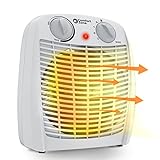
Overview: The Comfort Zone Personal Space Heater is a reliable, safety-focused electric heater designed for efficient spot heating in small personal spaces like desks, dorms, or home offices. Its fan-forced system delivers targeted warmth without complex setup. What Makes It Stand Out: Its standout feature is the Energy Save technology, which reportedly cuts energy use by up to 30% while maintaining heat output—a rare focus on efficiency in budget heaters. The dual heat settings (750W/1500W) and fan-only mode add year-round versatility, while robust safety features (tip-over switch, overheat protection, cool-touch housing) make it exceptionally child- and pet-friendly. Value for Money: Priced competitively, it offers excellent value for users prioritizing safety and energy savings over smart features. It undercuts premium models while matching core functionality, though alternatives with remotes or digital controls cost more. Strengths and Weaknesses: Strengths: Energy-efficient operation; intuitive controls; excellent safety suite; quiet fan-forced heat. Weaknesses: Lacks thermostat precision (basic dial only); no timer or remote; limited to small areas (under 150 sq ft). Bottom Line: A top choice for safety-conscious buyers seeking efficient, no-fuss warmth in compact spaces. Avoid if you need advanced climate control or whole-room heating.
7. Portable Electric Space Heater Cooling Desk Fan 2 in 1 Heater Fan Combo with 45° Tilt, 2 Wind Speeds, 1500W Overheat Protection Personal Small Heater for Home Office

Overview: This compact 2-in-1 unit merges a personal heater and desk fan into a single portable device, targeting users needing seasonal adaptability for desks, nightstands, or tiny rooms. Its simplicity caters to all ages. What Makes It Stand Out: The seamless transition between heating and cooling via a single knob is uniquely user-friendly—red for heat, blue for fan—eliminating confusing buttons. The 45° tilt adjusts airflow direction, while the integrated handle ensures easy portability across rooms. Value for Money: It delivers strong value as a dual-purpose tool, replacing two separate devices. Priced modestly, it’s ideal for budget buyers who prioritize functionality over quietness or precision; competitors with thermostats cost 20-30% more. Strengths and Weaknesses: Strengths: Effortless one-knob operation; space-saving 2-in-1 design; portable with handle; adequate safety features. Weaknesses: Fan-only mode lacks thermostat control; limited tilt range; heater noise noticeable at high setting; no timer. Bottom Line: Highly recommended for students or office workers wanting versatile, fuss-free temperature control on a budget. Skip if you need silent operation or automated temperature maintenance.
8. Techni Home Dual Comfort 2-in-1 1500W Space Heater & Fan, Portable, Energy Efficient Electric Heater or Fan with Adjustable Tilt for Indoor Use, Compact Personal Heater for Home and Office
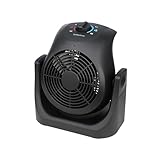
Overview: The Techni Home Dual Comfort is a streamlined 2-in-1 heater and fan built for personal use in tight spaces. It emphasizes speed and simplicity with minimal controls and a focus on portability. What Makes It Stand Out: Its standout trait is rapid dual-mode performance: 1500W heating warms rooms quickly, while four fan blades provide robust airflow. The top-mounted dial offers instant switching between two heat/fan settings, and the compact size fits snugly on shelves or desks. Value for Money: Excellent value for basic dual functionality at an entry-level price. It matches pricier models in core heating power but skips extras like remotes or digital displays, making it a smart pick for cost-conscious buyers needing reliability. Strengths and Weaknesses: Strengths: Fast heating/cooling; ultra-compact footprint; lightweight with carry handle; simple dial operation. Weaknesses: No thermostat (only manual settings); limited to personal spaces; fan mode lacks cooling precision; basic safety suite (no mention of auto-shutoff details). Bottom Line: A dependable, affordable 2-in-1 solution for small-area comfort. Choose this over feature-heavy models if you prefer straightforward operation and portability.
9. DREO Space Heater, Portable Electric Heaters for Indoor Use with Thermostat and Remote, 2024 Upgraded, Digital Display, 12H Timer, 5 Mode, 1500W PTC Ceramic Fast Safety Heat for Office Bedroom Home

Overview: DREO’s premium space heater blends advanced tech with safety, targeting users who want precise, quiet, and customizable heating for bedrooms or offices. Its 2024 upgrades focus on smart control and performance. What Makes It Stand Out: The Hyperamics PTC system pushes heat 200% farther than competitors, while the ultra-quiet 34dB operation (near-silent for sleep) is unmatched. The remote, 1°F thermostat precision, 12H timer, and ECO mode offer luxury-level convenience rarely seen at this price. Value for Money: Justifies its higher cost with exceptional features: the NTC chipset saves energy via precise temps, and ETL-certified “unbreakable” safety (V0 materials, enhanced tip-over sensor) adds peace of mind. Beats mid-range models in tech and efficiency. Strengths and Weaknesses: Strengths: Whisper-quiet performance; exceptional thermostat range (41–95°F); comprehensive safety; useful extras (remote, child lock, memory). Weaknesses: Digital display may disturb light-sensitive sleepers; premium price; bulkier than mini heaters. Bottom Line: The best investment for tech-savvy users wanting silent, precise, and safe heating. Worth every penny for bedrooms or quiet offices despite the cost.
10. Kismile Small Electric Space Heater,Portable Ceramic Space Heater Fan for Office with Adjustable Thermostat and Overheat Protection ETL Listed for Kitchen, 750W/1500W(Silver)

Overview: Kismile’s ultra-compact ceramic heater targets micro-spaces like under desks or kitchen counters. Its petite size (7.3" x 5.3" x 9.5") and quick-heating PTC tech prioritize portability for office or personal use. What Makes It Stand Out: The standout feature is its remarkably small footprint—among the most space-saving heaters tested—without sacrificing 1500W power. Ceramic elements heat in 2 seconds, and the ETL-listed safety suite (tip-over, overheat protection) fits snugly in tight spots. Value for Money: Outstanding value for size-constrained needs. It’s competitively priced against larger models but excels where space is limited, like dorms or offices. No frills, but perfect for its niche; cheaper than DREO with similar core safety. Strengths and Weaknesses: Strengths: Extremely compact; rapid ceramic heating; clear power indicator; reliable safety certifications; fan-only mode. Weaknesses: Basic thermostat (no digital precision); no remote or timer; limited to very small areas; silver finish shows dust. Bottom Line: The go-to heater for cramped spaces where size matters most. Ideal for desks or nightstands but avoid for rooms over 100 sq ft.
Why Portability Matters More Than Raw Power for Travelers
When you’re constantly packing and unpacking, every ounce and cubic inch counts. A heater designed purely for home use, even a small one, often becomes an impractical burden on the road. The ideal travel companion prioritizes thoughtful engineering that balances heat output with minimal footprint and weight, ensuring it slips easily into a carry-on or daypack without dominating your limited space. It’s about strategic warmth, not brute force.
The Weight-to-Wattage Ratio Dilemma
Heaters need sufficient wattage to generate noticeable heat, but higher wattage usually means more weight. Travelers must find the sweet spot: enough power (typically 300-800 watts) to warm a small personal zone (like a hotel bed or desk area) without the unit becoming too heavy (ideally under 3 lbs / 1.4 kg). Prioritize efficiency—ceramic heating elements often provide better heat distribution per watt than basic coil heaters, allowing for lighter designs.
Compact Design Beyond Just Size
True portability involves more than small dimensions. Consider the shape and stowability. A cylindrical unit might fit better in a suitcase gap than a flat rectangular one. Look for integrated handles, foldable grilles, or nesting components that minimize bulk. Avoid models with large, fixed bases or protruding parts that snag or take up disproportionate space. The heater should complement your luggage, not dictate its packing.
Durability for the Road Warrior
Frequent travel means constant handling, drops, and temperature changes. Your heater needs a robust outer shell (like high-impact plastic or coated metal) that can withstand the rigors of transit without cracking or exposing internal components. Reinforced grilles protect the heating element from accidental impacts during packing or unpacking. Durability isn’t optional; it’s essential for longevity and safety on the move.
Non-Negotiable Safety Features for Confined Spaces
Using any heating appliance in a hotel room, RV, or temporary accommodation carries inherent risks that demand rigorous safety standards. Unlike at home, you lack familiarity with the space’s electrical system and fire hazards. Compromising on safety features is a gamble you simply cannot afford when traveling.
Automatic Tip-Over Protection: Your First Line of Defense
This isn’t just a nice-to-have; it’s mandatory. Any credible travel heater must instantly shut off power to the heating element if it gets accidentally knocked over—whether by a pet, a clumsy turn in bed, or during packing. Verify this feature is present and functions reliably; it prevents the unit from resting against flammable surfaces like bedding, curtains, or carpets, significantly reducing fire risk.
Overheat Prevention Systems
Continuous operation in a confined space, poor ventilation, or blocked air intake can cause dangerous overheating. A quality travel heater incorporates multiple thermal cutoffs (fuses or sensors) that permanently or temporarily disable the unit if internal temperatures exceed safe limits. This protects both the device and your surroundings, especially crucial in spaces where you might fall asleep with the heater running.
Cool-Touch Exterior: Essential for Shared Spaces
In tight quarters like hotel rooms or hostels, accidental contact with a hot surface is likely. A heater with a cool-touch exterior—where the outer casing remains safe to touch even during operation—is vital. This prevents burns, particularly important if traveling with children, sharing a room, or using the heater on a nightstand near your bed. Don’t assume; check product specifications explicitly.
Certification Marks: Your Safety Guarantee
Never purchase a portable heater without recognized safety certifications. Look for marks like UL (Underwriters Laboratories) in the US, ETL (Intertek), CSA (Canada), or CE (Europe). These indicate independent laboratory testing for electrical safety, fire resistance, and mechanical hazards. Counterfeit or uncertified heaters are a major fire hazard; certifications are your verification of minimum safety standards.
Understanding Power Sources and Real-World Limitations
Travelers face diverse electrical environments, from standard wall outlets to car sockets and even limited solar setups. Understanding the power realities of your destinations and the heater’s requirements is critical to avoid frustration and ensure it actually functions when you need it most.
Mains Power (AC) Compatibility: Voltage and Plug Types
Global travelers must confirm the heater works with the local voltage (e.g., 110-120V in North America/Japan, 220-240V in most of Europe/Asia). Many quality travel heaters are dual-voltage (100-240V), eliminating the need for heavy voltage converters. Crucially, check if it includes or requires a physical plug adapter for different outlet shapes—some dual-voltage heaters still have a fixed plug type. Never rely solely on a plug adapter for voltage conversion.
12V DC (Car Socket) Heating: Realistic Expectations
Heaters marketed for car use via the 12V socket offer convenience but have severe limitations. Standard car sockets rarely deliver more than 120-150 watts safely. This provides only very mild warmth, suitable perhaps for defrosting a windshield slightly or taking the edge off the chill near your feet on a short trip—not for heating a person or a room. Don’t expect meaningful personal warmth from a true 12V-only heater; it’s physics, not marketing.
Battery Operation: The Holy Grail (With Caveats)
Truly cordless, battery-powered heaters are rare and often underpowered due to the immense energy required for heating. If a model claims battery operation, scrutinize the runtime at usable heat levels. A unit promising “3 hours” on high heat likely delivers only faint warmth. Realistically, focus on mains or car power; battery operation is usually a supplementary feature for minimal warmth during brief outages, not primary heating.
Features That Enhance Usability on the Go
Beyond core heating and safety, thoughtful design elements significantly improve the travel experience. These features address specific pain points encountered when using a heater away from home, making operation smoother, quieter, and more adaptable to transient living.
Precise Heat Settings and Thermostats
A simple on/off switch is insufficient. Multiple heat settings (e.g., low, medium, high) allow you to match output to the environment and conserve energy. A basic thermostat (even a manual dial) is invaluable, letting the heater cycle on and off to maintain a desired temperature range, preventing overheating the room and saving power—critical when outlets are scarce.
Noise Levels: The Quiet Comfort Factor
Travelers often use heaters while sleeping or working. Excessive fan noise becomes a major annoyance. Look for models specifically designed for quiet operation, often achieved through optimized fan blade design and lower-speed settings. Check decibel (dB) ratings if available; below 40 dB is generally considered very quiet for close proximity use. A whisper-quiet heater is non-negotiable for restful nights.
Versatile Placement Options
Not every surface is level or ideal. A heater with a stable, non-slip base works on desks, nightstands, or the floor. Some models offer wall-mounting brackets (check compatibility with temporary spaces—don’t damage hotel walls!) or even secure placement in a car cup holder for targeted warmth while driving. Flexibility in positioning expands where you can effectively use it.
Navigating Hotel and Accommodation Restrictions
Many hotels, hostels, and short-term rentals explicitly prohibit personal heating appliances due to fire safety concerns. Ignoring these rules risks fines or eviction. Understanding the landscape and choosing a heater that minimizes perceived risk is part of responsible travel.
Why Policies Exist (and Why They’re Often Vague)
Hotels face liability for guest-caused fires. Policies banning space heaters are common but enforcement varies wildly—some properties ban all external heaters, while others might allow certified, low-wattage models. The ambiguity stems from inconsistent safety standards among consumer heaters. Your safest bet is to assume a ban exists unless explicitly confirmed otherwise by management in advance.
Choosing a “Policy-Friendly” Heater
If you must bring one, prioritize features that align with common hotel safety concerns: low wattage (under 800W), strong safety certifications (UL, ETL), automatic shut-offs, cool-touch housing, and a professional, non-threatening appearance (avoid anything that looks industrial or makeshift). A compact, certified ceramic heater is far less likely to raise alarms than a large, uncertified coil heater.
Realistic Heating Expectations for Personal Comfort
Managing expectations is key. Portable travel heaters are designed for personal or spot heating, not for warming entire rooms like a central heating system. Understanding their effective range prevents disappointment and promotes safe usage.
The Concept of Personal Zone Heating
Focus on warming your immediate vicinity—the space around your bed, your desk chair, or your seating area. Position the heater to direct warm air towards you, not to try and heat the entire hotel room. This targeted approach is vastly more energy-efficient and achievable with low-wattage portable units. Think of it as creating a warm bubble around yourself.
Environmental Factors That Impact Performance
Drafts from windows/doors, high ceilings, poor insulation (common in older hostels/hotels), and large room sizes dramatically reduce effectiveness. A heater that works well in a small, well-sealed Tokyo capsule hotel might struggle in a drafty European Airbnb bedroom. Layering clothing and using blankets in conjunction with the heater is essential for true comfort; the heater supplements, not replaces, personal insulation.
Maintenance and Care for Longevity on the Road
A heater subjected to constant travel needs simple upkeep to ensure continued safe and efficient operation. Dust and debris accumulation, common in transit, can impair performance and become a fire hazard if neglected.
Simple Cleaning Routines for Travelers
Before and after trips, gently vacuum or use compressed air to clear dust from intake and exhaust grilles. Wipe the exterior with a slightly damp cloth. Never use liquids directly on the heater or submerge any part. Pay special attention to the heating element housing (if accessible per manual); dust buildup here is a major fire risk. A quick 2-minute clean prevents major issues.
Proper Storage to Prevent Damage
Always ensure the heater is completely cool and dry before packing. Store it in a protective case or padded sleeve within your luggage to prevent impacts. Avoid placing heavy items on top. If it has a power cord, wrap it loosely—not tightly—to avoid damaging internal wires. Proper storage ensures it’s ready and safe for your next adventure.
The True Cost of Ownership: Beyond the Price Tag
Evaluating a travel heater solely on its purchase price is shortsighted. The real value lies in its durability, energy efficiency, safety record, and how well it solves your specific comfort problems over multiple trips.
Weighing Initial Cost Against Reliability
A slightly more expensive heater with robust construction, certified safety, and efficient heating will likely outlast several cheaper, flimsier alternatives that fail or become unsafe after a few uses. Factor in the potential cost of replacing a failed unit mid-trip or, worse, dealing with an incident. Reliability pays dividends in peace of mind and actual usage.
Energy Efficiency: Saving on More Than Just Watts
While electricity costs in hotels are usually absorbed by the property, a more efficient heater (e.g., ceramic vs. basic coil) reaches your desired comfort level faster and maintains it with less cycling, potentially reducing strain on older building wiring—a subtle but important consideration for safety and not tripping breakers.
Integrating Your Heater into Your Travel Ecosystem
The best travel heater seamlessly integrates with your existing gear and routines. Consider how it complements your power solutions, packing strategy, and overall comfort toolkit for a frictionless experience.
Power Strategy Synergy
If you already carry a high-capacity power bank for devices, check if it can safely power a compatible low-wattage heater (most standard power banks cannot; this requires specific high-wattage PD power banks, which are large and expensive). More realistically, ensure your heater’s plug type aligns with the universal travel adapter you already own, avoiding extra bulk.
Packing as Part of Your Comfort System
View the heater as one component of your travel comfort kit, alongside items like an eye mask, earplugs, or a travel pillow. Its compact size should allow it to nest within your luggage without displacing essential items. If it forces you to pack less clothing, that’s a net win for luggage space.
Frequently Asked Questions
Can I bring a portable heater on an airplane in my carry-on luggage?
Generally, no. Most airlines prohibit portable heaters (including personal fan heaters) in both carry-on and checked baggage due to fire risk from heating elements and lithium batteries (if applicable). Always check your specific airline’s dangerous goods policy before traveling, but assume it’s not permitted.
Are portable fan heaters safe to leave on overnight in a hotel room?
While models with robust safety features (tip-over switch, overheat protection, thermostat) can be designed for unattended use, most hotels explicitly prohibit space heaters and strongly advise against leaving any heating appliance unattended. It’s generally not recommended due to policy violations and residual risk; use them only while awake and present.
What’s the most important safety certification to look for?
For the US and Canadian markets, UL (Underwriters Laboratories) or ETL (Intertek) certification is the gold standard, indicating rigorous independent safety testing. In Europe, the CE mark is required, but look for additional marks like GS (Geprüfte Sicherheit) for enhanced testing. Never purchase a heater without recognized certification specific to your region.
Can a portable heater work with a standard car inverter?
Possibly, but with major caveats. Most standard car inverters (150-300W) can only safely power very low-wattage heaters (under 150W), which provide minimal warmth. Higher-wattage heaters (500W+) require a large, heavy-duty inverter (1000W+) connected directly to the car battery, draining it quickly and potentially damaging the vehicle’s electrical system. It’s often impractical.
How close can I place the heater to my bed or furniture?
Always follow the manufacturer’s minimum clearance distances, typically 3 feet (1 meter) from any combustible material like bedding, curtains, furniture, or walls. Never place it under a desk, inside a cabinet, or where fabrics could drape over it. Maintain ample space for airflow on all sides.
Do portable heaters work effectively in very large hotel rooms?
No. Portable travel heaters are designed for personal or spot heating in small, enclosed spaces (e.g., within a 5x5 ft / 1.5x1.5 m zone). They lack the power to significantly heat large rooms, especially those with drafts or poor insulation. Manage expectations: focus on warming your immediate sleeping or sitting area.
Are ceramic heaters significantly better than coil heaters for travel?
Ceramic heaters generally offer advantages: they heat up and cool down faster, provide more even convection heat (often quieter), and the ceramic element itself stays cooler than exposed metal coils, enhancing safety. They are typically more energy-efficient for the same perceived warmth, making them a preferred choice for portable applications.
Can I use my travel heater with a power strip or extension cord?
It’s strongly discouraged. Space heaters draw high current. Using them with undersized power strips, extension cords, or multi-plug adapters can overload the circuit, causing overheating, melting, or fire. Plug the heater directly into a wall outlet whenever possible. If absolutely necessary, use only a heavy-duty (14-gauge or thicker), short extension cord rated for the heater’s wattage.
Why do some travel heaters have oscillation, and is it useful?
Oscillation gently swivels the heater to distribute warm air over a wider area. While potentially useful in a small, static room at home, it’s often less critical for travel where you’re usually targeting a very specific spot (like your bed). It adds mechanical complexity (a potential failure point) and bulk. Prioritize core safety and portability over oscillation for travel.
How can I tell if my portable heater is using too much power and tripping a breaker?
Signs include the heater suddenly shutting off (not due to thermostat/tip-over), lights dimming when it turns on, a faint burning smell from the outlet, or the circuit breaker tripping/resetting frequently. If this happens, unplug the heater immediately. It likely exceeds the circuit’s capacity (common in older buildings), especially if other devices (hair dryer, kettle) are on the same circuit. Use it alone on a dedicated outlet.
See Also
- 10 Premium Portable Ceramic Heaters for Frequent Movers (Worth the Investment)
- 10 Premium Portable Space Heaters (Worth the Investment) in 2026
- 10 Premium Bathroom Fan Heaters (Worth the Investment) for Steamy Warmth
- 10 Premium Fan Heaters for Luxury Home Comfort (Worth the Investment)
- 10 Premium Portable Oil Heaters for Cold Climates (Worth the Investment)