Table of Contents
There’s nothing quite like stepping into your garage on a frigid winter morning only to be met with bone-chilling cold that makes even the simplest task feel monumental. Whether you’re a weekend warrior tackling automotive projects, a woodworker pursuing your craft, or simply need to protect your vehicles and tools from freezing temperatures, an unheated garage severely limits its potential. Premium electric garage heaters represent a game-changing solution that transforms this neglected space into a comfortable, year-round workshop or storage area.
Investing in a high-quality electric garage heater isn’t just about immediate comfort—it’s about long-term value, safety, and performance. While budget models might tempt you with lower upfront costs, premium heaters deliver superior efficiency, precise temperature control, robust safety features, and durability that justifies their investment many times over. This comprehensive guide explores what makes these advanced heating systems worth every penny, the key features that separate exceptional models from mediocre ones, and how to select the perfect solution for your specific garage setup without getting overwhelmed by technical jargon or marketing hype.
Top 10 Electric Garage Heaters
Detailed Product Reviews
1. Comfort Zone 10,000W Hard-Wired Garage Heater – Industrial & Commercial Ceiling Mount, 240V Fan-Forced Heater with Remote, Digital Thermostat, Timer, 2 Heat Settings, Overheat Protection, Grey

Overview: The Comfort Zone 10,000W Hard-Wired Garage Heater delivers industrial-strength heating for demanding workspaces. This fan-forced ceiling-mount unit produces substantial warmth for large garages, workshops, and commercial areas exceeding 1,000 square feet. Built with heavy-gauge steel, it’s engineered to withstand harsh conditions while providing consistent, widespread heat distribution and reliable performance.
What Makes It Stand Out: This unit distinguishes itself through robust 10,000-watt output combined with intelligent controls. The included remote, digital thermostat, and programmable timer offer convenience rarely found in industrial heaters. Adjustable louvers and mounting angles provide precise airflow direction, while the overheat protection sensor and power indicator light ensure safe operation during extended use.
Value for Money: Priced in the premium range, this heater justifies its cost through superior power and durability. Comparable industrial units often lack digital controls and remote functionality. For serious DIY enthusiasts or commercial operators needing reliable, high-capacity heating, the investment delivers long-term value that budget models cannot match.
Strengths and Weaknesses: Pros include exceptional heating power, durable steel construction, advanced safety features, and flexible installation options. Cons involve complex hard-wiring requirements, 240V electrical needs, potential overkill for smaller spaces, and higher energy consumption during continuous operation.
Bottom Line: Ideal for large workshops and commercial garages, this powerful heater excels in demanding environments. Professional installation recommended. Choose this if you need maximum coverage and industrial-grade reliability.
2. CTSC 8500W Garage Heater Electric, 240v Hardwired Fan-Forced Electric Garage Heater with Digital Thermostat, Remote Control and Timer, ECO Function, Ideal for Workshop, ETL Listed Garage Heater

Overview: The CTSC 8500W Garage Heater balances high-performance heating with smart technology for modern workshops. This fan-forced, ceiling-mount unit delivers 29,010 BTUs, effectively warming spaces up to 850 square feet. Its ETL-listed construction and cold-rolled steel body ensure durability and safety compliance for commercial and residential use.
What Makes It Stand Out: The innovative Voltage Display Screen sets this apart, diagnosing installation issues instantly—a common frustration point for 240V heaters. The ECO function intelligently maintains temperature while reducing energy consumption, and the dual-control system (remote and LED touch panel) provides unmatched convenience and monitoring capability.
Value for Money: Positioned competitively, this heater offers premium features at a mid-range price. The energy-saving ECO mode and troubleshooting display add value that prevents costly service calls. Compared to basic industrial heaters, the smart features deliver significant long-term savings and operational peace of mind.
Strengths and Weaknesses: Pros include the unique voltage display, ECO efficiency, three heat settings, dual controls, and robust safety certification. Cons are the slightly lower wattage than industrial alternatives, complex installation requirements, and potential need for professional electrical work.
Bottom Line: Perfect for tech-savvy users wanting monitoring capabilities and energy efficiency. The CTSC excels in medium-to-large workshops where smart features justify the investment and troubleshooting tools prevent downtime.
3. Comfort Zone Hard-Wired Ceiling Mount Garage Electric Space Heater, Fan-Forced, 5,000 watt, 240 volt, Overheat Protection, Thermal Cut-Out Switch, Ideal for Workshop & Garage, ETL Compliant, CZ220

Overview: The Comfort Zone CZ220 delivers reliable, mid-range heating for modest-sized garages and workshops. This 5,000-watt, fan-forced ceiling-mount heater provides consistent warmth while maximizing floor space. Its heavy-gauge steel construction ensures durability in demanding environments, and ETL compliance guarantees rigorous safety standards.
What Makes It Stand Out: Simplicity defines this unit—dual-knob thermostat controls eliminate complexity while providing precise temperature management. The adjustable louvers and mounting angle allow targeted heat distribution, and the thermal cut-out switch provides essential safety without electronic components that could fail in harsh conditions.
Value for Money: This represents excellent entry-level value from a trusted brand. While lacking digital features, its robust build and straightforward operation make it a cost-effective solution for homeowners needing dependable heating without premium pricing or complicated interfaces.
Strengths and Weaknesses: Pros include durable steel construction, simple reliable controls, effective safety features, and space-saving design. Cons involve no remote control, basic thermostat accuracy, lower heat output for large spaces, and manual operation only without programmable features.
Bottom Line: An excellent choice for residential garages and small workshops prioritizing reliability over technology. Easy to operate and maintain, it’s ideal for users wanting straightforward, effective heating without unnecessary complexity.
4. Shinic 2 Packs Electric Garage Heaters, 1500W/750W Ceiling Mounted Heater Radiant Heaters with Halogen Light, 90 Degree Rotation, 5 Mode Settings, Space Heater for Garage, Shop, Large Room and Patio
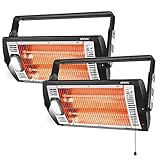
Overview: The Shinic 2-Pack Electric Garage Heaters offer a unique radiant heating solution with dual quartz tubes for instant warmth. Each 1,500-watt unit provides targeted heating for people and objects, making it ideal for workstations. The included halogen work light adds functional value for detailed tasks in dim garages or shops.
What Makes It Stand Out: This set’s radiant technology delivers immediate heat without fan noise, while the integrated work light illuminates your workspace. The 90-degree rotation allows precise positioning, and five mode settings (including heat+light combinations) provide versatility. Receiving two units maximizes coverage flexibility for multiple workstations.
Value for Money: Exceptional value considering you receive two complete heating units with built-in work lights. The dual-function design eliminates separate lighting purchases, and the ability to heat specific zones reduces energy waste compared to whole-space heating solutions.
Strengths and Weaknesses: Pros include instant radiant heat, integrated work light, adjustable angle, quiet operation, and two-unit versatility. Cons are limited total wattage for large spaces, directional heating (not whole-room), no thermostat for precise temperature control, and potential need for multiple installation points.
Bottom Line: Best for small workshops needing spot heating and task lighting. The Shinic excels at warming specific work areas rather than entire garages. Consider this for targeted comfort and illumination rather than whole-space heating.
5. Comfort Zone Hard-Wired Ceiling Mount Garage Electric Space Heater, Fan-Forced, 5,000 watt, 240 volt, Overheat Protection, Thermal Cut-Out Switch, Ideal for Workshop & Garage, ETL Compliant, CZ220BK

Overview: The Comfort Zone CZ220BK provides dependable medium-output heating for residential garages and workshops. This 5,000-watt, fan-forced ceiling-mount unit combines space-saving design with robust performance. The heavy-gauge steel construction withstands temperature fluctuations in poorly insulated spaces while meeting ETL safety standards for reliable operation.
What Makes It Stand Out: This model emphasizes straightforward operation through its dual-knob thermostat, offering reliable control without digital complexity. Adjustable louvers and mounting angles enable precise airflow targeting, while the thermal cut-out switch and overheat protection deliver essential safety monitoring for worry-free operation.
Value for Money: As a budget-conscious option from an established brand, this heater delivers solid performance without premium features. The simplified design reduces both initial cost and potential maintenance expenses, making it accessible for homeowners seeking reliable heating without unnecessary complexity.
Strengths and Weaknesses: Pros include durable steel build, simple intuitive controls, effective safety systems, and ceiling-mount space efficiency. Cons are lack of remote operation, basic thermostat precision, modest heating capacity for large areas, and manual-only adjustments without programmable convenience.
Bottom Line: Perfect for DIY enthusiasts wanting dependable, no-frills heating. The CZ220BK suits smaller garages and workshops where simplicity and reliability outweigh advanced features. Professional installation recommended for optimal safety and performance.
6. InoKraft 7,500W Electric Garage Heater, Wire: 8 AWG, Plug: NEMA 14-50P, Remote, Ceiling Mount, Digital Thermostat, 240 Volt, 24-Hour Timer, Overheat Protection, ECO Mode, Ideal for Garage

Overview:
The InoKraft 7,500W Electric Garage Heater delivers serious heating power for substantial workspaces. This 240-volt unit generates enough warmth to handle areas up to 750 square feet, making it ideal for two-car garages and workshops. Operating at a reasonable 65 dB, it balances performance with acoustic comfort while the fan-forced design ensures rapid heat distribution.
What Makes It Stand Out:
The digital thermostat offers precise temperature control from 40°F to 99°F, while the intelligent ECO mode automatically adjusts output based on ambient conditions, delivering genuine energy savings. The 24-hour timer provides convenient scheduling, and the five-angle mounting adjustments let you direct heat exactly where needed. The included NEMA 14-50P plug and 8.2-foot cord simplify installation compared to hardwired alternatives.
Value for Money:
Positioned in the mid-to-high price range, this heater justifies its cost through robust construction, smart features, and substantial power output. It competes favorably with units costing significantly more, offering professional-grade performance without the premium price tag of commercial models.
Strengths and Weaknesses:
Pros include impressive heating capacity, quiet operation, energy-saving ECO mode, flexible mounting options, and comprehensive safety features like overheat protection. Cons are the mandatory 240V outlet requirement, professional installation recommendation, and limitation to 750 sq ft coverage—insufficient for larger workshops.
Bottom Line:
For serious DIY enthusiasts and professionals needing reliable, efficient heating in medium-sized garages, the InoKraft 7,500W heater represents an excellent balance of power, features, and value.
7. Shinic Electric Garage Heaters with Remote Control, 1500W/750W Ceiling Mounted Radiant Quartz Heater with Work Light, 90° Rotation, 5 Mode Settings, Electric Heater for Garage, Shop, Patio Large Room

Overview:
The Shinic Electric Garage Heater offers targeted radiant heating in a space-saving ceiling-mounted design. This 120-volt unit provides two power settings (750W and 1500W) using dual quartz tubes that deliver immediate warmth to people and objects in its path, making it perfect for workstation-specific heating in garages or shops.
What Makes It Stand Out:
The integrated halogen work light is a standout feature, illuminating your workspace while heating it—eliminating the need for separate lighting. The 90° rotation capability allows precise heat direction, and the radiant technology provides instant warmth without waiting for air circulation. Five mode settings offer versatility for different conditions.
Value for Money:
This heater sits in the affordable price bracket, offering excellent value for those needing supplemental heat rather than whole-room warming. The included work light effectively adds a $30-50 value, making it a smart purchase for budget-conscious buyers.
Strengths and Weaknesses:
Pros include instant radiant heat, dual-functionality with work light, space-saving ceiling mount, ETL safety listing, and overheat protection. The metal housing enhances durability. Cons are limited 120V power insufficient for large spaces, no built-in thermostat for automatic temperature maintenance, and radiant heat’s directional nature leaving peripheral areas cold.
Bottom Line:
An ideal choice for hobbyists and mechanics needing focused warmth and illumination at specific workstations. It’s a practical, affordable solution for supplemental heating rather than primary garage climate control.
8. DR. INFRARED HEATER Portable Infrared Indoor and Outdoor Space Heater for Patio, Garage, Commercial & Residential With Remote Control, Without Thermostat, Black

Overview:
The DR. INFRARED HEATER offers versatile heating solutions for both indoor and outdoor environments. This 120-volt unit provides three power settings (900W, 1200W, and 1500W) and boasts an IP55 weatherproof rating, making it suitable for patios, garages, and open-air commercial spaces where exposure to moisture is a concern.
What Makes It Stand Out:
Its indoor/outdoor flexibility sets it apart from garage-only heaters. The high-level mirror aluminum reflector with 90% reflectivity maximizes heating efficiency, while the included wall and ceiling mounting bracket provides installation versatility. The infrared technology delivers clean, odorless heat instantly without warming the air, creating comfortable conditions quickly.
Value for Money:
Mid-range pricing reflects its dual-environment capability. While not the cheapest garage heater, its weatherproof construction and portability justify the cost for those needing flexible heating solutions across multiple spaces.
Strengths and Weaknesses:
Pros include IP55 weatherproof rating, multiple mounting options, instant infrared heating, three power settings, and portability. The efficient reflector design optimizes heat distribution. Cons are the lack of a built-in thermostat, limiting temperature control to manual adjustment, 120V power restricting large-space performance, and no timer function for automated operation.
Bottom Line:
Perfect for users seeking a versatile heater that transitions seamlessly between garage workspace and outdoor patio. It’s a flexible, weather-resistant option best suited for supplemental heating rather than primary climate control in large areas.
9. Dura Heat EUH1465 Electric Forced Air Heater with Pivoting Base 5,120 BTU, Yellow

Overview:
The Dura Heat EUH1465 is a compact, portable forced-air heater built for durability in tough workshop environments. Delivering 1500W of PTC ceramic heating power (5,120 BTU), this rugged unit features a pivoting base that directs heat where needed most in small garages, greenhouses, or job sites. Its bright yellow steel housing ensures visibility and withstands daily abuse.
What Makes It Stand Out:
The robust steel construction withstands harsh workshop conditions, while the pivoting base provides directional control rarely found in portable units. The dual-function design offers both heating and fan-only modes, extending its utility beyond winter months for year-round air circulation. The simple, no-frills operation appeals to users wanting immediate functionality without complex settings.
Value for Money:
Positioned as a budget-friendly option, this heater delivers reliable performance at an entry-level price. It’s an economical choice for occasional use or as a supplemental heat source without investing in high-end features.
Strengths and Weaknesses:
Pros include rugged steel durability, pivoting base for targeted heating, overheat protection, thermostat control, and versatile heat/fan settings. Its compact size enhances portability. Cons are limited 1500W power suitable only for small spaces, lack of remote control or smart features, potentially noisy operation, and basic aesthetic design.
Bottom Line:
An excellent entry-level heater for those needing simple, reliable warmth in compact workspaces. It’s a practical, no-nonsense solution that prioritizes durability and basic functionality over advanced features.
10. TURBRO 15,000W Electric Garage Heater, 240V Hard Wired, WiFi Enabled, Fan-Forced Shop Heater with Remote, Overheat Protection, Thermostat, 12-Hr Timer, Ceiling/Wall Mounted, ETL Listed, GH15K Smart

Overview:
The TURBRO GH15K Smart represents the pinnacle of residential garage heating technology. This massive 15,000W, 240-volt unit delivers an impressive 51,194 BTU to heat spaces from 1,600 to 2,500 square feet, making it suitable for large workshops, commercial garages, and expansive residential spaces that standard heaters cannot adequately warm.
What Makes It Stand Out:
WiFi connectivity enables smartphone control from anywhere, while the comprehensive remote and control panel provide multiple operation methods. The adjustable louvers and adaptable mounting angles allow precise airflow management. With temperature range from 45-95°F and 12-hour timer, it offers extensive customization for personalized comfort. The ETL listing ensures safety standards meet rigorous requirements for worry-free operation.
Value for Money:
Premium pricing reflects its commercial-grade power and smart features. While significantly more expensive than standard garage heaters, it costs considerably less than true commercial HVAC solutions, offering exceptional value for those needing serious heating capacity.
Strengths and Weaknesses:
Pros include unmatched 15,000W power, WiFi/smart controls, huge coverage area, precise temperature management, and robust safety features. The adjustable design optimizes heat distribution. Cons are mandatory professional hardwiring (no plug), substantial electrical requirements, high initial cost, and potential overkill for standard two-car garages.
Bottom Line:
The ultimate solution for heating large garages and commercial spaces. If you need maximum power, smart controls, and have the electrical infrastructure to support it, the TURBRO GH15K Smart is worth every penny.
Understanding Premium Electric Garage Heaters
What Defines a Premium Model?
Premium electric garage heaters distinguish themselves through a combination of superior engineering, advanced features, and exceptional build quality. These aren’t your basic space heaters with flimsy construction and inconsistent performance. Instead, they boast commercial-grade components, precision temperature management, and safety systems that protect both your property and family. The defining characteristic is reliability—you can trust a premium heater to turn on when needed, maintain steady temperatures without wild fluctuations, and operate safely for years without constant monitoring.
Key Differences from Budget Options
The gap between premium and budget electric garage heaters extends far beyond price tags. Budget models typically use cheaper materials that corrode in garage environments, lack precise thermostats that cause temperature swings of 10-15 degrees, and operate at noise levels that make conversation difficult. Premium heaters, conversely, feature stainless steel or powder-coated steel construction resistant to moisture and chemicals, digital thermostats accurate within 1-2 degrees, and engineered airflow systems that minimize noise. They also include multiple safety redundancies—overheat protection, tip-over switches, and thermal cutoffs—that cheaper units often skimp on.
Types of High-End Electric Garage Heaters
Forced-Air Fan Heaters
Forced-air fan heaters represent the workhorses of premium garage heating, using powerful internal fans to rapidly circulate warm air throughout your space. High-end models feature adjustable louvers for directional control, variable speed fans that operate whisper-quiet on low settings, and heavy-duty heating elements that won’t burn out after a single season. These excel at raising ambient air temperature quickly, making them ideal for larger garages where you need comprehensive warmth for multiple workstations or vehicle maintenance areas.
Infrared Radiant Heaters
Infrared radiant heaters take a fundamentally different approach, warming objects and people directly rather than heating the air itself. Premium infrared models use quartz or ceramic heating elements that produce consistent, comfortable warmth without creating dusty air currents. They’re exceptionally energy-efficient for spot heating specific work areas, and because they don’t rely on air circulation, they’re perfect for dusty woodworking shops where you want to avoid stirring up particles. The best models include precise intensity controls and wide-angle reflectors that distribute heat evenly across your workspace.
Ceiling-Mounted Workshop Heaters
Ceiling-mounted workshop heaters free up valuable floor and wall space while providing superior heat distribution from above. Premium versions feature remote control operation, adjustable mounting brackets for angled installation, and downward-directed airflow patterns that prevent heat stratification. Many include integrated LED work lights, combining two essential workshop functions into one sleek unit. These are particularly valuable in garages with high ceilings where floor-based heaters struggle to distribute warmth effectively.
Portable Cabinet Heaters
Portable cabinet heaters offer the ultimate flexibility for garages where work areas shift or for those who want heating capability in multiple locations. High-end portable models come with heavy-duty wheels that navigate uneven garage floors, robust carrying handles that won’t break under weight, and cord management systems that prevent tripping hazards. Despite their mobility, premium cabinet heaters don’t compromise on power, often delivering the same heating capacity as permanent installations while adding the convenience of repositioning wherever heat is needed most.
Wall-Mounted Convection Heaters
Wall-mounted convection heaters provide silent, consistent heating through natural air circulation without fans. Premium convection models feature elegant, low-profile designs that blend seamlessly with garage interiors, advanced fin designs that maximize heat transfer surface area, and programmable controls that maintain steady temperatures without the noise of fan operation. These are excellent choices for attached garages where noise might disturb living spaces or for those who prefer set-it-and-forget-it simplicity.
Critical Features to Evaluate
Heating Capacity and BTU Ratings
Understanding heating capacity requires looking beyond simple wattage numbers to BTU (British Thermal Unit) ratings and calculating your garage’s specific needs. Premium manufacturers provide detailed heating coverage maps based on insulation levels, ceiling height, and climate zones. A truly premium heater includes adjustable power settings—often ranging from 3,000 to 7,500 watts—allowing you to match output precisely to conditions rather than constantly cycling on and off. Look for models that provide consistent heat output even in sub-zero temperatures without derating performance.
Voltage and Power Requirements
Premium garage heaters typically require 240-volt circuits for optimal performance, though some high-end models offer dual-voltage flexibility. The key is understanding your electrical panel’s capacity—premium heaters often need dedicated 30-amp or 40-amp circuits. Top-tier models include built-in power monitors that prevent circuit overload and can adjust their draw based on available amperage. This smart load management protects your electrical system while ensuring you get maximum heating power without tripping breakers during critical cold snaps.
Thermostat Precision and Programmability
The difference between a premium heater and a basic model often comes down to thermostat sophistication. High-end units feature digital thermostats accurate to within one degree, eliminating the uncomfortable temperature swings that plague cheaper models. Advanced programmability allows you to set different temperatures for different times and days—warming the garage before your morning commute, dropping temperature during work hours, then reheating for evening projects. Some premium models even include adaptive learning that anticipates your schedule based on usage patterns.
Safety Certifications and Features
Premium electric garage heaters carry multiple safety certifications including UL (Underwriters Laboratories), ETL (Intertek), and CSA (Canadian Standards Association) listings that verify rigorous testing. Beyond basic certifications, look for models with redundant safety systems—multiple overheat sensors, automatic shutoff if airflow is blocked, and cool-touch exteriors that prevent burns. The best units include GFCI protection built directly into the heater, crucial for garage environments where moisture and concrete floors increase electrical shock risks.
Build Quality and Durability
A premium heater’s construction tells you everything about its longevity. Look for heavy-gauge steel cabinets with corrosion-resistant powder coating, sealed internal components that resist dust and chemical exposure, and heating elements made from high-grade materials like nickel-chromium or stainless steel. Premium models use ball-bearing motors that run for decades without maintenance, unlike sleeve-bearing motors in budget units that fail within a few years. The weight alone often reveals quality—premium heaters feel substantial because they use thicker materials throughout.
Noise Levels and Operational Quietness
Garage work requires concentration, and a roaring heater quickly becomes maddening. Premium models prioritize quiet operation through aerodynamic fan designs, vibration-dampening mounts, and insulated cabinets that contain motor noise. High-end forced-air heaters often operate below 50 decibels on low settings—quieter than normal conversation. Some premium infrared and convection models operate virtually silently, making them ideal for garages used as music practice spaces or home offices where noise pollution matters.
Energy Efficiency and Operating Costs
While electric heaters are inherently 100% efficient at converting electricity to heat, premium models optimize how that heat is delivered and maintained. Look for units with eco-modes that reduce power consumption once target temperature is reached, programmable timers that prevent heating an empty garage, and high-efficiency fans that move more air using less electricity. Premium heaters often include energy consumption monitors that track real-time and cumulative usage, helping you understand and control operating costs during peak winter months.
Installation Complexity
The best premium heaters balance powerful performance with thoughtful installation design. They include mounting templates for accurate placement, quick-connect wiring terminals that don’t require special tools, and clear instructions with video support. Some high-end models feature plug-and-play designs for certain configurations while still offering hardwire capability for permanent installations. Consider whether the heater includes all necessary mounting hardware or requires separate purchases that add to total investment.
Smart Features and Modern Technology
Wi-Fi Connectivity and App Control
Modern premium garage heaters increasingly include Wi-Fi connectivity that transforms your smartphone into a remote control. These apps allow you to adjust temperature from anywhere, receive alerts if the garage drops below a set threshold, and monitor energy consumption in real-time. The best implementations work across both iOS and Android platforms without requiring additional hub hardware. Look for systems with reliable connectivity that doesn’t drop when you need it most during severe weather events.
Integration with Smart Home Systems
For homes already invested in smart technology, premium heaters that integrate with platforms like Alexa, Google Home, or Apple HomeKit provide seamless control. You can incorporate garage heating into broader routines—“I’m home” commands that warm the garage as you arrive, or “goodnight” scenes that ensure the heater is off and safe. Premium models offer stable, secure integrations that don’t create vulnerabilities in your home network and maintain local control even if internet service is interrupted.
Advanced Scheduling Capabilities
Beyond basic programmable thermostats, premium heaters feature sophisticated scheduling that accounts for holidays, daylight saving time, and seasonal adjustments. Some include geofencing that detects when you’re approaching home and begins warming the garage automatically. The most advanced models can sync with weather forecasts, preemptively increasing heat output before major cold fronts arrive rather than reacting after temperatures plummet. This predictive heating saves energy while ensuring consistent comfort.
Installation Considerations
DIY vs Professional Installation
While many premium garage heaters are designed for DIY installation, electrical work often requires professional expertise. Units under 5,000 watts with plug-in designs typically suit confident DIYers, but hardwired 240-volt systems demand licensed electricians to ensure code compliance and safety. Premium manufacturers often maintain networks of certified installers who understand their products intimately. Factor installation costs into your total investment—paying for professional installation protects your warranty and ensures optimal performance from day one.
Electrical Requirements and Upgrades
Before purchasing any premium heater, assess your electrical panel’s capacity and available circuits. Many garages lack adequate 240-volt service, requiring panel upgrades or new circuit runs. Premium heaters with soft-start technology reduce initial power surge, potentially allowing installation on existing circuits without upgrading your entire electrical service. Some advanced models include power management systems that sequence multiple heaters in large garages, preventing simultaneous startup that could overwhelm electrical infrastructure.
Optimal Placement Strategies
Premium performance depends heavily on strategic placement. Forced-air heaters should mount in corners to create circular airflow patterns, while infrared units need clear line-of-sight to work areas. Ceiling-mounted units require adequate clearance from vehicles and stored materials—typically 8 feet minimum. Consider proximity to electrical panels to minimize wiring costs, but prioritize heating effectiveness over minor installation savings. Premium manufacturers provide detailed placement guides based on garage dimensions and layout configurations.
Cost Analysis and Value Proposition
Initial Investment vs Long-Term Savings
A premium electric garage heater typically costs 2-4 times more than budget alternatives, but this initial investment pays dividends through energy savings, extended lifespan, and prevented damage to tools and vehicles. High-quality heaters last 15-20 years versus 3-5 years for cheap models, spreading the cost over decades. Factor in reduced energy consumption from precise temperature control—premium units can save 20-30% on operating costs compared to inefficient budget heaters that constantly cycle. Additionally, protecting your vehicle from extreme cold reduces battery replacement frequency and prevents fluid thickening that strains engines.
Warranty and Support Expectations
Premium heaters back their quality claims with substantial warranties—typically 5-10 years on heating elements and 2-5 years on overall units. This compares to 1-year limited warranties on budget models that often exclude the most failure-prone components. Beyond warranty length, evaluate manufacturer support availability: do they offer phone support from knowledgeable technicians, maintain parts inventories for older models, and provide clear troubleshooting resources? Premium brands invest in customer service because their reputation depends on long-term satisfaction, not just initial sales.
Maintenance and Longevity
Routine Maintenance Tasks
Even premium heaters require periodic maintenance to ensure peak performance. Most high-end models feature tool-free access panels for easy filter cleaning or replacement—critical in dusty garage environments. Quarterly inspection of heating elements for corrosion, annual lubrication of fan motors (if not permanently sealed), and periodic calibration of thermostats ensure your investment lasts. Premium units often include maintenance reminder systems that alert you when service is due, preventing neglect that shortens lifespan.
Expected Lifespan of Premium Models
With proper maintenance, premium electric garage heaters reliably operate for 15-20 years, far exceeding the 3-5 year lifespan of budget alternatives. The heating elements in quality units often carry 10+ year warranties, while sealed bearings and protected electronics resist garage environmental stresses. This longevity means your initial investment amortizes to a remarkably low annual cost—often less than $50 per year when spread over the heater’s full operational life, making premium heaters the economical choice despite higher upfront pricing.
Frequently Asked Questions
What size premium electric garage heater do I need for my space?
Calculate your garage’s cubic footage (length × width × ceiling height) and consider insulation quality. As a general rule, you’ll need 10 watts per square foot for well-insulated garages, 15 watts for moderately insulated spaces, and 20+ watts for uninsulated areas. Premium heaters with adjustable output allow you to fine-tune capacity. A 24×24 foot well-insulated garage typically requires a 5,000-7,500 watt premium unit, while the same size uninsulated space might need dual heaters or a single high-capacity 10,000-watt model. Always size slightly larger than calculations suggest to avoid overworking the heater.
Are premium electric garage heaters expensive to operate?
Operating costs depend on local electricity rates, garage insulation, and temperature settings. At the national average of $0.14 per kWh, a 5,000-watt premium heater running 50% of the time costs about $2.10 per day or $63 monthly. However, premium features like precise thermostats, programmable schedules, and eco-modes reduce runtime by 20-40% compared to budget models, often offsetting their higher purchase price within 2-3 winters. Smart controls that heat only when needed can cut costs further, making premium heaters more economical long-term despite identical per-hour energy consumption.
Can I install a premium garage heater myself?
It depends on the model and your electrical expertise. Plug-in premium heaters under 5,000 watts with 120-volt connections are often DIY-friendly, requiring only basic mounting skills. However, most high-performance premium units need 240-volt hardwired connections that demand licensed electrician installation to maintain warranty and ensure code compliance. Even if you’re electrically skilled, professional installation often includes performance optimization, safety verification, and extended warranty options that make the additional cost worthwhile for such a significant investment.
What’s the real difference between 120V and 240V premium heaters?
240V heaters deliver significantly more heating power—typically 5,000-10,000 watts versus 1,500-3,000 watts for 120V models—making them suitable for larger garages and colder climates. They also operate more efficiently, drawing half the amperage for the same wattage, which reduces wire size requirements and voltage drop over long runs. Premium 240V heaters include better safety features and more sophisticated controls. While 120V models offer easier installation, they simply can’t match the performance needed for serious garage heating in most situations, making 240V the premium standard.
Are infrared heaters better than forced-air for garages?
Neither is universally superior—it depends on your specific needs. Infrared excels at spot heating specific work areas without stirring dust, making them ideal for woodworking shops or when you primarily work in one location. They provide instant warmth and don’t waste energy heating unused space. Forced-air premium heaters better serve large garages where you move between multiple workstations or need consistent ambient temperature for vehicle storage. Many premium setups combine both: infrared for primary workbench heating and forced-air for overall space maintenance.
How long should I expect a premium electric garage heater to last?
With proper maintenance, premium electric garage heaters reliably operate 15-20 years, with some commercial-grade units lasting even longer. This compares to 3-5 years for budget models. The extended lifespan stems from heavy-duty heating elements, sealed bearings, corrosion-resistant construction, and over-engineered electrical components that handle garage environmental stresses. Regular filter cleaning, annual inspections, and following manufacturer maintenance schedules ensure you achieve the maximum lifespan from your investment.
Does my garage need a dedicated electrical circuit for a premium heater?
Almost always, yes. Premium heaters draw substantial power that would overload shared circuits, creating safety hazards and nuisance tripping. A 5,000-watt heater requires a dedicated 240V/30-amp circuit, while larger 7,500-10,000 watt units need 40-50 amp circuits. Attempting to share circuits with lighting, outlets, or other equipment violates electrical codes and risks fire. The installation cost of a dedicated circuit is a necessary part of your total investment and should be factored into your budget before purchasing any premium heating system.
Can premium heaters effectively warm uninsulated garages?
Premium heaters can warm uninsulated garages, but efficiency drops dramatically without proper insulation. You’ll need approximately double the heating capacity (20 watts per square foot versus 10 watts) and operating costs will be 2-3 times higher as heat escapes through walls and ceiling. The heater’s premium features—powerful output, precise control, and rapid response—become even more valuable in uninsulated spaces. However, the smartest investment pairs a premium heater with basic insulation upgrades; even insulating just the garage door can reduce heating requirements by 30%.
What safety certifications matter most for premium garage heaters?
Prioritize UL (Underwriters Laboratories) or ETL (Intertek) listings that verify independent safety testing. For garage-specific use, look for units rated for “commercial” or “industrial” environments, which undergo more rigorous testing than residential-only models. IP (Ingress Protection) ratings indicate dust and moisture resistance—IPX4 or higher is ideal for garages. Additionally, check for automatic shutoff certifications and thermal overload protection that meets National Electrical Code requirements. Premium manufacturers display these certifications prominently; their absence is a red flag regardless of other features.
Will installing a premium garage heater increase my home’s value?
While garage heaters rarely provide direct ROI like kitchen renovations, they can significantly enhance marketability and perceived value, especially in cold climates. A professionally installed premium system signals to buyers that the garage is a functional, year-round space rather than seasonal storage. This is particularly valuable for homes marketed to car enthusiasts, hobbyists, or in regions with harsh winters. The key is permanent, hardwired installation by licensed professionals—portable units don’t add value. Some estimates suggest premium garage heating can recoup 50-75% of investment in home sale price, plus make your property stand out in competitive markets.
See Also
- 10 Premium Electric Garage Heaters for Cold Climates (Worth the Investment)
- 10 Premium Heavy Duty Garage Heaters for Workshops (Worth the Investment)
- 10 Premium Electric Space Heaters (Worth the Investment) for Large Living Rooms
- 10 Premium Indoor Heaters for Allergy Sufferers (Worth the Investment)
- 10 Premium Tall Oil-Filled Heaters for Large Rooms (Worth the Investment)