Table of Contents
There’s nothing quite like stepping into a freezing garage on a sub-zero morning to make you question every life choice that led to this moment. Whether you’re trying to get your car started, work on a project, or simply retrieve something from storage, an unheated garage in a cold climate can be miserable at best and downright dangerous at worst. Premium electric garage heaters represent a significant upgrade from portable space heaters or simply toughing it out, offering consistent warmth, safety features, and the durability to handle temperature extremes year after year.
Investing in a high-quality heating solution transforms your garage from a seasonal afterthought into a truly usable extension of your home. While the upfront cost of premium models might cause initial sticker shock, the long-term benefits—energy efficiency, robust safety systems, precise temperature control, and longevity—make them a smart financial decision for homeowners in harsh winter regions. Understanding what separates a premium heater from basic models will help you make an informed investment that pays dividends in comfort and functionality for decades.
Top 10 Electric Garage Heaters
Detailed Product Reviews
1. Comfort Zone 10,000W Hard-Wired Garage Heater – Industrial & Commercial Ceiling Mount, 240V Fan-Forced Heater with Remote, Digital Thermostat, Timer, 2 Heat Settings, Overheat Protection, Grey

Overview: The Comfort Zone 10,000W heater delivers industrial-strength heating for demanding workspaces. This ceiling-mounted unit combines powerful fan-forced technology with modern conveniences, making it ideal for large garages, workshops, and commercial settings where consistent warmth is essential.
What Makes It Stand Out: Its robust 10,000-watt output stands among the most powerful residential garage heaters available. The integrated remote control and digital thermostat with timer functionality offer exceptional convenience, allowing adjustments without climbing ladders. Heavy-gauge steel construction ensures durability in harsh environments, while adjustable louvers and mounting angles provide precise airflow direction for targeted heating.
Value for Money: Positioned as a premium industrial solution, this heater justifies its price through sheer power and features. Comparable commercial units often cost significantly more while offering fewer controls. The combination of remote operation, dual heat settings, and overheat protection provides excellent ROI for serious DIYers and professionals who need reliable, widespread heating.
Strengths and Weaknesses: Strengths include exceptional heating capacity, durable steel construction, comprehensive safety features, and flexible installation options. The remote control and digital controls add modern convenience. Weaknesses: hard-wired installation requires professional electrician, may be excessive for smaller garages under 600 sq ft, lacks an ECO mode for energy savings, and the grey industrial aesthetic won’t suit all spaces.
Bottom Line: Perfect for large, drafty workshops and commercial garages, this powerhouse heater offers professional-grade performance with user-friendly controls. If you need maximum heat output and don’t mind professional installation, this is a top-tier choice.
2. CTSC 8500W Garage Heater Electric, 240v Hardwired Fan-Forced Electric Garage Heater with Digital Thermostat, Remote Control and Timer, ECO Function, Ideal for Workshop, ETL Listed Garage Heater

Overview: The CTSC 8500W garage heater balances robust heating capacity with innovative troubleshooting features. Designed for spaces up to 850 square feet, this ETL-certified unit offers modern controls and energy-saving functions for workshop and garage environments.
What Makes It Stand Out: The revolutionary Voltage Display Screen addresses the most common installation issue—incorrect voltage supply. This diagnostic tool instantly shows voltage problems when fans underperform. Combined with ECO mode that adjusts output based on ambient temperature, a precise temperature sensor, and dual control methods (remote and LED touch panel), it delivers uncommon intelligence for its class.
Value for Money: This heater punches above its weight with premium features at a mid-range price point. The 29,010 BTU output competes with higher-priced models, while the voltage display prevents costly service calls. Three heat settings (8500W, 5600W, fan-only) provide flexibility that many competitors lack, offering strong value for tech-conscious buyers.
Strengths and Weaknesses: Strengths include the unique voltage troubleshooting display, ECO energy-saving function, versatile 3-stage heating, remote and touch controls, and robust SPCC steel construction. The 1-10 hour timer is adequate but shorter than some rivals. Brand recognition is limited compared to established names. Hardwired installation requires professional help, and the instruction manual could be more detailed.
Bottom Line: An excellent choice for those wanting smart features and diagnostic capabilities. The voltage display alone makes it worth considering for DIY installers who want to verify electrical connections themselves.
3. Comfort Zone Hard-Wired Ceiling Mount Garage Electric Space Heater, Fan-Forced, 5,000 watt, 240 volt, Overheat Protection, Thermal Cut-Out Switch, Ideal for Workshop & Garage, ETL Compliant, CZ220

Overview: The Comfort Zone CZ220 offers straightforward, reliable heating for modest-sized garages and workshops. This 5,000-watt ceiling-mounted unit prioritizes simplicity and durability over advanced features, making it ideal for users wanting dependable warmth without complexity.
What Makes It Stand Out: Its no-nonsense dual-knob thermostat provides intuitive temperature control without digital complications. The heavy-gauge steel construction withstands temperature fluctuations in poorly insulated areas, while the adjustable louvers and mounting angle allow targeted heat distribution. ETL compliance ensures safety standards are met.
Value for Money: This budget-friendly option delivers essential heating for spaces where high-powered units would be overkill. It competes favorably with similarly priced heaters by offering robust steel construction and reliable safety features. While lacking remote controls, its simplicity reduces potential failure points, potentially saving on long-term maintenance costs.
Strengths and Weaknesses: Strengths include simple, reliable operation, durable steel body, effective overheat protection with thermal cut-out switch, and space-saving ceiling design. The manual knobs are easy for anyone to operate. Weaknesses: no remote control or digital thermostat, lower 5,000W output limits coverage to approximately 500 sq ft, lacks timer functionality, and offers only basic on/off operation without heat settings.
Bottom Line: A solid, dependable choice for smaller garages or workshops where simplicity trumps technology. If you want reliable heat without bells and whistles, the CZ220 delivers excellent basic performance.
4. Shinic 2 Packs Electric Garage Heaters, 1500W/750W Ceiling Mounted Heater Radiant Heaters with Halogen Light, 90 Degree Rotation, 5 Mode Settings, Space Heater for Garage, Shop, Large Room and Patio
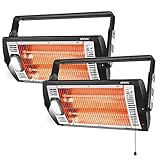
Overview: This unique two-pack offering provides targeted radiant heating with integrated work lighting. Unlike fan-forced models, these quartz heaters deliver immediate warmth to objects and people in their path, making them suitable for spot heating in garages, shops, or patios where concentrated heat is preferred over whole-room warming.
What Makes It Stand Out: Getting two complete heater units with adjustable brackets represents exceptional value. The integrated halogen work light solves visibility issues in dim garages, while 90-degree rotation directs heat precisely where needed. Five mode settings—including dual heat levels and light combinations—offer versatility that single-unit solutions cannot match.
Value for Money: Two heaters for the price typically charged for one fan-forced unit makes this an economical choice for zone heating. While individual 1,500W capacity won’t heat large garages, strategic placement can warm workbenches or specific areas effectively. The inclusion of work lights adds functionality that would cost extra with other heaters.
Strengths and Weaknesses: Strengths include dual-unit packaging, instant radiant heat, integrated halogen lighting, easy ceiling mounting, and simple pull-string operation. The 90° adjustment is practical. Weaknesses: insufficient power for whole-garage heating, no thermostat or remote control, likely requires standard outlets rather than hardwiring, and radiant heat doesn’t circulate air. Not ETL certified information is missing.
Bottom Line: Best for targeted heating zones rather than entire garages. If you need warmth at specific workstations plus lighting, this two-pack delivers excellent focused performance.
5. InoKraft 7,500W Electric Garage Heater, Wire: 8 AWG, Plug: NEMA 14-50P, Remote, Ceiling Mount, Digital Thermostat, 240 Volt, 24-Hour Timer, Overheat Protection, ECO Mode, Ideal for Garage

Overview: The InoKraft 7,500W heater bridges the gap between hardwired industrial units and portable heaters by including a NEMA 14-50P plug for flexible installation. Designed for spaces up to 750 square feet, it offers premium digital controls and quiet operation suitable for attached garages and workshops.
What Makes It Stand Out: Unlike most high-wattage heaters requiring hardwiring, this unit includes an 8.2-foot power cord with NEMA 14-50P plug, simplifying installation for those with compatible outlets. The 24-hour timer exceeds typical 10-hour limits, while 65 dB operation is noticeably quieter than competitors. Five angle adjustments and flexible louvers provide superior directional control.
Value for Money: This heater offers premium features—remote control, digital thermostat, ECO mode, and overheat protection—at a competitive price point. The included plug saves electrician costs, though professional installation is still recommended. It competes well with 8,500W units while providing quieter operation and better timer functionality.
Strengths and Weaknesses: Strengths include plug-in convenience, 24-hour timer, quiet operation, ECO energy-saving mode, remote control, and adjustable angles. The automatic fan delay efficiently distributes residual heat. Weaknesses: 7,500W output heats slightly less area than 8,500W+ models, requires NEMA 14-50 outlet (not standard), and professional installation is still advised despite plug inclusion.
Bottom Line: Ideal for users wanting high-end features without permanent hardwiring. If you have the proper outlet, this offers the easiest installation in its class while maintaining professional performance.
6. Comfort Zone Hard-Wired Ceiling Mount Garage Electric Space Heater, Fan-Forced, 5,000 watt, 240 volt, Overheat Protection, Thermal Cut-Out Switch, Ideal for Workshop & Garage, ETL Compliant, CZ220BK

Overview: The Comfort Zone CZ220BK is a robust ceiling-mounted electric heater designed for serious heating demands in garages and workshops. Delivering 5,000 watts of fan-forced heat at 240 volts, this unit is built for permanent, hard-wired installation. Its heavy-gauge steel construction withstands harsh, poorly insulated environments while the adjustable louvers and mounting angle allow precise heat direction. Safety features include overheat protection with a thermal cut-out switch and ETL compliance, making it a reliable choice for industrial and residential workspaces.
What Makes It Stand Out: This heater’s ceiling-mount design maximizes floor space in cluttered workshops, a crucial advantage over portable units. The dual knob thermostat offers straightforward temperature control without complex digital interfaces. Its commercial-grade steel body resists temperature fluctuations better than competitors using lighter materials. The combination of louvers and adjustable mounting angle provides targeted heating that many fixed-mount heaters lack, allowing users to direct warmth to specific work areas rather than wasting energy on empty spaces.
Value for Money: At its price point, the CZ220BK delivers exceptional value for those needing serious heating power. Comparable 5,000-watt units typically cost 20-30% more, and the durable construction ensures longevity that cheaper models can’t match. While professional installation adds cost, the energy efficiency of targeted heating and robust build quality justify the investment for regular users. It’s a buy-it-once solution versus replacing cheaper portable heaters every few seasons.
Strengths and Weaknesses: Strengths include powerful 5,000-watt output, space-saving ceiling design, durable steel construction, precise heat direction, and comprehensive safety features. Weaknesses involve requiring professional hard-wired installation (no plug-and-play option), being limited to 240-volt service, lacking remote control or smart features, and potentially being overkill for smaller garages under 500 sq.ft.
Bottom Line: Ideal for serious DIYers and professionals with 240-volt access needing permanent, powerful heating. The CZ220BK trades convenience for raw performance and durability, making it perfect for workshops where floor space is premium and consistent heat is essential. Not suited for casual users or renters.
7. Shinic Electric Garage Heaters with Remote Control, 1500W/750W Ceiling Mounted Radiant Quartz Heater with Work Light, 90° Rotation, 5 Mode Settings, Electric Heater for Garage, Shop, Patio Large Room

Overview: The Shinic Electric Garage Heater combines radiant quartz heating with practical workshop functionality. This 1500W/750W dual-mode unit mounts to the ceiling, saving floor space while delivering targeted infrared warmth. Five settings include full power, half power, light-only, heat+light, and off. The 90° rotation allows precise direction of both heat and the integrated halogen work light. Operating on standard 120V with a 3-prong plug, it offers easier installation than hard-wired alternatives while providing safety features like overheat auto-off and ETL listing.
What Makes It Stand Out: The integrated halogen work light sets this apart from pure heaters, eliminating the need for separate lighting in dim garages. Radiant quartz technology heats objects and people directly rather than wasting energy warming air—ideal for poorly insulated spaces. The remote control adds convenience rarely found in this price class, while the 90° rotation provides flexibility that fixed-mount heaters lack. Its 120V plug-in design makes it accessible to renters and DIY installers.
Value for Money: This heater delivers strong value by combining two workshop essentials—heating and lighting—in one unit. Purchasing separate heater and work light would cost 30-40% more. The dual power modes (750W/1500W) allow energy savings when full output isn’t needed. While not as powerful as 240V commercial units, its versatility and included remote justify the price for residential garages and small shops.
Strengths and Weaknesses: Strengths include dual-function design (heat + light), remote control operation, easy 120V plug-in installation, radiant heating efficiency, adjustable angle, and overheat protection. Weaknesses are limited 1500W output for very large spaces, no built-in thermostat for automatic temperature maintenance, radiant heat’s directional nature leaving peripheral areas cool, and halogen light adding to energy consumption.
Bottom Line: Perfect for hobbyists and homeowners needing targeted spot heating and illumination in specific work areas. The Shinic excels in small to medium garages where its dual functionality shines. Not ideal for whole-room heating or large commercial spaces, but unbeatable for convenience and versatility in typical residential workshops.
8. DR. INFRARED HEATER Portable Infrared Indoor and Outdoor Space Heater for Patio, Garage, Commercial & Residential With Remote Control, Without Thermostat, Black

Overview: The DR. INFRARED HEATER offers versatile dual-purpose heating for both indoor and outdoor environments. Rated IP55 for weather resistance, this portable unit delivers clean infrared heat through three power settings (900W, 1200W, 1500W) on standard 120V power. Its high-level mirror aluminum reflector achieves 90% reflectivity for efficient heat distribution. The included wall and ceiling mounting bracket provides installation flexibility, while remote control operation adds convenience. This heater is designed for patios, garages, restaurants, and residential spaces requiring spot heating without the bulk of fan-forced units.
What Makes It Stand Out: IP55 weatherproofing is rare in portable infrared heaters, enabling true outdoor use in light rain or dusty conditions. The high-efficiency mirror reflector outperforms standard metal shields, directing more heat where needed. Its silent operation (no fan) makes it ideal for noise-sensitive environments like offices or covered patios. The portability combined with mounting options offers unique flexibility—use it freestanding today, wall-mounted tomorrow.
Value for Money: While priced higher than basic infrared heaters, the IP55 rating and premium reflector justify the premium. Competitors with similar weather resistance cost significantly more. The three power settings allow energy management, running at 900W for modest heating needs. However, the lack of a thermostat means manual operation, potentially wasting energy if left on unnecessarily.
Strengths and Weaknesses: Strengths include weatherproof IP55 rating, silent infrared operation, versatile mounting options, remote control, portable design, and efficient reflector technology. Weaknesses are no thermostat for automatic temperature control, limited heating range for large spaces, infrared’s line-of-sight limitation, and black finish showing dust/dirt outdoors.
Bottom Line: Excellent choice for those needing flexible indoor/outdoor spot heating. The DR. INFRARED HEATER shines on patios and in garages where weather resistance and quiet operation matter. Best for supplemental heating rather than primary whole-room warmth. Its versatility justifies the price for users who value portability and dual-environment capability.
9. Dura Heat EUH1465 Electric Forced Air Heater with Pivoting Base 5,120 BTU, Yellow

Overview: The Dura Heat EUH1465 is a compact, portable forced-air heater built for rugged workshop environments. Delivering 1500W of PTC ceramic heating power (5,120 BTU), this yellow steel unit features a pivoting base for directional airflow control. It offers two operational modes: heat and fan-only, functioning as either a heater or air circulator. An adjustable thermostat enables precise temperature control, while overheat shut-off provides safety. Its durable steel construction and simple operation make it suitable for garages, greenhouses, and job sites where reliable spot heating is essential.
What Makes It Stand Out: The pivoting base provides 360-degree directional control uncommon in this size class, allowing users to target heat exactly where needed without moving the entire unit. PTC ceramic heating elements offer self-regulating efficiency and longer lifespan than traditional coil heaters. The fan-only mode extends utility beyond heating seasons, providing ventilation year-round. Its bright yellow color ensures high visibility in busy workshops, reducing tripping hazards.
Value for Money: This heater delivers solid value as a no-frills workhorse. Priced competitively with basic ceramic heaters, the added pivoting base and fan-only mode provide extra functionality without cost increase. PTC technology’s durability means lower replacement frequency than budget coil heaters. While lacking advanced features like remote control or mounting hardware, its simplicity reduces potential failure points and repair costs.
Strengths and Weaknesses: Strengths include pivoting base for directional control, PTC ceramic heating efficiency, dual heat/fan modes, durable steel construction, adjustable thermostat, and overheat protection. Weaknesses are limited to 1500W output for small spaces only, no remote control or smart features, noisy fan operation typical of forced-air units, and no tip-over switch mentioned in safety features.
Bottom Line: A reliable, straightforward heater for users needing portable, directional warmth in small workshops or garages. The Dura Heat EUH1465 excels as a supplemental heat source and summer fan, making it a practical two-season tool. Its pivoting base adds real utility. Best for those prioritizing durability and simplicity over advanced features or whole-room heating capacity.
10. TURBRO 15,000W Electric Garage Heater, 240V Hard Wired, WiFi Enabled, Fan-Forced Shop Heater with Remote, Overheat Protection, Thermostat, 12-Hr Timer, Ceiling/Wall Mounted, ETL Listed, GH15K Smart

Overview: The TURBRO GH15K Smart represents the pinnacle of modern garage heating technology, delivering an impressive 15,000 watts (51,194 BTU) for spaces up to 2,500 square feet. This 240V hard-wired unit integrates WiFi connectivity, remote control, and smart scheduling into a commercial-grade fan-forced heater. Adjustable louvers and mounting angles provide precise airflow direction, while a wide thermostat range (45-95°F) and 12-hour timer offer customizable comfort. ETL listing and overheat protection ensure safe operation. Designed for professional installation, it’s engineered for large garages, shops, and industrial spaces demanding both power and intelligence.
What Makes It Stand Out: WiFi integration sets this apart from traditional commercial heaters, enabling smartphone control and scheduling from anywhere. The 15,000-watt output dwarfs typical 5,000-watt units, heating 2,500 sq.ft. efficiently. Triple control methods (WiFi, remote, panel) provide unmatched convenience. The precision airflow management with adjustable louvers and angles surpasses fixed-direction competitors. Extended 12-hour timer and wide temperature range offer flexibility for diverse applications.
Value for Money: While premium-priced, the GH15K Smart delivers professional-grade performance at a fraction of commercial HVAC costs. Competing smart heaters with similar output cost significantly more. The WiFi capability and included remote eliminate need for separate smart switches. For heating large spaces, its efficiency and programmability yield energy savings that offset initial cost within 2-3 seasons of regular use.
Strengths and Weaknesses: Strengths include massive 15,000W heating capacity, WiFi/smartphone control, remote operation, adjustable airflow direction, wide temperature range, 12-hour timer, ETL safety certification, and energy-efficient thermostat. Weaknesses require professional hard-wired installation (costly setup), 240V service necessity, high initial price point, potential WiFi connectivity issues in metal buildings, and being overkill for spaces under 1,000 sq.ft.
Bottom Line: The ultimate solution for large garage and workshop owners wanting professional power with modern convenience. The TURBRO GH15K Smart justifies its premium through smart features and massive output. Ideal for commercial spaces and serious enthusiasts with 240V access. Not for casual users, but unbeatable for those needing whole-shop heating with smartphone control and scheduling capabilities.
Why Premium Electric Garage Heaters Are Essential for Cold Climates
Understanding the Challenges of Heating Large, Uninsulated Spaces
Garages present unique heating challenges that standard home heating systems simply aren’t designed to handle. Most garages lack proper insulation, feature concrete floors that radiate cold, and have large metal doors that create constant heat loss. Premium electric heaters are engineered specifically for these hostile environments, with higher BTU outputs and construction that withstands temperature fluctuations without degrading performance. Unlike residential space heaters that struggle below freezing, cold-climate garage heaters maintain efficiency even when outdoor temperatures plummet to -40°F.
The Long-Term Value of Investing in Quality
Budget heaters might seem appealing initially, but they often fail within a few seasons in demanding cold climates. Premium units typically offer 10-20 year lifespans with proper maintenance, featuring commercial-grade components that resist corrosion and thermal stress. The energy savings alone from efficient operation can offset the higher purchase price within 3-5 years, especially when heating larger garages or workshops daily. Additionally, quality heaters maintain consistent performance without the safety risks associated with overworked, underpowered units.
Key Features That Define Premium Garage Heaters
High Wattage Output and Heating Capacity
Premium electric garage heaters for cold climates start at 5,000 watts and can exceed 15,000 watts for large spaces. This substantial power output ensures rapid heat-up times and the ability to maintain comfortable temperatures even during arctic blasts. Look for models with adjustable wattage settings that let you scale energy consumption based on current needs. The best heaters provide consistent warmth across the entire space without cold spots, thanks to superior airflow design and heat exchanger technology.
Advanced Thermostat Controls and Smart Technology
Modern premium heaters feature digital thermostats accurate within 1-2 degrees, preventing the temperature swings common with mechanical thermostats. Smart connectivity allows remote operation via smartphone apps, enabling you to pre-warm the garage before you arrive home. Some advanced models integrate with home automation systems and learn your usage patterns, optimizing energy consumption while maintaining comfort. Programmable schedules and geofencing capabilities ensure you never waste energy heating an empty garage.
Robust Build Quality and Weather Resistance
Cold-climate garage heaters face moisture, dust, and extreme temperature cycling that destroy lesser units. Premium models feature powder-coated steel cabinets, sealed internal components, and corrosion-resistant hardware. Look for IPX4 or higher water resistance ratings for protection against condensation and melting snow. Heavy-duty mounting brackets and vibration-dampening designs prevent component fatigue from constant thermal expansion and contraction.
Safety Certifications and Overheat Protection
UL or ETL certification is non-negotiable for premium garage heaters, ensuring compliance with strict safety standards. Advanced thermal cutoff switches shut down the unit before dangerous temperatures occur, while multi-stage overheat protection prevents fire hazards. Quality heaters also include manual reset limits that require intentional restart after a safety shutdown, preventing automatic restart in unsafe conditions.
Types of Electric Garage Heaters for Extreme Cold
Forced Air Fan-Forced Heaters
These units use powerful fans to push heated air throughout the space, making them ideal for large, open garages. Premium fan-forced models feature variable-speed blowers that operate quietly at low settings while delivering maximum airflow when needed. Look for units with ball-bearing motors rated for continuous operation and stainless steel heating elements that won’t crack under thermal stress. The best models include directional louvers for precise heat distribution.
Infrared Radiant Heaters
Infrared heaters warm objects and people directly rather than heating the air, providing instant comfort in drafty garages. Premium infrared models use quartz or ceramic elements that emit consistent, gentle heat without the harsh glare of cheaper units. These heaters excel in poorly insulated spaces because they don’t waste energy warming air that immediately escapes. Ceiling-mounted infrared heaters free up floor space while providing targeted warmth to work areas.
Ceiling-Mounted vs Portable Units
Ceiling-mounted heaters maximize floor space and provide superior heat distribution by leveraging natural convection currents. Premium ceiling units feature swivel mounting brackets for precise positioning and remote control operation since they’re out of reach. Portable premium heaters offer flexibility for multi-use spaces, with heavy-duty wheels, cord management systems, and tip-over protection that immediately cuts power if knocked over. Both types should include secure handles and balanced weight distribution for safe repositioning.
Hardwired vs Plug-In Models
Hardwired installation provides the highest power capacity and cleanest appearance, with no exposed cords to trip over. Premium hardwired heaters include integrated disconnect switches and conduit-ready connections for professional installation. High-amperage plug-in models (NEMA 6-30P or 6-50P) offer easier installation while still delivering substantial heating power. Quality plug-in units feature heavy-gauge power cords with strain relief and cord wraps for storage.
Calculating the Right Size Heater for Your Space
BTU Requirements for Cold Climate Garages
In extreme cold regions, you’ll need approximately 50-60 BTUs per square foot of garage space for comfortable heating. A 24x24 foot garage (576 sq ft) requires 28,800-34,560 BTUs, which translates to 8,500-10,000 watts of electric heating power. Premium heaters often list both wattage and BTU ratings, but always verify the conversion (1 watt = 3.41 BTUs). Undersized heaters run constantly, waste energy, and burn out prematurely.
Factoring in Ceiling Height and Insulation
Standard calculations assume 8-foot ceilings; add 25% more capacity for each additional 2 feet of ceiling height. Poorly insulated garages require doubling the baseline BTU calculation, while well-insulated spaces may need only 60% of the standard estimate. Premium heaters often include insulation assessment guides in their documentation to help size the unit correctly. Remember that garage doors are the primary source of heat loss—upgrading door seals can reduce heater size requirements significantly.
The Importance of Proper Wattage per Square Foot
For cold climates, target 15-20 watts per square foot as a starting point. This ensures the heater can raise the temperature from extreme cold to comfortable working conditions within a reasonable timeframe. Premium heaters with multi-stage operation let you install a higher-capacity unit that runs efficiently at partial output most of the time, providing reserve power for the coldest days. This approach extends heater life and maintains more consistent temperatures than a maxed-out smaller unit.
Installation Considerations for Maximum Efficiency
Electrical Requirements and Circuit Capacity
Most premium garage heaters require 240-volt circuits with dedicated breakers. A 10,000-watt heater draws 42 amps, necessitating a 50-amp circuit with appropriately sized wire (6 AWG for runs under 100 feet). Never attempt to power a high-wattage heater from an existing circuit. Premium units include clear electrical specifications and often provide installation templates. Professional electrical installation ensures code compliance and safe operation, typically costing $300-800 depending on panel location and garage wiring.
Optimal Placement for Heat Distribution
Mount heaters at least 7 feet high and away from combustible materials, directing airflow toward the center of the space. For fan-forced units, position them to utilize natural air circulation patterns—typically mounting near a back wall to push heat across the length of the garage. Infrared heaters should target work areas directly, mounting 8-10 feet above the floor. Avoid placing any heater near garage doors where cold drafts reduce efficiency and cause constant cycling.
Ventilation and Clearance Requirements
Maintain minimum 3-foot clearances in front of heater intakes and exhausts, with 6 inches on sides and back unless the manual specifies otherwise. Premium heaters include thermal imaging guides showing safe clearances. While electric heaters don’t produce combustion gases, proper ventilation prevents moisture buildup and ensures even heat distribution. Consider installing a ceiling fan on low speed to circulate warm air without creating drafts.
Safety Features Non-Negotiable in Premium Models
Tip-Over and Overheat Protection Systems
Premium portable heaters include dual-tip-over switches that cut power instantly if the unit tilts more than 30 degrees. Overheat protection should involve multiple sensors—one monitoring element temperature, another tracking cabinet temperature, and a third monitoring airflow. These systems prevent fires and component damage during abnormal operating conditions. The best heaters include diagnostic LEDs that indicate which safety system activated, simplifying troubleshooting.
Cool-Touch Exteriors and Child Safety Locks
Even at maximum output, premium heater cabinets should remain cool enough to touch safely. This requires advanced thermal management and insulation that doesn’t compromise heating efficiency. Digital controls should include lockout features preventing unauthorized temperature changes or operation—essential in households with children. Remote controls with lock functions provide additional safety layers for ceiling-mounted units.
GFCI Compatibility for Damp Environments
Garages often experience condensation and melting snow, creating damp conditions. Premium heaters either include built-in GFCI protection or are explicitly designed to work with GFCI circuits without nuisance tripping. This compatibility is crucial for safety and compliance with modern electrical codes. Look for IP ratings confirming moisture resistance and sealed control panels that prevent water intrusion.
Energy Efficiency and Operating Costs
Understanding Energy Factor Ratings
Premium heaters achieve energy factors of 0.95-0.99, meaning 95-99% of consumed electricity converts directly to heat. This near-perfect efficiency comes from advanced heating element design and minimal standby power consumption. Compare this to gas heaters that lose 20-30% of energy through venting. While electricity costs more per BTU than gas in most regions, the efficiency premium and no-venting requirements often make electric heaters more economical for intermittently used spaces.
Programmable Timers and Zone Heating Benefits
Smart scheduling can reduce heating costs by 30-40% in residential garages. Program the heater to warm the space 30 minutes before typical use, then maintain a lower setback temperature (45-50°F) during unoccupied periods. Premium heaters with zone heating capabilities let you maintain different temperatures in separate garage areas—keeping a workshop toasty while storing vehicles in a cooler zone. This targeted approach maximizes comfort while minimizing energy waste.
Insulation Improvements to Maximize Heater Performance
The best heater can’t overcome poor insulation. Before investing in a premium unit, seal garage door gaps with weatherstripping, insulate the door itself with R-8 panels, and consider wall insulation if the garage is finished. These improvements can reduce required heater size by 30-50%, allowing you to purchase a smaller, less expensive premium model that operates more efficiently. Many premium heater manufacturers provide insulation audit checklists to optimize your setup.
Climate-Specific Features for Extreme Cold
Performance in Sub-Zero Temperatures
Premium heaters are rated for operation down to -40°F or lower, with components tested for thermal shock resistance. The heating elements, fan motors, and control electronics remain functional after extended periods in extreme cold. Look for cold-start ratings confirming the unit can begin heating immediately without warm-up periods. Some models include pre-heating cycles that gently warm internal components before full operation, extending lifespan in harsh climates.
Rapid Heat Recovery Capabilities
When you open a garage door in winter, heat escapes instantly. Premium heaters feature boost modes that temporarily increase output by 20-30% to recover comfortable temperatures quickly. This function typically engages automatically when the thermostat detects a rapid temperature drop, then gradually returns to normal operation. The best units recover 10-15 degrees within 5-10 minutes, minimizing discomfort and energy waste.
Frost Prevention and Freeze Protection Modes
Many premium heaters include a freeze protection setting that maintains temperatures just above freezing (35-40°F) using minimal energy. This prevents damage to tools, paint, and plumbing while keeping the space ready for rapid warming. Advanced models integrate with garage door openers, automatically increasing heat output when the door opens and switching to frost prevention mode after closing.
Maintenance and Longevity of Premium Units
Filter Cleaning and Airflow Optimization
Fan-forced heaters require regular filter maintenance to maintain efficiency and prevent overheating. Premium units feature washable, reusable filters that last the heater’s lifetime. Clean filters monthly during heavy use by vacuuming or rinsing with water. Check fan blades annually for dust buildup, which can imbalance the blower and reduce airflow. Many premium heaters include filter change indicators and self-diagnostic systems that alert you when airflow becomes restricted.
Annual Inspection Checklist
Before each heating season, inspect power connections for corrosion or looseness, especially in damp climates. Test all safety features—tip-over switches, overheat sensors, and thermostat accuracy. Verify that mounting brackets remain secure and that the heater hasn’t shifted position. Check that directional louvers move freely and that remote controls have fresh batteries. Premium heaters often include maintenance mode that runs diagnostic tests and reports component status via the control panel or app.
Warranty Coverage What to Look For
Quality garage heaters back their premium price with 5-10 year warranties on heating elements and 2-5 year coverage on electrical components. The best manufacturers offer lifetime warranties on the cabinet and structural components. Read warranty terms carefully—some require professional installation and annual maintenance to remain valid. Transferable warranties add value if you sell your home, and manufacturers with US-based service centers provide faster repairs.
Making Your Investment Decision
Balancing Upfront Cost with Lifetime Value
Premium garage heaters range from $400 to $1,500 depending on capacity and features. While this exceeds basic models, calculate the true cost over 15 years of operation. Factor in energy savings (30% vs inefficient models), avoided replacement costs (budget heaters often fail within 3 years), and increased home value. A quality heater that enables year-round garage use effectively adds usable square footage to your home, often recouping 50-75% of the investment in property value.
When Professional Installation Is Worth It
Hardwired heaters exceeding 5,000 watts should always be professionally installed to ensure safety and warranty compliance. Electricians can assess your panel capacity, run appropriate gauge wire, and install disconnect switches. Professional installation typically includes permits and inspections, protecting you from insurance issues if problems occur. Many premium manufacturers maintain certified installer networks who understand their products’ specific requirements and can optimize placement for your space.
Red Flags to Avoid in Lower-Priced Models
Beware of heaters lacking UL/ETL certification or with vague wattage ratings (“heats up to 500 sq ft” without specifying conditions). Avoid units with plastic cabinets that become brittle in cold, loud fans rated under 50,000 hours, or thermostats with only 5-10 degree accuracy. No premium heater uses exposed heating elements that can ignite dust or debris. Finally, avoid brands with sub-2-year warranties or no US-based customer support—these indicate manufacturers unwilling to stand behind their products.
Frequently Asked Questions
How much does it cost to run a premium electric garage heater? Operating costs depend on wattage, local electricity rates, and usage patterns. A 7,500-watt heater running 4 hours daily at $0.12/kWh costs about $3.60 per day or $108 monthly. However, with programmable thermostats maintaining setback temperatures, actual costs are often 40-60% lower. Premium efficiency ratings ensure maximum heat per dollar spent.
Can I install a premium garage heater myself? Plug-in models under 5,000 watts are suitable for DIY installation if you have basic electrical knowledge. However, hardwired units require permits, dedicated circuits, and professional installation to maintain warranties and comply with electrical codes. The National Electric Code mandates specific clearances and disconnect switches that professionals understand. Improper installation risks fire, voids insurance, and eliminates warranty coverage.
What’s the difference between a garage heater and a residential space heater? Garage heaters are built for unconditioned spaces with metal components, sealed electronics, and higher wattage outputs. They withstand temperature extremes, moisture, and dust that destroy indoor space heaters. Residential heaters lack the safety certifications, durability, and heating capacity for garage environments and pose significant fire risks when used inappropriately.
How long should a premium garage heater last? With proper maintenance, premium electric garage heaters typically last 15-20 years. Commercial-grade models often exceed 20 years in residential applications. Key longevity factors include annual filter cleaning, periodic electrical connection inspection, and operating the unit within its designed temperature range. Budget heaters in the same environment usually fail within 3-5 years.
Are infrared or fan-forced heaters better for cold climates? Each excels in different scenarios. Infrared heaters provide instant, targeted warmth ideal for poorly insulated garages or spot heating work areas. Fan-forced units better heat entire garages uniformly and maintain consistent temperatures. In extreme cold, many homeowners install both—a fan-forced unit for general heating and an infrared heater over a workbench for immediate comfort when entering the space.
Do I need to insulate my garage before installing a premium heater? While premium heaters can overcome poor insulation, you’ll waste significant energy and require an oversized unit. Minimum recommended insulation includes R-13 walls, R-19 ceilings, and an insulated garage door (R-8 to R-12). These improvements reduce required heater capacity by 30-50% and pay for themselves through energy savings within 2-3 years in cold climates.
Can a garage heater be too powerful for my space? Oversized heaters cycle on and off frequently, causing temperature swings and premature component wear. However, premium models with variable output or multi-stage operation can be “right-sized” for your maximum needs while running efficiently at lower settings. The key is selecting a heater with a wide modulation range rather than a single-output unit that’s excessively large.
What size breaker do I need for a premium garage heater? Follow the 125% rule: multiply the heater’s amperage by 1.25 and round up to the nearest standard breaker size. A 7,500-watt heater at 240 volts draws 31.25 amps, requiring a 40-amp breaker with 8 AWG wire. Always install a dedicated circuit—never share with other garage outlets or equipment. Consult an electrician to verify your panel has sufficient capacity.
Will a premium heater increase my home’s resale value? A permanently installed, hardwired premium garage heater can increase home value by $1,000-3,000 in cold climate markets. It effectively adds usable square footage, appealing to buyers wanting workshops, home gyms, or protected vehicle storage. Ensure professional installation with permits and mention the heater in listings. Portable units don’t typically add value but remain valuable personal property.
How do I maintain my heater during summer months? Clean filters thoroughly and vacuum any dust from intake grilles. For hardwired units, turn off the circuit breaker but leave the heater mounted. Cover ceiling-mounted units with a plastic bag to prevent dust accumulation. Portable heaters should be stored in a dry location. Test all safety features and thermostat accuracy before the first fall use. Some premium models include a “summer shutdown” mode that protects electronics during long idle periods.
See Also
- 10 Premium Electric Garage Heaters (Worth the Investment) in 2026
- 10 Premium Portable Oil Heaters for Cold Climates (Worth the Investment)
- 10 Premium Heavy Duty Garage Heaters for Workshops (Worth the Investment)
- 10 Premium Electric Space Heaters (Worth the Investment) for Large Living Rooms
- 10 Premium Indoor Heaters for Allergy Sufferers (Worth the Investment)