Table of Contents
As energy costs continue to climb and climate consciousness becomes non-negotiable, homeowners are searching for smarter ways to manage their utility bills without sacrificing comfort. The year 2026 brings advanced HVAC technology that puts unprecedented control literally in the palm of your hand. Smart thermostat remotes have evolved far beyond simple temperature adjustments, becoming intelligent energy management hubs that learn your habits, predict your needs, and optimize your home’s efficiency automatically.
These sophisticated devices represent one of the fastest returns on investment in the smart home ecosystem, often paying for themselves within the first year through reduced heating and cooling expenses. Unlike their basic programmable predecessors, modern smart thermostat remotes connect to Wi-Fi networks, integrate with broader home automation systems, and provide detailed insights into your energy consumption patterns. Understanding what features truly matter can mean the difference between modest savings and cutting your climate control costs by up to 30 percent.
Top 10 Smart Thermostat Remotes
Detailed Product Reviews
1. Amazon Smart Thermostat – Save money and energy - Works with Alexa and Ring - C-wire required

Overview: The Amazon Smart Thermostat represents the tech giant’s streamlined entry into home climate control, designed specifically for Alexa-centric households. This ENERGY STAR certified device promises straightforward energy savings through intelligent automation and seamless integration with the Amazon ecosystem, making it an accessible upgrade from traditional thermostats.
What Makes It Stand Out: Its deep Alexa integration allows for truly hands-free temperature management using presence detection through Echo devices. The standout feature is Amazon’s proactive rebate program, which identifies potential energy provider incentives post-purchase, potentially offsetting the initial cost significantly and simplifying the rebate process.
Value for Money: Positioned as a budget-friendly option, this thermostat delivers core smart functionality without premium pricing. When factoring in available rebates that Amazon helps you discover, the effective cost can drop substantially, making it one of the most financially accessible smart thermostats available while still delivering EPA-estimated $50 annual savings.
Strengths and Weaknesses: Strengths include effortless Alexa integration, automatic scheduling, potential rebate savings, and simple installation for C-wire equipped homes. Weaknesses are the mandatory C-wire requirement that limits compatibility, reliance on the Amazon ecosystem, absence of remote sensors, and a basic display compared to competitors.
Bottom Line: The Amazon Smart Thermostat excels for Alexa users seeking no-frills energy savings. While it lacks advanced features, its rebate assistance and seamless voice control make it an excellent value proposition for compatible homes already invested in Amazon’s ecosystem.
2. Sensi Smart Thermostat, 100 Years Of Expertise, Wi-Fi, Data Privacy, Programmable, Easy DIY Install, Works With Alexa, Energy Star Certified, Mobile App, ST55
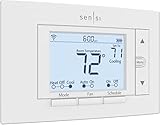
Overview: The Sensi Smart Thermostat ST55 combines Emerson’s century of HVAC expertise with modern privacy-focused smart home technology. Designed to mirror traditional thermostats in appearance and operation, it offers a familiar interface while delivering intelligent energy management and robust data protection for the conscientious homeowner.
What Makes It Stand Out: Sensi’s uncompromising privacy pledge ensures your personal data never becomes a commodity, a rare commitment in today’s connected landscape. The built-in level and intuitive app-guided installation eliminate professional setup costs, while its ability to operate without a C-wire in most systems dramatically expands compatibility across older homes.
Value for Money: This mid-priced thermostat delivers exceptional value through DIY installation and energy savings of approximately 23% on HVAC costs. The combination of no installation fees, broad system compatibility, and comprehensive maintenance alerts creates long-term value that exceeds its modest upfront investment and reduces service calls.
Strengths and Weaknesses: Strengths include robust privacy protection, straightforward installation, traditional button interface, detailed usage reports, and proactive maintenance reminders. Weaknesses involve fewer third-party integrations compared to competitors, a basic non-touch display, and limited presence detection capabilities without additional sensors.
Bottom Line: The Sensi ST55 is ideal for privacy-conscious homeowners wanting smart functionality without complexity. Its traditional design and Emerson reliability make it a trustworthy choice that prioritizes user data protection while delivering meaningful energy savings.
3. ecobee Smart Thermostat Essential - Energy Star Certified programmable Wi-Fi Thermostat - Works with Siri, Alexa, and Google Assistant

Overview: The ecobee Smart Thermostat Essential brings the brand’s reputable smart climate control to a more accessible price point. This ENERGY STAR certified device balances essential features with ecobee’s renowned energy optimization, supporting all major voice assistants while maintaining the core functionality that made ecobee a household name in smart climate management.
What Makes It Stand Out: The vibrant color touchscreen provides intuitive on-device control absent in many budget competitors. ecobee’s commitment to continuous improvement through free software updates ensures your thermostat evolves with technology, while the optional Power Extender Kit offers a clean solution for C-wire-limited installations without requiring wall damage or professional help.
Value for Money: As ecobee’s entry-level offering, it delivers 23% annual energy savings and robust app control at a competitive mid-range price. The compatibility checker prevents costly purchase mistakes, and while the PEK and trim kit are sold separately, the base unit provides excellent value for multi-platform smart homes seeking quality without premium cost.
Strengths and Weaknesses: Strengths include excellent voice assistant support, user-friendly touchscreen, reliable scheduling, comprehensive energy tracking, and high compatibility. Weaknesses are the lack of included remote sensors, lower savings percentage than ecobee’s premium model, and additional costs for C-wire accessories.
Bottom Line: The ecobee Essential is a smart choice for users wanting reliable, multi-platform smart thermostat functionality without premium pricing. Its touchscreen interface and software support make it a future-proof investment for most modern homes.
4. ecobee Smart Thermostat Premium with Smart Sensor and Air Quality Monitor - Programmable Wifi Thermostat - Works with Siri, Alexa, Google Assistant

Overview: The ecobee Smart Thermostat Premium represents the pinnacle of smart climate management, combining energy optimization with indoor air quality monitoring and home security features. This flagship device includes an array of sensors and premium materials that justify its position at the top of ecobee’s product line for discerning homeowners.
What Makes It Stand Out: The built-in air quality monitor transforms the thermostat into a comprehensive wellness device, alerting you to pollutants and providing actionable improvement tips. The included SmartSensor eliminates hot and cold spots by adjusting temperatures based on occupancy, while radar-based presence detection offers superior accuracy compared to traditional motion sensors and integrates with ecobee’s security ecosystem.
Value for Money: Though premium-priced, the included $50 SmartSensor and Power Extender Kit add immediate value. The 26% energy savings exceed most competitors, and the integrated air quality monitoring eliminates the need for separate devices, making the total package cost-effective for those wanting maximum home intelligence and health monitoring.
Strengths and Weaknesses: Strengths include comprehensive air quality monitoring, included remote sensor, premium build quality, radar occupancy detection, doorbell camera integration, and high system compatibility. Weaknesses involve the highest price point in the comparison and potentially overwhelming features for users wanting simple temperature control.
Bottom Line: The ecobee Premium is unmatched for homeowners prioritizing indoor air quality and comprehensive home monitoring. While overkill for basic needs, it’s a worthwhile investment for those wanting the most advanced climate and wellness management available.
5. meross Smart Thermostat for Home, WiFi Thermostat Works with Matter, Alexa, Apple Home, Google Assistant, App & Voice Control, 7x24h Scheduling, Energy Saving, C-Wire Required

Overview: The meross Smart Thermostat positions itself as a forward-thinking option by embracing the new Matter standard, promising seamless interoperability across major smart home platforms. Designed for broad HVAC compatibility covering 95% of systems, it targets tech-savvy users wanting to future-proof their home automation setup and avoid ecosystem lock-in.
What Makes It Stand Out: As one of the early Matter-certified thermostats, it offers local control and reduced latency compared to cloud-only alternatives. The 24/7 flexible scheduling provides granular control over heating and cooling routines, while smart alerts proactively notify you of filter changes and system issues, preventing costly HVAC problems before they escalate.
Value for Money: Competitively priced for a Matter-compatible device, it delivers multi-platform support without locking you into a single ecosystem. The potential 23% energy savings and comprehensive scheduling features provide solid returns, though the C-wire requirement for some configurations may necessitate additional wiring costs or professional installation.
Strengths and Weaknesses: Strengths include Matter certification for future-proof connectivity, broad HVAC compatibility, detailed scheduling, multi-platform app support, and proactive maintenance alerts. Weaknesses involve the complex C-wire requirements for certain systems, a less established brand reputation, and potential compatibility issues with two-wire or millivolt setups that require careful pre-purchase verification.
Bottom Line: The meross thermostat is ideal for early adopters embracing Matter standards. While installation may require extra research, its platform-agnostic design and robust scheduling make it a smart long-term investment for compatible homes.
6. Google Nest Thermostat - Smart Thermostat for Home - Programmable Wifi Thermostat - Charcoal
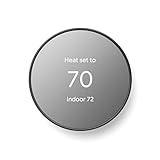
Overview:
The Google Nest Thermostat represents the tech giant’s entry-level smart climate control solution. This ENERGY STAR certified device connects via dual-band WiFi and Bluetooth Low Energy, offering modern convenience in a sleek charcoal finish. Designed to work without a C wire in most homes, it automatically adjusts temperatures when you leave, preventing energy waste in empty houses.
What Makes It Stand Out:
The standout feature is its intelligent occupancy detection that turns itself down when you’re away, integrating seamlessly with the Google Home app for schedule programming and remote control. Family members can adjust temperatures from anywhere using phones, tablets, or laptops. The thermostat’s compatibility checker tool helps avoid installation surprises.
Value for Money:
Positioned as an affordable smart thermostat, it delivers core features without premium pricing. However, the caveat about C wire requirements for heating-only, zone-controlled, and heat pump systems may necessitate additional installation costs that diminish its value proposition compared to competitors offering power adapter kits.
Strengths and Weaknesses:
Strengths include effortless scheduling, reliable remote access, proven energy savings, and broad compatibility without a C wire in most setups. Weaknesses are the lack of a lock feature, mandatory C wire for certain system types, and fewer advanced features than higher-end Nest models. The absence of room sensors limits multi-zone precision.
Bottom Line:
This thermostat excels for Google ecosystem users seeking straightforward smart climate control. Verify your system’s compatibility first, especially for heat pumps or zone control, to avoid unexpected installation expenses.
7. New! Honeywell Home Smart Thermostat, Conventional/Heat Pump Compatibility, WiFi Thermostat for Home, X2S, Gray

Overview:
Honeywell’s X2S smart thermostat brings Matter certification and conventional/heat pump compatibility to the mid-range market. This gray WiFi-enabled device emphasizes flexible scheduling and energy management through the First Alert app, replacing the RTH6580 with enhanced 2H/2C conventional and 2H/1C heat pump support.
What Makes It Stand Out:
Matter certification ensures future-proof interoperability across smart home platforms. The thermostat offers unparalleled scheduling flexibility with 5-1-1 day, 5-2 day, 7 day, or non-programmable options. Demand response capability and filter change reminders add practical utility, while extended 32°F low-heat setpoint serves specialized applications.
Value for Money:
The mid-range price includes energy program participation and rebate opportunities, offsetting initial investment. However, mandatory C-wire requirement without included workarounds may add installation costs. The two-year warranty provides peace of mind uncommon in this category.
Strengths and Weaknesses:
Strengths include Matter certification for broad compatibility, multiple scheduling formats, humidity monitoring, and utility rebate eligibility. Weaknesses are the absolute C-wire requirement, reliance on the less-known First Alert app, and utilitarian design lacking the premium aesthetic of competitors. No room sensors or occupancy detection limits advanced functionality.
Bottom Line:
Ideal for homeowners prioritizing scheduling versatility and future-proof connectivity. Confirm C-wire availability before purchasing, as installation complexity may require professional help, making it better suited for technically prepared buyers.
8. Honeywell Home T9 WiFi Smart Thermostat with 1 Smart Room Sensor, Touchscreen Display, White
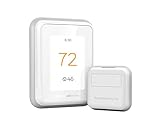
Overview:
The Honeywell Home T9 elevates smart climate control with included room sensing technology. This ENERGY STAR certified white thermostat features a touchscreen display and comes with one battery-powered Smart Room Sensor, enabling targeted temperature management throughout your home via the Resideo app.
What Makes It Stand Out:
The proprietary sensor technology delivers an impressive 200-foot signal range, automatically detecting occupied rooms to focus comfort where needed. Multi-room focus capability allows prioritizing multiple areas simultaneously, while Auto Home/Away scheduling adapts to your routine. Utility Demand Response Programs offer additional savings opportunities.
Value for Money:
The premium price is justified by the included sensor and advanced zoning capabilities. Energy provider rebates can significantly reduce cost, and the potential for enrollment in utility incentive programs enhances long-term value. Additional sensors expand functionality but increase total investment.
Strengths and Weaknesses:
Strengths include exceptional sensor range, multi-room targeting, broad platform compatibility (Alexa, HomeKit, Google Assistant), and intuitive touchscreen interface. Weaknesses involve requiring multiple sensors for full home coverage (only one included), higher base cost, and potential signal interference in complex home constructions. The sensor dependency means reduced functionality without proper placement.
Bottom Line:
Perfect for multi-level or large homes where single-point temperature measurement falls short. The sensor system genuinely differentiates it from basic smart thermostats, making it worth the premium for families seeking room-by-room comfort optimization.
9. Emerson Sensi Touch Wi-Fi Smart Thermostat with Touchscreen Color Display, Works with Alexa, Energy Star Certified, C-wire Required, ST75 Black 5.625" x 3.4" x 1.17"

Overview:
Emerson’s Sensi Touch targets privacy-conscious consumers with a sleek black design featuring a vibrant color touchscreen. This ENERGY STAR certified thermostat promises 23% HVAC energy savings through flexible scheduling and remote access, available in black, white, and silver finishes to complement home décor.
What Makes It Stand Out:
Emerson’s explicit privacy protection pledge—not selling personal data to third parties—addresses growing consumer concerns. The built-in level and illuminated easy-click terminals simplify DIY installation, while the large color display offers intuitive menu navigation. The compact dimensions (5.625" x 3.4" x 1.17") suit various wall spaces.
Value for Money:
Competitively priced for a touchscreen model, delivering solid energy savings claims. However, mandatory C-wire requirement without included adapter may necessitate professional installation, offsetting initial savings. No room sensors mean limited expansion compared to similarly priced competitors.
Strengths and Weaknesses:
Strengths include robust privacy policy, straightforward installation design, attractive aesthetic options, and proven energy efficiency. Weaknesses are the strict C-wire requirement, absence of occupancy sensors or learning capabilities, and smaller brand ecosystem limiting advanced integrations. The requirement to use Emerson’s specific app may fragment smart home management.
Bottom Line:
An excellent choice for privacy-focused homeowners comfortable with DIY installation prerequisites. Verify C-wire availability beforehand, as this thermostat prioritizes data security and design over cutting-edge smart features.
10. ecobee Smart Thermostat Enhanced - Programmable Wifi Thermostat - Works with Siri, Alexa, Google Assistant - Energy Star Certified - Smart Home
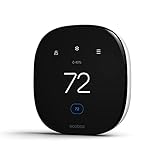
Overview:
The ecobee Smart Thermostat Enhanced represents the premium tier of intelligent climate management. This ENERGY STAR certified device claims up to 26% annual heating and cooling cost savings through advanced occupancy sensing and adaptive learning, packaged with a Power Extender Kit for broad system compatibility.
What Makes It Stand Out:
Built-in radar occupancy detection preheats or precools homes before arrival, while learning algorithms adapt to temperature preferences and humidity levels. The included Power Extender Kit and Trim Kit enable DIY installation on 90% of HVAC systems, eliminating common C-wire obstacles. Comprehensive assistant support includes Siri, Alexa, and Google Assistant.
Value for Money:
Premium pricing is offset by included installation accessories and superior energy savings claims. The radar-based occupancy detection provides more reliable presence sensing than geofencing alone, justifying cost for tech enthusiasts. No additional sensor purchases required for core functionality enhances overall value.
Strengths and Weaknesses:
Strengths include cutting-edge radar occupancy detection, included installation kit, multi-assistant compatibility, and adaptive learning capabilities. Weaknesses involve higher price point, potential overkill for smaller homes or simpler needs, and learning period requiring patience for optimal performance. The radar technology may raise privacy concerns despite benefits.
Bottom Line:
The top choice for homeowners wanting maximum automation and energy efficiency. Its advanced occupancy detection and included installation kit remove common barriers, making it ideal for tech-savvy users seeking a truly “smart” thermostat experience.
Why Smart Thermostat Remotes Are Essential for 2026 Energy Goals
The Evolution of Home Climate Control
Traditional thermostats operate on rigid schedules that don’t account for spontaneous schedule changes, weather fluctuations, or occupancy variations. Smart thermostat remotes eliminate these inefficiencies by providing dynamic control from anywhere in the world. In 2026, these devices incorporate machine learning that analyzes your household’s behavior patterns, local weather forecasts, and even utility rate structures to make micro-adjustments that accumulate significant savings over time. The remote functionality ensures you never waste money heating or cooling an empty home because you forgot to adjust the temperature before leaving.
Remote Access and Real-Time Adjustments
The core value proposition lies in the ability to monitor and modify your home’s temperature from your smartphone, tablet, or computer. Whether you’re stuck at the office late, arriving home early from a trip, or simply lounging in bed, instant access prevents energy waste. Advanced models in 2026 feature ultra-responsive apps with minimal latency, ensuring commands execute immediately. This capability proves especially valuable during unexpected weather events when you can pre-heat or pre-cool your home during off-peak hours, leveraging time-of-use electricity rates for maximum savings.
Energy Monitoring and Reporting Features
Modern smart thermostat remotes provide granular data about your HVAC system’s performance, breaking down energy usage by day, week, and month. These detailed reports help identify consumption spikes, inefficient equipment operation, and opportunities for behavioral changes. Look for devices that offer comparative analytics, showing how your usage stacks up against similar homes in your region. This benchmarking motivates conservation efforts and helps quantify the financial impact of your energy-saving strategies with precision.
Key Features to Look for in Modern Smart Thermostat Remotes
Advanced Scheduling Capabilities
Beyond basic 7-day programming, contemporary smart remotes support flexible scheduling that adapts to irregular routines. The most effective models offer multiple daily periods, vacation modes that resume normal schedules upon your return, and temporary hold functions that automatically revert to programmed settings. Some devices even suggest schedule optimizations based on your actual usage patterns, gradually refining the program to eliminate waste without compromising comfort.
Geofencing Technology
Geofencing uses your smartphone’s location to determine when you’re approaching or leaving home, triggering automatic temperature adjustments. This feature ensures optimal comfort upon arrival while maintaining energy-saving setbacks when the house is empty. The best implementations allow for multi-user geofencing, recognizing when the last person leaves and the first person returns. In 2026, refined geofencing reduces false triggers from quick trips to nearby stores and offers customizable radius settings to match your commuting patterns.
Multi-Zone Climate Management
Homes with multiple HVAC zones benefit enormously from smart remotes that can control each area independently. Rather than heating or cooling unused guest rooms or basements, you can maintain different temperatures in different zones based on occupancy and time of day. Advanced systems support room-specific sensors that feed data back to the main controller, creating micro-climates that eliminate hot and cold spots while concentrating energy only where it’s needed.
Voice Control Integration
Hands-free operation through Alexa, Google Assistant, or Siri adds convenience and encourages more frequent adjustments. Instead of navigating through app menus, you can simply say “set the temperature to 72 degrees” or “activate away mode.” The most sophisticated integrations understand natural language commands like “make it cooler in here” or “I’m going to bed,” executing pre-configured scenes that adjust temperature, lighting, and other environmental factors simultaneously.
Learning Algorithms and AI Adaptation
True smart thermostats observe your manual adjustments over time and automatically create personalized schedules that match your preferences. They recognize patterns like weekend vs. weekday routines, seasonal preference shifts, and even how long your specific home takes to reach target temperatures. In 2026, AI-powered devices factor in humidity levels, solar gain through windows, and thermal mass of your home’s construction to optimize HVAC runtime and minimize energy consumption.
Humidity and Air Quality Sensors
Temperature represents only part of comfort and efficiency. Integrated humidity sensors allow smart remotes to manage dehumidification and humidification equipment, preventing the HVAC system from overcooling in summer just to reduce moisture. Air quality sensors detect volatile organic compounds (VOCs) and CO₂ levels, automatically increasing ventilation when needed. This holistic approach ensures energy isn’t wasted addressing the wrong problem—like cooling when dehumidifying would suffice.
Weather Integration and Predictive Adjustments
Connection to hyperlocal weather services enables your thermostat to anticipate outdoor conditions and pre-adjust accordingly. If a cold front is moving in overnight, the system can gradually pre-heat your home using cheaper off-peak electricity rather than waiting for the temperature drop and then using expensive peak power. Similarly, sunny days trigger preemptive cooling adjustments before solar gain overheats your space. This predictive capability represents one of the most significant energy-saving advances in 2026 models.
Energy Usage Analytics and Insights
Comprehensive dashboards display not just current usage but projected monthly costs based on recent trends. The most advanced systems correlate energy consumption with external factors like outdoor temperature, humidity, and electricity rates, helping you understand what drives your bills. Some even provide specific recommendations, such as “lowering your away temperature by 2 degrees could save $15 monthly,” turning abstract data into actionable savings strategies.
Smart Home Ecosystem Compatibility
In 2026, isolated devices waste potential. Smart thermostat remotes should integrate seamlessly with your broader home automation platform, communicating with smart blinds, ceiling fans, and window sensors. When your smart blinds close during afternoon sun, the thermostat can reduce cooling output. If window sensors detect open windows, the system automatically pauses HVAC operation. This synergy multiplies energy savings beyond what any single device could achieve alone.
Backup Power and Offline Functionality
Reliability concerns disappear with devices that include battery backup and local control capabilities. While Wi-Fi connectivity enables advanced features, your heating and cooling shouldn’t fail during internet outages. Quality smart remotes store schedules locally and continue operating essential functions even when cloud services are unavailable. Some newer models include cellular backup for critical alerts, ensuring you never return to a frozen or overheated home due to connectivity issues.
Understanding Energy Savings Mechanisms
How Smart Scheduling Reduces Waste
Every degree of temperature adjustment for an 8-hour period saves approximately 1% on heating and cooling bills. Smart remotes maximize these setbacks by ensuring they occur reliably whenever possible. The devices calculate optimal recovery times, ramping up temperature gradually before you wake or return home rather than maintaining constant temperatures. This approach eliminates the most expensive heating and cooling cycles while ensuring comfort when needed.
The Impact of Occupancy Detection
Beyond geofencing, advanced occupancy sensors detect movement within the home, distinguishing between active living areas and empty spaces. This data allows the system to implement room-specific setbacks and avoid conditioning unused zones. Some 2026 models even integrate with security system sensors to create a comprehensive occupancy map, fine-tuning climate control with remarkable precision and preventing energy waste in forgotten spaces.
Optimizing HVAC Efficiency Through Data
Smart remotes monitor your system’s runtime patterns, identifying inefficiencies like short-cycling or unusually long heating cycles. This diagnostic capability alerts you to maintenance needs—such as filter changes or refrigerant leaks—before they become costly problems. By ensuring your HVAC equipment operates at peak efficiency, these devices protect your investment while maintaining optimal energy performance throughout the equipment’s lifespan.
Installation and Setup Considerations
Wiring Compatibility and C-Wire Requirements
Most smart thermostat remotes require a common wire (C-wire) to provide continuous power for Wi-Fi connectivity and display functions. Before purchasing, verify your existing wiring or budget for adapter installation. Some newer models include power-stealing technology or battery options for systems without C-wires, but these solutions may limit feature availability or require more frequent maintenance. Professional assessment of your HVAC system’s compatibility prevents installation headaches.
Professional vs. DIY Installation
While many smart thermostats offer straightforward DIY installation with step-by-step app guidance, complex multi-zone systems or heat pump configurations benefit from professional setup. Certified installers ensure proper wiring, configure advanced settings correctly, and validate system operation across all modes. The investment in professional installation often pays dividends through optimized performance and preserved manufacturer warranties.
Mobile App Interface Quality
The remote control experience lives or dies by the mobile application’s design. Evaluate apps for intuitive navigation, quick access to common functions, and reliable performance across iOS and Android platforms. The best interfaces provide one-tap access to common scenes, clear energy dashboards, and customizable alerts. Read recent app store reviews to gauge software stability and the frequency of updates, as a poorly maintained app can cripple an otherwise excellent hardware device.
Maximizing Your Energy Savings in 2026
Setting Up Effective Temperature Ranges
The Department of Energy recommends 68°F for heating and 78°F for cooling when you’re home and awake. Smart remotes make these setbacks painless by automatically implementing them and learning your comfort boundaries. Configure wider setbacks for away periods—typically 7-10 degrees difference—to maximize savings. The key is consistency; smart automation ensures these ranges are maintained reliably without requiring daily manual intervention.
Leveraging Away Modes and Vacation Settings
Extended absence features go beyond simple temperature setbacks. Advanced away modes monitor for pipe-freezing conditions, maintain minimal humidity control to prevent mold, and can simulate occupancy for security. Vacation settings integrate with your return travel plans, gradually restoring comfortable temperatures before arrival. These intelligent modes protect your home while achieving maximum energy conservation during your absence.
Integrating with Utility Programs and Rebates
Many utility companies offer substantial rebates for installing qualified smart thermostats and provide additional incentives for enrolling in demand response programs. These initiatives allow the utility to make minor temperature adjustments during peak demand periods in exchange for bill credits. Smart remotes in 2026 seamlessly participate in these programs, automatically managing the complex scheduling while ensuring you remain comfortable and financially rewarded.
Frequently Asked Questions
How much can I realistically save with a smart thermostat remote in 2026?
Most households reduce heating and cooling costs by 10-30 percent annually, translating to $150-$400 in typical climates. Savings depend on your previous thermostat habits, local energy rates, home insulation quality, and how actively you use the smart features. Homes upgrading from manual thermostats see the greatest impact, while those replacing basic programmable models typically save an additional 8-15 percent through enhanced automation and remote access.
Do smart thermostat remotes work without internet connectivity?
Essential heating and cooling functions continue operating on locally stored schedules during internet outages. However, remote access, voice control, weather integration, and energy reporting require Wi-Fi connectivity. Premium models include cellular backup for critical alerts and limited remote commands. The device reverts to a pre-configured default schedule if cloud services become unavailable for extended periods, ensuring your home remains comfortable and protected.
Will a smart thermostat remote work with my older HVAC system?
Most systems manufactured after 1980 with standard low-voltage wiring are compatible. However, high-voltage electric baseboards, millivolt gas fireplaces, and some proprietary communicating systems require specific thermostat models. Verify voltage requirements, wire count, and system type (conventional, heat pump, dual-fuel) before purchasing. Many manufacturers offer online compatibility checkers where you can upload photos of your current thermostat wiring for verification.
How difficult is it to install a smart thermostat remote myself?
DIY installation typically takes 30-60 minutes for standard systems with existing C-wires. The process involves turning off power, labeling wires, removing the old unit, mounting the new base, connecting wires to labeled terminals, and configuring settings through the mobile app. Complex scenarios—lack of C-wire, multi-zone systems, or heat pump configurations—warrant professional installation to avoid equipment damage or suboptimal performance.
Can smart thermostat remotes control multiple zones independently?
Yes, but this requires either multiple thermostats (one per zone) or a master thermostat with remote sensors and zone control dampers. The app consolidates control of all zones into a single interface, allowing independent scheduling and temperature settings for each area. This configuration maximizes energy savings by conditioning only occupied zones and addressing temperature variations between different floors or solar exposures.
What happens to my smart thermostat remote when I move?
Smart thermostats are designed for removal and reinstallation. Document your wiring configuration before uninstalling, and take the device with you as personal property. Perform a factory reset to remove your data and disconnect from your account. The new homeowners can install a basic thermostat or purchase their own smart model. Some manufacturers offer transfer programs that provide installation discounts to new owners while deactivating your old device from their servers.
Are smart thermostat remotes secure from hacking?
Reputable manufacturers implement bank-level encryption for data transmission and store minimal personal information. Enable two-factor authentication on your account, use strong unique passwords, and keep firmware updated. In 2026, most devices include local processing options that reduce cloud dependency and potential exposure. While no connected device is entirely risk-free, smart thermostats present lower security concerns than many other IoT devices due to their limited data scope and robust security standards.
How do smart thermostat remotes handle daylight saving time changes?
Quality devices automatically adjust for daylight saving time based on their internet connection and location settings. The transition occurs seamlessly without manual intervention, preserving your carefully crafted schedules. During the time change, verify that the adjustment occurred correctly, especially for critical wake-up temperature recovery times. Most systems also handle time zone changes automatically if you travel with the mobile app across regions.
Can I control my smart thermostat remote when traveling internationally?
Global internet access allows worldwide control through the mobile app or web interface. Time zone differences are handled automatically, with schedules executing based on your home’s local time. Some apps may experience latency from distant servers, but core functionality remains available. Ensure your mobile device has international roaming or Wi-Fi access, and consider enabling email alerts for critical notifications if app push notifications are unreliable on foreign networks.
What maintenance do smart thermostat remotes require beyond traditional thermostats?
The primary additional maintenance involves keeping the firmware and mobile app updated, which typically occurs automatically. Clean the display and sensors quarterly with a dry cloth, and replace batteries in wireless sensors annually. Monitor email alerts for filter change reminders and system efficiency warnings. Unlike mechanical thermostats, smart models have no moving parts to wear out, but their lifespan is typically 8-12 years due to evolving technology rather than hardware failure.
See Also
- 10 Must-Have Programmable Thermostat Covers for Energy Savings in 2026
- 10 Must-Have Smart Thermostat Remotes for Seamless Home Automation in 2026
- 2026’s Top 10 Programmable Thermostat Remotes for Energy Savings
- 10 Premium Smart Thermostat Remotes for Tech-Savvy Homes (Worth the Investment)
- How to Optimize Energy Savings with Learning Smart Thermostats