Table of Contents
Imagine coming home on a sweltering summer day to a perfectly cooled living space, without ever lifting a finger to adjust the thermostat. That’s the seamless reality smart portable air conditioners are delivering today—and by 2026, they’re evolving into indispensable hubs of home automation ecosystems. No longer just cooling boxes on wheels, these intelligent units learn your routines, anticipate weather shifts, and integrate with everything from lighting to security systems. They’re transforming how we interact with our indoor environments, turning passive climate control into an active, intuitive extension of modern living.
The days of guessing the right temperature or wasting energy cooling empty rooms are fading fast. Smart portable ACs now leverage AI-driven insights to optimize comfort while slashing energy bills, all through your smartphone or voice commands. But with rapid advancements in connectivity and automation, choosing the right unit requires understanding which features truly matter for your lifestyle. This guide cuts through the noise, focusing on the essential capabilities that define next-generation cooling—so you can invest in a system that doesn’t just respond to your needs but anticipates them. Let’s explore what makes a smart portable AC a future-proof cornerstone of home automation.
Top 10 Smart Portable Air Conditioners
Detailed Product Reviews
1. DREO Portable Air Conditioners, 8000 BTU ASHRAE (5000 BTU DOE) Smart AC Unit for Bedroom with Drainage-free Cooling, 45dB Quiet, APP/Voice/Remote, Portable AC for Room Indoors, AC318S

Overview: The DREO AC318S is a compact 8,000 BTU ASHRAE (5,000 BTU SACC) portable air conditioner designed for bedrooms or small living spaces up to 14 ft. coverage. It offers smart climate control via app, voice commands, and remote, alongside cooling, fan, and dehumidifying functions.
What Makes It Stand Out: Its patented drainage-free system evaporates moisture automatically below 90% humidity, eliminating manual draining—a rare feature in this class. The noise-isolation tech achieves a whisper-quiet 45dB operation, ideal for sleep, while the IceCool System delivers rapid cooling across a wide 61°F–86°F range. Seamless integration with Alexa, Google Home, and the DREO app adds convenience.
Value for Money: Priced mid-range, it justifies cost with premium features like true drainage-free operation and exceptional quietness, outperforming budget models that require frequent draining or lack smart controls. Competitors at similar prices often omit humidity-specific automation.
Strengths and Weaknesses: Strengths: Near-silent operation; no-drain convenience; responsive app/voice control; effective dehumidification. Weaknesses: Lower SACC rating (5,000 BTU) limits coverage vs. ASHRAE claims; drain hose needed above 90% humidity; app occasionally glitchy.
Bottom Line: An excellent choice for light-sleepers needing quiet, low-maintenance cooling in small rooms. Its drainage-free innovation and smart features deliver standout value despite modest SACC output. Highly recommended for bedrooms.
2. BLACK+DECKER Smart Portable Air Conditioner, 12,000 BTU for Rooms up to 550 Sq. Ft., Smart Portable AC with Follow Me Remote and Window Kit, BPACT12WT, White

Overview: This 12,000 BTU (8,000 BTU SACC) BLACK+DECKER unit cools spaces up to 550 sq. ft., featuring Wi-Fi, voice control, and three-in-one functionality (cooling, dehumidifying, fan). It includes a window kit and top-mounted LED controls for straightforward setup.
What Makes It Stand Out: The “Follow Me” remote acts as a mobile thermostat, adjusting cooling based on its location—unique for precise room-wide comfort. High SACC efficiency and robust 550 sq. ft. coverage suit larger rooms, while app/voice control via Alexa or Google Assistant ensures modern convenience.
Value for Money: Competitive for its coverage capacity, though premium pricing reflects the Follow Me tech. Budget ACs lack this feature, while similarly priced units often cover smaller areas. Ideal if precise temperature targeting is a priority.
Strengths and Weaknesses: Strengths: Excellent room coverage; innovative Follow Me remote; reliable smart controls; includes full window kit. Weaknesses: Noisy at 52dB (less ideal for bedrooms); app interface feels dated; dehumidification mode less potent than dedicated units.
Bottom Line: Best for larger spaces where targeted cooling matters most. The Follow Me remote is a game-changer for unevenly cooled rooms, though noise may deter light sleepers. Recommended for living areas or offices.
3. Midea 10,000 BTU ASHRAE (7,100 BTU SACC) Portable Air Conditioner, Smart Control, Cools up to 300 Sq. Ft., with Dehumidifier & Fan mode, Easy- to-use Remote Control & Window Installation Kit Included

Overview: Midea’s 10,000 BTU ASHRAE (7,100 BTU SACC) portable AC efficiently cools rooms up to 300 sq. ft. It combines cooling, dehumidifying, and fan modes with user-friendly digital controls, a washable filter, and included installation kit.
What Makes It Stand Out: Effortless installation via adjustable window brackets (26.5–48") and tool-free setup make it ideal for renters. The washable air filter enhances air quality, while SmartHome app integration and Alexa/Google compatibility offer seamless smart control without complexity.
Value for Money: Excellent mid-tier value—covers moderate spaces reliably at a fair price. Outperforms cheaper models with superior build quality and included accessories, though premium brands add more automation features.
Strengths and Weaknesses: Strengths: Simple, tool-free installation; washable filter for cleaner air; intuitive app and physical controls; compact footprint. Weaknesses: Limited to 300 sq. ft.; no drainage-free tech (requires manual emptying); app lacks advanced scheduling.
Bottom Line: A hassle-free solution for small apartments or bedrooms. Prioritizes simplicity and air quality over cutting-edge tech, making it perfect for first-time buyers. Highly recommended for straightforward, reliable cooling.
4. BLACK+DECKER Smart Portable Air Conditioner,12,000 BTU, for Rooms Up To 550 Sq. Ft., Portable AC with Inverter Compressor & Window Kit, BPACT08NM, White

Overview: This BLACK+DECKER model uses inverter compressor technology to cool rooms up to 550 sq. ft. as a 12,000 BTU (8,000 BTU SACC) unit. It includes Wi-Fi, three-in-one functionality, and a window kit for versatile climate control.
What Makes It Stand Out: The inverter compressor adjusts cooling output dynamically for consistent temperatures and 30% greater energy efficiency—a rarity in portable ACs. This reduces noise fluctuations and long-term electricity costs, complemented by robust smart app control.
Value for Money: Higher upfront cost is justified by energy savings and durability. While non-inverter competitors are cheaper initially, this unit pays off over time in larger spaces. Ideal for eco-conscious users prioritizing efficiency.
Strengths and Weaknesses: Strengths: Energy-efficient inverter tech; strong 550 sq. ft. coverage; quiet operation during stable cooling; reliable app integration. Weaknesses: Premium price point; no unique features like Follow Me remote; installation slightly fiddlier than Midea.
Bottom Line: A top pick for large rooms where efficiency matters. The inverter compressor delivers quieter, cost-effective cooling, though budget buyers may prefer simpler alternatives. Recommended for long-term use in living areas.
5. DR.PREPARE 8,000 BTU Portable Air Conditioner with WiFi Enabled, Cooling, Dehumidifier, Fan & Sleep Modes 4-in-1 Portable AC w/Remote Control & 67’’ Window Kit, Cools Up To 350 sq. ft, 1-24H Timers

Overview: DR.PREPARE’s 8,000 BTU unit is a 4-in-1 system (cooling, fan, dehumidifier, sleep) for spaces up to 350 sq. ft. It features Wi-Fi, 45dB quiet operation, and a 67" window kit, emphasizing mobility and health-focused design.
What Makes It Stand Out: The 46-pint/day dehumidifier mode outperforms most rivals, ideal for humid climates. Tool-free assembly, 4-roll casters, and a reusable mesh filter prioritize user convenience and air purity. Memory function retains settings after power loss—a thoughtful touch.
Value for Money: Strong mid-range contender with exceptional dehumidification and mobility. Matches pricier models in features while undercutting them, though SACC efficiency is average. Best for damp environments needing versatile use.
Strengths and Weaknesses: Strengths: Powerful dehumidification; ultra-portable design; health-focused filter; intuitive timer/scheduling. Weaknesses: Remote lacks batteries; window kit suits only sliding windows; cooling less potent than 12K BTU units.
Bottom Line: The go-to for humid regions or allergy sufferers. Its dehumidifying prowess and portability outweigh modest cooling limits. Recommended for bedrooms or basements where moisture control is critical.
6. Midea 8,500 BTU ASHRAE (5,000 BTU SACC) Portable Air Conditioner, Smart Control, Cools up to 150 Sq. Ft., with Dehumidifier & Fan mode, Easy- to-use Remote Control & Window Installation Kit Included
Overview: This compact Midea portable AC targets small spaces (up to 150 sq. ft.), offering cooling, dehumidification, and fan functions with smart connectivity. Ideal for apartments or home offices, it prioritizes user-friendly operation and app-based control.
What Makes It Stand Out: SmartCool technology enables remote management via the MSmartHome app and voice assistants (Alexa/Google), while the washable air filter ensures cleaner air. The straightforward window kit installation and 24-hour timer add practical convenience without complex setup.
Value for Money: Priced mid-range, it delivers solid value for small-room cooling. The included window kit, app control, and energy-efficient SACC rating justify the cost compared to basic non-smart models, though larger spaces require pricier units.
Strengths and Weaknesses: Strengths: Intuitive app/voice control; quiet operation for small rooms; easy installation; reusable filter reduces long-term costs. Weaknesses: Limited to very small areas (150 sq. ft.); SACC rating (5,000 BTU) underperforms ASHRAE claims in humid climates; no auto-evaporation requires manual draining.
Bottom Line: An excellent choice for cooling tiny spaces efficiently with smart features, but avoid for larger rooms. Best for renters seeking hassle-free, connected comfort in studios or small bedrooms.
7. KOVIET 12000 BTU Portable Air Conditioners, 6-IN-1 Wi-Fi Smart AC Unit with APP & Voice & Remote Control, Auto-Evaporation, Quiet Cooling, 24H Timer, Dehumidifier, Fan, Window Kit Included, White

Overview: KOVIET’s 12,000 BTU unit cools spaces up to 300 sq. ft. with energy-efficient performance, leveraging auto-evaporation and quiet engineering. Its 6-in-1 functionality (Cool/Dry/Fan/ECO/Sleep/Turbo) caters to diverse climate needs.
What Makes It Stand Out: Auto-evaporation tech minimizes drainage needs by up to 50%, while advanced noise reduction (quieter than rainfall) and a rotary compressor suit light sleepers. The KOVIET app offers granular control over temperature (61°F–86°F), humidity (30%–70%), and custom schedules.
Value for Money: Competitive pricing for its power class, especially with 30% energy savings vs. standard units. The auto-evaporation and robust smart features outshine similarly priced models, though premium brands charge more for comparable specs.
Strengths and Weaknesses: Strengths: Exceptional quietness; reduced drainage frequency; precise app controls; versatile 6-mode system; strong cooling for medium rooms. Weaknesses: Window kit may not fit all frames; ECO mode sacrifices cooling speed; app interface occasionally glitchy per user reports.
Bottom Line: A top pick for medium rooms needing whisper-quiet, low-maintenance cooling with smart versatility. Ideal for bedrooms or offices where noise and drainage hassle are concerns.
8. Portable Air Conditioners, 16000 BTU Smart Room Air Conditioner with Cooling/Dehumidifier/Fan, auto Oscillation, 24-Hour Timed Remote Control

Overview: This high-capacity 16,000 BTU unit targets large rooms (estimated 350–400 sq. ft.), featuring auto-oscillation, dehumidification, and smart scheduling. It emphasizes quiet operation and safety with child lock.
What Makes It Stand Out: Auto-oscillation distributes cool air widely, while water-full protection prevents overflow—a rarity in budget models. The 24-hour timer and remote enable energy-saving schedules, and child lock adds family-friendly security.
Value for Money: Budget-friendly for its BTU rating, but lacks refinements like app control or auto-evaporation. Better value than basic 10K–12K BTU units for large spaces, though premium rivals offer smarter features at higher cost.
Strengths and Weaknesses: Strengths: Powerful cooling for large areas; effective dehumidifier; child lock safety; quiet operation; simple setup. Weaknesses: Vague room size claims (“up to [insert] sq. ft.”); no smart connectivity; requires frequent manual draining; oscillation noise can be noticeable.
Bottom Line: A functional, no-frills solution for large rooms needing brute cooling power, but skip if you prioritize smart features or minimal maintenance. Best for garages or spacious living areas on a budget.
9. Midea Duo 14,000 BTU(12,000 BTU SACC) High Efficiency Inverter, Quiet Portable Air Conditioner, Cools up to 550 Sq.Ft., Works with Alexa/Google Assistant, Includes Remote Control&Window Kit (Renewed)

Overview: Midea’s Duo uses dual-hose inverter technology to cool large spaces (550 sq. ft.) efficiently. As a renewed (refurbished) unit, it promises premium performance at a lower cost, with smart controls and ultra-quiet operation.
What Makes It Stand Out: The industry-first dual-hose system prevents hot air infiltration and boosts cooling speed by 2X. Inverter tech saves 40%+ energy, while 42dB operation rivals library silence. Wi-Fi/app control and Alexa/Google compatibility add modern convenience.
Value for Money: Excellent value as a renewed model—delivers high-end features (inverter, dual-hose) below retail. Outperforms single-hose rivals in efficiency and cooling, though new units cost significantly more for similar specs.
Strengths and Weaknesses: Strengths: Unmatched cooling speed/efficiency; near-silent operation; energy savings; strong smart integration; effective for large rooms. Weaknesses: Renewed status risks minor wear; window kit fiddly for tall windows; SACC rating (12,000 BTU) may underdeliver in extreme heat.
Bottom Line: A standout for large spaces seeking quiet, efficient cooling. Highly recommended for buyers comfortable with refurbished electronics—ideal for living rooms or master bedrooms.
10. ROVSUN WiFi Enabled Smart 8000 BTU Portable Air Conditioner with Remote & APP Control, 3-in-1 Cooler, Dehumidifier & Fan, Powerful Room Mobile AC Unit with Rolling Wheels & Easy Installation Kit
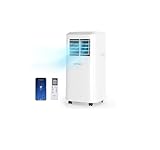
Overview: ROVSUN’s 8,000 BTU unit cools rooms up to 300 sq. ft. with 3-in-1 functionality (cooling/dehumidifier/fan), mobility features, and app control. Targets versatile use in bedrooms, offices, or apartments.
What Makes It Stand Out: 360° casters and side handles enable effortless room-to-room movement—uncommon in portables. The app offers remote scheduling, while the 2-speed fan and sleep mode enhance comfort. Window kit fits both sliding and double-hung windows.
Value for Money: Affordable for its smart features and mobility. Competes well with Midea’s smaller model but offers better coverage (300 sq. ft. vs. 150 sq. ft.), though KOVIET provides more BTUs at similar prices.
Strengths and Weaknesses: Strengths: Best-in-class mobility; simple app control; effective 3-in-1 flexibility; easy window installation; reusable filter. Weaknesses: Cooling lags in rooms over 250 sq. ft.; app lacks humidity controls; dehumidifier capacity is modest.
Bottom Line: Perfect for renters needing portable, app-controlled cooling across multiple small-to-medium rooms. Choose for mobility and simplicity, but opt for higher-BTU models if cooling larger spaces.
Core Principles of Smart Climate Control
Understanding Adaptive Cooling Technology
Adaptive cooling uses built-in sensors to monitor room conditions in real-time, adjusting fan speed and cooling intensity based on occupancy, sunlight exposure, and even your sleep cycle. Unlike basic models that run at fixed settings, these systems prevent overcooling by detecting when you’ve left the room or when natural shade reduces heat gain. This dynamic response ensures consistent comfort while minimizing energy waste, making it non-negotiable for 2026’s efficiency standards.
The Role of Predictive Intelligence
Predictive features analyze historical usage patterns alongside weather forecasts to pre-cool spaces before peak heat hits. For instance, if your schedule shows you arrive home at 6 PM daily, the unit might start lowering temperatures at 5 PM—only when electricity rates are lower. This foresight, powered by machine learning, transforms reactive cooling into proactive comfort planning, reducing strain on the grid and your wallet.
Seamless Integration with Home Ecosystems
True smart ACs function as collaborative nodes within your broader automation setup. They trigger actions like closing smart blinds when detecting intense sunlight or syncing with air purifiers during high-pollen days. Prioritize units with open-platform compatibility (like Matter protocol support) to avoid vendor lock-in and ensure smooth communication across diverse devices.
Connectivity and Control Essentials
Unified App Experience Across Devices
A robust mobile app serves as your central command center, offering more than just on/off toggles. Look for interfaces that display real-time energy consumption, filter life indicators, and customizable automation routines—like “Movie Night” mode that gradually lowers temps as showtime approaches. Cross-platform reliability (iOS/Android) and guest access for family members are equally critical for daily usability.
Voice Command Versatility
Beyond basic “Hey Google, cool the room,” advanced voice control handles nuanced requests like “Set bedroom to 72° for the next two hours.” Ensure compatibility with multiple assistants (Alexa, Siri, Google Assistant) and verify natural language processing accuracy. Units that support voice-activated scheduling or multi-room commands without requiring intermediary hubs offer the most frictionless experience.
Remote Access and Geofencing Capabilities
Geofencing uses your smartphone’s location to activate cooling as you approach home, ensuring comfort upon arrival. But 2026’s top-tier systems add layers like weather-responsive adjustments—pausing cooling if a sudden storm cools the area—or remote troubleshooting for technicians. Reliable cloud connectivity with strong encryption is vital here to prevent latency or security gaps.
Energy Intelligence and Sustainability
Real-Time Consumption Monitoring
Gone are the days of opaque energy use. Modern units break down hourly/daily costs and compare them to historical data, highlighting savings from smart features. Some even integrate with utility apps to shift operation to off-peak hours automatically. This transparency empowers you to refine habits and maximize ROI through actionable insights.
Eco-Mode Optimization Algorithms
Eco-modes now go beyond simple fan-speed reductions. Sophisticated algorithms balance temperature precision with minimal compressor runtime, using ambient humidity data to maintain comfort at slightly higher setpoints. Units that dynamically adapt Eco-mode based on outdoor conditions (e.g., dry vs. humid heat) deliver superior efficiency without sacrificing perceived comfort.
Renewable Energy Synergy
Forward-thinking models sync with home solar systems or battery storage, prioritizing cooling during surplus energy production. Others offer “green scheduling” that aligns high-power operation with community renewable energy availability. As grid-aware tech becomes standard, this feature will be key for eco-conscious households aiming for net-zero impact.
User Experience and Practicality
Intuitive Physical Controls as Backup
Despite app dominance, tactile controls remain essential during Wi-Fi outages or for less tech-savvy users. Seek units with responsive touch panels or dials that mirror app functionality, plus clear status indicators (e.g., color-coded energy use LEDs). Haptic feedback and braille labeling elevate accessibility without complicating design.
Noise Reduction Through Smart Engineering
Advanced inverter compressors and insulated ducting cut operational noise to library-quiet levels—critical for bedrooms or offices. The best 2026 units use AI to adjust fan curves based on time of day (e.g., whisper mode overnight), while vibration-dampening wheels ensure silent mobility. Always check decibel ratings at multiple fan speeds, not just idle mode.
Customizable Automation Workflows
Move beyond preset modes with fully personalized routines. Examples include “Wake-Up Cooling” that gradually lowers temps before your alarm, or “Party Mode” that boosts airflow when motion sensors detect multiple people. Platforms allowing IF-THEN logic (e.g., “IF air quality drops, THEN increase fan speed”) offer unparalleled adaptability for unique household needs.
Installation and Maintenance Considerations
Simplified Venting Solutions for Renters
Innovative venting kits now use magnetic seals or windowless exhaust tech, eliminating permanent modifications. Look for kits with adjustable panels that fit non-standard windows and include thermal insulation to prevent heat leakage. Quick-release hoses enable effortless seasonal storage—a must for apartment dwellers.
Self-Diagnosing Maintenance Alerts
Proactive health monitoring detects issues like refrigerant leaks or clogged filters before they impact performance. Alerts specify exact actions (e.g., “Clean condenser coils—video guide available”) and can schedule service appointments via the app. Units with filter-change indicators tied to actual usage—not just time—prevent unnecessary replacements.
Modular Design for Longevity
Repairability is the new sustainability. Choose systems with swappable components (like fans or sensors) and standardized parts. Brands offering firmware updates to add features post-purchase extend hardware relevance, while modular construction means replacing a faulty module—not the entire unit—when repairs are needed.
Frequently Asked Questions
How do smart portable ACs differ from traditional models?
Smart units integrate sensors, Wi-Fi, and AI to automate temperature adjustments based on occupancy, weather, and usage patterns. They connect to home ecosystems for unified control, whereas traditional models require manual operation and lack energy-optimization features.
Can these units significantly reduce energy bills?
Yes—through adaptive cooling, geofencing, and eco-modes, they avoid cooling empty rooms and leverage off-peak energy rates. Many users report 20-30% savings compared to conventional portables by eliminating wasted runtime and optimizing efficiency.
Is a strong Wi-Fi connection mandatory?
While core cooling functions work offline, smart features like remote control, automation, and energy tracking require stable Wi-Fi. Units with local processing can maintain basic routines during outages but need connectivity for advanced personalization.
Do they work with all smart home platforms?
Compatibility varies. Prioritize units supporting Matter or Works With Alexa/Google/Siri certifications. Open-protocol devices integrate more broadly, while proprietary systems may limit expansion to one brand’s ecosystem.
How complex is installation for renters?
Modern venting kits use no-drill solutions like adjustable window panels or wall sleeves, taking under 15 minutes to install. Magnetic seals and flexible exhaust hoses prevent damage, and most kits include thermal insulation to maintain window integrity.
Are maintenance demands higher than standard ACs?
No—self-diagnosing alerts actually simplify upkeep. Filter replacements and coil cleanings remain essential, but predictive notifications prevent neglect. Smart sensors also reduce mechanical strain, potentially extending the unit’s lifespan.
Can voice control handle nuanced temperature requests?
Top-tier models process natural language commands like “Make the living room cooler for yoga” by linking to preset routines. However, precision (e.g., “Set to 71.5°”) often works better via apps due to voice recognition limitations in noisy environments.
What room size do they effectively cool?
Always match BTU capacity to your space—undersized units overwork, while oversized ones cause humidity issues. Smart models excel by dynamically adjusting output, but base selection on square footage first. Use online BTU calculators considering ceiling height and sun exposure.
Why is humidity control crucial in smart ACs?
Excess moisture makes air feel warmer, forcing higher cooling. Advanced units monitor humidity and adjust dehumidification separately from temperature, maintaining ideal comfort (40-60% RH) while reducing energy use—especially vital in humid climates.
How do I future-proof my purchase?
Choose units with Matter protocol support, modular hardware, and brands committed to long-term software updates. Avoid closed ecosystems that can’t integrate new devices, and verify firmware upgrade paths for emerging automation standards.
See Also
- 10 Must-Have Smart Portable Air Conditioners for Ultimate Comfort in 2026
- The 10 Best Smart Portable Air Conditioners for Home Automation in 2026
- 10 Best Smart Window Air Conditioners for Home Automation in 2026
- The 10 Ultimate Best Smart Window Air Conditioners for Home Automation in 2026
- 10 Must-Have Portable Air Conditioners with Dehumidifier for Humid Climates in 2026