Table of Contents
Stepping into a frigid garage during winter months can feel like entering a different world—one where tools feel brittle, projects stall before they start, and even basic tasks become a battle against the cold. For homeowners and serious DIYers, a reliably warm workspace isn’t just a luxury; it’s essential for productivity, safety, and protecting valuable equipment. Permanent natural gas garage heaters offer a seamless, efficient solution, integrating directly with your home’s existing fuel source to deliver consistent, powerful warmth without the hassle of cords, tanks, or fumes of portable alternatives. Imagine starting your project on a snowy Saturday morning with the space already cozy, ready for you to dive straight into building, restoring, or organizing.
Unlike temporary heating methods that drain your wallet or compromise air quality, a professionally installed natural gas heater transforms your garage into a year-round functional extension of your living space. It eliminates the constant refilling, noisy operation, and potential safety hazards associated with kerosene or propane units, while avoiding the high electricity costs of plug-in heaters. The key lies in choosing the right permanent system—one designed specifically for the unique demands of a garage environment, where durability, precise temperature control, and absolute safety are non-negotiable. Understanding the critical features and considerations before investing ensures you get reliable comfort for decades, not just a season.
Top 10 Natural Gas Garage Heaters
Detailed Product Reviews
1. Mr. Heater F260550 Big Maxx MHU50NG Natural Gas Unit Heater,Black

Overview: The Mr. Heater Big Maxx MHU50NG is a robust, ceiling-mounted forced-air heater designed for large, drafty spaces like garages, workshops, and barns. Utilizing natural gas, it delivers substantial heating power to transform cold workspaces into functional environments efficiently. Its industrial-grade build targets users needing reliable spot heating for non-living areas. What Makes It Stand Out: Boasting 50,000 BTUs capable of heating up to 1,667 sq ft (roughly a 3-car garage), its standout feature is high-capacity coverage. Compatibility with standard 24V or modern Wi-Fi thermostats offers flexible, precise temperature control, a significant upgrade over basic manual units for tech-savvy users seeking convenience. Value for Money: Priced competitively for its output level, it delivers excellent value for large-space heating where central systems are impractical or inefficient. While installation requires professional help (gas line, venting), its efficiency in targeted heating often offsets higher operational costs compared to electric alternatives for similar coverage. Strengths and Weaknesses: Strengths: Exceptional heating capacity for large areas; versatile thermostat compatibility; durable ceiling-mount design; relatively efficient forced-air circulation. Weaknesses: Requires professional installation and separate thermostat; not suitable for living spaces due to noise; significant upfront cost for unit and setup. Bottom Line: An ideal, powerful solution for heating large workshops or garages where high BTU output is critical; highly recommended for its capacity and control options, despite installation complexity and noise limitations for non-living areas.
2. Mr. Heater Natural Gas Unit Heater 50,000 BTU/Hr. MHU50NG

Overview: This Mr. Heater model is a natural gas, ceiling-mounted unit heater targeting smaller workshops, garages, or commercial spaces up to 700 sq ft. It provides focused forced-air heating using reliable natural gas and features practical installation components right out of the box. What Makes It Stand Out: Its compact size for 50,000 BTUs is notable, efficiently heating medium spaces. The self-diagnostic spark ignition system enhances reliability by identifying issues, while included angle brackets simplify ceiling mounting. Easy external access to thermostat and AC terminals streamlines electrical connections during setup. Value for Money: Offers solid value for its targeted coverage area (700 sq ft), undercutting larger-capacity models like the Big Maxx when full 1,600+ sq ft heating isn’t needed. The included mounting hardware reduces initial setup costs, making it a cost-effective choice for appropriately sized spaces compared to overpowered alternatives. Strengths and Weaknesses: Strengths: Self-diagnostic ignition improves reliability; included mounting hardware; compact yet powerful for medium spaces; easy terminal access simplifies wiring. Weaknesses: Lower coverage (700 sq ft) vs. other 50K BTU models; still requires professional gas installation; venting requirements add complexity/cost; not for residential living areas. Bottom Line: A dependable, well-priced option for heating medium-sized garages or workshops up to 700 sq ft; recommended for its ease of installation features and reliable ignition, provided the space size matches its capacity.
3. Modine HD45AS0111Natural Gas Hot Dawg Garage Heater 45,000 BTU with 80-Percent Efficiency Grey
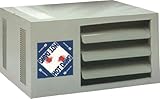
Overview: The Modine Hot Dawg HD45AS0111 is a commercial-grade, horizontal-ducted natural gas heater engineered for quiet, efficient heating in residential garages, workshops, and light commercial settings. Its 45,000 BTU output and 80% efficiency target reliable performance in spaces up to approximately 1,200 sq ft. What Makes It Stand Out: Certified for residential and commercial use, it offers exceptional versatility and safety compliance. The low-profile, neutral grey design blends discreetly, while the standard power exhaust simplifies venting through sidewalls or roofs using small-diameter pipe. Field wiring knockouts expedite electrical and gas connections significantly. Value for Money: Positioned at a premium price point justified by its commercial build quality, broader certification, and quiet operation. The ease of installation (knockouts, power exhaust) saves on labor costs. It’s a superior long-term investment over basic garage heaters, especially where quietness and durability are priorities. Strengths and Weaknesses: Strengths: Quiet operation ideal for attached garages; certified for diverse applications; simplified venting and wiring; durable commercial construction; attractive low-profile design. Weaknesses: Higher initial cost than basic models; 45K BTU limits coverage vs. 50K models; professional installation essential; power exhaust requires electricity. Bottom Line: Highly recommended for homeowners and businesses needing a quiet, durable, and versatile heater; its commercial pedigree and ease of installation make it worth the premium for serious workshop or garage heating needs.
4. ProCom Heating Natural Gas Ventless Infrared Plaque Heater With Base Feet - 30,000 BTU, T-Stat Control - Model# MN300TPA-B

Overview: The ProCom MN300TPA-B is a compact, ventless infrared plaque heater designed for residential living spaces like bedrooms, living rooms, or offices. Using natural gas, it silently heats up to 1,400 sq ft via radiant infrared heat, offering flexible placement with included wall-mount hardware or base feet. What Makes It Stand Out: Its ventless design eliminates complex installation (no flue/chimney needed), while the infrared technology provides immediate, focused radiant warmth. Key differentiators include built-in high/medium/low thermostat control, ANSI safety certification, and crucially, an oxygen depletion sensor (ODS) for automatic shutdown if unsafe conditions arise. Battery-free operation ensures function during power outages. Value for Money: Excellent value for supplemental or primary zone heating in smaller homes. The lack of installation complexity (beyond gas line connection) and zero electricity requirement significantly reduce setup and operational costs compared to vented or electric heaters, especially in outage-prone areas. Strengths and Weaknesses: Strengths: Truly portable (wall/floor); silent infrared heat; no electricity needed; ODS safety sensor; modern aesthetic; thermostat control. Weaknesses: Strictly for well-ventilated living spaces (check local codes); 30K BTU may be insufficient for very large rooms; requires direct gas line connection; ventless models prohibited in some jurisdictions. Bottom Line: A top choice for safe, efficient, and stylish supplemental heating in code-compliant residential spaces; highly recommended for its versatility, safety features, and independence from electrical power.
5. 30,000 BTU Vent Free Blue Flame Natural Gas Heater

Overview: This straightforward vent-free natural gas heater delivers 30,000 BTUs of convective blue flame heat, suitable for warming enclosed spaces up to 1,000 sq ft. Designed primarily for residential use in areas like living rooms or bedrooms, it emphasizes simplicity and core functionality without advanced features. What Makes It Stand Out: Its primary advantage is ultimate simplicity and reliability: battery-operated ignition (battery included) ensures startup during power failures, and the built-in adjustable thermostat provides basic temperature management. The complete lack of electricity requirement is a major selling point for emergency backup or off-grid applications. Value for Money: Represents strong value as a no-frills, essential heater. The low purchase price combined with zero operational electricity costs makes it exceptionally economical to run. It’s significantly cheaper upfront and simpler to install than vented models, ideal for budget-conscious buyers needing basic supplemental heat. Strengths and Weaknesses: Strengths: Extremely simple operation; no electricity required; affordable purchase price; battery ignition for outages; easy thermostat adjustment. Weaknesses: Basic blue flame (less efficient/more drying than infrared); limited to 1,000 sq ft; ventless safety/legality concerns (check local codes); minimal aesthetic design; fewer features than ProCom model (e.g., no ODS detail specified). Bottom Line: A practical, budget-friendly option for basic supplemental heating in small-to-medium rooms where ventless heaters are permitted; recommended for its reliability during power outages and low operating cost, but verify local ventless heater regulations first.
6. Reznor 150,000 BTU Commercial Natural Gas Garage Heater Ceiling Mount, Warehouse, and Gas Shop Heater Unit | Quiet Forced Air, Low Static Propeller Fan | UDXC-150

Overview: The Reznor UDXC-150 is a robust commercial-grade natural gas heater designed for large spaces like warehouses, workshops, and garages. It delivers 150,000 BTU of heating power with an 83% thermal efficiency rating, utilizing forced-air technology for even heat distribution.
What Makes It Stand Out: Its standout features include the durable TCORE2 titanium-stabilized aluminized steel heat exchanger for longevity, patented single-burner combustion for consistent performance, and a low-static propeller fan ensuring quiet operation. The integrated circuit board with diagnostics and LED status indicators simplifies maintenance.
Value for Money: Priced competitively for commercial use, it justifies its cost through exceptional durability and energy efficiency. While initial investment is higher than budget units, reduced long-term operating costs and minimal downtime offset this, especially against less efficient alternatives.
Strengths and Weaknesses: Strengths: High BTU output for large areas, industrial-grade construction, versatile ceiling/wall mounting (brackets sold separately), and 83% efficiency. Weaknesses: No mounting hardware included, requires professional venting setup, and may be overpowered for small spaces.
Bottom Line: A top-tier investment for commercial settings demanding reliable, high-capacity heating; ideal for workshops or warehouses prioritizing durability over quick DIY installation.
7. Mr. Heater Natural Gas Unit Heater 80,000 BTU/Hr. MHU80NG
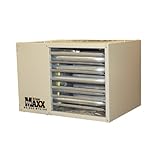
Overview: The Mr. Heater MHU80NG is a compact natural gas unit heater targeting residential garages and small workshops. With 80,000 BTU output, it efficiently heats spaces up to 1,000 square feet, featuring straightforward installation and reliable performance for everyday use.
What Makes It Stand Out: It excels with user-friendly spark ignition and a self-diagnostic control module that alerts users to operational issues, simplifying troubleshooting. The inclusion of two angle brackets for ceiling mounting adds immediate convenience compared to competitors requiring separate purchases.
Value for Money: Positioned as a budget-friendly option, it offers excellent affordability for smaller spaces. While less powerful than industrial models, its included mounting hardware and simple setup provide tangible savings on installation costs versus pricier commercial units.
Strengths and Weaknesses: Strengths: Easy DIY installation with included brackets, self-diagnostic ignition, compact size for tight spaces, and cost-effective operation. Weaknesses: Limited coverage area (1,000 sq ft), lacks advanced efficiency metrics, and basic construction may not withstand heavy commercial use.
Bottom Line: A practical, wallet-friendly choice for homeowners with small-to-medium garages who prioritize hassle-free setup and reliable supplemental heating.
8. Reznor 60,000 BTU Unit Natural Gas Heater Indoor Use Garage and Shop Heater | Quiet Forced Air, Ceiling Mount, Low Static Propeller Fan | UDXC-60
Overview: This Reznor UDXC-60 heater delivers targeted 60,000 BTU heating for smaller commercial or residential spaces like home workshops and compact garages. It maintains the series’ signature efficiency (83%) and quiet forced-air operation in a more space-conscious design.
What Makes It Stand Out: It inherits Reznor’s premium TCORE2 heat exchanger and single-burner technology for exceptional durability, paired with an intuitive circuit board display and status LEDs. Its flexible mounting system (ceiling or wall) accommodates varied layouts despite the lower BTU output.
Value for Money: Offers commercial-grade reliability at a mid-range price point, outperforming cheaper residential heaters in longevity. Savings come from reduced energy waste and minimal servicing needs, though it costs more upfront than entry-level models.
Strengths and Weaknesses: Strengths: Space-efficient yet powerful for small areas, 83% thermal efficiency, robust industrial build, and versatile mounting options. Weaknesses: Mounting brackets sold separately, venting components not included, and over-engineered for very small sheds.
Bottom Line: Highly recommended for owners of modest-sized workshops seeking a durable, efficient heater that bridges residential and commercial performance without excessive capacity.
9. Mr. Heater Corporation F260590 MHU125NG NG 125K BTU Unit Heater

Overview: The Mr. Heater MHU125NG is a versatile 125,000 BTU natural gas heater built for larger residential or light commercial spaces, covering up to 2,000 square feet. It emphasizes adaptability with features like propane conversion and powered exhaust.
What Makes It Stand Out: Its key differentiator is the included liquid propane conversion kit, allowing fuel flexibility uncommon in this segment. Powered exhaust ensures efficient venting, while electronic ignition provides reliable startup without manual pilot lighting.
Value for Money: Delivers strong bang-for-buck with its dual-fuel capability and broad coverage. Though efficiency ratings aren’t specified, the propane option adds value in areas with volatile gas prices, making it a cost-smart pick versus single-fuel alternatives.
Strengths and Weaknesses: Strengths: Propane conversion included, large 2,000 sq ft coverage, powered exhaust for safer operation, and electronic ignition. Weaknesses: No efficiency data provided, lacks advanced diagnostics, and build quality may not match premium commercial brands.
Bottom Line: An excellent flexible-heating solution for spacious garages or barns where fuel adaptability is critical, though not ideal for heavy-duty industrial use.
10. Reznor 175,000 BTU Commercial Natural Gas Garage Heater Ceiling Mount, Warehouse, and Gas Shop Heater Unit | Quiet Forced Air, Low Static Propeller Fan | UDXC-175
Overview: The Reznor UDXC-175 is a high-output commercial heater engineered for expansive industrial spaces like factories and large warehouses, boasting 175,000 BTU capacity and 83% thermal efficiency for rapid, uniform heating.
What Makes It Stand Out: It features the industry-leading TCORE2 heat exchanger for unmatched durability, patented combustion tech, and smart diagnostics via an integrated circuit board. The low-static fan ensures whisper-quiet operation even at maximum output—critical for noise-sensitive environments.
Value for Money: Commands a premium price but offers superior ROI through energy savings and decades-long reliability. It outperforms cheaper heaters in large facilities where downtime or inefficiency incurs significant costs, justifying its investment.
Strengths and Weaknesses: Strengths: Highest BTU in the series, exceptional build quality, quiet forced-air system, and versatile venting options. Weaknesses: Very high upfront cost, requires professional installation, and excessive for spaces under 5,000 sq ft.
Bottom Line: The definitive choice for large-scale industrial heating where performance, efficiency, and longevity are non-negotiable; avoid for smaller or budget-constrained projects.
Understanding Permanent Natural Gas Garage Heaters
Why Permanent Installation Outperforms Portable Options
Permanent natural gas heaters are hardwired into your home’s gas line and electrical system, offering unmatched reliability and convenience. Unlike portable units that require manual setup, fuel tank swaps, or extension cords, these systems operate silently and invisibly, kicking on automatically when heat is needed. They avoid the fire risks associated with flammable fuels stored near workbenches and eliminate tripping hazards from cords stretched across the floor. The consistent, draft-free warmth they provide is far superior to the spot heating of portables, creating a uniformly comfortable environment essential for detailed work or long projects.
Core Operating Principles Explained Simply
These heaters function by drawing in cool air, passing it over a heat exchanger warmed by a natural gas flame, and then distributing the warmed air back into the space via a powerful blower. Modern units utilize advanced combustion technology for exceptional efficiency, ensuring minimal fuel waste. Crucially, they incorporate sealed combustion systems, pulling 100% of the air needed for burning from outside the garage and expelling all combustion byproducts directly outdoors through dedicated venting. This critical design feature maintains pristine indoor air quality and eliminates any risk of carbon monoxide entering your workspace.
Essential Features for Garage-Specific Performance
Durability Built for Workshop Realities
Garages are tough environments—dust, metal shavings, temperature swings, and physical bumps are par for the course. A quality permanent heater features robust construction with powder-coated steel housings resistant to corrosion and impact. Critical internal components like the heat exchanger must be made from aluminized or stainless steel to withstand constant thermal cycling and potential exposure to fumes from paints, solvents, or vehicle exhaust. Look for units designed specifically for commercial or industrial settings, as they inherently meet the higher durability standards needed for a busy garage.
Precision Temperature Control Capabilities
Forget basic on/off switches. Effective garage heating requires nuanced control to match varying needs—whether you’re doing精细 woodworking requiring stable humidity or just keeping pipes from freezing. Integrated thermostats with programmable schedules allow you to set different temperatures for different times of day or days of the week, optimizing comfort and energy use. Advanced models offer modulating burners that adjust heat output incrementally rather than cycling fully on/off, maintaining a remarkably stable temperature and reducing wear on the system. Compatibility with smart home thermostats adds another layer of convenience and efficiency.
Quiet Operation for Focused Work
Noise can be a major distraction in a workspace. Permanent natural gas heaters designed for garages prioritize quiet operation through features like insulated cabinet construction, vibration-dampening mounts, and advanced blower wheel designs. Look for sound ratings measured in sones; lower numbers indicate quieter performance. A heater operating below 2-3 sones (comparable to a whisper) ensures you can focus on your project without the constant drone of a heater competing with your radio or podcast.
Sizing Your Heater Correctly for Optimal Results
Calculating Your Garage’s Actual Heating Load
Simply matching heater BTU output to garage square footage is a common and costly mistake. The true heating requirement (load) depends on multiple factors: insulation levels in walls, ceiling, and garage door; climate zone; number of windows; and ceiling height. A poorly insulated 2-car garage in Minnesota needs significantly more heating power than a well-insulated one in California. Professional sizing involves calculating heat loss through every surface. Undersizing leads to constant running and inadequate warmth; oversizing causes short cycling, poor humidity control, discomfort, and higher energy bills.
Impact of Insulation and Air Sealing
The effectiveness of any heater is dramatically influenced by your garage’s thermal envelope. Adding insulation to walls and ceiling (R-10 to R-19 is typical for garages) and ensuring the overhead door is well-sealed can reduce the required heater size by 25-50%. Pay special attention to sealing gaps around doors, windows, and where utilities enter the structure. Addressing air leaks is often the most cost-effective first step before selecting a heater, as it directly lowers the heating load and improves overall comfort and efficiency.
Ceiling Height Considerations
Standard garages often have 8-10 foot ceilings, but many modern homes feature 12-foot or higher ceilings in the garage. Warm air naturally rises, so higher ceilings create a larger volume of air to heat and can lead to significant temperature stratification (hot air near the ceiling, cold air at floor level). Heaters designed for high-ceiling applications often incorporate powerful horizontal airflow patterns or destratification features to push warm air down to the working level, ensuring efficient heat distribution where it’s needed most.
Critical Safety Systems You Cannot Compromise On
Sealed Combustion: The Non-Negotiable Standard
This is the absolute cornerstone of safe garage heating. Sealed combustion means the heater draws all combustion air from outdoors via a dedicated intake pipe and vents all combustion gases directly outdoors via an exhaust pipe. There is zero interaction between the heater’s combustion process and the air inside your garage. This eliminates the risk of dangerous carbon monoxide (CO) poisoning, backdrafting, or oxygen depletion—critical in an attached garage where fumes could potentially seep into living spaces. Never consider a heater that uses indoor air for combustion in a garage setting.
Multi-Stage Safety Lockouts and Sensors
Modern units incorporate redundant safety mechanisms. Flame sensors ensure the gas valve shuts off instantly if the flame goes out. Overheat protection cuts power if internal components exceed safe temperatures. Pressure switches verify that the exhaust venting system is functioning correctly before allowing ignition. High-limit switches act as a final backup if other controls fail. These systems work together to prevent fire hazards, gas leaks, and CO production, providing essential peace of mind. Ensure the heater meets current ANSI Z21.86 or CSA 2.3 safety standards.
Carbon Monoxide Detection Integration
While a sealed combustion heater should not produce CO indoors, installing standalone, battery-backed CO detectors in the garage and adjacent living spaces is still a vital safety practice. Some advanced heater models can integrate with whole-home safety systems, triggering alerts or shutdowns if a detector senses elevated CO levels, adding an extra layer of protection for your household.
Installation Requirements and Professional Considerations
Venting System Specifications and Options
Proper venting is as crucial as the heater itself. Most modern permanent garage heaters use direct-vent systems, requiring two concentric pipes (one inside the other) running through an exterior wall: the inner pipe exhausts combustion gases, while the outer pipe draws in fresh combustion air. The specific venting material (usually Type B gas vent or PVC/CPVC for certain high-efficiency models), maximum run length, and clearance requirements to combustibles are strictly dictated by the manufacturer and local codes. Improper venting is a leading cause of system failure and safety hazards.
Gas Line Sizing and Pressure Requirements
Your existing natural gas line must deliver sufficient volume (measured in cubic feet per hour - CFH) and pressure to meet the heater’s demand, especially if other gas appliances (furnace, water heater, stove) are operating simultaneously. An undersized gas line causes low-pressure lockouts, preventing the heater from igniting or causing it to shut down during operation. A qualified installer will calculate the required gas pipe diameter (often 3/4" or 1" black iron pipe) from the gas meter to the heater and ensure proper pressure regulation, potentially requiring upgrades to your home’s gas service.
Electrical Circuit and Thermostat Wiring Needs
Permanent heaters require a dedicated electrical circuit, typically 120V or 240V depending on the model and blower size. This circuit must be correctly sized (amperage) and include a disconnect switch within sight of the heater. Low-voltage thermostat wiring (usually 18-24 gauge) connects the heater to the thermostat location. Proper grounding and adherence to the National Electrical Code (NEC) are mandatory. Attempting DIY electrical work on these systems is dangerous and illegal in most jurisdictions.
Maximizing Efficiency and Long-Term Value
Understanding AFUE Ratings in Context
Annual Fuel Utilization Efficiency (AFUE) measures how efficiently a heater converts gas into usable heat over a typical year. While higher AFUE (80%+) is generally better, garage heaters operate differently than whole-house furnaces. Many efficient garage units operate in the 80-95% AFUE range. However, the real-world efficiency gain in an unconditioned garage space might be less dramatic than in a sealed home. Prioritize reliability, proper sizing, and correct installation over chasing the absolute highest AFUE number, as improper installation negates any theoretical efficiency benefit.
Strategic Placement for Optimal Airflow
Where you mount the heater significantly impacts performance. Avoid locations directly above workbenches where heat blasts down on you or where tools might obstruct airflow. Mounting high on a wall (often 6-8 feet) or suspended from the ceiling allows warm air to circulate effectively throughout the space. Ensure adequate clearance is maintained on all sides (as specified by the manual) for air intake and exhaust. Position the unit to direct airflow across the main working area, away from the garage door where cold drafts enter.
Maintenance Protocols for Peak Performance
Annual professional maintenance is essential for safety, efficiency, and longevity. This includes inspecting and cleaning the heat exchanger, checking gas pressure and combustion efficiency, verifying vent integrity, lubricating the blower motor (if applicable), and testing all safety controls. Homeowners can perform basic tasks like vacuuming dust from the air intake grill and ensuring the area around the heater remains clear of stored items. Neglecting maintenance leads to reduced efficiency, increased fuel costs, and potential safety shutdowns.
Navigating Costs and Long-Term Investment
Breaking Down Initial Investment Components
The total cost involves more than just the heater unit. Factor in the heater itself, all necessary venting materials (pipes, elbows, wall thimble), gas line materials if upgrades are needed, electrical components, and professional installation labor. Installation complexity (distance for venting/gas lines, attic access, wall type) significantly impacts the final price. While upfront costs are higher than portable heaters, the long-term operational savings and convenience often justify the investment for frequent garage users.
Calculating True Operating Costs
Natural gas is typically the most cost-effective heating fuel per BTU delivered. Calculate estimated annual operating costs by multiplying the heater’s BTU input by your local gas cost per therm (or CCF), then adjusting for the unit’s AFUE. For example: (50,000 BTU/hr * 1,000 hours of use * $1.20/therm) / (100,000 BTU/therm * 0.85 AFUE) = ~$70.71/year. Compare this to the significantly higher costs of electric resistance heating or frequent propane tank refills to see the long-term savings potential.
Warranty Coverage and What It Protects
Reputable manufacturers offer warranties ranging from 5 to 20 years, often covering the heat exchanger for the longest period (e.g., 10-20 years) and other parts for shorter terms (e.g., 5 years). Warranties typically require professional installation and annual maintenance to remain valid. Carefully review what is covered (parts, labor, specific components) and any exclusions (e.g., damage from improper venting or lack of maintenance). A strong warranty reflects the manufacturer’s confidence in the product’s durability.
Future-Proofing Your Garage Heating Solution
Smart Technology Integration Potential
Modern heaters increasingly offer compatibility with smart thermostats and home automation systems. This allows for remote temperature adjustments via smartphone, integration with voice assistants, geofencing (heating starts as you head home), and detailed energy usage reporting. While not essential, smart features enhance convenience and provide tools to further optimize energy consumption based on actual usage patterns.
Considering Potential Workshop Upgrades
If you plan to convert your garage into a dedicated workshop, art studio, or even a finished living space in the future, selecting a heater with higher capacity (within reason) or advanced zoning capabilities might be prudent. Ensure the system can handle potential increased insulation levels or the addition of climate-sensitive equipment like woodworking machinery that requires stable temperatures.
Frequently Asked Questions
How much does a professional installation typically cost?
Installation costs vary widely based on location, heater size, venting complexity, and necessary gas/electrical modifications, but typically range from $1,500 to $4,000 for a standard two-car garage setup. Always get multiple detailed quotes.
Can I install this heater myself to save money?
No. Natural gas installation requires specialized licensing, knowledge of complex building and mechanical codes, gas pressure testing, venting expertise, and electrical work. DIY installation is illegal in most areas, voids warranties, creates severe safety hazards, and will fail inspection.
How loud are these heaters during operation?
Modern units designed for garages prioritize quiet operation. Expect noise levels between 40-60 decibels (similar to a refrigerator hum or moderate rainfall) at typical mounting heights. Look for specific sone ratings; lower is quieter.
Do I need a special permit for installation?
Yes, nearly all jurisdictions require permits for gas line work, venting installations, and electrical connections related to permanent heating systems. Your licensed installer will handle pulling the necessary permits and scheduling required inspections.
Will this heater work if the power goes out?
Most forced-air natural gas heaters require electricity to power the blower and controls. They will not operate during a power outage unless connected to a whole-home generator or a dedicated heater-specific backup power source.
How often does the heater need servicing?
Annual professional maintenance is strongly recommended and often required to maintain the warranty. This ensures safe, efficient operation and identifies potential issues before they cause failures.
Can I use propane instead of natural gas?
Some heaters are dual-fuel capable, but most are specifically designed and certified for either natural gas or propane. Converting fuel types requires specific, manufacturer-approved components and must be done by a professional; never attempt a field conversion yourself.
What’s the minimum clearance required around the heater?
Clearance requirements (distance to combustibles like walls, ceilings, stored items) are strictly defined by the manufacturer and installation code (often 1-3 feet on sides, 6+ feet above). Never block the air intake or exhaust vents.
How long do these heaters typically last?
With proper installation, annual maintenance, and a quality unit, expect a lifespan of 15-25 years. Factors like usage intensity, garage environment (dust, humidity), and maintenance diligence significantly impact longevity.
Will this heat my garage quickly from freezing temperatures?
Heating speed depends on the heater’s BTU output relative to your garage’s heat loss. A correctly sized unit will bring a cold garage up to a comfortable temperature within 30-60 minutes, but it’s designed for maintaining temperature, not instant super-heating like a portable torpedo heater.
See Also
- 10 Must-Have Natural Gas Garage Heaters for Efficient Heating in 2026
- 10 Must-Have Natural Gas Garage Heaters for Whole-Garage Heating in 2026
- 10 Affordable Natural Gas Garage Heaters That Don’t Sacrifice Quality in 2026
- 10 Must-Have Portable Garage Heaters for Winter Vehicle Maintenance in 2026
- 10 Best Budget Natural Gas Garage Heaters Under $200 for Homeowners