Table of Contents
Imagine waking up to a home that’s already warmed to your perfect temperature, all because you murmured a command in your sleep. Or arriving after a long day to find your space cooled and comfortable, orchestrated by a simple voice note sent from your car. Voice-controlled thermostats promise this seamless blend of convenience and energy efficiency, turning climate control from a chore into an effortless part of your daily rhythm. But as technology races forward into 2026, the sheer variety of options can leave even the most tech-savvy homeowner feeling overwhelmed. Choosing the right one isn’t just about shouting at your wall—it’s about finding a system that truly adapts to your unique home, habits, and voice.
Let’s be honest: a thermostat that misunderstands you when you have a cold, clashes with your existing smart home setup, or guzzles energy despite its “smart” label defeats the purpose. The frustration of setting up a device only to discover it won’t talk to your favorite voice assistant, or worse, requires complex rewiring you didn’t anticipate, is all too real. This guide cuts through the 2026 hype to focus on what genuinely matters: identifying the features and compatibility factors that ensure your voice-controlled thermostat becomes a reliable, intuitive extension of your lifestyle—not another gadget gathering dust. We’ll explore the critical considerations beyond the glossy marketing, helping you invest in comfort that lasts.
Top 10 Voice Controlled Thermostats
Detailed Product Reviews
1. Amazon Smart Thermostat – Save money and energy - Works with Alexa and Ring - C-wire required

Overview:
The Amazon Smart Thermostat offers a straightforward upgrade from traditional models, focusing on energy savings and seamless Alexa integration. Designed for users already invested in Amazon’s ecosystem, it automates temperature adjustments based on home, away, and sleep modes while leveraging EPA-estimated energy savings. A C-wire is mandatory for installation.
What Makes It Stand Out:
Its tight integration with Alexa and Ring enables unique “comfort zones” using Echo devices or Amazon’s Air Quality Monitor for presence-based adjustments. Post-purchase rebate guidance simplifies accessing local energy provider incentives, enhancing immediate cost savings beyond the thermostat’s $50/year ENERGY STAR-estimated reduction.
Value for Money:
Priced competitively, it justifies cost through long-term energy bill reductions and included rebate support. While lacking advanced HVAC monitoring, its focus on core automation delivers solid ROI for Alexa-centric households, outperforming basic programmable thermostats but trailing premium models with occupancy sensing.
Strengths and Weaknesses:
Strengths: Simple Alexa voice control, strong energy-saving potential, easy setup for compatible systems, and rebate assistance. Weaknesses: C-wire requirement limits older home compatibility, no built-in occupancy sensors, and limited third-party platform support beyond Alexa/Ring.
Bottom Line:
Ideal for Amazon ecosystem users seeking hassle-free energy savings, though its C-wire dependency and narrow smart-home integration make it less versatile for multi-platform households. A reliable, cost-effective entry into smart thermostats.
2. Sensi Smart Thermostat, 100 Years Of Expertise, Wi-Fi, Data Privacy, Programmable, Easy DIY Install, Works With Alexa, Energy Star Certified, Mobile App, ST55
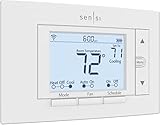
Overview:
The Sensi Smart Thermostat combines百年 expertise with user-friendly design, prioritizing privacy and DIY installation. ENERGY STAR-certified and C-wire optional for most systems, it targets homeowners wanting energy savings without complex setups or data-sharing concerns, featuring intuitive physical controls.
What Makes It Stand Out:
Sensi’s strict privacy policy—refusing to sell user data—is rare among smart thermostats. Its no-C-wire flexibility, built-in level for installation, and maintenance alerts (like filter reminders) cater to DIYers. The traditional thermostat aesthetic avoids wall damage during retrofitting.
Value for Money:
At a mid-range price, it offers exceptional value through 23% HVAC energy savings, robust privacy, and broad HVAC compatibility. The absence of subscription fees and included maintenance features provide long-term savings, outperforming budget models with weaker privacy or connectivity.
Strengths and Weaknesses:
Strengths: No C-wire needed for most setups, strong data privacy, easy retrofit installation, detailed usage reports, and Alexa compatibility. Weaknesses: Limited smart-home ecosystem support (primarily Alexa), basic app interface, and no advanced features like occupancy sensing.
Bottom Line:
A top choice for privacy-conscious users and DIY installers needing reliable, no-frills energy savings. While lacking cutting-edge automation, its simplicity and trustworthiness make it a worthwhile investment for mainstream households.
3. meross Smart Thermostat for Home, WiFi Thermostat Works with Matter, Alexa, Apple Home, Google Assistant, App & Voice Control, 7x24h Scheduling, Energy Saving, C-Wire Required

Overview:
The meross Smart Thermostat emphasizes Matter protocol compatibility and broad HVAC support (95% of systems), including heat pumps and humidifiers. It requires a C-wire and targets users seeking unified control across Apple, Google, and Alexa ecosystems via local Matter integration.
What Makes It Stand Out:
Seamless Matter support reduces app overload by enabling local control through Apple Home, Google Home, and SmartThings without cloud dependency. Smart alerts for filter life and malfunctions, plus granular 7-day scheduling, enhance proactive HVAC management and energy tracking.
Value for Money:
Priced affordably, it delivers high value for multi-platform smart homes through Matter compatibility and detailed energy reports. Savings from optimized scheduling justify the cost, though C-wire requirements may add installation expenses for older homes.
Strengths and Weaknesses:
Strengths: Excellent Matter integration, comprehensive HVAC compatibility, precise scheduling, real-time energy tracking, and multi-assistant support. Weaknesses: Mandatory C-wire for some setups, incompatible with baseboard heaters, and less polished app than competitors.
Bottom Line:
Best for tech-savvy users invested in Matter ecosystems wanting unified control and detailed energy insights. C-wire limitations and niche HVAC exclusions may deter some, but its future-proof protocol support is compelling.
4. ecobee Smart Thermostat Essential - Energy Star Certified programmable Wi-Fi Thermostat - Works with Siri, Alexa, and Google Assistant

Overview:
The ecobee Essential is a streamlined, ENERGY STAR-certified thermostat saving up to 23% on HVAC costs. It suits 85% of systems and offers touchscreen/app control with Siri, Alexa, and Google Assistant support. A C-wire isn’t required, but the PEK add-on is sold separately.
What Makes It Stand Out:
Its standout feature is broad voice assistant compatibility and free software updates ensuring longevity. The intuitive app tracks energy use remotely, while the Compatibility Checker minimizes installation risks. No C-wire necessity (with PEK) broadens accessibility.
Value for Money:
Competitively priced, it offers strong ROI via energy savings and ecosystem flexibility. The separate PEK cost slightly dings value, but Essential’s reliability and multi-assistant support outshine single-platform rivals, making it a smart mid-tier buy.
Strengths and Weaknesses:
Strengths: Triple voice assistant support, no mandatory C-wire (PEK sold separately), user-friendly app, and free updates. Weaknesses: PEK not included, lacks occupancy sensors, and basic scheduling vs. premium models.
Bottom Line:
A versatile, future-proof choice for multi-assistant households prioritizing energy savings. The Essential excels in compatibility but falls short on automation—opt for the Enhanced model if budget allows for occupancy features.
5. ecobee Smart Thermostat Enhanced - Programmable Wifi Thermostat - Works with Siri, Alexa, Google Assistant - Energy Star Certified - Smart Home
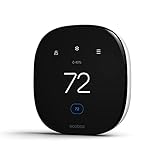
Overview:
ecobee’s Enhanced model builds on the Essential with radar-based occupancy sensing and a 26% energy-saving claim. It includes the Power Extender Kit (PEK) for C-wire-free installs, supports 90% of HVAC systems, and integrates deeply with major smart platforms.
What Makes It Stand Out:
Built-in radar occupancy detection preheats/cools homes before arrival—unique among competitors. Humidity-based adjustments, included PEK/trim kit, and learning capabilities create a highly personalized, efficient experience without extra purchases.
Value for Money:
Priced higher than the Essential, it justifies cost through advanced automation and included PEK. The 26% savings potential and radar tech deliver superior long-term value over basic models, especially for larger homes where occupancy sensing shines.
Strengths and Weaknesses:
Strengths: Radar occupancy sensing, included PEK, humidity adaptation, comprehensive platform support, and learning algorithms. Weaknesses: Premium price, complex setup for non-tech users, and occasional radar over-sensitivity.
Bottom Line:
The premium pick for automation enthusiasts seeking maximum comfort and savings. While costly, its radar tech and bundled accessories make it ecobee’s most compelling offering for those prioritizing intelligent, hands-off climate control.
6. Honeywell Home RTH9585WF1004 Wi-Fi Smart Color Thermostat, 7 Day Programmable, Touch Screen, Energy Star, Alexa Ready, Gray

Overview: The Honeywell Home RTH9585WF1004 is a premium Wi-Fi smart thermostat featuring a customizable color touchscreen. Designed for most forced-air, hot water, and heat pump systems (C-wire required), it offers 7-day scheduling, Energy Star certification, and compatibility with Alexa for voice control, aiming to enhance comfort while reducing energy consumption. What Makes It Stand Out: Its standout feature is the vibrant, personalized color touchscreen that blends with home décor, a rarity in this segment. The direct integration with utility Demand Response Programs is unique, potentially earning users rebates by allowing minor temperature adjustments during peak energy demand periods, beyond standard scheduling. Value for Money: Priced mid-to-high range, it justifies cost through robust utility program access and a premium, user-friendly interface. While competitors offer similar scheduling, the potential rebate earnings and distinctive color personalization add tangible value, especially for users in areas with active utility incentives. Strengths and Weaknesses: Strengths: Highly intuitive touchscreen; strong utility rebate/Demand Response integration; versatile 7-day scheduling; Energy Star certified. Weaknesses: C-wire mandatory (excluding some older homes); incompatible with electric baseboard heat; color customization is largely aesthetic with no functional benefit. Bottom Line: Ideal for homeowners seeking a visually adaptable thermostat with direct utility savings potential, the Honeywell RTH9585WF1004 excels in ease of use and energy program access, making it a worthwhile investment if compatible with your HVAC system and local utility offerings.
7. meross Smart Thermostat for Home, WiFi Thermostat Works with Matter, Alexa, Apple Home, Google Assistant, App & Voice Control, 7x24h Scheduling, Energy Saving, C-Wire Required

Overview: The meross Smart Thermostat is a versatile, Matter-compatible Wi-Fi thermostat supporting Apple Home, Alexa, Google Assistant, and more. It targets energy savings via 7x24 scheduling and remote app control, requiring a C-wire and fitting 95% of HVAC systems (excluding electric baseboard heaters and millivolt systems). What Makes It Stand Out: Its Matter protocol integration is key, enabling seamless, local, multi-platform control without constant cloud reliance, reducing app overload. The detailed energy usage tracking within the meross app for optimizing HVAC consumption is also a significant differentiator for cost-conscious users. Value for Money: Positioned competitively, it offers exceptional value through broad Matter compatibility and robust energy monitoring. The ability to work across Apple, Google, and Amazon ecosystems without subscription fees, plus actionable energy insights, justifies its price against single-platform alternatives. Strengths and Weaknesses: Strengths: Excellent Matter & multi-platform support; detailed energy usage tracking; comprehensive smart alerts (filter, malfunctions); flexible 24/7 scheduling. Weaknesses: Strict C-wire requirement; compatibility check essential (excludes some systems); app interface may feel less polished than Nest or Ecobee. Bottom Line: A top choice for smart home enthusiasts prioritizing Matter compatibility and granular energy data, the meross thermostat delivers strong value and cross-platform convenience, provided your HVAC system meets its wiring and compatibility requirements.
8. Google Nest Thermostat - Smart Thermostat for Home - Programmable Wifi Thermostat - Snow

Overview: The ENERGY STAR certified Google Nest Thermostat (Snow) learns your schedule to automatically adjust heating and cooling, aiming to save energy without sacrificing comfort. It works without a C-wire in most homes but may require one for specific systems like heat pumps, and connects via Wi-Fi for remote control and energy-saving features. What Makes It Stand Out: Its intuitive “Auto-Schedule” feature learns routines within days, eliminating manual programming. The “Savings Finder” proactively identifies additional energy-saving opportunities, and C-wire flexibility makes it accessible for many older homes compared to strict C-wire competitors. Value for Money: While priced higher, its learning capability, strong energy-saving potential (validated by ENERGY STAR), and C-wire flexibility in many installations offer solid value. Rebates often available through utilities further enhance affordability compared to thermostats requiring complex installation. Strengths and Weaknesses: Strengths: Learns schedules automatically; excellent energy-saving features (Savings Finder); no C-wire needed for many systems; clean design & app; strong remote access. Weaknesses: No physical lock feature; limited manual scheduling granularity; compatibility checker essential; some systems still need C-wire. Bottom Line: Highly recommended for users wanting a truly “set-and-forget” experience with proven energy savings, the Nest Thermostat’s learning ability and broad compatibility (C-wire or not) make it a reliable, valuable investment for most modern homes.
9. Google Nest Thermostat - Smart Thermostat for Home - Programmable Wifi Thermostat - Charcoal
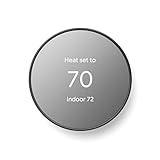
Overview: The Charcoal-colored Google Nest Thermostat delivers identical core functionality to its Snow counterpart: ENERGY STAR certified, learning-based temperature scheduling, and remote Wi-Fi control. It similarly targets energy savings by adapting to your habits and may operate without a C-wire depending on your HVAC system configuration. What Makes It Stand Out: Like the Snow model, its key strength is the adaptive learning algorithm that creates a schedule automatically, plus the Savings Finder tool. The Charcoal finish offers a sleeker, modern aesthetic option for users preferring darker accents in their home décor. Value for Money: Priced the same as Snow, it provides identical value—justifying cost through effortless automation, potential utility rebates, and energy savings. The color choice is purely stylistic; functional value hinges on the robust learning features and broad (though not universal) C-wire flexibility. Strengths and Weaknesses: Strengths: Automatic schedule learning; proactive Savings Finder; works without C-wire in most homes; seamless Google Home integration; elegant design (Charcoal). Weaknesses: Lack of schedule lock; limited manual programming depth; C-wire required for some systems; identical functionality to Snow (color only differs). Bottom Line: An excellent choice for aesthetic preference (Charcoal), this Nest Thermostat is identical in performance to the Snow model. Prioritize it if you prefer the darker finish, as it delivers the same top-tier learning capabilities and energy-saving potential for compatible homes.
10. vine Smart Thermostat for House, WiFi Thermostats for Home Compatible with Alexa and Google Assistant, 7day x 8period Programmable, Energy Star Certified, C-Wire Required

Overview: The vine Smart Thermostat is an Energy Star Certified, C-wire required Wi-Fi thermostat compatible with Alexa and Google Assistant. It supports 90% of 24V HVAC systems and features detailed 7-day, 8-period scheduling, Auto Home/Away mode, and practical utilities like filter change reminders for energy savings and comfort. What Makes It Stand Out: Its highly granular 7-day x 8-period scheduling offers exceptional flexibility for complex routines. The mandatory pre-purchase QR code compatibility check ensures user confidence, and multi-functional alerts (filter, temperature, malfunctions) provide comprehensive system oversight beyond basic thermostats. Value for Money: Positioned affordably, it delivers strong value through extensive scheduling options, Energy Star certification, and robust alert features. The dual-app support (Vine/Simple Life) and broad voice assistant compatibility offer flexibility often found in pricier models, especially for budget-conscious buyers. Strengths and Weaknesses: Strengths: Extremely flexible 7x8 scheduling; mandatory compatibility check reduces installation issues; useful multi-alert system; Energy Star certified; child lock feature. Weaknesses: Strict C-wire requirement; app ecosystem less polished than Google/Nest; Auto Home/Away may be less refined than Nest’s learning. Bottom Line: A compelling budget-friendly option for users needing precise scheduling control and essential smart features, the vine thermostat offers great value and practicality, provided your system passes its compatibility check and you prioritize scheduling granularity over advanced learning.
Understanding Your Core Compatibility Needs
Before diving into flashy features, laying the groundwork for seamless integration is non-negotiable. Your thermostat must speak the same language as your home’s infrastructure and your preferred voice ecosystem. Overlooking this step is the most common reason for post-purchase disappointment.
Voice Assistant Ecosystem Alignment
Your choice hinges significantly on which voice platform you already use daily—whether it’s the assistant built into your speakers, TV, or phone. Not all thermostats work equally well across different platforms. Some offer deep, native integration with one major assistant (allowing for nuanced commands and routines), while others provide only basic compatibility with several. Consider your primary voice hub: does it need to trigger complex multi-step routines involving other smart devices, or is simple temperature adjustment sufficient? Prioritizing alignment with your dominant ecosystem ensures smoother, more reliable voice control without frustrating workarounds.
Electrical System and Wiring Requirements
Don’t assume your existing wiring is ready. Older homes, in particular, may lack the crucial “C-wire” (common wire) that powers modern smart thermostats continuously. While many 2026 models offer workarounds like power extender kits, these can be finicky or void warranties. Check your current thermostat’s wiring before purchasing. If you’re unsure, consult a professional HVAC technician—trying to force compatibility can lead to system damage, inconsistent performance, or safety hazards. A thermostat that constantly reboots because it’s starved for power defeats the purpose of voice control.
Wi-Fi and Network Stability Essentials
Your thermostat is only as smart as your home network. Frequent Wi-Fi dropouts mean missed voice commands and disrupted scheduling. Assess your router’s coverage, especially near your HVAC system’s location (often in basements or utility closets with weak signals). Consider a mesh network system if dead zones exist. Additionally, ensure your thermostat supports your Wi-Fi band (2.4 GHz is standard for reliability; 5 GHz is faster but has shorter range). A thermostat that can’t maintain a stable connection becomes a frustrating paperweight, no matter how advanced its voice recognition.
Evaluating Essential Voice Control Capabilities
Voice control is the headline feature, but its effectiveness varies wildly. Understanding the nuances ensures your thermostat understands you clearly and acts precisely, even in noisy or complex situations.
Accuracy and Recognition in Real-World Settings
Lab-perfect voice recognition rarely survives the real world. Testimonials often reveal struggles with accents, background noise (like blenders or kids playing), or commands spoken from another room. Look for models emphasizing advanced noise cancellation and multiple microphones. Consider if it learns your voice over time or requires distinct wake words for different household members. A thermostat that constantly mishears “set to 72” as “set to 27” isn’t just annoying—it’s wasteful and undermines trust in the entire system.
Command Complexity and Natural Language Processing
Basic thermostats only respond to rigid phrases like “Set temperature to 70 degrees.” Advanced 2026 models leverage natural language processing (NLP), understanding context and conversational requests: “Make it a bit cooler in here,” “Will it be warm enough for the baby’s room by naptime?” or “What’s the temperature upstairs right now?” Evaluate how intuitively you can phrase requests without memorizing specific syntax. The best systems feel less like programming and more like giving a simple instruction to a helpful assistant.
Multi-User and Personalization Features
Households have diverse comfort needs. Does the thermostat distinguish between voices to apply personalized schedules or preferred temperatures? Can it recognize who’s speaking and adjust accordingly (e.g., your spouse prefers it warmer)? Robust multi-user support prevents constant manual overrides and ensures everyone in the home benefits from tailored comfort. This is especially valuable for households with varying routines or specific health-related temperature needs.
Prioritizing Privacy and Security Considerations
An always-listening device in your home demands serious attention to how your data is handled. Voice control convenience shouldn’t come at the cost of your privacy or network security.
On-Device Processing vs. Cloud Reliance
Some thermostats process voice commands directly on the device, minimizing data sent to the cloud—ideal for privacy-conscious users. Others send all audio snippets to remote servers for analysis, raising concerns about potential data storage or breaches. Investigate the manufacturer’s approach: does voice processing happen locally whenever possible? What data is stored, and for how long? Clear, transparent privacy policies are non-negotiable in 2026.
Physical Privacy Safeguards
Look for tangible controls you can trust. A physical mute button or switch that truly disables the microphone (often accompanied by a clear LED indicator) provides peace of mind when privacy is paramount, like during sensitive conversations. Avoid models relying solely on voice commands to mute, as you can’t verify it’s off. This simple hardware feature is a critical layer of user control.
Security Protocol Standards
Your thermostat is a potential entry point for hackers. Ensure it supports the latest Wi-Fi security protocols (WPA3 is ideal in 2026) and receives regular, automatic firmware updates to patch vulnerabilities. Check if the manufacturer has a dedicated security page detailing their practices. A thermostat compromised by malware could lead to energy theft, unauthorized access to your home network, or even physical system damage.
Assessing Installation and Usability Factors
Even the most advanced thermostat fails if setup is a nightmare or daily use feels clunky. Prioritize solutions designed for real-world practicality, whether you’re a DIY enthusiast or prefer professional help.
DIY-Friendly Design and Support
While professional installation is recommended for complex wiring, many 2026 models are designed for confident homeowners. Look for intuitive step-by-step mobile app guides with clear wiring diagrams (using your phone’s camera for visual matching is a plus), physical labels on terminals, and readily available online video tutorials from the manufacturer. Robust customer support channels (live chat, detailed FAQs) are essential if you hit a snag. Avoid setups requiring obscure tools or proprietary connectors.
Physical Interface as a Backup
Voice control is great—until your Wi-Fi drops or you have laryngitis. A responsive, intuitive touchscreen or physical buttons are crucial backups. Evaluate the display: is it clear in bright sunlight and dim light? Can you easily see the current temp, mode, and schedule at a glance? A thermostat that’s frustrating to use manually defeats the purpose of having a physical unit on your wall.
Mobile App Integration and Remote Control
Your voice commands are just one piece. The companion mobile app is your lifeline for scheduling, monitoring energy usage, receiving alerts (like extreme temperature warnings), and making adjustments when you’re away. Test the app’s interface in reviews: is it logically organized, fast, and reliable? Does it offer valuable insights beyond basic temperature changes, like usage reports or maintenance reminders? A poor app experience significantly diminishes the thermostat’s overall value.
Planning for Long-Term Value and Future-Proofing
Investing in a thermostat means choosing a device that stays relevant and functional for years, adapting as your needs and technology evolve. Avoid solutions that feel cutting-edge today but become obsolete tomorrow.
Software Update Commitment
Hardware is just the shell; the software defines longevity. Research the manufacturer’s track record: how frequently do they release meaningful feature updates and security patches? Do they clearly state a minimum support period (e.g., 5+ years)? Companies known for abandoning products quickly after launch should raise red flags. Regular updates ensure compatibility with new voice assistants, smart home standards, and security threats.
Adherence to Open Standards and Interoperability
Proprietary systems often lead to dead ends. Prioritize thermostats built on open, industry-wide standards like Matter over Thread or Wi-Fi. This ensures compatibility not just with current voice assistants and hubs, but with future smart home devices and platforms you might adopt. A thermostat locked into a single brand’s ecosystem risks becoming unusable if that brand changes direction or exits the market.
Energy Insights and Adaptive Learning Maturity
Beyond basic scheduling, the best thermostats in 2026 leverage data intelligently. Look for systems that provide clear, actionable energy usage reports—not just raw data. More advanced models use adaptive learning that genuinely refines schedules based on your actual behavior (not just guesses), identifies inefficiencies, and even factors in local weather forecasts for proactive adjustments. This translates to tangible cost savings and environmental benefits over time, proving the investment’s worth.
Frequently Asked Questions
How accurate is voice recognition with a cold or nasal voice?
Modern thermostats with advanced NLP and multi-microphone arrays handle minor voice changes reasonably well, but severe congestion can cause errors. Look for models emphasizing accent and voice-variation training during setup for better resilience.
Can voice-controlled thermostats work without an internet connection?
Basic temperature adjustment via physical controls usually works, but voice control itself requires an active internet connection to process commands through the cloud or local hub. Offline voice processing is rare and limited in capability.
Are there monthly subscription fees for voice control features?
Most core voice control functionality works without subscriptions. However, some advanced energy reporting, professional monitoring, or specific service integrations might require a fee—always confirm the manufacturer’s policy upfront.
How do I prevent my thermostat from overhearing private conversations?
Use the physical mute switch when privacy is critical. Also, review privacy settings in the companion app to limit data retention and ensure audio is only processed when the wake word is detected.
Will a voice-controlled thermostat work with my old HVAC system?
Compatibility depends heavily on your existing wiring (especially the C-wire). Many modern thermostats support common systems (gas, electric, heat pumps), but verify compatibility using the manufacturer’s online tool before purchasing.
Can multiple voice assistants control the same thermostat?
Generally, no—most thermostats pair with one primary voice ecosystem (e.g., only works natively with Assistant or Alexa). Some may offer limited cross-platform control via third-party hubs, but seamless multi-assistant support is uncommon.
How much energy can I realistically save?
Savings vary based on climate, home insulation, and usage habits. Well-configured smart thermostats typically save 10-15% on heating and cooling costs annually through optimized scheduling and reduced waste, but voice control itself doesn’t directly save energy—it enables easier adjustments.
Is professional installation worth the cost?
If you lack HVAC wiring experience or your system has complex requirements (like dual-fuel setups), professional installation is highly recommended to avoid damage, ensure safety, and validate warranties. It’s often a small price for peace of mind.
Can voice commands adjust temperatures in specific rooms with zoning?
Yes, if your HVAC system has a zoning setup and the thermostat explicitly supports multi-zone control via voice. Standard single-zone thermostats cannot control individual rooms through voice commands alone.
What happens during a power outage?
Most retain settings andchedules in memory for several hours using a backup battery. Voice control and remote access will be unavailable until power and internet are restored, but basic manual operation usually resumes once power returns.
See Also
- How to Choose the 10 Best Voice Controlled Thermostats for Your Family in 2026
- Why Voice-Controlled Smart Thermostats Are Revolutionizing Home Comfort in 2026
- 2026’s Top 10 Voice Controlled Thermostats for Hands-Free Comfort
- How to Choose the 10 Best Thermostats for Heat Pumps in 2026
- 10 Top-Rated Line Voltage Thermostats According to Experts in 2026