Table of Contents
Winter months can turn cozy apartment living into a battle against drafty windows and sky-high utility bills. If you’ve ever huddled under blankets while staring at a thermostat that barely budges, you know the frustration of inefficient central heating in smaller spaces. Many renters feel trapped, forced to either freeze or face shocking energy costs. The good news? Portable space heaters, particularly modern ceramic models, offer a targeted, efficient solution designed specifically for the unique constraints of apartment living—without requiring permanent installation or landlord approvals.
Ceramic heaters have evolved dramatically, moving far beyond the simple, noisy units of the past. Today’s smart designs deliver rapid, focused warmth while prioritizing safety and energy conservation—critical factors when you’re heating a single room rather than an entire building. They work by using ceramic plates that heat up quickly and distribute warmth efficiently through a fan, providing near-instant comfort without the intense, localized heat of older coil-based models. Understanding how to choose the right one for your specific apartment layout, electrical setup, and lifestyle is the key to maximizing comfort while minimizing both your environmental footprint and your monthly expenses. Let’s break down exactly what matters most in 2026.
Top 10 Energy Efficient Ceramic Heaters for Apartments
Detailed Product Reviews
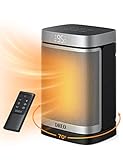
1. DREO Space Heater, 1500W Portable Electric Heaters for Indoor Use, PTC Ceramic Heater for Office with Remote, Thermostat, 70°Oscillation, 12H Timer, 5 Modes, Safe Quiet Room Heater for Bedroom
Overview:
This compact DREO ceramic heater delivers efficient personal heating for spaces like bedrooms or offices using 1500W PTC technology. Designed for direct placement near users (floor, desk), it emphasizes rapid warmth, safety, and quiet operation with essential features like thermostat control and oscillation.
What Makes It Stand Out:
DREO’s Hyperamics Technology promises notably faster heat delivery than standard models. The 70° oscillation ensures broad coverage, while the 37.5 dB noise level enables near-silent use during sleep or work. ETL-listed Shield360° protection (tip-over, overheat, flame-retardant materials) and ECO Mode for energy savings further distinguish it.
Value for Money:
Priced competitively for its feature set, it offers excellent value. The inclusion of a precise 1°F thermostat, remote, and 12H timer rivals pricier brands, while ECO Mode potentially reduces long-term energy costs compared to basic heaters lacking smart temperature control.
Strengths and Weaknesses:
Strengths: Exceptionally fast heating; very quiet operation; robust safety suite; intuitive thermostat; effective oscillation; versatile placement. Weaknesses: Remote requires separate batteries; no explicit mention of 24-hour auto-off; oscillation range narrower than some tower models.
Bottom Line:
A top-tier choice for personal or small-room heating, balancing speed, safety, and quietness. Ideal for offices or bedrooms where targeted warmth and unobtrusive operation matter most. Highly recommended for its reliability and feature completeness.
2. DREO Space Heater, Portable Electric Heaters for Indoor Use with Thermostat and Remote, 2024 Upgraded, Digital Display, 12H Timer, 5 Mode, 1500W PTC Ceramic Fast Safety Heat for Office Bedroom Home

Overview:
DREO’s 2024-upgraded portable heater leverages Hyperamics 1500W PTC technology for rapid, far-reaching warmth in bedrooms or offices. It combines a modern digital display, enhanced safety, and whisper-quiet performance (34 dB), positioning itself as a versatile, user-friendly personal heating solution.
What Makes It Stand Out:
The “2024 Upgraded” tag highlights key improvements: a new heat funnel design for 200% farther airflow reach, an enhanced NTC chipset for ultra-precise 1°F thermostat control, and a quieter 34 dB operation via brushless DC motor and winglet fan design. Memory function and child lock add convenience.
Value for Money:
Justifying its price, it outperforms budget heaters with superior engineering—like frictionless motor quietness and precise ECO Mode savings. The remote, 12H timer, multiple modes (including Fan Only), and robust safety (V0 materials, ETL-certified) offer comparable value to premium models at a mid-range cost.
Strengths and Weaknesses:
Strengths: Industry-leading quietness (34 dB); exceptional airflow reach; precise temperature control; intuitive memory function; comprehensive safety suite. Weaknesses: Remote batteries not included; no explicit room size specification; oscillation angle not stated.
Bottom Line:
An outstanding upgrade for users prioritizing near-silent operation and precise comfort. The enhanced airflow and smart features make it ideal for noise-sensitive environments. Highly recommended as a premium yet practical personal heater.
3. DREO Space Heater for Large Room, 23 Inch Electric Heaters for Indoor Use, 8 Safe Protection Tower, 70° Oscillation, PTC Ceramic with Thermostat and Remote, Quiet, 12H Timer, Bedroom, Office

Overview:
This 23-inch tower heater targets larger areas (up to 250 sq.ft) with dual DC motors and an expanded heating plate. Designed for bedrooms or offices, it prioritizes powerful, even warmth, safety, and quiet operation, featuring 70° oscillation and ETL-certified protection.
What Makes It Stand Out:
Its dual-motor system delivers twice the airflow (10ft/s) and 2-second heat-up time, while the 25% larger heating plate enhances efficiency. The 70° oscillation ensures uniform coverage in spacious rooms, and the 34 dB noise level maintains tranquility—key advantages over single-motor competitors.
Value for Money:
Priced for larger-room capability, it offers strong value by eliminating the need for multiple heaters. Energy-saving ECO Mode (up to 40% savings), precise thermostat, and 8 safety protections match premium tower heaters. The 12H timer and remote justify its cost for whole-room comfort.
Strengths and Weaknesses:
Strengths: Powerful for large spaces (250 sq.ft); rapid heat distribution; excellent safety (cool-touch, 8 protections); very quiet; energy-efficient ECO Mode. Weaknesses: Bulkier than personal heaters; lacks explicit memory function; remote batteries sold separately.
Bottom Line:
The optimal DREO choice for heating larger rooms efficiently and safely. Its robust power, wide oscillation, and quiet operation make it ideal for living areas or spacious bedrooms. Highly recommended for effective whole-room warmth.
4. Ceramic Space Heater, Portable Indoor Heater with Remote Control, Three Heating Modes, Overheat and Tip-Over Protection, Suitable for Home, Bedroom, and Office Indoor Use

Overview:
This non-DREO ceramic heater offers versatile 700W/1000W/1500W heating for homes or offices. Featuring PTC instant heat, thermostat control, and essential safety, it targets budget-conscious buyers seeking reliable, no-frills personal warmth without brand premiums.
What Makes It Stand Out:
Triple power settings provide unmatched flexibility for varying needs, while the 24-hour auto power-off (beyond standard 12H timers) enhances safety. ETL certification, flame-retardant materials, and a 6ft cord emphasize reliability, though it lacks advanced tech like oscillation.
Value for Money:
An excellent budget option, it undercuts DREO models while covering core needs: adjustable heat, timer, remote, and robust safety (tip-over, overheat). The 30-day return and 12-month warranty add peace of mind, making it ideal for occasional use or cost-sensitive buyers.
Strengths and Weaknesses:
Strengths: Flexible power levels; 24-hour auto-off; comprehensive safety certifications; simple operation; strong warranty. Weaknesses: No oscillation; louder than DREO models (noise level unspecified); remote batteries not included; basic thermostat.
Bottom Line:
A dependable, economical heater for small spaces where oscillation or ultra-quiet operation isn’t critical. Best for students, renters, or supplemental heating. Recommended for essential warmth at an accessible price.
5. DREO Space Heater, 1500W Electric Heaters for Indoor Use with Thermostat, 70° Oscillation, 8 Safety Protections, 5 Modes, Remote, 12H Timer, Quiet Portable Heater for Office, Bedroom, Large Room

Overview:
This DREO model merges portability with large-room capability (270 sq.ft), featuring 1500W PTC ceramic heating, 70° oscillation, and extensive safety. Designed for bedrooms, offices, or living areas, it emphasizes even heat distribution, quietness, and energy efficiency.
What Makes It Stand Out:
The exclusive trackball oscillation system (750k+ cycles lifespan) enables smoother, quieter movement and 20% wider coverage. At 34 dB, it’s library-quiet, while smart ECO Mode dynamically adjusts 1000W–1500W output for optimal energy savings—key differentiators in its class.
Value for Money:
Competitively priced for its premium features, it justifies cost through superior engineering: trackball oscillation outlasts standard gears, and precise ECO Mode lowers long-term energy use. The 8 safety protections, remote, and 270 sq.ft coverage rival costlier heaters.
Strengths and Weaknesses:
Strengths: Exceptional oscillation durability; ultra-quiet (34 dB); efficient ECO Mode; broad 270 sq.ft coverage; comprehensive safety suite. Weaknesses: Requires direct wall outlet (no extension cords); remote batteries not included; no 24-hour auto-off.
Bottom Line:
A premium all-rounder excelling in quiet operation, coverage, and longevity. Perfect for those seeking reliable, even warmth in medium-to-large rooms without noise disruption. Highly recommended for its innovative design and robust performance.
6. Gaiatop Mini Space Heater, Lightweight PTC Ceramic Fast Heating 500W Energy Efficient for Indoor Use, Overheating & 45° Tip-Over Protection, Portable Desk Electric Heaters for Office Home Black

Overview: This ultra-compact 500W PTC ceramic heater targets small personal spaces like desks, dorms, or home offices. Its minimalist black design prioritizes portability and safety for focused spot heating without overwhelming room temperatures.
What Makes It Stand Out: The standout feature is near-instant 2-second heat delivery via PTC technology in a remarkably small footprint. Integrated 45° tip-over and overheating protection, combined with V0 fireproof materials, ensure safety in tight quarters where larger heaters pose risks.
Value for Money: Priced affordably for its niche, it excels as a supplemental heater. While insufficient for whole-room warming, it delivers exceptional efficiency for personal use—slashing energy costs compared to central heating or bulkier units. Ideal for budget-conscious buyers needing targeted warmth.
Strengths and Weaknesses: Strengths: Extremely quiet operation, true portability, rapid heating, and robust safety certifications. Weaknesses: Limited to very small areas (under 100 sq ft), lacks thermostat/timer controls, and 500W output won’t heat larger rooms.
Bottom Line: A superb choice for desk-side or bedside personal heating where safety and space savings matter most. Avoid if you need whole-room warmth, but perfect for efficient spot heating in compact environments.
7. Space Heater, WINHL 17 Inches Electric Heaters for Indoor Use with Thermostat and Remote, 70°Oscillation, 12H Timer, 5 Modes, 1500W PTC Ceramic Fast Safety Heat for Office Bedroom Home

Overview: This versatile 1500W ceramic heater combines powerful heating with smart controls for medium to large rooms. Its 17-inch stature houses oscillation, thermostat regulation, and remote functionality, positioning it as a primary heating solution for bedrooms or offices.
What Makes It Stand Out: The comprehensive feature set dominates: precise thermostat control, 70° oscillation for even heat distribution, five modes (including fan-only), and a 12-hour timer. ETL certification and V0 flame-retardant materials bolster credibility beyond basic safety protections.
Value for Money: Justifies a mid-range price with premium convenience. The remote, auto-shutoff timers, and energy-efficient thermostat reduce long-term costs versus simpler models. Outperforms budget heaters in adaptability, making it cost-effective for year-round use.
Strengths and Weaknesses: Strengths: Excellent room coverage (up to 150 sq ft), intuitive thermostat, quiet operation, and robust safety suite. Weaknesses: Remote requires separate batteries, oscillation mechanism adds slight noise, and bulkier than personal heaters.
Bottom Line: Highly recommended for those seeking a feature-rich, reliable primary heater. Its smart controls and safety make it a worthwhile investment for consistent room heating in homes or offices.
8. QQT Space heater,Corded Portable PTC Ceramic Space Heater for Indoor Use,Quiet Desk Heater for Office,Energy-Saving Bathroom Heater,Tipping and Overheating Protection,Dumping Shutdown,White
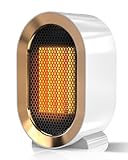
Overview: The QQT heater focuses on silent operation and safety for intimate spaces like bedrooms or bathrooms. Its 1200W dual-mode PTC ceramic system delivers rapid warmth while prioritizing near-silent performance (<30 dB) for sleep-friendly use.
What Makes It Stand Out: Unmatched quietness is the highlight—ideal for light sleepers or focused work. The compact 8.2” design fits under desks or beside beds, while upgraded ABS flame-retardant materials and 45° tip-over protection enhance safety in high-traffic areas.
Value for Money: Excellent for noise-sensitive environments. Though pricier than basic models, the whisper-quiet operation and child/pet-safe design justify the cost for bedrooms. Saves energy by heating only occupied zones instead of entire rooms.
Strengths and Weaknesses: Strengths: Near-silent output, efficient 3-second heating, soft airflow, and portable handle. Weaknesses: Limited to small spaces (~100 sq ft), no thermostat/timer, and white/black/green color options only.
Bottom Line: Top pick for bedrooms or nurseries where silence is critical. Avoid for large rooms, but unmatched for discreet, safe personal heating during sleep or work.
9. Gaiatop Mini Space Heater, Lightweight PTC Ceramic Fast Heating 500W Energy Efficient for Indoor Use, Overheating & 45° Tip-Over Protection, Portable Desk Electric Heaters for Office Home White

Overview: Identical to Product #6 but in white, this 500W PTC heater serves the same purpose: efficient personal heating for desks or compact areas. Its sleek, space-saving design caters to users prioritizing aesthetics alongside functionality in home offices or dorms.
What Makes It Stand Out: The instant 2-second heat-up and minimalist white chassis blend seamlessly into modern décors. Like its black counterpart, it leverages PTC ceramic efficiency and critical safety features (45° tip-over/overheat protection) in a near-silent package.
Value for Money: Matches Product #6’s value proposition—optimal for supplemental heating. The color variant offers aesthetic flexibility without cost premium, maintaining strong cost efficiency for personal use versus whole-house alternatives.
Strengths and Weaknesses: Strengths: Discreet design, ultra-portable, and reliable safety. Weaknesses: Same limitations as #6—too weak for rooms over 100 sq ft and lacks advanced controls like thermostats.
Bottom Line: Choose this white version if matching room décor matters; otherwise, identical in function to #6. A dependable, safe micro-heater for personal spaces where style and simplicity count.
10. GiveBest Portable Electric Space Heater with Thermostat, 1500W/750W Safe and Quiet Ceramic Heater Fan, Heat Up 200 Square Feet for Office Room Desk Indoor Use, Silver

Overview: This 1500W dual-mode heater doubles as a fan, targeting versatile use across seasons. Its thermostat-controlled heating covers up to 200 sq ft, making it suitable for bedrooms or small living areas, with portability enhanced by a built-in handle.
What Makes It Stand Out: The 2-in-1 functionality (heater + fan) and auto thermostat are key differentiators. The thermostat maintains set temperatures without manual adjustments, while quiet operation (<60 dB) ensures bedroom compatibility—rare in heaters of this power.
Value for Money: Strong mid-tier value. The thermostat and dual wattage (1500W/750W) optimize energy use, potentially lowering bills versus fixed-power models. Covers larger areas than competitors at similar prices, enhancing cost efficiency.
Strengths and Weaknesses: Strengths: Effective room coverage, useful fan mode, solid safety suite, and portable handle. Weaknesses: Tip-over alarm emits a loud beep (disruptive at night), and silver finish shows fingerprints easily.
Bottom Line: Best for versatile, room-sized heating with smart temperature control. Ideal for offices or bedrooms needing both winter warmth and summer airflow—just note the audible tip-over alert.
Understanding Ceramic Heater Technology and Benefits
How Ceramic Heating Elements Work Differently
Unlike traditional resistance heaters that rely solely on glowing metal coils, ceramic heaters utilize positive temperature coefficient (PTC) ceramic plates. These plates naturally self-regulate their temperature; as they heat up, their electrical resistance increases, preventing them from getting dangerously hot and reducing energy consumption. A fan then pushes air over these warm ceramic elements, distributing consistent, comfortable heat throughout the room much faster than radiant or oil-filled units. This mechanism inherently promotes efficiency and safety.
Key Advantages for Apartment Dwellers
The compact nature of ceramic heaters makes them ideal for space-constrained apartments where bulky furniture or limited floor area is a concern. Their rapid heat-up time means you only need to run them when and where you’re present, avoiding the waste of heating unoccupied rooms via central systems. Furthermore, their lower surface temperature compared to radiant heaters significantly reduces fire risks near furniture or curtains—essential in tight living quarters. The focused warmth they provide often allows residents to lower their central thermostat, creating substantial overall energy savings.
Ceramic vs. Other Heater Types: Why It Matters
While oil-filled radiators offer silent operation and lingering heat, they are slow to warm up and cool down, making them inefficient for intermittent use. Radiant coil heaters provide intense spot heating but pose higher fire risks and don’t circulate air effectively. Ceramic heaters strike the optimal balance for apartments: fast, efficient, safe, and quiet enough for bedrooms or living areas. Their ability to maintain a steady room temperature without constant cycling (thanks to thermostats) further solidifies their position as the top choice for efficient supplemental heating in rental units.
Essential Features to Evaluate for Apartment Use
Determining the Right Wattage for Your Space
Wattage directly correlates to heating capacity. A common guideline is 10 watts per square foot, but apartment specifics matter significantly. Consider ceiling height, insulation quality (often poor in older buildings), and the primary purpose (supplemental vs. primary heat). A 1500-watt unit (the standard maximum for most household circuits) is typically sufficient for rooms up to 150 square feet. Crucially, never exceed the circuit’s capacity—most apartment outlets are on 15-amp circuits, limiting you to 1800 watts max (though staying under 1500W is safer to avoid tripping breakers, especially if other devices share the circuit).
The Critical Role of Thermostat Precision
An accurate, adjustable thermostat is non-negotiable for efficiency. Basic on/off thermostats cause the heater to cycle wildly, wasting energy as it constantly overheats the space. Look for digital thermostats with precise temperature settings (e.g., 68°F, 70°F) and preferably a built-in room sensor. Advanced models feature “follow-me” thermostats that adjust based on your immediate vicinity, or even programmable timers/schedules to heat the room only when you’re home, preventing all-night runtime. This granular control ensures you only use the energy necessary to maintain your desired comfort level.
Safety Mechanisms That Are Non-Negotiable
Apartment safety is paramount. Prioritize models with both automatic tip-over shut-off (mandatory in modern units) and overheat protection that cuts power if internal components exceed safe temperatures. Cool-touch exteriors are essential, especially in homes with children or pets, preventing burns from accidental contact. Additional peace of mind comes from units certified by recognized testing laboratories (UL, ETL, CSA)—never skip this verification. Features like child locks are also valuable bonuses in shared living situations.
Apartment-Specific Considerations You Can’t Ignore
Navigating Electrical Limitations Safely
Most apartment circuits are shared. Plugging a 1500W heater into an outlet already powering a TV, computer, and lamp can easily trip the breaker. Always plug the heater directly into a wall outlet—never use an extension cord or power strip, as these can overheat. Identify which outlets are on the same circuit (turn off the breaker and see what loses power) and avoid running other high-wattage appliances simultaneously. If breakers trip frequently, you likely need a lower-wattage unit or must dedicate the circuit solely to the heater.
Noise Levels: Why Whisper-Quiet Operation Matters
Living in close quarters means noise travels. While ceramic heaters are generally quieter than older fan heaters, fan noise can still be disruptive, especially in bedrooms or studios. Look for models explicitly marketed as “ultra-quiet” or “silent operation,” often achieved through advanced fan blade design and sound-dampening materials. Check decibel (dB) ratings if available; anything below 40 dB is considered very quiet for a heater. Remember, oscillation can sometimes increase noise slightly—test if possible or read reviews specifically mentioning sound levels.
Portability and Space-Saving Design Essentials
Apartments demand versatile solutions. A lightweight unit (under 10 lbs) with a comfortable handle makes moving the heater between rooms effortless. Compact footprints that fit under desks, beside sofas, or in corners are crucial. Integrated storage for the power cord prevents tripping hazards and messy tangles. Some models offer wall-mounting options, freeing up valuable floor space entirely—a significant advantage in studio layouts. Consider where you’ll store it during warmer months; foldable handles or nesting designs can be helpful.
Maximizing Energy Efficiency and Cost Savings
Decoding Energy Star and Emerging 2026 Efficiency Standards
While Energy Star certification for space heaters has been limited historically, look for models adhering to the latest DOE efficiency guidelines, which became stricter in recent years. In 2026, prioritize units boasting specific efficiency claims backed by independent testing (e.g., “X% more efficient than standard models”). Features like eco-modes, which intelligently modulate heat output to maintain temperature using minimal power, are increasingly common and represent the cutting edge of efficiency for portable units.
Smart Features That Translate to Real Savings
Modern connectivity offers tangible benefits. Wi-Fi or Bluetooth-enabled heaters allow remote scheduling (turn it on 15 minutes before you get home), usage tracking to monitor electricity consumption, and integration with smart home systems for automated routines (e.g., “Good Morning” routine that warms the bedroom). Geofencing can automatically turn the heater off when you leave the vicinity. While not essential, these features provide significant control and prevent wasteful operation when the room is unoccupied, directly impacting your energy bill.
The True Cost of Operation: Beyond the Purchase Price
Calculate long-term costs. A $50 heater that constantly runs at full blast might cost more in electricity over a season than a $100 efficient model with precise thermostat control. Estimate usage: (Wattage / 1000) x Hours Used x Electricity Rate (per kWh). If your rate is $0.15/kWh, a 1500W heater running 8 hours/day costs about $1.80 daily. Features like thermostats and eco-modes can easily reduce runtime by 30-50%, leading to substantial savings. Factor this into your decision—it’s where the real value of an efficient heater shines.
Proper Usage and Maintenance for Longevity
Strategic Placement for Optimal Heat Distribution
Location dramatically impacts effectiveness. Place the heater on the floor (heat rises) in an open area, ideally near the center of the room or in the path of natural drafts (like under a window). Maintain at least 3 feet of clearance from furniture, bedding, curtains, and flammable materials on all sides—this is critical for safety and allows air intake/outflow for efficient operation. Avoid tucking it into tight corners where airflow is restricted, as this forces the unit to work harder and can trigger overheating sensors.
Essential Cleaning Practices to Maintain Efficiency
Dust buildup on the intake and output grilles acts as insulation, forcing the heater to consume more energy to push air through. Unplug the unit and let it cool completely. Use a soft brush attachment on a vacuum cleaner to gently remove dust from vents. For stubborn grime, a slightly damp microfiber cloth (never spray liquids directly!) can be used on the exterior casing—ensure it’s bone dry before plugging in again. Cleaning monthly during heavy use keeps airflow optimal and prevents potential fire hazards from excessive dust accumulation.
When to Replace vs. Repair: Knowing the Signs
Ceramic heaters have a finite lifespan, typically 5-10 years with proper care. Warning signs it’s time for replacement include unusual burning smells (not just initial “new heater” odor), inconsistent heating, frequent tripping of safety features without obvious cause (like tipping), visible damage to the cord or plug, or excessive noise/vibration. Attempting DIY repairs on electrical heating elements is dangerous and voids safety certifications. If major components fail, replacement is almost always safer and more cost-effective than repair.
Frequently Asked Questions
How much can I realistically save on my electric bill using a ceramic heater instead of central heating?
Savings depend heavily on your usage pattern and central system efficiency. By heating only the occupied room (e.g., living room during evening, bedroom at night) and lowering the central thermostat by 10-15°F, many apartment dwellers report 10-20% reductions in overall heating costs during peak months. The key is targeted use—never run the space heater while also running central heat at a high setting in the same area.
Are ceramic heaters safe to leave on overnight in a bedroom?
While modern ceramic heaters have robust safety features (tip-over, overheat protection), safety organizations generally advise against unattended operation, especially while sleeping. If you must use one overnight, choose an ultra-quiet model with precise thermostat control, place it well away from bedding, and ensure it has all current safety certifications. Using it to warm the room before bed and turning it off is the safest approach.
Can I use a ceramic heater in a bathroom?
Most standard ceramic heaters are not rated for bathroom use due to moisture exposure risks. Only use a heater explicitly labeled and certified as “bathroom-safe” or “IPX4-rated” (splash-proof). These have special sealing to prevent electrical hazards from steam or splashes. Never use a standard unit in a bathroom—it’s a significant electrocution and fire hazard.
Do ceramic heaters dry out the air like other electric heaters?
All electric resistance heaters (including ceramic) reduce relative humidity as they warm the air, which can make the air feel drier. However, they don’t actively remove moisture like a dehumidifier. Using a humidifier alongside your heater is the best solution for comfort if dry air is an issue, rather than avoiding the heater itself.
Will a ceramic heater work effectively in a room with high ceilings or poor insulation?
They can work, but efficiency drops significantly. High ceilings allow heat to rise and stratify, leaving the living space cooler. Poor insulation (common in older apartments) means heat escapes rapidly. In these cases, a higher-wattage model (within circuit limits) might be necessary, but managing expectations is key. Focus the heater near your immediate seating area and consider supplemental measures like thermal curtains.
Is it safe to plug a ceramic heater into a power strip?
Absolutely not. Power strips and extension cords are not designed to handle the continuous high current (12+ amps) drawn by a 1500W heater. This creates a serious fire hazard due to overheating. Always plug the heater directly into a wall outlet that’s in good condition and on a dedicated circuit if possible.
How do I know if my apartment’s electrical system can handle a space heater?
Check your circuit breaker panel. Identify the breaker for the outlet you plan to use (turn it off and see what loses power). If it’s a 15-amp breaker (most common), the maximum safe continuous load is 1440 watts (80% of 1800W). A 1500W heater is acceptable only if it’s the sole device on that circuit. If other outlets/lights go off with the same breaker, you likely cannot safely run a full-power heater there without tripping.
Do ceramic heaters emit any harmful fumes or gases?
No. Unlike combustion-based heaters (propane, kerosene), ceramic electric heaters produce no carbon monoxide, nitrogen dioxide, or other harmful emissions. They simply warm the air passing over the ceramic element. This makes them safe for indoor air quality, provided they are clean and functioning properly (burning dust can cause temporary odors).
What’s the ideal thermostat setting for energy savings with a ceramic heater?
Set it to the lowest comfortable temperature, typically between 65°F and 68°F for active rooms. Every degree lower saves energy. Use layered clothing or blankets to allow for a lower setting. Avoid setting it to “High” constantly; let the thermostat cycle the heater on and off to maintain the set temperature efficiently.
Can ceramic heaters be used as the primary heat source in an apartment?
Generally, no. They are designed as supplemental heat for specific rooms. Relying on multiple units to heat an entire apartment is almost always less efficient and more expensive than a properly functioning central heating system. They are best used to take the chill off a frequently used room while keeping the central thermostat lower, not as a full replacement.
See Also
- Stop High Energy Bills with the 10 Best Energy Efficient Ceramic Heaters in 2026
- 10 Top-Rated Energy Efficient Ceramic Heaters According to Experts in 2026
- How to Choose the 10 Best Ceramic Heaters for Energy Savings in 2026
- Stop High Bills with the 10 Best Energy Efficient Ceramic Heaters This Year
- How to Choose the 10 Best Electric Fireplace Heaters for Efficient Heating in 2026