Table of Contents
Summer heat turning your cozy studio into a sauna? That tiny bedroom suddenly feeling like a microwave? You’re not alone. Finding relief without breaking the bank or sacrificing precious square footage is the holy grail for city dwellers, apartment renters, and anyone navigating compact living spaces. The right compact window air conditioner can be a game-changer, transforming stifling afternoons into cool, comfortable retreats. But with a dizzying array of options promising big cooling power in small packages, the search can quickly become overwhelming. Choosing poorly means wasted money, constant noise complaints, and a unit that simply can’t keep up.
Forget the guesswork and generic advice. This guide cuts through the marketing hype to give you the real factors that matter when selecting a compact window AC for your small space in 2026. We’re moving beyond basic BTU charts to uncover the nuanced considerations – from installation quirks specific to modern window types to the evolving landscape of energy efficiency standards and smart features that genuinely add value. Whether you’re cooling a dorm room, a narrow apartment bedroom, or a sun-drenched home office, understanding these key elements ensures you invest in comfort that lasts, operates efficiently, and fits seamlessly into your life, not the other way around. Let’s unpack what truly makes a compact AC unit the perfect fit for your unique space.
Top 10 Compact Window Air Conditioners
Detailed Product Reviews
1. Amazon Basics 5000-BTU Small Window Air Conditioner, Up to 150 Sqf, Window AC Units with Cool and Fan Functions, Washable Filter, Adjustable Window Kit, Intuitive Mechanical Controls, White

Overview:
This budget-friendly 5,000 BTU window AC unit targets small spaces (up to 150 sq. ft.), like bedrooms or home offices. It offers basic cooling and fan modes, a washable filter, and straightforward mechanical controls. Installation is designed for standard windows with included side panels.
What Makes It Stand Out:
Its standout feature is uncomplicated reliability at a low price point. The intuitive dial controls eliminate digital complexity, while the washable filter and quiet 56 dB operation ensure hassle-free maintenance and sleep-friendly use. The adjustable window kit accommodates a wide range of window sizes.
Value for Money:
As one of the most affordable 5,000 BTU models, it delivers essential cooling without frills. While it lacks a remote or digital display, it outperforms cheaper units in noise control and build quality, making it ideal for renters or those needing temporary cooling.
Strengths and Weaknesses:
Strengths: Extremely budget-friendly; simple, durable mechanical controls; effective for small rooms; washable filter reduces long-term costs; quiet enough for bedrooms.
Weaknesses: No remote control; basic temperature settings lack precision; requires separate screwdriver for installation; limited to very small spaces.
Bottom Line:
A no-nonsense, economical choice for cooling compact areas reliably. Best for budget-focused buyers prioritizing simplicity over advanced features, though larger rooms will require stepping up to higher BTU models.
2. Frigidaire 5,000 BTU Window-Mounted Air Conditioner, Cools Up to 150 Sq. Ft., Quiet Operation, Effortless Temperature Control, 2 Fan Speeds, Auto Restart, White

Overview:
Frigidaire’s 5,000 BTU unit cools spaces up to 150 sq. ft. with a focus on quiet operation and user convenience. It features Effortless Temperature Control for consistent cooling, a washable filter, and an auto-restart function after power outages.
What Makes It Stand Out:
The auto-restart feature is a major differentiator, automatically restoring settings post-outage—ideal for overnight use. Its industry-leading 52 dBA quiet operation surpasses competitors, and the extra-long power cord eliminates extension cord hassles.
Value for Money:
Priced moderately above budget models, it justifies the cost with premium features like auto-restart and superior noise reduction. For the price, it offers better long-term convenience and comfort than bare-bones alternatives, especially for light sleepers.
Strengths and Weaknesses:
Strengths: Exceptionally quiet (52 dBA); auto-restart preserves settings; user-friendly controls; washable filter; no extension cord needed.
Weaknesses: Slightly higher cost than entry-level units; no remote control; limited to small rooms; basic digital interface.
Bottom Line:
An excellent mid-tier pick for those valuing tranquility and reliability. Highly recommended for bedrooms where quiet operation and power-outage resilience matter most, despite the absence of a remote.
3. Amazon Basics 6000-BTU Window Air Conditioner, Up to 250 Sqf, Window AC Units with Cool and Fan Functions, Washable Filter, Adjustable Window Kit, Digital Temperature Display, Remote Control, White

Overview:
This upgraded Amazon Basics model delivers 6,000 BTU cooling for rooms up to 250 sq. ft., featuring a remote control, digital display, and core functions like dual cooling/fan modes and a washable filter. It targets medium-sized spaces needing versatile temperature management.
What Makes It Stand Out:
The remote control and digital display elevate it above the 5,000 BTU sibling, offering convenience for larger areas. The higher BTU rating effectively covers medium rooms (e.g., living rooms), while maintaining the same quiet 56 dB operation and easy-clean filter.
Value for Money:
It smartly bridges budget and premium tiers. For marginally more than the 5,000 BTU version, you gain significant room coverage and remote functionality—outperforming similarly priced units that omit these features. Ideal for cost-conscious buyers needing extra cooling power.
Strengths and Weaknesses:
Strengths: Higher 6,000 BTU capacity for medium rooms; includes remote and digital display; retains quiet operation; washable filter; wide window compatibility.
Weaknesses: Remote lacks backlighting; installation still requires basic tools; digital display can be hard to read in low light.
Bottom Line:
The best value for medium-room cooling in this lineup. If your space exceeds 150 sq. ft., this remote-equipped model offers exceptional functionality for its price, making it a top recommendation over smaller units.
4. LG 5000 BTU Window Air Conditioner with Remote, Easy Mechanical Control Ultra-Quiet Compact-size Cools 150 Sq.Ft. for Small Room, Washable Filter AC Unit Easy Installation White LW5025R

Overview:
LG’s compact 5,000 BTU unit cools small rooms (up to 150 sq. ft.) with a focus on user-friendly operation. It includes a remote, LCD display, energy-saving function, and eco-friendly R32 refrigerant, packaged in a streamlined design for easy installation.
What Makes It Stand Out:
The eco-conscious R32 refrigerant reduces environmental impact versus older coolants, while the Energy Save mode actively cuts electricity costs. The remote control and intuitive LCD panel provide effortless adjustments from anywhere in the room.
Value for Money:
Priced mid-range, it delivers premium eco-features and convenience at a reasonable cost. The energy savings over time offset the initial investment, and the remote/LCD combo adds significant usability—beating similarly priced models lacking these.
Strengths and Weaknesses:
Strengths: Eco-friendly R32 refrigerant; Energy Save function lowers bills; full-featured remote; slide-out washable filter; compact design.
Weaknesses: Slightly narrower window fit range (21"-35"); no auto-restart; mechanical controls less precise than digital.
Bottom Line:
A standout for eco-aware buyers seeking convenience. Highly recommended for small rooms where energy efficiency and remote operation matter, though those needing auto-restart should consider Frigidaire.
5. GE Window Air Conditioner Unit, 5,000 BTU for Small Rooms up to 150 sq ft. with Manual Adjustable Fan and Cooling Settings, Perfect for Small Bedroom or Living Room, Easy Install Kit Included, White

Overview:
GE’s 5,000 BTU mechanical window AC unit cools spaces up to 150 sq. ft. with manual dials for temperature and fan settings. It emphasizes simplicity, low-noise operation, and tool-free installation via its EZ Mount kit, targeting users who prefer tactile controls.
What Makes It Stand Out:
Its purely mechanical interface (no digital components) ensures durability and ease of use for non-tech-savvy users. The focus on silent operation and included installation hardware streamlines setup, avoiding common frills that add cost.
Value for Money:
As a no-frills, reliable workhorse, it competes strongly on price. While lacking remotes or digital displays, its robust build and quiet performance justify the cost for buyers prioritizing longevity over modern conveniences.
Strengths and Weaknesses:
Strengths: Extremely durable mechanical controls; exceptionally quiet; simple installation with EZ Mount kit; 10 precise temp settings; reliable brand.
Weaknesses: No remote or digital display; limited window size range; basic aesthetics; no energy-saving modes.
Bottom Line:
The ideal choice for purists wanting dependable, silent cooling without digital distractions. Best for bedrooms where straightforward operation and reliability trump high-tech features—skip if you need a remote.
6. Frigidaire 6,000 BTU Window Air Conditioner and Dehumidifier, 115V, Cools up to 250 Sq. Ft. for Apartment, Dorm Room, Small/Medium Rooms, with Remote Control, White

Overview: This 6,000 BTU Frigidaire window unit targets small to medium spaces (up to 250 sq. ft.), combining cooling, dehumidifying, and fan functions. Ideal for apartments, dorms, or bedrooms, it features digital controls, a washable filter, and remote operation for basic climate management.
What Makes It Stand Out: Its standout feature is the integrated dehumidifier (removing up to 1.3 pints/hour), rare in entry-level units. The remote-controlled thermostat maintains precise temperatures from across the room, while Sleep Mode intelligently adjusts settings overnight for comfort and quiet operation. The filter-clean alert also enhances user convenience.
Value for Money: Priced mid-range, it justifies cost through multi-functionality (AC + dehumidifier) and energy-efficient operation for its size. Though pricier than bare-bones models, the added features outperform competitors lacking humidity control or smart scheduling at this tier.
Strengths and Weaknesses: Strengths: Effective dehumidification, intuitive remote, programmable timer, and easy-maintenance filter. Weaknesses: Limited to smaller rooms; noise levels are average (not ultra-quiet); no smart connectivity or advanced energy certifications.
Bottom Line: Highly recommended for humid climates or compact spaces needing dual cooling/dehumidifying. Avoid if seeking smart features or larger-room coverage, but ideal for dorms or budget-conscious buyers prioritizing practicality.
7. Midea 5,000 BTU 150 Sq ft Mechanical Window Air Conditioner, Black (Renewed)

Overview: This refurbished 5,000 BTU Midea unit cools spaces up to 150 sq. ft., featuring mechanical dials (no digital display), two cooling modes, and two fan speeds. Designed for tight budgets, it fits standard windows (23"-36" wide) and emphasizes simplicity for small bedrooms or offices.
What Makes It Stand Out: Its affordability as a renewed product is the key draw, offering reliable cooling without smart tech bloat. The mechanical controls ensure foolproof operation, while the compact size suits narrow windows where bulkier units won’t fit.
Value for Money: Exceptional for ultra-budget seekers—renewed units cost significantly less than new equivalents. However, lacking modern features (like energy-saving modes or remotes), it’s best for temporary use or secondary rooms where frills aren’t needed.
Strengths and Weaknesses: Strengths: Lowest upfront cost, plug-and-play setup, durable mechanical controls. Weaknesses: No energy efficiency data (CEER not listed), limited cooling capacity, no filter alert or advanced features; “renewed” status risks potential wear.
Bottom Line: Only choose if minimizing initial cost is critical and you need basic cooling for very small spaces. Skip if reliability or efficiency matter—this is a bare-minimum solution for short-term use.
8. Midea 10,000 BTU U Shaped Smart Inverter Window Air Conditioner - Cools 450 Sq Ft, Ultra Quiet with Open Window Flexibility - Alexa/Google Assistant Compatible - 35% Energy Savings, Remote (Updated)
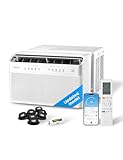
Overview: This premium 10,000 BTU Midea U-series inverter AC cools up to 450 sq. ft. with cutting-edge tech: ENERGY STAR certification, Wi-Fi/voice control, and a unique U-shape design enabling open-window ventilation. Targets eco-conscious users in medium-large rooms.
What Makes It Stand Out: The revolutionary U-shape allows window opening for fresh air while cooling—unmatched by competitors. It’s 10x quieter (32 dBA) than standard units, saves 35%+ energy via inverter tech, and integrates seamlessly with Alexa/Google for smart-home control.
Value for Money: Priced higher upfront, but justifies cost through massive energy savings (lowest operating costs in class) and premium features. Beats non-inverter 10K BTU models long-term, especially in hot climates where runtime is high.
Strengths and Weaknesses: Strengths: Unrivaled quietness, open-window flexibility, significant energy savings, robust smart features. Weaknesses: Complex installation vs. basic units; higher initial investment; limited to windows 22"-36" wide.
Bottom Line: Top pick for large rooms where noise, energy bills, and fresh air matter. Worth every penny for long-term savings and comfort—avoid only if budget is extremely tight or windows are non-standard.
9. Midea 8,000 BTU U Shaped Smart Inverter Window Air Conditioner - Cools 350 Sq Ft, Ultra Quiet with Open Window Flexibility - Alexa/Google Assistant Compatible - 37% Energy Savings, Remote (Updated)
Overview: The 8,000 BTU sibling to Product 8, this Midea U-series inverter cools 350 sq. ft. with identical smart/U-shape innovation but scaled for medium rooms. Retains ENERGY STAR certification, ultra-quiet operation (32 dBA), and open-window capability.
What Makes It Stand Out: Shares Product 8’s game-changing U-design (enabling ventilation) and 37% energy savings claim via inverter tech. Slightly quieter airflow (710W vs. 890W) and ideal sizing for studios or standard bedrooms where 10K BTU is overkill.
Value for Money: Better value than Product 8 for appropriately sized rooms—same tech at lower cost. Savings from 37% efficiency offset premium pricing versus basic 8K BTU units, especially with frequent summer use.
Strengths and Weaknesses: Strengths: Class-leading energy efficiency, whisper-quiet performance, flexible window operation, full smart-home integration. Weaknesses: Overpriced for cooling-only needs; installation requires precise window dimensions (22"-36" wide).
Bottom Line: The smart choice for medium rooms demanding efficiency and quiet. Prioritize this over Product 8 if your space is under 400 sq. ft.—it’s the optimal balance of power and innovation.
10. Midea 5,000 BTU EasyCool Small Window Air Conditioner - Cool up to 150 Sq. Ft. with Easy-to-Use Mechanical Controls and Reusable Filter, Perfect for Small Bedroom, Living Room, Home Office
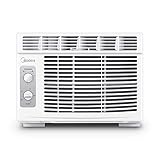
Overview: Midea’s entry-level 5,000 BTU EasyCool unit targets tiny spaces (150 sq. ft.) with mechanical dials, a reusable filter, and straightforward installation. Focuses on affordability and simplicity for bedrooms or home offices without smart features.
What Makes It Stand Out: Its standout trait is a CEER 11.0 rating—unusually efficient for a budget mechanical model. The “quieter than a refrigerator” claim and tool-light installation (screwdriver-only) cater to renters needing hassle-free setup.
Value for Money: Excellent value for no-frills cooling: low purchase price, energy savings from high CEER, and reusable filter cuts long-term costs. Beats Product 7’s renewed model with a full warranty and verified efficiency.
Strengths and Weaknesses: Strengths: High energy efficiency, very quiet operation, 1-year warranty, simple maintenance. Weaknesses: No remote/smart features; limited to very small rooms; basic mechanical controls feel outdated.
Bottom Line: Best budget pick for small rooms where reliability and low running costs matter. Choose this over Product 7 for new-unit peace of mind—skip only if you demand smart controls or larger coverage.
Understanding Your Space and Cooling Needs
Before even glancing at product specs, a deep dive into your specific environment is non-negotiable. This foundational step prevents the most common and costly mistake: buying a unit that’s too powerful or, worse, significantly undersized for the area it needs to cool.
Calculating the Right Cooling Capacity (BTUs)
British Thermal Units (BTUs) measure an air conditioner’s cooling power. While a basic rule of thumb suggests 20 BTUs per square foot, this oversimplifies reality for compact spaces. Critical factors like room height (ceilings over 8 feet demand more power), significant sun exposure (south or west-facing windows), the number of heat-generating occupants or electronics, and poor insulation drastically impact the required BTU output. An undersized unit will run constantly, struggle to reach the desired temperature, spike your energy bill, and wear out prematurely. Conversely, an oversized unit cools too quickly without adequately dehumidifying the air, leading to a clammy, uncomfortable feel and inefficient short-cycling. Always start with the square footage calculation, then increase the BTU recommendation by 10-20% for challenging conditions like heavy sun exposure or high ceilings common in lofts.
Assessing Your Window Type and Installation Constraints
Modern window designs present unique challenges for compact AC installation. Standard double-hung windows are generally the easiest, but many small spaces feature sliding windows (horizontally opening), casement windows (crank-out), awning windows (top-hinged), or even fixed panes with operable vents. Each type requires specific installation kits or modifications. Measure the minimum width and height of the open window sash exactly where the unit will sit – not the full window frame. Compact units often have strict minimum opening sizes. Also, consider the window’s structural integrity; older or lightweight frames might not support even a small unit without reinforcement. Don’t forget about external clearance – ensure there’s adequate space outside the window for proper airflow and that the unit won’t obstruct fire escapes or walkways.
Evaluating Room Layout and Airflow Dynamics
Small spaces often have unconventional layouts or obstacles. Is the room long and narrow? Does it have an open doorway to another area (like a kitchenette)? Is furniture blocking potential airflow paths? These factors influence how effectively cooled air circulates. A unit placed in a corner far from the main seating area might create uncomfortable temperature zones. Consider if you need oscillating vents or the ability to direct airflow specifically. Also, assess potential heat sources within the room – large south-facing windows, appliances, or even dense electronics setups – as these create localized hot spots the AC must combat beyond just the ambient room temperature.
Energy Efficiency: Saving Money While Staying Cool
In an era of rising energy costs and environmental awareness, efficiency isn’t just a buzzword; it’s a critical factor impacting your wallet and comfort over the unit’s lifespan. Compact units vary significantly here, and understanding the metrics is key.
Deciphering SEER and EER Ratings for 2026 Models
The Seasonal Energy Efficiency Ratio (SEER) and Energy Efficiency Ratio (EER) are the gold standards. SEER measures cooling output over a typical cooling season divided by total energy input, reflecting performance across varying temperatures. EER measures efficiency at a specific, high outdoor temperature (usually 95°F). For compact window units in 2026, look for the minimum SEER rating mandated by current standards (likely higher than previous years), but prioritize models significantly exceeding this baseline. A higher SEER/EER means the unit removes more heat per watt of electricity consumed. While a more efficient model might cost slightly more upfront, the savings on your electricity bill over several cooling seasons often far outweigh the initial difference, especially for units running frequently in hot climates.
The True Impact of Energy Star Certification
Energy Star certification, managed by the EPA, signifies a unit meets strict energy efficiency guidelines that are significantly better than federal minimums. For compact window ACs in 2026, an Energy Star model typically uses about 7-10% less energy than a non-certified equivalent. This isn’t just about saving money; it translates to reduced strain on the power grid and lower carbon emissions. Crucially, Energy Star certification also often correlates with better overall engineering and performance, including quieter operation and more consistent temperature control. Don’t skip checking for this label – it’s a reliable indicator of a unit designed for efficiency without compromising core functionality.
Smart Features That Actually Conserve Energy
Beyond basic ratings, look for intelligent features that optimize energy use in real-time. Programmable timers allow you to cool the space only when needed (e.g., turning on 30 minutes before you get home, shutting off when you leave). Advanced thermostats with precise temperature control prevent the unit from overcooling. Some 2026 models might incorporate occupancy sensors or learning algorithms that adjust cooling based on detected presence or historical usage patterns. While “smart home” connectivity (Wi-Fi/app control) is convenient, evaluate if the energy-saving features it enables (like remote scheduling adjustments) justify the potential complexity or security considerations for your needs.
Noise Levels: Ensuring Peaceful Comfort
A compact AC shouldn’t come at the cost of constant background noise disrupting sleep, work, or relaxation. Noise output is a critical, yet often overlooked, specification for small living spaces where the unit is close to your primary activity area.
Understanding Decibel (dB) Ratings and Real-World Perception
Manufacturers list noise levels in decibels (dB), usually for different operating modes (e.g., fan-only, low, high, turbo). A difference of just 3 dB is perceived by the human ear as a noticeable change in loudness; a 10 dB increase sounds roughly twice as loud. For bedroom use, prioritize units with low settings below 50 dB – comparable to a quiet conversation. Anything consistently above 55-60 dB on its lowest setting can become intrusive, especially at night. Remember, dB ratings are often measured in ideal lab conditions; real-world noise inside your specific room might vary slightly. Look for user reviews specifically mentioning noise levels in similar small-space applications.
Identifying Noise-Reduction Technologies
Manufacturers employ various techniques to minimize sound. Look for units highlighting “quiet operation” modes, which often reduce fan speed. Features like insulated compressor compartments, vibration-dampening mounts, and aerodynamically designed fan blades significantly lower operational noise. Some compact models utilize brushless DC motors for the fan, which are inherently quieter and more energy-efficient than traditional AC motors. While compact size inherently limits how quiet a unit can be (smaller fans need to spin faster), prioritizing models with proven noise-reduction engineering makes a tangible difference in livability.
Placement Strategies to Minimize Disruption
Even the quietest unit can seem loud if poorly placed. Position the unit as far as practical from your bed or primary seating area. Ensure it’s installed perfectly level according to the manual; an unlevel unit can cause vibrations and rattling noises. Check that the side panels are fully extended and securely locked into the window frame to prevent buzzing. If noise is a paramount concern, consider models specifically marketed as “ultra-quiet” – these often undergo additional acoustic engineering specifically for bedroom or office environments.
Installation, Operation, and User Experience
The ease of getting your compact AC up and running, and how intuitive it is to use daily, significantly impacts your satisfaction. A unit that’s a nightmare to install or operate defeats the purpose of a simple cooling solution.
Simplifying the Installation Process
Compact units should be designed for DIY installation, but complexity varies. Look for models with intuitive, tool-free installation kits featuring flexible accordion-style side panels that easily adjust to fit common window widths without excessive cutting or complex brackets. Clear, step-by-step visual instructions (ideally including diagrams or QR codes linking to video guides) are invaluable. Consider the unit’s weight – while compact, some can be surprisingly heavy for one person to lift safely into a high window; ergonomic handles make a difference. Kits compatible with multiple window types (double-hung, slider) offer more flexibility if you move or have different windows.
Intuitive Controls and Display Clarity
Navigating confusing control panels with tiny buttons and cryptic symbols is frustrating. Prioritize units with well-spaced, responsive physical buttons (backlit for nighttime use) alongside a clear, easy-to-read digital display showing the current temperature, mode, and fan speed. While touchscreen interfaces exist, they can be less reliable and harder to use with damp fingers. A well-designed remote control is essential for compact units, allowing comfortable adjustment from across the small room. Ensure the remote has all necessary functions and is logically laid out.
Essential Features for Daily Convenience
Beyond basic cooling, features that enhance usability matter immensely in tight quarters. A reliable sleep mode that gradually raises the temperature (saving energy) while maintaining comfort is crucial for bedrooms. A fan-only mode provides ventilation without cooling on milder days. A handy “follow me” remote sensor (where the unit uses the remote’s location to measure room temperature) ensures accurate cooling where you actually are, not just near the unit. A washable, accessible air filter is non-negotiable for maintaining air quality and efficiency – check how easy it is to remove and clean. Consider if a dehumidifier mode (separate from cooling) would be beneficial in a humid climate.
Durability, Maintenance, and Long-Term Value
A compact AC is an investment. Choosing a unit built to last and easy to maintain ensures reliable cooling for years, avoiding the hassle and cost of premature replacement.
Evaluating Build Quality and Component Longevity
While price isn’t the sole indicator, extremely cheap units often cut corners on materials. Look for sturdy plastic housings that don’t feel flimsy, and metal grilles (especially on the air intake) that resist bending. Research common brand reputations for reliability in the compact segment – some manufacturers consistently use higher-quality compressors and fans known for longevity. Check warranty terms; a longer compressor warranty (e.g., 5 years vs. 1 year) often signals greater confidence in core component durability. Read user reviews focusing on units that have been in operation for 2-3 seasons.
Streamlining Routine Maintenance
Regular maintenance is simple but vital for efficiency and lifespan. The absolute easiest task should be accessing and cleaning the air filter – monthly during heavy use. Units where the filter slides out effortlessly from the front without tools are ideal. Consider how easy it is to clean the exterior condenser coils (usually requiring a soft brush/vacuum – accessibility from the front or top is best). Some newer compact models feature anti-dust coatings on coils or filters that reduce maintenance frequency. Avoid designs where basic upkeep requires disassembling large parts of the unit.
Considering Total Cost of Ownership
Look beyond the sticker price. Factor in the estimated annual energy cost (based on SEER/EER and your local electricity rates) over the unit’s expected lifespan (typically 8-12 years with good care). A slightly more expensive, highly efficient model can save hundreds in electricity over time. Also, consider potential costs associated with difficult installation (needing professional help) or frequent filter replacements if proprietary filters are required and expensive. Reliability impacts cost too – a unit failing after 3 years means replacing it entirely. The best value balances upfront cost, energy efficiency, ease of maintenance, and proven durability.
Navigating Modern Features and Future-Proofing
The compact AC market is evolving. Understanding which newer features offer genuine benefits for small spaces in 2026, versus fleeting gimmicks, helps you make a forward-thinking choice.
Smart Connectivity: Useful Tool or Unnecessary Distraction?
Wi-Fi/app control is increasingly common. For compact units, its real value lies in precise scheduling (cooling only when needed), remote adjustments (turning it on while commuting home), and energy usage tracking. However, evaluate if you’ll actually use these features consistently. Consider potential downsides: reliance on your home Wi-Fi stability, app quality (clunky interfaces are common), and long-term support (will the app still work in 5 years?). For many small-space users focused purely on cooling, a reliable remote and programmable timer might be more practical and less frustrating than full smart integration.
Air Quality Enhancements Worth Considering
Basic air filtration is standard, but some compact units now incorporate additional features. Multi-stage filters (pre-filter + carbon filter) can better capture dust, pollen, and odors – a significant benefit for allergy sufferers in small, enclosed spaces where air recirculates heavily. While true HEPA filtration is rare in compact window units due to space constraints, look for filters rated highly for particle capture (e.g., MERV 8+). Some models include ionizers or UV-C lights; research their effectiveness and potential downsides (like ozone production from some ionizers) before considering them essential.
The Shift Towards Eco-Friendly Refrigerants
Environmental regulations are driving a transition away from older refrigerants with high global warming potential (GWP). By 2026, expect most new compact window ACs to utilize newer, more environmentally friendly refrigerants like R-32, which has a significantly lower GWP than the previously common R-410A. While this doesn’t directly impact your unit’s cooling performance or efficiency in your home, choosing a unit with a newer refrigerant supports broader environmental goals and ensures compatibility with future service regulations. It’s a sign the manufacturer is investing in current, sustainable technology.
Frequently Asked Questions
Frequently Asked Questions
What’s the smallest window opening a compact AC typically requires? Most true compact units require a minimum window opening width of 18-23 inches and a height of 12-16 inches, but always check the specific model’s installation manual for exact minimums before purchasing.
Can a compact window AC effectively cool more than one small room? Generally, no. Compact units are designed for single-room cooling. Open doorways might allow some air migration, but performance will be significantly reduced in adjacent rooms, leading to inadequate cooling and higher energy use. Focus on sizing correctly for the primary room.
How often should I clean the air filter in my compact window AC? Clean the reusable air filter at least once a month during peak cooling season. If you have pets, allergies, or live in a dusty environment, cleaning every 2-3 weeks is advisable for optimal airflow and efficiency.
Is it safe to install a compact window AC in a casement (crank-out) window? Yes, but it requires a specific installation kit designed for casement windows, often involving a custom panel that seals the opening without obstructing the crank mechanism. Standard kits won’t work; verify the unit includes or is compatible with a casement kit.
Will a higher BTU unit cool my small room faster and better? Not necessarily. An oversized unit will cool the air rapidly but fail to remove sufficient humidity, resulting in a cold but clammy, uncomfortable room. It will also cycle on and off frequently (short-cycle), wasting energy and causing premature wear. Proper sizing is crucial.
Can I use a compact window AC in a room with an inward-swinging window? Installing in an inward-swinging window is generally unsafe and not recommended. The unit needs to be partially outside the living space for proper heat exhaust. The window must open outward or slide horizontally to accommodate standard installation.
Do compact window ACs require professional installation? Most are designed for straightforward DIY installation following the included instructions. However, if you have an unusual window type (like a very tall slider or awning window), lack upper-body strength to lift the unit, or feel uncomfortable with the process, hiring a handyman is a wise investment for safety and proper sealing.
How much space should be above and below the AC unit inside the room? Ensure at least 6-8 inches of clearance above the unit inside the room for unobstructed warm air discharge, and at least 3-4 inches below for cool air intake. Blocking these vents drastically reduces efficiency and cooling capacity.
Are portable air conditioners a better option than compact window units for small spaces? Portable units offer installation flexibility but are generally less efficient, noisier (the compressor is inside the room), require venting a hot hose out a window (which can be cumbersome and leaky), and often struggle to cool as effectively as a properly sized window unit in the same space.
Does the color of the AC unit affect its performance? No, the exterior color (usually white or beige) has a negligible impact on performance. Internal engineering, component quality, and proper installation are vastly more important factors for cooling efficiency and reliability. Choose the color that best blends with your window.
See Also
- 10 Game-Changing Compact Air Conditioners for Small Living Spaces in 2026
- We Tested 50 Compact Window Air Conditioners - Here are the 10 Best for Tight Spaces
- 2026’s Top 10 Compact Window Air Conditioners for Tight Spaces
- 2026’s Top 10 Compact Air Conditioners for Dorm Rooms and Tiny Spaces
- How to Choose the 10 Best Portable Air Conditioner Covers for Small Spaces in 2026