Table of Contents
Cross ventilation has evolved from a simple architectural principle into a sophisticated home comfort strategy, especially as we approach 2026. With rising energy costs and increasing awareness of indoor air quality, homeowners are rediscovering the power of strategic airflow management. Window fans represent one of the most cost-effective and environmentally friendly ways to harness natural ventilation patterns, creating a cooling system that works with your home’s design rather than against it.
The landscape of window fan technology has transformed dramatically in recent years, incorporating smart home integration, ultra-efficient motors, and designs that address the shortcomings of earlier models. Today’s options offer unprecedented control over your indoor environment, from programmable airflow patterns to sensors that automatically adjust based on temperature and humidity. Understanding what makes these modern units truly “game-changing” requires looking beyond basic specifications to the features that will genuinely impact your daily comfort and energy bills.
Top 10 Window Fans for Cross Ventilation
Detailed Product Reviews
1. Vornado TRANSOM Window Fan with 4 Speeds, Remote Control, Reversible Exhaust Mode, Weather Resistant Case, Whole Room, Ice White

Overview: The Vornado TRANSOM Window Fan represents the premium tier of window-mounted ventilation, delivering powerful airflow through its 4-speed settings. Designed for single or double-hung windows measuring 26-40 inches wide, this 7.16-inch tall unit features electronic reversibility, remote operation, and weather-resistant construction. Its low-profile design maintains window functionality while providing whole-room air exchange.
What Makes It Stand Out: Electronic reversibility sets this fan apart—switching between intake and exhaust modes with a single button rather than manual rotation. The auto temperature control automatically adjusts operation based on ambient conditions, while Vornado’s signature vortex action ensures effective air circulation. The Soft-fit foam block system creates an impressively secure seal without permanent installation.
Value for Money: Positioned at the premium end, the TRANSOM justifies its price through superior engineering and convenience features. Comparable high-end fans lack the electronic reversal and temperature automation. For consumers prioritizing performance and durability, the investment pays dividends in comfort and longevity.
Strengths and Weaknesses: Strengths include powerful yet quiet operation, intuitive remote control, electronic reversibility, robust weather-resistant casing, and excellent window sealing. Weaknesses involve its limited horizontal-only installation, potential need for screen removal, narrow window compatibility range, and premium pricing that may exceed casual user budgets.
Bottom Line: Ideal for homeowners seeking top-tier ventilation performance without compromise. The Vornado TRANSOM excels in build quality, features, and convenience, making it worth the premium for those who value automated comfort and durable construction.
2. Comfort Zone 9-Inch 3-Speed Reversible Twin Window Fan – Dual Blade Window Exhaust Fan with Auto-Locking Expanders, 22.25" to 33" Wide – Tabletop Feet & Removable Bug Screen included

Overview: The Comfort Zone 9-Inch Twin Window Fan offers practical ventilation for budget-conscious consumers. This 3-speed unit fits windows 22.25-33 inches wide and features manually reversible twin blades for intake or exhaust functions. Its compact 9-inch design includes auto-locking accordion expanders and converts to a tabletop fan with included removable feet.
What Makes It Stand Out: Versatility defines this model—the ability to function as both window and tabletop fan provides exceptional value. The removable bug screen and fabric cover effectively block pests and debris, while the whisper-quiet setting enables undisturbed sleep. Auto-locking expanders simplify installation without tools.
Value for Money: This fan delivers outstanding affordability without sacrificing core functionality. Competing models at this price point rarely offer dual-purpose design or bug protection. For renters or those needing seasonal cooling, it represents minimal financial commitment with maximum utility.
Strengths and Weaknesses: Strengths include budget pricing, dual window/tabletop functionality, effective bug screen, straightforward manual controls, and reliable auto-locking expanders. Weaknesses comprise manual reversal requiring physical removal, only three speeds, absence of remote or thermostat, and less powerful airflow compared to premium alternatives.
Bottom Line: Perfect for those seeking no-frills ventilation on a budget. While lacking advanced features, its versatility and affordability make it an excellent entry-level choice for supplemental cooling and basic air exchange needs.
3. Bionaire Window Fan with Reversible Airflow Blades – 3-Speed Settings, Programmable Thermostat, LED Display, Remote Control, Fits 24–36" Windows, No Assembly Required

Overview: The Bionaire Window Fan bridges the gap between basic and premium models with its programmable thermostat and electronic reversible blades. Accommodating windows 24-36 inches wide, this 3-speed unit features an LED display with dimmer and remote control. The built-in accordion extender panels ensure tool-free installation across various window types.
What Makes It Stand Out: The programmable thermostat automatically maintains desired temperatures by cycling the fan on/off, a feature rare in this price category. Electronic blade reversal eliminates manual handling, while the LED display provides clear temperature monitoring. The included remote adds convenience for across-room adjustments.
Value for Money: This model offers excellent mid-range value, packing thermostat automation typically found in higher-priced units. Compared to basic manual fans, the temperature control justifies the modest price increase, delivering smart functionality without premium cost.
Strengths and Weaknesses: Strengths include programmable thermostat, electronic reversibility, remote control, wide window compatibility, and clear LED display. Weaknesses involve only three speed settings, non-smart connectivity, potentially less robust construction than premium brands, and limited to horizontal installation.
Bottom Line: A smart choice for users wanting automated temperature control without breaking the bank. The Bionaire excels in set-it-and-forget-it convenience, making it ideal for bedrooms and spaces requiring consistent climate management.
4. Comfort Zone 9-Inch Smart WiFi Twin Window Fan – 3-Speed Dual Blade Fan with App & Voice Control, Reversible Exhaust, Cooling & Circulate Modes, Expandable 23.5" to 37", Bug Screen

Overview: The Comfort Zone Smart WiFi Twin Window Fan brings connected convenience to window ventilation. This 3-speed dual-blade unit expands from 23.5-37 inches and offers three operational modes: cooling, exhaust, and circulate. App and voice control enable remote management, while the programmable timer automates operation schedules.
What Makes It Stand Out: Smart home integration distinguishes this model, allowing control via smartphone app or voice assistants. The unique circulate mode runs blades in opposite directions for enhanced air distribution. Auto-locking expanders and included bug screen maintain practicality while embracing modern connectivity.
Value for Money: Remarkably affordable for a smart appliance, this fan costs only slightly more than non-connected alternatives. The WiFi capabilities and three-mode versatility deliver technology typically commanding premium prices, making it accessible for mainstream smart home adoption.
Strengths and Weaknesses: Strengths encompass app/voice control, versatile operation modes, programmable timer, good window fit range, and included bug screen. Weaknesses include potential app connectivity issues, only three speeds, reliance on smartphone for advanced features, and absence of temperature sensor.
Bottom Line: Best suited for tech-savvy users seeking smart home integration. The Comfort Zone Smart Fan offers impressive connectivity and versatility at a competitive price, though traditionalists may prefer simpler manual controls.
5. Vornado TRANSOM Window Fan with 4 Speeds, Remote Control, Reversible Exhaust Mode, Weather Resistant Case, Black, Whole Room

Overview: The Vornado TRANSOM Window Fan in black delivers the same premium performance as its white counterpart, offering powerful airflow through 4-speed settings. Designed for windows 26-40 inches wide, this 7.16-inch tall unit features electronic reversibility, remote operation, and weather-resistant construction. Its low-profile design preserves window functionality while providing whole-room ventilation.
What Makes It Stand Out: The sleek black finish provides aesthetic flexibility for darker window frames and modern décor. Beyond appearance, the electronic reversible chamber enables instant mode switching with a single button. Auto temperature control automatically optimizes operation, while Vornado’s vortex technology ensures thorough air circulation throughout the entire room.
Value for Money: As a premium offering, the TRANSOM commands a higher price justified by superior engineering and convenience. The black color option maintains the same feature set as the white model, providing choice without compromising performance. For design-conscious buyers, the color variety adds value.
Strengths and Weaknesses: Strengths include powerful quiet operation, electronic reversibility, remote control, durable weather-resistant casing, effective foam seal system, and now a color choice. Weaknesses remain the horizontal-only installation, potential screen removal requirement, limited window size compatibility, and premium pricing.
Bottom Line: Identical in performance to the ice white version, the black TRANSOM suits those prioritizing both premium features and aesthetic coordination. It’s an excellent investment for discerning homeowners wanting reliable, automated ventilation that complements their interior design.
6. AMCHIXIN 31.5-33.5 Inch Vertical Window Exhaust Fan for Sliding Windows – Align Perfectly with Window Top and Bottom Frames Tool-Free With Variable Speed for Bedrooms Smoky Spaces Hot Areas(Black)
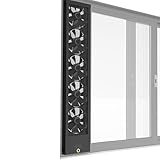
Overview: The AMCHIXIN vertical window fan addresses a specific market gap: sliding windows that traditional horizontal fans can’t service. Designed for vertical frames measuring 31.3-33.5 inches, this unit installs tool-free using a spring-loaded aluminum alloy frame that extends to create a secure, damage-free seal.
What Makes It Stand Out: Unlike conventional window fans, this model’s vertical orientation and five-blade array maximize airflow in sliding window applications. The stepless speed controller offers precise adjustment from gentle ventilation to powerful exhaust, making it ideal for pet rooms, cigar spaces, or kitchens. Its flush-mount slim design preserves full window function while the stainless steel mesh guard ensures safety.
Value for Money: Priced competitively for a specialized solution, this fan eliminates the need for costly custom ventilation systems. Generic horizontal fans simply don’t work for sliding windows, making this a smart investment for apartment dwellers or homeowners with non-standard windows. The durable aluminum construction and reversible functionality for year-round use enhance its long-term value.
Strengths and Weaknesses: Strengths include perfect sliding window compatibility, 30-second tool-free installation, stepless speed control, and robust build quality. Weaknesses are its narrow compatibility range—requiring exact measurements—and inability to fit traditional double-hung windows. The vertical-only design limits its versatility.
Bottom Line: For sliding window owners struggling with ventilation, this AMCHIXIN fan is a game-changer. While measurement-critical, its specialized design, powerful performance, and effortless installation make it the best solution for this niche application. Highly recommended for targeted use.
7. Vornado PORTAL® Window Fan with 3 Speeds, Reversible Exhaust Mode, Weather Resistant, Window Fan For Kitchen, Bedroom, Home, Low Profile, Black

Overview: The Vornado PORTAL® brings the brand’s signature airflow engineering to window ventilation. This low-profile horizontal fan fits windows 24-38 inches wide with minimum 8-inch openings, using an innovative modular block system for a custom, secure installation without tools.
What Makes It Stand Out: Vornado’s reputation for powerful circulation shines through with this model’s reversible exhaust function and three quiet speed settings. The weather-resistant construction allows year-round installation, while the intuitive controls enable seamless switching between intake and exhaust modes. Its 6.58-inch height maintains sightlines and natural light.
Value for Money: As a premium Vornado product, it commands a higher price than generic window fans but delivers superior build quality, quieter operation, and patented airflow technology. The modular fitting system eliminates gaps that plague cheaper models, reducing energy waste and improving efficiency. For those prioritizing performance and durability, the investment pays dividends.
Strengths and Weaknesses: Strengths include robust airflow, whisper-quiet operation, weather-resistant durability, and the versatile reversible function. The modular blocks ensure a tight fit. Weaknesses include the potential need for screen removal, horizontal-only installation limitation, and premium pricing that may deter budget shoppers.
Bottom Line: The Vornado PORTAL® is a top-tier window fan for standard double-hung or single-hung windows. Its powerful, quiet performance and secure fit justify the premium price. If you value quality engineering and year-round comfort, this is your best choice.
8. Vornado PORTAL® Window Fan with 3 Speeds, Reversible Exhaust Mode, Weather Resistant, Window Fan For Kitchen, Bedroom, Home, Low Profile, White

Overview: Identical in performance to its black counterpart, the white Vornado PORTAL® offers the same powerful ventilation in a lighter aesthetic. This horizontal window fan accommodates windows 24-38 inches wide using Vornado’s innovative modular block system for a secure, gap-free installation.
What Makes It Stand Out: Beyond the signature Vornado airflow technology and reversible exhaust function, the white finish blends seamlessly with lighter window frames and interior décor. The three-speed quiet operation, weather-resistant build, and intuitive controls remain unchanged, providing the same year-round ventilation flexibility in a more discreet color option.
Value for Money: Matching the black version’s premium pricing, this fan represents a long-term investment in indoor air quality. The color choice doesn’t affect performance but offers aesthetic flexibility. While costing more than basic models, the durable construction and efficient operation reduce long-term replacement costs and energy consumption.
Strengths and Weaknesses: Strengths mirror the black model: exceptional airflow, minimal noise, robust weather resistance, and a precision fit system. The white finish better suits certain décors. Weaknesses include the same horizontal-only limitation, potential screen removal requirement, and higher price point compared to budget alternatives.
Bottom Line: Choose the white Vornado PORTAL® if you want premium window ventilation that matches lighter window frames. It delivers the same outstanding performance and quiet operation as the black version, making it ideal for homeowners who prioritize both function and aesthetic cohesion.
9. Comfort Zone Window Fan for Bedroom, 9 inch 3 Speed Dual Fans with Auto-Locking Expanders, Window Exhaust Fan, Removeable Bug Screen, Black
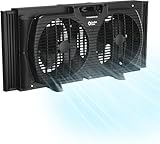
Overview: The Comfort Zone window fan offers versatile ventilation with its dual 9-inch fan design and convertible functionality. It expands from 22.25 to 33 inches wide to fit most double-hung windows, while included detachable feet transform it into a tabletop unit for year-round utility.
What Makes It Stand Out: This fan’s hybrid design maximizes value—functioning as both window and tabletop fan. The auto-locking expanders create a secure, airtight seal without manual adjustment, while the removable bug screen and fabric cover keep insects and debris out. A new whisper-quiet setting makes it bedroom-friendly.
Value for Money: Positioned in the mid-range price bracket, this fan delivers exceptional versatility. You’re essentially getting two products: a window exhaust fan and a portable tabletop unit. The automatic locking mechanism and included bug screen add value typically found in pricier models, making it a budget-smart choice for multi-purpose use.
Strengths and Weaknesses: Strengths include dual functionality, auto-locking convenience, effective bug protection, and quiet operation. The reversible airflow and expandable width increase compatibility. Weaknesses involve manual reversal (less convenient than electronic), smaller 9-inch fans that move less air than larger units, and a less premium build than high-end competitors.
Bottom Line: The Comfort Zone fan is perfect for those wanting flexibility on a budget. It works admirably as both window and tabletop fan, making it ideal for apartments, dorm rooms, or home offices. While not the most powerful option, its versatility and smart features make it a practical choice.
10. Windigaga 8 Inch Shutter Exhaust Fan, 760 CFM High-Speed Wall Mounted Exhaust Fan, 40dB Quiet Cooling Ventilation Attic Fan for Shed, Garage, Greenhouse, Basement, Chicken Coop, Generator Room, Black
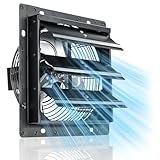
Overview: The Windigaga shutter exhaust fan is a robust wall-mounted solution designed for spaces where traditional window fans can’t reach. Delivering 760 CFM of airflow through its 8-inch galvanized steel housing, this unit tackles heat, humidity, and odors in garages, sheds, greenhouses, and chicken coops.
What Makes It Stand Out: This fan’s industrial-grade construction features three large aluminum alloy blades and automatic shutters that open during operation and seal tightly when off, preventing rain and pest intrusion. Despite its power, it maintains quiet 40dB operation while the corrosion-resistant build withstands harsh environments.
Value for Money: For specialized ventilation needs, this fan offers professional-grade performance at a DIY price point. Comparable commercial exhaust fans cost significantly more. The energy-efficient 26W motor and durable construction ensure low operating costs and long service life, delivering excellent ROI for property owners needing serious ventilation.
Strengths and Weaknesses: Strengths include powerful 760 CFM output, whisper-quiet operation, automatic shutter system, industrial durability, and straightforward DIY installation. The ETL listing ensures safety. Weaknesses: wall-mount only (not window-compatible), requires cutting installation hole, and may be overkill for small rooms needing minimal ventilation.
Bottom Line: For workshops, garages, or agricultural spaces requiring powerful ventilation, the Windigaga fan is outstanding. Its combination of high airflow, quiet operation, and rugged durability makes it a superior choice for demanding environments. Not for casual home use, but unbeatable for its intended applications.
Understanding Cross Ventilation and Window Fans
Cross ventilation relies on pressure differences between opposite sides of your home to create a natural flow of fresh air. When executed properly, this method can reduce indoor temperatures by several degrees without consuming the massive amounts of energy required by air conditioning systems. Window fans serve as the engine of this process, actively drawing fresh air from intake windows while expelling stale, warm air through exhaust windows.
The science behind effective cross ventilation involves more than just placing fans in random windows. Factors like wind direction, window placement, and fan positioning all influence how efficiently air moves through your space. Modern window fans are designed specifically to optimize these natural forces, using reversible airflow capabilities that allow you to switch between intake and exhaust modes as outdoor conditions change throughout the day.
The Physics of Strategic Airflow
Understanding pressure zones around your home helps maximize fan effectiveness. The windward side of your house experiences positive pressure, making it ideal for intake fans, while the leeward side experiences negative pressure, perfect for exhaust. Some advanced units now come with built-in pressure sensors that can detect these zones automatically, adjusting their operation to work with natural wind patterns rather than fighting against them.
Health Benefits of Proper Ventilation
Beyond temperature control, cross ventilation with window fans dramatically improves indoor air quality by flushing out pollutants, volatile organic compounds, and excess carbon dioxide. This constant air exchange reduces mold growth potential, alleviates allergy symptoms, and creates a fresher living environment. The latest models include enhanced filtration systems that capture pollen and dust while maintaining high airflow rates, a significant improvement over older designs that prioritized air movement over air quality.
Key Features That Define 2026 Window Fan Technology
The newest generation of window fans incorporates innovations that would have seemed futuristic just a few years ago. These aren’t your parents’ noisy, single-speed units that rattled in the window frame. Modern engineering has addressed nearly every complaint associated with traditional window fans while adding capabilities that integrate seamlessly into smart home ecosystems.
Reversible Airflow Systems
Dual-direction motors represent perhaps the most significant advancement in window fan design. Rather than needing separate fans for intake and exhaust, reversible models can push air in or out with the flip of a switch or tap of an app. This versatility proves invaluable when managing changing weather patterns throughout the day. Morning cool air can be drawn in, while afternoon heat gets pushed out, all with the same unit. The best systems offer independent control of each fan blade in twin models, allowing simultaneous intake and exhaust operation.
Multi-Speed Precision Controls
Gone are the days of choosing between “low,” “medium,” and “high” settings that rarely matched your actual needs. 2026 window fans feature variable speed controls with precise adjustment capabilities, often offering 10 or more discrete levels. This granularity lets you fine-tune airflow to create just the right amount of circulation without creating drafts or excessive noise. Some premium models include “boost” modes for rapid air exchange and “whisper” settings for overnight operation that won’t disturb sleep.
Advanced Blade Designs
Aerodynamic blade engineering borrowed from high-efficiency HVAC systems has revolutionized fan performance. Specially curved blades with optimized pitch angles move more air while requiring less energy and generating minimal noise. Many designs now feature asymmetrical blade configurations that reduce harmonic vibrations, eliminating the annoying hum that plagued older models. These improvements allow fans to operate at higher CFM ratings without the acoustic penalty traditionally associated with powerful airflow.
Types of Window Fans for Different Ventilation Needs
Not all window fans serve the same purpose, and understanding the distinctions helps you select the right configuration for your specific cross ventilation strategy. The market has diversified to address different architectural challenges and user preferences, moving beyond the one-size-fits-all approach.
Twin Window Fans
Twin-fan units feature two independently controlled fans side-by-side, offering maximum flexibility for cross ventilation setups. You can configure one side for intake while the other exhausts, creating a complete air exchange system within a single window opening. This design proves particularly valuable in apartments or homes where you have limited windows available for ventilation. The ability to operate each fan at different speeds adds another layer of customization, allowing you to balance airflow rates based on room size and external conditions.
Single Blade High-Velocity Models
For larger spaces or situations requiring maximum air movement, high-velocity single-fan units deliver impressive CFM ratings in a compact package. These workhorses excel at either intake or exhaust duty, making them ideal for paired installations where you dedicate specific windows to each function. Modern versions include aerodynamic housings that minimize air resistance and maximize efficiency, often achieving the same airflow as older models while using half the energy.
Exhaust-Only and Intake-Only Fans
Specialized single-direction fans serve specific purposes in comprehensive ventilation strategies. Exhaust-only models typically feature higher pressure ratings to push hot air out of attics or upper floors, while intake-only fans prioritize quiet operation and filtration for bringing fresh air into living spaces. Using dedicated fans for each function can create more effective pressure differentials than relying on reversible models alone, particularly in multi-story homes.
Sizing and Placement Strategies for Maximum Effectiveness
Choosing the right size fan and positioning it correctly determines whether your cross ventilation system succeeds or fails. Oversized fans create uncomfortable drafts and excessive noise, while undersized units fail to move enough air to make a meaningful difference. The calculation involves understanding your space’s cubic footage and the fan’s airflow capacity.
Calculating CFM Requirements
The gold standard for ventilation recommends exchanging all the air in a room every 5-10 minutes. To determine your needs, calculate the room’s cubic footage (length × width × height) and divide by your desired exchange rate. For a 300 square foot bedroom with 8-foot ceilings, you’ll need approximately 240-480 CFM depending on how quickly you want to refresh the air. However, cross ventilation systems should be sized for your entire home rather than individual rooms, requiring more powerful fans or multiple units working in concert.
Window Compatibility Measurements
Modern window fans accommodate various window types, but careful measurement remains essential. Most units fit standard double-hung windows between 24-37 inches wide, with expandable side panels filling gaps. Casement and sliding windows require specialized mounting kits that create a secure seal without damaging the frame. The depth of the fan housing also matters, as protruding models can interfere with curtains or blinds. Low-profile designs sit nearly flush with the window frame, maintaining your home’s aesthetic while delivering powerful performance.
Smart Features and Home Integration
The integration of window fans into smart home ecosystems represents a paradigm shift in how we manage indoor comfort. These connected devices respond automatically to environmental changes, learn your preferences, and coordinate with other home systems to optimize both comfort and energy efficiency.
Wi-Fi Connectivity and App Control
Remote operation through smartphone apps allows you to activate fans before arriving home, ensuring a cool, fresh environment upon arrival. Advanced apps provide real-time data on indoor and outdoor temperature, humidity, and air quality, helping you make informed decisions about when to ventilate. Some systems even integrate local weather forecasts, automatically adjusting operation to avoid pulling in hot air during unexpected temperature spikes or high pollen days.
Voice Assistant Compatibility
Integration with popular voice assistants enables hands-free control, perfect for adjusting settings while cooking, relaxing, or when your phone isn’t readily available. You can create custom routines like “evening cooldown” that adjust multiple fans throughout your home to specific speeds and directions. This level of automation transforms window fans from manual appliances into intelligent components of your home’s climate control system.
Automated Scheduling and Sensors
Built-in temperature and humidity sensors allow fans to operate autonomously, turning on when conditions meet your predetermined thresholds. This set-and-forget functionality ensures optimal ventilation without constant manual adjustment. Some advanced models include air quality sensors that detect pollutants or carbon dioxide levels, automatically increasing airflow when indoor air quality degrades. The ability to create different schedules for weekdays and weekends adds another layer of customization that matches your lifestyle patterns.
Energy Efficiency and Cost Considerations
Operating window fans costs significantly less than running air conditioning, but efficiency varies dramatically between models. Understanding the factors that influence energy consumption helps you calculate long-term operating costs and environmental impact.
DC Motor Technology
The shift from AC to DC motors represents the single biggest improvement in fan efficiency. DC motors consume 50-70% less electricity while providing smoother speed control and quieter operation. Many 2026 models feature brushless DC motors that not only reduce energy consumption but also extend the fan’s lifespan by eliminating wear-prone components. The initial price premium for DC motor fans typically pays for itself within one cooling season through reduced electricity bills.
Energy Star Certifications
While not all high-quality fans pursue Energy Star certification, those that do have undergone rigorous testing to verify their efficiency claims. Certified models use approximately 15% less energy than standard units while meeting strict performance criteria. The certification also requires low standby power consumption, important for smart fans that remain connected to Wi-Fi when not actively operating. Look for the Energy Star label as a quick way to identify models that balance performance with conservation.
Noise Levels and Quiet Operation Technologies
Traditional window fans earned a reputation for being loud, but modern engineering has transformed them into whisper-quiet appliances. Understanding noise ratings and the technologies that reduce sound helps you select a fan that won’t disrupt sleep or daily activities.
Decibel Ratings Explained
Fan noise is measured in decibels (dB), with typical conversations occurring around 60 dB and quiet libraries at 40 dB. The best window fans operate at 35-45 dB on low settings, making them barely noticeable. Be wary of manufacturers who only advertise maximum CFM without disclosing noise levels, as high airflow often comes at an acoustic cost. Reputable brands provide dB ratings for each speed setting, allowing you to make informed decisions based on your noise sensitivity.
Vibration Reduction Features
Even quiet motors can create noise through vibration transfer to the window frame. Modern fans employ multiple strategies to isolate vibrations, including rubber mounting gaskets, balanced blade assemblies, and weighted bases that dampen resonance. Some premium models feature active vibration cancellation technology similar to that used in high-end audio equipment, monitoring and counteracting vibrations in real-time to maintain near-silent operation.
Installation and Security Considerations
A window fan is only effective if installed securely and safely. The installation process varies significantly between models, and security concerns arise whenever you create an opening in a ground-floor window.
Expandable Side Panels
Most window fans include accordion-style side panels that expand to fill the gap between the fan housing and window frame. Quality panels feature durable construction that withstands repeated adjustments without cracking or losing their seal. Look for models with locking mechanisms that prevent the panels from collapsing inward, and consider insulated panels that improve energy efficiency when the fan isn’t operating. Some innovative designs use inflatable seals that conform precisely to your window dimensions, eliminating air leaks entirely.
Locking Mechanisms
Ground-floor installations require security features that prevent intruders from easily removing the fan. Many modern units include integrated locking tabs that secure to the window sash, while others work with aftermarket security brackets that bolt directly into the window frame. For casement windows, specialized mounting kits create a secure barrier while maintaining the ability to quickly remove the fan when needed. Always verify that your chosen fan includes or is compatible with security hardware appropriate for your installation location.
Maintenance and Seasonal Storage
Proper maintenance dramatically extends the lifespan and performance of your window fans. Regular cleaning prevents dust buildup that reduces efficiency and can create fire hazards, while proper storage protects components during the off-season.
Cleaning and Filter Care
Most contemporary fans feature tool-less designs that allow quick access to blades and filters for cleaning. Washable foam filters should be cleaned monthly during heavy use periods, while more advanced electrostatic filters may require replacement every 2-3 months. The fan housing and blades can be wiped down with a damp cloth, though some models include dishwasher-safe components for thorough cleaning. Always disconnect power before cleaning and ensure all components are completely dry before reassembly.
Winterization Procedures
Before storing fans for winter, perform a deep clean and inspect all components for wear. Lubricate motor bearings if specified in the manual, and store units in their original packaging or covered with breathable cloth to prevent dust accumulation. For homes in extreme climates, consider removing fans entirely and reinstalling insulating window panels to maximize energy efficiency during heating season. Smart fans should be disconnected from power and have their backup batteries removed to prevent corrosion during long-term storage.
Troubleshooting Common Issues
Even the best window fans can experience problems that affect performance. Understanding common issues and their solutions helps you maintain optimal operation without costly service calls.
Addressing Airflow Problems
Reduced airflow often indicates blocked filters or dirty blades, but can also result from improper installation creating air leaks around the fan housing. Check that expandable panels create a tight seal and that the window sash locks firmly against the top of the unit. If one fan in a twin model operates at reduced capacity, the issue may be a failing motor capacitor, which is often replaceable without professional help. Always verify that your fan’s CFM rating matches your space requirements, as undersized units will struggle regardless of condition.
Electrical and Power Issues
Fans that fail to start or randomly shut off may be experiencing voltage fluctuations or overheating protection activation. Ensure your fan is plugged directly into a wall outlet rather than an extension cord, which can cause voltage drop. Smart fans that disconnect from Wi-Fi may need firmware updates or could be experiencing interference from other wireless devices. Most manufacturers provide reset procedures that restore factory settings and resolve connectivity issues. If a fan trips circuit breakers, it likely indicates a motor problem requiring professional repair or replacement.
Environmental Factors and Climate Considerations
Your local climate and seasonal patterns significantly influence which window fan features provide the most value. A system perfect for coastal California may prove inadequate in humid Florida or arid Arizona.
Humidity and Moisture Management
In humid climates, the timing of ventilation becomes critical. The best window fans include integrated hygrometers that measure both indoor and outdoor humidity, automatically adjusting operation to avoid introducing moist air that could promote mold growth. Some models feature dehumidification assist modes that coordinate with your home’s dehumidifier, creating a comprehensive moisture management strategy. For coastal areas, corrosion-resistant components and sealed motor housings protect against salt air damage.
Allergen and Pollen Control
Allergy sufferers benefit from fans with high-efficiency filtration systems and pollen sensors that monitor outdoor allergen levels. Advanced models can automatically close intake dampers when pollen counts spike, preventing allergens from entering your home. HEPA-grade filters capture microscopic particles, while activated carbon layers remove odors and volatile organic compounds. These filtration enhancements transform window fans from simple air movers into comprehensive air quality management tools.
Budget Planning and Value Assessment
Window fan prices range from under $50 for basic models to over $300 for feature-packed smart units. Determining where your money delivers the most value requires evaluating which features align with your specific needs and usage patterns.
Entry-level fans typically offer reversible operation and multiple speeds but lack smart features and advanced filtration. Mid-range options around $100-150 often represent the sweet spot, providing quiet DC motors, decent smart capabilities, and quality construction. Premium models justify their cost through superior energy efficiency, advanced sensors, and integration with whole-home automation systems. Calculate potential energy savings compared to air conditioning usage—most households recoup the cost of a quality fan within one season.
Consider warranty coverage when evaluating price, as longer warranties indicate manufacturer confidence in durability. A $200 fan with a 5-year warranty may offer better value than a $100 fan requiring replacement after two seasons. Also factor in filter replacement costs for models with advanced filtration, as these ongoing expenses can add $30-50 annually to operating costs.
Frequently Asked Questions
How many window fans do I need for effective cross ventilation?
Most homes require at least two fans positioned on opposite sides of the house—one for intake and one for exhaust. Larger homes or multi-story buildings benefit from additional fans, typically one per 500-700 square feet of living space. The key is creating a clear path for air to travel through your home.
Can window fans be used with air conditioning?
Yes, window fans complement air conditioning by pre-cooling your home in the evening and providing fresh air during mild weather. Use fans during cooler hours to reduce AC runtime, but avoid running them simultaneously with air conditioning as this wastes energy by pulling cooled air outside.
Are window fans secure enough for ground-floor installation?
Modern window fans include locking mechanisms and security brackets that make removal difficult from the outside. For maximum security, choose models with reinforced mounting hardware and consider installing additional window locks or security bars that remain in place year-round.
How much can I expect to save on energy bills?
Households using window fans for nighttime cooling typically reduce air conditioning usage by 30-50% during mild weather, translating to $20-50 monthly savings depending on climate and electricity rates. The savings increase significantly in regions with cool nights and hot days.
What’s the difference between CFM and air exchange rate?
CFM (cubic feet per minute) measures the volume of air moved, while air exchange rate indicates how quickly a fan replaces all air in a space. A fan with 200 CFM rating moves 200 cubic feet of air per minute, which would exchange the air in a 1,000 cubic foot room in five minutes.
Do smart window fans work without internet connectivity?
Most smart fans operate manually via onboard controls even without Wi-Fi, though you lose remote access and automation features. Some models store schedules locally and continue operating autonomously, while others revert to basic manual operation until connectivity is restored.
How long do modern window fans typically last?
Quality window fans with DC motors and proper maintenance last 7-10 years, compared to 3-5 years for basic AC motor models. Smart components may require updates or replacement sooner, but the mechanical portions of premium fans have exceptional longevity.
Can window fans help with cooking odors and smoke?
Window fans excel at removing cooking odors when configured for exhaust. Position a fan in a kitchen window to pull smoke and smells outside while drawing fresh air from windows in adjacent rooms. This creates a negative pressure zone that prevents odors from spreading throughout your home.
What’s the ideal window height for fan installation?
Install intake fans in lower windows and exhaust fans in upper windows or upstairs rooms to leverage natural convection. Hot air rises, so exhausting from higher points creates more efficient airflow patterns. This principle, known as the stack effect, enhances fan performance without increasing energy consumption.
Are there window fans suitable for casement or sliding windows?
Specialized mounting kits adapt standard window fans for casement and sliding window applications. These kits create a secure seal and proper support, though you may sacrifice some adjustability. Some manufacturers offer purpose-built fans for non-standard windows, though selection remains more limited than for double-hung windows.
See Also
- 10 Game-Changing High Velocity Fans for Garages in 2026
- 10 Game-Changing Window AC Installation Accessories for Smooth Installation in 2026
- 10 Game-Changing Smart Window Air Conditioners with App Control in 2026
- 10 Game-Changing Window AC Support Frames for Large Windows in 2026
- 10 Game-Changing Window AC Slide-Out Brackets for Easy Cleaning in 2026