Table of Contents
Industrial spaces have always presented unique climate control challenges that go far beyond what residential or commercial environments demand. From massive warehouses with soaring ceilings to manufacturing floors generating intense heat from machinery, the need for powerful, reliable air circulation has never been more critical. As we move into 2026, pedestal fan technology has undergone a remarkable transformation, moving from simple rotating blades to sophisticated air management systems that integrate with smart building infrastructure and deliver unprecedented efficiency.
The convergence of IoT connectivity, advanced materials science, and energy-conscious engineering has created a new generation of industrial pedestal fans that do far more than just move air. These modern solutions offer predictive maintenance capabilities, adaptive airflow patterns based on real-time conditions, and durability that withstands the harshest industrial environments. Understanding what makes these innovations truly “game-changing” requires looking beyond marketing claims to the core technologies and design principles that separate next-generation equipment from traditional models.
Top 10 Pedestal Fans for Industrial Spaces
Detailed Product Reviews
1. HiCFM 5000 CFM 20 inch High Velocity Pedestal Oscillating Fan with Powerful 1/5 Motor, 9ft Power Cord, Oscillation, Metal Body with Wheels for Garage, Commercial, Industrial - UL Safety Listed

Overview:
The HiCFM 20-inch industrial pedestal fan delivers 5000 CFM via a 1/5 HP motor, targeting garages, workshops, and commercial spaces. Three speed settings (3000/4000/5000 CFM), 80-degree oscillation, and height adjustment from 41-55 inches provide versatile cooling. The metal construction, 9-foot UL-listed cord, and thermal protection emphasize job-site durability and electrical safety.
What Makes It Stand Out:
This fan’s transparent noise disclosure (62-69dB at 2 meters) is refreshingly honest, letting buyers assess suitability before purchase. The turbo aluminum blades and pre-locked screw knobs enable genuine tool-free assembly in four simple steps. A 100% copper wiring stator and thermally protected PSC motor prevent overheating during continuous operation, addressing common failure points in budget fans.
Value for Money:
Positioned as a mid-tier option, it balances performance and price effectively. The 5000 CFM output competes with pricier models, while UL listing and all-metal construction provide commercial-grade reliability. Wheels and tool-free assembly add practical value that justifies the cost against plastic alternatives that crack under industrial conditions.
Strengths and Weaknesses:
Strengths: Transparent noise specifications; true tool-free assembly; robust metal construction; thermal protection; UL safety listed; wheeled mobility; 9-foot cord
Weaknesses: Lower CFM than 30-inch competitors; limited height range; 69dB high-speed noise may be intrusive; 20-inch blade span covers less area
Bottom Line:
An excellent choice for small-to-medium workshops or double-car garages where straightforward, reliable cooling is needed. The honest noise disclosure and safety features make it ideal for users prioritizing transparency and durability over maximum power.
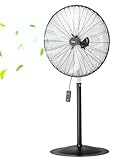
2. VEVOR Industrial Pedestal Fan, 30 Inch 85-Degree Oscillating Fan, Height Adjustable Standing Fans with 3 Adjustable Speeds, High Power Floor Fans for Office, Black
Overview:
VEVOR’s 30-inch industrial pedestal fan generates 9100 CFM through an industrial-grade PSC motor with thermal protection. Height adjusts from 53.5-78.3 inches with 85-degree oscillation and manual 15-degree tilt up or down. Designed for offices and commercial spaces, it includes installation tools and promises durable components for demanding environments.
What Makes It Stand Out:
The 65.62-foot air delivery distance ensures airflow reaches distant warehouse corners, a specification rarely advertised. The extensive height range accommodates floor-level equipment cooling to elevated ventilation. Including a complete installation tool set demonstrates VEVOR’s commitment to out-of-box usability without hunting for additional tools.
Value for Money:
This fan offers premium performance at a competitive price point. The 9100 CFM output rivals units costing significantly more, while comprehensive tilt and oscillation provide versatility typically found in higher-end models. For large space coverage, it delivers professional-grade results without professional-grade pricing, making it accessible for serious DIYers.
Strengths and Weaknesses:
Strengths: Exceptional 9100 CFM output; impressive 65.62-foot air delivery; extensive height adjustment; dual-direction manual tilt; included installation tools; thermal protection
Weaknesses: Heavier construction reduces portability; larger footprint requires more space; noise level not specified; may be overkill for residential garages
Bottom Line:
Perfect for warehouses, production floors, and large workshops where maximum airflow coverage is essential. The extensive adjustability and powerful output justify its selection for commercial applications requiring serious ventilation power and reach.
3. iLiving ILG8P30-72 Commercial Pedestal Floor Fan, 30-Inch, Industrial Heavy Duty Floor Standing Fan with 7261 CFM, Perfect for Home, Shop, Bedroom, Gym, Garage, Black

Overview:
iLiving’s 30-inch commercial fan combines robust metal construction with 7261 CFM output for industrial environments. OSHA compliance and UL certification make it workplace-ready. Heavy-duty steel housing and three aluminum blades handle continuous operation in demanding settings like barns, warehouses, and distribution centers. US-based support and a one-year warranty back the product.
What Makes It Stand Out:
OSHA compliance with 1/2-inch opening requirements demonstrates serious safety engineering for workplace liability protection. US-based customer support (1-800-317-1688) and a one-year parts warranty provide peace of mind rare in this import-dominated category. The 7261 CFM rating hits a sweet spot between power and energy efficiency.
Value for Money:
While potentially pricier than import alternatives, OSHA compliance and US-based support justify the investment for business owners. Safety certifications reduce workplace liability risks, making it cost-effective for commercial operations. For residential users, the premium buys reliability and legal compliance that budget fans cannot match, translating to longer service life.
Strengths and Weaknesses:
Strengths: OSHA and UL compliant; US-based customer support; one-year warranty; heavy-duty metal construction; balanced 7261 CFM output; 9-foot cord
Weaknesses: No oscillation mentioned; height adjustability range not specified; potentially higher price point; no noise specifications; limited speed details
Bottom Line:
Ideal for commercial operations prioritizing safety compliance and reliability. The OSHA certification makes it a liability-conscious choice for business owners, while the warranty and support provide long-term value worth the premium investment for both commercial and safety-minded residential users.
4. Comfort Zone 20-Inch High-Velocity Industrial Pedestal Fan – Heavy-Duty All-Metal Shop Fan with Aluminum Blades, 3-Speed Slim Profile Stand Fan, 180° Tilt & Adjustable Height for Garage or Warehouse

Overview:
Comfort Zone’s 20-inch high-velocity fan delivers 7.8 m/s airspeed through five precision-balanced aluminum blades in an all-metal steel body. Engineered for professional work environments, it features three speeds, telescoping height adjustment from 51-62 inches, and an industry-leading 180-degree tilt. The slim profile saves space in crowded workshops while directing airflow exactly where needed.
What Makes It Stand Out:
The 180-degree pivoting head provides unmatched directional control, allowing upward room circulation or downward bench-focused cooling. Five meticulously balanced aluminum blades create smoother, more consistent airflow than standard three-blade designs. The rugged all-metal construction withstands dust and debris inherent to professional job sites without cracking or warping.
Value for Money:
This fan competes strongly in the 20-inch category by offering premium features at a mid-range price. The 180-degree tilt is a standout feature typically absent in competitors, while the five-blade design enhances efficiency and reduces vibration. For users needing precise airflow direction rather than broad coverage, it delivers specialized performance without premium pricing.
Strengths and Weaknesses:
Strengths: 180-degree tilt range; five-blade design for smooth airflow; all-metal rugged construction; telescoping height adjustment; slim space-saving profile; three-speed control
Weaknesses: CFM rating not specified; no oscillation function; limited height range; noise level not disclosed; no wheels mentioned for mobility
Bottom Line:
Best suited for workshops requiring targeted cooling rather than broad circulation. The exceptional tilt range and durable build make it perfect for mechanics, woodworkers, and technicians who need precise, reliable airflow directed at specific workstations or equipment.
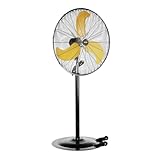
5. HiCFM 30" Pedestal Standing Fan, 8300 CFM High Velocity 80° Oscillating Heavy Duty Metal Stand Fan for Industrial, Commercial, Garage, Workshop Use - UL Listed
Overview:
HiCFM’s 30-inch pedestal fan generates 8300 CFM via a 1/3 HP industrial motor, positioning it as a high-performance option for large spaces. Height adjusts from 65-77 inches with 80-degree oscillation and 15-degree tilt. Advanced noise-reduction technology keeps operation under 75dB, while heavy-duty aluminum blades and metal construction with black powder coating ensure durability for industrial, commercial, garage, and workshop use.
What Makes It Stand Out:
The claimed 30% noise reduction over competitors addresses a primary complaint about industrial fans. The 1/3 HP motor delivers exceptional 8300 CFM output while maintaining reasonable acoustics. The combination of oscillation, tilt, and extensive height adjustment provides comprehensive airflow customization rarely found in this power class.
Value for Money:
This fan offers near-commercial power at a consumer-accessible price. The 8300 CFM output rivals professional units costing significantly more, while noise reduction technology adds livability for residential garages or workshops. Robust construction and included mobility features provide excellent long-term value, though the indoor-only restriction limits versatility.
Strengths and Weaknesses:
Strengths: High 8300 CFM output; noise-reduction technology; 1/3 HP powerful motor; extensive height range; oscillation and tilt; wheeled base; UL listed; 9-foot cord
Weaknesses: Indoor use only restriction; 75dB may still be loud for quiet environments; larger footprint requires space; limited detail on speed settings
Bottom Line:
An outstanding balance of power and usability for large garages, workshops, or commercial spaces where noise is a concern. The noise-reduction technology makes it more suitable for mixed-use environments than traditional industrial fans, while maintaining serious airflow performance that competes with units twice its price.
6. Tornado 20” Oscillating Pedestal Fan – 5000 CFM, Stand Fan, 3-Speed, 1/6 HP, 6.6 FT, Industrial & Commercial Use, UL Listed

Overview: The Tornado 20" Pedestal Fan delivers industrial-strength cooling with an impressive 5,000 CFM maximum airflow, making it ideal for demanding commercial and warehouse environments. Its adjustable height spans 42.5 to 54.7 inches, while the 75° oscillation and 40° vertical tilt ensure comprehensive air circulation. Powered by a robust 1/6 HP motor, this UL-listed unit prioritizes safety with built-in overheat protection.
What Makes It Stand Out: This fan’s exceptional airflow capacity sets it apart from residential models, while its safety certifications and thermal protection offer peace of mind for continuous operation. The 6.6-foot heavy-duty cord provides flexibility in large spaces, and the rust-resistant grille with powder-coated steel frame ensures durability in harsh conditions.
Value for Money: Positioned as a professional-grade solution, the Tornado justifies its price point through commercial-grade components and UL certification. While more expensive than consumer fans, it outperforms cheaper alternatives in longevity and raw power, making it cost-effective for businesses requiring reliable cooling.
Strengths and Weaknesses: Strengths include remarkable airflow, sturdy construction, safety features, and wide oscillation. Weaknesses involve noise levels reaching 72 decibels—noticeable in quiet settings—and its explicit indoor-only restriction. The assembly is straightforward, but the industrial design may overwhelm smaller residential spaces.
Bottom Line: Perfect for warehouses, factories, and commercial settings needing powerful, reliable cooling. The Tornado’s performance and safety features make it a worthwhile investment for professional environments where airflow is critical.
7. VEVOR 16-Inch High Velocity Pedestal Fan, 1450 CFM Industrial Standing Floor Fan with Handle, 75° Oscillating, 3-Speed Adjustable Height, Metal Made for Commercial, Garage, Workshop, Home, Copper

Overview: The VEVOR 16-Inch High Velocity Pedestal Fan offers a compact yet powerful cooling solution for commercial and residential spaces. Delivering up to 1,450 CFM with three speed settings, this all-metal fan balances performance with practicality. Height adjusts from 34.5 to 49.5 inches, while 75° vertical tilt and 20° horizontal oscillation provide decent coverage for most applications.
What Makes It Stand Out: Its all-metal construction distinguishes it from plastic competitors, ensuring durability without excessive weight. The relatively quiet operation (64-69 dB) is impressive for an industrial fan, making it suitable for workshops where noise matters. The integrated handle enhances portability between garage, workshop, or home use.
Value for Money: This fan sits in the sweet spot between cheap residential models and expensive industrial units. The metal build and 55W motor offer better longevity than plastic alternatives, while the price remains accessible for homeowners seeking professional-grade durability.
Strengths and Weaknesses: Strengths include sturdy metal construction, portability, quieter operation, and versatile placement options. Weaknesses are the limited 20° oscillation range and lower CFM compared to larger 20-inch models. The power cord at 5.9 feet is slightly shorter than some competitors.
Bottom Line: An excellent choice for those needing durable, moderately powerful cooling in garages, workshops, or large rooms. The VEVOR delivers professional build quality without the premium price tag or deafening noise of larger industrial fans.
8. BEESTAR 18 Inch Heavy Duty High Velocity Pedestal Fan,Industrial Standing Fan with Adjustable Height and Tilt,3-Speed,Metal for Industrial, Commercial, Residential, Greenhouse,Black

Overview: The BEESTAR 18-Inch Heavy Duty Pedestal Fan combines impressive power with exceptional adjustability for demanding environments. Its thermally protected PSC motor reaches 1,520 RPM, delivering wind speeds up to 8.2 m/s across three settings. Height adjusts from 47.1 to 55.1 inches, but the standout feature is the remarkable 120° vertical tilt and 360° left-right rotation for truly customizable airflow.
What Makes It Stand Out: Unmatched directional control sets this fan apart—no other model in its class offers such extensive positioning flexibility. The heavy-duty metal construction with balanced aluminum blades ensures stable operation even at maximum power, while the wide base prevents tipping during oscillation.
Value for Money: With its unique articulation capabilities and robust build, the BEESTAR offers excellent value for users needing targeted cooling in large spaces. It competes favorably with premium industrial fans while providing superior adjustability that justifies its mid-to-high price range.
Strengths and Weaknesses: Strengths include extraordinary positioning range, powerful airflow, stable metal construction, and easy assembly. Weaknesses involve potential overkill for standard home use and the larger footprint required for the wide base. The 100-watt power draw is efficient but may still be excessive for casual cooling needs.
Bottom Line: Ideal for workshops, warehouses, and commercial spaces requiring precise airflow direction. The BEESTAR’s unparalleled adjustability makes it the top choice for professionals who need cooling exactly where they want it.
9. Allsheen 20 Inch High Velocity Pedestal Fan, Heavy Duty Industrial Standing Fan with 3-Speed & Adjustable Height (47.1"-55.1"), Metal Fan for Bedroom, Patio, Workshop & Indoor Air Circulation
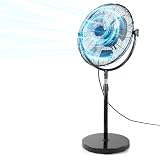
Overview: The Allsheen 20-Inch High Velocity Pedestal Fan promises industrial power without the typical industrial noise. Engineered with a thermally protected motor, it generates an impressive 8.2 m/s wind speed while maintaining remarkably quiet operation—a rare combination in high-performance fans. Height adjusts from 47 to 55 inches with manual tilt for targeted cooling.
What Makes It Stand Out: This fan’s key differentiator is its quiet performance alongside powerful airflow, eliminating the distracting hum that plagues most industrial fans. The heavy-duty metal construction ensures stability and longevity, while the precisely balanced aluminum blades maximize efficiency without excessive noise.
Value for Money: As a premium option, the Allsheen costs more than basic metal fans but delivers a superior user experience through noise reduction and robust build quality. For those working in home offices or living spaces adjacent to workshops, the quiet operation alone justifies the investment over cheaper, louder alternatives.
Strengths and Weaknesses: Strengths include powerful yet quiet operation, durable all-metal construction, wide 20-inch blade span, and easy no-tool assembly. Weaknesses are the higher price point and substantial weight from the metal build, making it less portable than lighter models. The oscillation range isn’t specified, which may concern some buyers.
Bottom Line: The perfect solution for users needing industrial airflow in noise-sensitive environments. Whether cooling a home workshop or large living space, the Allsheen delivers power without the penalty of excessive noise.
10. Vie Air 18 Inch Industrial Heavy Duty Pedestal Oscillating Metal Stand Fan, Black

Overview: The Vie Air 18-Inch Industrial Pedestal Fan represents a straightforward, no-frills approach to heavy-duty cooling. This oscillating metal stand fan offers three speed settings in a durable black powder-coated steel construction designed for basic commercial and residential needs. While specifications are minimal, the industrial designation suggests reliable performance for standard applications in garages or workshops.
What Makes It Stand Out: Simplicity is this fan’s primary virtue—lacking complex features that can fail, it focuses on fundamental cooling with a robust metal build. The oscillating head provides room-wide circulation without complicated adjustments, making it ideal for users wanting reliable operation without a learning curve or maintenance concerns.
Value for Money: Likely positioned as a budget-friendly industrial option, the Vie Air appeals to cost-conscious buyers needing metal durability over plastic alternatives. While it may lack advanced features, the solid construction offers better longevity than similarly priced residential fans, making it a practical value purchase.
Strengths and Weaknesses: Strengths include simple operation, durable metal construction, and presumably affordable pricing. Weaknesses stem from minimal product information—CFM, decibel levels, and exact adjustability aren’t specified, making performance comparisons difficult. The lack of detailed features may indicate basic performance rather than premium capability.
Bottom Line: A solid choice for those prioritizing simplicity and durability over advanced features. If you need a basic, sturdy fan for a garage or workshop without breaking the bank, the Vie Air delivers essential cooling without unnecessary complexity.
The Evolution of Industrial Pedestal Fans
From Basic Cooling to Smart Air Management
The earliest industrial pedestal fans were essentially scaled-up residential models with more powerful motors and metal guards. Their sole purpose was creating a breeze to make workers more comfortable. Today’s systems function as integral components of facility climate strategies, actively managing temperature differentials, reducing moisture accumulation, and even helping control airborne particulates. This shift represents a fundamental change in how engineers approach industrial ventilation.
Why 2026 Represents a Tipping Point
Several factors converge in 2026 to make this year pivotal for industrial air circulation technology. New energy efficiency mandates for industrial facilities, advances in brushless motor technology reaching cost-effectiveness, and the widespread adoption of facility-wide IoT networks have all matured simultaneously. This perfect storm of innovation means buyers now have access to capabilities that were prohibitively expensive just two years ago.
Core Technologies Redefining Performance
IoT-Enabled Smart Controls
Modern industrial pedestal fans now feature embedded sensors and wireless connectivity that allow them to communicate with facility management systems. These smart controls enable remote operation through centralized dashboards, automated scheduling based on shift patterns, and integration with temperature sensors throughout the workspace. Facility managers can adjust fan speeds, oscillation patterns, and operation zones from a single interface, creating responsive cooling strategies that adapt to production schedules and seasonal changes.
Brushless DC Motor Innovations
The transition from traditional AC induction motors to brushless DC motors represents one of the most significant leaps forward. These motors deliver up to 60% better energy efficiency while generating less heat and operating virtually silently compared to their predecessors. Their electronic commutation eliminates brush wear, dramatically extending motor life and reducing maintenance requirements in 24/7 industrial operations.
Advanced Aerodynamic Blade Engineering
Computational fluid dynamics has revolutionized fan blade design, creating profiles that maximize airflow while minimizing turbulence and noise. Multi-tiered blade configurations, variable pitch designs, and specialized trailing edge treatments help these fans move more air per watt of electricity consumed. Some designs incorporate serrated edges that break up vortex formation, reducing the annoying “fan hum” that plagued older industrial models.
Energy Recovery Systems
Cutting-edge pedestal fans now incorporate regenerative features that capture kinetic energy during deceleration and feed it back into the power system. While the energy recovery per fan is modest, facilities running dozens of units can see measurable reductions in overall electricity consumption. This technology also enables smoother speed transitions and reduces strain on electrical infrastructure during startup cycles.
Critical Features for Industrial Applications
Industrial-Grade Build Materials
The difference between commercial and industrial-grade construction becomes apparent in material choices. Premium models utilize aircraft-grade aluminum alloys for blade construction, powder-coated steel or stainless steel for guards and columns, and reinforced polymer composites for internal components. These materials resist corrosion from chemical vapors, withstand impacts from debris, and maintain structural integrity in temperature extremes from -20°F to 120°F.
Variable Height and Oscillation Mechanisms
True industrial versatility requires more than basic up-and-down adjustment. Advanced pedestal fans feature pneumatic or electric height adjustment with ranges from 4 to 10 feet, allowing precise targeting of airflow zones. Oscillation mechanisms now offer programmable sweep angles from 30 to 180 degrees, with some models providing independent vertical and horizontal oscillation for comprehensive area coverage.
Noise Dampening Technology
Industrial environments are already loud, but adding fan noise can push facilities over OSHA occupational noise limits. Modern designs incorporate vibration isolation mounts between motor and housing, acoustically insulated motor compartments, and blade designs that operate below 65 decibels even at maximum speed. This attention to acoustic performance helps maintain worker safety and comfort without sacrificing airflow performance.
Weather and Corrosion Resistance
For facilities with semi-exposed areas, washdown requirements, or corrosive atmospheres, IP ratings have become crucial. Industrial pedestal fans now commonly carry IP55 or IP65 ratings, indicating protection against dust ingress and water jets. Marine-grade coatings, stainless steel fasteners, and sealed bearing systems ensure longevity in food processing, chemical manufacturing, and coastal industrial environments.
Power Efficiency Ratings
Understanding efficiency metrics helps buyers calculate long-term operational costs. Look for fans providing CFM (cubic feet per minute) per watt ratings above 20 for high-efficiency models. Some manufacturers now publish EER (Energy Efficiency Ratio) scores specifically for industrial air circulators, making comparisons more straightforward. The most efficient units can pay for their premium price through energy savings within 18-24 months of continuous operation.
Specialized Fan Categories for Different Industries
Heavy-Duty Metal Fabrication Fans
Metalworking shops require fans that can withstand hot metal shards, grinding dust, and oil mist. These specialized units feature spark-resistant aluminum construction, thermal cutoff switches, and reinforced guards with tighter mesh patterns. Their motors are sealed against metal dust infiltration, and bearings are rated for continuous operation in high-ambient-temperature environments.
Chemical-Resistant Models for Harsh Environments
Pharmaceutical and chemical processing facilities demand fans built from chemically inert materials. Polypropylene housings, PTFE-coated blades, and Hastelloy hardware options prevent corrosion from aggressive solvents and acids. These models often include intrinsically safe electrical components for hazardous location ratings, making them suitable for Class I, Division 2 environments.
High-Velocity Cooling Solutions
For extreme heat applications like foundries or glass manufacturing, high-velocity fans deliver concentrated air streams at speeds exceeding 3,000 feet per minute. These units prioritize directional airflow over wide coverage, using focused nozzles and high-RPM motors to create cooling zones for workers stationed near heat sources. Variable frequency drives allow precise speed control to match process heat output.
Portable and Modular Designs
Flexibility has become increasingly valuable in dynamic industrial settings. Portable pedestal fans feature heavy-duty casters with locking mechanisms, quick-disconnect power cords, and collapsible designs for easy storage. Modular systems allow multiple fan heads to operate from a single pedestal base, letting facilities reconfigure cooling layouts as production lines change without purchasing entirely new units.
Eco-Friendly and Sustainable Options
Sustainability-focused facilities now have access to fans manufactured from recycled materials and powered by renewable energy inputs. Solar-compatible DC models can run directly from photovoltaic panels during daylight hours, while grid-tied versions feature advanced power factor correction to reduce overall electrical demand. Some manufacturers offer take-back programs for end-of-life recycling, contributing to circular economy initiatives.
Strategic Placement and Installation
Optimal Positioning for Maximum Airflow
Effective fan placement goes beyond simply pointing them at work areas. The principle of evaporative cooling means positioning fans to create consistent air movement across worker skin surfaces without creating disruptive drafts. Place units 10-15 feet from target zones, angled slightly upward to take advantage of natural convection currents. Avoid positioning fans directly opposite each other, which creates turbulent air pockets that reduce overall effectiveness.
Electrical Requirements and Safety Zones
Industrial pedestal fans draw significant current, especially during startup. Ensure dedicated circuits with appropriate amperage ratings, and consider soft-start features to prevent voltage drops that affect sensitive equipment. Maintain clearance from overhead cranes, forklift traffic paths, and emergency exits. Install fans on circuits with ground fault protection in areas where moisture is present.
Zoning Strategies for Large Facilities
Divide large facilities into thermal zones based on heat generation, occupancy, and process requirements. Use networked fans to create pressure differentials that direct hot air toward exhaust systems while pulling cooler makeup air into occupied spaces. This strategic approach can reduce HVAC loading by 15-30% while improving comfort in critical work zones.
Maintenance and Longevity
Preventative Maintenance Schedules
Establish maintenance intervals based on operating hours rather than calendar time. For continuous operation, inspect blade balance and guard integrity monthly, clean motor cooling vents weekly, and lubricate bearings quarterly. Fans in dusty environments may require daily cleaning of intake screens. Create digital maintenance logs tied to IoT systems that automatically schedule service based on actual runtime data.
Blade Balancing and Motor Care
Imbalanced blades create vibration that destroys bearings and reduces efficiency. Use dynamic balancing equipment to check blade sets annually, or whenever fans are moved or impact-damaged. Monitor motor temperature with infrared thermometers during operation; persistent overheating indicates bearing failure, voltage issues, or airflow blockage through motor cooling passages.
Troubleshooting Common Issues
Excessive noise often indicates loose guards, debris striking blades, or bearing wear. Reduced airflow typically results from blade contamination, motor capacitor degradation, or incorrect voltage supply. Intermittent operation usually points to thermal overload protection triggering from blocked ventilation or low voltage conditions. Modern smart fans can diagnose many of these issues automatically and alert maintenance teams before failures occur.
Safety and Compliance
OSHA and Industrial Safety Standards
Industrial pedestal fans must comply with OSHA 1910.212 guarding requirements, ensuring openings are small enough to prevent finger contact with blades. Fans operating in wet locations require GFCI protection and appropriate NEMA enclosure ratings. Ensure all models carry UL or ETL listings for industrial use, and verify that speed controls meet NEC Article 430 requirements for motor controllers.
Guarding and Stability Features
Heavy bases prevent tip-over hazards in high-traffic areas; look for units weighing 50+ pounds with low centers of gravity. Guard openings should not exceed ½ inch for general industrial use, with 3/8-inch maximum for areas accessible to workers wearing gloves. Some advanced models include tilt sensors that automatically shut down the fan if it falls or is knocked over, preventing injury and equipment damage.
Cost Analysis and ROI
Understanding Total Cost of Ownership
The purchase price represents only 20-30% of a fan’s total lifecycle cost. Calculate energy consumption based on local electricity rates and expected operating hours. Factor in maintenance costs including replacement bearings, capacitors, and guards. Premium fans with 10-year motor warranties may cost 40% more upfront but eliminate replacement costs for a decade. Consider downtime costs; a failed fan in a critical cooling application can halt production lines costing thousands per hour.
Energy Savings Calculations
Compare CFM per watt ratings between models to project annual operating costs. A fan delivering 20,000 CFM at 800 watts costs roughly $700 annually to run continuously at $0.10/kWh. A more efficient model achieving the same airflow at 500 watts saves $270 per year per fan. In facilities with 20+ fans, these savings quickly justify premium pricing while reducing carbon footprint.
Future Trends Beyond 2026
AI-Powered Climate Adaptation
Emerging systems use machine learning algorithms to analyze facility temperature patterns, worker locations, and production schedules to preemptively adjust fan operations. These AI systems can predict heat buildup from machinery cycles and begin cooling zones before temperatures become uncomfortable, creating truly proactive climate management rather than reactive cooling.
Integration with Building Management Systems
The next frontier involves deep integration where pedestal fans communicate bidirectionally with HVAC systems, exhaust fans, and even loading dock doors. When integrated with occupancy sensors and weather data, the entire facility becomes an intelligent climate ecosystem that optimizes energy use while maintaining precise environmental conditions for both workers and processes.
Frequently Asked Questions
What CFM rating do I need for my industrial space?
Calculate your space volume (length × width × height) and aim for 3-5 air changes per hour for general ventilation. For heat-intensive areas, target 8-12 changes per hour. A 50,000 square foot warehouse with 20-foot ceilings needs fans totaling 500,000-1,000,000 CFM for effective cooling.
How many pedestal fans should I deploy in my facility?
Start with one fan per 2,000-3,000 square feet for moderate climates, increasing density in hot spots. Create airflow paths that prevent dead zones, using smoke pencils or anemometers to verify coverage. Networked smart fans allow you to adjust placement based on real-time performance data.
What’s the typical lifespan of an industrial pedestal fan?
Quality industrial fans last 7-10 years with proper maintenance. Brushless DC motor models can exceed 15 years. Harsh environments with chemical exposure or extreme dust may reduce lifespan by 30-50%. Always check warranty terms; premium models offer 5-10 year warranties on motors.
Are smart fans worth the additional cost?
For facilities with 10+ fans operating continuously, smart features typically pay for themselves within 2-3 years through energy savings and reduced maintenance. Remote monitoring prevents minor issues from becoming major failures, and automated scheduling ensures fans run only when needed.
How do I protect fans in washdown environments?
Specify IP65 or higher ratings, ensure all electrical connections are sealed, and mount fans on elevated bases to prevent direct spray on motor housings. Use stainless steel or polymer construction to prevent rust, and implement quick-disconnect mounts for easy removal during deep cleaning.
Can industrial pedestal fans reduce my HVAC costs?
Yes, effective air circulation can reduce HVAC loading by 15-30% by eliminating temperature stratification and improving thermostat accuracy. Fans allow you to raise cooling setpoints by 3-4°F while maintaining comfort, directly reducing chiller and compressor runtime.
What maintenance is required for fans in dusty environments?
Daily cleaning of intake screens, weekly motor vent cleaning, and monthly blade washing prevent dust buildup that reduces efficiency and creates imbalance. Use compressed air or vacuum systems rather than water unless fans have appropriate IP ratings. Consider filter kits for extremely dusty applications.
How noisy should an industrial fan be?
Aim for models operating below 70 decibels at maximum speed for general industrial use. For quality control areas or spaces requiring communication, target under 60 decibels. Modern aerodynamic designs can deliver high airflow at noise levels comparable to normal conversation.
What’s the difference between pedestal and drum fans for industrial use?
Pedestal fans offer directional control, height adjustment, and smaller footprints, making them ideal for targeted cooling and flexible placement. Drum fans provide higher total CFM but lack precision aiming and typically consume more power per CFM delivered. Choose pedestal fans for worker comfort zones and drum fans for general space ventilation.
Do I need explosion-proof fans in my facility?
Any area with flammable vapors, dust, or gases requires explosion-proof or intrinsically safe fans rated for the specific hazard class. This includes paint booths, chemical storage areas, grain handling facilities, and some metal powder operations. Never use standard industrial fans in these locations, as motor sparks can trigger catastrophic explosions.
See Also
- 10 Game-Changing Wearable Rechargeable Fans for Outdoor Workers in 2026
- 10 Game-Changing Wearable Rechargeable Fans for Active Lifestyles in 2026
- 10 Game-Changing Oscillating Rechargeable Fans for Even Airflow in 2026
- 10 Game-Changing Adjustable Cooling Mats for Smart Homes in 2026
- 10 Premium Box Rechargeable Fans for Industrial Use (Worth the Investment)