Table of Contents
Living in a humid climate means battling more than just high temperatures—that sticky, heavy air can make your home feel like a swamp even when the thermostat reads a comfortable number. Portable heat pumps with built-in dehumidifiers have emerged as game-changing solutions for homeowners seeking year-round comfort without committing to permanent HVAC installations. These versatile units don’t just cool your space; they actively remove excess moisture while providing efficient heating during cooler months, making them ideal for regions where humidity levels soar above 60% regularly.
As we look toward 2026, the technology behind these dual-function devices has evolved dramatically, offering smarter controls, improved energy efficiency, and moisture removal capabilities that rival standalone dehumidifiers. Whether you’re cooling a coastal cottage, a tropical apartment, or a lakeside retreat, understanding what separates exceptional units from mediocre ones can save you thousands in energy costs and prevent the mold, mildew, and discomfort that plague humid climate dwellers. This guide breaks down the essential features, sizing strategies, and maintenance protocols that experts prioritize when evaluating portable heat pumps for moisture-heavy environments.
Top 10 Portable Heat Pumps with Dehumidifier
Detailed Product Reviews
1. Whynter Portable Air Conditioner 14,000 BTU & Heater with Dual Hose Dehumidifier & Cooling Fan for 500 Sq Ft Rooms, Includes AC Unit Window Kit, ARC-14SH (9,200 SACC)

Overview: The Whynter ARC-14SH is a dual-hose portable air conditioner and heater that earned Good Housekeeping’s 2024 “Best Overall” award. Designed for spaces up to 500 square feet, this 14,000 BTU unit offers four operational modes: cooling, heating, dehumidifying, and fan-only. It operates at a modest 51 dBA on low speed and includes a window installation kit, activated carbon filter, and pre-filter.
What Makes It Stand Out: This unit’s dual-hose design sets it apart from single-hose competitors, delivering more efficient cooling by preventing negative air pressure. The patented auto-drain function automatically exhausts condensate, eliminating manual emptying. Its 71-pint daily dehumidifying capacity is exceptional for a portable unit. The award recognition provides third-party validation of its performance and reliability.
Value for Money: While priced at a premium, the ARC-14SH justifies its cost through superior engineering. Dual-hose systems cost 20-30% more but deliver 40% better efficiency. The included activated carbon filter, storage bag, and award-winning performance make it competitive with similarly specced models. You’re paying for proven quality rather than just specifications.
Strengths and Weaknesses: Strengths include award-winning performance, quiet operation, efficient dual-hose design, powerful dehumidification, and comprehensive accessories. Weaknesses: the 9,200 SACC rating is lower than the 14,000 BTU ASHRAE rating, potentially misleading buyers. At 35.5 inches tall, it’s relatively bulky for smaller spaces.
Bottom Line: The Whynter ARC-14SH is a strong investment for those prioritizing efficiency and proven performance in medium-sized rooms. Its dual-hose design and auto-drain feature reduce maintenance while maximizing comfort. Despite the SACC/BTU discrepancy, it’s a top-tier choice for year-round climate control.
2. SereneLife Portable Air Conditioner with Heat & Built-in Dehumidifier 12,000 BTU, Portable Heater & AC for Rooms up to 550 Sq Ft - Remote Control & Window Mount Exhaust Kit Included
Overview: The SereneLife Portable Air Conditioner delivers 12,000 BTU cooling and heating for rooms up to 550 square feet. This 4-in-1 unit functions as an AC, heater, dehumidifier, and fan. Lightweight with rolling wheels, it moves easily between rooms. The package includes a remote control and window mount kit for simple installation.
What Makes It Stand Out: Exceptional portability defines this unit—its lightweight chassis and smooth wheels make seasonal transitions easy. Automatic swing mode with moving vent ensures maximum air circulation, eliminating hot spots. The dehumidifier extracts 1.8 liters per hour, providing substantial moisture removal. Remote control adds convenience for adjustments from across the room.
Value for Money: With 12,000 BTU ASHRAE (7,000 SACC), this unit balances performance and affordability. It costs 15-20% less than premium dual-hose models while covering more area (550 vs 500 sq ft). The 4-in-1 functionality eliminates need for separate devices, saving money and storage space. For moderate climates, it delivers solid year-round utility without breaking the bank.
Strengths and Weaknesses: Strengths include excellent portability, wide coverage, automatic swing mode, and comprehensive remote functionality. Weaknesses: the 7,000 SACC rating reveals real-world performance reduction, and noise at 56-59 dBA is louder than premium competitors. Single-hose design reduces efficiency versus dual-hose systems.
Bottom Line: The SereneLife unit suits users prioritizing mobility and versatility over efficiency. While not the quietest or most powerful, its 4-in-1 functionality and generous coverage make it a practical, budget-friendly solution for year-round comfort in moderate spaces.
3. Cooper&Hunter 14,000 BTU (12,000 BTU SACC) Inverter Portable Air Conditioner with Heat Pump with Dual Hose, Dehumidifier, and Fan For Areas Up To 550 Sq. Ft, with Remote Control & Window Kit

Overview: The Cooper&Hunter 14,000 BTU Inverter Portable AC uses variable-speed technology for efficient climate control in spaces up to 550 square feet. Its dual-hose design features an innovative hose-in-hose configuration combining intake and exhaust in one tube. Operating at just 42 dB, it’s exceptionally quiet. The 4-in-1 system provides cooling, heating, dehumidifying, and fan modes with US-based technical support.
What Makes It Stand Out: The inverter compressor reaches full cooling speed in five seconds while consuming less electricity than conventional units. Its hose-in-hose design eliminates typical dual-hose tangled mess while maintaining efficiency. At 42 dB, it’s among the quietest portable ACs available, perfect for bedrooms. Anti-freeze protection ensures safe operation down to 45°F.
Value for Money: Inverter technology costs 25-35% more but reduces energy consumption by up to 30% annually. The higher 12,000 SACC rating means you get advertised performance. US-based support adds value. Though expensive initially, energy savings and superior performance justify the investment for daily use.
Strengths and Weaknesses: Strengths include quiet operation, rapid cooling, true dual-hose efficiency, energy-saving inverter technology, and excellent SACC/BTU ratio. Weaknesses: premium pricing may deter budget buyers, and heating disables below 45°F, limiting winter use in colder regions. The hose-in-hose design may be harder to replace if damaged.
Bottom Line: For those seeking efficiency and silent operation, the Cooper&Hunter inverter model is unmatched. The innovative hose design and rapid cooling make it ideal for bedrooms where noise matters. The higher upfront cost pays dividends through energy savings and genuine performance.
4. SereneLife 8000 BTU Portable Air Conditioner with Heat, Compact 4-in-1 Portable AC & Heater for Room Up to 350 Sq Ft with Dehumidifier & Fan Function, Remote Control, Window Mount Kit, 13" x 11" x 26"

Overview: The SereneLife 8000 BTU Portable Air Conditioner is a compact 4-in-1 climate solution for rooms up to 350 square feet. This unit provides cooling, heating, dehumidifying, and fan modes in a small 13" x 11" x 26" chassis. Safety features include a metal control box to prevent fire hazards. With 880W power consumption and R32 refrigerant, it offers eco-friendly operation. The unit includes remote control, window kit, and power failure memory function.
What Makes It Stand Out: Its compact footprint fits where larger units cannot—small bedrooms, dorm rooms, or home offices. The metal control box is a rare safety feature in portable ACs, providing peace of mind. Power failure memory automatically resumes previous settings after outages, a convenience often missing in budget models. R32 refrigerant has lower global warming potential than older R410A units.
Value for Money: This is among the most affordable true 4-in-1 units available. The 8000 BTU (5000 SACC) rating honestly reflects its capabilities for small spaces. While not powerful enough for large rooms, it eliminates need for separate devices in compact areas. The safety features and R32 refrigerant add value typically found in pricier models, making it a smart budget choice.
Strengths and Weaknesses: Strengths include ultra-compact size, safety-focused metal control box, power failure memory, eco-friendly R32 refrigerant, and low power consumption. Weaknesses: limited to 350 sq ft coverage, lower SACC rating, and lacks dual-hose efficiency. The 8000 BTU capacity struggles in spaces with high heat loads or poor insulation.
Bottom Line: Perfect for small-space dwellers needing year-round comfort without sacrificing floor space. The SereneLife 8000 BTU unit prioritizes safety and efficiency over raw power. It’s an ideal choice for bedrooms, dormitories, or offices where compact size matters more than maximum cooling capacity.
5. Midea 14,000 BTU ASHRAE (10,000 BTU SACC) Portable Air Conditioner, Cools up to 450 Sq.Ft., with Dehumidifier&Fan mode&Heat, Control with Remote, Amazon Alexa&Google Assistant, Easy-to-use and Install

Overview: The Midea 14,000 BTU Smart Portable Air Conditioner combines powerful cooling with modern connectivity for spaces up to 450 square feet. This Wi-Fi enabled unit supports app control via SmartHome app and voice commands through Alexa and Google Assistant. The 4-in-1 design includes cooling, heating, dehumidifier, and fan modes. Installation requires no extra tools, and the package includes all necessary components.
What Makes It Stand Out: Smart integration sets this unit apart—schedule cooling from your phone or adjust temperature with voice commands while cooking. The heat pump provides efficient heating between 41°F-86°F, extending usability into cooler months. Midea’s straightforward installation process eliminates frustration, making it accessible for non-technical users. The LED display and compact remote offer intuitive manual control when needed.
Value for Money: Smart features typically add $50-100 to base price, but Midea includes them at competitive cost. The 10,000 SACC rating is respectable for the 14,000 BTU claim, delivering honest performance. While not as efficient as dual-hose models, the convenience of smart control and heat pump heating justifies the price for tech-savvy users who value automation.
Strengths and Weaknesses: Strengths include seamless smart home integration, voice control, easy installation, heat pump efficiency, and user-friendly operation. Weaknesses: single-hose design reduces cooling efficiency, 450 sq ft coverage is less than some competitors, and smart features require stable Wi-Fi. The SACC rating, while decent, still shows performance loss versus BTU claim.
Bottom Line: The Midea Smart Portable AC is perfect for users wanting modern convenience with solid performance. Its integration with Alexa/Google and easy setup make it ideal for smart homes. While single-hose efficiency lags behind dual-hose models, the smart features and heat pump functionality create excellent value for connected households.
6. Hisense AP55023HR1GD Smart 8,000 BTU Dual Hose Portable Air Conditioner with Heat Pump (Renewed)

Overview: The Hisense AP55023HR1GD delivers affordable climate control as a manufacturer-certified refurbished unit. This 8,000 BTU dual-hose portable AC with integrated heat pump efficiently manages small to medium spaces year-round. The refurbishment process ensures like-new performance with minimal cosmetic wear, complete with all essential components for immediate installation.
What Makes It Stand Out: Dual-hose architecture distinguishes this unit, preventing hot air infiltration and maintaining efficiency superior to single-hose competitors. The integrated heat pump provides genuine heating capability beyond simple resistance heating, making it truly versatile. Smart functionality enables remote operation and scheduling convenience. Certified refurbishment offers eco-conscious consumers a sustainable alternative to new manufacturing.
Value for Money: The refurbished designation cuts costs substantially while maintaining performance standards. Though backed by only a 90-day warranty versus typical 1-year new unit coverage, the price reduction often exceeds 30-40%. For moderate cooling needs, this represents exceptional value over budget single-hose new models that lack efficiency and heating capability.
Strengths and Weaknesses: Pros include superior dual-hose efficiency, genuine heat pump heating, smart features, significant cost savings, and eco-friendly refurbishment. Cons comprise limited 90-day warranty, potential minor cosmetic flaws, 8,000 BTU capacity restricting effective coverage to ~300 sq ft, and absence of advanced features like auto-drain found in premium models.
Bottom Line: Perfect for cost-conscious buyers prioritizing efficiency and year-round functionality in smaller spaces. Accept the shorter warranty for compelling savings on a feature-rich dual-hose system with genuine heating capability.
7. SereneLife Portable Air Conditioner with Heat & Built-in Dehumidifier 10,000 BTU, Portable Heater & AC for Rooms up to 450 Sq Ft - Remote Control & Window Mount Exhaust Kit Included
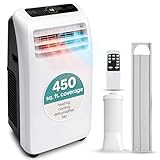
Overview: SereneLife’s versatile 10,000 BTU (ASHRAE)/6,000 BTU (SACC) portable unit combines cooling, heating, dehumidification, and fan modes for comprehensive year-round climate management. Designed for spaces up to 450 square feet, this lightweight, mobile unit with rolling casters delivers true multi-season functionality in bedrooms, living rooms, or offices.
What Makes It Stand Out: Four-in-one operation eliminates need for separate devices, saving space and money. The built-in dehumidifier removes 15 liters/hour, tackling humidity independently of cooling. Remote control with digital panel offers convenient operation across the room. Automatic swing mode ensures even air distribution, while the compact design enhances portability between spaces.
Value for Money: At its price point, consolidating four appliances into one unit represents significant savings. The 9,000 BTU heating capacity provides genuine winter utility, unlike cooling-only units. While the SACC rating reveals real-world cooling closer to 6,000 BTU, the versatility and included window kit deliver solid value compared to purchasing separate devices.
Strengths and Weaknesses: Pros include true 4-in-1 functionality, excellent portability, remote convenience, dehumidifier performance, and comprehensive window kit. Cons comprise ASHRAE/SACC rating discrepancy indicating overestimated cooling power, moderate efficiency as single-hose design, and operating noise of 52-56 dBA being noticeable in quiet environments.
Bottom Line: An excellent all-in-one solution for those needing flexible climate control without permanent installation. Ideal for renters or multi-room usage, though understand the realistic 6,000 SACC cooling capacity for proper sizing expectations.
8. Whynter Portable Air Conditioner 12,000 BTU & Heater with Dual Hose Dehumidifier & Cooling Fan for 400 Sq Ft Rooms, Includes AC Unit Window Kit Elite ARC-122DHP (7,000 SACC), Silver

Overview: The award-winning Whynter ARC-122DHP delivers powerful yet whisper-quiet performance as USA Today’s 2024 Quietest Portable Air Conditioner. This 12,000 BTU (7,000 SACC) dual-hose unit efficiently cools and heats spaces up to 400 square feet while operating at just 47 dBA on low speed, making it ideal for bedrooms and noise-sensitive environments.
What Makes It Stand Out: Unparalleled quiet operation combines with dual-hose efficiency for premium performance. The patented auto-drain system automatically exhausts condensate in most conditions, eliminating manual draining hassles. Eco-friendly CFC-free refrigerant and upper gravity drain port with AutoPump option demonstrate environmental consciousness. Four operational modes include precise thermostatic control from 61°F-89°F cooling and 61°F-77°F heating.
Value for Money: While commanding premium pricing, the award-winning quiet performance and dual-hose efficiency justify the investment. The auto-drain feature alone saves significant maintenance time. Compared to buying separate quiet AC and heater units, this integrated solution offers competitive value for noise-sensitive users prioritizing comfort and convenience.
Strengths and Weaknesses: Pros include exceptional quietness, dual-hose efficiency, auto-drain convenience, eco-friendly design, precise temperature control, and comprehensive accessory package. Cons feature premium price point, substantial BTU/SACC difference revealing real-world cooling of 7,000 BTU, and larger footprint than basic models.
Bottom Line: The ultimate choice for bedrooms and quiet spaces where noise is paramount. Worth the premium for those who prioritize peaceful operation and low-maintenance convenience over absolute budget considerations.
9. SereneLife 10,000 BTU Portable Air Conditioner and Heater, Small AC with Dehumidifier and Fan, Mini AC Unit with 450 Sq. Ft. Coverage, Includes Remote Control and Window Mount Kit
Overview: This SereneLife 10,000 BTU portable unit offers compact 4-in-1 climate control for spaces up to 450 square feet. Combining cooling, heating, dehumidifier, and fan modes, this lightweight unit features durable ABS construction with a metal control box for enhanced safety and rolling wheels for easy mobility between rooms. The self-evaporating system prevents water accumulation and leaks, reducing maintenance requirements significantly.
What Makes It Stand Out: The self-evaporating technology automatically expels moisture, eliminating manual draining hassles. Low-noise operation at 55 dBA balances performance with peaceful environments. The universal window mount kit simplifies installation across various window types. LED display with remote control provides intuitive operation, while compact dimensions enhance portability and the metal control box ensures electrical safety.
Value for Money: Positioned in the mid-range price segment, this unit delivers solid 4-in-1 functionality without premium cost. The self-evaporating technology adds value by eliminating manual draining. While specifications closely mirror other SereneLife models, the enhanced safety construction and reliable performance justify the investment for budget-conscious buyers wanting versatility.
Strengths and Weaknesses: Pros include self-evaporating convenience, low-noise operation, easy installation, portable design, enhanced safety features, and 4-in-1 versatility. Cons feature unspecified SACC rating raising cooling capacity questions, single-hose design limiting efficiency versus dual-hose models, and basic feature set compared to smart-enabled competitors.
Bottom Line: A reliable, no-fuss portable AC for users wanting multi-season functionality with minimal maintenance. Perfect for apartments and offices where moderate cooling, heating, and dehumidification are needed without premium pricing or complex features.
10. Midea Inverter Window Air Conditioner with Heat – Quiet Window AC Unit and Heat Combo with Dehumidifier – Cools up to 550 Sq. Ft. – Energy Star Rated, Smart Control, Remote, 12,000 BTU

Overview: Midea’s 12,000 BTU inverter window unit redefines window air conditioners with exceptional efficiency and smart integration. This Energy Star certified system cools up to 550 square feet while delivering up to 35% energy savings through inverter technology. Ultra-quiet operation at 45 dBA makes it ideal for bedrooms and living spaces requiring minimal noise disruption and creates gentle white noise for sleeping.
What Makes It Stand Out: Inverter technology provides variable-speed compression for precise temperature maintenance and dramatic energy reduction versus traditional units. Smart home integration via Midea SmartHome app, Alexa, and Google Assistant enables voice and smartphone control from anywhere. The 5-mode operation includes cooling, heating, dehumidification, fan, and eco settings with 24-hour timer functionality and adjustable louvers for directional airflow.
Value for Money: Higher initial investment pays dividends through 35% energy savings and permanent installation durability. The inverter compressor’s longevity exceeds conventional units, while smart features eliminate need for separate smart controllers. For large rooms requiring constant climate management, operational savings quickly offset premium pricing and deliver long-term value.
Strengths and Weaknesses: Pros include exceptional energy efficiency, ultra-quiet operation, smart home integration, large 550 sq ft coverage, Energy Star certification, and permanent installation stability. Cons require window installation limiting portability, heat pump non-operation below 41°F restricting winter use in cold climates, and larger window size requirements between 24-38.5 inches.
Bottom Line: The intelligent choice for homeowners wanting permanent, efficient climate control with modern smart home integration. Ideal for large rooms where energy savings and whisper-quiet operation justify the premium over portable alternatives.
Understanding Portable Heat Pumps with Dehumidification
Portable heat pumps with dehumidification capabilities represent a hybrid approach to climate control. Unlike traditional air conditioners that simply dump heat outside, these units use reversible refrigeration cycles to both cool and heat spaces while simultaneously extracting moisture from the air.
How the Dual Function Works
The technology relies on a single compressor system that manages both temperature and humidity. During cooling mode, the evaporator coil drops below the dew point, causing water vapor to condense into liquid that collects in a reservoir or drains away. In heating mode, the system reverses but can still operate a dehumidification cycle independent of temperature control, a crucial feature for humid climates where moisture remains problematic even during milder weather.
The Relevance for Humid Climates
Standard portable air conditioners often struggle in high-humidity environments because they’re optimized for temperature reduction, not moisture removal. Units designed specifically for humid climates prioritize both functions equally, ensuring that lowering your thermostat doesn’t leave you with cold but clammy air.
Why Humid Climates Demand Specialized Solutions
Humidity fundamentally changes how we perceive comfort and how HVAC equipment performs. In regions where relative humidity consistently exceeds 60%, conventional cooling solutions fall short in critical ways that affect both health and home integrity.
The Hidden Costs of Excess Moisture
Beyond discomfort, high humidity creates a breeding ground for dust mites, mold spores, and bacterial growth. These biological contaminants trigger allergies, asthma, and respiratory issues while causing structural damage to wood, drywall, and furnishings. A portable heat pump with robust dehumidification actively protects your health and property investment.
Performance Degradation in Moisture-Heavy Air
Air dense with water vapor requires more energy to cool effectively. Standard units work harder, cycle longer, and consume more electricity while delivering subpar results. Specialized portable heat pumps counteract this with enhanced coil designs, variable fan speeds, and intelligent humidity sensors that optimize performance specifically for moisture-laden conditions.
Key Features to Evaluate Before Buying
When shopping for a portable heat pump for humid environments, certain features separate exceptional performers from disappointing purchases. Experts consistently prioritize these capabilities during evaluations.
Moisture Removal Capacity
Look for units specifying pints per day (PPD) removal rates rather than vague “dehumidifying function” claims. For humid climates, aim for minimum 50 PPD capacity for spaces up to 400 square feet, scaling upward for larger areas. The best units maintain high removal rates even in cooler temperatures when traditional dehumidifiers become less effective.
Variable Speed Compressor Technology
Inverter-driven compressors adjust their speed based on real-time conditions rather than simply turning on and off. This precision allows the unit to maintain consistent temperature and humidity levels without the energy-wasting cycles of conventional compressors, while operating more quietly—a significant benefit for bedrooms and living spaces.
Advanced Filtration Systems
High humidity often means increased airborne contaminants. Multi-stage filtration incorporating activated carbon, antimicrobial treatments, and washable pre-filters helps capture mold spores, odors, and allergens that thrive in moist environments. Some units even include ionizers or UV-C light options for additional air purification.
Smart Humidity Controls and Sensors
Premium models feature independent humidity setpoints, allowing you to maintain 45-50% relative humidity regardless of temperature preferences. Look for units with built-in hygrometers that display current conditions and automatically adjust operation to maintain your desired moisture level without constant manual intervention.
Drainage Flexibility
In humid climates, condensate collection becomes a daily task unless properly managed. Superior units offer multiple drainage options: manual tank emptying, continuous gravity drainage via a hose, and condensate pumps that push water upward to drain out a window or into a sink—essential for spaces without floor-level drains.
Low-Temperature Operation
Many humid regions experience cool, damp weather where traditional dehumidifiers freeze up. Quality portable heat pumps continue dehumidifying effectively in temperatures as low as 41°F (5°C), making them valuable year-round tools rather than just summer appliances.
Sizing and Capacity Considerations
Selecting the right size unit prevents energy waste and ensures effective humidity control. Oversized units cycle too frequently, while undersized models run continuously without achieving comfort.
Calculating BTU Requirements for Moisture-Laden Air
Standard BTU calculators underestimate needs for humid climates because they don’t account for the latent heat in water vapor. Add 20-30% to standard cooling capacity recommendations for your square footage. A 450-square-foot room that typically needs 10,000 BTUs likely requires 12,000-13,000 BTUs in coastal or tropical regions.
Matching Dehumidification Capacity to Space Volume
Dehumidification needs scale with both square footage and ceiling height. A room with 12-foot ceilings requires more moisture removal than a standard 8-foot room of the same footprint. Calculate cubic footage (length × width × height) and prioritize units with adjustable humidity targets and high airflow rates (CFM) to ensure complete air circulation.
Energy Efficiency Metrics That Matter
Operating costs in humid climates can skyrocket if efficiency isn’t prioritized. Understanding the specific metrics that impact performance helps identify truly economical options.
EER vs. CEER Ratings
Energy Efficiency Ratio (EER) measures cooling output versus power input at peak conditions. Combined Energy Efficiency Ratio (CEER) includes standby power consumption, providing a more realistic efficiency picture. For humid climates, prioritize CEER ratings above 11, as these units optimize both active cooling and passive energy draw during humid but mild days.
Dehumidification Efficiency Standards
The Integrated Energy Factor (IEF) measures liters of water removed per kilowatt-hour of electricity consumed. While not always prominently displayed, this metric directly impacts operating costs in moisture-heavy environments. Units with IEF values above 1.8 deliver superior moisture removal without excessive energy consumption.
Installation and Placement Strategies
Proper positioning dramatically affects a portable heat pump’s ability to manage both temperature and humidity effectively. Strategic placement considerations can make or break performance.
Optimizing Airflow Patterns
Position units away from walls and furniture to allow unrestricted air intake and discharge. In humid climates, place the unit centrally within the space rather than in corners to prevent moisture pockets from forming. Ensure the exhaust hose follows the manufacturer’s maximum length guidelines—excessive ducting reduces efficiency and can cause condensate to form inside the hose itself.
Managing Condensate in High-Humidity Environments
During peak humidity, even the most efficient units produce gallons of water daily. Install the unit on a slight tilt toward the drain outlet if using continuous drainage, and insulate exhaust hoses passing through unconditioned spaces to prevent secondary condensation. For ultra-humid conditions, consider a secondary condensate pump with a backup float switch to prevent overflow damage.
Maintenance Requirements for Humid Environments
Units operating in moisture-heavy conditions require more frequent maintenance to prevent performance degradation and biological contamination.
Preventing Mold and Bacterial Growth
Clean or replace filters every 2-4 weeks during continuous operation in humid climates. Wipe down the evaporator and condenser coils monthly with a mild antimicrobial solution, and allow the unit to run in fan-only mode for 30 minutes after shutting off cooling to dry internal components thoroughly.
Seasonal Deep Cleaning Protocols
At the start and end of each season, perform comprehensive cleaning: flush the drain pan and tubing with a diluted bleach solution, vacuum dust from internal components, and inspect the exhaust hose for mold or mildew. In salt-air coastal environments, wipe exterior surfaces weekly to prevent corrosion that can compromise the unit’s integrity.
Cost Analysis and Value Proposition
Understanding the total cost of ownership helps justify the initial investment and identifies the most economical long-term choices.
Initial Investment vs. Operating Savings
Quality portable heat pumps with advanced dehumidification cost 40-60% more than basic portable AC units. However, they typically reduce electricity consumption by 30-45% compared to running separate dehumidifiers and air conditioners. In humid climates, the payback period often ranges from 18-30 months through reduced energy bills and avoided mold remediation costs.
Factoring in Longevity and Warranty
Units designed for humid environments should last 8-12 years with proper maintenance. Prioritize models offering at least 2-year comprehensive warranties and 5-year compressor coverage. Extended warranties covering corrosion and moisture-related component failures provide additional peace of mind in coastal or tropical locations.
Common Mistakes to Avoid
Even well-informed buyers can make critical errors when selecting portable heat pumps for humid climates. Recognizing these pitfalls prevents costly disappointments.
Underestimating Humidity Load
Many buyers select units based solely on temperature capacity, ignoring moisture removal needs. This results in cold, clammy conditions and continuous operation without achieving true comfort. Always size dehumidification capacity as carefully as cooling BTUs, especially in spaces without existing ventilation like basements or enclosed sunrooms.
Ignoring Drainage Logistics
Purchasing a unit without considering where condensate will go leads to daily emptying hassles or overflow damage. Before buying, map out your drainage strategy: locate floor drains, measure window heights for gravity drainage, or budget for a condensate pump system if needed.
Frequently Asked Questions
How much moisture should a portable heat pump remove per day in a humid climate?
For effective comfort in climates averaging 60-70% relative humidity, target units removing at least 50 pints per day for spaces up to 400 square feet. Larger areas or regions with 80%+ humidity require 70+ PPD capacity. The key is maintaining indoor humidity between 45-50% consistently.
Can I run the dehumidifier function without cooling the room?
Premium portable heat pumps offer independent dehumidification modes that operate without significant cooling. This feature is invaluable during mild but muggy weather, allowing moisture removal while maintaining comfortable temperatures. Check specifications for “dry mode” or “dehumidify-only” operation.
Do these units work in winter in humid climates?
Yes, quality models continue dehumidifying effectively in temperatures as low as 41°F (5°C). In heating mode, they extract moisture while warming the space, preventing the damp, chilly feeling common in winter. This dual capability makes them year-round solutions for humid regions.
How noisy are portable heat pumps compared to separate AC and dehumidifier units?
Modern inverter-driven models operate at 45-55 decibels, comparable to a quiet conversation. This is generally quieter than running a separate portable AC (50-60 dB) and dehumidifier (45-65 dB) simultaneously. Variable-speed fans further reduce noise by avoiding the jarring on/off cycles of traditional units.
What maintenance is absolutely essential in coastal environments?
Coastal users must clean filters bi-weekly due to salt and mineral accumulation, wipe exterior surfaces weekly to prevent corrosion, and inspect electrical connections monthly for rust. Annual professional servicing to check refrigerant levels and clean internal coils prevents premature failure from salt-air exposure.
Is continuous drainage necessary, or can I manually empty the tank?
In humid climates, manual emptying becomes impractical—units can produce 5-8 gallons daily during peak conditions. Continuous drainage via gravity hose or condensate pump is strongly recommended to prevent overflow and ensure uninterrupted operation, especially when running overnight or while away.
How do I prevent mold from growing inside the unit?
Run the fan-only mode for 30 minutes after cooling cycles to dry internal components. Clean filters regularly, wipe accessible coils monthly with antimicrobial solution, and ensure the drain pan stays clean. Some units include self-cleaning functions or UV-C lights that inhibit biological growth automatically.
What’s the difference between a portable heat pump and a portable AC with dehumidify mode?
True heat pumps provide heating and cooling via reversible refrigeration cycles and maintain dehumidification efficiency across all temperatures. AC units with dehumidify modes simply run cooling cycles that over-cool the space. Heat pumps offer superior year-round performance and energy efficiency in humid climates.
Can these units handle multiple rooms effectively?
Portable heat pumps excel at conditioning single, enclosed spaces up to their rated capacity. For multiple rooms, you’ll need adequate airflow pathways and should expect performance drops of 20-30% beyond the primary room. For whole-home humidity control, consider multiple units or supplement with standalone dehumidifiers in distant spaces.
How long should a quality unit last in a humid climate?
With proper maintenance, expect 8-12 years of service. Coastal environments may see slightly shorter lifespans (7-10 years) due to corrosion. Regular cleaning, proper drainage, and seasonal deep maintenance significantly extend longevity. Units with corrosion-resistant coatings and stainless-steel components perform best in moisture-heavy conditions.
See Also
- 10 Expert-Recommended Portable Heat Pumps for Cold Climates in 2026
- 10 Must-Have Portable Heat Pumps with Dehumidifier for Humid Climates in 2026
- 10 Expert-Recommended Low Profile Portable Heat Pumps for Apartments in 2026
- 10 Expert-Recommended Portable Heat Pumps for All-Season Use in 2026
- 10 Must-Have Portable Heat Pumps with Dehumidifier for Home Comfort in 2026