Table of Contents
Imagine walking into a home that intuitively adjusts to your presence, ensuring every room feels perfectly comfortable the moment you step in. No more fiddling with settings, no more wasting energy heating or cooling empty spaces—just seamless, personalized climate control that works silently in the background. This isn’t science fiction; it’s the reality smart thermostats with advanced sensors are bringing to homes right now. As we move deeper into the era of hyper-connected living, the humble thermostat has evolved from a simple temperature dial into the intelligent brain of your home’s ecosystem, learning your habits and optimizing your environment with remarkable precision.
The magic behind this transformation lies in the sophisticated sensors integrated into modern systems. Gone are the days when a single wall unit dictated the climate for your entire house, leading to chilly hallways and sweltering bedrooms. Today’s sensor-driven thermostats gather real-time data from multiple points, creating a dynamic understanding of your home’s microclimates and occupancy patterns. This shift isn’t just about convenience; it’s a fundamental upgrade in how we manage energy, comfort, and even indoor air quality. For the discerning smart home owner in 2026, understanding these sensor capabilities isn’t optional—it’s essential for unlocking true efficiency and a genuinely responsive living space.
Top 10 Thermostats with Sensors
Detailed Product Reviews
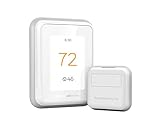
1. Honeywell Home T9 WiFi Smart Thermostat with 1 Smart Room Sensor, Touchscreen Display, White
Overview:
The Honeywell Home T9 integrates a smart thermostat with a bundled room sensor, enabling precise multi-room temperature control. ENERGY STAR certified, it uses geofencing and scheduling to optimize HVAC usage while connecting to utility demand-response programs for potential rebates.
What Makes It Stand Out:
Its standout feature is the included Smart Room Sensor with an exceptional 200-ft range, allowing focus on specific rooms (e.g., bedrooms at night). Seamless compatibility with Alexa, Apple HomeKit, and Google Assistant enables voice control, while auto-home/away scheduling leverages motion detection for true “set-and-forget” efficiency.
Value for Money:
At a competitive price point, the bundled sensor adds significant value over competitors requiring separate purchases. Energy-saving potential via utility rebates and demand-response programs offsets the initial cost, making it a cost-effective long-term investment compared to basic smart thermostats lacking multi-room capabilities.
Strengths and Weaknesses:
Strengths: Excellent sensor range; robust utility program integration; intuitive app control; effective multi-room focus. Weaknesses: Requires C-wire for some systems; setup complexity for non-tech users; sensor battery life may need monitoring.
Bottom Line:
Ideal for households prioritizing room-specific comfort and energy savings, the T9 delivers exceptional value with its included sensor and utility partnerships, earning a strong recommendation for tech-savvy homeowners seeking comprehensive climate control.
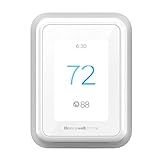
2. Honeywell Home T9 WIFI Smart Thermostat, Smart Room Sensor Ready, Touchscreen Display, Alexa and Google Assist
Overview:
This Honeywell T9 variant offers core smart thermostat functionality without included sensors, targeting users with simpler needs or existing Honeywell ecosystems. It emphasizes energy reporting and utility program compatibility for cost-conscious consumers.
What Makes It Stand Out:
The Monthly Energy Report provides actionable insights, while Smart Response technology learns heating/cooling patterns to optimize timing. Geofencing automates home/away modes, and broad compatibility (including heat pumps) ensures wide applicability, though sensors are sold separately for multi-room use.
Value for Money:
Priced lower than the sensor-included model, it suits budget-focused buyers who don’t need immediate multi-room coverage. Savings from utility efficiency programs enhance ROI, but the requirement to purchase sensors separately for full functionality reduces overall value if room-specific control is essential.
Strengths and Weaknesses:
Strengths: Detailed energy usage tracking; reliable geofencing; extensive HVAC compatibility; strong voice assistant support. Weaknesses: No included sensor; C-wire mandatory; limited multi-room capability without add-ons; no air quality monitoring.
Bottom Line:
A solid entry into smart thermostats for straightforward single-room control, it’s best for users already in utility programs or planning incremental sensor purchases. Recommended only if multi-room focus isn’t an immediate priority.
3. ecobee Smart Thermostat Premium with Smart Sensor and Air Quality Monitor - Programmable Wifi Thermostat - Works with Siri, Alexa, Google Assistant

Overview:
ecobee’s Premium model combines a high-end thermostat with a SmartSensor and built-in air quality monitor. ENERGY STAR certified, it promises up to 26% annual savings on HVAC costs while prioritizing health-focused environmental awareness.
What Makes It Stand Out:
The integrated air quality monitor (tracking PM2.5, VOCs, and CO2) and HVAC filter alerts are unique. Radar-based occupancy sensing, cinematic metal-framed display, and ecobee Doorbell Camera integration offer a premium, holistic smart-home experience beyond basic temperature control.
Value for Money:
Justified by its bundled sensor and air quality features, it commands a higher price but delivers comprehensive value. The included Power Extender Kit simplifies installation, and energy savings potential offsets costs faster than basic models, especially for health-conscious households.
Strengths and Weaknesses:
Strengths: Advanced air quality tracking; elegant design with radar occupancy; DIY-friendly install kit; strong energy-saving claims; doorbell camera integration. Weaknesses: Premium price; sensor range (60 ft) lags behind Honeywell; air quality alerts may overwhelm some users.
Bottom Line:
A top-tier choice for health-focused users seeking an all-in-one ecosystem, the Premium’s air quality features and included sensor make it worth the investment. Highly recommended for those prioritizing indoor air health alongside climate control.
4. EB-RSHM2PK-01 ecobee SmartSensor (Pack of 2), White with Brushed Steel Detachable Stands, Temperature and Occupancy Detection, Wirelessly Connects to All ecobee Devices, Freeze Detection

Overview:
This two-pack of ecobee SmartSensors wirelessly extends thermostat functionality by monitoring room occupancy and temperature. Designed to eliminate hot/cold spots, they enable true multi-room comfort when paired with ecobee thermostats.
What Makes It Stand Out:
Magnetic mounting with brushed steel stands offers flexible installation (wall or tabletop), while 60-ft range through walls ensures reliable communication. Freeze detection and occupancy-based energy savings—like reducing HVAC use in empty rooms—provide practical, automated benefits beyond basic temperature tracking.
Value for Money:
Priced reasonably for a two-pack, they significantly enhance ecobee thermostat value without requiring a full system upgrade. The energy savings from occupancy-based scheduling quickly justify the cost, especially for larger homes where single-thermostat control is inadequate.
Strengths and Weaknesses:
Strengths: Easy magnetic installation; freeze protection alerts; occupancy-driven energy savings; clear app integration; sleek design. Weaknesses: Shorter range than Honeywell sensors; requires ecobee thermostat (no third-party compatibility); limited to temperature/occupancy (no humidity).
Bottom Line:
Essential for maximizing ecobee thermostat potential in multi-room homes, these sensors deliver tangible comfort and savings. Highly recommended for ecobee users needing precise room-by-room climate management.
5. Honeywell Home RCHTSENSOR-1PK, Smart Room Sensor works with T9/T10 WIFI Smart Thermostats

Overview:
This single Honeywell sensor pairs exclusively with T9/T10 thermostats to extend temperature and humidity monitoring to additional rooms. It leverages motion detection to prioritize comfort in occupied spaces, enhancing the thermostat’s multi-room capabilities.
What Makes It Stand Out:
Its motion-based “room focus” feature dynamically shifts HVAC attention to active areas, while nighttime bedroom scheduling ensures consistent sleep comfort. The dedicated integration with Honeywell thermostats ensures seamless operation without complex setup, differentiating it from generic sensors.
Value for Money:
As a single-sensor purchase, it’s cost-effective for targeted use (e.g., adding one bedroom). However, multi-room setups become expensive versus ecobee’s two-packs. Best value for Honeywell T9/T10 owners needing incremental coverage, though bulk discounts are limited.
Strengths and Weaknesses:
Strengths: Motion-triggered room prioritization; simple thermostat pairing; reliable 200-ft range; humidity sensing; sleep-mode optimization. Weaknesses: Sold individually (increasing multi-room costs); Honeywell-exclusive compatibility; no freeze detection or air quality features.
Bottom Line:
A reliable, high-range sensor for Honeywell ecosystem users, it’s ideal for single-room additions but less economical for whole-home coverage. Recommended primarily for T9/T10 owners seeking focused comfort in one key area.
6. Provirtec Smart Thermostat for Home with Room Sensor, 7 Days Programmable, Energy Saving WiFi Thermostats for House,APP & Touchscreen Control, C Wire Required, 3.95 Inch Large Screen

Overview: The Provirtec Smart Thermostat offers core smart HVAC control with a dedicated room sensor, targeting homeowners seeking energy savings and basic automation. Compatible with most 24V systems (3H2C), it features 7-day scheduling, Wi-Fi/BT Mesh connectivity, and a large touchscreen display.
What Makes It Stand Out: Its “One + One Smart Monitoring” system pairs seamlessly with the included thermo-hygrometer for precise, body-location-based temperature control, reducing hot/cold spots. The intuitive sliding touch interface, large 3.95-inch screen, and reliable local control during Wi-Fi outages (via BT Mesh) enhance usability, especially for non-tech-savvy users. Sleep/Home/Away modes provide targeted energy savings.
Value for Money: Priced mid-range, it delivers strong value for those needing reliable scheduling, room-specific monitoring, and a user-friendly display without premium smart home integrations. The included room sensor adds significant utility over basic models, though the mandatory C-wire requirement may necessitate professional installation for some, slightly increasing total cost.
Strengths and Weaknesses: Strengths: Excellent room sensor integration for consistent comfort; large, clear display; robust HVAC compatibility; effective energy-saving modes; stable local control fallback. Weaknesses: Requires C-wire (limiting DIY installation); Wi-Fi limited to 2.4GHz; lacks advanced voice assistant depth and broader smart home platform support (e.g., Matter) found in competitors.
Bottom Line: A solid, affordable choice for straightforward smart temperature control with effective room-specific monitoring, ideal for users prioritizing ease of use and energy savings over deep smart home ecosystem integration. Ensure C-wire availability before purchase.
7. Honeywell Home X8S Smart Thermostat with Room Sensor, Video Doorbell Compatibility, IAQ Control, and Customizable Touchscreen Display, White

Overview: The Honeywell Home X8S is a premium smart thermostat bundling advanced climate control, indoor air quality (IAQ) management, and unique video doorbell integration. It includes a long-range wireless room sensor and features a large, customizable display for comprehensive home comfort management.
What Makes It Stand Out: The standout feature is direct “Doorbell Camera View & Intercom” compatibility with specific First Alert/Ring doorbells, allowing interaction from the thermostat screen. Its robust IAQ control (humidity, ventilation), Matter certification for broad smart home interoperability, and the highly flexible room sensor (200ft range, wall-mountable) prioritize holistic comfort beyond just temperature.
Value for Money: Positioned at a higher price point, it justifies cost through exceptional versatility: doorbell integration, comprehensive IAQ features, Matter support, and the high-quality room sensor. It offers better long-term value than basic thermostats for users deeply invested in Honeywell/First Alert ecosystems or seeking integrated security/comfort, though IAQ features may require extra HVAC hardware.
Strengths and Weaknesses: Strengths: Unique doorbell intercom functionality; excellent IAQ capabilities; superb room sensor range/flexibility; Matter certified; large customizable 5" display; strong voice assistant support. Weaknesses: Doorbell compatibility limited to specific models; IAQ features need additional equipment; setup can be complex for non-tech users; premium cost.
Bottom Line: Highly recommended for tech-savvy homeowners wanting seamless integration between climate control, air quality, and security systems, particularly within compatible ecosystems. The bundled room sensor and Matter support enhance its premium appeal.
8. Google Nest Temperature Sensor (2nd Gen) - Room Comfort Sensor with Scheduling - Works with The Nest Learning Thermostat (3rd and 4th Gen) and Nest Thermostat E - Porcelain, White

Overview: The Google Nest Temperature Sensor (2nd Gen) is an accessory designed exclusively to enhance compatible Nest thermostats. It enables multi-room temperature monitoring, allowing the thermostat to prioritize comfort in specific areas or average readings across up to six rooms.
What Makes It Stand Out: Its key strength is effortless scheduling per room via the Google Home/Nest app, directly addressing hot/cold spots. The exceptional 3-year battery life and flexible placement (wall, shelf) make installation simple anywhere. Prioritizing a single room (e.g., bedroom at night) or averaging temperatures across zones offers tailored comfort impossible with a single thermostat sensor.
Value for Money: As a niche accessory requiring a compatible Nest thermostat (sold separately), its value is contextual. Priced moderately, it’s cost-effective for Nest users struggling with uneven heating/cooling, effectively transforming a single-point thermostat into a zoned system. However, it holds no standalone value and isn’t compatible with non-Nest systems.
Strengths and Weaknesses: Strengths: Solves hot/cold spot issues effectively; very simple setup and app control; long 3-year battery life; flexible placement options; enables room prioritization/averaging. Weaknesses: Only works with specific older Nest thermostats (not 4th Gen standalone); requires existing Nest ecosystem investment; no display or standalone functionality; limited to six sensors total.
Bottom Line: An essential add-on for compatible Nest thermostat owners experiencing inconsistent temperatures, offering significant comfort improvements with minimal hassle. Not recommended for non-Nest users or owners of the latest Nest Learning Thermostat (4th Gen).
9. Honeywell Home X8S Smart Thermostat with Room Sensor, Video Doorbell Compatibility, IAQ Control, and Customizable Touchscreen Display, Black

Overview: Identical in functionality to its white counterpart (Product 7), the Honeywell Home X8S in Black offers the same premium smart thermostat experience with integrated room sensor, IAQ management, and video doorbell compatibility, now in a sleek black finish for aesthetic versatility.
What Makes It Stand Out: Mirroring Product 7, its defining features are the direct Doorbell Camera View & Intercom (with compatible First Alert/Ring models), comprehensive IAQ control, Matter certification, and the highly flexible long-range (200ft) wireless room sensor. The customizable 5-inch display allows color/style matching to home decor, with the black chassis offering a modern alternative.
Value for Money: Pricing and value proposition are identical to the white model. It delivers premium features justifying its cost for users seeking deep integration between climate, air quality, and security. The color choice doesn’t affect performance but offers design flexibility, making it equally valuable for those preferring a darker aesthetic in their smart home setup.
Strengths and Weaknesses: Strengths: Same as Product 7: Doorbell intercom, IAQ control, Matter support, excellent room sensor, large display, broad voice assistant compatibility. Weaknesses: Same as Product 7: Limited doorbell compatibility, potential need for extra IAQ hardware, complex setup, high price. Aesthetic preference is the only differentiator.
Bottom Line: The same excellent recommendation as the white X8S applies: ideal for users wanting integrated comfort, air quality, and security features within compatible ecosystems, now with a stylish black finish option. Choose based on decor preference.
10. Google Nest Learning Thermostat (4th gen) + Nest Temperature Sensor (2nd gen) - Silver

Overview: This bundle pairs Google’s flagship 4th Gen Learning Thermostat with a second-generation Temperature Sensor, offering AI-driven learning, room-specific comfort control, and a premium design for a comprehensive smart climate solution.
What Makes It Stand Out: The thermostat’s core strength is its adaptive learning, which creates a personalized schedule and requests permission for energy-saving adjustments via the Google Home app. The included sensor eliminates hot/cold spots by monitoring a key room. No C-wire requirement (in most homes), Matter compatibility, a large dynamic display with Farsight, and deep Google Assistant/Alexa/Siri integration set it apart.
Value for Money: While the highest-priced bundle here, it offers exceptional value through true “set-and-forget” learning, effortless C-wire-free installation, and seamless multi-room control via the sensor. The learning capability drives significant energy savings over time, offsetting the initial cost compared to programmable-only thermostats lacking AI.
Strengths and Weaknesses: Strengths: Intelligent self-programming; no C-wire needed (typically); excellent room sensor for spot control; beautiful, large display with Farsight; strong voice/app control; Matter certified; clear energy-saving notifications. Weaknesses: Premium price; sensor only compatible with older Nest thermostats (not 4th Gen standalone – bundle resolves this); limited HVAC compatibility checks needed.
Bottom Line: The top recommendation for most users seeking a truly smart, user-friendly, and energy-efficient system. The learning capability and included sensor deliver unmatched convenience and comfort, justifying the investment for tech-forward homeowners.
Understanding the Sensor Revolution in Climate Control
Why Single-Point Sensing Falls Short
Relying solely on the thermostat’s built-in sensor creates significant blind spots. Heat rises, rooms have different exposures to sunlight, and interior spaces like hallways or bathrooms often lag behind main living areas in temperature adjustment. This leads to constant manual overrides, uneven comfort, and unnecessary energy consumption as the system struggles to compensate for incomplete data. A single sensor simply cannot capture the diverse thermal landscape of a modern home.
The Core Principle: Distributed Intelligence
Advanced thermostats overcome this limitation by utilizing a network of remote sensors placed strategically throughout your living space. These sensors communicate wirelessly with the main unit, providing a comprehensive, real-time map of temperatures and occupancy across different zones. This distributed intelligence allows the system to make nuanced decisions, directing heating or cooling precisely where and when it’s needed, rather than treating the entire house as a single, uniform volume.
Key Sensor Types Powering Modern Thermostats
Room Temperature Sensors: The Foundation
These are the workhorses, placed in key living areas beyond the main thermostat location. They provide accurate readings of actual conditions where people spend time, ensuring the system responds to the environment in the bedroom, living room, or home office, not just near the hallway thermostat. Placement away from direct sunlight, drafts, and heat sources is critical for reliable data.
Occupancy and Motion Detection Sensors
Beyond temperature, knowing if a room is occupied is transformative. These sensors detect movement (or lack thereof) to automatically adjust settings. They prevent heating or cooling empty rooms for extended periods, shifting to energy-saving modes when a space is unoccupied, and seamlessly restoring comfort just before you return. This is fundamental for true “set it and forget it” efficiency.
Ambient Light Sensors
Integrated into some advanced systems, these sensors measure natural light levels. This data helps the thermostat anticipate temperature changes caused by solar gain—like a room warming rapidly in the morning sun—and can preemptively adjust HVAC operation to maintain consistent comfort without overshooting.
Humidity Monitoring Sensors
Comfort isn’t just about temperature; relative humidity plays a huge role. Sensors that track moisture levels allow the system to optimize not just for heat but for feels-like temperature. High humidity can make 72°F feel muggy, while low humidity can make the same temperature feel chilly. Integrated humidity control (often working with a whole-home humidifier/dehumidifier) creates a more consistently pleasant environment.
Air Quality Sensors (Emerging Standard)
Increasingly vital for holistic health, these sensors monitor particulates (PM2.5), volatile organic compounds (VOCs), and sometimes carbon dioxide (CO2) levels. When poor air quality is detected, the system can trigger increased ventilation (via integration with an ERV/HRV) or signal when it’s time to replace filters, contributing significantly to a healthier indoor environment.
Critical Features to Evaluate When Choosing
Sensor Range and Reliability
Wireless sensor range is paramount. Ensure the system specifies coverage that matches your home’s square footage and layout, including potential obstacles like thick walls or multiple floors. Look for systems using robust communication protocols (like Wi-Fi mesh extenders or dedicated low-frequency bands) to prevent dropouts, which can cripple the system’s effectiveness.
Ease of Sensor Placement and Management
The best system is useless if adding or relocating sensors is cumbersome. Prioritize platforms with intuitive mobile apps that clearly show sensor locations on a floor plan, allow easy renaming (e.g., “Master Bedroom” vs. “Sensor 3”), and provide battery life indicators. Magnetic mounts or simple adhesive options make placement flexible during setup and experimentation.
Adaptive Learning Capabilities
True intelligence goes beyond reacting to sensor data; it involves learning. Look for systems that analyze occupancy patterns and temperature preferences across all sensors over time. This allows the thermostat to build a personalized schedule that anticipates your needs before you even think about adjusting settings, continuously refining its predictions for optimal comfort and savings.
Integration Depth with Your Existing Ecosystem
A sensor-rich thermostat must speak the language of your other smart devices. Deep integration with major platforms (like Matter over Thread) ensures seamless coordination. For instance, occupancy sensors should trigger not just HVAC changes but also lighting adjustments or security system status, creating a truly unified smart home response.
Geofencing as a Complementary Layer
While room sensors handle intra-home dynamics, geofencing uses your smartphone’s location to adjust the home’s overall climate setting when the last person leaves or the first person returns. It’s a powerful complement to room sensors, initiating broader energy-saving modes when the house is fully empty and kickstarting comfort restoration on your commute home.
Installation and Setup Considerations
Strategic Sensor Placement Matters Most
Where you put sensors is as important as having them. Avoid placing temperature sensors near vents, windows, doors, electronics, or in direct sunlight. For occupancy sensors, aim for central locations in a room with a clear view of entry points, but avoid pointing them directly at TVs or flickering lights which can cause false triggers. Experimentation during setup is often necessary.
Calibration and Fine-Tuning
Even the best sensors might need minor calibration. Most systems allow you to adjust for slight variances between sensors (e.g., if one consistently reads 1°F higher than a known accurate thermometer). Take time during initial setup to verify readings in critical rooms and make these small adjustments for peak accuracy.
Managing Multiple Zones Effectively
If your HVAC system supports zoning (multiple dampers controlling airflow to different areas), sensor data becomes the key to unlocking its full potential. Ensure the thermostat software allows you to assign specific sensors to control specific zones, creating truly independent climate areas within your home for maximum personalized comfort.
Maximizing Energy Savings and Comfort
Leveraging Occupancy Data for Real Savings
The most significant energy gains come from occupancy awareness. Systems that reliably detect unoccupied rooms can reduce conditioning in those spaces by several degrees, leading to substantial cumulative savings. Understand how your system defines “unoccupied” (e.g., 15 minutes of no motion) and adjust it to match your household’s typical patterns for optimal efficiency without sacrificing comfort.
Understanding Temperature Averaging vs. Priority Settings
Different systems handle multiple sensor inputs differently. Some average all readings, which can mask issues in a specific room. Others allow you to set a “primary” sensor (e.g., the master bedroom at night) whose reading takes precedence. Knowing this functionality helps you configure the system to prioritize the comfort of the space that matters most at any given time.
The Role of Historical Data and Reporting
Advanced thermostats log sensor data over time. Utilize this feature! Reviewing historical temperature, humidity, and occupancy reports helps identify patterns, potential HVAC inefficiencies (like a room that consistently struggles to reach setpoint), and provides concrete evidence of your energy savings, validating your investment.
Future-Proofing Your Investment
Software Updates and Long-Term Support
Sensor technology and integration standards evolve. Choose a manufacturer with a proven track record of regular, meaningful firmware updates that add new features, improve sensor algorithms, and support emerging smart home protocols. Long-term software commitment ensures your system stays relevant and capable.
Privacy and Data Security Protocols
Sensors collect intimate data about your home life and routines. Scrutinize the manufacturer’s privacy policy. Understand what data is collected (beyond basic temperature/occupancy), how it’s anonymized, where it’s stored, and whether you have granular control over data sharing. Robust encryption for data in transit and at rest is non-negotiable.
Scalability for Future Expansion
Consider if the system allows you to easily add more sensors later as your needs grow (e.g., finishing a basement, adding a sunroom). Check the maximum number of supported sensors and whether adding them requires complex reconfiguration or additional hubs. A truly future-proof system grows with your home.
Frequently Asked Questions
Frequently Asked Questions
How many remote sensors do I realistically need for an average home? The ideal number depends on your home’s layout and your comfort expectations. A good starting point is one sensor per major living zone (e.g., living room, master bedroom, kids’ bedroom hallway) plus the main thermostat location, often totaling 3-5 sensors for a typical single-family home. Focus on areas where comfort is critical or where temperature differs significantly from the thermostat location.
Can remote sensors work through walls and multiple floors? Most modern wireless sensors use protocols designed to penetrate walls and floors, but signal strength diminishes with distance and obstructions. Concrete walls, metal studs, or large appliances can cause issues. Systems using mesh networking (where sensors relay signals) generally perform better in larger or multi-story homes than those relying solely on direct communication with the thermostat.
Do occupancy sensors work reliably with pets? Many advanced systems offer pet immunity, typically ignoring movement from animals under a certain weight (e.g., 40-50 lbs). Check specifications carefully if you have larger pets. Placement also matters; mounting sensors higher on the wall can sometimes reduce false triggers from smaller pets moving below.
How do I know if a sensor’s battery is low? Reputable systems provide clear notifications within the mobile app, often showing battery percentage for each sensor and sending alerts well before batteries die. Most sensors use standard AA or AAA batteries lasting 1-2 years. The app should make it easy to identify which specific sensor needs replacement.
Will humidity sensors control my whole-home humidifier/dehumidifier? Only if the thermostat is explicitly designed and wired to interface with those systems. A humidity monitoring sensor alone only provides data; it doesn’t activate equipment. Ensure compatibility and proper installation wiring if you want the thermostat to automatically manage whole-home humidity levels based on sensor readings.
Can I use third-party sensors with my smart thermostat? Generally, no. Most manufacturers design their systems to work exclusively with their own proprietary sensors for guaranteed compatibility, security, and feature integration. Attempting to use third-party sensors usually results in limited or no functionality.
How accurate are remote temperature sensors? Quality sensors are typically accurate within +/- 0.5°F to 1°F under normal conditions. Accuracy can be affected by poor placement (near heat sources, drafts, or direct sunlight). If you suspect inaccuracy, compare the sensor reading in a stable room (away from vents/windows) with a known reliable thermometer and use the calibration feature if available.
Do I need a separate hub for the sensors to work? Most modern smart thermostats with remote sensors communicate directly via Wi-Fi, Bluetooth, or proprietary low-power radio (like Zigbee or Thread), eliminating the need for a separate hub. However, some older or highly specialized systems might require a small bridge device; always check the specific requirements before purchasing.
Can sensor data be used for security purposes? While occupancy sensors detect movement, they are not designed or marketed as security devices. Relying on them for security is risky, as they may not detect slow movement, have blind spots, or could be disabled if the thermostat system loses power or connectivity. Use dedicated security sensors for safety.
How do temperature sensors impact my HVAC system’s runtime? By providing precise, localized data, sensors prevent the HVAC system from running unnecessarily to satisfy a single, potentially inaccurate point (the thermostat location). This leads to more efficient, targeted runtimes – shorter cycles focused on occupied zones needing adjustment, reducing overall wear and tear and energy consumption compared to systems without distributed sensing.
See Also
- 10 Essential Line Voltage Thermostats Every Apartment Owner Needs in 2026
- 10 Essential Tips for Choosing the Best Wi-Fi Smart Thermostats for Your Home
- 10 Essential Smart Thermostats Every First-Time Homeowner Needs in 2026
- The 10 Best Smart Thermostats Every Eco-Conscious Home Needs This Year
- 10 Essential Smart Thermostats Every Homeowner Needs in 2026