Table of Contents
Beat the heat without breaking the bank or sacrificing your patio ambiance this season. There’s nothing quite like gathering outdoors with friends as sunlight filters through string lights, only to have the conversation derailed by oppressive humidity or a sudden temperature spike. You’ve invested in comfortable seating, maybe even a fire pit for cooler evenings, but when the mercury rises, that dreamy oasis can quickly become an unbearable sauna. Portable air conditioners feel clunky and expensive to run, while traditional fans often just recycle hot air. What if there was a smarter, more efficient way to transform your outdoor space into a consistently cool retreat? The answer lies in a technology that’s been refreshing spaces for decades but is now smarter, sleeker, and more effective than ever for patios and decks.
Evaporative coolers, often called “swamp coolers,” offer a brilliant solution rooted in simple, natural physics – the same principle that makes you feel cooler when stepping out of a pool on a breezy day. As water evaporates, it absorbs heat from the surrounding air, creating a refreshing drop in temperature. Modern outdoor units harness this process with impressive efficiency, using significantly less energy than refrigerant-based AC units and avoiding the dry, stale air they produce. Forget the bulky, noisy behemoths of the past; today’s patio-specific evaporative coolers are designed with aesthetics and practicality in mind, integrating seamlessly into your outdoor décor while delivering targeted, comfortable cooling. Understanding how to choose the right one for your unique space is the key to unlocking true outdoor comfort, and that journey starts with knowing what truly matters in 2026.
Top 10 Outdoor Evaporative Coolers
Detailed Product Reviews
1. Portable Swamp Coolers - 1300 CFM MC18M Evaporative Air Cooler with 2-Speed Fan, 53.4 dB - 500 sq. ft. Coverage Evaporative Air Cooler Portable High Velocity Outdoor Cooling Fan by Hessaire - White
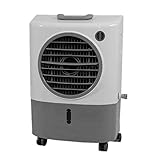
Overview: The Hessaire MC18M is a compact, portable evaporative cooler designed for spaces up to 500 sq. ft. Utilizing XeL50 media and a 4.8-gallon tank, it offers energy-efficient cooling by leveraging water evaporation, targeting outdoor or well-ventilated indoor areas where traditional AC is impractical or costly.
What Makes It Stand Out: Its patented axial propeller extends cool air throw distance significantly, while the lightweight ABS resin construction ensures portability and reduced noise (53.4 dB). The focus on saving up to 50% on electricity versus conventional AC and effortless setup (fill, plug, switch) are key differentiators for small-space cooling.
Value for Money: Priced moderately, it delivers strong value for garages, patios, or workshops under 500 sq. ft. It outperforms basic fans and avoids the high energy costs and installation hassles of portable AC units, though larger spaces will need higher-CFM models.
Strengths and Weaknesses: Strengths: Energy-efficient operation, quiet performance, easy maintenance, durable lightweight build, effective for small zones. Weaknesses: Limited coverage area, requires manual refilling, ineffective in high humidity, no oscillation.
Bottom Line: An excellent, budget-friendly choice for targeted cooling in small, dry environments; ideal for DIYers or workshop use but insufficient for whole-room cooling in larger areas.
2. Hessaire MC37M 3100CFM Evaporative Cooler

Overview: This mid-sized evaporative cooler from Hessaire covers up to 700 sq. ft., featuring a 10.3-gallon tank and 3100 CFM airflow. It uses a 3-panel intake system for broader cooling, targeting larger workshops, patios, or semi-open commercial spaces seeking an energy-conscious alternative to AC.
What Makes It Stand Out: The expanded 80% larger evaporation surface reduces refill frequency, while polypropylene resin construction minimizes noise and vibration. The 3-panel system enhances air distribution efficiency, and Hessaire’s 25+ years of cooling expertise ensures reliable, low-maintenance operation.
Value for Money: Offers solid ROI for medium spaces, balancing capacity and cost. It saves significantly on electricity versus portable AC units and handles larger zones than entry-level models, though initial cost is higher than basic fans.
Strengths and Weaknesses: Strengths: Extended runtime (3-4 hours), quiet operation, durable build, efficient multi-panel cooling, easy setup. Weaknesses: Still humidity-dependent, lacks oscillation, bulkier than smaller units, no smart features.
Bottom Line: A dependable, high-value upgrade for medium-sized areas needing consistent, quiet evaporative cooling; best for dry climates where AC costs are prohibitive.
3. Uthfy 41" Swamp Cooler, 4800 CFM Evaporative Air Cooler with 10.6 Gallon Water Tank, Portable Outdoor Air Conditioner with 3 Ice Pack, 110° Oscillation, 3 Speed for Garage, Yard, Commercial Use

Overview: The Uthfy 41" is a high-capacity evaporative cooler built for large areas (up to 1,200 sq. ft.), featuring a massive 10.6-gallon tank, 4800 CFM output, and unique enhancements like three ice packs and 110° oscillation. It targets garages, commercial spaces, or expansive patios.
What Makes It Stand Out: Triple ice packs and a 3-side cooling pad significantly boost cooling intensity beyond standard models. Auto-fill via garden hose, robust sheet-metal body with powder coating, and a copper motor for efficiency/noise reduction set it apart. Oscillation ensures even air distribution.
Value for Money: Competitive for its class, justifying cost with pro-grade durability, ice-enhanced cooling, and oscillation. More energy-efficient than portable ACs for large zones, though initial investment is higher than basic swamp coolers.
Strengths and Weaknesses: Strengths: Exceptional coverage, ice pack cooling boost, oscillation, auto-fill option, rugged construction, low noise. Weaknesses: Heavy unit, complex assembly, ice packs require freezer space, less effective in humid conditions.
Bottom Line: The top pick for large, dry-area cooling where maximum airflow and ice-assisted chill are critical; ideal for workshops or events but overkill for small residential use.
4. Hessaire MC61M 5,300 CFM 3-Speed Portable Evaporative Cooler

Overview: Hessaire’s largest model, the MC61M, delivers 5,300 CFM for spaces up to 1,500 sq. ft. with a 14.6-gallon tank. Designed for commercial or industrial settings like warehouses, it emphasizes wide-area coverage and extended runtime through evaporative cooling technology.
What Makes It Stand Out: The industry-leading 80% larger evaporation surface minimizes refills, while the 3-panel intake system maximizes air distribution. Polypropylene resin ensures durability and quiet operation (critical for workplaces), backed by Hessaire’s legacy of energy-efficient cooling solutions.
Value for Money: Premium pricing is justified for large-scale applications, offering substantial savings over industrial AC systems. Lower operational costs and reliable performance make it cost-effective for businesses, though excessive for homes.
Strengths and Weaknesses: Strengths: Unmatched coverage for evaporative coolers, long runtime, robust build, quiet operation, energy-efficient. Weaknesses: Very high humidity sensitivity, no oscillation, bulky size, requires significant floor space.
Bottom Line: The definitive choice for large, dry commercial spaces needing powerful, economical cooling; impractical for residential use but indispensable for warehouses or workshops.
5. SereneLife Portable Swamp Cooler Air Conditioner - 2500 CFM Airflow, 8 Gallon Water Tank Portable Evaporative Air Cooler for Room & Outdoors, WiFi, Humidifier & Fan Modes, Ice Packs & Remote Included

Overview: This versatile 2500 CFM evaporative cooler doubles as a fan, humidifier, and smart cooler, featuring WiFi/app control, a remote, and dual ice packs. Targeted at homes and covered patios up to 600 sq. ft., it merges convenience with modern tech.
What Makes It Stand Out: Unique WiFi connectivity, 360° oscillation, and three operational modes (cool/fan/humidifier) differentiate it. The 8-gallon tank with safety pump, auto-dry pad, and sleek ABS design cater to tech-savvy users seeking quiet (≤52 dB), low-maintenance comfort.
Value for Money: Priced higher than basic models, but smart features and multi-functionality add value for connected homes. Energy efficiency (140W) and avoiding AC installation costs offset the premium, especially for year-round humidifier/fan use.
Strengths and Weaknesses: Strengths: Smart controls, multi-mode versatility, ice pack enhancement, quiet operation, stylish portable design. Weaknesses: Smaller coverage than high-CFM rivals, app reliability concerns, higher upfront cost, humidity limitations persist.
Bottom Line: Perfect for tech-oriented consumers wanting customizable, multi-functional cooling in medium spaces; a smart home standout but less powerful than commercial-grade coolers.
6. Uthfy 8979 CFM Swamp Cooler, 58" Evaporative Air Cooler with 36 Gal Water Tank, 5 Ice Box, 120° Oscillation, Portable Air Conditioner with 3 Speeds, Outdoor Cooling Fan for Garage, Patio, Factory Use

Overview: The Uthfy 8979 CFM Swamp Cooler is a heavy-duty evaporative air cooler engineered for large commercial and industrial spaces like factories, warehouses, and expansive patios. Its industrial-scale design prioritizes maximum airflow and cooling capacity over residential convenience. What Makes It Stand Out: Boasting an exceptional 8979 CFM airflow covering 1800 sq. ft., a massive 36-gallon water tank with auto-fill capability via garden hose, and 5 dedicated ice compartments, it delivers rapid, sustained cooling unmatched by smaller units. The 120° oscillation, robust powder-coated metal construction, and heavy-duty casters with brakes ensure durability and broad air distribution in demanding environments. Value for Money: While significantly pricier than residential models, its industrial-grade performance, minimal energy consumption compared to traditional AC units for large spaces, and long runtime justify the cost for commercial users needing serious cooling power without complex installation. Strengths and Weaknesses: Strengths: Unrivaled airflow capacity; massive water tank with auto-fill; durable build; excellent oscillation; 5 ice boxes boost cooling. Weaknesses: Bulky and heavy for home use; very loud at high speeds; requires frequent water source access; overkill for small spaces. Bottom Line: An exceptional investment for workshops, factories, or large outdoor venues needing powerful, cost-effective evaporative cooling, but impractical for typical home environments due to size and noise.
7. VAGKRI Swamp Cooler, 2100CFM Evaporative Air Cooler with 3 Modes & Wind Speeds, 120°Oscillation, 24H Timer, Portable Outdoor Air Conditioner with Auto Fill for Patio Garage Commercial Use, 8 Gallon

Overview: The VAGKRI 2100CFM Swamp Cooler is a versatile mid-sized evaporative air cooler designed for patios, garages, and medium commercial areas up to 700 sq. ft., offering smart features and flexible operation in dry climates. What Makes It Stand Out: Its standout features include true 3-in-1 functionality (fan, cooler, humidifier), a convenient 24-hour timer, remote control operation, and an auto-fill system via garden hose adapter. The 3-sided cooling pads and 2 included ice packs enhance cooling efficiency, while the transparent water window simplifies monitoring. Value for Money: Priced competitively for its feature set, it offers excellent value for homeowners and small businesses. The energy-efficient 105W operation (vs. traditional AC), auto-fill convenience, and remote/timer functionality provide significant savings and usability benefits over basic models. Strengths and Weaknesses: Strengths: Remote control & 24H timer; auto-fill capability; 3-in-1 versatility; energy-efficient; easy mobility; clear water level indicator. Weaknesses: Ice packs require pre-freezing; 8-gallon tank may need refills in extreme heat; oscillation coverage limited to 700 sq. ft. Bottom Line: A highly recommended, user-friendly choice for patios, garages, or medium-sized rooms in dry climates, balancing smart features, solid cooling performance, and good value effectively.
8. AKIRES 1800CFM Swamp Cooler,3-IN-1 Evaporative Air Cooler with 5.3 Gal Water Tank,6 Ice Packs,Evaporative Cooler with 12H Timer,2 Modes,3 Speeds,120°Oscillation,Cooling Fan for Indoor,Outdoor(31IN)

Overview: The AKIRES 1800CFM Swamp Cooler is a compact yet capable 3-in-1 evaporative air cooler targeting bedrooms, offices, and small patios, emphasizing energy efficiency and quiet operation through its upgraded copper motor. What Makes It Stand Out: The 2026-upgraded high-efficiency copper motor is its key differentiator, promising quieter running, better durability, and lower energy consumption (100W). It also features 6 reusable ice packs, a 12-hour timer, two cooling modes, and 1800 CFM airflow in a relatively compact design. Value for Money: Positioned as a premium residential unit, the investment in the copper motor tech and inclusion of 6 ice packs justify its price for users prioritizing longevity, quiet operation, and energy savings in spaces up to 500 sq. ft., outperforming cheaper plastic-motor alternatives. Strengths and Weaknesses: Strengths: Superior copper motor (quiet, efficient, durable); 6 ice packs for enhanced cooling; 12H timer; compact size; 3-in-1 functionality. Weaknesses: Smaller 5.3-gallon tank requires more frequent refills; limited coverage area; no remote control; oscillation range standard. Bottom Line: Ideal for energy-conscious consumers seeking a quiet, durable cooler for bedrooms or small rooms, the copper motor upgrade makes it a worthwhile value-focused investment despite the modest tank size.
9. Uthfy Swamp Cooler Air Conditioner, Evaporative Air Cooler with 5.3 Gallon Water Tank, 4 Ice Box, Remote, 12H Timer, 120°Oscillation, Portable Cooling Fan with 3 Speeds for Bedroom Home Office

Overview: The Uthfy portable swamp cooler is a lightweight, user-centric evaporative air cooler designed specifically for residential use in bedrooms, home offices, and small living areas, prioritizing convenience and quiet comfort. What Makes It Stand Out: Its standout attributes are exceptional portability (only 13 lbs with handle and casters), ultra-quiet 25 dB operation, and dual control via touch panel and remote. The Uthfy copper motor promises efficiency, while the 3 modes (Normal, Natural, Sleep) and 12H timer enhance usability for restful environments. Value for Money: Excellent value for home users, offering premium residential features (remote, quiet operation, copper motor) at a reasonable price. The 90% lower energy cost vs. traditional AC and suitability for small spaces deliver significant long-term savings and comfort. Strengths and Weaknesses: Strengths: Extremely lightweight & portable; very quiet (25 dB); remote control; copper motor efficiency; 3 user modes; easy maneuverability. Weaknesses: Limited to small spaces; 5.3-gallon tank needs refills; ice packs not included; lower CFM than larger models. Bottom Line: Highly recommended for bedrooms or home offices where quiet, portable, and energy-efficient cooling is paramount; excels as a personal comfort solution but lacks power for large areas.
10. VAGKRI 35" Evaporative Air Cooler, 2800CFM Swamp Cooler, 120°Oscillation Air Cooler with Remote Control, 24H Timer, 3 Modes & Wind Speeds for Outdoor Indoor Use, 9.2Gallon

Overview: The VAGKRI 35" Evaporative Air Cooler is a robust mid-to-large capacity unit (2800 CFM) built for versatile use in living rooms, larger patios, garages, or workshops up to 900 sq. ft., combining strong performance with smart home-like features. What Makes It Stand Out: Its key advantages are the upgraded bottom auto-fill system for truly uninterrupted operation, a larger 9.2-gallon tank, 3 cooling pads for faster temperature reduction, and comprehensive remote control with 24-hour timer. The 900 sq. ft. coverage and 2300 CFM airflow offer substantial cooling power. Value for Money: Represents strong value for its coverage area and feature set. The auto-fill system eliminates constant monitoring, the 24H timer and remote add convenience, and the 3 cooling pads improve efficiency, making it cost-effective versus running traditional AC in suitable dry climates. Strengths and Weaknesses: Strengths: Bottom auto-fill system; large 9.2-gallon tank; 3 cooling pads for efficiency; remote & 24H timer; good 900 sq. ft. coverage; easy mobility. Weaknesses: Ice packs need pre-freezing; requires ventilation (not for sealed rooms); slightly heavier than compact models. Bottom Line: A top choice for homeowners needing reliable, feature-rich cooling for medium to large living spaces or patios in dry climates, where the auto-fill and remote features significantly enhance usability and value.
Understanding Evaporative Cooling for Outdoor Spaces
How Evaporation Creates Instant Comfort
Evaporative cooling works by pulling warm, dry air through water-saturated pads. As the air moves across these pads, the water evaporates, absorbing heat energy from the air itself. This process naturally lowers the air temperature before a powerful fan pushes the cooled, humidified air out into your patio area. It’s a purely physical reaction, requiring no chemical refrigerants, making it an inherently eco-friendly cooling method perfect for open or semi-enclosed outdoor environments where traditional AC struggles.
Why Patios Are the Perfect Environment
Unlike enclosed rooms, patios benefit immensely from evaporative cooling’s reliance on airflow and lower humidity. Open spaces allow the slightly more humid air produced by the cooler to disperse naturally, preventing that “stuffy” feeling. The constant exchange of air outdoors means the evaporative process remains highly effective, continuously drawing in fresh, warm air to be cooled, rather than recirculating the same limited volume like indoor AC must do. This makes patios an ideal, almost tailor-made, setting for this technology.
Key Differences from Traditional Air Conditioning
It’s crucial to understand that evaporative coolers are not mini-AC units. They cool by adding moisture, not by removing it. This means they excel in hot, dry climates but have limitations in areas with consistently high humidity (typically above 50-60%). They also work best in open or partially covered areas, not sealed rooms. However, their massive advantages include drastically lower energy consumption (using up to 75% less electricity), simpler maintenance, quieter operation (no loud compressors), and a gentler, more natural-feeling breeze that doesn’t dry out your skin or respiratory system.
Essential Features to Prioritize in Your 2026 Patio Cooler
Determining the Right Cooling Capacity
Sizing isn’t just about square footage; it’s about effective airflow for your specific layout. Measure your patio’s length, width, and average ceiling height (if covered). Consider obstacles like furniture, planters, or partial walls that might block airflow. Manufacturers provide CFM (Cubic Feet per Minute) ratings – a higher CFM moves more air. For a standard 200 sq ft patio, look for units rated around 2,000-3,000 CFM. Undersized units won’t make a dent, while oversized ones can feel overwhelming and waste energy.
Evaluating Portability and Placement Flexibility
Your patio cooler should move with your lifestyle, not anchor you in one spot. Look for robust, multi-directional caster wheels that glide smoothly over pavers, grass, or deck surfaces. Integrated handles are essential. Consider weight distribution – a lighter unit is easier to maneuver solo. Some advanced 2026 models feature foldable handles or even remote-controlled movement for effortless repositioning as the sun shifts or your gathering moves from the dining area to the lounge zone.
Water Tank Capacity and Refill Convenience
A larger tank means fewer trips to the spigot, especially during peak afternoon heat. Tank sizes typically range from 10 to 50+ gallons. Balance capacity with portability – a massive tank makes the unit heavy when full. Prioritize easy-fill designs: wide openings that accommodate a garden hose nozzle without spills, and ideally, an external fill port so you don’t have to open the unit. Some premium models now offer auto-fill connectivity to an outdoor faucet for truly set-and-forget operation during extended use.
Energy Efficiency and Power Source Options
This is where evaporative coolers truly shine. Look for ENERGY STAR certified models (increasingly common for outdoor units) which guarantee top-tier efficiency. Evaluate the wattage consumption of both the fan motor and the water pump – lower is better. Consider your power source: standard 120V outlets are most common, but ensure your patio has accessible GFCI-protected outlets. For truly remote patios, explore solar-compatible models or those designed to run efficiently on common portable power stations, a growing trend for off-grid cooling.
Noise Levels for a Peaceful Ambiance
A peaceful patio vibe is shattered by a loud cooler. Check decibel (dB) ratings – aim for units operating below 55 dB on low/medium settings for conversational comfort. Look for features like insulated fan housings, brushless DC motors (quieter and more efficient), and multiple fan speed settings. Don’t just trust manufacturer claims; seek out verified user reviews specifically mentioning noise levels during typical evening use.
Smart Controls and Connectivity Features
The 2026 landscape demands intuitive operation. Basic models offer simple dials, but modern conveniences include:
- Digital Touch Panels: For precise temperature (dampness) and fan speed control.
- Remote Controls: Essential for adjusting settings from your lounge chair.
- Wi-Fi/App Integration: Schedule cooling, monitor tank levels, adjust settings remotely, or integrate with smart home systems like voice assistants. This is becoming a standard expectation for mid-to-high-end patio coolers.
Durability and Weather Resistance
Your cooler faces sun, rain, and temperature swings. Prioritize:
- UV-Resistant Housing: Prevents plastic from becoming brittle and cracking.
- Corrosion-Proof Components: Especially important for metal parts near water (stainless steel, coated alloys).
- Sealed Electronics: Protects the control panel and motor from moisture ingress.
- Stable Base Design: Resists tipping in breezy conditions. Look for units explicitly rated for outdoor use, not just “portable.”
Ease of Maintenance and Cleaning
Neglecting maintenance kills efficiency and causes odors. Prioritize features that simplify care:
- Tool-Free Access: Easily removable pads and water tanks for cleaning.
- Drain Plugs: Essential for completely emptying the tank, especially before storage.
- Self-Cleaning Cycles: Some newer models use brief bursts of high-speed airflow or water circulation to reduce mineral buildup.
- Accessible Filters: If the unit has pre-filters for dust, ensure they are easy to locate and clean/replace.
Optimizing Performance for Your Specific Climate
Assessing Your Local Humidity Levels
Evaporative cooling’s effectiveness plummets as ambient humidity rises. If your area regularly experiences dew points above 60°F (15.5°C) or relative humidity consistently above 50-60%, an evaporative cooler may provide only marginal relief, primarily through increased airflow rather than significant temperature drop. Research your typical summer humidity patterns; these coolers are most transformative in arid and semi-arid regions but can still offer comfort in moderate humidity if the space has excellent cross-ventilation.
Maximizing Effectiveness in Humid Conditions
Even in less-than-ideal humidity, smart placement and usage boost results:
- Position for Cross-Ventilation: Place the unit where it can draw in the driest, hottest air (often from a sun-exposed side) and blow cooled air towards seating areas, allowing moist air to escape downwind.
- Utilize Shade: Operate the cooler in a shaded part of the patio; cooling already-shaded air requires less evaporation.
- Combine with Fans: Use ceiling or pedestal fans to enhance air movement and the perceived cooling effect, helping disperse the slightly humidified air.
Strategies for Dry Climate Superiority
In arid regions (desert climates, high plains), evaporative coolers deliver near-AC-level temperature drops (15-30°F). Maximize this:
- Seal Semi-Enclosed Areas: If your patio has partial walls or screens, minimize large openings on the side opposite the cooler’s intake to direct airflow.
- Pre-Cool the Intake Air: Position the intake away from reflective surfaces like light-colored walls that radiate heat.
- Run Continuously: Unlike AC, it’s efficient to run them steadily during peak heat, maintaining a stable, cool microclimate.
Design and Integration into Your Outdoor Living Space
Choosing Aesthetics That Complement Your Style
Gone are the days of purely utilitarian metal boxes. Modern patio coolers come in finishes to match any décor: sleek matte blacks and grays for contemporary spaces, warm wood-look laminates for rustic patios, or even customizable panel options. Consider the unit’s footprint – a low, wide profile might tuck neatly under a counter, while a taller, narrower unit fits beside seating. The goal is for it to look like an intentional part of your patio furniture, not an afterthought.
Managing Water Usage and Drainage
Be mindful of where water drains, especially on wooden decks or near electrical outlets. Look for units with:
- Directional Drain Plugs: Allows you to route the overflow hose away from sensitive areas.
- Low-Profile Bases: Minimizes the risk of water pooling underneath the unit.
- Overflow Safeguards: Automatic shut-off or alerts when the tank is full to prevent spills. Consider placing the unit on a slightly elevated, impermeable surface like a patio tile if drainage is a concern.
Ensuring Safe Operation Around People and Pets
Safety is paramount outdoors:
- Tip-Over Switches: Automatically shut off the motor if the unit is knocked over – crucial with kids or pets playing nearby.
- Cool-to-Touch Exteriors: Especially important for units that might be brushed against.
- Secure Cord Management: Features like cord wraps prevent tripping hazards on walkways. Always use a GFCI outlet to prevent shock hazard, especially in damp conditions.
Long-Term Value and Ownership Considerations
Calculating True Operational Costs
While the upfront cost might be comparable to a small portable AC, the real savings are in operation. Calculate based on:
- Wattage: (Fan + Pump) / 1000 = Kilowatts per hour.
- Local Electricity Rate: (e.g., $0.15 per kWh).
- Daily Usage Hours. Example: A 250W unit running 8 hours/day at $0.15/kWh costs only $0.30 per day to operate, versus potentially $1.50+ for a similarly sized AC unit. Factor in minimal water usage (a few gallons per day) for a complete picture of incredibly low running costs.
Understanding Warranty Coverage and Support
Warranties vary significantly. Look for:
- Comprehensive Coverage: Minimum 1-year full parts/labor, with extended coverage (2-5 years) specifically on the motor and pump – the most critical components.
- Clear Terms: Understand what voids the warranty (e.g., improper winterization, using non-recommended water).
- Reputable Manufacturer Support: Research customer service responsiveness before buying. A long warranty is meaningless if getting service is impossible.
Proper Winterization and Storage Practices
Evaporative coolers must be winterized to prevent freeze damage:
- Drain Completely: Empty the tank, pump, and all internal lines (use the drain plug).
- Dry Thoroughly: Run the fan for 30+ minutes to evaporate residual moisture inside the pads and housing.
- Remove Pads: Store pads separately in a dry, well-ventilated area to prevent mold. Clean them first per manufacturer instructions.
- Cover Securely: Use a breathable, weatherproof cover if stored outdoors, or store the entire unit in a dry garage/shed. Neglecting this step is the #1 cause of premature failure.
Frequently Asked Questions
Frequently Asked Questions
Can evaporative coolers work effectively on a covered patio? Yes, they work very well on covered patios as long as there is adequate cross-ventilation. The key is having openings (like roll-up shades, open sides, or high vents) to allow the slightly humidified, cooled air to circulate out and be replaced by drier, warmer air for the cooler to process. Completely sealed covered patios are less ideal.
How much can I realistically expect the temperature to drop? In ideal dry conditions (low humidity), expect a drop of 15°F to 30°F. The actual drop depends heavily on the starting temperature and humidity – the hotter and drier it is, the greater the potential cooling effect. In moderate humidity, the drop might be 5°F to 15°F, primarily felt as increased comfort from the airflow and slight evaporation on your skin.
Do I need special water for my evaporative cooler? Hard water (high mineral content) causes faster scale buildup on pads and in the tank. Using distilled or filtered water significantly extends pad life and reduces maintenance. If using tap water, you’ll need to clean the tank and pads more frequently and may need to use descaling solutions periodically.
How often do I need to clean the cooling pads? This varies based on water hardness and usage. Generally, inspect pads every 2-4 weeks during peak season. Rinse them with clean water to remove loose dust. A deeper cleaning with a mild vinegar solution or manufacturer-recommended cleaner might be needed monthly. Replace pads at least once per season, or sooner if they become stiff, clogged, or start to smell.
Are evaporative coolers safe to use around outdoor electrical outlets? Yes, if plugged into a properly installed, Ground Fault Circuit Interrupter (GFCI) protected outdoor outlet. This is non-negotiable for safety near water. Never use an indoor extension cord; use a heavy-duty outdoor-rated extension cord only if absolutely necessary and keep it as short as possible.
Can I leave my evaporative cooler running unattended? It’s generally safe to run them unattended for periods, similar to a fan, provided:
- The water tank has sufficient water (low-water shutoff is essential).
- It’s on a stable, level surface away from flammable materials.
- The GFCI outlet is functioning correctly.
- It’s not in an area prone to sudden, heavy downpours unless specifically designed for it. Never leave it running indefinitely while traveling.
Do evaporative coolers add significant humidity to my patio? They do increase the relative humidity of the immediate air they are blowing out. However, because patios are open or semi-enclosed, this slightly more humid air mixes rapidly with the larger volume of outdoor air and dissipates. You won’t experience the “muggy” feeling common with indoor AC in humid climates; instead, you feel the cooling effect of evaporation on your skin.
How do I prevent algae or mold growth inside the unit? Prevention is key:
- Drain the tank completely when not in use for more than a day.
- Run the fan for 20-30 minutes after shutting off the water pump to dry internal components.
- Clean the tank and pads regularly with a mild vinegar solution or approved cleaner.
- Consider adding a small amount of hydrogen peroxide (as per manufacturer guidelines) to the water tank to inhibit growth – never use bleach.
Can evaporative coolers cool multiple rooms if my patio is open to the house? They are designed for open outdoor areas. While cool air might drift into an adjacent open doorway, they lack the power and sealed environment to effectively cool interior rooms. Their strength is creating a comfortable microclimate specifically within your patio or deck space.
Is it worth getting a larger capacity cooler than my patio technically needs? Slightly oversized (e.g., 10-20% more CFM) can be beneficial for faster initial cooling or handling very hot days, but significantly oversized units can feel drafty and are less energy-efficient for maintaining a steady temperature. They also tend to be larger, heavier, and noisier. Matching capacity closely to your space is usually optimal for comfort and efficiency.
See Also
- 10 Essential Garage Evaporative Coolers Every Workshop Owner Needs in 2026
- 10 Essential Ducted Evaporative Coolers Every Homeowner Needs in 2026
- 10 Essential Ceiling Mounted Evaporative Coolers Every Homeowner Needs in 2026
- 10 Game-Changing Outdoor Evaporative Coolers for Patios in 2026
- 10 Essential Tips for Choosing the Best Portable Evaporative Coolers for Your Home