Table of Contents
Bathroom ventilation has evolved dramatically in recent years, transforming from a simple utility into a sophisticated home wellness feature. As we approach 2026, the humble exhaust fan now plays a crucial role in maintaining indoor air quality, preventing structural damage, and even enhancing energy efficiency. Whether you’re renovating a master suite or updating a powder room, understanding what makes an exhaust fan truly essential will help you make informed decisions that protect your investment and your health.
The market offers more options than ever before, with smart technology, ultra-quiet operation, and sleek designs that blend seamlessly into modern decor. But with these advances comes complexity—how do you determine which features matter most for your specific space? This comprehensive guide breaks down the ten essential categories of bathroom exhaust fans you’ll want to consider for 2026, focusing on the features, technologies, and specifications that separate outstanding ventilation from inadequate afterthoughts.
Top 10 Exhaust Fans for Bathrooms
Detailed Product Reviews
1. Broan-Nutone® Bathroom Exhaust Fan, 50 CFM Modern Grille, Energy Star Fan, 2.0 Sones

Overview: This compact exhaust fan from Broan-Nutone delivers 50 CFM of ventilation power specifically designed for smaller powder rooms and bathrooms up to 45 square feet. The unit combines Energy Star certification with a modern aesthetic, operating at 2.0 sones—quiet enough for comfortable use without being completely silent. Its made-in-USA construction and streamlined design make it a practical choice for homeowners seeking reliable moisture and odor control in compact spaces.
What Makes It Stand Out: The standout feature is its truly compact housing (7-1/4" x 7-1/2" x 3-5/8") with foldable mounting brackets that enable no-cut installation, even without attic access. This versatility solves a common retrofitting challenge. The brighter white grille seamlessly blends with standard ceiling paint, creating an unobtrusive appearance. The spring-loaded cover removal system simplifies cleaning and maintenance, addressing a frequent pain point with older fan models.
Value for Money: Positioned as an entry-to-mid-range option, this fan offers excellent value for targeted small-space applications. While 50 CFM limits its use to powder rooms or half-baths, the Energy Star certification ensures long-term energy savings. Competing units with similar installation flexibility often cost 20-30% more, making this a smart investment for specific use cases rather than overspending on unnecessary capacity.
Strengths and Weaknesses: Strengths include hassle-free installation, Energy Star efficiency, compact design, and American manufacturing quality. The 2.0 sone rating strikes a balance between awareness and quiet operation. Weaknesses are the limited 50 CFM capacity, restricting it to small bathrooms, and the moderate noise level may not satisfy those seeking whisper-quiet performance. The absence of advanced features like integrated lighting also limits its versatility.
Bottom Line: Ideal for homeowners needing a straightforward, reliable ventilation solution for small bathrooms or powder rooms. Its installation flexibility and energy efficiency make it a practical choice, though those with larger spaces should consider higher CFM alternatives. A solid, no-frills workhorse that delivers exactly what it promises.
2. Amico Bathroom Exhaust Fan, 1.0 Sones, 110 CFM, Low Noise, Household Bath Ventilation Fans, Ceiling Mounted, No Attic Access Needed, Easy to Install- ETL & FCC Certified

Overview: The Amico Bathroom Exhaust Fan delivers powerful 110 CFM ventilation designed for medium to large bathrooms up to 100 square feet. Operating at an impressively quiet 1.0 sones, it effectively eliminates steam, moisture, and stuffy air while maintaining a serene bathroom environment. The ceiling-mounted design accommodates installations without attic access, making it versatile for various home configurations. ETL and FCC certifications provide assurance of electrical safety and reliable performance.
What Makes It Stand Out: This fan’s exceptional noise-to-power ratio sets it apart—delivering high airflow at just 1.0 sones, quieter than many lower-CFM competitors. The inclusion of both ETL and FCC certifications exceeds standard safety requirements, demonstrating rigorous quality control. Its 9" x 9" housing with 4-inch duct connection offers compatibility with most existing setups, while the bracket system allows direct joist mounting or between-joist installation, providing uncommon flexibility for DIY installations.
Value for Money: With robust 110 CFM performance and premium quiet operation, this fan punches above its weight class in the mid-range price segment. Comparable high-CFM, low-sone units from premium brands typically cost 40-50% more. The comprehensive safety certifications and build quality suggest longevity that justifies the investment, particularly for master bathrooms where both performance and quiet operation are non-negotiable.
Strengths and Weaknesses: Strengths include powerful 110 CFM airflow, whisper-quiet 1.0 sone operation, dual safety certifications, flexible installation options, and effective moisture control for larger spaces. Weaknesses include larger housing dimensions requiring more ceiling space, and the grille design is functional but less aesthetically refined than some designer models. The lack of integrated lighting means separate electrical work if illumination is needed.
Bottom Line: An excellent choice for homeowners with larger bathrooms seeking powerful ventilation without noise disruption. The combination of high CFM, low sones, and safety certifications makes it a standout value. Perfect for master suites or shared family bathrooms where performance and quiet operation are equally important.
3. Broan-NuTone Bathroom Exhaust Fan with LED light – Easy Retrofit Without Attic Access, Quiet 1.5 Sones, Effective Ventilation at 80 CFM ENERGY STAR Certified Moisture and Odor Control

Overview: This Broan-NuTone fan integrates 80 CFM ventilation with a long-lasting LED light, creating a dual-function solution for bathrooms up to 75 square feet. Operating at 1.5 sones, it provides quiet yet perceptible operation while the integrated 3500K LED delivers 50,000 hours of illumination. Energy Star certification ensures reduced energy consumption, and the innovative no-cut roomside installation design makes it ideal for retrofit projects without attic access.
What Makes It Stand Out: The patent-pending Slideclip springless grille attachment revolutionizes installation and cleaning—eliminating frustrating spring mechanisms that often break or corrode. The integrated LED light eliminates the need for separate bathroom lighting, simplifying electrical work and creating a cleaner ceiling appearance. The CleanCover grille’s “floating” design offers a contemporary aesthetic that integrates seamlessly with modern décor, distinguishing it from utilitarian alternatives.
Value for Money: While priced higher than basic 80 CFM fans, the integrated LED light and advanced installation system justify the premium. Purchasing separate quality LED fixtures and fans would cost 30-40% more combined. The 50,000-hour LED lifespan and 3-year warranty provide long-term value, while Energy Star certification yields ongoing utility savings. It’s a cost-effective package for those wanting both functions without compromising on quality.
Strengths and Weaknesses: Strengths include innovative Slideclip installation, integrated long-life LED, quiet 1.5 sone operation, Energy Star efficiency, and modern aesthetic. The no-cut retrofit saves significant labor costs. Weaknesses include higher upfront cost than basic models, and the fixed 3500K color temperature may not suit all lighting preferences. The 80 CFM rating limits its use to medium-sized bathrooms.
Bottom Line: A superior choice for renovation projects where both ventilation and lighting upgrades are desired. The innovative installation system and integrated LED make it worth the modest premium. Perfect for DIYers and those without attic access who want a clean, modern look without cutting drywall.
4. Broan-NuTone Bathroom Exhaust Fan Easy Retrofit without Attic Access, Quiet 1.5 Sones, Effective Ventilation at 80 CFM ENERGY STAR Certified Moisture and Odor Control

Overview: This Broan-NuTone exhaust fan delivers 80 CFM of Energy Star-certified ventilation for bathrooms up to 75 square feet, operating at a quiet 1.5 sones. Designed specifically for challenging installations, it features the same innovative roomside installation system as its LED-equipped sibling but in a more streamlined, ventilation-focused package. The unit effectively combats moisture and odors while maintaining a peaceful bathroom environment.
What Makes It Stand Out: The patent-pending Slideclip technology eliminates traditional spring-loaded grilles, enabling tool-free cover removal for effortless cleaning and maintenance. The no-cut installation process is genuinely revolutionary—allowing complete retrofitting from below the ceiling without drywall modification, saving hours of labor and mess. The CleanCover grille’s minimalist design creates a floating appearance that elevates the typical utilitarian exhaust fan into a subtle design element.
Value for Money: This fan occupies a sweet spot in the mid-range category, offering premium installation innovation without the cost of integrated lighting. It’s priced competitively with standard 80 CFM units while delivering superior installation convenience. For those who already have adequate bathroom lighting, this represents a 25-30% savings over the LED version while retaining all core performance and installation benefits. The Energy Star certification provides ongoing operational savings.
Strengths and Weaknesses: Strengths include revolutionary no-cut installation, quiet 1.5 sone operation, Energy Star efficiency, springless Slideclip design, and modern aesthetic. The 80 CFM capacity suits most standard bathrooms perfectly. Weaknesses include lack of integrated lighting (if needed), and the premium price over basic 80 CFM fans may deter budget-conscious buyers. The installation innovation may be underutilized in new construction with attic access.
Bottom Line: An exceptional choice for retrofit and replacement projects where installation convenience is paramount. The Slideclip system alone justifies choosing this over competitors. Ideal for DIYers and contractors working in finished spaces without attic access who want reliable performance without ceiling demolition.
5. Amico Bathroom Exhaust Fan 2 Pack, 80 CFM, 1.0 Sones, Low Noise, Easy to Install, Ceiling Mounted Retrofit Ventilation Fans, No Attic Access Needed- UL Certified

Overview: This value-packed twin set from Amico provides two 80 CFM exhaust fans, each operating at an exceptionally quiet 1.0 sones. Designed for bathrooms up to 80 square feet, these units deliver effective moisture and odor control while maintaining a tranquil environment. The UL certification ensures electrical safety, and the compact housing accommodates installations without attic access. This package addresses multi-bathroom homes or provides a convenient spare for future replacement needs.
What Makes It Stand Out: The 2-pack configuration offers rare value, effectively halving the per-unit cost compared to individual purchases. Achieving 1.0 sones at 80 CFM is impressive—quieter than many premium single units. The compact 7.5" x 7.2" housing fits tighter ceiling spaces than most competitors, while the versatile bracket system supports both retrofit and new construction scenarios. UL listing provides commercial-grade safety assurance often missing in budget-friendly options.
Value for Money: This twin pack represents exceptional value, typically priced 30-40% less than buying two comparable fans separately. The per-unit cost approaches budget-tier pricing while delivering premium-tier quiet operation and safety certification. For homeowners with two bathrooms, it’s an obvious economical choice. Even for single-bathroom owners, the spare unit provides insurance against future failures at minimal additional cost. The UL certification and quality components suggest durability that exceeds typical budget alternatives.
Strengths and Weaknesses: Strengths include outstanding value in 2-pack format, whisper-quiet 1.0 sone operation, UL safety certification, compact housing dimensions, and flexible installation. The 80 CFM rating suits most standard bathrooms effectively. Weaknesses include basic grille aesthetics without designer features, and the bulk purchase may be unnecessary for single-bathroom households. Installation instructions could be more detailed for novice DIYers.
Bottom Line: A no-brainer for multi-bathroom homes seeking quiet, reliable ventilation on a budget. The performance-to-price ratio is outstanding, making it equally attractive for contractors and cost-conscious homeowners. If you need two fans or want a backup, this package delivers premium quiet operation at near-budget pricing.
6. Amico Bathroom Exhaust Fan, 1.0 Sones, 80 CFM, Low Noise, Easy to Install, Ceiling Mounted Retrofit Ventilation Fans, 4 Inch Duct, No Attic Access Needed- UL Certified

Overview: The Amico Bathroom Exhaust Fan delivers 80 CFM airflow at just 1.0 sones, designed specifically for retrofit installations where attic access is impossible. Measuring 7.5" x 7.2" x 4" with a 9.4" x 8.6" grille, it fits standard ceiling cutouts and includes a 4-inch duct connection. UL certification ensures electrical safety for this self-contained ventilation solution ideal for bathrooms up to 80 square feet.
What Makes It Stand Out: This fan’s primary distinction is its no-attic-access installation system using included mounting brackets that secure directly to ceiling joists. Most competitors require above-ceiling access, making this a game-changer for first-floor bathrooms or multi-story buildings. The 1.0 sone rating delivers genuinely quiet operation you can barely hear over ambient noise, while UL listing provides verified safety assurance missing from many budget alternatives.
Value for Money: Priced competitively with standard exhaust fans, this model eliminates $200+ professional installation costs typically required for inaccessible ceilings. The energy-efficient motor keeps operating costs minimal, and UL certification prevents costly electrical issues. Compared to cutting drywall or hiring contractors, it’s exceptional value for retrofit scenarios.
Strengths and Weaknesses: Strengths include revolutionary bracket mounting, whisper-quiet 1.0-sone operation, UL safety certification, and straightforward installation. Weaknesses: 80 CFM limits suitability to smaller bathrooms; basic design lacks advanced features like integrated lighting; grille aesthetics are functional but plain.
Bottom Line: Perfect for DIYers tackling retrofits in spaces without attic access. The Amico delivers reliable, quiet ventilation where traditional fans simply cannot go. If you need to replace an old unit from below, this is your best choice.
7. Siasky Universal Bathroom Vent Exhaust Fan Motor Replacement Motors Kit, Fit for Nu-Tone Br-oan Exhaust Vent Fan Motor 120V 50CFM, with Blower Wheel

Overview: The Siasky Universal Bathroom Vent Fan Motor Replacement Kit offers a cost-effective solution for reviving dead exhaust fans without replacing the entire housing. This 120V motor delivers 50 CFM at 0.6 amps with a precision-balanced 5/8 coil pack, spinning at 3000 RPM. Designed for compatibility across numerous brands including Nu-Tone and Broan, it includes a 4 5/8" blower wheel and 6-inch wire harness with dual plugs.
What Makes It Stand Out: This kit’s universal design philosophy saves homeowners from complete fan replacement, extending existing housing lifespan by years. The moisture-resistant construction specifically addresses bathroom humidity challenges, while the 1.5-sone noise level remains reasonable for a replacement component. Center-to-center mounting studs at 1 7/8" fit a wide array of legacy models.
Value for Money: At a fraction of new fan costs, this motor kit delivers exceptional ROI for mechanically inclined homeowners. Rather than spending $80-150 on a complete unit plus installation, you can restore ventilation for the price of a dinner out. The included blower wheel and pre-wired plugs eliminate separate component purchases.
Strengths and Weaknesses: Strengths include broad cross-brand compatibility, moisture-resistant build, cost savings, and quieter operation than many original motors. Weaknesses: Requires DIY electrical/mechanical skills; 50 CFM is modest for modern ventilation standards; shaft dimensions may not fit all legacy units despite “universal” claims.
Bottom Line: An economical lifeline for aging exhaust fans. If your housing is sound and you’re comfortable with basic wiring, this kit postpones costly full replacement while delivering reliable, quiet performance.
8. Roodike Bathroom Exhaust Fan for Ceiling Mount, Household Bath Vent Ventilation Fans with 1.0 Sones Quiet Operation, 110 CFM with 4" Duct Collar, 26W Low Consumption (housing size 9.2"x9.2")

Overview: The Roodike Bathroom Exhaust Fan combines powerful 110 CFM airflow with whisper-quiet 1.0-sone operation in a compact 9.2" x 9.2" housing. Its advanced DC motor consumes only 26 watts while moving substantial air volume, making it suitable for bathrooms up to 172 square feet. The 4-inch duct collar and corner-mount screw design facilitate installation, while a 10,000+ hour MTBF rating promises longevity.
What Makes It Stand Out: Energy efficiency is the headline feature—this unit operates at just 26 watts, delivering over 38 hours of runtime per kilowatt-hour. The advanced DC motor technology achieves this while maintaining quiet operation and high airflow, a rare combination. The 110 CFM rating exceeds most competitors in this power consumption class, making it ideal for larger bathrooms where typical 80 CFM units fall short.
Value for Money: Though slightly pricier than basic 80 CFM fans, the energy savings quickly offset the premium. Running continuously costs pennies per day, and the extended 10,000-hour lifespan reduces replacement frequency. For larger bathrooms, avoiding the cost of dual-fan installation makes this a smart financial choice.
Strengths and Weaknesses: Strengths include exceptional energy efficiency, high CFM-to-watt ratio, ultra-quiet operation, and robust DC motor longevity. Weaknesses: Larger 9.2" housing may not retrofit smaller existing openings; four-corner mounting requires precise ceiling cutout; limited brand recognition versus established competitors.
Bottom Line: The Roodike excels for energy-conscious homeowners with medium to large bathrooms. If you prioritize low operating costs and powerful ventilation, this fan delivers outstanding long-term value despite minor installation constraints.
9. JOEAONZ Bathroom Exhaust Fan 110 CFM Very Quiet with Matel Housing, Ceiling Mount Ventilation Fan Large Air-flow Capacity, Energy-Saving Household Bath Vent Extractor, White Plastic Grille

Overview: The JOEAONZ Bathroom Exhaust Fan delivers robust 110 CFM ventilation through a durable metal housing, distinguishing it from plastic-dominated competitors. Designed for bathrooms up to 107 square feet, this ceiling-mount unit features a detachable 4-inch polymeric duct connector and white plastic grille. The metal construction ensures durability while maintaining a standard 7.75" x 7.5" x 5.7" opening size for broad compatibility.
What Makes It Stand Out: Metal housing is increasingly rare in this price segment, offering superior durability and noise dampening compared to plastic shells. The detachable duct connector simplifies retrofit installations by accommodating existing ductwork without forcing replacements. Versatility extends beyond bathrooms to bedrooms and cloakrooms, making it a multi-room solution for moisture and odor control.
Value for Money: This fan positions itself as a mid-range option with premium construction. The metal housing typically commands 30-50% higher prices, yet JOEAONZ maintains competitive pricing. For homeowners prioritizing longevity over flashy features, the robust build delivers excellent ROI by outlasting cheaper plastic alternatives.
Strengths and Weaknesses: Strengths include durable metal housing, powerful 110 CFM airflow, easy retrofit installation, and multi-room versatility. Weaknesses: Plastic grille feels inconsistent with metal housing quality; specifications lack detail on sone rating and power consumption; brand recognition is limited compared to Broan or Panasonic.
Bottom Line: Choose the JOEAONZ when durability trumps brand name. It’s a workhorse fan that handles demanding ventilation tasks reliably, though specification transparency could improve. Perfect for those wanting metal construction without premium pricing.
10. Amico Bathroom Exhaust Fan with Light, 80 CFM, 0.9 Sones, 1000LM, 5CCT, Easy Install, Ceiling Mount Shower Bathroom Fan, Adjustable Exhaust Vent with light, ETL & FCC Certified
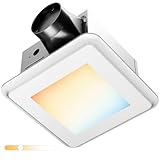
Overview: The Amico Bathroom Exhaust Fan with Light merges powerful 80 CFM ventilation with customizable illumination in a single sleek unit. Operating at an ultra-quiet 0.9 sones, it fits standard 8.8" x 8.8" ceiling openings and serves bathrooms up to 80 square feet. The integrated light delivers 1000 lumens with five color temperature options (2700K-5000K) and full 0-100% dimming capability, controlled by standard wall switches.
What Makes It Stand Out: This fan’s lighting system is best-in-class—five selectable CCTs and smooth dimming transform bathroom ambiance from energizing daylight to relaxing warm glow. The 0.9-sone operation is quieter than many premium standalone fans, let alone combo units typically compromised by light integration. ETL and FCC certifications exceed basic safety requirements, ensuring electromagnetic compatibility.
Value for Money: While priced higher than basic fans, it eliminates separate light fixture costs and installation labor. Comparable ventilation-only fans with 0.9 sones cost nearly as much, making the advanced lighting essentially free. Energy-efficient LED lighting reduces electricity costs versus traditional bulbs, while the robust motor ensures longevity.
Strengths and Weaknesses: Strengths include whisper-quiet 0.9-sone operation, exceptional lighting versatility, dual ETL/FCC certification, and space-saving design. Weaknesses: 80 CFM limits suitability to smaller bathrooms; premium pricing may exceed budget-conscious buyers; lighting features require compatible dimmer switches for full functionality.
Bottom Line: The ultimate choice for bathroom renovations where lighting and ventilation both need upgrading. If you value tranquility and customizable ambiance, this fan-light combo justifies every penny. Ideal for master baths and en-suites.
Understanding Bathroom Ventilation Requirements
Why Proper Exhaust Matters
Bathrooms generate significant moisture from showers, baths, and sinks—up to 2.5 gallons of water vapor per day in an average family bathroom. Without effective ventilation, this moisture creates the perfect breeding ground for mold, mildew, and bacteria while causing paint to peel, mirrors to fog, and wooden fixtures to warp. Proper exhaust fans remove this humid air, odors, and airborne contaminants, extending the life of your bathroom finishes and protecting your home’s structural integrity.
Building Code Basics
Most building codes require either an operable window or mechanical ventilation for any bathroom without adequate natural airflow. For 2026, updated energy codes mandate that exhaust fans meet specific airflow requirements based on bathroom square footage. Typically, you’ll need approximately 1 CFM (Cubic Feet per Minute) per square foot of bathroom space, with a minimum of 50 CFM for any full bathroom. Half-baths usually require at least 20 CFM to maintain proper air quality.
Sizing Your Space Correctly
Calculating the right fan capacity involves more than just square footage. Ceiling height, ductwork length, and the number of bends in your venting system all impact performance. A bathroom with 9-foot ceilings needs more power than one with standard 8-foot ceilings. Similarly, if your ductwork runs through an unconditioned attic space or has multiple turns, you’ll need a fan with higher static pressure capability to overcome these obstacles and deliver the rated airflow.
The 10 Essential Bathroom Exhaust Fan Categories for 2026
The workhorse of bathroom ventilation, ceiling-mounted fans remain the most common installation type. These units mount directly between ceiling joists and vent vertically through the roof or horizontally through a sidewall. Modern versions feature improved motors that deliver higher airflow with less energy consumption. Look for models with sealed housings that prevent air leakage and backdraft dampers that close when the fan isn’t operating, preventing outside air from entering your home.
Perfect for bathrooms with limited ceiling space or where joist placement creates installation challenges, low-profile fans measure less than 4 inches in height. These streamlined units fit between tight joist spaces while still delivering adequate CFM ratings. Despite their compact size, many include advanced features like humidity sensors and quiet operation. They’re ideal for retrofits where access is limited or when you want to minimize the visual impact of the housing above the ceiling.
When ceiling installation proves impossible due to duct routing challenges or structural limitations, wall-mounted fans offer an excellent alternative. These units install on an exterior wall and vent directly outside, eliminating long duct runs that reduce efficiency. Wall-mounted options work particularly well in first-floor bathrooms or condominiums where ceiling access is restricted. Modern designs feature exterior covers that prevent weather infiltration while maintaining clean interior aesthetics.
Inline fans mount the motor assembly in a remote location—typically in the attic or a utility space—leaving only a discreet vent grille visible in the bathroom. This configuration dramatically reduces noise since the motor sits several feet away from the living space. A single powerful inline unit can service multiple bathrooms simultaneously, making it cost-effective for whole-home ventilation strategies. The remote placement also allows for easier maintenance access without disturbing the bathroom ceiling.
The cornerstone of 2026’s ventilation technology, humidity-sensing fans automatically activate when moisture levels rise above a preset threshold. These intelligent units detect the humidity spike that occurs during showers and continue running until the air returns to normal levels, preventing the guesswork of manual timer settings. Advanced models learn your bathroom’s usage patterns and adjust sensitivity accordingly, ensuring optimal performance while minimizing false activations.
Motion-sensing fans provide hands-free operation that ensures ventilation runs whenever someone enters the bathroom. These units typically include adjustable timers that continue running for a preset period after motion ceases, usually between 5 and 30 minutes. This feature proves invaluable for households with children or guests who might forget to manually operate the fan. The best models combine motion and humidity sensing for comprehensive automated control.
Maximizing functionality in a single fixture, fan-light combos replace your existing ceiling light with a unit that provides both illumination and ventilation. These integrated solutions simplify installation since they use existing electrical wiring while reducing ceiling clutter. Modern LED versions offer energy-efficient lighting with customizable color temperatures and dimming capabilities. Some advanced models even include nightlight features for safe navigation during late-night bathroom visits.
For those seeking ultimate comfort, three-in-one units add a heating element to the fan-light combination. These fixtures circulate warm air while ventilating, making them perfect for cold climates where stepping out of a shower can be uncomfortable. The heating function operates independently from the fan, allowing year-round use. Many 2026 models feature ceramic heating elements that warm quickly and include overheat protection for safety.
As energy efficiency becomes increasingly important, Energy Star certified fans use at least 70% less energy than standard models while delivering equal or better performance. These units incorporate advanced motor technology, such as DC brushless motors, that consume minimal electricity during operation. Many utility companies offer rebates for installing Energy Star ventilation fans, helping offset the slightly higher initial cost while reducing long-term operating expenses.
Noise level has long been the primary complaint about bathroom exhaust fans. Ultra-quiet models operate at less than 0.3 sones—quieter than a whisper—making them ideal for en-suite bathrooms where nighttime operation shouldn’t disturb sleepers. These fans achieve silence through superior motor design, vibration dampening mounts, and aerodynamic fan blade engineering. The quietest models often cost more but provide a premium experience worth the investment.
Key Features to Evaluate in 2026
Airflow Capacity and CFM Ratings
While the basic calculation of 1 CFM per square foot provides a starting point, consider your bathroom’s specific needs. High-traffic family bathrooms benefit from 20-30% more capacity than the minimum. Features like jetted tubs or steam showers require significantly higher CFM ratings—sometimes 150 CFM or more—to handle the extreme moisture load. Always verify that the rated CFM reflects performance with your specific duct configuration, not just ideal laboratory conditions.
Noise Level Considerations
Fan noise is measured in sones, with lower numbers indicating quieter operation. A standard fan produces about 2-4 sones—comparable to normal conversation. Premium quiet fans operate below 1 sone, with the best models reaching 0.3 sones or less. Consider your tolerance for noise and the fan’s location. A fan in a guest powder room can be louder than one in a master bedroom suite where quiet operation is paramount.
Energy Efficiency Metrics
Beyond Energy Star certification, evaluate the fan’s wattage draw at various speeds. Variable-speed fans consume less energy when running at lower speeds for general air circulation versus full power for moisture removal. Look for models with automatic speed adjustment that ramps up when humidity spikes and reduces to a low, energy-saving level during normal conditions. This feature can cut energy consumption by up to 60% compared to single-speed fans.
Smart Home Integration
Modern fans increasingly offer Wi-Fi connectivity and integration with smart home ecosystems. These features allow remote control via smartphone apps, voice activation through virtual assistants, and integration with broader home automation routines. You can program your fan to run automatically when you start your morning shower routine or receive alerts if humidity levels remain elevated, indicating potential ventilation issues.
Installation Requirements
Evaluate whether your electrical system can support the fan’s requirements. Some combination units with heaters require dedicated 20-amp circuits. Consider the duct size—most residential fans use 4-inch or 6-inch ducts, with larger diameters providing better airflow and reducing noise. Verify that your chosen fan’s mounting system works with your ceiling type, whether drywall, plaster, or drop-ceiling tiles.
Modern Design and Aesthetic Considerations
Discreet Grill Options
Gone are the days of bulky, plastic grills that detract from your bathroom’s design. Contemporary fans offer low-profile grills with sleek metal finishes, paintable surfaces, and minimalist designs that blend into the ceiling. Some premium models feature nearly invisible micro-perforated grills that are barely noticeable when the fan is off. Consider the grill size relative to your bathroom scale—oversized grills overwhelm small spaces, while undersized ones look lost in large rooms.
Customizable Trim Kits
Many manufacturers now provide interchangeable trim kits that allow you to match your fan’s appearance to other bathroom fixtures. These kits come in various finishes—brushed nickel, oil-rubbed bronze, matte black, and polished chrome—to coordinate with your faucets, lighting, and hardware. Some advanced systems even allow you to swap the trim without replacing the entire unit, making style updates simple and cost-effective.
Exterior Venting Solutions
The exterior vent cap impacts both aesthetics and performance. Modern low-profile caps feature integrated backdraft dampers and pest screens while maintaining a subtle appearance on your home’s exterior. For roof installations, consider shrouded vents that blend with roofing materials. Sidewall vents should include weather-resistant covers that prevent rain infiltration and feature designs that complement your home’s architecture rather than creating an eyesore.
Maintenance and Longevity Factors
Cleaning Accessibility
Even the best fan requires periodic cleaning to maintain performance. Look for models with tool-free grill removal and easily accessible fan blades. Some premium fans feature dishwasher-safe grills and blades that simplify maintenance. Consider the grill attachment method—spring clips are easier to remove than screw-mounted options, though they may feel less secure. The ability to clean without tools encourages regular maintenance, ensuring consistent performance over the fan’s lifespan.
Motor Durability
The motor represents the heart of your exhaust fan and its most likely failure point. Permanent split capacitor (PSC) motors offer reliable performance at moderate cost, while electronically commutated motors (ECM) provide superior efficiency and longer lifespans—often 10-15 years versus 5-7 years for standard motors. Look for motors with sealed bearings that resist moisture damage and thermal overload protection that prevents burnout if the fan becomes obstructed.
Warranty Coverage
Quality manufacturers stand behind their products with robust warranties. Standard fans typically include 1-3 year warranties, while premium models offer 7-year or even lifetime warranties on the motor. Read warranty terms carefully—some cover only the motor while excluding other components like grills or sensors. A comprehensive warranty indicates manufacturer confidence and protects your investment against premature failure.
Installation Best Practices
DIY vs Professional Setup
While many homeowners can install basic ceiling-mounted fans, certain situations warrant professional installation. Wall-mounted units, inline systems, and any installation requiring new ductwork or electrical circuits benefit from experienced hands. If your project involves attic access, roof penetration, or dealing with existing moisture damage, the cost of professional installation often pays for itself through proper setup and warranty protection.
Ductwork Optimization
The shortest, straightest duct path yields the best performance. Each 90-degree bend reduces airflow by approximately 5-10 CFM, while long duct runs increase static pressure and noise. Use rigid metal ductwork rather than flexible plastic—it’s smoother interior surface reduces resistance and prevents sagging that traps moisture. Insulate ducts passing through unconditioned spaces to prevent condensation and maintain efficiency.
Timer and Control Wiring
Modern fans often require additional wiring for advanced controls. Humidity sensors need constant power to monitor conditions even when the fan isn’t running. Motion sensors and smart controls may need neutral wires that older bathrooms lack. Before purchasing, verify your electrical box contains the necessary wires or budget for an electrician to upgrade the circuit. Consider installing a timer switch as a backup to automatic controls, ensuring ventilation even if sensors fail.
2026 Technology Trends
IoT Connectivity Features
Internet of Things integration transforms exhaust fans from passive devices into active home health monitors. Connected fans can track humidity trends, runtime hours, and filter status, sending alerts to your phone when maintenance is due or unusual conditions occur. Some systems integrate with whole-home ventilation strategies, coordinating bathroom exhaust with fresh air intake systems for balanced air exchange throughout your home.
Air Quality Monitoring
Advanced fans now incorporate particulate and VOC (Volatile Organic Compound) sensors that detect more than just humidity. These multi-sensor units can activate when cleaning product fumes, aerosol sprays, or other air quality issues arise. This feature proves particularly valuable in bathrooms where hair products, cleaning supplies, and personal care items introduce various airborne chemicals. The fan creates a healthier environment by responding to actual air quality rather than just moisture levels.
Automatic Speed Adjustment
Variable-speed fans with intelligent controllers represent the cutting edge of ventilation technology. These systems continuously monitor conditions and adjust fan speed in real-time, running at low speeds for background ventilation and ramping up to maximum CFM when showers create humidity spikes. This approach optimizes both energy consumption and moisture removal, often reducing overall energy use while improving air quality compared to single-speed alternatives.
Cost and Value Analysis
Budget Planning
Exhaust fan prices range from under $50 for basic models to over $500 for premium smart units with integrated lighting and heating. Establish your budget early, but remember that the cheapest option rarely provides the best value. Factor in installation costs, which can equal or exceed the fan’s purchase price, especially if ductwork modification or electrical upgrades are needed. A mid-range fan with quality components often outperforms and outlasts a cheap unit, delivering better long-term value.
Long-term Savings Potential
Energy-efficient fans cost more upfront but reduce electricity costs significantly over their lifespan. A fan running 2 hours daily at 30 watts costs approximately $15 annually to operate, while an inefficient 80-watt model costs about $40. Over a 10-year lifespan, the energy savings can offset the higher initial cost. Additionally, effective ventilation prevents costly moisture damage repairs, potentially saving thousands in mold remediation and structural fixes.
Feature vs Price Balance
Prioritize features based on your actual needs rather than marketing hype. A basic humidity-sensing fan provides 80% of the benefits of a fully integrated smart model at half the cost. However, if you’re building a comprehensive smart home ecosystem, the premium for Wi-Fi connectivity and advanced sensors may justify the expense. Consider which features solve real problems in your household—motion sensing for forgetful kids, ultra-quiet operation for light sleepers, or heating elements for cold climates.
Frequently Asked Questions
How do I calculate the right CFM for my bathroom?
Measure your bathroom’s length, width, and ceiling height to determine cubic footage. Multiply square footage by ceiling height, then divide by 7.5 for a standard recommendation. For example, a 50-square-foot bathroom with 8-foot ceilings needs approximately 53 CFM. Add 50 CFM for jetted tubs and 100 CFM for steam showers. Always round up to the nearest available fan size rather than down.
Can I replace my existing fan without accessing the attic?
Yes, many manufacturers offer retrofit kits designed for installation from below the ceiling. These units use expandable mounting brackets that secure to existing joists through the ceiling cutout. However, you’ll still need attic access to inspect and potentially replace ductwork. If your current ductwork is in good condition, a direct replacement from below is feasible, though more challenging than a full access installation.
What’s the difference between sones and decibels for fan noise?
Sones measure perceived loudness specifically for ventilation equipment, while decibels measure sound pressure. One sone equals approximately 40 decibels at 1 kHz frequency. Bathroom exhaust fans are rated in sones because this scale better represents how humans perceive the low-frequency hum of a fan. For reference, a quiet library registers around 1 sone, normal conversation is about 2-3 sones, and a typical office environment is 4 sones.
Do exhaust fans need their own dedicated circuit?
Most standard exhaust fans operate on the existing lighting circuit and don’t require dedicated wiring. However, combination units with heating elements often need a dedicated 20-amp circuit. Fans with multiple functions (light, heater, nightlight) may require multiple switches and corresponding wiring. Check the manufacturer’s specifications and consult local electrical codes before installation to ensure proper circuit protection.
How often should I clean my bathroom exhaust fan?
Clean the grill and visible fan blades every 3-6 months using a vacuum with a brush attachment and a damp cloth. Deep clean the entire unit annually by removing the grill and washing it with warm, soapy water. Inspect the motor housing for dust buildup and clean carefully with compressed air. Homes with high bathroom usage, pet dander, or construction dust may require more frequent cleaning to maintain optimal performance.
Can I vent my bathroom fan into the attic or soffit?
Never vent a bathroom exhaust fan directly into an attic, soffit, or crawl space. This practice dumps warm, moist air into unconditioned areas, creating ideal conditions for mold growth and wood rot. All bathroom exhaust must terminate outside the building envelope through a dedicated roof vent, sidewall vent, or gable end vent. The termination point should be at least 3 feet from any intake vents to prevent recirculation.
What’s the lifespan of a typical bathroom exhaust fan?
Standard exhaust fans last 5-10 years depending on usage, motor quality, and maintenance. Premium models with ECM motors often exceed 15 years. Signs of failure include increased noise, reduced airflow, failure to start, or intermittent operation. Humidity sensors and electronic controls may fail sooner than the motor itself. Regular cleaning and avoiding excessive moisture exposure extend lifespan significantly.
Are smart exhaust fans worth the extra cost?
Smart fans provide value if you’ll utilize their features. The ability to monitor humidity remotely, receive maintenance alerts, and integrate with home automation justifies the premium for tech-savvy homeowners or those managing rental properties. However, a quality humidity-sensing non-smart fan provides excellent automated ventilation at lower cost. Evaluate whether you’ll actively use the app features or simply rely on automatic operation anyway.
How do I know if my current fan is working properly?
Hold a single square of toilet paper up to the running fan’s grill. A properly functioning fan should hold the paper firmly against the grill. Alternatively, place your hand near the exterior vent termination—you should feel strong, steady airflow. If mirrors fog excessively during showers or moisture lingers for more than 20 minutes after bathing, your fan is likely undersized, clogged, or malfunctioning.
Can I install a bathroom exhaust fan myself?
Basic ceiling-mounted fan replacements are DIY-friendly if you have electrical experience and attic access. You’ll need basic tools, comfort working with electrical connections, and knowledge of local building codes. Complex installations involving new ductwork, circuit upgrades, or inline systems typically require professional installation. Always turn off power at the breaker, test wires with a voltage detector, and obtain necessary permits before starting work.
See Also
- 10 Essential Bathroom Fans Every Homeowner Needs in 2026
- 10 Essential Clip-On Rechargeable Fans Every Commuter Needs in 2026
- 10 Essential Clip-On Rechargeable Fans Every Student Needs in 2026
- 10 Essential Personal Rechargeable Fans Every Commuter Needs in 2026
- 10 Essential Clip-On Rechargeable Fans Every Camper Needs in 2026