Table of Contents
Stepping into your first home brings a mix of excitement and overwhelming decisions, especially when winter’s chill reminds you that heating isn’t just about comfort—it’s about survival and budgeting. Baseboard heaters often become the unsung heroes for new homeowners, offering targeted warmth without the complexity of central ductwork, but navigating the options can feel like learning a new language. The landscape in 2026 has evolved dramatically, with smarter controls, improved safety features, and energy-efficient designs that weren’t available even five years ago.
Understanding what makes a baseboard heater truly “essential” isn’t about grabbing the first unit you see at the hardware store. It’s about matching your specific living situation—whether you’re dealing with a drafty 1920s bungalow or a modern condo—to the right technology, capacity, and installation requirements. This guide cuts through the technical jargon to focus on the fundamental categories and features that deserve your attention, helping you make informed decisions that keep your space cozy without inflating your electric bill or compromising safety.
Top 10 Baseboard Heaters for First-Time Homeowners
Detailed Product Reviews
1. Comfort Zone 1500W Convection Baseboard Heater with Built-In Thermostat, Overheat & Tip-Over Protection, Dent-Proof Ends, Plug-In Portable, Ideal for Home, Bedroom & Office, White

Overview:
The Comfort Zone 1500W Convection Baseboard Heater delivers plug-and-play warmth for medium-sized rooms without permanent installation. This portable unit features a built-in adjustable thermostat with two heat settings, providing consistent convection heat for bedrooms, offices, or dorms. Its slim, low-profile design integrates seamlessly against walls while delivering year-round heating capability.
What Makes It Stand Out:
True portability distinguishes this from hardwired alternatives—simply plug into a standard outlet for immediate warmth. The dent-proof end panels maintain appearance despite regular handling, while advanced safety features including tip-over shut-off, overheat protection, and stay-cool housing ensure family-friendly operation. Whisper-quiet performance eliminates noise disruption during sleep, work, or entertainment.
Value for Money:
Positioned in the mid-range portable category, it eliminates installation costs entirely while delivering 1500W comparable to permanent units. For renters or supplemental heating needs, this flexibility outweighs hardwired alternatives requiring professional electrical work. The integrated thermostat adds value versus basic heaters lacking temperature control, offering energy-efficient targeted heating that reduces whole-house heating expenses.
Strengths and Weaknesses:
Strengths include genuine portability, comprehensive safety suite, silent operation, dent-resistant construction, and immediate deployment. The plug-in convenience allows use anywhere with a standard outlet. Weaknesses include occupying a valuable wall outlet, potentially insufficient power for very large spaces, and less permanent aesthetic integration than hardwired options. Continuous heavy use may yield shorter lifespan compared to commercial-grade alternatives.
Bottom Line:
An excellent choice for renters, dorm residents, or homeowners needing targeted, temporary heating. The Comfort Zone heater balances performance, safety, and convenience, making it ideal for supplemental warmth without installation commitment.
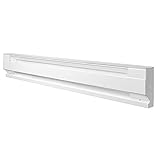
2. Cadet F Series 48" Electric Baseboard Heater (Model: 4F1000W, Part: 09954 ), 3415/2560 BTU, 240/208 Volt, 1000/750 Watt, White
Overview:
The Cadet F Series represents a professional-grade heating solution designed for permanent installation. Operating at 1000/750 watts with 240/208-volt capability, this hardwired unit delivers robust heat output for small to medium-sized rooms. Engineered for longevity, it prioritizes durable, built-in performance over portability, requiring professional electrical installation for safe operation.
What Makes It Stand Out:
The limited lifetime warranty demonstrates exceptional manufacturer confidence rarely seen in heating appliances. Universal wiring connections and pre-punched knockouts at one-inch intervals simplify installation for qualified electricians, reducing labor time and costs. Unlike portable units, this heater integrates seamlessly into home infrastructure without occupying floor space or wall outlets, providing a clean, permanent aesthetic.
Value for Money:
While requiring higher upfront investment including professional installation, the lifetime warranty and commercial-grade construction deliver superior long-term value. Hardwired 240V operation provides more efficient heating than 120V portable alternatives. The lack of an included thermostat necessitates separate purchase but allows integration with existing home systems or smart controls, offering customization flexibility.
Strengths and Weaknesses:
Strengths include robust steel construction, lifetime warranty, high-efficiency 240V operation, and permanent space-saving installation. The high-temperature safety shutoff ensures reliable protection. Weaknesses include mandatory professional installation, no included thermostat, zero portability, and higher initial cost. The 48-inch length may prove excessive for compact spaces, and the hardwired design eliminates flexibility for repositioning.
Bottom Line:
Ideal for homeowners undertaking renovations or new construction where permanent heating solutions are planned. The Cadet F Series excels when durability and integrated performance outweigh portability concerns. Best suited for long-term residence applications requiring reliable, efficient primary heating.
3. Comfort Zone Baseboard Space Heater with Digital Thermostat, Electric, Dent-Proof End Panels, Overheat Protection, Tip-Over Switch, & Stay-Cool Body, Ideal for Home, Bedroom, & Office, 1,500W, CZ650B

Overview:
The Comfort Zone CZ650B elevates portable baseboard heating with digital precision. This 1500-watt convection heater targets medium-sized rooms with two adjustable heat settings and a digital thermostat featuring clear temperature display. Designed for home, bedroom, or office use, it combines modern controls with comprehensive safety features and whisper-quiet operation for undisturbed comfort.
What Makes It Stand Out:
The digital thermostat distinguishes it from analog competitors, offering precise temperature setting and monitoring rather than guesswork. Dent-proof end panels maintain appearance despite regular repositioning, while the advanced safety system includes tip-over switch, stay-cool body, and overheat protection. Silent convection heating preserves peaceful environments without the noise of fan-forced alternatives.
Value for Money:
Positioned slightly above basic portable models, the digital interface justifies the modest premium for users prioritizing accurate temperature control. It eliminates installation costs while delivering targeted heating efficiency. The ability to heat specific rooms reduces whole-house heating expenses, offering payback through energy savings. The digital display enhances user experience compared to manual dial controls.
Strengths and Weaknesses:
Strengths include digital thermostat accuracy, silent convection heating, robust safety suite, dent-resistant design, and true plug-in portability. The clear display enhances user experience. Weaknesses include dependence on outlet availability, potential limitations for very large spaces, and digital components that may be more failure-prone than mechanical alternatives. Like other portables, it lacks seamless aesthetic integration of hardwired units.
Bottom Line:
A superior choice for tech-savvy users wanting precise digital control without permanent installation. The CZ650B excels in bedrooms and offices where quiet, accurate heating and safety are paramount. Recommended for supplemental heating with modern convenience and reliable performance.
4. Cadet Baseboard Heater Ul 120 V/4.17 A White 30 " 500 W

Overview:
The Cadet 120V Baseboard Heater provides a low-profile heating solution with unique remote control convenience. Delivering 500 watts of convection heat, this lightweight unit includes two heaters per package, designed for easy floor mounting in living rooms, bedrooms, or offices. The 120-volt operation simplifies installation compared to 240-volt alternatives, working with standard household circuits.
What Makes It Stand Out:
Remote control operation offers uncommon convenience, allowing temperature adjustments without physical contact. The inclusion of two units provides flexible placement options for balanced room heating or separate zone control. The 120-volt design eliminates the need for dedicated high-voltage wiring, making it accessible for DIY-inclined homeowners comfortable with basic electrical work.
Value for Money:
The dual-unit package presents compelling value for small-space heating. While individual 500-watt output limits coverage, strategic placement of two units can effectively heat targeted areas. The claimed 1,710 sq ft coverage appears optimistic for 500W and should be viewed skeptically—realistic coverage is closer to 150 sq ft per unit. Remote functionality adds premium convenience at a moderate price point.
Strengths and Weaknesses:
Strengths include remote control convenience, dual-unit packaging, easy 120V installation, and compact design. The lightweight construction simplifies handling. Weaknesses include potentially underpowered 500W output, lightweight materials that may compromise long-term durability, and lack of advanced safety features like tip-over protection. The 30-inch length may provide insufficient heat distribution for larger rooms.
Bottom Line:
Suitable for small rooms or supplemental heating in specific areas. Best for users prioritizing remote convenience and easy installation over maximum heat output. Verify space requirements carefully, as the 500W capacity suits modest spaces rather than the advertised large coverage area.
5. BEYOND HEAT Electric Baseboard Heater, 1500W Convection Heater with Adjustable thermostat and Overheat Protection, Slient Operation for indoor use, White

Overview:
The BEYOND HEAT Electric Baseboard Heater delivers 1500 watts of silent convection heating in a compact package. Featuring an adjustable thermostat with two heat settings, this unit targets small to medium-sized indoor spaces. The ETL-approved design emphasizes safety with overheat and tip-over protection, complemented by dent-proof end panels and stay-cool body construction for worry-free operation.
What Makes It Stand Out:
ETL certification ensures rigorous US safety standards compliance, providing assurance for quality-conscious buyers wary of lesser-known brands. The compact 29.25-inch footprint fits discreetly in tight spaces where longer heaters prove impractical. Dent-proof end panels maintain appearance despite regular repositioning, while silent operation preserves quiet environments essential for bedrooms and offices.
Value for Money:
Competitively priced against mainstream brands, it offers comparable 1500W performance and safety features at a budget-friendly point. The compact size maximizes placement flexibility without sacrificing output. For cost-conscious consumers seeking certified safety and reliable heating, it presents strong value versus premium alternatives with similar specifications, though brand reputation remains less established.
Strengths and Weaknesses:
Strengths include ETL safety certification, powerful 1500W output, quiet convection heating, compact design, and comprehensive protection features. The adjustable thermostat provides basic temperature control. Weaknesses include lesser brand recognition compared to established competitors, potentially shorter track record for long-term reliability, and basic mechanical thermostat versus digital options. The 29-inch length may limit heat distribution in larger rooms, requiring supplemental heating sources.
Bottom Line:
A solid, budget-friendly alternative for safety-conscious buyers prioritizing certification over brand name. The BEYOND HEAT heater excels in small to medium spaces where compact dimensions and quiet operation matter. While lacking brand prestige, its ETL certification and feature set make it a worthy contender for supplemental heating needs where value is paramount.
6. EZ-HEAT 1,500 Watt Baseboard Space Heater with Adjustable Thermostat, Dent-Proof End Panels, Overheat Protection, Tip-Over Switch, & Stay-Cool Body, CZ600

Overview: The EZ-HEAT CZ600 is a versatile convection baseboard heater designed for medium-sized rooms. Delivering 1,500 watts of heating power with adjustable thermostat control, this unit prioritizes safety and user convenience. Its portable design combines essential safety features with quiet operation, making it suitable for bedrooms, offices, and living spaces where peace of mind matters as much as warmth.
What Makes It Stand Out: This heater distinguishes itself through comprehensive safety engineering. The tip-over switch automatically cuts power if knocked over, while overheat protection prevents dangerous temperature escalation. The stay-cool body remains safe to touch during operation, and dent-proof end panels maintain appearance despite regular use. Whisper-quiet operation ensures zero disturbance during sleep or work.
Value for Money: Priced competitively for feature-rich portable baseboard heaters, the CZ600 offers excellent value through its multi-layered safety systems that typically cost more. The ability to zone-heat specific rooms reduces whole-house heating expenses, delivering payback through lower energy bills. Compared to basic models, the durability features extend usable lifespan, enhancing long-term value.
Strengths and Weaknesses: Pros: Advanced safety suite including tip-over and overheat protection; silent operation ideal for noise-sensitive environments; dent-resistant construction maintains aesthetics; cost-effective zone heating reduces utility bills; user-friendly adjustable thermostat.
Cons: 1,500-watt capacity limits effectiveness in larger spaces; 120-volt operation may not suit all wiring configurations; lacks built-in timer or smart controls found in premium competitors.
Bottom Line: The EZ-HEAT CZ600 is an excellent choice for safety-conscious consumers seeking reliable supplemental heating in medium-sized rooms. Its robust protection features and quiet operation make it particularly suitable for bedrooms and home offices, though those needing whole-room solutions or smart connectivity should consider alternatives.
7. Cadet F Series 72 in. Electric Baseboard Heater (Model: 6F1500-1W, Part: 05536), 120 Volt, 1500 Watt, White

Overview: The Cadet F Series 6F1500-1W is a no-frills, 72-inch electric baseboard heater delivering 1,500 watts of continuous convection heat at 120 volts. Designed for permanent installation, this hardwired unit offers straightforward heating without complex features. Manufactured by the established Cadet brand, it provides basic warmth for residential spaces requiring supplemental heat.
What Makes It Stand Out: Simplicity is this unit’s defining characteristic. The heater focuses solely on reliable convection heating without digital displays, fans, or complex controls that can fail. Its 72-inch length provides substantial heating surface area for effective warmth distribution. Cadet’s established manufacturing experience ensures consistent performance, while the continuous heat transmission design maintains steady temperatures without cycling interruptions.
Value for Money: As a budget-oriented hardwired baseboard heater, it delivers functional heating at an entry-level price point. The lack of included thermostat or advanced features keeps initial costs low, though requiring separate thermostat purchase adds expense. For contractors or homeowners wanting basic, permanent heating without premium pricing, it represents adequate value, though feature-rich alternatives offer more bang for buck.
Strengths and Weaknesses: Pros: Simple, reliable convection heating with minimal failure points; generous 72-inch length effective for medium rooms; reputable manufacturer with proven track record; straightforward installation for qualified electricians; continuous operation maintains consistent warmth.
Cons: Extremely limited product information provided; no built-in thermostat or safety features mentioned; 120-volt limitation reduces efficiency compared to 240-volt models; basic design lacks modern aesthetics or durability enhancements.
Bottom Line: The Cadet 6F1500-1W suits buyers seeking bare-bones, dependable baseboard heating for permanent installation. It’s best for those comfortable purchasing thermostats separately and prioritizing simplicity over features. However, the sparse documentation raises questions about included safety protections, warranting direct manufacturer verification before purchase.
8. Cadet F Series 36" Electric Baseboard Heater (Model: 3F750W, Part: 09952), 2560/1925 BTU, 240/208 Volt, 750/563 Watt, White
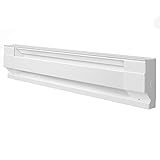
Overview: The Cadet 3F750W is a compact 36-inch electric baseboard heater offering dual-voltage flexibility for small space heating. Delivering 750 watts at 240 volts (or 563 watts at 208 volts), this hardwired unit produces 2,560 BTU of convection warmth. Designed for closets, bathrooms, or small bedrooms, it combines versatility with straightforward installation in a space-saving footprint.
What Makes It Stand Out: Exceptional installation flexibility defines this model. Universal wiring accommodates both 240-volt and 208-volt circuits, adapting to various electrical configurations. Pre-punched knockouts simplify mounting, reducing installation time for DIYers or contractors. The limited lifetime warranty stands out in a category where shorter warranties are common, demonstrating manufacturer confidence. Its compact 36-inch length fits where standard heaters cannot.
Value for Money: This heater offers solid value for small-space applications. The multi-voltage capability eliminates the need to match specific circuit requirements, potentially saving rewiring costs. Lifetime warranty protection provides long-term peace of mind that justifies its slightly higher price versus entry-level competitors. For targeted heating in compact areas, its efficiency and durability make it a cost-effective choice.
Strengths and Weaknesses: Pros: Dual-voltage wiring versatility (240V/208V); lifetime warranty exceeds industry standard; compact 36-inch size ideal for small spaces; easy installation with pre-punched knockouts; reliable convection heat circulation.
Cons: Lower wattage limits effectiveness to rooms under 100 square feet; no integrated thermostat requires separate purchase; basic design lacks premium aesthetic features; BTU output insufficient for primary heating in most rooms.
Bottom Line: The Cadet 3F750W excels as a supplementary heater for small spaces where installation flexibility is paramount. Its dual-voltage capability and lifetime warranty make it a smart choice for bathrooms, powder rooms, or large closets. However, those needing primary heat for standard-sized rooms should opt for higher-wattage alternatives.
9. Stelpro High-End Electric Baseboard Heater, 1500W / 240V, 64-In Long x 2½-In High Compact Convection Heater for Rooms up to 150 sq. ft, Discreet Design, Prima Series (ASPRL1502W) – White

Overview: The Stelpro Prima ASPRL1502W represents premium baseboard heating with its ultra-compact 2.5-inch height and 64-inch length. Delivering 1,500 watts at 240 volts, this convection heater warms rooms up to 150 square feet through a tubular stainless steel element with aluminum fins. Designed for discerning homeowners, it emphasizes discreet aesthetics and maintenance accessibility without sacrificing performance.
What Makes It Stand Out: Revolutionary low-profile design stands 25% shorter than traditional baseboards, fitting seamlessly under windows and architectural trim. The detachable front panel with reinforced steel casing resists dents while providing tool-free access for cleaning. Noiseless convection technology eliminates fan noise entirely. Optional thermostat integration choices include wall-mounted or built-in electronic kits, offering customization competitors lack. The five-year warranty plus lifetime heating element guarantee demonstrates exceptional build quality.
Value for Money: Positioned in the premium tier, the ASPRL1502W justifies its higher price through superior engineering and aesthetics. The compact design preserves valuable wall space and architectural integrity, adding intangible value for design-conscious buyers. Commercial-grade materials and exceptional warranty coverage reduce replacement risks. While requiring separate thermostat purchase, its efficiency and durability deliver long-term cost benefits that offset initial investment.
Strengths and Weaknesses: Pros: Ultra-low 2.5-inch profile for discreet installation; premium stainless steel and aluminum construction; completely silent operation; flexible thermostat options; outstanding warranty coverage; dent-resistant reinforced casing.
Cons: Requires 240-volt circuit limiting installation flexibility; thermostats sold separately adding cost; premium pricing exceeds budget alternatives; 150 sq ft coverage insufficient for larger open-concept spaces.
Bottom Line: The Stelpro ASPRL1502W is ideal for homeowners prioritizing aesthetics and build quality in their heating solution. Its revolutionary compact design and silent operation make it perfect for modern spaces where traditional bulky heaters would detract from décor. While the investment is substantial, the performance and warranty justify the cost for quality-focused buyers.
10. Cadet F Series 49" Portable Electric Baseboard Heater (Model: 4P1500W, Part: 05601), 5120 BTU, 120 Volt, 1500 Watt, White

Overview: The Cadet 4P1500W is a portable 49-inch electric baseboard heater delivering 1,500 watts and 5,120 BTU of convection warmth at 120 volts. Designed for plug-and-use convenience, this unit provides supplemental heating without installation requirements. Its mid-length size balances portability with heating capacity, making it suitable for moving between rooms as needed for targeted comfort.
What Makes It Stand Out: True portability distinguishes this model from hardwired alternatives. The 49-inch length offers more heating surface than compact units while remaining manageable to relocate. Cadet’s established manufacturing reputation ensures basic reliability. The simple plug-in operation eliminates electrician costs and permanent mounting decisions, appealing to renters or those wanting temporary heating solutions without structural modifications.
Value for Money: As a mid-range portable heater, it offers reasonable value for plug-in convenience. The 1,500-watt capacity matches many permanent units while providing location flexibility. However, the extremely limited feature set and unspecified safety protections may not justify its price compared to feature-rich portable heaters with tip-over protection and thermostats. Value depends entirely on prioritizing brand recognition over modern safety amenities.
Strengths and Weaknesses: Pros: Portable design allows room-to-room use; plug-in 120-volt operation requires no installation; 49-inch length provides decent heating surface; established manufacturer brand recognition; simple operation without complex controls.
Cons: Minimal product information and feature details; no mention of tip-over protection or overheat shutoff; no integrated thermostat mentioned; basic design lacks durability enhancements; unspecified warranty details raise reliability questions.
Bottom Line: The Cadet 4P1500W serves renters or homeowners needing basic portable heating without installation commitment. Its plug-and-use simplicity is its primary advantage. However, the lack of documented safety features is concerning for unsupervised operation. Verify complete specifications directly with Cadet before purchasing, especially if children or pets are present, as modern safety standards are not clearly addressed in available documentation.
Understanding Baseboard Heating Systems
What Makes Baseboard Heaters Ideal for New Homeowners
Baseboard heating systems offer a unique advantage for first-time homeowners who might be juggling mortgage payments with renovation budgets. Unlike forced-air systems that require extensive ductwork and professional maintenance contracts, baseboard heaters operate as independent units, allowing you to heat only the rooms you’re actively using. This zone-based approach translates directly into energy savings and gives you granular control over your monthly utility expenses—a critical consideration when you’re still learning your home’s thermal characteristics.
The installation flexibility also can’t be overstated. Most units mount directly to wall studs along the floor perimeter, working with natural convection currents to circulate warm air silently. This means no noisy blowers disrupting your work-from-home meetings or sleeping children. For homeowners in older properties, baseboard heaters often represent the least invasive heating upgrade, preserving original plaster walls and hardwood floors while delivering modern comfort standards.
Electric vs. Hydronic: The Fundamental Choice
The first major fork in the road involves understanding the two primary technologies. Electric convection heaters use heating elements that warm the air directly, providing near-instant heat but cycling on and off frequently to maintain temperature. These units typically cost less upfront and install more simply, making them attractive for budget-conscious buyers who need immediate solutions.
Hydronic models, by contrast, heat a fluid—usually oil or water—that retains warmth long after the thermostat shuts off. This thermal inertia creates more consistent temperatures and reduces the number of cycles, potentially extending the unit’s lifespan. While the initial investment runs higher and installation may require professional help, the operating efficiency often pays dividends in larger spaces or climates with prolonged heating seasons. Your choice here sets the foundation for every other decision in your heating strategy.
Key Features That Define Quality Baseboard Heaters
Heating Capacity and Room Size Calculations
Getting the wattage right prevents both underheating and wasteful oversizing. The standard calculation starts with measuring your room’s square footage, then multiplying by 10 watts for standard 8-foot ceilings in moderately insulated spaces. A 150-square-foot bedroom needs roughly 1,500 watts, but this formula shifts dramatically with variables like ceiling height, window quality, and climate zone. A sunroom with single-pane glass in Minnesota might require 15 watts per square foot, while a well-insulated interior room could need only 7.
First-time homeowners often overlook vertical space—cathedral ceilings demand proportional increases in heating power. Similarly, rooms above unheated garages or crawl spaces lose heat through the floor, requiring capacity bumps of 20-30%. Always round up slightly rather than down; an undersized heater runs continuously, consuming more energy while leaving you cold, whereas an oversized unit cycles efficiently to maintain comfort.
Thermostat Control Options
Manual dial thermostats might seem straightforward, but they lack precision and often lead to temperature swings of 5-7 degrees, creating noticeable discomfort. Digital thermostats with +/- 1-degree accuracy represent the modern baseline, offering programmable schedules that align heating with your daily routine. Waking up to a warm bathroom and returning to a cozy living room without heating empty spaces all day delivers tangible savings.
The real game-changer for 2026 involves smart thermostats that integrate with home automation systems. These allow remote control via smartphone, learning algorithms that adapt to your habits, and energy usage reporting that helps you identify waste patterns. Some advanced models even factor in local weather forecasts, pre-heating before cold snaps and scaling back during unexpected warm spells. When evaluating options, confirm whether the thermostat is built-in or wall-mounted—external units offer better temperature sensing away from the heat source itself.
Safety Features Modern Homeowners Need
Safety technology has advanced significantly, and skipping these features to save a few dollars invites serious risk. Overheat protection should be non-negotiable, automatically shutting down the unit if internal temperatures exceed safe thresholds. This prevents fire hazards and protects the heater’s components from damage during airflow blockages from furniture or curtains.
Tip-over switches matter more for portable units, but even hardwired models benefit from sensors that detect when the unit has been dislodged from its mounting. For homes with children or pets, look for units with tamper-resistant controls and cool-to-touch housings that minimize burn risks. GFCI compatibility proves essential for bathroom, kitchen, or garage installations where moisture exposure could create shock hazards. The best units also include indicator lights that confirm power status, helping you diagnose issues without touching the heater.
Energy Efficiency Ratings Explained
While baseboard heaters convert electricity to heat at 100% efficiency, how they deliver and maintain that heat varies considerably. The Department of Energy doesn’t mandate specific efficiency ratings for electric resistance heaters, but industry standards like UL certification ensure basic performance benchmarks. More telling is the unit’s design—those with larger finned heating elements distribute warmth more evenly, reducing hot and cold spots that cause occupants to crank thermostats higher.
For hydronic models, look for insulation quality around the fluid reservoir. Premium units maintain heat for 30-45 minutes after shutdown, while cheaper models cool rapidly, requiring frequent restarts. Some manufacturers now provide estimated annual operating costs based on average electricity rates, though these figures assume ideal conditions. A more practical approach involves checking the wattage draw at various settings and calculating costs based on your local utility’s kilowatt-hour rate.
The 10 Essential Baseboard Heater Categories for 2026
These workhorse units represent the entry point for most first-time homeowners, offering reliable heating without complexity. Typically available in 500-2,500 watt ranges, they install directly to wall studs and wire into standard 120V or 240V circuits. The 240V models deliver more heat per circuit, making them preferable for primary heating applications. Look for units with heavy-gauge steel construction and baked enamel finishes that resist rust and discoloration over decades of use.
What distinguishes quality standard models are the little details: crimped elements that expand and contract without breaking, noise-dampening designs that eliminate ticking sounds during heating cycles, and removable front panels for cleaning. While they lack the thermal retention of hydronic units, their immediate heat output and lower price point make them ideal for supplemental heating or milder climates where extended runtime isn’t the primary concern.
Hydronic heaters function like mini-boilers, heating a sealed fluid that circulates through copper tubes surrounded by aluminum fins. This design radiates gentle, consistent warmth without the temperature swings of electric models. Once heated, the fluid maintains temperature for extended periods, cycling the heating element less frequently and creating a more comfortable environment. The reduced cycling also translates to quieter operation and potentially longer lifespan.
The trade-offs involve weight and cost—these units run significantly heavier, requiring robust wall mounting, and typically cost 2-3 times more than equivalent electric models. Installation demands careful leveling to ensure proper fluid circulation, and any physical damage that breaches the reservoir creates a permanent failure. For first-time homeowners planning long-term residency in colder regions, the investment often proves worthwhile through enhanced comfort and durability.
Modern construction trends toward larger windows and minimalist aesthetics, leaving less wall space for traditional 8-inch tall heaters. Low-profile models compress the heating element into a 4-5 inch height while maintaining output through denser fin arrangements. These units tuck neatly beneath large picture windows or built-in benches, preserving sight lines and design intentions.
The engineering challenge involves maintaining airflow in a shorter chassis, so quality units incorporate specialized baffles that direct convection currents upward more efficiently. Some designs even recess partially into the wall cavity, though this requires modifications during installation. For open-concept living spaces where visual clutter matters, these streamlined profiles deliver heat without dominating the architectural landscape.
The integration of Wi-Fi and Bluetooth connectivity transforms baseboard heaters from simple appliances into intelligent climate management tools. Smart units connect to whole-home ecosystems like Alexa, Google Home, or Apple HomeKit, allowing voice control and integration with other devices. Imagine your heater automatically reducing output when your smart doorbell detects you’ve left for work, or ramping up when your security system disarms upon your return.
Beyond convenience, these systems provide granular energy tracking, showing exactly how many kilowatts each room consumes. This data proves invaluable for first-time homeowners learning to budget utilities. Some advanced models even offer geofencing, detecting when your smartphone leaves the area and adjusting temperatures accordingly. When evaluating smart features, prioritize units with local control options—if the Wi-Fi goes down, you still need manual operation capability.
While marketed for commercial use, these robust units solve specific residential challenges that standard heaters can’t address. Spaces with extreme heat loss—think converted garages, sunrooms with wall-to-wall glass, or workshops with high ceilings—require the concentrated output that commercial models deliver. These units pack up to 4,000 watts into reinforced housings designed for continuous operation.
The construction differences are substantial: thicker gauge steel, industrial-grade heating elements, and enhanced overheat protection systems. They also offer longer lengths—up to 12 feet—providing more even heat distribution across expansive walls. The downside involves appearance; these prioritize function over form, often with utilitarian designs. However, for first-time homeowners tackling ambitious DIY conversions or dealing with unusually challenging spaces, the extra capacity prevents the need for multiple smaller units.
Bathrooms present unique challenges: high humidity, limited wall space, and strict electrical codes. Dedicated bathroom baseboard heaters include built-in ground fault circuit interrupter (GFCI) protection that prevents shock hazards if water contacts the unit. They also feature lower surface temperatures to reduce burn risks in tight quarters where users might brush against them while toweling off.
Proper placement becomes critical in bathrooms—units must install away from tubs, showers, and sinks according to local code requirements, typically maintaining at least three feet of clearance from water sources. Some models include timers specifically designed for bathroom use, allowing you to pre-heat the space before morning routines without running the unit all night. For first-time homeowners, investing in a purpose-built bathroom heater avoids costly code violations and provides peace of mind.
Not every heating need justifies permanent installation. Portable units that mimic baseboard design offer the same convection heating principles but with plug-and-play convenience. These prove invaluable during initial move-in when you’re still determining which rooms you’ll actively use, or for providing temporary heat while renovating. They typically include carrying handles, tip-over protection, and overheat shutoffs that make them safer for mobile use.
The key limitation involves power—most plug into standard 120V outlets, maxing out around 1,500 watts due to circuit constraints. This restricts their effectiveness to smaller rooms or supplemental heating. However, the ability to move heat where you need it, when you need it, provides flexibility that permanent installations can’t match. For first-time homeowners on tight budgets, a quality portable unit can bridge the gap while you plan more extensive upgrades.
Integrated timers address one of the most common sources of energy waste: heating empty rooms out of habit. Units with programmable timers allow you to set different operating schedules for each day of the week, automatically reducing output during work hours and ramping up before you return. This eliminates the need for separate wall timers or smart home hubs, simplifying installation and reducing points of failure.
The timer interfaces vary from simple pin-style mechanical dials to digital displays with multiple daily settings. Mechanical timers prove more reliable long-term but lack precision, while digital options offer minute-by-minute control but depend on battery backup during power outages. For first-time homeowners establishing new routines, these built-in schedules enforce energy discipline without requiring daily attention, gradually reducing utility costs as the system learns your patterns.
The installation method fundamentally impacts both performance and safety. Hardwired units connect directly to your home’s electrical panel through dedicated circuits, delivering higher wattage (up to 4,000 watts on 240V) and eliminating the risk of someone accidentally unplugging your heat source. This permanence also allows for cleaner installation with no exposed cords, integrating seamlessly into baseboard channels.
Plug-in models offer simplicity but sacrifice power and safety. Limited to 120V outlets, they can’t exceed 1,500 watts without tripping breakers, making them suitable only for small spaces. They also introduce cord management challenges and present tripping hazards. For first-time homeowners, the decision often comes down to skill level and commitment—hardwiring requires basic electrical knowledge or professional help, but delivers superior results for primary heating applications.
As homes become more connected, the ability to link multiple heaters into coordinated zones transforms efficiency. Multi-zone systems use a central control panel or master thermostat to manage several units simultaneously, preventing different rooms from fighting each other. For example, when the living room reaches target temperature, the system can automatically reduce output in adjacent spaces to prevent overheating, rather than each unit operating in isolation.
This coordination proves especially valuable in open floor plans where air circulates freely between spaces. Some advanced systems allow you to assign priority to different rooms—heating the nursery to a higher temperature while maintaining cooler conditions in the guest bedroom. While this requires compatible heaters and potentially professional setup, the long-term efficiency gains and enhanced comfort justify the initial complexity for homeowners planning to stay put for several years.
Installation Considerations for First-Time Buyers
DIY-Friendly Models vs. Professional Installation
Your comfort with electrical work should drive this decision. DIY-friendly heaters come with pre-attached mounting brackets, clear wire terminals, and comprehensive instructions that walk you through code-compliant installation. Most include templates for cutting drywall if you’re recessing the unit, and specify exact circuit requirements. If you can confidently turn off your main breaker and use a voltage tester, you can likely handle a standard 240V installation.
Professional installation becomes necessary when you’re adding new circuits, dealing with older wiring that lacks grounding, or installing multiple units that require load calculations. Electricians also ensure proper spacing from combustibles, correct thermostat placement away from heat sources, and compliance with local permit requirements. Factor $200-400 per unit for professional installation when budgeting—this investment prevents costly mistakes and ensures your homeowner’s insurance remains valid.
Electrical Requirements and Circuit Planning
Baseboard heaters consume substantial power, demanding respect for your home’s electrical capacity. A 2,000-watt unit on 240V draws 8.3 amps, meaning you could theoretically place two on a 20-amp circuit. However, electrical code requires continuous loads not exceed 80% of circuit capacity, so you’re limited to 16 amps total. This math becomes critical when planning multiple heaters, especially in older homes with 100-amp main panels that may already be near capacity.
First-time homeowners should map their existing electrical usage before adding heating loads. Electric dryers, water heaters, and stoves consume massive power, leaving limited room for additional 240V circuits. Upgrading your electrical panel might be necessary, costing $1,500-3,000 but adding value and safety. Always verify that your planned heater locations have access to appropriate voltage—many homes have 120V outlets along baseboards but lack 240V access without running new wire from the panel.
Placement Strategies for Maximum Efficiency
The old rule of placing heaters under windows remains valid because rising warm air counteracts cold downdrafts from glass. However, modern low-E windows reduce this effect, allowing more flexibility. Avoid placing furniture within 12 inches of the heater front, as this blocks convection currents and creates hot spots while leaving the rest of the room cold. Long curtains also pose problems—either trim them short or position heaters in wall sections without window treatments.
For first-time homeowners, consider how you’ll actually use each room. A heater placed on the wall opposite your bed might blow warm air across your sleeping face, causing dryness and discomfort. In living rooms, position units where they won’t be blocked by sectional sofas or entertainment centers. Corners often work poorly because two walls block airflow; centering heaters on longer walls creates better circulation. Always check that thermostat sensors have clear air access and aren’t influenced by nearby heat sources like electronics or direct sunlight.
Maintenance and Longevity Factors
Cleaning and Dust Management
Dust accumulation on heating elements reduces efficiency by insulating the fins and creating burning odors when the unit first activates each season. Plan to vacuum the element fins gently using a brush attachment at least twice yearly—once before heating season and once mid-winter. Never use water or cleaning sprays on electric elements, as moisture causes shorts and corrosion. The front panel should detach easily without tools, providing clear access to the interior.
For hydronic units, check the fluid level indicator annually if accessible, though sealed systems shouldn’t require topping off. Listen for gurgling sounds that indicate air in the lines, which reduces heating effectiveness. Some models include bleed valves for releasing trapped air, similar to residential radiators. Establishing these simple maintenance habits during your first year prevents performance degradation and extends the unit’s operational life well beyond the 15-20 year average.
Warranty Coverage Essentials
Warranty terms reveal manufacturer confidence in their products. Standard coverage spans 5-10 years on the heating element and 1 year on the complete unit. Premium models may offer lifetime warranties on the element, which matters because element replacement often costs nearly as much as a new heater. Read the fine print carefully—many warranties require professional installation to remain valid, and improper voltage or cleaning voids coverage.
First-time homeowners should register their heaters online immediately after purchase, creating a digital record that simplifies warranty claims. Keep receipts and installation photos showing proper placement and wiring. Some manufacturers extend warranty periods for units serviced by certified technicians, though this usually applies to commercial installations. Understanding your coverage before problems arise prevents frustration when you need support most.
Cost Analysis and Budget Planning
Initial Purchase Price Ranges
Expect to invest $50-150 for basic electric models, $200-400 for hydronic units, and $300-600 for smart-enabled or specialty heaters. Commercial-grade units can exceed $800 for high-capacity models. These prices reflect the heater alone—thermostats, wiring, and installation hardware add $50-100 per unit. While tempting to choose the cheapest option, remember that quality housing and elements prevent premature failure that costs more in the long run.
Budget for thermostats separately, as built-in controls often lack precision. Programmable wall thermostats run $30-80, while smart thermostats cost $100-250. Multi-zone control panels add $200-500 but manage entire home systems. First-time homeowners should allocate 20% of their heating budget for quality thermostatic controls, as this investment delivers the greatest efficiency returns and comfort improvements.
Operating Cost Calculations
Calculate operating costs using the formula: (Wattage ÷ 1,000) × Hours Used × Electricity Rate (kWh). A 1,500-watt heater running 8 hours daily at $0.12 per kWh costs $1.44 per day or about $43 monthly. Real-world costs vary because thermostats cycle the unit on and off, but this provides a baseline for budgeting. In practice, a properly sized heater might run only 40% of the time in moderately cold weather, cutting costs significantly.
First-time homeowners should track actual usage during their first winter, noting outdoor temperatures and daily runtime. This data helps you adjust thermostat schedules and identify which rooms merit heating investment. Some utility companies offer time-of-use rates, making programmable timers even more valuable by shifting heating to off-peak hours. Understanding these cost dynamics early prevents bill shock and informs decisions about insulation upgrades that reduce heating loads.
Frequently Asked Questions
1. How do I determine the right wattage for my room?
Measure the room’s square footage and multiply by 10 watts for standard ceilings and insulation. Increase to 12-15 watts for poorly insulated spaces, high ceilings, or extremely cold climates. Always round up to the nearest standard heater size rather than down.
2. Can I install a baseboard heater myself, or do I need an electrician?
If you’re comfortable working with electrical circuits and your home’s wiring is modern and grounded, you can likely install a 120V or 240V heater. However, adding new circuits or working in older homes requires a licensed electrician to ensure code compliance and safety.
3. What’s the difference between 120V and 240V models?
240V heaters deliver twice the heating capacity on the same amperage, making them more efficient for primary heating. They require a double-pole circuit breaker and special wiring. 120V units plug into standard outlets but are limited to about 1,500 watts, suitable only for small rooms or supplemental heat.
4. How long do baseboard heaters typically last?
Quality electric models last 15-20 years with proper maintenance. Hydronic units often exceed 20 years due to reduced cycling. Regular cleaning and avoiding physical damage are the biggest factors in maximizing lifespan.
5. Are baseboard heaters safe for homes with children and pets?
Modern units include safety features like overheat protection, tamper-resistant controls, and cool-to-touch housings. However, teach children not to touch or place objects inside heaters, and keep pet bedding at least three feet away to prevent fire risks.
6. Can baseboard heaters be used as the primary heat source?
Yes, in well-insulated homes in moderate climates. In extremely cold regions or older, drafty homes, they work best as supplemental heat combined with a central system. Proper sizing and multi-zone control are essential for primary heating applications.
7. How much clearance space do baseboard heaters need?
Maintain 12 inches of clear space in front of the heater for proper airflow. Keep furniture, curtains, and combustible materials at least 6 inches from the sides and top. Never block the unit’s air intake or exhaust vents.
8. Do baseboard heaters dry out the air like forced-air systems?
Baseboard heaters don’t actively remove moisture like furnaces with blowers, but warming air reduces relative humidity, which can feel drying. Using a separate humidifier in winter helps maintain comfort, especially in bedrooms.
9. What’s the best thermostat type for baseboard heaters?
Line-voltage thermostats designed specifically for electric heat offer the best performance. Programmable digital models provide precision and scheduling, while smart thermostats add remote control and energy tracking. Avoid low-voltage thermostats meant for furnaces.
10. Can I paint baseboard heaters to match my decor?
Yes, but only with heat-resistant paint rated for temperatures up to 200°F. Remove the front panel and clean thoroughly before painting. Never paint the heating element itself, as this creates fire hazards and reduces efficiency. Spray paint provides the most even finish.
See Also
- The 10 Best Ceramic Heaters Every First-Time Homeowner Needs This Year
- 10 Essential Hardwired Baseboard Heaters Every Homeowner Needs in 2026
- 10 Essential Baseboard Heaters Every Homeowner Needs in 2026
- 10 Expert-Recommended Residential Baseboard Heaters for First-Time Buyers in 2026
- The 10 Best Electric Fireplaces Every First-Time Homeowner Needs This Year