Table of Contents
Keeping your home comfortably warm during chilly months shouldn’t mean choosing between sky-high energy bills and inconsistent heating. Thermostat baseboard heaters have emerged as a popular solution for homeowners seeking reliable, zone-controlled warmth without the complexity of central HVAC systems. These sleek, low-profile units tuck neatly against walls while delivering precise temperature control exactly where you need it most.
Understanding what separates an exceptional baseboard heater from a mediocre one can save you hundreds of dollars in operating costs while ensuring your family stays cozy for years to come. This comprehensive guide walks you through every critical consideration—from heating technology and thermostat precision to installation requirements and safety features—empowering you to make a confident, informed decision for your specific living space and budget.
Top 10 Thermostat Baseboard Heaters
Detailed Product Reviews
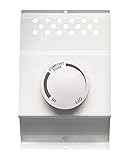
1. Cadet F Series Double Pole Built-In Baseboard Thermostat (Model: BTF2W, Part: 08734), 22 Amp, 120/208/240 Volt, White
Overview:
The Cadet BTF2W is a built-in mechanical thermostat engineered exclusively for Cadet F series electric baseboard heaters. Operating at 22 amps across 120/208/240 volts, this unit features a straightforward twist dial controlling temperatures from 45-80°F. Its integrated design mounts directly to either end of the heater, creating a clean, unified appearance while eliminating the need for remote wall mounting and additional wiring runs.
What Makes It Stand Out:
This thermostat’s primary distinction is its proprietary built-in design that integrates seamlessly with Cadet F series heaters. Unlike conventional wall-mounted alternatives, it attaches directly to the heater itself, reducing installation complexity and material costs significantly. The large, easy-grip dial provides intuitive operation for users of all ages, while the white finish matches Cadet heaters perfectly for a cohesive, unobtrusive look.
Value for Money:
Priced moderately for a brand-specific accessory, this thermostat delivers excellent value only if you own compatible Cadet F series heaters. For those users, it saves additional wiring expenses and professional installation time. However, its limited compatibility severely restricts its overall value proposition compared to universal thermostats that work across multiple brands.
Strengths and Weaknesses:
Strengths include seamless integration with Cadet F series, straightforward installation, simple mechanical operation, and clean aesthetics. Weaknesses are its exclusive compatibility, lack of advanced features, mechanical temperature variance of several degrees, and inability to control multiple heaters from one location.
Bottom Line:
This thermostat is ideal for Cadet F series owners prioritizing simplicity and integrated design, but unsuitable for those seeking versatility or modern features.
2. YeloDeer Dual Voltage (110V-265V) 4-Wire Manual Electric Baseboard Heater Thermostat for Home

Overview:
The YeloDeer dual-voltage thermostat is a versatile electronic manual control unit designed for broad compatibility across 110-265V electric heating systems. Handling up to 20 amps (2400W at 120V, 4800W at 240V), this non-programmable thermostat delivers precise temperature regulation from 40-80°F. It works with baseboard heaters, fan-forced units, and convectors, featuring clear indicator lights for power and heating status that provide immediate operational feedback.
What Makes It Stand Out:
This thermostat distinguishes itself through exceptional voltage flexibility and electronic accuracy that surpasses traditional mechanical models. The wide 110-265V operating range accommodates virtually any residential electrical system, while the electronic control mechanism maintains tighter temperature tolerances within 1-2°F. User-friendly indicator lights provide immediate visual feedback about system operation, eliminating guesswork about whether heating is active.
Value for Money:
Offering impressive versatility at a competitive price point, this thermostat represents strong value for homeowners with mixed-voltage applications or future system upgrades. The electronic precision alone justifies the modest premium over basic mechanical units, while the broad compatibility eliminates the need to purchase different models for different heaters.
Strengths and Weaknesses:
Strengths include wide voltage compatibility, superior temperature accuracy, clear operation indicators, straightforward installation, and broad heater compatibility. Weaknesses include the 20-amp maximum limit, which may be insufficient for larger heating setups, manual non-programmable operation, and limited brand recognition compared to established manufacturers.
Bottom Line:
An excellent choice for those seeking electronic precision and dual-voltage flexibility without the complexity of smart features.
3. Cadet Double Pole Mechanical Wall Thermostat for Electric Heaters (Model: T522-W), 22 Amp, White

Overview:
The Cadet T522-W is a traditional double-pole mechanical wall thermostat designed for universal replacement applications across electric heating systems. Rated for 22 amps across 120, 208, and 240-volt systems, this straightforward unit features a simple twist dial controlling temperatures with a typical mechanical range. Its double-pole configuration includes a positive off position, completely disconnecting power when not in use—an essential safety feature for many applications and electrical codes.
What Makes It Stand Out:
This thermostat’s key advantage is its universal replacement design with color-coded wires that simplify installation for DIYers and professionals alike. The positive off position distinguishes it from single-pole models, providing complete electrical isolation when heating isn’t required. Cadet’s reputation for reliable, no-frills heating components ensures dependable performance without unnecessary complexity.
Value for Money:
As a moderately priced mechanical thermostat from an established brand, it delivers solid value for those seeking simple, reliable operation. While lacking advanced features, its durable construction and universal compatibility make it a cost-effective solution for replacing failed units in rental properties, offices, or homes where basic functionality suffices and budgets are constrained.
Strengths and Weaknesses:
Strengths include double-pole positive off safety, universal compatibility, color-coded wiring, simple operation, and brand reliability. Weaknesses include mechanical temperature variance of several degrees, no advanced programming or smart features, and basic aesthetic design that won’t win style awards but remains functional.
Bottom Line:
A dependable, straightforward choice for anyone needing a reliable wall-mounted mechanical thermostat with essential safety features.
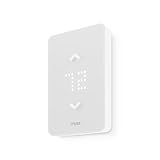
4. Mysa Smart Thermostat LITE - Line Voltage Electric Baseboard Heater Thermostat 120V/240V | DIY Install | HomeKit, Alexa, Google | Wi-Fi Programmable | App Control
Overview:
The Mysa Smart Thermostat LITE revolutionizes line voltage heating control by bringing Wi-Fi connectivity and intelligent scheduling to electric baseboard and fan-forced heaters. Compatible with 120V, 208V, and 240V systems, this sleek white thermostat replaces standard line voltage units with a simple 4-wire DIY installation. The device integrates seamlessly with major smart home platforms including HomeKit, Alexa, and Google Assistant for comprehensive voice and app control.
What Makes It Stand Out:
This thermostat’s standout feature is its 100% free app forever promise—no subscription fees or hidden costs for remote access, scheduling, or energy reports. The DIY-friendly 15-minute installation with video guidance eliminates electrician expenses. Its ability to create custom heating schedules for each day promises up to 26% heating cost reduction through optimized energy usage based on occupancy patterns.
Value for Money:
While commanding a premium price over manual thermostats, the Mysa LITE justifies its cost through eliminated subscription fees, potential energy savings, and professional-grade features. The DIY installation saves $150-300 in electrician fees, making it financially attractive within the first heating season for tech-savvy homeowners who can leverage its capabilities.
Strengths and Weaknesses:
Strengths include seamless smart home integration, no subscription fees, easy installation, energy usage reporting, and multi-voltage compatibility. Weaknesses include premium pricing, Wi-Fi dependency, potential complexity for non-technical users, and limited benefits for those with consistent schedules who may not utilize advanced features.
Bottom Line:
The ideal solution for homeowners seeking modern convenience, energy savings, and smart home integration without ongoing costs.
5. 240 V Only 4-Wire Manual Electric Baseboard Heater Thermostat for Home, YeloDeer

Overview:
The YeloDeer 240V-only thermostat combines electronic precision with contemporary design for dedicated high-voltage heating systems. This manual control unit handles up to 4800W at 240V, offering temperature adjustment from 40-80°F through a large, smoothly rotating knob. Its thin, flush-mount profile sits elegantly against walls while remaining compatible with electric baseboards, convectors, and fan-forced heaters, making it suitable for modern home aesthetics.
What Makes It Stand Out:
This thermostat distinguishes itself through its stylish, minimalist aesthetic that departs from industrial-looking competitors. The large control knob rotates continuously without restrictive 5°F increments, allowing fine-tuned temperature adjustments despite being a manual unit. Electronic accuracy provides tighter temperature control than mechanical alternatives, while indicator lights clearly display heating status and connection points for user convenience.
Value for Money:
Positioned as a mid-range option, this thermostat offers strong value for 240V-only installations where appearance matters. The electronic accuracy and contemporary design justify the modest premium over basic mechanical units, though the voltage limitation reduces versatility compared to dual-voltage alternatives that can adapt to different electrical systems.
Strengths and Weaknesses:
Strengths include attractive flush-mount design, precise electronic control, smooth continuous adjustment, clear indicator lights, and straightforward installation. Weaknesses include 240V-only limitation, lack of programming features, 20-amp maximum capacity, and lesser-known brand status that may concern some buyers.
Bottom Line:
Perfect for homeowners with 240V systems who prioritize aesthetics and precision in a simple, non-programmable thermostat.
6. meross Matter Smart Thermostat for Electric Baseboard Heater, Works with Alexa, HomeKit, Google, SmartThings, Programmable WiFi Thermostat for House, Energy Saving, App & Voice Control for Smart Home
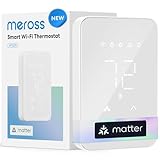
Overview: The meross Matter Smart Thermostat brings modern connectivity to high-voltage electric heating systems. Designed for 120-240V baseboard, convector, and fan-forced heaters, this thermostat bypasses the ecosystem wars with universal Matter support, enabling seamless integration across all major smart home platforms simultaneously.
What Makes It Stand Out: True Matter compatibility sets this apart from proprietary alternatives, allowing concurrent connection to Alexa, HomeKit, Google Home, and SmartThings. The open window detection automatically pauses heating when it senses sudden temperature drops, while real-time energy monitoring provides actionable consumption data. The visual 24/7 scheduling interface makes programming intuitive compared to app-only competitors.
Value for Money: Priced competitively in the $80-100 range, this thermostat delivers premium smart features at a mid-tier cost. Comparable universal thermostats often exceed $120, while brand-locked alternatives limit flexibility. The inclusion of energy monitoring and multi-platform support without subscription fees creates strong long-term value that justifies the investment over basic programmable models.
Strengths and Weaknesses: Strengths: Universal Matter support eliminates ecosystem lock-in; intelligent open window detection prevents energy waste; comprehensive energy monitoring with historical data; intuitive visual scheduling; reliable WiFi connectivity and voice control across all platforms.
Weaknesses: Requires neutral wire for installation, which may complicate older home setups; not compatible with low-voltage HVAC systems (clearly stated but limits versatility); initial WiFi setup can be finicky; app interface occasionally lags during updates.
Bottom Line: For homeowners with compatible electric heating seeking future-proof smart home integration, the meross Matter thermostat is an excellent choice. The universal compatibility and energy-saving features make it a worthwhile upgrade from manual or single-platform smart thermostats.
7. Cadet Single Pole Built-In Thermostat Kit for Cadet Electric Baseboard Heaters (Model: BTF1W, Part: 08732), 22 Amp, 240/208/120 Volt, White
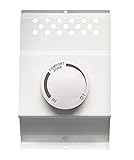
Overview: This purpose-built mechanical thermostat integrates directly into Cadet F-series electric baseboard heaters, offering straightforward temperature control without complex wiring or external mounting. Designed for single-pole applications, it provides basic manual operation with a clean, integrated aesthetic that matches Cadet’s heater design language.
What Makes It Stand Out: The seamless end-mount installation eliminates the need for additional wall boxes or wiring runs, reducing installation time to under 15 minutes. Its single-pole design with a low-position shutoff provides simple, reliable operation without digital complexity. The large twist dial offers tactile temperature adjustment from 45-80°F with clear reference markings.
Value for Money: At approximately $25-30, this thermostat delivers exceptional value for Cadet heater owners. Generic alternatives may cost slightly less but lack the guaranteed compatibility and clean integration. For those wanting basic control without batteries, WiFi, or programming, it’s significantly more cost-effective than smart alternatives while maintaining manufacturer warranty compliance.
Strengths and Weaknesses: Strengths: Tool-free installation to heater ends; perfect color and design match for Cadet heaters; no external wiring required; reliable mechanical operation without power dependencies; clear temperature range markings; UL-listed for safety.
Weaknesses: Single-pole only (no true off position); limited exclusively to Cadet F-series heaters; mechanical control lacks precision of digital thermostats; no programming or scheduling capabilities; dial calibration may drift over time.
Bottom Line: Ideal for Cadet F-series heater owners seeking simple, reliable control without frills. The integrated design and foolproof installation make it the best basic thermostat option, though those wanting scheduling or precision should look elsewhere.
8. 2 PCS 240 V Only 4-Wire Manual Electric Baseboard Heater Thermostat for Home, YeloDeer
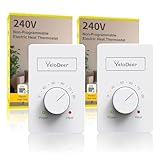
Overview: YeloDeer’s dual-pack electronic thermostats offer a cost-effective upgrade from mechanical controls for 240V electric heating systems. These non-programmable units provide digital precision in a manual package, controlling baseboard, convector, and fan-forced heaters up to 4800W with clean, contemporary styling.
What Makes It Stand Out: The electronic temperature sensing delivers significantly better accuracy than traditional bimetallic thermostats, maintaining tighter temperature bands. The flush-mount design with a large, smooth-rotating dial provides modern aesthetics while allowing stepless adjustment rather than fixed increments. The two-pack configuration offers immediate value for multi-room installations.
Value for Money: Retailing around $40-50 for two units, these thermostats provide electronic accuracy at mechanical prices. Individual electronic thermostats typically cost $30-40 each, making this pack a compelling value. For homeowners upgrading multiple rooms, the cost savings are substantial while delivering improved comfort and efficiency through better temperature control.
Strengths and Weaknesses: Strengths: Superior electronic accuracy over mechanical alternatives; attractive flush-mount design; smooth continuous adjustment without incremental limitations; clear indicator lights for operation status; comprehensive installation instructions; excellent two-pack value.
Weaknesses: 240V-only limits flexibility for 120V installations; printed dial numbers are reference-only (confusing initially); non-programmable design lacks modern scheduling; wire terminals could be more robust; limited brand recognition compared to established manufacturers.
Bottom Line: An excellent value proposition for those wanting better temperature control without smart features. The two-pack pricing and electronic precision make it ideal for whole-house manual thermostat upgrades, provided you have 240V systems.
9. Mysa Smart Thermostat for Electric Baseboard Heaters 240V | Remote Control with 100% Free APP | Easy Install | HomeKit, Alexa, Google Home | Wi-Fi Programmable | Temp. & Humidity Alerts

Overview: Mysa’s second-generation smart thermostat for high-voltage electric heating combines sleek Scandinavian-inspired design with robust smart home integration. Supporting 120-240V systems up to 3800W, this 40% smaller unit features adaptive display technology and comprehensive platform support for the design-conscious smart home enthusiast.
What Makes It Stand Out: The adaptive brightness display with proximity sensing automatically adjusts based on ambient light and user presence, creating an unobtrusive aesthetic. Its compact footprint addresses the common complaint about smart thermostats dominating wall space. The thermostat monitors both temperature and humidity, sending alerts for unusual conditions beyond basic heating control.
Value for Money: Priced at $130-150, Mysa commands a premium over competitors like meross. The justification lies in its superior industrial design, more refined user experience, and advanced display technology. For Apple HomeKit users particularly, the native integration quality rivals thermostats costing $200+. The free app with no subscription fees preserves long-term value.
Strengths and Weaknesses: Strengths: Compact, minimalist design; adaptive display technology reduces visual clutter; excellent HomeKit integration; humidity monitoring adds environmental awareness; intuitive app with quick scheduling; high build quality and premium feel.
Weaknesses: Requires neutral wire or second live wire (challenging for older two-wire systems); limited to 3800W at 240V (lower than some competitors); premium pricing may not suit budget-conscious buyers; initial firmware setup can require patience.
Bottom Line: The best choice for Apple-centric smart homes or design-focused users. The premium price is justified by thoughtful features and compact aesthetics, but ensure your wiring meets the four-wire requirement before purchasing.
10. Feekoon Built in Thermostat Compatible with Cadet, Electric Baseboard Heater Thermostat, 22 Amp, 240/208/120 Volt(1 Pack,Single Pole)

Overview: Feekoon offers an aftermarket alternative to official Cadet thermostats, providing single-pole manual control for Cadet F-series electric baseboard heaters. Constructed from metal rather than plastic, this thermostat emphasizes durability while maintaining the integrated mounting design that eliminates external wiring complications.
What Makes It Stand Out: The metal construction provides enhanced durability over OEM plastic components, promising longer service life in high-traffic areas. Its multi-voltage support (240/208/120V) offers installation flexibility across different heater configurations. As a direct-fit replacement, it maintains the same tool-free end-mount installation that makes Cadet’s design convenient.
Value for Money: At roughly $15-20, this represents significant savings over the official Cadet BTF1W thermostat. The metal build quality suggests better longevity, potentially offering better total cost of ownership. For landlords or budget-conscious homeowners maintaining multiple units, the price difference becomes substantial while delivering equivalent functionality.
Strengths and Weaknesses: Strengths: Durable metal construction; direct compatibility with Cadet F-series; supports multiple voltages; straightforward installation; cost-effective alternative to OEM parts; manual operation requires no batteries or WiFi.
Weaknesses: Aftermarket status may raise warranty concerns; single-pole design lacks true off position; limited to Cadet F-series only; no temperature calibration adjustment; basic mechanical control lacks precision; limited manufacturer support compared to Cadet.
Bottom Line: A solid budget alternative for Cadet heater owners comfortable with aftermarket parts. The metal construction and multi-voltage support add value, but verify compatibility with your specific heater model and consider warranty implications before purchasing.
Understanding Thermostat Baseboard Heaters
What Are Thermostat Baseboard Heaters?
Thermostat baseboard heaters are electric heating units designed to run along the base of walls, using either convection or hydronic technology to warm individual rooms. Unlike central heating systems, they operate independently, allowing you to create customized heating zones throughout your home. The integrated thermostat—whether built-in or wall-mounted—monitors room temperature and cycles the unit on and off to maintain your desired comfort level.
How Do They Work?
These heaters function by drawing cool air through the bottom vent, warming it over heated elements, and releasing it back into the room through the top. The thermostat continuously measures ambient temperature and activates the heating element when the room drops below your set point. Modern units utilize advanced sensors that prevent the temperature swings common in older models, maintaining consistent warmth within one degree of your target.
Benefits of Modern Units
Today’s thermostat baseboard heaters offer significant improvements over their predecessors. You’ll find whisper-quiet operation, sleeker profiles that blend with contemporary décor, and smart features that integrate with home automation systems. They provide heat without blowing dust or allergens around, making them ideal for allergy sufferers. Plus, their zone-control capability lets you heat occupied spaces while turning down temperatures in unused rooms—a strategy that can slash heating costs by 20-30%.
Key Features That Define Quality Units
Heating Element Technology
The heart of any baseboard heater lies in its heating element. Premium models feature nickel-chromium elements embedded in aluminum fins, which distribute heat rapidly and evenly across the unit’s length. This design minimizes hot spots and cold zones while maximizing energy transfer. Some advanced units use sealed thermal elements that maintain heat longer, reducing how frequently the element needs to reactivate and lowering your electricity consumption.
Thermostat Precision and Responsiveness
A thermostat’s accuracy directly impacts both comfort and operating costs. High-quality units employ electronic thermostats with digital displays that maintain temperature within half a degree of your setting. Look for units with adaptive learning technology that tracks how quickly your room loses heat and adjusts cycling patterns accordingly. This prevents the uncomfortable temperature swings that plague less sophisticated models.
Build Quality and Durability
The housing material determines both longevity and safety. Heavy-gauge steel cabinets with powder-coated finishes resist dents and scratches while preventing rust. Quality units feature dent-resistant front panels and sturdy mounting brackets that keep the heater flush against the wall. The internal components should be securely fastened to prevent rattling during operation, with wiring connections housed in protected junction boxes.
Safety Certifications and Features
Reputable manufacturers submit their units for rigorous third-party testing. UL (Underwriters Laboratories) certification is non-negotiable—it confirms the heater meets stringent electrical safety standards. ETL certification provides similar assurance. Beyond certifications, premium units include thermal cut-off switches that shut down the unit if internal temperatures exceed safe limits, protecting against fire hazards.
Types of Thermostat Baseboard Heaters
Electric Hydronic Baseboard Heaters
These units heat a sealed fluid—typically oil or a glycol solution—that circulates through the heater. The fluid retains heat exceptionally well, allowing the unit to continue warming your space even after the heating element shuts off. This results in more consistent temperatures and fewer on/off cycles. While they cost more upfront and take longer to initially heat a room, their operating efficiency often pays for itself within two to three heating seasons.
Convection Baseboard Heaters
Convection models heat air directly as it passes over electric elements. They’re less expensive, heat up faster, and work well for spaces you use intermittently. However, they cycle more frequently since they don’t retain heat, potentially creating slight temperature fluctuations. Their simplicity makes them reliable and easy to maintain, with fewer components that could fail over time.
Portable vs. Permanent Installation
Portable units plug into standard outlets and include tip-over switches for safety. They’re ideal for renters or for supplementing heat in specific areas temporarily. Permanent hardwired units connect directly to your electrical panel, offering higher wattage options and cleaner installation without exposed cords. Your choice depends on whether you need flexibility or maximum heating power.
Sizing and Capacity Considerations
Calculating Room Size Requirements
Proper sizing prevents energy waste and ensures adequate heating. Measure your room’s square footage and multiply by 10 watts for rooms with standard 8-foot ceilings and average insulation. A 150-square-foot bedroom requires roughly 1,500 watts. For poorly insulated spaces or rooms with large windows, increase the wattage by 25% to compensate for heat loss.
Wattage and BTU Basics
Baseboard heaters list capacity in watts, but understanding BTU (British Thermal Unit) equivalents helps compare heating power. A standard formula: watts × 3.41 = BTUs. A 2,000-watt unit produces approximately 6,820 BTUs per hour. This conversion matters when determining if a heater can handle your space, especially in colder climates where higher BTU output becomes crucial.
Factoring in Ceiling Height and Insulation
Rooms with ceilings over 8 feet require additional heating capacity—add 25% more wattage for 9-foot ceilings and 50% for vaulted spaces. Insulation quality dramatically impacts requirements. Homes with R-30 attic insulation and sealed windows may need 30% less heating power than drafty older houses. Consider having an energy audit to identify heat leaks before sizing your heaters.
Multi-Room Zoning Strategies
Strategic zoning maximizes both comfort and savings. Install individual heaters in bedrooms, allowing family members to set personal preferences. Use higher-capacity units in open living areas while keeping hallway heaters at minimum settings. For bathrooms, consider smaller units with timers that warm the space before morning routines. This approach prevents heating unused areas while ensuring each room reaches optimal comfort when occupied.
Thermostat Options and Controls
Built-in vs. Wall-Mounted Thermostats
Built-in thermostats offer clean installation with no additional wiring, but their position near the floor can lead to slightly inaccurate readings since heat rises. Wall-mounted thermostats placed at eye level provide more precise temperature sensing and easier access for adjustments. They cost more to install but deliver superior comfort control, especially in larger rooms where floor-level temperature differs significantly from living height.
Programmable and Smart Thermostat Integration
Programmable thermostats automatically lower temperatures during sleep hours or when you’re away, potentially cutting heating costs by 10-15%. Smart thermostats connect to Wi-Fi, allowing remote control via smartphone apps. They learn your schedule, monitor weather forecasts to pre-heat before cold snaps, and provide detailed energy usage reports. Integration with voice assistants adds convenience for adjusting settings hands-free.
Manual Thermostats: When Simplicity Wins
Sometimes simpler is better. Manual thermostats with clear dial controls work reliably for decades without software updates or connectivity issues. They’re ideal for guest rooms, rental properties, or spaces where you want set-it-and-forget-it simplicity. Without digital displays or programming options, they cost less and eliminate the learning curve that frustrates some users.
Wireless and Remote Control Capabilities
Wireless thermostats eliminate the need to run wires through walls, making them perfect for retrofit installations. Some advanced systems use radio frequency or Bluetooth to communicate between heaters and controls. Remote controls let you adjust settings from your couch or bed—particularly valuable for elderly users or those with mobility limitations. Look for units with clear display feedback confirming your adjustments.
Energy Efficiency Factors
Understanding Energy Ratings
While baseboard heaters don’t carry ENERGY STAR ratings like appliances, you can assess efficiency through other metrics. Check the unit’s thermal output versus power input ratio—higher numbers indicate less energy waste. Some manufacturers provide estimated annual operating costs based on average usage patterns. Compare these figures across similar wattage units to identify more efficient models.
Eco Modes and Energy-Saving Features
Modern units include eco modes that slightly reduce output while maintaining comfort, similar to how cruise control saves gas in cars. Some feature open-window detection that automatically shuts off if a sudden temperature drop suggests a window is open. Others offer adaptive start, learning how long your room takes to heat and activating accordingly to reach your desired temperature precisely when scheduled.
Impact on Your Electric Bill
Operating costs depend on your electricity rate, heater wattage, and daily usage hours. A 1,500-watt heater running 8 hours daily at $0.12 per kWh costs about $1.44 per day. Multiply this across multiple units and months, and costs add up quickly. However, zone heating typically reduces whole-home heating expenses by allowing you to keep central systems at lower settings while warming only occupied spaces.
Comparing Efficiency Across Types
Hydronic units operate more efficiently over time despite higher initial costs. Their heat retention means they cycle 30-40% less frequently than convection models in continuous-use spaces. For rooms heated less than 4 hours daily, convection heaters often prove more economical due to lower purchase prices. Consider usage patterns when evaluating long-term efficiency—there’s no one-size-fits-all answer.
Installation Essentials
DIY Installation: What You Need to Know
Hardwired baseboard heater installation requires intermediate electrical skills. You’ll need to run dedicated 240-volt circuits from your breaker panel, install proper gauge wire, and mount the unit securely. Most units include templates for cutting wall openings. Always turn off power at the main breaker before starting, and use a voltage tester to confirm wires are dead. Local codes may require permits even for DIY work.
Professional Installation: When to Call an Expert
Hire a licensed electrician if your panel lacks spare breaker slots, you need new circuits run through finished walls, or you’re uncomfortable working with 240-volt wiring. Professionals ensure proper load calculations, code compliance, and safe connections. They can also integrate heaters with existing smart home systems. Expect to pay $200-$500 per unit for installation, depending on complexity and your location.
Electrical Requirements and Circuit Capacity
Most permanent baseboard heaters require 240-volt circuits, though smaller portable units use standard 120-volt outlets. A 20-amp circuit can safely handle up to 3,840 watts of heating load. Never exceed 80% of a breaker’s rated capacity. Calculate total wattage before adding multiple heaters to a single circuit, and consider upgrading your electrical panel if you’re installing several units throughout your home.
Placement and Positioning for Optimal Performance
Install heaters on exterior walls beneath windows when possible. This creates a thermal barrier that counters cold air infiltration. Maintain at least 12 inches of clearance above the unit and 6 inches from furniture to ensure proper airflow. Avoid installing behind doors or in areas with heavy curtains that could block heat distribution. For bathrooms, position heaters away from direct water spray and ensure they’re connected to GFCI-protected circuits.
Safety Features and Standards
Overheat Protection Mechanisms
Quality units include multiple safety redundancies. Thermal limit switches monitor internal temperatures and cut power if elements exceed safe thresholds. Some feature redundant sensors—if one fails, a backup ensures protection. Automatic reset functions allow the unit to resume operation once temperatures normalize, while manual reset models require user intervention, providing an extra safety layer for peace of mind.
Tip-Over Switches for Portable Units
Portable baseboard heaters must include tip-over switches that instantly cut power if the unit tilts or falls. Test this feature periodically by gently lifting one side while the unit is on—it should shut off immediately. The switch should reset automatically when the heater is placed upright. This simple mechanism prevents fires and burns, especially important in homes with children or pets.
Child-Safe Designs
Look for units with cool-touch housing on the front panel, though the top will still be hot during operation. Locking thermostat controls prevent curious children from adjusting settings. Some models include tamper-resistant covers over power switches. Always teach children that heaters aren’t toys, and consider physical barriers like decorative screens that block access while allowing airflow.
UL Listing and Certification Importance
UL certification means the unit underwent testing for electrical safety, fire resistance, and structural integrity. The UL mark should be permanently attached, not just printed on packaging. ETL certification from Intertek offers equivalent assurance. Avoid any heater lacking these certifications, as they’ve likely skipped critical safety testing. Check the certification number online to verify it’s current and not counterfeit.
Maintenance and Longevity
Routine Cleaning Procedures
Dust buildup reduces efficiency and creates burning odors. Unplug portable units or turn off circuit breakers for hardwired models before cleaning. Use a vacuum with a brush attachment to remove dust from fins and vents monthly during heating season. Wipe the exterior with a damp cloth—never use harsh chemicals that could damage the finish. Clean heaters at the start of each season for optimal performance.
Seasonal Maintenance Checklist
Before heating season, inspect power cords for damage and test thermostats for accuracy using a separate thermometer. Listen for unusual buzzing or clicking sounds that could indicate loose components. Check that wall-mounted thermostats are level and securely attached. At season’s end, clean thoroughly and consider covering units to prevent dust accumulation during summer months.
Troubleshooting Common Issues
If your heater won’t turn on, check the circuit breaker and test the thermostat by turning it above room temperature. A heater that runs constantly may be undersized for the space or have a stuck thermostat. Unusual noises often mean loose mounting screws or debris inside the unit. If the breaker trips repeatedly, the heater may have a short circuit requiring professional repair. Never bypass safety features to force operation.
Expected Lifespan and Warranty Considerations
Quality baseboard heaters typically last 15-20 years with proper maintenance. The heating element usually fails first, followed by thermostat components. Look for units with 5-10 year warranties on the element and at least 1 year on the thermostat. Read warranty terms carefully—some require professional installation to remain valid. Keep purchase receipts and register your product online to ensure coverage.
Cost Analysis and Budgeting
Initial Purchase Price Ranges
Basic convection heaters start around $50-$100 for smaller units, while premium hydronic models range from $150-$400 depending on length and features. Smart thermostats add $50-$150 to the total cost. Wall-mounted thermostats cost $30-$80 plus installation. Balance upfront investment against operating costs—a more efficient $300 unit may save $50-$100 annually compared to a basic model.
Installation Cost Factors
DIY installation costs only materials—wire, breakers, and conduit totaling $50-$100 per unit. Professional installation runs $200-$500 per heater, influenced by your home’s construction, panel location, and local labor rates. Retrofitting heaters into finished walls costs more than new construction installations. Get multiple quotes and ask electricians about package deals for multiple units.
Operating Cost Calculations
Calculate annual operating costs by multiplying wattage × daily hours × electricity rate × heating days. A 1,500-watt heater running 6 hours daily for 120 days at $0.12/kWh costs about $130 per season. Smart usage patterns—lowering temperatures 8 hours daily—can reduce this by 30%. Track actual usage with a plug-in power meter for portable units to refine your estimates.
Long-Term Value Considerations
Evaluate total cost of ownership over the heater’s lifespan. A $300 hydronic unit lasting 20 years with lower operating costs may be cheaper overall than a $100 convection model that uses more electricity and fails after 10 years. Factor in warranty coverage, energy savings, and potential home resale value. Quality heaters can be a selling point for energy-conscious buyers.
Making Your Final Decision
Assessing Your Home’s Specific Needs
Walk through your home room by room, noting square footage, insulation quality, and usage patterns. A drafty home office used 8 hours daily needs different heating than a well-insulated guest room used occasionally. Consider your climate zone—northern regions require higher wattage per square foot. List priorities: Is silent operation crucial? Do you need smartphone control? This assessment narrows your options significantly.
Prioritizing Features vs. Budget
Create a must-have versus nice-to-have list. Safety certifications and adequate heating capacity are non-negotiable. Beyond that, decide if smart features justify their cost for your lifestyle. A family with varying schedules benefits more from programmable thermostats than a retiree with consistent routines. Allocate your budget to features you’ll actually use rather than impressive specifications that don’t match your needs.
Reading Reviews Without Getting Overwhelmed
Focus on reviews discussing long-term reliability and actual energy usage rather than initial impressions. Look for patterns—if multiple reviews mention thermostat inaccuracy or noisy operation after six months, consider it a red flag. Pay attention to reviews from your climate zone, as heating performance varies with outdoor temperatures. Ignore extreme reviews (both glowing and scathing) and concentrate on balanced, detailed feedback.
Where to Shop for the Best Selection
Home improvement stores offer hands-on inspection and immediate availability but limited high-end options. Electrical supply houses stock professional-grade units with expert staff to answer technical questions. Online retailers provide the widest selection and competitive pricing but require careful research. Consider buying from retailers with generous return policies, allowing you to test a unit’s performance before committing to multiple heaters.
Frequently Asked Questions
How do I know what size baseboard heater I need for my room?
Measure your room’s length and width to get square footage, then multiply by 10 watts for standard 8-foot ceilings with average insulation. For example, a 12×15 foot room (180 square feet) needs roughly 1,800 watts. Add 25% more capacity for poorly insulated spaces, large windows, or ceilings over 8 feet. It’s better to have slightly more capacity than you need, as the thermostat will cycle the unit appropriately.
Can I install a baseboard heater myself or do I need an electrician?
You can install portable plug-in units yourself, but hardwired 240-volt heaters require electrical knowledge and permit compliance. If you’re comfortable running new circuits from your breaker panel, understanding wire gauges, and following local codes, DIY is possible. However, most homeowners benefit from hiring a licensed electrician who ensures safe, code-compliant installation and can handle any electrical panel upgrades needed.
Are thermostat baseboard heaters expensive to run?
Operating costs depend on your electricity rate, heater wattage, and usage patterns. A 1,500-watt heater running 8 hours daily costs roughly $1.44 per day at average electricity rates. While this adds up over a heating season, zone heating with baseboard units typically reduces overall heating expenses compared to running a central system at higher temperatures throughout your entire home.
What’s the difference between hydronic and convection baseboard heaters?
Hydronic units heat a sealed fluid that retains warmth and continues heating after the element turns off, providing more consistent temperatures with fewer cycles. Convection heaters warm air directly, heat up faster, and cost less initially but cycle more frequently. Choose hydronic for continuously used spaces and convection for occasionally heated rooms or tighter budgets.
How long do baseboard heaters typically last?
Quality baseboard heaters last 15-20 years with proper maintenance. The heating element usually fails first, while the housing and controls often last longer. Regular cleaning, avoiding physical damage, and not obstructing airflow extend lifespan. Units with longer warranties (5-10 years on elements) typically indicate manufacturer confidence in durability.
Can I use a smart thermostat with my baseboard heater?
Yes, many modern baseboard heaters are compatible with smart thermostats, though you may need to purchase the thermostat separately. Ensure the thermostat is specifically rated for 240-volt high-voltage applications, as standard smart thermostats for central HVAC won’t work. Some heaters have built-in Wi-Fi capabilities, while others require a wall-mounted smart thermostat wired to the unit.
Where is the best place to install a baseboard heater?
Install baseboard heaters on exterior walls beneath windows when possible. This placement creates a thermal barrier that counters cold air infiltration and drafts. Ensure at least 12 inches of clearance above the unit and 6 inches from furniture. Avoid locations behind doors, near heavy curtains, or in areas where water might splash. Proper placement maximizes both efficiency and safety.
Are baseboard heaters safe to leave on overnight?
Modern baseboard heaters with UL certification and overheat protection are designed for safe continuous operation. However, you should never leave portable units unattended or block airflow with clothing or furniture. For overnight use, ensure the heater is properly installed, away from flammable materials, and equipped with a functioning thermostat that cycles the unit appropriately. Hardwired units are safer for extended unattended operation than portable models.
Do baseboard heaters dry out the air like some central heating systems?
Baseboard heaters don’t actively remove moisture from air like forced-air systems can, since they don’t blow air across heating elements or through ductwork. However, any heating system can lower relative humidity as warm air holds more moisture. Using baseboard heaters in individual rooms rather than overheating your entire house can actually preserve more comfortable humidity levels where you need it most.
What maintenance do baseboard heaters require?
Clean your heaters monthly during use with a vacuum brush attachment to remove dust from fins and vents. Test thermostats for accuracy seasonally and inspect power cords or connections for damage. Listen for unusual noises that could indicate loose components. At season’s end, clean thoroughly and consider covering units to prevent summer dust buildup. This minimal maintenance ensures efficient, safe operation for years.
See Also
- 10 Essential Tips for Installing Thermostat Controlled Baseboard Heaters Like a Pro
- The 10 Most Revolutionary Thermostat Baseboard Heaters of 2026
- The 10 Ultimate Best Thermostat Baseboard Heaters for Smart Temperature Control in 2026
- The 10 Best Hydronic Baseboard Heaters for Homeowners in 2026
- 10 Best Line Voltage Thermostat Covers for Baseboard Heaters This Year