Table of Contents
Keeping your sprawling home perfectly comfortable year-round shouldn’t feel like solving a complex puzzle. Traditional central systems often struggle with uneven temperatures, forcing you to crank the thermostat just to cool the farthest bedroom while overheating the living room. For large properties with multiple distinct areas, hallways, or additions, the frustration of hot and cold spots is all too real, leading to sky-high energy bills and constant thermostat battles. This is where a smarter approach to climate control becomes essential, moving beyond one-size-fits-all solutions.
Imagine having precise, independent control over the temperature in every major room or zone of your home – the master suite cool for sleeping, the home office warm for productivity, and the sun-drenched family room just right, all operating simultaneously and efficiently. Multi-zone mini-split air conditioning systems make this vision a practical reality, offering the flexibility and targeted comfort large homes desperately need. They eliminate the inefficiency of cooling unused spaces and provide a level of customization that ducted systems simply cannot match, transforming how you experience comfort in your expansive living environment.
Top 10 Multi Zone Mini Split Air Conditioners
Detailed Product Reviews
1. 4 Zone 35000 BTU Mini Split Air Conditioner and Heat Pump, 19 SEER2 WiFi Enabled Ductless AC/Heating System with 4 Indoor Units (9K+9K+12K+12K) w/Multi Zone AC Pre-Charged Condenser, 208-230V
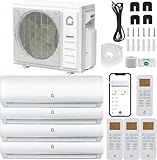
Overview: This comprehensive ductless mini-split system delivers whole-home climate control across four distinct zones using a single 35,000 BTU outdoor condenser paired with four indoor units (9K+9K+12K+12K). Certified for all-season reliability, it handles cooling, heating, dehumidification, and fan functions with independent room control.
What Makes It Stand Out: Its 4-zone flexibility with mixed BTU capacity accommodates varied room sizes efficiently. The 19 SEER2 rating and inverter technology promise up to 30% energy savings, while extreme-weather operation (-13°F to 131°F) and 50-foot airflow ensure resilience. Smart integration via app, WiFi, and Alexa, plus auto-defrost and self-cleaning, enhance convenience.
Value for Money: Though premium-priced, the pre-charged condenser and inclusion of four remotes justify costs for multi-room coverage. It outperforms single-zone systems in scalability, but note: line sets and power cables require separate purchase, adding ~$300–$500 to installation. Competitors with similar zones often lack its extreme-temperature range.
Strengths and Weaknesses: Pros: Exceptional zone customization; robust all-weather performance; significant energy savings; comprehensive smart controls. Cons: Higher upfront cost; professional installation mandatory (adds expense); line sets not included.
Bottom Line: Ideal for larger homes needing tailored climate zones, this system delivers premium efficiency and smart features. Despite installation complexities, its versatility and energy savings make it a worthwhile investment for whole-home comfort.
2. ROVSUN 28000 BTU Tri Zone WIFI Mini Split AC/Heating System, 20 SEER2 3 Zone (9K/9K/9K) BTU Ductless Split Air Conditioner with Pre-Charged Condenser, Heat Pump & 25Ft Line Set, 208-230V

Overview: This tri-zone mini-split offers balanced climate control for three spaces via a 28,000 BTU condenser and three identical 9,000 BTU indoor units. Featuring heating down to -4°F, it serves as a year-round solution for residential or light commercial use with dehumidification, turbo cooling, and quiet operation.
What Makes It Stand Out: The included 25-foot line sets simplify installation versus competitors requiring separate purchases. Its 20 SEER2 rating and inverter tech enable 30% energy savings, while ETL/AHRI certification guarantees performance. Unique iFEEL mode adjusts temperatures based on remote sensor placement, optimizing comfort.
Value for Money: Competitive pricing for a tri-zone kit with pre-installed line sets—a rarity at this tier. The 20 SEER2 efficiency offsets operational costs, though professional installation remains essential (~$1,500+). Better value than pricier brands, but lacks the extreme cold-weather capability of higher-end models.
Strengths and Weaknesses: Pros: Cost-effective with included line sets; strong energy efficiency; versatile room compatibility; Alexa/Google Assistant support. Cons: Limited heating range (-4°F); requires extra power cord; multi-box shipping risks delays.
Bottom Line: A smart choice for cooling three similarly sized rooms, this system excels in affordability and ease of setup. While not suited for harsh winters, its included accessories and solid SEER rating offer excellent value for moderate climates.
3. GarveeTech 18K Dual 2 Zone Mini Split Air Conditioner,24 SEER2 12000 BTU+ 12000 BTU Wifi Enabled Multi Zone Ductless, 208-230V Cools Up to 1500 Sq.Ft Multi Zone Ductless Pre-Charged Heat Pump

Overview: Engineered for dual-room precision, this 18,000 BTU system features two identical 12,000 BTU indoor units covering up to 1,500 sq. ft. Its 24 SEER2 rating—the highest among listed products—prioritizes efficiency, while R454B refrigerant ensures eco-friendly operation in homes or offices.
What Makes It Stand Out: Unmatched 24 SEER2 efficiency promises up to 70% energy savings, surpassing most competitors. The ultra-quiet 29dB mute mode enables sleep-friendly operation, and R454B refrigerant offers lower global warming potential. Smart app control and 24-hour scheduling add modern convenience without complexity.
Value for Money: Premium efficiency justifies a higher price tag, reducing long-term electricity costs significantly. Though installation is costly, the energy savings offset expenses faster than 20–22 SEER models. Ideal for eco-conscious buyers prioritizing operational savings over upfront costs.
Strengths and Weaknesses: Pros: Industry-leading energy efficiency; whisper-quiet operation; eco-friendly refrigerant; straightforward dual-zone management. Cons: Limited to two zones; no extreme cold-weather specs (-13°F minimum); professional install required.
Bottom Line: For buyers seeking maximum efficiency in two rooms, this is a top-tier pick. Its exceptional SEER2 rating and low noise deliver superior comfort and savings, though its dual-zone limit may deter larger-home owners.
4. Senville 36000 BTU Quad Zone Mini Split Air Conditioner Heat Pump, 3 Ton, 4 Zone, Works with Alexa, White

Overview: This quad-zone system uses a single 36,000 BTU condenser to power four 9,000 BTU indoor units, enabling individual climate control across four rooms. Certified for extreme cold (-22°F), it’s built for year-round reliability in diverse residential or commercial settings.
What Makes It Stand Out: Arctic Heat Pump technology allows operation in brutal cold (-22°F), a standout for northern climates. AHRI certification validates performance, while seamless Alexa integration enables voice-controlled scheduling. The sleek white design blends into modern spaces better than utilitarian alternatives.
Value for Money: Priced competitively for a quad-zone kit, though the included 16ft line set may require extensions for larger homes. Its cold-weather prowess justifies costs where alternatives fail, but energy efficiency (unspecified SEER) lags behind newer 20+ SEER models.
Strengths and Weaknesses: Pros: Exceptional cold-weather capability; reliable AHRI certification; Alexa compatibility; versatile commercial/residential use. Cons: Moderate energy efficiency; line set length may be insufficient; no app control mentioned.
Bottom Line: Choose this for reliability in freezing temperatures across four zones. While not the most efficient, its rugged performance in extreme cold makes it indispensable for harsh climates, despite minor smart-feature gaps.
5. COSTWAY 18k Dual 2 Zone Mini Split Air Conditioner, 22 SEER2 9000 BTU+ 12000 BTU, 208-230V, Wifi Enabled Multi Zones Mini Split AC Heat Pump Full Set, Ductless Energy Star

Overview: This asymmetric dual-zone system combines a 9,000 BTU and 12,000 BTU indoor unit (18K total) for flexible room sizing, covering spaces from bedrooms to living areas. Energy Star-certified with R32 refrigerant, it balances eco-friendliness and performance across varied climates (-13°F to 125°F).
What Makes It Stand Out: The mismatched BTU configuration (9K+12K) optimizes cooling for uneven room sizes—a rarity in dual-zone kits. Its 22 SEER2/10 HSPF2 ratings and R32 refrigerant (675 GWP) offer strong efficiency with lower environmental impact. Six operational modes and health-focused features enhance usability.
Value for Money: Excellent value for targeted room coverage, with R32 refrigerant future-proofing against regulations. Energy savings offset the modest price premium over basic models, though professional installation remains a significant added cost.
Strengths and Weaknesses: Pros: Flexible asymmetric zoning; high efficiency with eco-friendly refrigerant; comprehensive modes; quiet sleep function. Cons: Chassis heating limits cold operation (-13°F); no extreme cold specs; filter maintenance required.
Bottom Line: A pragmatic choice for homes with differently sized rooms, this system’s asymmetric design and eco-credentials deliver smart, adaptable comfort. Prioritize it over uniform dual-zone models if room sizes vary significantly.
6. Smart 4 Zone Mini Split AC/Heat Pump System, 35000 BTU Ductless, Wifi App/Alexa Control, 19 SEER2, 208–230v, 9000+12000+12000+12000 BTU, Pre-Charged Outdoor Condenser, Remote Included
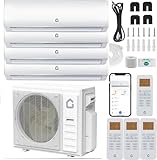
Overview: This comprehensive 4-zone ductless system delivers targeted climate control across four distinct spaces via one 35,000 BTU outdoor condenser and mixed-capacity indoor units (9k + three 12k BTU heads). Pre-charged for simplified setup and compatible with Wi-Fi/Alexa, it handles extreme temperatures from -13°F to 131°F for year-round comfort in multi-room environments.
What Makes It Stand Out: The flexible 9k+12k×3 BTU configuration uniquely accommodates varied room sizes (e.g., smaller bedrooms vs. larger living areas), while iFEEL mode auto-adjusts based on remote sensor placement. Extreme cold-weather resilience (-13°F heating) and anti-frost tech outperform many competitors, and AHRI/ETL certification validates real-world performance.
Value for Money: Though professional installation is mandatory (copper lines excluded), the pre-charged design reduces labor costs. At 19 SEER2, it’s slightly less efficient than newer 23–24 SEER2 models but justifies pricing through four independent zones and robust all-climate reliability, avoiding the need for multiple single-zone units.
Strengths and Weaknesses:
Strengths: Customizable per-room control; exceptional cold-weather operation; quiet swing mode; comprehensive remote/app/voice control; durable all-weather build.
Weaknesses: Copper lines sold separately; complex installation requires HVAC expertise; 19 SEER2 lags behind top-tier efficiency.
Bottom Line: Ideal for larger homes needing tailored comfort across four uniquely sized rooms, this system excels in harsh climates. While installation costs add up, its flexibility and reliability make it a worthwhile investment for multi-zone efficiency.
7. COSTWAY 36k Dual 2 Zone Mini Split Air Conditioner, 23 SEER2 18000 BTU+ 18000 BTU, 208-230V, Wifi Enabled Multi Zones Mini Split AC Heat Pump Full Set, Ductless Energy Star

Overview: This dual-zone Energy Star-certified mini-split offers balanced 18k+18k BTU cooling/heating for two identical rooms, featuring 23 SEER2 efficiency and R32 refrigerant. With Wi-Fi control, wide climate tolerance (-13°F to 125°F), and AHRI/ETL certification, it targets eco-conscious buyers seeking smart, energy-efficient zoned comfort.
What Makes It Stand Out: Its R32 refrigerant (GWP 675) significantly reduces environmental impact versus older R410A models, while the 23 SEER2 rating promises top-tier efficiency for lower operational costs. The six operational modes (including health-focused settings) and chassis heating for cold-weather reliability enhance versatility.
Value for Money: Competitive pricing for a 23 SEER2 unit, though professional installation is non-negotiable. The higher efficiency offsets long-term energy bills, but the symmetrical 18k+18k setup lacks flexibility for unevenly sized rooms, potentially limiting value for some layouts.
Strengths and Weaknesses:
Strengths: Excellent energy efficiency; eco-friendly refrigerant; robust cold-weather operation; intuitive app control; quiet sleep mode.
Weaknesses: Only suits identically sized zones; no mixed-BTU options; filter access could be simpler; no built-in leak detection.
Bottom Line: A strong eco-friendly choice for cooling two similarly sized rooms, delivering quiet, efficient performance. Best for users prioritizing sustainability and lower running costs over zone customization.
8. GarveeHome 18K Dual 2 Zone Mini Split Air Conditioner,24 SEER2 12000 BTU+ 12000 BTU Wifi Enabled Multi Zone Ductless, 208-230V Cools Up to 1500 Sq.Ft Multi Zone Ductless Pre-Charged Heat Pump
Overview: This dual-zone system provides 12k+12k BTU cooling/heating for spaces up to 1,500 sq. ft., featuring a class-leading 24 SEER2 rating, Wi-Fi/app control, and ultra-quiet operation (as low as 29dB). Designed for apartments or small homes, it includes pre-charged lines and focuses on silent, efficient climate management.
What Makes It Stand Out: The 24 SEER2 efficiency is among the highest in its class, maximizing energy savings. Mute mode (29dB) ensures near-silent operation for bedrooms, while the streamlined app enables precise scheduling and remote adjustments—ideal for noise-sensitive environments.
Value for Money: The premium 24 SEER2 efficiency justifies a higher upfront cost through substantial electricity bill reductions. Pre-charged lines simplify installation, but the symmetrical 12k+12k design limits adaptability for rooms of differing sizes, potentially reducing value for uneven layouts.
Strengths and Weaknesses:
Strengths: Industry-leading 24 SEER2 efficiency; whisper-quiet mute mode; responsive app control; easy-filter maintenance; compact indoor units.
Weaknesses: Only suitable for equally sized zones; no advanced diagnostics; limited heating in subzero temps; app connectivity occasionally unstable.
Bottom Line: An exceptional pick for near-silent, ultra-efficient cooling in two similarly sized rooms. Prioritize this if noise reduction and energy savings outweigh the need for zone flexibility.
9. TURBRO 18,000 BTU Dual Zones Mini Split AC/Heating System, R454B, Ductless Multi Zones Inverter Mini Split Air Conditioner with Heat Pump, 22 SEER2, WiFi Enabled, Greenland (9K+9K), 230V

Overview: This dual-zone mini-split (9k+9k BTU) uses eco-friendly R454B refrigerant and boasts 22 SEER2 efficiency, rapid cooling/heating (30/60 seconds), and Wi-Fi control. Engineered for extreme climates (-13°F to 131°F), it targets users seeking quick temperature adjustments and federal tax incentives.
What Makes It Stand Out: R454B refrigerant offers a lower global warming potential than R32, aligning with future regulations. The claimed $98.93 cooling-season energy cost (est.) and tax credit eligibility provide tangible savings, while the large impeller fan ensures wide airflow distribution even in larger rooms.
Value for Money: Competitive pricing for R454B adoption, with tax credits improving ROI. However, the 22 SEER2 lags behind 24 SEER2 rivals, and the 9k+9k setup suits only very small, identical zones. Installation costs remain high due to professional requirements.
Strengths and Weaknesses:
Strengths: Environmentally progressive R454B refrigerant; rapid cooldown/heating; tax credit eligibility; strong airflow reach; dynamic fan balance reduces noise.
Weaknesses: Lower SEER2 than top models; limited capacity for larger rooms; delivery split across multiple boxes; no auto-defrost specifics.
Bottom Line: Choose this for eco-friendly, rapid-response cooling in two small rooms, especially if tax credits offset costs. Not ideal for larger or unevenly sized spaces.
10. Garvee 4 Zone Mini Split, 35000 BTU ODU Mini Split Ac/Heating System, 208-230v Wifi Enabled Energy Efficient Multi Zone Mini Split Air Conditioner & Heater, 16Ft Copper Line & Full Installation Kit

Overview: A complete 4-zone solution with a 35,000 BTU outdoor unit and four 9k BTU indoor heads (1600 sq. ft. total), featuring 19 SEER2 efficiency, included 16.4ft copper lines, and advanced safety tech. It delivers independent room control from -13°F to 127°F with Wi-Fi/Alexa integration and pre-charged R-454B refrigerant.
What Makes It Stand Out: The included full installation kit (copper lines, mounts, etc.) eliminates hidden costs—a rarity among competitors. Fire-proof wiring, refrigerant leak detection, and a built-in condensate pump prioritize safety, while 82°F energy-saving heating mode optimizes off-peak usage.
Value for Money: Highest upfront value due to the bundled installation kit, saving $200+ versus systems requiring separate line purchases. Though 19 SEER2 trails newer models, energy-saving modes and tax credit eligibility enhance long-term savings for multi-room setups.
Strengths and Weaknesses:
Strengths: Comprehensive installation kit included; exceptional safety features; quiet ≤38dB operation; flexible zone scheduling; reliable subzero heating.
Weaknesses: Lower 19 SEER2 efficiency; 9k×4 BTU limits room size flexibility; app interface less polished than rivals; outdoor unit bulkier.
Bottom Line: The smartest buy for 4-zone setups needing hassle-free installation and top-tier safety. Sacrifices peak efficiency for unmatched convenience and peace of mind—perfect for family homes.
Understanding Multi-Zone Mini-Split Systems
What Exactly is a Multi-Zone Mini-Split?
At its core, a multi-zone mini-split system consists of one outdoor condenser unit connected to multiple indoor air-handling units, typically mounted high on walls or ceilings. Unlike traditional central air that relies on a network of ducts, each indoor unit operates independently, serving a specific room or designated “zone.” This ductless design is fundamental to their efficiency and zoning capability, allowing you to condition only the spaces you’re using at any given time.
How Multi-Zone Differs from Single-Zone and Central Systems
While a single-zone mini-split connects one outdoor unit to just one indoor unit (ideal for an addition or small home), a multi-zone system links one outdoor unit to several indoor units – commonly 2 to 8, though larger configurations exist. This is distinct from central air conditioning, which uses a single thermostat to control the entire house through a duct system. Central systems inherently lose energy through duct leaks (up to 30% in some homes!) and cannot provide room-by-room temperature control without complex and often expensive zoning retrofits involving dampers and multiple thermostats.
The Core Components Explained
The outdoor unit houses the compressor and condenser coil, responsible for heat exchange with the outside air. Refrigerant lines connect this unit to the indoor air handlers, which contain the evaporator coil and a fan to circulate conditioned air directly into the zone. Crucially, a sophisticated inverter-driven compressor adjusts its speed based on the collective cooling or heating demand from all active indoor units, optimizing energy use rather than simply cycling on and off like older, less efficient systems.
Why Multi-Zone is Ideal for Large Homes
Solving the Problem of Uneven Temperatures
Large homes often have areas with vastly different solar exposure, insulation levels, or usage patterns. A multi-zone system directly tackles hot and cold spots by allowing each zone to be set to its ideal temperature independently. No more freezing the kitchen while waiting for the upstairs to cool down; each space gets precisely the comfort it needs.
Significant Energy Savings Potential
The ability to heat or cool only occupied zones is a major energy saver. Why condition an empty guest wing or a rarely used formal dining room? By shutting off indoor units in unoccupied areas, you avoid wasting energy moving air through ducts (or in this case, avoid running the compressor unnecessarily for unused zones). The inverter technology further enhances savings by modulating compressor speed to match the exact load, operating much more efficiently than systems that run at full blast or not at all.
Flexibility for Complex Layouts and Additions
Homes with open floor plans, multiple stories, finished basements, or recent additions present unique cooling challenges. Ductwork for central systems can be impractical or prohibitively expensive to extend into these areas. Multi-zone mini-splits excel here, as the refrigerant lines are small and can be run through walls, ceilings, or closets with minimal disruption, making them perfect for retrofitting older homes or integrating into complex new constructions without major structural changes.
Sizing Your Multi-Zone System Correctly
The Critical Importance of Proper Sizing
Oversizing leads to short cycling (frequent on/off starts), poor humidity control, discomfort, and wasted energy. Undersizing means the system struggles constantly, never reaching the desired temperature and wearing out prematurely. For multi-zone systems, incorrect sizing is even more critical because the single outdoor unit must be capable of handling the combined load of all zones that might operate simultaneously, yet also modulate efficiently when only one or two zones are active.
Calculating Total and Simultaneous Load
A professional load calculation (using Manual J standards) is non-negotiable. This assesses your home’s specific characteristics: square footage, ceiling height, window size/orientation, insulation levels, local climate, and even occupancy patterns. Crucially, it determines not just the total cooling capacity needed for the whole house, but also the simultaneous load – the maximum capacity required when the most demanding combination of zones are running together (e.g., sun-facing rooms on a hot afternoon).
Matching Outdoor Unit Capacity to Indoor Units
The combined capacity of all selected indoor units must be carefully matched to the outdoor unit’s capabilities. Manufacturers provide specific guidelines on the maximum allowable indoor unit capacity ratio (often 130-150% of the outdoor unit’s rated capacity) and the minimum ratio for efficient low-load operation. Exceeding these limits can cause system malfunctions or inefficiency. A qualified installer uses manufacturer-specific selection software to ensure perfect compatibility.
Considering Future Expansion Needs
If you plan to add zones later (like finishing a basement), discuss this upfront with your installer. Some outdoor units have a higher maximum capacity limit, allowing you to add indoor units later without replacing the condenser. Planning for potential expansion during the initial design phase saves significant cost and hassle down the line.
Key Features to Prioritize
Inverter Technology: The Heart of Efficiency
This is arguably the most important feature. Inverter-driven compressors adjust their speed continuously to match the exact heating or cooling demand, rather than operating at a fixed speed and cycling on/off. This translates to smoother temperature control, quieter operation, significantly lower energy consumption (especially during partial-load conditions common in multi-zone setups), and reduced wear and tear on components.
Advanced Zoning Control Options
Look beyond basic on/off and temperature setting. Sophisticated systems offer wireless touch-screen or smartphone app control for each zone, scheduling capabilities per zone (e.g., lower temps at night in bedrooms), occupancy sensors that adjust settings based on room use, and even integration with smart home ecosystems. The ability to easily manage multiple zones enhances both comfort and efficiency.
Heating Performance in Cold Climates
If you experience freezing winters, pay close attention to the system’s rated heating capacity at low outdoor temperatures (e.g., 5°F or 0°F). Some models utilize advanced technologies like flash injection or variable refrigerant flow optimization to maintain strong heating output and efficiency well below freezing, reducing or eliminating reliance on less efficient backup heat strips.
Noise Levels: Indoor and Outdoor Units
Quiet operation is crucial, especially for indoor units in bedrooms or living areas. Check the decibel (dB) ratings for indoor units at different fan speeds – lower numbers are quieter. Modern units often have a “quiet mode” for nighttime operation. Outdoor unit noise is also a consideration, particularly if placed near windows or neighbors; look for models with sound-dampening features and lower dB ratings.
Air Filtration and Air Quality Features
Many indoor units incorporate multi-stage filtration systems, including washable pre-filters and sometimes advanced options like anti-allergen or deodorizing filters. Some higher-end models even offer features like humidity control modes or optional UV-C lights to help improve indoor air quality, a significant benefit for health and comfort.
Installation: The Make-or-Break Factor
Why Professional Installation is Non-Negotiable
Multi-zone mini-splits are complex HVAC systems. Proper installation is absolutely critical for performance, efficiency, longevity, and warranty validity. Incorrect refrigerant charging, poor line-set installation, inadequate vacuuming, or improper electrical work can lead to catastrophic failures, chronic inefficiency, and costly repairs. This is not a DIY project.
Optimal Placement of Indoor Units
Indoor units need strategic placement for effective air distribution and aesthetics. They should be mounted high on walls (for cooling dominance) or ceilings, away from obstructions, with clear airflow paths across the room. Avoid placing them directly above heat sources or where furniture might block the air. Proper placement ensures even temperatures and prevents drafts.
Running Refrigerant Lines and Electrical
The lineset (containing refrigerant lines, drain line, and wiring) must be run carefully between the outdoor and indoor units, minimizing bends and ensuring proper support. Linesets need to be vacuumed thoroughly before charging to remove moisture and air, which is vital for system health. Electrical work must comply strictly with local codes and manufacturer specifications. Experienced installers know the tricks to run lines discreetly through attics, basements, or closets.
Maximizing Longevity and Performance
Essential Routine Maintenance Tasks
Like any HVAC system, multi-zone mini-splits require regular upkeep. The most critical task homeowners can do is cleaning the indoor unit air filters monthly during peak season – clogged filters restrict airflow, reduce efficiency, and strain the system. Wiping down the indoor unit casing and ensuring the outdoor unit has clear airflow (keeping foliage trimmed) are simple but important steps.
The Importance of Professional Tune-Ups
Schedule an annual professional maintenance visit, ideally before the peak cooling or heating season. A technician will inspect refrigerant levels, check electrical components, clean the outdoor coil, verify drainage, test system operation, and identify potential issues before they become major problems. This proactive care ensures peak efficiency, extends system life, and maintains warranty coverage.
Troubleshooting Common Minor Issues
Familiarize yourself with basic troubleshooting: if an indoor unit stops working, check the filter, ensure the circuit breaker hasn’t tripped, and verify the remote control has fresh batteries. If icing occurs on the indoor unit, it’s often due to a dirty filter or low airflow – clean the filter first. Persistent issues like strange noises, failure to heat/cool, or error codes always require a professional service call.
Cost Considerations and Value
Understanding the Initial Investment
Multi-zone mini-split systems typically have a higher upfront cost per ton of capacity compared to a basic central air system. This includes the cost of the outdoor unit, multiple indoor units, specialized installation labor, and potentially structural modifications for line-sets. However, the cost is often comparable to or less than installing ductwork in a home that lacks it, especially for retrofits or additions.
Calculating Long-Term Operational Savings
The real value shines in the operating costs. Significant energy savings from zoning (only conditioning occupied spaces) and inverter efficiency can lead to substantial reductions in monthly utility bills, often paying back the initial cost difference over several years. The precise savings depend on your local energy rates, climate, usage patterns, and how effectively you utilize the zoning features.
Evaluating Total Cost of Ownership
When comparing systems, look beyond the sticker price. Consider the projected energy costs over the system’s lifespan (typically 15-20 years), potential maintenance costs, expected durability of components, and the value of enhanced comfort and air quality. A slightly higher initial investment in a high-efficiency, well-installed multi-zone system often delivers superior long-term value for a large home.
Frequently Asked Questions
Frequently Asked Questions
How much does a multi-zone mini-split system cost for a large home? Costs vary significantly based on home size, number of zones, chosen efficiency levels, and installation complexity. Get multiple detailed quotes from qualified installers for an accurate estimate tailored to your specific home.
Can a multi-zone system heat my home effectively in very cold weather? Yes, many modern systems are designed for cold-climate operation, maintaining efficient heating down to 5°F, 0°F, or even lower. Ensure you select a model specifically rated for your region’s winter temperatures.
Is ductless really more efficient than my existing central air? Generally, yes, especially if your central system has leaky ducts (common in older homes) or you need to cool zones unevenly. Eliminating duct losses and enabling precise zoning typically results in noticeable energy savings.
Will the indoor units be noisy in my bedrooms? Modern indoor units are designed for quiet operation, especially on low fan speeds. Look for models with the lowest dB ratings and ensure proper installation; many offer “quiet mode” specifically for nighttime use.
How many zones do I actually need for my large home? This depends on your layout and usage. Typically, each major living area (living room, kitchen), bedroom suite, and distinct space (like a basement rec room) functions well as its own zone. A professional assessment is key.
Can I install this myself to save money? Absolutely not. Complex refrigerant handling, electrical work, and precise installation requirements demand licensed, experienced HVAC professionals to ensure safety, performance, and warranty validity.
How long do these systems typically last? With proper installation and regular maintenance, a quality multi-zone mini-split system can reliably last 15-20 years, comparable to or exceeding the lifespan of many central systems.
Will the outdoor unit be an eyesore? Outdoor units are compact but need proper placement. Work with your installer to position it discreetly near the house (often on a side or rear wall), potentially screening it with landscaping while maintaining adequate airflow.
Can I control the system with my smartphone? Most modern multi-zone systems offer optional Wi-Fi interfaces or come with built-in connectivity, allowing full control and monitoring of each zone via a smartphone app, often integrated with smart home systems.
Are there rebates or tax credits available? Yes, significant incentives are often available! Check the Database of State Incentives for Renewables & Efficiency (DSIRE), federal tax credit programs (like the Inflation Reduction Act credits), and your local utility company for current rebates on high-efficiency HVAC installations.
See Also
- 2026’s Top 10 Multi Zone Mini Split Air Conditioners for Large Homes
- 10 Top-Rated Multi Zone Mini Split Air Conditioners According to HVAC Experts in 2026
- How to Solve Uneven Cooling with the 10 Best Multi Zone Mini Split Air Conditioners in 2026
- We Tested 50 Multi Zone Mini Split Air Conditioners - Here are the 10 Best for Whole-Home Cooling
- 2026’s Top 10 Multi Zone Mini Split Air Conditioners for Whole House Cooling