Table of Contents
Staring down another sweltering apartment summer with a sky-high electricity bill from your window AC unit? You’re not alone. Many renters dream of cooler, more affordable relief but feel trapped by limited options, strict landlord rules, and the sheer impracticality of installing central air. Enter evaporative coolers – often called swamp coolers – a compelling alternative that uses nature’s own cooling process. Forget complex refrigerants and massive energy draws; these units rely on the simple, refreshing power of water evaporation. While they aren’t a magic bullet for every climate, understanding their unique potential could be your ticket to a more comfortable, budget-friendly, and eco-conscious living space, especially if you’re navigating the constraints of apartment life.
The appeal for apartment dwellers is significant. Evaporative coolers typically consume a fraction of the electricity of traditional air conditioners, translating directly to lower utility costs – a major perk when you’re footing the bill. They also introduce fresh, filtered air into your space instead of just recirculating stale indoor air, which can feel revitalizing in tightly sealed modern apartments. But here’s the crucial part: their effectiveness hinges entirely on your specific environment and how well you choose a unit designed for the realities of renting. Jumping in without understanding the climate limitations, window requirements, or water management can lead to disappointment. This guide cuts through the noise, focusing purely on what you need to know to determine if an evaporative cooler is viable for your apartment and how to select the absolute best features for your unique situation, avoiding common pitfalls that renters face.
Top 10 Window Evaporative Coolers
Detailed Product Reviews
1. Bonaire Durango 4500 CFM 3-Speed Window Evaporative Cooler for 1600 sq. ft. (with Motor) 6280030

Overview: The Bonaire Durango 4500 CFM targets large spaces up to 1,600 sq. ft., functioning as a window-mounted evaporative cooler ideal for dry climates. It relies on water evaporation rather than refrigerant, offering an energy-efficient alternative to traditional AC for workshops, garages, or open-plan areas where humidity is low. Its core design focuses on high-volume airflow through a three-speed motor system. What Makes It Stand Out: Its primary distinction is the robust 4,500 CFM airflow capacity, among the highest in this list, enabling rapid cooling of expansive areas. The dedicated window-mount design ensures secure installation without complex ducting, while the three-speed motor provides adaptable cooling intensity. The inclusion of the motor as standard simplifies setup. Value for Money: Positioned as a cost-effective solution for substantial cooling needs, it avoids the high energy consumption and installation costs of refrigerant-based AC units. While lacking premium features like remotes or advanced media, its straightforward functionality and high CFM rating deliver solid value for budget-conscious buyers needing basic, powerful evaporative cooling in suitable environments. Strengths and Weaknesses: Strengths: Exceptional airflow for large spaces; energy-efficient operation; simple window installation; durable motor inclusion. Weaknesses: Limited to arid climates; basic feature set (no remote, timer, or advanced media); potential for higher water usage; lacks portability once installed. Bottom Line: A reliable, high-capacity workhorse for cooling large, dry-area spaces affordably, though its simplicity and climate dependency make it best suited for utilitarian applications over comfort-focused home use.
2. Mastercool Evaporative Cooler 4000 Cfm 1600 Sq. Ft. 115 V

Overview: The Mastercool 4000 CFM cooler efficiently cools areas up to 1,600 sq. ft. using evaporative technology, powered by a standard 115V outlet. Designed for window installation, it features a narrow 10-inch exterior profile for unobtrusive mounting and emphasizes durability with UV-resistant plastic construction, targeting homeowners seeking an affordable, effective cooling solution for dry regions. What Makes It Stand Out: Key differentiators include the convenient remote control for effortless speed adjustments and the strong “Made in USA” manufacturing claim, suggesting quality control. The extended 5-year warranty on the cooling media (vs. 1 year on the unit) is a significant confidence booster, alongside the included hardware simplifying installation. Value for Money: Excellent value emerges from the remote control, robust warranty package, and US assembly. At its price point, it surpasses basic models by offering user-friendly convenience and long-term media reliability, making it a cost-efficient choice compared to similarly sized units lacking these features or warranties. Strengths and Weaknesses: Strengths: Remote control convenience; strong 5-year media warranty; UV-resistant, durable build; narrow profile for easy window fit; lightweight and simple installation. Weaknesses: Limited to low-humidity environments; no timer function; plastic construction may feel less premium than metal alternatives; basic speed settings only. Bottom Line: Highly recommended for buyers prioritizing user-friendliness, warranty security, and straightforward installation in a capable 1,600 sq. ft. evaporative cooler, especially given its US manufacturing and remote operation.
3. Hessaire MC37M 3100CFM Evaporative Cooler

Overview: The Hessaire MC37M is a portable evaporative cooler delivering 3,100 CFM to cover approximately 1,000 sq. ft. It features a distinctive three-panel intake system and a large 10.3-gallon water tank, designed for flexible placement in workshops, patios, or garages where traditional AC isn’t feasible, leveraging evaporative cooling for energy savings. What Makes It Stand Out: The triple-panel intake system significantly boosts air coverage and efficiency, while the oversized tank (80% larger evaporation surface) minimizes refills and reduces operational noise. Hessaire’s long-standing reputation (since 1996) for energy-efficient, quiet cooling solutions adds credibility and trust. Value for Money: Justifies its price through superior engineering: the extended runtime from the large tank, enhanced cooling from the multi-panel design, and notably quiet operation offer tangible benefits over cheaper, noisier models. The focus on durability and efficiency provides solid long-term value despite a potentially higher initial cost. Strengths and Weaknesses: Strengths: Excellent air coverage via 3-panel intake; large tank reduces refill frequency; very quiet operation; lightweight polypropylene build; strong brand heritage. Weaknesses: Not suitable for humid climates; portable but still bulky; lacks remote control or timer; coverage slightly less than top models (1,000 sq. ft. vs. 1,600). Bottom Line: An outstanding choice for those needing quiet, efficient, and wide-reaching portable evaporative cooling in dry areas, particularly valuing reduced noise and less frequent water top-ups for medium-sized spaces.
4. Portable Swamp Coolers - 1300 CFM MC18M Evaporative Air Cooler with 2-Speed Fan, 53.4 dB - 500 sq. ft. Coverage Evaporative Air Cooler Portable High Velocity Outdoor Cooling Fan by Hessaire - White
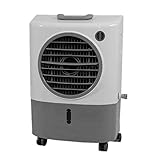
Overview: The Hessaire MC18M is a compact, portable evaporative air cooler rated for 500 sq. ft., featuring 1,300 CFM airflow, a 4.8-gallon tank, and two-speed fan control. Designed for smaller rooms, patios, or personal use, it emphasizes ease of operation and portability with its lightweight ABS construction and simple fill-plug-switch functionality. What Makes It Stand Out: Its standout features are the patented axial propeller for extended cool-air throw and the high-density XeL50 media, which optimizes cooling efficiency while promising up to 50% energy savings versus AC. The ultra-lightweight ABS resin body enhances portability and durability compared to bulkier coolers. Value for Money: Offers exceptional value for small-space cooling. The energy savings claim, effective single-pad cooling system, and robust yet light build provide significant functionality at an accessible price. It outperforms similarly sized units in portability and targeted cooling efficiency, making it cost-effective for personal or compact area use. Strengths and Weaknesses: Strengths: Highly portable and lightweight; energy-efficient operation (up to 50% savings); effective long-throw airflow; simple, user-friendly operation; durable ABS construction. Weaknesses: Limited to 500 sq. ft.; 53.4 dB noise level is noticeable; only two fan speeds; not ideal for very large or humid spaces. Bottom Line: Highly recommended for efficiently and affordably cooling small rooms or personal spaces, especially where portability, energy savings, and ease of use are top priorities in dry climates.
5. AEROZY Windowless Portable Air Conditioner, 24.4" Small Evaporative Air Cooler for Room No Window, 3-Speed Settings, 4 Modes, 7H Timer, Remote Control, 4 Ice Packs, Quiet AC Unit for Bedroom, White

Overview: The AEROZY unit is a compact, windowless evaporative air cooler (not a true compressor AC) designed for bedrooms or small rooms up to ~300 sq. ft. It features a bladeless design, remote control, multiple modes, and a 2-gallon tank, positioning itself as a quiet, safe, and flexible cooling solution where windows aren’t available. What Makes It Stand Out: Its unique bladeless, safe-for-kids/pets design and true portability (no window required) differentiate it significantly. The inclusion of 4 ice packs for an extra cooling boost, 120° oscillation, and a generous 15-hour timer with 4 modes (including Sleep/ECO) offer features uncommon in basic evaporative coolers, enhancing comfort versatility. Value for Money: Good value for its niche: the bladeless safety, oscillation, ice packs, and extensive remote-controlled features (timer, modes) justify the price for small-space, windowless use. It provides more comfort flexibility than standard swamp coolers, though true AC performance isn’t achievable via evaporation alone. Strengths and Weaknesses: Strengths: Safe bladeless design; excellent portability (no window needed); versatile modes and 15H timer; ice packs enhance cooling; wide oscillation; quiet operation. Weaknesses: Misleading “AC” labeling (evaporative only); limited cooling capacity in humid conditions; ice packs offer only temporary boost; smaller coverage than evaporative specs suggest. Bottom Line: A strong pick for safe, quiet, feature-rich spot cooling in small, dry-climate rooms without windows, but manage expectations—it’s an advanced evaporative cooler, not a substitute for refrigerant-based AC in high humidity.
6. SereneLife Portable Swamp Cooler Air Conditioner - 2500 CFM Airflow, 8 Gallon Water Tank Portable Evaporative Air Cooler for Room & Outdoors, WiFi, Humidifier & Fan Modes, Ice Packs & Remote Included

Overview: The SereneLife Portable Swamp Cooler is a versatile evaporative air cooler designed for indoor and covered outdoor use. It leverages water evaporation and dual ice packs to provide cooling without complex installation, targeting bedrooms, living rooms, and patios with its 2500 CFM airflow and 8-gallon tank.
What Makes It Stand Out: Its standout feature is integrated Wi-Fi control alongside a remote and touch panel, offering true smart-home convenience. The 360° oscillation, combined with humidifier and fan modes, provides adaptable comfort. The large 8-gallon tank with a safety pump minimizes refills, while the 140W energy draw and ≤52 dB operation ensure efficiency and quietness.
Value for Money: Priced competitively for its feature set, it justifies cost through multi-functionality (cooler/fan/humidifier), smart controls, and robust build quality. It’s more expensive than basic models but cheaper than window ACs, offering significant savings on energy bills compared to traditional cooling.
Strengths and Weaknesses: Strengths: Excellent smart connectivity; large tank capacity; very quiet operation; easy mobility; versatile modes. Weaknesses: Limited cooling in high humidity; requires proximity to water source for refills; ice packs need freezer space; app connectivity can occasionally lag.
Bottom Line: Highly recommended for dry-climate users seeking smart, portable cooling. Its versatility, quiet operation, and strong airflow make it ideal for medium-sized rooms, though humidity limitations apply.
7. Hessaire MC61M 5,300 CFM 3-Speed Portable Evaporative Cooler

Overview: The Hessaire MC61M is a high-capacity evaporative cooler built for large spaces, delivering 5,300 CFM airflow via a unique 3-panel intake system. Targeting garages, workshops, or open patios, it uses a substantial 14.6-gallon tank and focuses on straightforward, powerful cooling without complex tech.
What Makes It Stand Out: Its massive 5,300 CFM output and industry-leading 80% larger evaporation surface provide exceptional coverage and extended runtime (3-4 hours per fill). The lightweight polypropylene resin construction ensures durability while reducing noise and vibration significantly compared to competitors.
Value for Money: Positioned as a premium industrial-grade unit, it offers excellent value for large-area cooling needs. While pricier upfront than smaller coolers, its energy efficiency (no high-wattage compressor), low maintenance, and robust build deliver long-term savings for workshops or commercial use.
Strengths and Weaknesses: Strengths: Unmatched airflow for large spaces; very quiet operation; large tank reduces refill frequency; extremely durable build; simple plug-and-play use. Weaknesses: Bulky and heavy despite casters; no smart features or remote; ineffective in humid conditions; higher initial cost.
Bottom Line: A top choice for large, dry spaces like warehouses or workshops. Its raw cooling power, durability, and quiet operation justify the investment for serious cooling demands, though not suited for small rooms or humid climates.
8. Feculs Portable Air Conditioners No Windows Needed, 3-IN-1 Swamp Cooler, Evaporative Air Cooler, 4 Modes & 3 Speeds, 2-Gal Water Tank for Long Cooling, Max 20 FT/S Remote Control, 12 Hours Timer

Overview: The Feculs 3-in-1 Swamp Cooler targets smaller spaces (up to 320 sq.ft) as a ventless, window-free solution. It combines cooling, fan, and humidifier functions with 4 modes, 3 speeds, and a compact 2-gallon tank, emphasizing energy efficiency and ease of use for bedrooms or offices.
What Makes It Stand Out: Its ultra-low 65W power consumption (saving ~70% vs. traditional AC) and true ventless design stand out. The 20ft remote, 12-hour timer with auto-shutoff, and nighttime-friendly display (auto-off after 3 mins) prioritize user convenience and energy savings in a minimalist package.
Value for Money: Excellent value for small-space cooling on a budget. It’s significantly cheaper than portable ACs requiring venting, with minimal operating costs. The included ice crystal boxes extend cooling duration, enhancing its affordability for short-term or supplemental cooling.
Strengths and Weaknesses: Strengths: Extremely energy-efficient; very quiet (46-56 dB); simple setup (no installation); affordable; easy water level monitoring. Weaknesses: Small 2-gallon tank needs frequent refills; limited cooling range; ineffective in humidity; ice packs offer modest enhancement.
Bottom Line: Highly recommended for budget-conscious users in dry climates needing supplemental cooling for small rooms. Its efficiency and simplicity shine, but capacity constraints limit it for larger or humid spaces.
9. Hessaire DC18 Mobile Evaporative Cooler

Overview: The Hessaire DC18 is a compact, mobile evaporative cooler designed for personal or small-space use. Built on Hessaire’s decades of expertise, it prioritizes portability and core cooling functionality with a focus on reliability for spot cooling in homes or offices.
What Makes It Stand Out: Its standout feature is the emphasis on mobility and simplicity. Engineered for easy movement with integrated handles and casters, it delivers straightforward evaporative cooling without unnecessary tech. Hessaire’s reputation for durable, low-noise operation in energy-efficient designs is its key differentiator.
Value for Money: Offers solid value as a no-frills, reliable cooler. Priced accessibly, it avoids the markup of smart features, making it cost-effective for basic cooling needs. Hessaire’s build quality ensures longevity, translating to lower cost-per-use over time compared to cheaper, less durable models.
Strengths and Weaknesses: Strengths: Highly portable and maneuverable; proven Hessaire reliability; quiet operation; simple maintenance; energy-efficient. Weaknesses: Lacks advanced features (no remote, timer, or multiple modes); smaller tank capacity; limited airflow for larger rooms; basic aesthetics.
Bottom Line: A dependable, budget-friendly choice for targeted cooling in small, dry areas. Ideal for users prioritizing portability and core functionality over smart features, though it won’t suit those needing extended runtime or advanced controls.
10. YEW 32" Swamp Cooler Air Conditioner,1800 CFM Portable Evaporative Air Cooler,Cooling Fan for Room Garage Patio,5.3 Gal Water Tank,3 Speeds,6 Ice Boxes,12H Timer,Remote,Grey

Overview: The YEW 32" Swamp Cooler is a mid-sized evaporative air cooler offering 1800 CFM airflow for rooms, garages, or patios. It features a 5.3-gallon tank, 6 ice packs, and 120° vertical swing, targeting users seeking affordable, flexible cooling without window installation.
What Makes It Stand Out: The inclusion of six ice packs significantly boosts cooling capacity on hot days, while the 120° vertical oscillation ensures even air distribution. Its ultra-quiet operation (46-56 dB) and dual control (remote + touch panel) enhance usability for sleep or focused work.
Value for Money: Excellent value for its capacity and features. It undercuts larger Hessaire models while offering comparable basics (tank size, ice packs, timer) at a lower price point. The energy efficiency and included accessories (6 ice packs, remote) maximize its cost-effectiveness for medium-sized spaces.
Strengths and Weaknesses: Strengths: Generous ice pack inclusion; very quiet; easy mobility with casters; intuitive controls; good tank size for runtime. Weaknesses: Cooling effectiveness drops sharply in humidity; plastic build feels less premium; remote range can be inconsistent; vertical swing mechanism occasionally sticks.
Bottom Line: A strong budget pick for dry climates needing reliable, quiet cooling in medium spaces. Its ice packs and oscillation add real value, though durability and humidity limitations warrant consideration.
Understanding Evaporative Cooling: The Science Simplified
How Evaporation Creates Cool Air
At its core, evaporative cooling harnesses a fundamental natural process: when water evaporates, it absorbs heat from the surrounding air. These units pull warm, dry air from outside your apartment through water-saturated cooling pads. As the air moves across these moist pads, the water evaporates, significantly lowering the air temperature before it’s gently pushed into your living space. It’s the same principle that makes you feel cooler when stepping out of a swimming pool on a breezy day. This process fundamentally differs from refrigerant-based AC, which uses chemical cycles to remove heat.
Why Humidity is the Critical Factor
This is the non-negotiable rule for evaporative coolers: they work exceptionally well only in dry climates. The evaporation process adds moisture to the air. In low-humidity environments (typically below 50% relative humidity), this added moisture is welcome and enhances the cooling sensation. However, in humid climates, the air is already saturated with moisture, severely limiting evaporation. The result? The unit struggles to cool effectively and can make your apartment feel uncomfortably muggy, like a steamy bathroom. Always check your local average summer humidity levels before considering this technology.
Apartment-Specific Advantages of Evaporative Coolers
Dramatically Lower Energy Consumption
One of the most compelling reasons for apartment renters to explore evaporative cooling is the significant reduction in electricity usage. These units primarily power a fan and a small water pump, consuming up to 75-85% less energy than a comparably sized window air conditioner. For renters paying their own utilities, especially in regions with high electricity costs, this translates directly into substantial monthly savings, making comfort much more affordable.
Improved Air Quality and Ventilation
Unlike standard window AC units that recirculate the same indoor air, evaporative coolers constantly draw in fresh outdoor air. As this air passes through the water-soaked pads, dust, pollen, and other airborne particles are captured and washed out. The result is a continuous supply of filtered, oxygen-rich, cooled air flowing into your apartment. This constant ventilation is particularly beneficial in apartments that might feel stuffy or lack adequate natural airflow, helping to reduce odors and stale air.
Quieter Operation for Shared Walls
Apartment living often means thin walls and close neighbors. Evaporative coolers generally operate much more quietly than traditional window AC units. The primary sound comes from the fan, which is typically a gentle whoosh rather than the loud compressor hum and rattle common in ACs. This lower noise profile makes them a more neighbor-friendly option, reducing the risk of complaints and allowing for more peaceful sleep, especially important in densely populated buildings.
Essential Features to Prioritize for Apartment Use
Compact Size and Space-Saving Design
Apartment windows and limited floor space demand careful consideration of unit dimensions. Look for models specifically designed with apartments in mind – often lower profile or narrower units that fit standard single-hung or slider windows without blocking the entire opening. Consider where the unit will sit; some are designed to be placed inside the window sill rather than jutting far out, preserving more interior space and providing better stability in rental setups.
Portability and Lightweight Construction
The ability to easily move the unit is crucial for apartment dwellers. Features like sturdy integrated casters (wheels), comfortable handles, and a relatively lightweight design make seasonal installation, storage, or even moving the cooler between rooms (if your setup allows) much more manageable. Avoid overly bulky industrial models; prioritize units built with portability as a core feature, recognizing the frequent need to store them during off-seasons or when moving.
Adjustable Fan Speeds and Thermostat Control
Precise control is key to comfort and efficiency in a variable apartment environment. Multiple fan speed settings allow you to tailor the airflow to the outside temperature and your personal comfort level, from a gentle breeze on moderately warm days to maximum cooling during heatwaves. A built-in, adjustable thermostat takes this further, automatically cycling the fan to maintain your desired room temperature, preventing overcooling and unnecessary energy use – a significant comfort upgrade over basic on/off models.
Water Tank Capacity and Ease of Refilling
Consider how often you’re willing to top up the water. Larger tanks mean less frequent refills, ideal for busy schedules, but they also make the unit heavier when full. For apartments, a balance is key – large enough for several hours of operation but manageable to lift and carry to a sink. Crucially, prioritize easy access to the fill port. Look for wide openings, clear markings, and designs that allow filling without disassembling the unit, making the chore quick and mess-free, especially important in small kitchen or bathroom spaces.
Noise Level Specifications
While generally quieter than AC, evaporative coolers still produce noise. Pay close attention to the manufacturer’s decibel (dB) rating, specifically looking for levels under 50 dB on lower settings for bedroom use. Read user reviews focusing on noise complaints. Remember that noise perception is subjective; a unit that seems quiet in a showroom might be noticeable in the quiet confines of your apartment at night. Prioritize models explicitly marketed for quiet operation in living spaces.
Water Pump Reliability and Auto-Shutoff
The water pump is vital for circulating water to the pads. Opt for units known for durable, quiet pumps. Just as important is an automatic shut-off feature that engages when the water tank runs dry. This prevents the pump from running dry (which can damage it) and stops the fan from blowing warm, uncooled air through the dry pads, which can actually heat the room slightly. This feature protects your investment and ensures efficient operation.
Pad Material and Replacement Ease
Cooling pads are the heart of the system and need periodic replacement (usually annually). Common materials are cellulose (aspen wood shavings) and rigid plastic/composite. Cellulose pads are generally more efficient at cooling but can harbor mildew if not dried properly and may require more frequent replacement. Composite pads last longer and resist mold but might cool slightly less effectively. Crucially, ensure the pads are user-replaceable without tools – a major factor for long-term apartment use where maintenance simplicity is non-negotiable.
Navigating Apartment Installation Challenges
Window Type Compatibility is Paramount
Not all windows work. Evaporative coolers require specific window types for safe and secure installation. Standard double-hung windows (where one sash slides up/down) are often the easiest fit, allowing the unit to sit securely in the lower sash track. Slider windows (horizontal sliding) can also work with the right model designed for them. Casement (crank-out), awning, or picture windows are usually incompatible. Always check your window type against the cooler’s installation requirements before purchasing; this is a deal-breaker for many renters.
Landlord Approval and Rental Restrictions
Never assume you can install any cooling unit. Review your lease agreement thoroughly for clauses regarding window modifications, air conditioners, or evaporative coolers. Many leases explicitly prohibit window units or require prior written permission. Contact your landlord before buying anything. Be prepared to explain how evaporative coolers differ from AC (lower weight, often easier installation/removal, no permanent mods), but respect their rules. Getting approval in writing saves future headaches.
Secure Installation Without Permanent Modifications
Rental agreements typically forbid drilling holes or making permanent alterations. Choose a unit designed for “no-drill” installation, relying on sturdy brackets that clamp securely into the window track or use adjustable side panels that expand to fit snugly within the window frame. Ensure the unit feels rock-solid once installed – a wobbling cooler is a safety hazard and risks damage to the window or unit. Stability is non-negotiable in a rental.
Maintenance Realities for Renters
Daily and Seasonal Water Management
Using an evaporative cooler requires active participation. You’ll need to empty and refill the water tank regularly, depending on the tank size and outdoor conditions (more often in extreme heat). At the end of the season, thorough cleaning and complete drying of the tank, pads, and internal components are essential to prevent mold, mildew, and mineral buildup during storage. Factor this routine into your decision – it’s more hands-on than simply turning on an AC unit.
Pad Replacement and Cleaning Schedule
Cooling pads collect minerals from water and dust from the air. They require periodic rinsing (sometimes weekly in dusty areas) and full replacement typically once per cooling season. Factor in the cost and availability of replacement pads for your chosen model. Ignoring pad maintenance drastically reduces cooling efficiency and can lead to unpleasant odors circulating in your apartment. It’s a small but necessary recurring task.
Frequently Asked Questions
Frequently Asked Questions
Can evaporative coolers work in my humid apartment city? Their effectiveness plummets in high humidity (above 50-60% RH). They excel in dry climates like the Southwest US but are generally ineffective and can make humidity worse in places like the Southeast or Midwest during summer. Check your local average summer humidity first.
Will an evaporative cooler significantly lower my electric bill compared to AC? Yes, typically by 75-85% for comparable cooling output, as they only power a fan and small water pump, not an energy-intensive compressor. This is one of their biggest advantages for cost-conscious renters.
Do I need a special window type for installation? Absolutely. They primarily fit standard double-hung (vertical slider) or horizontal slider windows. Casement (crank-out), awning, or fixed picture windows are usually incompatible. Verify your window type against the unit’s specs before buying.
How often do I need to add water to the tank? Frequency depends on tank size and outdoor temperature/humidity. Smaller tanks (10-15 gallons) may need refilling every 8-12 hours on hot days, while larger tanks (20+ gallons) might last 24+ hours. Be prepared for regular refills.
Is the noise level disruptive for apartment living? Generally, they are significantly quieter than window AC units, producing a fan-like whoosh (often 40-55 dB). Many models have quiet settings suitable for bedrooms, making them more neighbor-friendly in shared buildings.
Can I install it myself without landlord permission? Never assume. Most leases restrict window modifications. Always review your lease and obtain written landlord approval before purchasing or installing any window unit, evaporative cooler or otherwise, to avoid lease violations.
How do I prevent mold and mildew in the unit? Empty the water tank daily when not in use for extended periods. At season’s end, thoroughly clean the tank and pads with a vinegar solution, run the fan dry for several hours, and store the unit completely dry in a well-ventilated area.
Do evaporative coolers actually cool the air like AC? They lower the air temperature through evaporation, but the cooling effect is most pronounced in dry air. The cooled air feels refreshing, but the absolute temperature drop might be less than a powerful AC in very hot conditions, especially if humidity rises.
Are replacement parts like pads easy to find for renters? Pad availability varies by model. Prioritize units from reputable brands with readily available, standard-sized replacement pads sold online or at hardware stores. Avoid obscure models where parts might be hard to source later.
Can I use an evaporative cooler indoors without a window? No, proper operation requires drawing fresh, dry outdoor air through the unit. Using it in a completely sealed room recirculates the same air, quickly saturating it with moisture and rendering the cooler ineffective while increasing indoor humidity uncomfortably.
See Also
- The 10 Ultimate Best Window Evaporative Coolers for Apartments in 2026
- 10 Best Window Evaporative Coolers for Renters in 2026
- Solving Overheating Spaces with Window Evaporative Coolers: A Smart Cooling Hack for 2026
- How to Solve Overheating Rooms with the 10 Best Window Evaporative Coolers in 2026
- Top 10 Best Portable Evaporative Coolers for Small Apartments in 2026