Table of Contents
The sun beats down relentlessly, turning your living room into a sauna even with the blinds drawn. You crank the window unit to max, but the air sputtering out feels barely cooler than the oppressive heat outside. That sinking feeling when your air conditioner – your lifeline against the scorching temperatures – starts struggling, then sputters, and finally gives up entirely during a record-breaking heatwave is more than just uncomfortable; it’s a crisis. For millions living in regions where summer means sustained triple-digit temperatures and high humidity, a window air conditioner isn’t a luxury, it’s a non-negotiable necessity for safety and sanity. Choosing the wrong unit isn’t just a waste of money; it’s gambling with your comfort and well-being when the mercury soars.
Finding a window AC that delivers consistent, powerful cooling and survives the brutal test of relentless summer heat requires looking far beyond basic price tags or advertised BTU numbers. Generic buying guides often miss the mark for extreme climates, failing to address the unique stresses intense sun, dust, humidity, and continuous operation place on these hardworking machines. You need a deep understanding of the specific engineering, features, and installation practices that separate units that thrive under pressure from those destined to overheat, break down, or simply fail to keep pace. This guide cuts through the noise, focusing exclusively on the critical factors that ensure your window air conditioner becomes a reliable fortress against the heat, season after season, even when the forecast looks dire.
Top 10 Window Air Conditioners for Hot Climates
Detailed Product Reviews
1. Midea 10,000 BTU U Shaped Smart Inverter Window Air Conditioner - Cools 450 Sq Ft, Ultra Quiet with Open Window Flexibility - Alexa/Google Assistant Compatible - 35% Energy Savings, Remote (Updated)
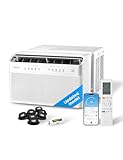
Overview: The Midea 10,000 BTU U-Shaped Smart Inverter AC offers advanced cooling for spaces up to 450 sq. ft., featuring a unique design and smart connectivity. It targets users seeking quiet, energy-efficient climate control with modern convenience features. What Makes It Stand Out: Its revolutionary U-shape design enables windows to remain partially open for fresh air and views while operating, a rarity in window units. Combined with ultra-quiet 32 dBA operation (10x quieter than standard models), ENERGY STAR certification, and over 35% energy savings via inverter tech, it delivers exceptional comfort. Full smart control via app or voice assistants (Alexa/Google) and an anti-theft window lock add significant value. Value for Money: Priced premium, it justifies cost through substantial long-term energy savings and unique benefits like the open-window feature. While pricier than basic models, its efficiency, quietness, and smart capabilities offer superior value for tech-savvy users prioritizing comfort and lower bills over several seasons. Strengths and Weaknesses: Strengths: Extremely quiet operation; significant energy savings; flexible window opening; robust smart features; secure anti-theft lock. Weaknesses: Higher initial cost; U-design may not suit all window types; limited to single/double-hung windows (22"-36" width). Bottom Line: An outstanding investment for those needing powerful, whisper-quiet cooling with smart features and the unique ability to open windows. Its energy efficiency and innovative design make it highly recommended despite the premium price, especially for bedrooms or living areas up to 450 sq. ft.
2. Frigidaire 8,000 BTU Window Air Conditioner with Remote Control, Cools Up to 350 Sq. Ft., Quiet Operation, Eco Mode, 3 Fan Speeds, Auto Restart, White

Overview: This Frigidaire 8,000 BTU unit delivers reliable cooling for rooms up to 350 sq. ft., emphasizing user-friendly operation and energy consciousness. It’s a solid choice for bedrooms or small living spaces seeking dependable, moderately quiet performance. What Makes It Stand Out: The inclusion of Eco Mode actively reduces energy consumption by optimizing cooling, complemented by Sleep Mode for automatic nighttime temperature adjustment. The 54 dBA quiet operation is notable for its class, alongside intuitive features like 6-way airflow, 3 fan speeds, Clean Filter alerts, and a convenient remote. Value for Money: Positioned as a mid-range option, it offers excellent value through thoughtful energy-saving modes (Eco and Sleep) and durable features like the washable filter. It outperforms similarly priced basic units with its focus on efficiency and user comfort, making it a cost-effective long-term solution. Strengths and Weaknesses: Strengths: Effective Eco and Sleep modes; quiet for its size (54 dBA); easy remote control; useful Clean Filter indicator; reliable Auto Restart. Weaknesses: Lacks smart/WiFi connectivity; noise level may still bother very light sleepers; no window-opening capability. Bottom Line: A highly practical and efficient choice for cooling spaces up to 350 sq. ft. Its energy-saving features, quiet operation, and user-centric design provide strong value. Recommended for users prioritizing reliability, ease of use, and moderate energy savings without needing smart home integration.
3. Frigidaire 5,000 BTU Window-Mounted Air Conditioner, Cools Up to 150 Sq. Ft., Quiet Operation, Effortless Temperature Control, 2 Fan Speeds, Auto Restart, White

Overview: Designed for compact spaces up to 150 sq. ft., this Frigidaire 5,000 BTU model focuses on simplicity, quiet operation, and essential cooling for small bedrooms, offices, or dorm rooms. What Makes It Stand Out: Its standout feature is the remarkably quiet 52 dBA operation, ideal for undisturbed sleep in small areas. The Effortless Temperature Control maintains consistent comfort, while the Auto Restart (after power outages) and extra-long power cord add significant convenience without complexity. Value for Money: An exceptional value for very small spaces. Its low price point is justified by core reliability, quiet performance perfect for bedside use, and the practical Auto Restart feature. The washable filter ensures long-term, low-cost maintenance, maximizing savings for budget-conscious buyers. Strengths and Weaknesses: Strengths: Very quiet (52 dBA) for intimate spaces; simple, reliable operation; Auto Restart is highly useful; easy-clean filter; long power cord avoids extensions. Weaknesses: Limited to very small rooms (150 sq. ft.); only 2 fan speeds; lacks advanced features like remote, smart control, or eco modes. Bottom Line: The top recommendation for cooling tiny rooms where whisper-quiet operation is paramount. Its simplicity, reliability, and focus on core comfort make it perfect for dorms, small bedrooms, or home offices under 150 sq. ft., offering unbeatable value in its niche.
4. Midea 8,000 BTU U Shaped Smart Inverter Window Air Conditioner - Cools 350 Sq Ft, Ultra Quiet with Open Window Flexibility - Alexa/Google Assistant Compatible - 37% Energy Savings, Remote (Updated)
Overview: This Midea model brings the innovative U-shaped inverter technology to the 8,000 BTU class, cooling up to 350 sq. ft. with ultra-quiet operation, smart features, and the signature open-window flexibility. What Makes It Stand Out: It replicates the flagship U-design advantages: enabling window opening for fresh air/views and achieving near-silent 32 dBA operation (10x quieter than standard). ENERGY STAR certified with over 37% energy savings via inverter tech, plus full smart control (app/voice) and an anti-theft lock, sets it apart from conventional units. Value for Money: Commands a premium price, but delivers clear value through massive energy savings and unique benefits. The long-term operational cost reduction and unparalleled open-window feature justify the investment for those seeking the quietest, most flexible smart cooling for medium-sized rooms. Strengths and Weaknesses: Strengths: Exceptionally quiet (32 dBA); significant energy savings (>37%); unique window-opening capability; comprehensive smart controls; secure anti-theft lock. Weaknesses: Higher upfront cost; installation limited to specific window sizes (22"-36" width); U-shape may not fit all aesthetic preferences. Bottom Line: The premier choice for 350 sq. ft. spaces where quietness, energy efficiency, and the ability to open the window are critical. Despite the cost, its innovative design and smart features offer compelling long-term value, making it strongly recommended for discerning users.
5. ROVSUN 8000 BTU Window Air Conditioner with Heat, Window AC Unit & Heater Combo with APP & Voice Smart Control, Timer Function & Easy Installation Kit, Work with Alexa/Google Assistant, 115V/60Hz

Overview: The ROVSUN 8,000 BTU unit is a versatile all-in-one climate solution, providing both cooling (for 350 sq. ft.) and heating (4,000 BTU), alongside dehumidification and fan functions, aimed at year-round comfort seekers. What Makes It Stand Out: Its key differentiator is the built-in heating function, transforming it from a seasonal AC into a year-round climate controller. Comprehensive features include 5 modes (Heat, Cool, Dry, Fan, Auto), 3 fan speeds, WiFi/smart voice control, ECO mode, and a 24H timer, all backed by a straightforward installation kit. Value for Money: Offers excellent value as a dual-function unit, eliminating the need for a separate space heater. The included smart features and ECO mode enhance cost-effectiveness over time, though its efficiency may not match dedicated high-end coolers or heaters. The 1-year warranty adds peace of mind. Strengths and Weaknesses: Strengths: Valuable heating/cooling combo; full smart home integration; multiple operating modes; easy installation kit; washable front-access filter. Weaknesses: Heating capacity (4,000 BTU) is modest for cold climates; noise level likely higher than premium coolers; build quality may not match top brands. Bottom Line: Highly recommended for users needing basic heating and cooling in the same unit for spaces up to 350 sq. ft., especially in milder climates. Its versatility, smart features, and ease of setup provide solid value, though prioritize dedicated cooling units if heating isn’t essential.
6. Amazon Basics 6000-BTU Window Air Conditioner, Up to 250 Sqf, Window AC Units with Cool and Fan Functions, Washable Filter, Adjustable Window Kit, Digital Temperature Display, Remote Control, White

Overview: This 6000-BTU window AC from Amazon Basics targets small to medium rooms (up to 250 sq. ft.), offering essential cooling and fan functions with user-friendly features like a digital display and remote control. It’s designed for bedrooms or home offices seeking straightforward, efficient climate control. What Makes It Stand Out: Its balanced feature set stands out, including precise 7-temperature settings, 2-way airflow control, and a washable filter for air quality. The remote adds convenience, while the 56 dB noise level ensures quiet operation suitable for sleep or focused work, all at an accessible price point. Value for Money: Priced competitively, it delivers strong value for medium rooms. It matches pricier brands in core functionality (cooling, filter, remote) but lacks extras like heating. For pure cooling in spaces under 250 sq. ft., it’s a cost-effective alternative to models with unnecessary features. Strengths and Weaknesses: Strengths: Reliable cooling for room size, quiet operation, easy-to-clean filter, intuitive digital controls, and comprehensive installation kit. Weaknesses: Limited to cooling/fan (no heat), basic remote without smart features, and installation requires basic tools not included. Bottom Line: An excellent, no-frills choice for efficiently cooling small bedrooms or offices. Its quiet performance, ease of maintenance, and solid build justify the price for users needing dependable cooling without advanced add-ons.
7. GE Window Air Conditioner Unit, 5,000 BTU for Small Rooms up to 150 sq ft. with Manual Adjustable Fan and Cooling Settings, Perfect for Small Bedroom or Living Room, Easy Install Kit Included, White

Overview: GE’s 5000-BTU unit is engineered specifically for compact spaces (up to 150 sq. ft.), such as small bedrooms or studios. It emphasizes simplicity with manual controls, low-noise operation, and a streamlined installation process using the included EZ Mount kit. What Makes It Stand Out: Its standout feature is reliability for very small rooms. The mechanical dials offer tactile, straightforward adjustment (10 temp settings, 2 fan speeds), avoiding complex digital interfaces. The focus on near-silent operation makes it ideal for light sleepers in confined areas where louder units would be disruptive. Value for Money: It offers solid value for its niche—ultra-small rooms. While basic, it avoids the cost of overpowered units or smart features unnecessary for its size category. Compared to similar 5000-BTU models, GE’s reputation for durability enhances its cost-per-year value for essential cooling. Strengths and Weaknesses: Strengths: Exceptionally quiet, simple manual controls ideal for users avoiding tech complexity, robust build quality, and genuinely easy installation for double-hung windows. Weaknesses: No remote or digital display, limited to cooling (no fan-only mode specified), and narrower window compatibility (27.125"-36" wide). Bottom Line: Highly recommended for cooling tight spaces like studio apartments or small bedrooms where simplicity, quietness, and proven reliability matter most. Skip it if you need digital features or cooling beyond 150 sq. ft.
8. ROVSUN 8000 BTU Air Conditioner Window Unit with Heat, 4-in-1 Window AC Unit Cooler, Heater, Dehumidifier & Fan with Timer, Remote Control & Installation Kit for Rooms up to 350 Sq. Ft, 115V/60Hz

Overview: The ROVSUN 8000 BTU unit is a versatile 4-in-1 solution (cooling, heating, dehumidifying, fan) for rooms up to 350 sq. ft. It targets users needing year-round climate control in spaces like larger bedrooms or home offices, featuring remote operation and energy-saving modes. What Makes It Stand Out: Its multi-functionality is key—providing supplemental heat (4000 BTU) alongside cooling sets it apart from most budget window units. The inclusion of ECO mode, a 24-hour timer, and quiet 52 dB operation adds significant versatility and convenience for moderate climates or seasonal transitions. Value for Money: Excellent value for the price, considering the heating capability rarely found in this BTU range. It eliminates the need for a separate space heater in mild winters, justifying a slightly higher cost than cooling-only units. Energy efficiency further reduces long-term operating expenses. Strengths and Weaknesses: Strengths: True 4-in-1 functionality, very quiet operation, energy-saving ECO mode, clear remote/digital controls, and straightforward installation kit. Weaknesses: Heating capacity is modest (best for mild cold), requires 115V outlet (not 230V), and build quality may not match premium brands. Bottom Line: A top pick for versatile, year-round comfort in medium-sized rooms. Its heating function, quiet performance, and smart features offer exceptional bang for buck, especially in regions with mild winters.
9. Amazon Basics 5000-BTU Small Window Air Conditioner, Up to 150 Sqf, Window AC Units with Cool and Fan Functions, Washable Filter, Adjustable Window Kit, Intuitive Mechanical Controls, White

Overview: Amazon Basics’ 5000-BTU model is a budget-focused solution for very small rooms (up to 150 sq. ft.), featuring basic cooling and fan modes, mechanical dials, and a washable filter. It prioritizes simplicity and affordability for compact spaces like tiny bedrooms or home offices. What Makes It Stand Out: Its standout trait is utter simplicity and low cost. The intuitive mechanical controls (no digital display) appeal to users who prefer tactile adjustments and dislike remotes or apps. It retains core Amazon Basics strengths: a washable filter, 2-way airflow, and quiet 56 dB operation. Value for Money: Unbeatable value for minimal cooling needs. It’s significantly cheaper than smart or heating models while delivering reliable performance for its size class. If you only need basic cooling in a small room and want to minimize upfront cost, it’s hard to beat. Strengths and Weaknesses: Strengths: Extremely affordable, simple and reliable mechanical operation, quiet enough for sleep, easy filter access, and includes full installation kit. Weaknesses: Very basic (no remote, digital display, or timer), cooling-only, and less precise temperature control than digital models. Bottom Line: The ideal choice for budget-conscious buyers needing no-frills cooling in very small spaces. Sacrifices tech conveniences but excels at fundamental, quiet cooling at the lowest price.
10. ROVSUN 12000 BTU Window Air Conditioner with Heat, Window AC Unit & Heater Combo with APP & Voice Smart Control, Timer Function & Easy Installation Kit, Work with Alexa/Google Assistant, 208/230V
Overview: ROVSUN’s premium 12000 BTU unit delivers powerful all-in-one climate control (cooling, heating, dehumidifying, fan) for larger rooms (up to 550 sq. ft.). Its standout feature is smart connectivity via app and voice control (Alexa/Google), alongside robust heating and cooling performance. What Makes It Stand Out: Seamless smart integration is its defining feature—full remote control via app, scheduling, and voice commands elevate convenience. Combined with strong 12000 BTU cooling, 4000 BTU heating, ECO mode, and a washable filter, it’s a high-tech solution for spacious areas. Value for Money: Premium-priced but justified for tech-savvy users needing smart features and large-room coverage. The inclusion of heating, comprehensive app control, and a 1-year warranty adds value over basic 12k BTU units. It’s cost-effective if you’d otherwise buy separate smart thermostats or heaters. Strengths and Weaknesses: Strengths: Powerful smart connectivity, excellent coverage for large rooms, true 4-in-1 functionality, detailed app control, and easy filter access. Weaknesses: Requires 208/230V circuit (not standard 110V), higher upfront cost, and complex setup for non-tech users. Bottom Line: Highly recommended for large rooms where smart home integration and all-season comfort are priorities. Its power and tech features justify the investment for those with compatible electrical setups and a desire for ultimate convenience.
Understanding the Unique Demands of Extreme Heat
Why Standard Units Fail in Prolonged High Temperatures
Most window air conditioners are designed for moderate climates with seasonal heat. When faced with sustained temperatures above 95°F (35°C), standard models quickly reach their operational limits. The compressor, the heart of the system, must work exponentially harder to reject heat into an already scorching outdoor environment. This constant high-stress operation leads to premature wear, frequent overheating shutdowns, and ultimately, catastrophic failure. Standard units often lack the robust components and thermal management systems needed to dissipate this immense heat load efficiently.
The Dual Challenge: Dry Heat vs. Humid Heat
Extreme climates aren’t monolithic. Arid desert regions present intense radiant heat and massive temperature swings, demanding units with exceptional heat rejection capabilities and resilience against dust and sand abrasion. Conversely, humid subtropical zones add the burden of high moisture content in the air, requiring not just cooling capacity but significant dehumidification power to make the indoor environment feel comfortable. A unit suitable for Phoenix might struggle in Houston, and vice versa, highlighting the need to match features to your specific environmental stressors.
The Continuous Operation Imperative
In moderate climates, AC units cycle on and off. In extreme heat, they often run 24/7 for days or weeks on end. This continuous operation generates immense internal heat within the unit itself and places extraordinary, unrelenting stress on the compressor, fan motors, and electrical components. Standard designs aren’t engineered for this marathon workload, leading to overheating, electrical failures, and shortened lifespans. Reliability hinges on components built for endurance under constant strain.
Calculating Your True Cooling Capacity Needs
Beyond Square Footage: The Critical BTU Adjustment Factor
While square footage provides a starting point for BTU calculation, it’s dangerously inadequate for hot climates. You must significantly increase the base BTU recommendation – often by 20-30% or more – to account for intense solar gain through windows, high ceiling heights, poor insulation, and the fundamental physics challenge of cooling against a massive outdoor/indoor temperature differential. Underestimating leads directly to an overwhelmed unit that runs constantly without ever reaching the desired temperature.
Assessing Your Room’s Specific Heat Load
Conduct a thorough heat load analysis. Consider the number and direction of windows (south/west-facing get brutal afternoon sun), the quality and color of roofing/shading, the number of heat-generating appliances or occupants, and the level of insulation in walls and ceilings. A room with large, unshaded west windows in direct afternoon sun requires vastly more cooling power than a small, well-insulated room with north-facing windows, even if they are the same square footage.
The Danger of Oversizing in Humid Climates
While undersizing is the most common mistake in hot zones, oversizing presents its own pitfalls, especially in humid areas. An oversized unit cools the air too rapidly, short-cycling before it has adequately removed moisture from the air. The result? A space that feels clammy and uncomfortable despite the low temperature, as high humidity levels remain. Precise sizing, adjusted for climate severity, is paramount for both temperature control and humidity management.
Decoding Efficiency for Long-Term Value in Heat
Why EER Trumps SEER for Window Units in Hot Climates
While SEER (Seasonal Energy Efficiency Ratio) is the standard for central systems, EER (Energy Efficiency Ratio) is the critical metric for window air conditioners, especially in consistently hot regions. EER measures efficiency at a single, high-temperature point (typically 95°F outdoor, 80°F indoor, 50% humidity), mirroring real-world peak load conditions. A higher EER means the unit uses less electricity to produce the same cooling output when it matters most – during the hottest part of the day. Prioritize EER over SEER for window ACs in extreme heat.
The True Cost of Low Efficiency During Heatwaves
During extended heatwaves, a unit with a low EER rating consumes significantly more electricity. This isn’t just an environmental concern; it translates directly to exorbitant utility bills that can dwarf the initial purchase price over a single summer. In regions prone to heat domes, the difference between a high-EER and low-EER unit can mean hundreds of dollars in additional energy costs during peak usage periods. Efficiency is an investment in affordability under stress.
Features That Enhance Real-World Efficiency
Look beyond the EER number. Features like variable-speed compressors (less common but growing in premium window units) or advanced inverter technology modulate cooling output to match demand, avoiding the energy spikes of constant on/off cycling. High-quality, multi-speed fans also contribute to maintaining efficiency across different load conditions. Auto-restart functionality after a power outage prevents the unit from immediately drawing maximum power when cooling is least needed (e.g., nighttime), smoothing electrical demand.
Essential Durability and Reliability Features for Survival
Robust Compressor Technology: The Heart of Reliability
The compressor is the most failure-prone component under extreme heat stress. Units featuring rotary compressors or high-quality reciprocating compressors specifically rated for high ambient temperatures are significantly more resilient than basic models. Look for mentions of “hard start” kits (sometimes included or easily added) which provide the extra torque needed to start the compressor when it’s hot, reducing strain and preventing startup failures that plague standard units.
Advanced Thermal Protection Systems
Basic thermal overload protectors simply shut the unit down when it overheats, leaving you in the heat until it cools – which might take hours during a heatwave. Superior units incorporate multi-stage thermal management: sensors monitor critical points (compressor, motor windings), and sophisticated controls may automatically reduce cooling output or increase fan speed before a full shutdown occurs, attempting to stabilize temperatures and maintain some cooling function. This proactive approach is crucial for minimizing downtime.
Build Quality: Materials Matter Against the Elements
The casing material matters. Heavy-gauge steel cabinets dissipate heat better and resist warping under intense sun exposure far more effectively than thin plastic. Look for units with metal grilles (especially on the outdoor side) that resist deformation and maintain airflow. Sealed electrical components protect against dust infiltration, a major killer in dry, dusty climates. Corrosion-resistant coatings on coils are essential in coastal or high-humidity areas.
Optimized Airflow Design for Extreme Heat Rejection
How the unit moves air across the condenser coil (the hot outdoor part) is critical. Units designed with larger coil surface areas, wider spacing between fins (to resist clogging with dust), and powerful, well-positioned condenser fans can reject heat much more effectively when ambient temperatures soar. Poor airflow design leads directly to coil overheating and compressor shutdown, regardless of the unit’s rated BTU.
Smart Installation and Usage Practices for Peak Performance
The Non-Negotiable: Perfect Sealing and Insulation
Even the most powerful, efficient unit will fail if hot outdoor air leaks around it through the window frame. Meticulous installation using high-quality, expandable foam insulation kits designed for window ACs is essential. Seal every gap between the unit chassis and the window frame, both indoors and out. This prevents hot air infiltration, improves efficiency dramatically, and reduces the strain on the unit trying to cool unwanted air.
Strategic Placement for Optimal Heat Rejection
Location within the window opening matters. Avoid placing the unit where direct afternoon sun hits the outdoor section, if possible. Ensure the outdoor section has ample clearance on all sides (check the manual, but often 6-12 inches) for unobstructed airflow – no shrubs, walls, or awnings blocking intake or exhaust. Blocking airflow is a primary cause of overheating and shutdowns in high heat.
Proactive Maintenance: Your Unit’s Lifeline
In extreme climates, maintenance isn’t optional; it’s mandatory for survival. Clean or replace air filters at least every two weeks during peak season – clogged filters drastically reduce airflow and cooling capacity, causing immediate strain. Schedule professional coil cleaning (both evaporator indoors and condenser outdoors) at least once a year; dust and grime buildup acts as insulation, preventing efficient heat transfer. Check and clear the condensate drain regularly to prevent water leaks and mold.
Smart Operation Strategies to Reduce Strain
Use window coverings (blackout curtains, reflective film) to block solar heat gain before it enters the room. Set the thermostat to a reasonable temperature (e.g., 78°F) rather than trying to achieve an unrealistic 68°F against 110°F outside. Utilize fan settings that circulate air effectively without unnecessarily overcooling. Consider a programmable or smart thermostat to raise the temperature slightly when the room is unoccupied, reducing runtime without sacrificing comfort when needed.
Frequently Asked Questions
Frequently Asked Questions
How much higher should I set the BTU rating for a very hot climate compared to standard recommendations? You generally need to increase the base BTU calculation by 20-30% or more for areas consistently experiencing temperatures above 95°F, especially with significant sun exposure, high ceilings, or poor insulation. Never size down; it’s better to slightly oversize (with proper humidity consideration) than severely undersize.
Can a window AC reliably cool a room when it’s over 100°F outside? Yes, but only if the unit is specifically sized with the extreme heat in mind (higher BTU than standard calc), has a high EER, and features robust components designed for high ambient operation. Standard units will struggle severely or shut down.
What’s the single most important feature for preventing overheating shutdowns in extreme heat? Optimized airflow design for heat rejection is paramount. This includes a sufficiently large condenser coil with wide fin spacing, a powerful condenser fan, and adequate clearance around the outdoor section for unobstructed air intake and exhaust.
Is a higher EER worth the extra upfront cost in a hot climate? Absolutely. The energy savings during prolonged, high-load operation (which can last weeks) will significantly offset the higher purchase price within one or two cooling seasons, especially with rising electricity costs during peak demand periods.
How often should I clean the air filter during a severe heatwave? During periods of continuous operation in extreme heat, inspect and clean or replace the air filter at least once a week. A clogged filter is a primary cause of reduced cooling, frozen coils, and overheating.
What causes a window AC to leak water inside during very hot weather? The most common cause is a clogged condensate drain, preventing the water from the evaporator coil from exiting properly. High humidity combined with a dirty filter or low refrigerant can also overwhelm the drain system. Ensure the unit is pitched slightly outward as per the manual.
Do inverter or variable-speed window ACs make a significant difference in hot climates? Yes. These technologies allow the compressor and fans to modulate speed based on cooling demand, rather than just cycling fully on/off. This provides more consistent temperatures, better humidity control (in humid zones), quieter operation, and crucially, lower stress on components during continuous high-load operation, enhancing reliability.
Why does my AC struggle more in the afternoon than in the morning, even at the same outdoor temperature? Afternoon sun dramatically increases solar heat gain through windows and walls, significantly raising the indoor heat load beyond what the outdoor thermometer shows. The building structure itself also absorbs and radiates heat accumulated during the day.
Can using a ceiling fan allow me to set the AC thermostat higher without sacrificing comfort? Yes, effectively. Ceiling fans create a wind-chill effect on your skin, making you feel 3-4°F cooler. This allows you to raise the AC thermostat setting by a similar amount, reducing runtime and energy consumption while maintaining comfort.
What voltage requirements should I check for in extreme heat operation? Ensure the unit is plugged into a dedicated circuit with the correct voltage (usually 115V or 230V) and amperage as specified by the manufacturer. Voltage drops under heavy load (common during heatwaves when grid demand is high) can cause motors to overheat and fail; a stable, adequate power supply is critical for reliability.
See Also
- 10 Best Window Air Conditioners for Hot Climates Based on Real User Reviews in 2026
- 10 Best Window Air Conditioners for Hot Climates That Actually Cool in 2026
- 10 Affordable Window Air Conditioners That Don’t Sacrifice Quality in 2026
- 10 Affordable Energy Star Window Air Conditioners That Don’t Sacrifice Quality in 2026
- 10 Best Mini Split Air Conditioners for Hot Climates This Year