Table of Contents
Staring at the thermometer as it climbs past 100°F while your current unit labors uselessly, blowing lukewarm air that feels like a hairdryer set to “despair,” is a uniquely frustrating experience. In regions where summer isn’t just hot but relentlessly, oppressively scorching, a standard window air conditioner often becomes little more than an expensive fan, failing to deliver the deep, consistent cooling needed for rest, productivity, or even basic comfort. This isn’t just about inconvenience; it’s about maintaining a safe, livable indoor environment when outdoor temperatures threaten health and well-being. The reality is stark: not all cooling units are engineered to thrive under the extreme stress of prolonged, intense heat, leading many to invest in equipment that simply can’t handle their climate’s demands.
Understanding why some units buckle under desert suns or humid tropics while others maintain composure is the crucial first step toward finding reliable relief. It boils down to specific engineering choices, component quality, and features designed explicitly for thermal extremes – considerations rarely highlighted in generic buying guides. Moving beyond basic BTU charts and into the realm of climate-specific performance reveals a whole new set of criteria. This guide cuts through the marketing noise, focusing solely on the technical and practical aspects that matter when your local weather forecast consistently reads like a heat advisory. Let’s unpack what truly separates effective cooling heroes from disappointing duds in the world’s hottest zones.
Top 10 Window Air Conditioners for Hot Climates
Detailed Product Reviews
1. Midea 10,000 BTU U Shaped Smart Inverter Window Air Conditioner - Cools 450 Sq Ft, Ultra Quiet with Open Window Flexibility - Alexa/Google Assistant Compatible - 35% Energy Savings, Remote (Updated)
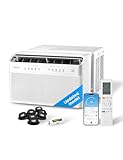
Overview: The Midea 10,000 BTU U-Shaped Smart Inverter AC is a premium window unit designed for medium to large rooms up to 450 sq. ft., emphasizing quiet operation, energy efficiency, and smart connectivity. Its distinctive U-shaped design integrates with your window frame for unique functionality. What Makes It Stand Out: The revolutionary U-shape allows the window to remain partially open for ventilation and view preservation, while blocking external noise. Operating as low as 32 dBA (10x quieter than conventional units), it leverages inverter technology for over 35% energy savings and ENERGY STAR certification. Full smart control via app, Alexa, and Google Assistant, plus an anti-theft window lock, sets it apart. Value for Money: Priced higher than basic models, its value is justified by substantial energy savings, exceptional quietness, and the unique open-window flexibility. The ENERGY STAR certification and robust smart features offer long-term cost efficiency and convenience not matched by similarly priced alternatives. Strengths and Weaknesses: Strengths: Ultra-quiet operation (32 dBA), significant energy savings (35%+), open-window capability, seamless smart integration, secure anti-theft feature. Weaknesses: Higher initial cost, complex installation for non-standard windows, limited compatibility (requires 22"-36" width, min 13.75" height). Bottom Line: An exceptional investment for those prioritizing quiet, energy-efficient cooling and smart home integration in rooms up to 450 sq. ft., especially where maintaining a view or fresh air access is desired. Highly recommended despite the premium price.
2. Frigidaire 8,000 BTU Window Air Conditioner with Remote Control, Cools Up to 350 Sq. Ft., Quiet Operation, Eco Mode, 3 Fan Speeds, Auto Restart, White

Overview: This Frigidaire 8,000 BTU unit delivers reliable cooling for spaces up to 350 sq. ft., focusing on user-friendly operation, energy-conscious features, and consistent performance for bedrooms or small living areas. What Makes It Stand Out: Its standout features include Eco Mode for optimized energy use during cooling and Sleep Mode for gradual temperature adjustment overnight. The inclusion of Clean Filter alerts, a washable filter, 6-way airflow, and a quiet 54 dBA operation enhance everyday usability and maintenance without smart tech complexity. Value for Money: Positioned as a mid-range option, it offers excellent value through practical energy-saving modes (Eco/Sleep), easy maintenance, and dependable cooling. It outperforms basic units in efficiency and features while avoiding the premium cost of smart/inverter models, ideal for budget-conscious buyers seeking reliability. Strengths and Weaknesses: Strengths: Effective Eco and Sleep modes, intuitive remote, quiet operation (54 dBA), helpful filter alerts, versatile airflow. Weaknesses: Lacks smart connectivity or Wi-Fi, no open-window design, higher noise level compared to inverter units, basic styling. Bottom Line: A solid, no-frills choice for efficiently cooling rooms up to 350 sq. ft. Its practical energy modes and user-friendly maintenance make it a worthwhile purchase for those who don’t need smart features but value quiet, reliable performance.
3. Frigidaire 5,000 BTU Window-Mounted Air Conditioner, Cools Up to 150 Sq. Ft., Quiet Operation, Effortless Temperature Control, 2 Fan Speeds, Auto Restart, White

Overview: Frigidaire’s compact 5,000 BTU model targets very small spaces (up to 150 sq. ft.), such as dorm rooms or home offices, prioritizing simplicity, quiet operation, and hassle-free installation for efficient spot cooling. What Makes It Stand Out: Its ultra-quiet performance (52 dBA) is ideal for light sleepers, while Effortless Temperature Control maintains consistent settings. The Auto Restart feature after power outages and the extra-long power cord (eliminating extension cords) address common user pain points for small-space cooling. Value for Money: As an entry-level unit, it provides strong value for tiny rooms. The focus on core reliability, easy filter access, and thoughtful touches like the long cord and Auto Restart deliver essential functionality without unnecessary extras, undercutting larger or smart models significantly. Strengths and Weaknesses: Strengths: Very quiet (52 dBA) for small spaces, simple operation with Effortless Control, convenient Auto Restart, no extension cord needed, budget-friendly. Weaknesses: Limited cooling capacity (only 150 sq. ft.), only two fan speeds, no smart features or advanced energy modes, basic dehumidification. Bottom Line: The top recommendation for cooling very small rooms efficiently and quietly. Its simplicity, reliability, and value make it perfect for apartments, dorms, or offices under 150 sq. ft. where high capacity isn’t needed.
4. Midea 8,000 BTU U Shaped Smart Inverter Window Air Conditioner - Cools 350 Sq Ft, Ultra Quiet with Open Window Flexibility - Alexa/Google Assistant Compatible - 37% Energy Savings, Remote (Updated)
Overview: Midea’s 8,000 BTU U-Shaped Smart Inverter AC cools spaces up to 350 sq. ft., sharing the innovative U-design and smart features of its larger sibling but tailored for smaller rooms, with a focus on near-silent operation and energy efficiency. What Makes It Stand Out: Like the 10k model, it boasts the noise-blocking U-shape allowing window ventilation (32 dBA operation) and over 37% energy savings via inverter tech. ENERGY STAR certified, it offers full smart control (app, Alexa, Google) and an anti-theft window lock, specifically optimized for 350 sq. ft. coverage. Value for Money: It commands a premium but delivers exceptional value through drastic energy savings, unparalleled quietness, and unique open-window flexibility. For 350 sq. ft. spaces, it outperforms standard 8k BTU units in efficiency and features, justifying its cost for those seeking a premium, future-proof solution. Strengths and Weaknesses: Strengths: Extremely quiet (32 dBA), 37%+ energy savings, window-open capability, comprehensive smart integration, secure installation. Weaknesses: Higher price point, installation constraints (22"-36" width), no heating function, overkill for very small rooms. Bottom Line: The premier choice for 350 sq. ft. rooms where quiet, efficient, and smart cooling with view/ventilation flexibility is paramount. Despite the cost, its advanced tech and comfort make it a highly recommended upgrade from conventional units.
5. ROVSUN 8000 BTU Window Air Conditioner with Heat, Window AC Unit & Heater Combo with APP & Voice Smart Control, Timer Function & Easy Installation Kit, Work with Alexa/Google Assistant, 115V/60Hz

Overview: The ROVSUN 8,000 BTU unit is a versatile all-in-one climate solution offering both cooling (8k BTU) and heating (4k BTU) for spaces up to 350 sq. ft., featuring smart controls, dehumidification, and straightforward installation. What Makes It Stand Out: Its dual cooling/heating capability is the key differentiator, enabling year-round use. Combined with full smart features (app/voice control), a washable front-access filter, ECO mode, 24H timer, and multi-mode operation (Cool, Heat, Dry, Fan), it provides comprehensive climate management uncommon in standard ACs. Value for Money: While priced competitively for a heat pump combo, its value lies in replacing two separate units (AC + heater). The included installation kit and smart features add convenience, though energy efficiency during heating may be lower than dedicated heat pumps. Ideal for seasonal climates needing both functions. Strengths and Weaknesses: Strengths: All-season cooling/heating, strong smart integration, easy filter access, simple installation kit, multi-functional modes. Weaknesses: Heating capacity (4k BTU) is modest for cold climates, noise levels not specified (likely higher than Midea), 115V requirement limits placement. Bottom Line: Highly recommended for moderate climates where a single-unit solution for cooling and supplemental heating in 350 sq. ft. spaces is needed. Its versatility and smart features offer compelling value, though prioritize it only if heating functionality is essential.
6. Amazon Basics 6000-BTU Window Air Conditioner, Up to 250 Sqf, Window AC Units with Cool and Fan Functions, Washable Filter, Adjustable Window Kit, Digital Temperature Display, Remote Control, White

Overview: This entry-level 6000-BTU unit targets small-to-medium rooms up to 250 sq. ft., offering essential cooling for bedrooms or home offices with straightforward functionality and hassle-free setup.
What Makes It Stand Out: Its standout features include a convenient remote control, digital temperature display, and a washable filter for allergen reduction. The 2-way air direction control and dual cooling speeds provide notable customization for basic comfort needs within its capacity range.
Value for Money: Priced affordably, it delivers reliable performance for its class. While lacking advanced features like heating or smart controls, it outperforms cheaper mechanical models (like Product 9) with its remote and digital precision, justifying a modest premium for added convenience.
Strengths and Weaknesses: Strengths: Quiet operation (56 dB), easy installation kit, energy-efficient cooling for its size, and washable filter. Weaknesses: No heating function, and the 250 sq. ft. capacity may struggle in very hot climates or sun-exposed rooms.
Bottom Line: An excellent budget-friendly choice for efficient, quiet cooling in standard-sized bedrooms; ideal for users prioritizing simplicity and value over advanced features.
7. GE Window Air Conditioner Unit, 5,000 BTU for Small Rooms up to 150 sq ft. with Manual Adjustable Fan and Cooling Settings, Perfect for Small Bedroom or Living Room, Easy Install Kit Included, White

Overview: GE’s compact 5000-BTU model is engineered specifically for small spaces up to 150 sq. ft., such as studio apartments or guest rooms, emphasizing ease of installation and quiet nighttime operation.
What Makes It Stand Out: Its mechanical dials (no digital interface) ensure intuitive, tool-free adjustments—a rarity in modern units. The fixed chassis simplifies mounting, and the EZ Mount kit streamlines setup for renters or DIY beginners.
Value for Money: Competitively priced for its niche, it offers exceptional bang-for-buck in ultra-small rooms. Though less feature-rich than pricier digital models, its durability and no-fuss operation make it a smarter investment than basic store brands for dedicated small-space cooling.
Strengths and Weaknesses: Strengths: Ultra-quiet for sleeping, simple mechanical controls, reliable GE build quality, and effortless installation. Weaknesses: Limited to 150 sq. ft., lacks remote control or precise digital temp settings, and has fewer cooling modes than competitors.
Bottom Line: Highly recommended for tiny rooms where simplicity, silence, and reliability matter most; skip if you need advanced features or cooling beyond 150 sq. ft.
8. ROVSUN 8000 BTU Air Conditioner Window Unit with Heat, 4-in-1 Window AC Unit Cooler, Heater, Dehumidifier & Fan with Timer, Remote Control & Installation Kit for Rooms up to 350 Sq. Ft, 115V/60Hz

Overview: This versatile 8000-BTU unit doubles as a year-round climate solution for spaces up to 350 sq. ft., combining cooling, heating, dehumidifying, and fan functions in a single energy-efficient package.
What Makes It Stand Out: The 4-in-1 functionality (including 4000-BTU heating) is its crown jewel, outperforming single-season competitors. The ECO mode, 24-hour timer, and ultra-quiet operation (52 dB) enhance its appeal for eco-conscious users seeking all-season comfort.
Value for Money: Priced moderately higher than cooling-only units, it delivers exceptional long-term value by eliminating the need for a separate space heater. Savings from integrated dehumidification and energy efficiency justify the cost for year-round use in moderate climates.
Strengths and Weaknesses: Strengths: Comprehensive all-season utility, whisper-quiet performance, intuitive remote/LED controls, and easy assembly. Weaknesses: Heating capacity is modest for very cold areas, and window size requirements (confirm pre-purchase) may exclude some installations.
Bottom Line: A top pick for medium rooms needing affordable heating and cooling; ideal for apartments or offices where versatility and quiet operation are priorities.
9. Amazon Basics 5000-BTU Small Window Air Conditioner, Up to 150 Sqf, Window AC Units with Cool and Fan Functions, Washable Filter, Adjustable Window Kit, Intuitive Mechanical Controls, White

Overview: This no-frills 5000-BTU model targets ultra-small spaces (≤150 sq. ft.), delivering essential cooling for dorms, tiny bedrooms, or home offices with rugged mechanical controls and minimal setup complexity.
What Makes It Stand Out: Its entirely mechanical dial system—free of digital displays or remotes—ensures reliability and ease of use, especially for users preferring tactile controls. The washable filter and straightforward installation kit prioritize practicality over tech.
Value for Money: As one of the most affordable options here, it’s unbeatable for basic cooling in confined areas. While less feature-rich than Product 6, it costs less and avoids electronic complexities, making it perfect for budget users with simple needs.
Strengths and Weaknesses: Strengths: Extremely durable mechanical interface, low noise (56 dB), washable filter, and broad window compatibility. Weaknesses: No remote or digital display, limited to very small rooms, and fewer comfort settings than digital counterparts.
Bottom Line: The go-to choice for no-nonsense, reliable cooling in tight spaces; choose this over pricier models if you value simplicity and rock-bottom pricing.
10. ROVSUN 12000 BTU Window Air Conditioner with Heat, Window AC Unit & Heater Combo with APP & Voice Smart Control, Timer Function & Easy Installation Kit, Work with Alexa/Google Assistant, 208/230V
Overview: This premium 12000-BTU powerhouse cools rooms up to 550 sq. ft. while offering heating, dehumidifying, and smart climate control via app or voice commands—positioned as a whole-room, year-round solution.
What Makes It Stand Out: Smart integration (Alexa/Google Assistant, dedicated app) and app-based scheduling are game-changers, enabling remote adjustments and energy monitoring. The robust 12000-BTU cooling paired with heating for larger spaces sets it apart from basic units.
Value for Money: Its higher price reflects advanced capabilities, but the energy savings from ECO mode and precise scheduling offset costs over time. For large rooms needing smart features and heating, it’s more economical than buying separate units.
Strengths and Weaknesses: Strengths: Exceptional smart-home compatibility, powerful 4-in-1 functionality, washable filter, and strong cooling for large areas. Weaknesses: Requires 208/230V outlet (not standard in all homes), and complex setup may deter non-tech-savvy users.
Bottom Line: Highly recommended for tech-savvy users with large rooms seeking ultimate convenience and year-round climate control; verify voltage compatibility before purchasing.
Understanding the Unique Demands of Extreme Heat on Cooling Systems
When temperatures soar into triple digits day after day, standard air conditioning technology faces significant stress that impacts performance, efficiency, and longevity. The core challenge lies in the fundamental physics of heat transfer: the greater the temperature difference between the outdoor air and the refrigerant inside the unit’s condenser coil, the harder the system must work to reject heat. In extreme conditions, this can push components beyond their optimal operating range, leading to reduced cooling capacity, frequent cycling, or even shutdowns. Humidity, often accompanying high heat, adds another layer of complexity, as the unit must work harder to remove moisture from the air, further straining the system.
The Physics of Cooling Under Pressure
Air conditioners don’t “create” cold; they move heat from inside your space to the outside environment. This process becomes exponentially more difficult as the outdoor ambient temperature rises. Think of it like trying to push water uphill – the steeper the hill (the hotter it is outside), the more energy is required. Standard units designed for moderate climates often lack the robust components needed to maintain sufficient pressure differentials and refrigerant flow rates when ambient temperatures exceed 95°F or 100°F consistently. This directly translates to warmer air output and longer run times, significantly diminishing comfort.
Humidity’s Amplifying Effect in Hot Zones
High heat frequently coincides with high humidity, especially in coastal or tropical hot climates. While the primary job is temperature reduction, dehumidification is critical for perceived comfort. A unit struggling with extreme heat often has reduced dehumidification capacity because the evaporator coil may not get cold enough to effectively condense moisture from the air. This results in that dreaded “cool but clammy” feeling, where the temperature reads acceptable but the air feels sticky and oppressive, undermining the entire purpose of cooling.
Long-Term Strain on Components
Continuous operation at maximum capacity, common during extended heatwaves, places immense stress on critical components like the compressor, condenser fan motor, and electrical controls. Units not specifically built for durability under these conditions are far more prone to premature wear, component failure, and significantly shortened lifespans. The electrical grid itself can also become unstable during peak cooling demand, leading to voltage fluctuations that further challenge the unit’s internal electronics and power supply.
Critical Sizing Considerations Beyond Basic Room Measurements
Choosing the right capacity is paramount in hot climates, but relying solely on square footage calculations found in generic guides is a recipe for underperformance. Extreme heat demands a more nuanced approach to sizing, as standard BTU (British Thermal Unit) recommendations often fall short when ambient temperatures consistently exceed the assumptions used in those charts.
Accounting for Extreme Temperature Differentials
Manufacturer sizing charts typically assume a maximum outdoor temperature around 95°F. In regions where 105°F or higher is common, the effective cooling load increases dramatically. A unit sized precisely for a room based on a 95°F max might only deliver 70-80% of its rated capacity at 110°F. To compensate, you often need to step up to a higher BTU rating than a standard calculation would suggest – potentially 20-30% more capacity – to achieve the desired indoor temperature. Ignoring this differential guarantees a system that runs constantly but never reaches your target comfort level.
The Sun Exposure Multiplier
The direction your room faces and the amount of direct sunlight it receives massively impacts heat gain, especially under intense sun. A west-facing room with large windows in the afternoon sun can have a heat load double that of a north-facing room of the same size. In hot climates, this factor cannot be an afterthought; it must be a primary input into your sizing calculation. Standard charts rarely account adequately for this, especially when solar radiation is extreme.
Insulation and Building Material Realities
Older homes, common in many hot regions, often have minimal insulation, single-pane windows, or heat-absorbing materials like brick or concrete that act as thermal batteries, radiating heat long after the sun sets. These factors significantly increase the cooling load beyond what square footage alone indicates. Assessing your specific building’s thermal performance – including roof color, window types, and wall construction – is essential for accurate sizing in challenging environments.
Essential Performance Features for Reliability in Scorching Conditions
When the mercury climbs, certain technological features become non-negotiable for maintaining consistent cooling and avoiding system breakdowns. These go beyond basic on/off functionality and are critical differentiators for hot climate performance.
High-Temperature Operation Ratings
This is arguably the single most important specification. Look explicitly for units rated to operate effectively at ambient temperatures of 115°F or higher. Many standard models are only rated up to 104°F or 110°F, and their performance plummets or they shut down entirely once exceeded. Manufacturers test and certify maximum operating temperatures; units built for hot zones will clearly state this higher threshold (e.g., “Rated for 120°F Operation”). Never assume a standard unit will function reliably at temperatures common in your area.
Robust Compressor Technology
The compressor is the heart of the system, and its resilience determines overall durability under heat stress. Inverter compressors, which modulate speed based on demand rather than simply cycling on and off, generally handle high ambient temperatures better. They operate more efficiently across a wider temperature range, reduce strain during startup (a critical failure point in heat), and maintain more stable indoor temperatures. While not exclusive to inverter tech, units designed for hot climates often feature compressors with enhanced cooling mechanisms or higher thermal tolerance ratings.
Enhanced Condenser Coil Design
The condenser coil (outside section) is where heat is rejected to the outdoor air. In extreme heat, standard coils can become overwhelmed. Look for units with larger surface area coils, often featuring more rows of tubing or specialized fin designs (like louvered or hydrophilic coatings) that improve heat transfer efficiency even when the air passing over them is very hot. Some high-end models incorporate dual condenser coils or supplemental cooling features specifically for high-ambient scenarios.
Energy Efficiency Nuances in Extreme Heat
While SEER (Seasonal Energy Efficiency Ratio) ratings are standard metrics, their real-world meaning shifts dramatically in consistently hot environments. A high SEER number alone doesn’t guarantee lower operating costs when the unit is battling 110°F days for months on end.
Understanding SEER Limitations in Constant Heat
SEER is calculated based on a seasonal average temperature profile, typically assuming milder conditions. In a climate with prolonged extreme heat, the unit operates almost exclusively at its highest load point, where efficiency is naturally lower than the seasonal average. A unit with a slightly lower SEER rating but superior high-ambient performance might actually consume less energy over a scorching summer than a higher-SEER unit that struggles and runs continuously at reduced efficiency when it’s hottest.
The Real Cost of Inadequate Sizing
An undersized unit, even if highly rated for efficiency under mild conditions, will run constantly during heatwaves. This constant operation, often at reduced efficiency due to high head pressure, leads to significantly higher energy consumption than a correctly sized (or slightly oversized for climate) unit that can cycle more effectively and reach the setpoint. The energy penalty for chronic undersizing in hot climates is substantial and often overlooked.
Smart Features for Strategic Energy Savings
Features like programmable thermostats, geofencing, and adaptive recovery settings become vital tools. They allow you to pre-cool your space during slightly cooler (and potentially cheaper electricity rate) periods before the peak afternoon heat hits, reducing the strain on the unit when temperatures are highest. Timers that prevent the unit from running unnecessarily when the space is unoccupied also contribute significantly to managing overall energy use during extended hot periods.
Installation Challenges Specific to Hot Climates
Proper installation is always crucial, but the intense conditions of hot regions introduce unique hurdles that can make or break a unit’s performance and lifespan, often unrelated to the unit itself.
Managing Solar Oven Effects on the Unit
Window units mounted on the sun-baked side of a building (especially west or south-facing) absorb significant radiant heat, raising the ambient temperature immediately around the condenser coil well above the actual air temperature. This “solar oven” effect drastically reduces efficiency and can trigger overheating protection. Strategic placement in shade, if possible, or installing a dedicated, well-ventilated external shade structure (never blocking airflow!) is critical. Some units come with integrated sunshades, but these are often insufficient for extreme exposure.
Voltage Stability and Electrical Considerations
Extreme heat coincides with peak electricity demand, leading to voltage sags (brownouts) on the grid. Air conditioners, especially during compressor startup, are highly sensitive to low voltage, which can cause hard starting, increased wear, or immediate failure. Units designed for hot climates often incorporate advanced hard-start kits or voltage monitoring circuits that safely manage startup under low-voltage conditions. Ensuring your circuit is dedicated and wiring is adequate for the unit’s requirements (including startup surge) is non-negotiable.
Sealing Against Infiltration in Old Structures
Many homes in hot regions are older, with windows and walls that aren’t airtight. Hot, humid air infiltrating around a poorly installed unit negates cooling efforts and forces the system to work harder. Meticulous installation using high-quality, UV-resistant foam seals and weatherstripping specifically designed to withstand constant high temperatures is essential. Paying extreme attention to sealing every gap between the unit, the window frame, and the wall sleeve prevents hot air from sneaking back in, a common cause of poor performance.
Maintenance Imperatives for Longevity in Harsh Conditions
The punishing environment of hot climates accelerates wear and tear, making rigorous, climate-specific maintenance not just advisable but essential for sustained performance and avoiding costly mid-summer breakdowns.
Combating Dust and Debris Buildup
Hot, dry climates generate significant dust, while humid hot zones often have sticky pollen or salt air near coasts. This debris rapidly clogs condenser and evaporator coils, acting as insulation and drastically reducing heat transfer efficiency. In standard climates, cleaning coils twice a season might suffice; in extreme heat, monthly checks and cleanings during peak season are often necessary. Using a soft brush and coil cleaner designed for the specific environment (e.g., salt-resistant for coastal areas) is vital.
Filter Maintenance Frequency
Air filters become saturated much faster in hot climates due to longer run times and higher airborne particulate loads (dust, pollen). A clogged filter restricts airflow, causing the evaporator coil to ice over (even in heat!) and reducing cooling capacity. In extreme conditions, filters may need checking and cleaning or replacement weekly during peak usage, not just monthly. High-efficiency filters can help capture more particles but may require even more frequent changes.
Refrigerant Level Vigilance
While refrigerant shouldn’t “leak out” under normal operation, the constant thermal stress and potential for minor seal degradation in extreme heat can increase the risk of slow leaks over time. A unit low on refrigerant will struggle immensely in high ambient temperatures, losing cooling capacity rapidly. If you notice a significant, unexplained drop in performance during extreme heat (not attributable to dirty coils or filters), having a professional check the refrigerant charge is a critical troubleshooting step specific to harsh climate operation.
Noise Management for Comfort During Restless Nights
When the heat makes sleep elusive, a noisy air conditioner becomes an unbearable addition to the misery. Hot climate units often run longer and harder, amplifying noise issues that might be tolerable in milder weather.
Understanding Sound Pressure Levels in Context
Manufacturer noise ratings (in decibels) are typically measured under ideal, moderate conditions. In extreme heat, as the unit runs at maximum capacity for extended periods, noise levels often increase significantly. Pay close attention to the sound pressure level specifically at high cooling capacity settings, not just the low-setting whisper mode. Units designed for hot climates often incorporate enhanced sound-dampening materials around the compressor compartment and fan housings.
Vibration Control Under Thermal Stress
Metal components expand and contract significantly with large temperature swings. Units not built with robust vibration isolation can develop rattles or buzzing noises as components shift slightly during intense operation. Look for models featuring heavy-duty anti-vibration mounts and sturdy internal framing designed to maintain integrity under constant thermal cycling. Proper installation with firm, level support is also crucial to minimize transmitted noise into the building structure.
Strategic Placement for Noise Mitigation
Even the quietest unit can be disruptive if mounted outside a bedroom window. Whenever possible, position the unit on a side of the house facing away from primary sleeping areas. If placement near bedrooms is unavoidable, prioritize units with the lowest possible noise ratings at full capacity and consider supplementary sound-dampening measures, ensuring they never obstruct critical airflow paths around the unit.
Cost Analysis: Beyond the Initial Purchase Price
Evaluating value in hot climates requires looking far past the sticker price. The true cost of ownership is heavily influenced by performance under stress, energy consumption during peak heat, and long-term durability – factors often ignored in standard comparisons.
The Hidden Cost of Chronic Underperformance
An inexpensive unit that fails to adequately cool your space during the hottest weeks forces you into uncomfortable living conditions or prompts the purchase of supplemental cooling (like a second unit), negating any initial savings. The cost of discomfort, lost productivity, or even health impacts during extreme heat events is difficult to quantify but very real. Investing in a unit proven to handle your specific climate extremes is an investment in reliable comfort when you need it most.
Energy Costs During Peak Season
As discussed, an undersized or inefficient unit in extreme heat consumes vastly more electricity than a correctly specified, climate-appropriate model. Calculate potential energy costs based on realistic high-ambient operation, not just the SEER rating under mild conditions. The difference in monthly electricity bills during a long, hot summer can easily exceed the price difference between a basic unit and a hot-climate optimized model over just one or two seasons.
Longevity and Replacement Frequency
Units constantly stressed by extreme heat and potentially poor installation wear out faster. A premium unit designed for durability in harsh conditions, despite a higher upfront cost, may last 10-15 years with proper maintenance, while a standard unit might fail in 5-7 years under the same punishing conditions. Factoring in the cost and hassle of earlier replacement makes the higher initial investment in a hot-climate specific unit economically sound over the long term.
Future-Proofing for Increasingly Hot Summers
Climate change is making extreme heat events more frequent, intense, and prolonged. Choosing a unit today requires considering not just current conditions but the trajectory of your local climate over the next decade.
Selecting for Higher Temperature Thresholds
Don’t just buy for last summer’s peak; buy for what next summer might bring. Opt for units rated for operation at temperatures significantly higher (e.g., 120°F+) than your current historical maximum. This buffer provides resilience against increasingly common “heat dome” events and ensures your investment remains effective for longer as average temperatures rise.
Adaptable Technology Features
Prioritize units with features that enhance resilience under stress. Inverter technology, robust high-ambient operation ratings, advanced voltage protection, and easily serviceable components (like accessible coils) contribute to a unit’s ability to handle unexpected temperature spikes and changing grid conditions. Smart connectivity for remote monitoring and adjustment also allows for proactive management during unexpected heatwaves.
Considering Broader System Integration
Think beyond the single window unit. How might your cooling strategy evolve? Units with features like whole-house fan modes (for use during cooler evenings) or compatibility with smart home energy management systems offer more flexibility as your needs or the climate change. While a window unit might be the immediate solution, choosing one that integrates well with potential future upgrades (like ductless mini-splits for larger spaces) can be a strategic move.
Making the Informed Decision for Your Specific Environment
Armed with knowledge of hot climate demands, the final step is applying these principles to your unique situation. There is no universal “best” unit; the optimal choice depends entirely on the specific challenges of your location, your building, and your usage patterns.
Mapping Your Microclimate
Your specific location within a hot region matters immensely. Are you in the dry desert basin, the humid coastal plain, or the urban heat island of a major city? Each presents distinct challenges (dry heat vs. humidity, dust levels, salt air, ambient nighttime temps). Research typical high temperatures, humidity averages, and common airborne particulates for your exact area, not just the general region. This microclimate awareness is crucial for selecting the right features.
Honestly Assessing Your Space
Conduct a thorough evaluation: precise room dimensions, window type and condition, dominant sun exposure, insulation quality, typical occupancy, and heat-generating appliances. Don’t rely on memory; measure and observe. Note how the space feels during the hottest part of the day – is one wall significantly hotter? Does humidity linger? This real-world assessment informs critical sizing and feature decisions far better than generic charts.
Prioritizing Your Non-Negotiables
Given the constraints of your space, budget, and climate, determine what features are absolute must-haves versus nice-to-haves. For someone in Phoenix, 120°F operation rating and dust-resistant coils might be non-negotiable. For someone in humid Florida, superior dehumidification and corrosion resistance might top the list. Clarifying these priorities prevents getting swayed by irrelevant features and focuses your search on units that truly solve your core problems.
Frequently Asked Questions
Frequently Asked Questions
Can standard window air conditioners effectively cool rooms when it’s over 100°F outside?
Most standard units are only rated to operate efficiently up to 95-104°F. Performance typically drops significantly above this range, and many will shut down entirely above 110°F. Units specifically designed for hot climates with higher ambient temperature ratings (115°F+) are essential for reliable cooling in extreme heat.
Why does my air conditioner freeze up or blow warm air during heatwaves?
This is often caused by inadequate airflow (dirty filters or coils) or low refrigerant levels, both exacerbated by extreme heat. High ambient temperatures force the system to work harder, increasing strain. A unit undersized for the climate or room is particularly prone to these issues as it runs continuously without reaching the setpoint.
How much larger should I size my unit for a very hot climate?
Standard BTU charts underestimate needs in extreme heat. You may need 20-30% more capacity than a basic square footage calculation suggests, especially for rooms with significant sun exposure, poor insulation, or in areas consistently exceeding 100°F. Always factor in high-temperature differentials and consult sizing guides that account for extreme ambient conditions.
Do inverter window air conditioners perform better in high heat?
Generally, yes. Inverter compressors adjust speed based on demand, allowing more efficient operation across a wider temperature range, including extreme highs. They reduce stress during startup (a common failure point in heat), maintain more stable temperatures, and often have higher maximum operating temperature ratings compared to traditional fixed-speed compressors.
Is a higher SEER rating always better in a hot climate?
Not necessarily. SEER is a seasonal average; in constant extreme heat, a unit’s real-world efficiency at high load matters more. A slightly lower SEER unit engineered specifically for high-ambient performance might use less energy during a scorching summer than a high-SEER unit that struggles and runs constantly at reduced efficiency when it’s hottest.
How critical is proper installation for hot climate performance?
It’s absolutely critical. Even the best unit will underperform if poorly installed. Sealing all gaps to prevent hot air infiltration, ensuring adequate clearance for airflow (especially around the condenser), protecting the unit from direct sun exposure, and verifying correct electrical supply are non-negotiable steps to maximize performance and prevent overheating in extreme heat.
Why do I need to clean the coils more often in hot, dry climates?
Hot, arid environments generate significant fine dust that rapidly clogs condenser and evaporator coils. This dust acts as insulation, drastically reducing heat transfer efficiency. Standard cleaning schedules are insufficient; monthly coil inspections and cleanings during peak season are often necessary to maintain cooling capacity when dust levels are high.
Can voltage fluctuations during heatwaves damage my air conditioner?
Yes, absolutely. Peak cooling demand causes grid strain and voltage sags (brownouts). Low voltage is a major cause of compressor failure, especially during startup. Units designed for hot climates often include built-in hard-start kits or voltage protection circuits. Ensuring a dedicated circuit with proper wiring is also essential to mitigate this risk.
Are smart features worth considering for hot climate cooling?
Yes, strategically. Features like programmable schedules, geofencing, and adaptive recovery allow you to pre-cool your space during slightly cooler (and potentially cheaper rate) periods before peak heat hits. This reduces the unit’s strain during the hottest part of the day and can significantly improve comfort and energy management during extended heat events.
When should I consider alternatives to a single window unit for extreme heat?
If you consistently struggle to cool a large space, multiple rooms, or face extreme temperatures (115°F+), a single window unit may be insufficient regardless of size. Alternatives like ductless mini-split systems (offering zoned cooling and higher efficiency) or exploring whole-house solutions might be necessary. Consult a professional if your cooling needs exceed what a robust, correctly sized window unit can provide for your specific hot climate challenges.
See Also
- 10 Best Window Air Conditioners for Hot Climates Based on Real User Reviews in 2026
- 10 Best Window Air Conditioners for Hot Climates That Won’t Quit in 2026
- 10 Best Mini Split Air Conditioners for Hot Climates This Year
- 10 Best Window Air Conditioners for High Humidity Climates in 2026
- 10 Game-Changing High Capacity Wall Air Conditioners for Hot Climates in 2026