Table of Contents
Imagine this: you’re stuck in traffic during a brutal heatwave, dreading the moment you unlock your front door to a sweltering house. Or worse, you’re halfway through a weekend getaway when you realize you left the heat cranked to 75°. That sinking feeling of wasted energy and discomfort is exactly why remote-controlled thermostats have moved from luxury to essential. Modern life demands flexibility, and your home’s comfort system shouldn’t be chained to a wall in your hallway. With a smart thermostat at your fingertips, transforming your indoor climate becomes as simple as checking the weather on your phone – whether you’re across town, across the country, or simply lounging on the couch.
Gone are the days when “programmable” meant wrestling with confusing buttons and rigid schedules that never matched your actual routine. Today’s Wi-Fi enabled thermostats offer intuitive control, intelligent automation, and tangible energy savings that put money back in your pocket. They learn your habits, adapt to unexpected changes, and provide insights you never knew you needed. But with so many features and technical considerations, choosing the right one can feel overwhelming. This guide cuts through the noise, focusing on the critical factors that truly matter for seamless remote operation and long-term satisfaction, ensuring you invest in a system that works for you, not against you.
Top 10 WiFi Thermostats
Detailed Product Reviews
1. Honeywell Home RTH6580WF Wi-Fi 7-Day Programmable Thermostat, White

Overview: The Honeywell Home RTH6580WF is a Wi-Fi-enabled programmable thermostat designed for straightforward climate control and energy savings in most homes. It offers remote access via dedicated apps and integrates with major smart home ecosystems, targeting DIY installers seeking reliability without complexity. What Makes It Stand Out: Its standout features include ENERGY STAR certification for verified efficiency, seamless compatibility with Alexa, Google Assistant, and Cortana, and an exceptionally user-friendly DIY installation process. The large backlit display ensures clear visibility, while dual app options (Total Connect Comfort or Honeywell Home) provide flexible remote management. Value for Money: Priced competitively in the mid-range smart thermostat market, it delivers strong value through energy savings potential and broad smart home compatibility. While lacking a touchscreen or advanced analytics, its reliability, ease of setup, and proven energy efficiency make it a cost-effective choice compared to pricier models with features casual users may not utilize. Strengths and Weaknesses: Strengths: Simple DIY installation; intuitive interface; robust app control; excellent voice assistant support; ENERGY STAR certified. Weaknesses: No touchscreen; limited customization beyond basic scheduling; display lacks color; app experience can feel dated compared to newer competitors. Bottom Line: An excellent, no-nonsense choice for homeowners wanting reliable remote control, basic scheduling, and energy savings without a steep learning curve or high cost; ideal for straightforward HVAC systems and smart home beginners.
2. Sensi Smart Thermostat, 100 Years Of Expertise, Wi-Fi, Data Privacy, Programmable, Easy DIY Install, Works With Alexa, Energy Star Certified, Mobile App, ST55
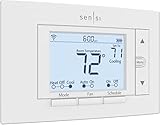
Overview: The Sensi ST55 Smart Thermostat leverages Honeywell’s legacy to offer a privacy-focused, user-friendly Wi-Fi thermostat emphasizing ease of installation and energy savings. It prioritizes data security and simplicity, targeting users wary of data sharing and those needing a hassle-free DIY upgrade. What Makes It Stand Out: Sensi differentiates itself with a strong privacy promise (no selling of personal data), true C-wire optional operation for wider compatibility, and straightforward physical button controls that fit standard wallplates. Its ENERGY STAR certification claims significant savings (~23%), bolstered by usage reports and proactive HVAC maintenance alerts. Value for Money: Positioned as a mid-tier option, its value shines through exceptional installation ease (no wall patching), robust privacy stance, and tangible energy-saving potential. It undercuts premium thermostats while offering more privacy assurance and simpler operation than some competitors, making it a smart buy for privacy-conscious DIYers. Strengths and Weaknesses: Strengths: No C-wire usually needed; strong privacy policy; easy physical button interface; detailed usage reports; simple DIY install; ENERGY STAR savings. Weaknesses: App interface less polished than leaders; limited advanced features (e.g., no Matter support); scheduling can feel basic; display is functional but not premium. Bottom Line: Highly recommended for users prioritizing data privacy, effortless installation without a C-wire, and clear energy-saving reports; a practical, reliable upgrade for most standard HVAC systems seeking simplicity and security.
3. New! Honeywell Home Smart Thermostat, Conventional/Heat Pump Compatibility, WiFi Thermostat for Home, X2S, Gray

Overview: The Honeywell Home X2S (RTH2CWF) is a versatile Wi-Fi thermostat designed specifically as a replacement for older models (like the RTH6580), supporting both conventional and heat pump systems. It emphasizes Matter certification, flexible scheduling, and utility program integration for energy-conscious homeowners. What Makes It Stand Out: Key highlights include Matter over Thread certification for future-proof smart home integration (Apple HomeKit, Alexa, Google), explicit compatibility with complex heat pump setups (2H/2C conventional or 2H/1C heat pump), and utility-focused features like demand response participation. The flexible 5-1-1, 5-2, or 7-day scheduling caters to diverse routines. Value for Money: Its price reflects its niche as a direct RTH6580 successor with enhanced connectivity (Matter) and heat pump support. While requiring a C-wire, the value is solid for users with compatible systems needing modern smart features, utility rebates, and long-term Matter compatibility, justifying the cost over basic models. Strengths and Weaknesses: Strengths: Matter certified for broad ecosystem support; excellent heat pump/conventional compatibility; flexible programming options; utility demand response capable; humidity monitoring. Weaknesses: C-wire mandatory; setup slightly more complex than entry-level; display less vibrant than color touchscreen models; app can be intricate for beginners. Bottom Line: The top pick for users with heat pumps or older Honeywell systems needing a direct, feature-rich upgrade with Matter support and utility program access; ensure C-wire availability before purchase for best results.
4. Honeywell Home RTH9585WF1004 Wi-Fi Smart Color Thermostat, 7 Day Programmable, Touch Screen, Energy Star, Alexa Ready, Gray

Overview: The Honeywell RTH9585WF is a premium Wi-Fi thermostat featuring a customizable color touchscreen, advanced scheduling, and strong utility integration. It targets users wanting a blend of aesthetic personalization, energy-saving programs, and seamless smart home control for comprehensive climate management. What Makes It Stand Out: Its vibrant, customizable color touchscreen is the centerpiece, allowing décor matching and intuitive swipe navigation. Deep utility integration stands out, enabling participation in demand response programs for potential rebates. Flexible scheduling adapts to utility peak pricing, and ENERGY STAR certification underscores efficiency. Value for Money: Positioned at a higher price point, it justifies the cost with its premium touchscreen, extensive utility features, and robust smart home compatibility (Alexa, etc.). While pricier than basic models, the enhanced user experience, potential rebate savings, and long-term energy management tools offer compelling value for tech-savvy homeowners. Strengths and Weaknesses: Strengths: Beautiful, customizable color touchscreen; excellent utility program integration; flexible scheduling; bright display; strong smart home compatibility. Weaknesses: Requires C-wire; higher cost than non-touch models; not compatible with electric baseboard heat; app can feel secondary to the physical interface. Bottom Line: Highly recommended for users prioritizing a premium, customizable interface, active participation in utility savings programs, and a top-tier touchscreen experience; ideal if your system has a C-wire and you value aesthetics alongside functionality.
5. Google Nest Thermostat - Smart Thermostat for Home - Programmable Wifi Thermostat - Snow

Overview: Google’s Nest Thermostat is a sleek, learning-focused smart thermostat designed to simplify energy savings through automation and intuitive app control. It emphasizes automatic scheduling, remote access, and proactive energy-saving suggestions to optimize comfort without manual programming. What Makes It Stand Out: The Nest excels with its signature “Auto-Schedule” that learns routines over time and “Auto-Away” to save energy when you’re out. Unique features include “Savings Finder” for personalized efficiency tips and strong integration with the Google Home ecosystem. ENERGY STAR certification and C-wire-free operation in most homes enhance accessibility. Value for Money: Competitively priced, it offers exceptional value through significant potential energy savings (via learning and Savings Finder) and seamless Google Home integration. While lacking advanced utility programs of some Honeywells, its ease of use, learning capabilities, and robust app provide strong ROI for users invested in the Google ecosystem seeking hassle-free automation. Strengths and Weaknesses: Strengths: Learns schedules automatically; intuitive Google Home app; Savings Finder feature; C-wire usually not needed; clean, modern design; strong remote access. Weaknesses: Limited manual scheduling granularity; less focused on utility demand response programs; compatibility checker essential; no physical buttons for quick adjustments. Bottom Line: An outstanding choice for Google ecosystem users wanting a “set-and-forget” thermostat that learns habits and actively finds savings; highly recommended for simplicity, effective automation, and maximizing energy efficiency with minimal user input.
6. Honeywell Home RTH8800WF2022, T5 WiFi Smart Thermostat, 7 Day-Programmable Touchscreen, Alexa Ready, Geofencing Technology, Energy Star, C-Wire Required
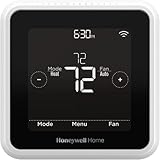
Overview: The Honeywell T5 is a programmable smart thermostat prioritizing energy efficiency through advanced scheduling and geofencing. ENERGY STAR certified, it targets homeowners seeking precise climate control and bill savings without complex installation.
What Makes It Stand Out: Its geofencing technology intelligently switches to “Away” mode using smartphone location, while the 7-day flexible scheduling allows granular temperature adjustments. The inclusion of utility demand-response programs—where providers offer rebates for minor temperature adjustments during peak demand—adds unique financial incentives beyond typical models.
Value for Money: Positioned mid-range, the T5 justifies its cost through verified energy savings (8–16% on heating/cooling bills) and potential utility rebates. It outperforms basic programmable thermostats but lacks the ecosystem integration of premium models like ecobee.
Strengths and Weaknesses: Strengths: Reliable geofencing, clear touchscreen, actionable energy reports, utility program compatibility. Weaknesses: C-wire mandatory (limiting older homes), no built-in room sensors, scheduling interface less intuitive than competitors.
Bottom Line: An excellent choice for utility-savvy users prioritizing scheduling precision and geofencing, though C-wire dependency may deter some. Ideal for maximizing rebate opportunities and steady energy reduction.
7. Amazon Smart Thermostat – Save money and energy - Works with Alexa and Ring - C-wire required

Overview: Amazon’s thermostat merges deep Alexa integration with energy-saving automation, targeting users invested in Amazon’s ecosystem. It simplifies smart climate control while emphasizing utility rebates and effortless installation.
What Makes It Stand Out: Unique “comfort zones” leverage Echo devices or Air Quality Monitors to adjust temperatures room-by-room based on presence detection—a standout for multi-occupant homes. Alexa’s automatic transitions between Home/Away/Sleep modes require zero manual input, enhancing convenience.
Value for Money: Competitive pricing paired with Amazon’s post-purchase rebate email streamlines savings. While ENERGY STAR’s $50/year claim is standard, the seamless Alexa/Ring compatibility adds value for existing users, though non-Amazon households gain less utility.
Strengths and Weaknesses: Strengths: Effortless Alexa voice control, intuitive app, strong presence-based automation, rebate assistance. Weaknesses: Limited third-party integration (no Apple/Google), no geofencing, requires C-wire, basic scheduling compared to Honeywell.
Bottom Line: Best for Amazon-centric households wanting hands-off automation and voice control. Rebates enhance affordability, but ecosystem lock-in reduces appeal for non-Alexa users.
8. meross Smart Thermostat for Home, WiFi Thermostat Works with Matter, Alexa, Apple Home, Google Assistant, App & Voice Control, 7x24h Scheduling, Energy Saving, C-Wire Required

Overview: The meross thermostat champions broad compatibility and Matter protocol support, catering to tech-savvy users managing diverse smart home ecosystems. It emphasizes scheduling flexibility and proactive HVAC monitoring.
What Makes It Stand Out: As a Matter-certified device, it enables local, hub-free control across Apple Home, Google, and Alexa—reducing latency and app clutter. Smart Alerts for filter changes or system errors provide maintenance foresight rare in budget models, while 24/7 scheduling optimizes energy use.
Value for Money: Budget-friendly with robust cross-platform functionality. Though C-wire-dependent like peers, its Matter integration future-proofs purchases better than single-ecosystem rivals. Lacks advanced features like room sensors but excels in reliability for its price.
Strengths and Weaknesses: Strengths: Seamless Matter integration, comprehensive scheduling, real-time energy tracking, strong app alerts. Weaknesses: Incompatible with electric baseboard heaters, C-wire required, limited third-party sensor support, interface less polished than ecobee.
Bottom Line: A top pick for multi-ecosystem homes seeking Matter compatibility and maintenance insights. Avoid if using baseboard heating, but ideal for integrated, alert-driven energy management.
9. ecobee Smart Thermostat Essential - Energy Star Certified programmable Wi-Fi Thermostat - Works with Siri, Alexa, and Google Assistant

Overview: ecobee’s Essential balances premium features with accessibility, targeting users wanting ecosystem flexibility and DIY installation. ENERGY STAR certified, it focuses on adaptive scheduling and remote management.
What Makes It Stand Out: Its “no C-wire” solution via the optional Power Extender Kit (PEK) accommodates older homes—a rarity among competitors. The touchscreen interface and free software updates ensure longevity, while the app provides detailed energy consumption analytics.
Value for Money: Priced slightly higher than mid-tier models, but the PEK flexibility and 23% claimed savings (vs. constant 72°F) justify cost. Room sensors (sold separately) elevate it beyond basic scheduling, though the Essential lacks built-in sensors.
Strengths and Weaknesses: Strengths: C-wire not essential (with PEK), intuitive app, strong multi-assistant support, regular updates. Weaknesses: No included room sensors, geofencing less reliable than Honeywell, premium features require add-ons.
Bottom Line: Highly recommended for homes lacking C-wires or seeking long-term adaptability. The Essential delivers polished performance but budget-conscious buyers should note sensor costs.
10. Sensi Lite Smart Thermostat, Programmable, WiFi, Easy DIY, Works With Alexa, ENERGY STAR Certified, ST25, Most Systems C-Wire Not Required, C-Wire needed with Heat/Cool Only & Heat Pump System – Black
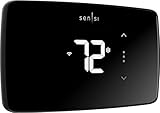
Overview: The Sensi Lite prioritizes privacy and hassle-free installation, appealing to users wary of data exploitation. ENERGY STAR certified, it offers straightforward scheduling and broad HVAC compatibility.
What Makes It Stand Out: Explicit privacy guarantees—no data selling or ad targeting—set it apart in a surveillance-heavy market. The “C-wire not required” design (for most systems) simplifies DIY setup, while the top-rated app enables reliable remote control and usage reports.
Value for Money: Affordable with no hidden costs, though utility savings (~23%) align with industry standards. Privacy focus adds intangible value, but geofencing is less sophisticated than Honeywell’s. Ideal for budget-conscious privacy advocates.
Strengths and Weaknesses: Strengths: Privacy-first policy, easy installation (level included), no C-wire needed for many systems, robust app. Weaknesses: C-wire required for heat pumps, basic scheduling, limited smart features vs. Matter/Alexa rivals, no geofencing automation.
Bottom Line: A trustworthy, no-frills option for privacy-focused homeowners with compatible HVAC systems. Skip if needing advanced automation, but perfect for simple, secure energy savings.
Understanding the Core Value of Remote Control
Beyond Basic Temperature Adjustment
Remote control isn’t just about changing the temperature from your phone. It’s the foundation for a dynamic home comfort system that responds to your life. Forget rigid schedules; adjust settings on the fly when plans change – cool the house before an early return from work or warm it up during an unexpected snow delay. This level of responsiveness eliminates the energy waste inherent in traditional programmable thermostats that run on fixed timers regardless of actual occupancy.
Energy Efficiency Through Active Management
The real power lies in proactive energy management. Monitoring your system usage remotely allows you to identify patterns and make informed adjustments. Did the AC run unnecessarily while you were on vacation? Remote access lets you correct that immediately, preventing wasted energy and high bills. Consistent, conscious control translates directly into measurable savings on your monthly utility expenses, often paying for the thermostat itself over time.
Peace of Mind and Home Protection
Remote thermostats offer crucial peace of mind beyond comfort. Monitor indoor temperatures while traveling to prevent frozen pipes in winter or extreme heat buildup in summer. Receive instant alerts if temperatures fall outside safe ranges, allowing you to take action before minor issues become costly disasters. This proactive monitoring is invaluable for protecting your home and possessions, especially during extended absences.
Essential Features for True Remote Control Capability
Reliable Mobile App Experience
The mobile application is your primary remote control interface, so its quality is non-negotiable. Look for apps that are consistently rated highly for stability, intuitive navigation, and fast response times. A laggy or crash-prone app defeats the purpose of remote access. Testimonials often highlight whether the app feels like a seamless extension of your home system or a frustrating afterthought.
Robust Wi-Fi Connectivity and Range
Stable, continuous Wi-Fi connection is the absolute backbone of remote functionality. The thermostat must maintain a strong signal to your home network router, even if it’s installed in a basement or utility closet. Prioritize models known for excellent wireless range and compatibility with both 2.4 GHz and (where supported) 5 GHz networks. Frequent disconnections render remote features useless.
Geofencing for Automatic, Location-Based Adjustments
This intelligent feature uses your smartphone’s location to automatically adjust the temperature when you leave or approach home. No manual input needed – it shifts to an energy-saving mode when the last person leaves and begins warming or cooling just before arrival. It eliminates the “did I remember to adjust it?” anxiety and ensures comfort without constant manual intervention.
Critical Compatibility Considerations
Matching Your Existing HVAC System Type
Not all thermostats work with every heating and cooling system. You must confirm compatibility with your specific setup – whether it’s a standard forced-air furnace and central air conditioner, a heat pump (which may require supplemental heat strips), a boiler system for radiators, or a multi-stage/multi-zone configuration. Mismatched systems lead to improper operation, potential damage, and voided warranties.
Understanding Wiring Requirements (Especially the C-Wire)
The common wire (C-wire) provides continuous power, crucial for Wi-Fi thermostats that need constant energy for connectivity and features. Many older homes lack this wire. While some newer models offer “power stealing” or include adapter kits to work without a C-wire, this can sometimes cause instability or issues with certain HVAC systems. Knowing your wiring setup beforehand prevents installation headaches and ensures reliable long-term performance.
Voltage Compatibility for Safety and Functionality
HVAC systems operate on different voltages (typically 24V AC for low-voltage systems common in homes, but sometimes line-voltage for baseboard heaters). Using a thermostat designed for the wrong voltage is dangerous and will damage equipment. Always verify the thermostat’s voltage specifications match your system’s requirements – this is a fundamental safety check, not an optional feature.
Installation and Setup Realities
DIY Feasibility vs. Professional Installation
While many thermostats tout “easy DIY installation,” the reality depends heavily on your comfort level with basic electrical work and understanding your existing wiring. If your wiring is clean, labeled, and matches standard diagrams, DIY might be straightforward. However, if wires are frayed, unlabeled, or your system has complexities (like a heat pump), professional installation is highly recommended. Incorrect wiring can damage your HVAC system or create safety hazards.
Network Integration and Initial Configuration
Getting the thermostat connected to your home Wi-Fi is the first critical step after physical installation. A smooth setup process with clear, step-by-step instructions within the mobile app is essential. Be prepared to have your Wi-Fi network name and password ready. Some systems require temporary direct connections (like Bluetooth pairing) before final Wi-Fi setup. Patience during this phase ensures reliable remote access later.
Calibration and Learning Period
After installation, the thermostat may need a short period to calibrate its sensors and learn your home’s heating and cooling characteristics. Initial temperature readings might seem slightly off as it adjusts. Most systems also have a learning phase where they observe your manual adjustments to build an efficient schedule. Understanding this process prevents frustration and sets realistic expectations for optimal performance.
Security and Privacy Imperatives
Data Encryption Standards
Your thermostat transmits data over the internet, making security paramount. Ensure the manufacturer employs strong encryption protocols (like WPA2/WPA3 for Wi-Fi and TLS for data transmission) to protect your home network and personal usage data from interception. Look for clear statements about encryption standards in the product specifications or privacy policy.
Firmware Update Policies
Security vulnerabilities are discovered over time. A responsible manufacturer provides regular, easy-to-install firmware updates to patch these holes. Investigate how often updates are released and how they are delivered (automatic vs. manual). A thermostat that no longer receives security updates becomes a potential weak point in your home network.
Privacy Controls for User Data
Smart thermostats collect data on your habits and home environment. Understand what data is collected, how it’s used (e.g., for improving features vs. advertising), and crucially, what control you have over it. Look for robust privacy settings within the app that allow you to opt-out of data sharing where possible and review what information is stored.
Evaluating Long-Term Value and Costs
Upfront Purchase Price Spectrum
Prices vary significantly based on features and brand reputation. Entry-level models offer basic remote control and scheduling, while premium options include advanced sensors, detailed energy reports, and sophisticated automation. Determine your essential features to avoid overpaying for capabilities you won’t use, but don’t sacrifice core reliability for the absolute cheapest option.
Calculating Potential Energy Savings
The most significant long-term cost is the energy your HVAC system consumes. Research the potential savings associated with features you prioritize (like scheduling accuracy, geofencing, or usage reports). Many utilities offer rebates for specific Energy Star certified models, which can substantially offset the initial cost. Factor in these potential savings and rebates when assessing the true value proposition.
Warranty Coverage and Support Quality
A solid warranty (typically 1-3 years) provides peace of mind against manufacturing defects. More importantly, evaluate the quality and accessibility of customer support. Are there clear channels for help (phone, chat, email)? Is there a comprehensive knowledge base? Responsive, knowledgeable support is invaluable if you encounter setup issues or technical problems down the line.
Future-Proofing Your Investment
Platform Longevity and Ecosystem Integration
Consider the manufacturer’s track record. How long do they typically support older models with software updates? Are they part of a larger, stable smart home ecosystem (like Matter compatibility)? Choosing a thermostat from a company committed to long-term platform support ensures your investment remains functional and integrated as your smart home evolves.
Sensor Technology and Environmental Awareness
Advanced models incorporate room sensors to monitor temperature and occupancy in different areas, enabling more precise comfort control. Some even detect humidity levels or air quality. While not essential for basic remote control, these features represent the direction of smart thermostats and can enhance overall comfort and efficiency if your budget allows.
Adapting to Evolving Smart Home Standards
The smart home landscape is constantly changing. Look for thermostats that support current open standards (like Matter over Thread) or have a proven history of adapting to new protocols (like Zigbee or Z-Wave). This flexibility helps ensure your thermostat can integrate with future smart home devices and platforms without becoming obsolete.
Frequently Asked Questions
Frequently Asked Questions
How difficult is installing a Wi-Fi thermostat myself? Installation difficulty varies; if your existing wiring is standard and matches the thermostat’s diagram, it’s often manageable for a DIYer comfortable with basic electrical work. However, complex systems (heat pumps, multi-stage) or missing wires (like a C-wire) usually require a professional HVAC technician to ensure safety and proper function.
Do I absolutely need a C-wire for a Wi-Fi thermostat? While many modern thermostats can function without a C-wire using “power sharing” techniques, it’s highly recommended. Operating without a dedicated C-wire can sometimes cause intermittent issues like the thermostat resetting, the HVAC system short-cycling, or unreliable Wi-Fi connectivity, especially on systems with humidifiers or older wiring.
Can a Wi-Fi thermostat really save me money on energy bills? Yes, significantly. By enabling precise scheduling, geofencing (adjusting when you’re away), remote adjustments to avoid waste, and providing usage insights, these thermostats optimize HVAC runtime. Most users see noticeable reductions in energy consumption, often recouping the thermostat’s cost within a year or two through lower utility bills.
What happens to my thermostat if my home Wi-Fi goes down? The thermostat will continue to function based on its last programmed schedule or manual settings, controlling your HVAC system normally. However, remote access via your phone app and voice control features will be unavailable until your Wi-Fi connection is restored. Local control at the thermostat itself always remains active.
Are Wi-Fi thermostats vulnerable to hacking? Like any internet-connected device, there is a potential risk. However, choosing models from reputable manufacturers that implement strong encryption (WPA2/WPA3, TLS), provide regular security updates, and allow you to control data sharing significantly minimizes this risk. Keeping your home Wi-Fi network secure with a strong password is also crucial.
How does geofencing actually work with a thermostat? Geofencing uses the location services on your smartphone. The thermostat’s app creates a virtual boundary (geofence) around your home. When your phone exits this boundary (indicating you’ve left), the thermostat switches to an energy-saving mode. When your phone re-enters the boundary, it starts adjusting the temperature to reach your desired comfort level by the time you arrive.
Will a smart thermostat work with my specific HVAC system (heat pump, boiler, etc.)? Compatibility is essential and varies. You must verify the thermostat explicitly supports your system type (standard AC/furnace, heat pump with auxiliary heat, boiler, etc.) before purchasing. Check the manufacturer’s compatibility tool online using your existing thermostat’s wiring as a guide to avoid operational problems or damage.
Can I control the thermostat using voice commands? Most modern Wi-Fi thermostats integrate with major voice assistants like Amazon Alexa, Google Assistant, and sometimes Apple HomeKit/Siri. This allows you to adjust the temperature, set modes, or check the status using simple voice commands, provided you have the corresponding smart speaker or display in your home.
What kind of information do the energy usage reports provide? These reports typically show your HVAC system’s runtime (heating and cooling hours), estimated energy consumption, comparisons to previous periods, and insights into how specific settings or schedules impact usage. This data helps identify inefficiencies and opportunities to further reduce energy waste.
Are there utility company rebates available for purchasing a smart thermostat? Yes, many electric and gas utilities offer rebates or discounts on specific Energy Star certified smart thermostats as part of energy efficiency programs. Check your local utility’s website or the thermostat manufacturer’s rebate page to see if you qualify – these can significantly lower the upfront cost.
See Also
- The 10 Best Remote Controls for Thermostats Every First-Time Homeowner Needs This Year
- 10 Best WiFi Thermostats for Energy Savings This Year
- The 10 Best WiFi Thermostats Every Tech-Savvy Renter Needs This Year
- The 10 Best WiFi Thermostats Every First-Time Homebuyer Needs This Year
- 10 Best Value WiFi Thermostats for Easy Installation in 2026