Table of Contents
As temperatures climb and energy costs continue to rise, homeowners are increasingly turning to whole house fans as a smart alternative to traditional air conditioning. These powerful ventilation systems work by drawing cool evening and morning air through open windows while expelling hot, stale air through your attic, creating a refreshing breeze throughout your entire home. The result? Dramatic energy savings, improved indoor air quality, and a more comfortable living environment without the constant hum and high electricity bills of AC units.
Understanding what makes a whole house fan truly energy-efficient in 2026 requires looking beyond simple horsepower ratings. Today’s most efficient models incorporate advanced motor technology, precision engineering, and smart features that optimize performance while minimizing energy consumption. Whether you’re building a new home or retrofitting an existing one, knowing which features matter most will help you select a system that delivers maximum cooling power for minimal energy cost, keeping your family comfortable and your utility bills manageable for years to come.
Top 10 Whole House Fans for Energy Efficiency
Detailed Product Reviews
1. QA-Deluxe 5500 Energy Efficient Whole House Fan – Low Voltage Plug & Play, 2-Speed Wall Switch & Timer, Removable Grille – 10-Year Warranty – Up to 3400 sq ft (2-Story) & 2400 sq ft (1-Story)
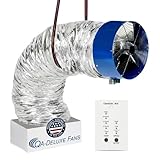
Overview: The QA-Deluxe 5500 is a robust whole house fan designed for energy-efficient cooling of medium to large homes. Delivering 5,500 CFM (3,945 CFM CA Title 24 compliant), it effectively ventilates two-story homes up to 3,400 square feet or single-story homes up to 2,400 square feet. This plug-and-play unit installs between standard 16" to 24" on-center joists without additional framing, measuring 28.5" x 14" x 14".
What Makes It Stand Out: The integrated R-5 insulated damper prevents thermal transfer when idle, maintaining energy savings year-round. The low-voltage plug-and-play design simplifies installation, while the included 2-speed wall switch with timer offers convenient operational control. A 10-year motor warranty and 3-year parts warranty provide exceptional long-term protection.
Value for Money: Priced competitively for its class, the QA-Deluxe 5500 delivers substantial ROI through reduced AC dependency. The extensive warranty and USA assembly justify the investment compared to cheaper alternatives with shorter lifespans.
Strengths and Weaknesses: Strengths include powerful airflow, energy efficiency, straightforward installation, robust warranties, and effective insulation. Weaknesses involve the fixed wall switch location limiting flexibility, and requiring adequate attic ventilation (4.5 sq ft). The unit may be oversized for smaller homes.
Bottom Line: An excellent choice for homeowners seeking reliable, efficient cooling with premium features and long-term warranty coverage. Ideal for medium to large two-story residences in moderate climates.
2. QA-Deluxe 6500 Energy Efficient Whole House Fan – Low Voltage Plug & Play, 2-Speed Wall Switch & Timer, Removable Grille – 10-Year Warranty – Up to 4400 sq ft (2-Story) & 3000 sq ft (1-Story)

Overview: The QA-Deluxe 6500 upgrades the 5500 model with enhanced airflow for larger residences. Producing 6,500 CFM (4,478 CFM CA Title 24 compliant), it cools two-story homes up to 4,400 square feet or single-story homes up to 3,000 square feet. It retains the same compact dimensions (28.5" x 14" x 14") and joist compatibility as its smaller sibling, making installation straightforward.
What Makes It Stand Out: This model’s higher capacity serves expansive homes without increasing installation complexity. The R-5 insulated damper, 2-speed wall switch with timer, and low-voltage plug-and-play design remain standard. The identical warranty package (10-year motor, 3-year parts) and USA assembly ensure premium quality and long-term reliability.
Value for Money: The price premium over the 5500 is justified for homes exceeding the smaller unit’s capacity. It delivers proportionally greater cooling power while maintaining energy efficiency, preventing the need for multiple units or oversized AC systems. The long-term savings offset the initial investment.
Strengths and Weaknesses: Strengths include superior CFM rating, comprehensive coverage, easy installation, and excellent warranties. Weaknesses are the same fixed wall switch limitation and significant attic ventilation requirements (5.5 sq ft). It may be unnecessarily powerful for average-sized homes, representing overkill.
Bottom Line: The optimal solution for large homes needing maximum ventilation. Worth the upgrade if your square footage demands the extra capacity, offering the same reliability and efficiency as the 5500 series.
3. Centric Air QA-Deluxe 5500 Energy Efficient Whole House Fan – Plug & Play, 2-Speed Temperature/Timer Remote Control, Removable Grille – 10-Warranty – Up to 3400 sq ft (2-Story) & 2400 sq ft (1-Story)

Overview: The Centric Air QA-Deluxe 5500 mirrors the standard 5500 model’s specifications—5,500 CFM (3,945 CFM CA Title 24) for homes up to 3,400 sq ft (two-story) or 2,400 sq ft (single-story). The identical dimensions (28.5" x 14" x 14") and 16-24" joist compatibility ensure seamless installation without structural modifications.
What Makes It Stand Out: The wireless remote control with integrated timer distinguishes this model, offering unmatched operational flexibility compared to fixed wall switches. Control the fan from anywhere in your home without rewiring. It retains the R-5 insulated damper, low-voltage plug-and-play design, and USA assembly that define the series.
Value for Money: The modest price increase for remote functionality delivers significant convenience value. For homes where wall switch placement is problematic or for users prioritizing flexibility, the premium is well-justified over the standard wall-switch version.
Strengths and Weaknesses: Strengths include complete remote operation convenience, identical performance to the wall-switch version, and robust warranties. Potential weaknesses involve remote battery dependency, possible signal interference, and misplacement risk. The core unit maintains the same ventilation requirements (4.5 sq ft) and energy efficiency.
Bottom Line: Choose this variant if remote control convenience outweighs the slight cost increase. It offers identical performance and reliability to the standard 5500 while providing superior user flexibility for modern households.
4. Quietcool QC ES-3100 RF Energy Saver Advanced Whole House Fan with Wireless Control - Up to 3081 CFM - As low as 81 watts - Two Speed - Covers up to 1,541 SQFT - 10 Year Warranty

Overview: The Quietcool QC ES-3100 RF targets smaller homes with an ultra-efficient design. Moving 3,081 CFM on high and 2,020 CFM on low, it effectively cools spaces up to 1,541 square feet. The ECM motor consumes just 285 watts on high and an impressive 80.8 watts on low, making it exceptionally economical for continuous operation.
What Makes It Stand Out: Remarkable energy efficiency stands out, with power consumption lower than many ceiling fans. The wireless RF control provides convenient operation without wall modifications. The R5 damper box insulates effectively during colder months. QuietCool’s advanced design emphasizes whisper-quiet operation compared to traditional whole house fans, making it ideal for noise-sensitive environments.
Value for Money: Lower upfront cost makes it accessible for budget-conscious buyers or small homes. Operating costs are minimal, delivering rapid payback through energy savings. However, limited coverage requires accurate sizing—it’s unsuitable for larger spaces, potentially necessitating multiple units.
Strengths and Weaknesses: Strengths include extreme efficiency, quiet operation, wireless control, and low power draw. Weaknesses involve limited CFM and coverage area, potentially insufficient for open floor plans or multiple stories. The smaller motor may struggle with inadequate attic ventilation and isn’t designed for expansive cooling duties.
Bottom Line: Perfect for apartments, condos, or small single-story homes prioritizing quiet operation and minimal energy use. Verify your square footage needs before purchasing, as it’s designed for targeted, efficient cooling rather than whole-house ventilation in larger properties.
5. Master Flow GAF 6000 CFM 30" Belt-Drive Deluxe Whole House Fan, 1/3 HP Motor, 2-Speed Wall Switch, Energy Efficient Ventilation for Homes upto 3000 sq. ft. - 30BWHFS

Overview: The Master Flow GAF 6000 CFM employs a traditional belt-drive design for powerful ventilation. The 1/3 HP permanent split-capacitor motor drives a 30" fan, moving substantial air volume for homes up to 3,000 square feet. This utilitarian approach prioritizes raw airflow over advanced features, representing a classic whole house fan design.
What Makes It Stand Out: The belt-drive system offers proven durability and quieter operation than direct-drive alternatives at high speeds. Its 6,000 CFM capacity matches premium models at a lower price point. The included 2-speed wall switch provides basic control, and optional timer compatibility (model WHT36, sold separately) adds scheduling flexibility for automated operation.
Value for Money: This fan delivers excellent price-per-CFM value for budget-focused buyers. However, the separate timer purchase increases total cost. Lacks insulation damper details, potentially reducing energy efficiency compared to insulated competitors. USA assembly quality provides reliability and parts availability.
Strengths and Weaknesses: Strengths include high airflow, robust belt-drive motor, cost-effective performance, and quiet operation relative to power. Weaknesses involve bulkier 30" design requiring more attic space, no integrated timer, potential lack of thermal damper, and older technology less optimized for efficiency. Installation may be more complex.
Bottom Line: A solid workhorse for homeowners wanting maximum airflow on a budget. Suitable for larger attics where installation space isn’t constrained. Consider alternatives if energy efficiency, remote control, or compact design are priorities. Best for those comfortable with basic controls and separate timer purchase.
6. QA-Deluxe 6500 Energy Efficient Whole House Fan – Plug & Play, 2-Speed Temperature/Timer Remote Control, Removable Grille – 10-Year Warranty – Up to 4400 sq ft (2-Story) & 3000 sq ft (1-Story)

Overview: The QA-Deluxe 6500 is a powerhouse whole house fan designed for substantial residences, delivering impressive airflow to cool homes up to 4,400 square feet. This energy-efficient unit pulls cool evening air through open windows while exhausting hot attic air, significantly reducing air conditioning dependency and utility costs. Its plug-and-play design simplifies installation between standard joists without structural modifications.
What Makes It Stand Out: The 6,500 CFM airflow capacity sets this model apart for larger homes, while the R-5 insulated damper prevents thermal transfer when idle. The wireless remote with timer functionality offers convenient operation from anywhere in your home. A standout feature is the 10-year motor warranty plus 3-year parts coverage, backed by USA assembly, providing exceptional long-term confidence. The removable grille facilitates easy cleaning and maintenance access.
Value for Money: While representing a higher initial investment than smaller units, the QA-Deluxe 6500 delivers substantial ROI through reduced AC usage. The robust warranty minimizes future replacement concerns, and the energy savings typically offset the purchase price within 2-3 cooling seasons for large homes. Compared to central air installation or operation, this fan offers dramatic cost reduction.
Strengths and Weaknesses: Strengths include massive coverage area, high-performance airflow, excellent insulation damper, straightforward installation, and industry-leading warranty. The timer and remote enhance usability. Weaknesses involve its substantial size requiring adequate attic space, and the remote’s basic functionality may lack smart home integration some users desire. The unit’s power demands proper electrical consideration.
Bottom Line: For homeowners with large properties seeking significant cooling cost reduction, the QA-Deluxe 6500 is an outstanding investment. Its powerful performance, energy efficiency, and exceptional warranty make it a top-tier choice for whole-house ventilation.
7. Quietcool QC CL-4700 RF Classic Advanced Whole House Fan with Wireless Control - Up to 4415 CFM - Two Speed - Covers up to 2,208 SQFT - 10 Year Warranty - Removable Grille

Overview: The QuietCool QC CL-4700 RF Classic Advanced targets average-sized homes up to 2,208 square feet with reliable ventilation cooling. This two-speed system efficiently exchanges indoor and outdoor air, creating a comfortable living environment while reducing air conditioning costs. The wireless remote enables convenient operation without wired switches.
What Makes It Stand Out: Delivering 4,415 CFM on high speed, this model balances performance with practicality. The R5 insulated damper doors prevent heat loss during winter months, maintaining energy efficiency year-round. Its 551-watt PSC motor provides robust airflow while remaining cost-effective. The 10-year warranty demonstrates manufacturer confidence, and the removable grille simplifies maintenance. QuietCool’s established reputation for reliable whole-house ventilation adds credibility.
Value for Money: Positioned in the mid-range price segment, the CL-4700 offers excellent value for homes within its coverage area. The energy savings typically recover the investment within several cooling seasons. While not as efficient as ECM motor models, the PSC motor delivers reliable performance at a lower upfront cost, making it accessible for budget-conscious homeowners seeking whole-house cooling solutions.
Strengths and Weaknesses: Strengths include solid airflow performance, quiet operation, effective insulation damper, wireless convenience, and comprehensive warranty. The unit is well-suited for single-story and smaller two-story homes. Weaknesses involve the PSC motor’s higher energy consumption compared to ECM alternatives, limited coverage for larger properties, and absence of smart home connectivity features that some competitors offer.
Bottom Line: The QC CL-4700 RF is a dependable, cost-effective solution for average-sized homes. Its proven performance, warranty protection, and energy savings make it a smart choice for homeowners seeking reliable whole-house ventilation without premium pricing.
8. Quietcool QC ES-4700 RF Energy Saver Advanced Whole House Fan with Wireless Control - Up to 4195 CFM - As low as 75 watts - Two Speed - Covers up to 2,098 SQFT - 10 Year Warranty
Overview: The QuietCool QC ES-4700 RF Energy Saver revolutionizes whole-house ventilation with its ultra-efficient ECM motor, consuming as little as 75 watts on low speed. Designed for homes up to 2,098 square feet, this unit delivers powerful cooling while minimizing electricity costs. The two-speed wireless remote provides convenient control for optimizing comfort and efficiency.
What Makes It Stand Out: The ECM motor technology is the star feature, offering dramatic energy reduction compared to traditional PSC motors while maintaining 4,195 CFM high-speed performance. The R5 insulated damper box ensures year-round thermal efficiency. Operating at just 75 watts on low, this fan costs pennies per hour to run. QuietCool backs it with a 10-year warranty, and the removable grille allows easy access for cleaning and maintenance.
Value for Money: Though priced higher than PSC motor models, the ES-4700 delivers superior long-term value through substantial energy savings. Households using the fan frequently will recoup the premium within 1-2 seasons. The minimal operating cost makes it ideal for continuous evening operation, and the robust warranty protects your investment for a decade.
Strengths and Weaknesses: Strengths include exceptional energy efficiency, low power consumption, quiet ECM motor operation, effective cooling performance, reliable warranty, and insulated damper system. The wireless remote adds convenience. Weaknesses involve a higher upfront cost than classic models, slightly lower peak CFM than the CL-4700, and coverage limited to medium-sized homes requiring multiple units for larger properties.
Bottom Line: For eco-conscious homeowners prioritizing operational savings, the ES-4700 is an outstanding choice. The premium price is justified by remarkable efficiency and long-term cost reduction, making it a wise investment for sustainable home cooling.
9. Quietcool QC ES-6000 RF Energy Saver Advanced Whole House Fan with Wireless Control - Up to 5576 CFM - As low as 112 watts - Two Speed - Covers up to 2,788 SQFT - 10 Year Warranty

Overview: The QuietCool QC ES-6000 RF Energy Saver scales efficient ventilation to larger homes up to 2,788 square feet. This powerful unit moves 5,576 CFM on high while maintaining remarkable energy efficiency through its ECM motor. The two-speed system with wireless control provides flexible cooling for spacious residences seeking to minimize air conditioning dependency.
What Makes It Stand Out: This model delivers the highest airflow in QuietCool’s energy-efficient lineup while consuming only 112 watts on low speed. The ECM motor technology ensures optimal performance-to-power ratio, making it ideal for larger properties where running costs are a concern. The R5 damper box provides excellent insulation during inactive periods. A 10-year warranty and removable grille for maintenance access complete the premium package.
Value for Money: The ES-6000 commands a premium price but eliminates the need for multiple smaller units in large homes. Energy savings compound quickly in spacious properties with high cooling demands. The efficient motor design reduces operating costs by 70-80% compared to traditional air conditioning, delivering ROI within a few seasons for homes matching its capacity.
Strengths and Weaknesses: Strengths include exceptional CFM output for large spaces, ultra-efficient ECM motor, scalable cooling solution, reliable warranty protection, and effective thermal dampening. The wireless remote enhances usability. Weaknesses involve the highest price point in its category, substantial attic ventilation requirements (5.5 sq ft), and potential overcapacity for homes under 2,000 square feet. Installation may require professional electrical work.
Bottom Line: For larger homes prioritizing energy efficiency, the ES-6000 is the premium choice in whole-house ventilation. Its powerful performance and minimal operating costs justify the investment for spacious properties seeking sustainable cooling.
10. Solatube® Whole House Fan EPS FOCUS Model - Quiet, Energy-Efficient Ventilation for Rooms Up to 500 sq ft - Max CFM 259

Overview: The Solatube EPS FOCUS diverges from traditional whole-house fans by targeting individual rooms up to 500 square feet. This innovative unit operates with doors closed, pulling hot air into the attic while drawing fresh air through windows. Engineered for bedrooms, offices, or gyms, it provides localized cooling without conditioning entire homes.
What Makes It Stand Out: Operating at just 30 dB, this is arguably the quietest ventilation fan available, ensuring undisturbed sleep and work. The wafer-thin grille creates a modern, discreet aesthetic that blends seamlessly with ceilings. Its low-voltage EC brushless motor consumes minimal electricity, costing pennies daily. The complete DIY kit includes everything needed for straightforward installation without professional help. The universal remote offers flexible wall-mount or handheld operation.
Value for Money: Priced significantly below whole-house systems, the EPS FOCUS delivers targeted value for problem rooms. The minimal operating cost and easy installation eliminate ongoing expenses. While it won’t replace central cooling, it reduces AC usage in specific zones, providing quick payback for households needing spot ventilation rather than comprehensive solutions.
Strengths and Weaknesses: Strengths include ultra-quiet operation, sleek minimalist design, simple DIY installation, exceptional energy efficiency, and targeted cooling capability. The remote control adds convenience. Weaknesses involve limited 259 CFM airflow restricting it to small rooms, inability to cool entire homes, and requirement for open windows in the target room. It’s a supplement, not a replacement for whole-house systems.
Bottom Line: For homeowners seeking quiet, energy-efficient relief in specific hot rooms, the Solatube EPS FOCUS excels. Its unique design and whisper-quiet operation make it ideal for bedrooms or offices, though it’s unsuitable as a primary whole-house cooling solution.
Understanding Whole House Fans and Energy Efficiency
How Whole House Fans Work
Whole house fans operate on a beautifully simple principle: they create negative pressure inside your home by pulling air upward and pushing it into the attic, which then forces the hot attic air out through existing vents. This continuous air exchange replaces the hot indoor air with cooler outdoor air in a fraction of the time it takes traditional cooling systems to achieve the same temperature drop. The key to energy efficiency lies in how quickly and effectively this exchange happens without consuming excessive electricity.
The Science Behind Energy Savings
The energy savings from whole house fans stem from their ability to leverage naturally cooler outdoor air during evening and early morning hours. Instead of using energy-intensive compressors and refrigerants like air conditioners, these fans simply move air. A properly sized and installed system can reduce your cooling costs by 50-90% depending on your climate zone. The efficiency multiplier comes from reducing your air conditioner’s runtime and giving your attic—a major source of heat gain—a thorough flush of hot air that would otherwise radiate back into your living spaces.
Climate Considerations for Maximum Efficiency
Not all climates are equally suited for whole house fan operation. Regions with significant temperature drops between day and night (typically 15-20°F or more) see the greatest energy savings. Coastal areas, mountain regions, and desert climates with cool evenings are ideal candidates. In more humid climates, timing becomes crucial—running the fan during the driest parts of the day prevents adding excess moisture to your home while still capitalizing on cooler temperatures.
Key Features That Define Energy Efficiency
CFM Ratings and Airflow Efficiency
CFM (Cubic Feet per Minute) measures how much air a fan moves, but higher isn’t always better for efficiency. The sweet spot is matching CFM to your home’s square footage and volume. Look for fans that deliver approximately 2-3 CFM per square foot of living space. More advanced models offer variable speed settings, allowing you to run at lower CFM during milder temperatures, consuming significantly less energy while maintaining comfort.
Motor Types: ECM vs PSC
The motor is the heart of energy efficiency. Electronically Commutated Motors (ECM) represent the gold standard for 2026, using up to 75% less electricity than traditional Permanent Split Capacitor (PSC) motors. ECM motors adjust their speed based on demand and operate cooler, extending the fan’s lifespan. While PSC motors are less expensive initially, the energy payback period for ECM motors typically ranges from 2-4 years, making them the smarter long-term investment.
Insulation and Sealing Mechanisms
A major energy waster in older whole house fan designs is air leakage when the unit isn’t running. Modern energy-efficient models feature insulated, gasket-sealed doors that automatically close when the fan shuts off. Some advanced systems include R-10 or higher insulation values and airtight seals that prevent heated or cooled air from escaping through the fan opening into the attic, eliminating a significant source of energy loss.
Blade Design and Aerodynamics
Aerodynamic blade design directly impacts how efficiently a fan moves air. Look for fans with precision-engineered, balanced blades that minimize turbulence and noise while maximizing airflow. Multi-wing designs with optimized pitch angles can move the same amount of air as older designs while using 30-40% less energy. The best blades are made from lightweight, durable materials that resist warping and maintain their efficiency over time.
Types of Whole House Fans
Traditional Belt-Drive Models
Belt-drive fans separate the motor from the fan blades using a pulley system, which reduces vibration and noise while allowing the motor to operate at optimal speeds. These systems typically last longer because the motor doesn’t endure direct blade stress. For energy efficiency, look for models with high-quality bearings and properly tensioned belts that minimize friction losses. Belt-drive units excel in larger homes requiring higher CFM ratings.
Direct-Drive Fans
Direct-drive fans connect the motor shaft directly to the blades, resulting in a more compact design with fewer moving parts. Modern direct-drive units with ECM motors offer exceptional efficiency and are generally easier to maintain since there are no belts to replace. They’re ideal for installations with limited attic space and provide excellent energy efficiency in small to medium-sized homes.
Smart Whole House Fans
The evolution toward smart home integration has revolutionized whole house fan efficiency. These systems automatically adjust speed based on indoor and outdoor temperature differentials, humidity levels, and even air quality sensors. They learn your schedule and preferences, running at optimal times without manual intervention. The energy savings from automated operation can add an additional 15-25% beyond the base efficiency of the fan itself.
Compact and Space-Saving Designs
For homes with limited attic space or unconventional framing, compact whole house fans deliver impressive efficiency in smaller packages. These units often use centrifugal fan designs rather than traditional axial blades, allowing them to move substantial air through smaller openings. While typically more expensive per CFM, their ability to be installed in tight spaces makes them invaluable for retrofit projects where traditional units won’t fit.
Sizing Your Fan for Optimal Performance
Calculating Your Home’s CFM Requirements
Proper sizing is critical for both comfort and efficiency. Start by calculating your home’s total square footage and multiplying by the ceiling height to get cubic footage. For a complete air exchange every 2-3 minutes, divide the total cubic footage by 2 or 3. This gives you your target CFM range. Oversizing leads to excessive energy consumption and noise, while undersizing forces the fan to run longer, negating potential savings.
The 2-3 Minute Air Exchange Rule
The 2-3 minute air exchange standard represents the optimal balance between energy consumption and cooling effectiveness. Faster exchanges (closer to 2 minutes) create a more powerful cooling sensation but use more energy. Slower exchanges (closer to 3 minutes) are more energy-efficient but may feel less dramatic. Multi-speed fans give you the flexibility to adjust this based on daily temperature variations.
Multi-Speed vs Single-Speed Options
Multi-speed fans offer superior energy efficiency by allowing you to match fan output to cooling needs. On mild evenings, a low speed setting might provide perfect comfort while using minimal electricity. Single-speed fans operate at full capacity whenever on, which can waste energy during marginal cooling conditions. The ability to fine-tune operation makes multi-speed models worth the modest price premium for most homeowners.
Installation Factors That Impact Efficiency
Attic Ventilation Requirements
Your fan is only as efficient as your attic’s ability to exhaust hot air. Without adequate attic ventilation (soffit, ridge, or gable vents), the fan works against pressure buildup, consuming more energy for less cooling effect. Calculate your required net free vent area (NFVA) by dividing the fan’s CFM by 750. This ensures unrestricted airflow and prevents the motor from straining, which reduces both efficiency and lifespan.
Ideal Placement and Positioning
Strategic placement maximizes cooling efficiency while minimizing energy use. Center the fan in a central hallway on the highest occupied floor to create even air distribution. Avoid placing fans near bedrooms where noise might be disruptive, and ensure the path to open windows is unobstructed. Proper positioning reduces the need to run the fan at higher speeds, directly saving energy.
Electrical Considerations
Energy-efficient fans often require dedicated circuits, especially larger models. Ensure your electrical panel can accommodate the required amperage without overloading. Some advanced fans include soft-start technology that reduces startup power draw by up to 70%, preventing circuit strain and reducing peak demand charges. Consider wiring the fan to a timer or smart switch to prevent accidental all-day operation.
Professional vs DIY Installation
While DIY installation can save money upfront, professional installation often pays for itself through optimized efficiency. Certified installers understand proper sealing, insulation, and balancing that prevent energy loss. They can also assess your attic ventilation and recommend improvements that maximize the fan’s effectiveness. Poor installation can reduce efficiency by 20-30% through air leaks and improper ducting.
Noise Levels and Home Comfort
Understanding Sone Ratings
Sone ratings measure perceived loudness, with lower numbers indicating quieter operation. Energy-efficient fans typically operate between 1-4 sones on low speed and 4-7 sones on high. For comparison, a modern refrigerator runs at about 1 sone. Quiet operation isn’t just about comfort—fans that are too loud get used less frequently, eliminating potential energy savings. Look for fans with sone ratings under 5 for regular use settings.
Vibration Isolation Techniques
Vibration is both a noise source and an energy waster. Quality fans incorporate rubber isolation mounts, flexible duct connectors, and balanced blade assemblies that minimize vibration transfer to your home’s structure. Some advanced models include floating motor mounts that virtually eliminate vibration. This not only reduces noise but also prevents energy loss through structural damping.
Quiet Operation Features to Look For
Beyond basic isolation, premium energy-efficient fans include acoustic insulation around the housing, variable speed ramps that avoid sudden noise spikes, and aerodynamic blade designs that reduce air turbulence noise. Some units feature “night modes” that automatically limit speed during quiet hours, ensuring comfort without sacrificing the energy savings from overnight cooling.
Smart Features and Home Integration
Programmable Timers and Thermostats
Built-in timers and thermostats prevent energy waste from forgotten fans left running. Set your fan to automatically shut off after a predetermined time or when indoor temperatures reach your desired level. Dual-temperature sensors that compare indoor and outdoor temperatures ensure the fan only runs when it’s actually beneficial, preventing operation during unexpected temperature inversions or humidity spikes.
Wi-Fi Connectivity and App Control
Wi-Fi enabled fans allow remote monitoring and control from your smartphone, letting you start cooling your home before you arrive. Advanced apps provide energy consumption tracking, runtime analytics, and maintenance reminders. Some systems integrate with local weather data to automatically adjust operation based on forecasted temperatures, optimizing energy savings without constant manual adjustment.
Integration with Home Automation Systems
Fans that connect to platforms like Alexa, Google Home, or comprehensive home automation systems can coordinate with other energy-saving devices. They might automatically turn off when your air conditioner activates, or run in conjunction with smart window openers that automatically close when the fan stops. This ecosystem approach maximizes whole-home energy efficiency rather than treating the fan as an isolated system.
Energy Monitoring Capabilities
Real-time energy monitoring helps you understand exactly how much electricity your fan consumes and calculate precise savings versus air conditioning. Some smart fans provide detailed usage reports showing runtime, speed settings, and estimated cost per hour. This data allows you to fine-tune your usage patterns for maximum efficiency and provides concrete numbers for tracking your return on investment.
Cost Analysis and ROI
Initial Investment Breakdown
Energy-efficient whole house fans typically range from $300 to $1,500 depending on size, features, and motor technology. ECM motor models cost 30-50% more upfront than standard versions but deliver substantially better long-term value. Installation adds $200-$600 depending on complexity. While the initial outlay exceeds basic models, the energy savings typically recover the difference within 2-5 years.
Operating Cost Calculations
A modern ECM whole house fan uses 70-300 watts depending on speed, compared to 2,000-5,000 watts for central air conditioning. Running a whole house fan for 4 hours at an average of 150 watts costs about 8 cents (at $0.13/kWh), while running AC for the same period costs $1.04-$2.60. Daily savings of $1-$2 add up to $300-$600 over a cooling season, making the operating cost advantage substantial.
Payback Period Expectations
Most homeowners achieve full payback on their energy-efficient whole house fan within 3-7 years through reduced electricity bills. Factors accelerating payback include higher local electricity rates, longer cooling seasons, and larger homes with expensive-to-run AC systems. In extreme climates with high energy costs, payback can occur in as little as 2-3 years. The fan’s 15-20 year lifespan means over a decade of pure savings after payback.
Utility Rebates and Incentives
Many utility companies offer rebates for energy-efficient whole house fans, typically ranging from $50-$300. Check the Database of State Incentives for Renewables & Efficiency (DSIRE) for programs in your area. Some utilities classify these fans as demand-response devices, offering additional incentives for smart models that can be remotely managed during peak load periods. These programs can reduce your effective cost by 20-40%.
Maintenance for Sustained Efficiency
Seasonal Maintenance Checklist
To maintain peak efficiency, inspect your fan each spring before cooling season begins. Check belt tension and condition on belt-drive models, clean dust from blades and motor housing, verify that automatic shutters open and close freely, and ensure attic vents remain unobstructed. Test all speed settings and smart features. A well-maintained fan operates 10-15% more efficiently than a neglected one.
Cleaning Best Practices
Dust accumulation on blades reduces airflow efficiency by disrupting smooth air movement. Clean blades every 2-3 months during heavy use with a soft brush or vacuum attachment. Avoid bending or damaging blade edges, as even minor imperfections increase turbulence and noise while reducing efficiency. Keep the motor housing clean but never use liquid cleaners near electrical components.
When to Replace Your Fan
Even the best-maintained fans lose efficiency over time. Consider replacement if your fan is more than 15-20 years old, makes excessive noise indicating bearing wear, or uses an outdated PSC motor. Newer models are so much more efficient that replacement often makes financial sense even if the old unit still functions. A 20-year-old fan might use 2-3 times the electricity of a modern equivalent.
Common Mistakes to Avoid
Undersized Fan Selection
Choosing a fan that’s too small for your home forces extended runtimes that waste energy and provide inadequate cooling. The fan runs continuously trying to achieve temperature reduction, consuming electricity without delivering results. Always size based on your home’s actual cubic footage plus a 10-15% buffer for optimal efficiency.
Poor Attic Ventilation
Installing a powerful fan without addressing insufficient attic ventilation creates a pressure imbalance that reduces efficiency and can backdraft combustion appliances. The fan motor strains against the pressure, consuming excess energy and wearing prematurely. Always calculate and ensure adequate NFVA before installation.
Improper Sealing and Insulation
Gaps around the fan housing and inadequate insulation on the fan door create year-round energy loss. Heated air escapes in winter, and cooled air leaks in summer, forcing your HVAC system to work harder. Proper installation includes airtight sealing and insulation matching your attic’s R-value.
Running at Inappropriate Times
Operating your fan when outdoor temperatures exceed indoor temperatures or during high humidity periods wastes energy and can make your home less comfortable. Smart controls prevent this mistake, but manual users must be diligent about checking conditions before turning on the fan.
Future Trends for 2026 and Beyond
Emerging Technologies
The next generation of whole house fans incorporates brushless DC motors with integrated variable frequency drives, promising another 20-30% efficiency gain over current ECM models. Advanced materials like carbon fiber blades reduce weight while increasing durability. Some prototypes integrate thermoelectric cooling elements for hybrid operation during marginal temperature conditions.
Evolving Energy Standards
New federal and state energy efficiency standards taking effect in 2026 require minimum efficacy ratings (CFM per watt) for whole house fans. These regulations are driving innovation and eliminating inefficient models from the market. Look for fans certified under these new standards to ensure you’re getting the most efficient technology available.
Sustainability Features
Manufacturers are increasingly focusing on sustainability beyond energy consumption. Recycled and recyclable materials, modular designs for easier repair, and extended warranty programs that encourage long-term use rather than replacement are becoming standard. Some companies now offer take-back programs for old units, ensuring responsible recycling of components.
Frequently Asked Questions
How much can I realistically save on my energy bills with a whole house fan?
Most homeowners save between 30-70% on their cooling costs during mild to moderate weather, translating to $300-$800 annually depending on home size, local electricity rates, and climate. The savings are most dramatic in climates with cool evenings where you can avoid air conditioning entirely for months.
What size whole house fan do I need for a 2,000 square foot home?
For a typical 2,000 sq ft home with 8-foot ceilings (16,000 cubic feet), you’ll want a fan rated between 5,300-8,000 CFM to achieve a complete air exchange every 2-3 minutes. Choose a multi-speed model around 7,000 CFM for optimal flexibility and efficiency.
Are whole house fans noisy?
Modern energy-efficient fans are significantly quieter than older models. Quality units operate between 1-4 sones on low speed (comparable to a refrigerator) and 4-7 sones on high. Features like variable speed controls, acoustic insulation, and vibration isolation mounts make them suitable for nighttime operation in most homes.
Can I install a whole house fan myself?
DIY installation is possible for handy homeowners but requires electrical work, attic access, and precise cutting of ceiling joists. Professional installation ensures proper sizing, sealing, and ventilation assessment that maximizes efficiency. Many homeowners find the energy savings from proper installation outweigh the installation cost difference.
Do whole house fans work in humid climates?
Yes, but timing is critical. Run the fan during the driest parts of the day—typically early morning and late evening—when humidity is lowest. Smart fans with humidity sensors can automate this decision. In consistently humid climates, use the fan to supplement rather than replace air conditioning.
How long should I run my whole house fan each day?
Typical runtime is 4-8 hours during cooler periods, often from evening through early morning. Run the fan until indoor temperatures match outdoor temperatures, then close windows to trap the cool air. Smart fans with temperature sensors automate this process for maximum efficiency.
What’s the difference between a whole house fan and an attic fan?
Whole house fans cool your living space by drawing air through windows and exhausting it through the attic. Attic fans only ventilate the attic space itself, reducing radiant heat but not directly cooling living areas. Whole house fans provide much greater energy savings and comfort improvement.
Will a whole house fan increase my heating costs in winter?
Only if improperly installed. Quality fans include insulated, sealed doors that prevent heat loss when not in use. Ensure your installer uses proper gaskets and insulation matching your attic’s R-value. Some smart fans include winter modes that seal more aggressively during heating season.
How do I maintain my whole house fan for maximum efficiency?
Clean the blades every 2-3 months during use, check belt tension annually, ensure shutters operate freely, and keep attic vents clear. Have a professional inspect the motor and electrical connections every 3-5 years. Proper maintenance can improve efficiency by 10-15% and extend the fan’s lifespan to 15-20 years.
Are there any rebates available for whole house fans?
Many utilities offer rebates from $50-$300 for energy-efficient whole house fans, especially smart models with ECM motors. Check with your local utility company and search the DSIRE database for state and federal incentives. Some regions classify them as demand-response devices, offering additional bill credits.
See Also
- How to Solve Poor Air Circulation with the 10 Best Whole House Fans in 2026
- The 10 Ultimate Best Whole House Fans for Attic Cooling in 2026
- The 10 Most Revolutionary Whole House Fans of 2026
- The 10 Ultimate Best Floor Rechargeable Fans for Whole-Room Circulation in 2026
- The 10 Ultimate Best Box Fans for Whole-Room Cooling in 2026