Table of Contents
Summer heat waves are no longer just uncomfortable—they’re becoming increasingly intense and unpredictable. If you’ve ever sat in a sweltering room, watching your electricity bill climb while your current unit strains to keep up, you know the frustration isn’t just about temperature. It’s about feeling powerless against rising energy costs and outdated technology that guzzles power without delivering consistent comfort. The good news? You don’t need to sacrifice cool, quiet air for your budget or the planet. Today’s market offers smarter solutions that blend performance with genuine efficiency, if you know where to look.
Forget the outdated idea that “value” simply means the cheapest upfront price. Real value in a window air conditioner emerges from a careful balance: how effectively it cools your space, how little it impacts your wallet over years of use, and how seamlessly it integrates into your daily life. Focusing solely on the sticker price often leads to buyer’s remorse when high operating costs and inadequate cooling become apparent. This guide cuts through the noise, focusing on the critical features and specifications that define true energy-efficient value in 2026, empowering you to make a choice that pays off long after installation.
Top 10 Window Air Conditioners for Energy Efficiency
Detailed Product Reviews
1. GE Window Air Conditioner 8,000 BTU for Rooms up to 350 sq ft., Wi-Fi Enabled, Energy-Efficient Cooling for Medium Rooms, Easy Install Kit, Control Using Remote or Smartphone App, White

Overview:
This 8,000 BTU Wi-Fi-enabled window AC from GE targets medium rooms up to 350 sq ft. It includes an EZ Mount kit for straightforward double-hung window installation (24.5–36" wide) and offers smart control via the SmartHQ app or voice assistants like Alexa, alongside a standard remote.
What Makes It Stand Out:
Smart integration is its crown jewel—remote scheduling, monitoring, and voice control provide unmatched convenience. The Eco Mode intelligently shuts off the compressor/fan when the target temperature is reached, optimizing energy use. The slide-out washable filter also simplifies maintenance.
Value for Money:
Priced mid-range, it justifies cost through smart capabilities absent in basic models. While non-smart 8K BTU units are cheaper, the long-term energy savings from Eco Mode and app-driven efficiency offset the premium, making it a savvy pick for tech-savvy users.
Strengths and Weaknesses:
Strengths: Seamless app/voice control; effective Eco Mode; easy installation; quiet operation for its class.
Weaknesses: Limited window width range; app connectivity can occasionally lag; no auto-restart after power outages.
Bottom Line:
An excellent smart AC for medium rooms, ideal for those prioritizing remote control and energy savings. Choose it over budget models if connectivity is essential, but verify window compatibility first.
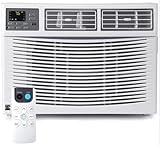
2. Kenmore KM8K-R 8,000 BTU Window Air Conditioner for Medium Rooms up to 350 Sq. Ft. – Quiet Cooling, Remote Control, Easy Install, Digital Display, 3 Fan Speeds, Energy Efficient, Washable Filter
Overview:
Kenmore’s 8,000 BTU unit delivers reliable cooling for spaces up to 350 sq ft, featuring a digital touch panel, remote control, and a CEER 10.9 rating for efficiency. It includes a washable filter and auto-restart functionality after power interruptions.
What Makes It Stand Out:
The intuitive digital display provides real-time feedback, while multi-mode operation (Sleep, Auto, Eco, Cooling) ensures tailored comfort. Auto-restart is a standout for areas prone to outages, and the CEER 10.9 rating exceeds many competitors’ efficiency.
Value for Money:
Competitively priced, it offers robust features without smart-tech markup. The energy savings from its high CEER rating and eco-mode justify the cost over cheaper, less efficient models, especially for frequent long-term use.
Strengths and Weaknesses:
Strengths: Excellent energy efficiency (CEER 10.9); auto-restart; user-friendly digital controls; quiet operation; washable filter.
Weaknesses: No Wi-Fi/smart capabilities; remote lacks backlight; window height range slightly restrictive.
Bottom Line:
A dependable, efficient workhorse for medium rooms. Best for users seeking straightforward, feature-rich cooling without smart features—offering great value for reliability-focused buyers.
3. GE Window Air Conditioner 12,000 BTU for Rooms up to 550 sq ft., Wi-Fi Enabled, Energy-Efficient Cooling for Large Rooms, Easy Install Kit, Control Using Remote or Smartphone App, White
Overview:
GE’s 12,000 BTU smart AC tackles larger spaces (up to 550 sq ft) with Wi-Fi control via SmartHQ app, Alexa/Google compatibility, and an EZ Mount kit. It covers wider windows (25–36.6" wide) and includes Eco Mode and a slide-out filter.
What Makes It Stand Out:
It uniquely combines high cooling capacity for large rooms with full smart functionality. Eco Mode dynamically adjusts to save energy, while the app enables precise scheduling—rare in this BTU tier. The fixed chassis ensures stable installation.
Value for Money:
Priced higher due to smart features and 12K BTU power, it’s cost-effective for large rooms where multiple smaller units would be needed. Long-term utility savings from Eco Mode enhance its value versus non-smart 12K models.
Strengths and Weaknesses:
Strengths: Powerful cooling for large areas; comprehensive smart controls; effective Eco Mode; easy cleaning filter.
Weaknesses: Heavier unit complicates installation; app connectivity issues reported; no auto-restart after outages.
Bottom Line:
The top choice for large rooms needing smart, energy-efficient cooling. Worth the investment if you require robust capacity and remote management—just confirm window dimensions fit.
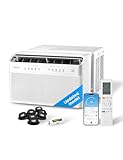
4. Midea 8,000 BTU U Shaped Smart Inverter Window Air Conditioner - Cools 350 Sq Ft, Ultra Quiet with Open Window Flexibility - Alexa/Google Assistant Compatible - 37% Energy Savings, Remote (Updated)
Overview:
Midea’s innovative U-shaped 8,000 BTU inverter AC cools rooms up to 350 sq ft while allowing partial window opening. ENERGY STAR-certified, it boasts ultra-quiet operation (32 dBA), 37% energy savings, and Wi-Fi/smart assistant control.
What Makes It Stand Out:
The revolutionary U-design enables fresh-air access and unobstructed views—unmatched by traditional units. Inverter technology delivers exceptional quietness and energy savings, while the open-window anti-theft feature adds security.
Value for Money:
Priced at a premium, the inverter efficiency and unique open-window flexibility justify the cost. Energy savings quickly recoup the investment versus standard units, making it economical for eco-conscious users despite higher upfront cost.
Strengths and Weaknesses:
Strengths: U-shape allows window opening; industry-leading quietness; 37%+ energy savings; sleek app control; secure anti-theft lock.
Weaknesses: Complex installation; limited window height compatibility; app occasionally unstable.
Bottom Line:
A game-changer for noise-sensitive environments and those wanting fresh air. Opt for this if open-window use and extreme quietness are priorities—its innovation redefines window AC expectations.
5. Amazon Basics 6000-BTU Window Air Conditioner, Up to 250 Sqf, Window AC Units with Cool and Fan Functions, Washable Filter, Adjustable Window Kit, Digital Temperature Display, Remote Control, White

Overview:
Amazon Basics’ 6,000 BTU unit targets small spaces (up to 250 sq ft) with basic cooling and fan modes. It includes a washable filter, remote, digital display, and fits standard windows (23–36" wide), emphasizing simplicity and affordability.
What Makes It Stand Out:
Its stripped-down design focuses on core functionality at a low price point. The 7-temperature settings and 2-way airflow offer surprising customization for budget ACs, while the washable filter ensures basic air quality.
Value for Money:
Exceptional value for occasional or small-space use. Significantly cheaper than smart or high-BTU models, it’s ideal for renters or supplemental cooling where advanced features aren’t needed—though lacks long-term efficiency perks.
Strengths and Weaknesses:
Strengths: Very affordable; simple installation; quiet for price (56 dB); washable filter; compact for small rooms.
Weaknesses: Limited to 250 sq ft; no energy-saving modes; basic remote; not suitable for large/heated rooms.
Bottom Line:
The go-to budget pick for bedrooms or offices under 250 sq ft. Choose it for reliable, no-frills cooling where cost trumps smart features or heavy-duty performance.
6. GE Window Air Conditioner 14,000 BTU for Rooms up to 700 sq ft., Wi-Fi Enabled, Energy-Efficient Cooling for Large Rooms, Easy Install Kit, Control Using Remote or Smartphone App, White

Overview: This GE 14,000 BTU window AC delivers robust cooling for large spaces up to 700 sq ft, featuring smart connectivity and energy efficiency. Designed for living rooms or family areas, it includes an EZ Mount kit for straightforward double-hung window installation (26.13"-37.75" width) and a slide-out washable filter. What Makes It Stand Out: Its standout feature is seamless SmartHQ app integration, enabling remote scheduling and control via smartphone, Alexa, or Google Assistant. The dedicated Eco Mode automatically powers down the fan and compressor when the target temperature is reached, significantly reducing energy consumption without manual intervention, complemented by three cooling modes and fan speeds. Value for Money: Priced competitively for its high cooling capacity and smart capabilities, it offers excellent long-term savings through energy efficiency. While initial cost is higher than basic models, the utility bill reductions from Eco Mode and robust performance for large rooms justify the investment compared to less efficient alternatives. Strengths and Weaknesses: Strengths: Powerful 14k BTU cooling for large areas; intuitive smart controls and voice compatibility; effective Eco Mode for savings; user-friendly installation kit. Weaknesses: Installation width range may not fit all windows; noise levels aren’t specified as ultra-quiet like some GE Profile models. Bottom Line: An ideal, future-proof solution for cooling spacious rooms efficiently and conveniently. Its smart features, strong performance, and energy savings make it a top recommendation for tech-savvy users needing substantial cooling power.
7. GE Profile Inverter Window Air Conditioner Unit 8,000 BTU with Energy Efficient AC Cooling up to 350 sq ft., Ultra Quiet, SMART Home Capable, Includes Remote and Install Kit, White
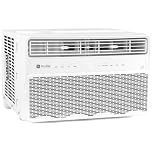
Overview: This GE Profile 8,000 BTU inverter AC targets medium rooms up to 350 sq ft, emphasizing whisper-quiet operation and energy savings. It leverages inverter technology for adaptive cooling and includes SmartHQ app connectivity, Alexa/Google Assistant compatibility, and a standard remote. What Makes It Stand Out: Boasting a remarkably low 43 dB noise level—earning GE Profile the “Quietest Window AC Brand” title—it excels for bedrooms. Its inverter technology dynamically adjusts power (37% more efficient than DOE minimums, CEER 15.0), ensuring consistent comfort while slashing energy use compared to traditional compressors. Value for Money: The premium price reflects exceptional quietness and inverter efficiency, translating to noticeable utility savings over time. It’s a superior long-term value versus non-inverter models with similar capacity, especially for noise-sensitive environments where comfort is paramount. Strengths and Weaknesses: Strengths: Industry-leading quiet operation (43 dB); highly efficient inverter technology; seamless smart home integration; three fan speeds and cooling modes. Weaknesses: Lower BTU capacity limits room size suitability; no unique physical features like view preservation. Bottom Line: The premier choice for medium rooms where silence and efficiency are non-negotiable. Its inverter tech and near-silent operation justify the cost, making it highly recommended for bedrooms or offices needing unobtrusive cooling.
8. GE Profile ClearView Inverter Window Air Conditioner Unit, 12,200 BTU, Energy Efficient Cooling up to 550 sq ft., Ultra Quiet, SMART Home Capable, Includes Remote, White

Overview: This 12,200 BTU GE Profile unit uniquely combines powerful cooling for rooms up to 550 sq ft with an unobstructed window view. Featuring inverter technology, SmartHQ app control, and ultra-quiet operation (as low as 40 dB), it installs in windows 20"-40" wide with Flex-Depth adaptability. What Makes It Stand Out: The revolutionary ClearView design maintains full window visibility and operability after installation—a rarity in window ACs. Paired with Flex-Depth (4.5"-13.75" wall compatibility) and inverter efficiency (34% more efficient), it solves common aesthetic and installation frustrations while delivering quiet, effective cooling. Value for Money: Priced at a premium, it offers unique value through its view-preserving design and flexible installation, which eliminate trade-offs typical of window units. The energy savings from inverter tech and smart controls further enhance long-term cost-effectiveness for medium-to-large rooms. Strengths and Weaknesses: Strengths: Unmatched ClearView window access; versatile Flex-Depth installation; extremely quiet (40 dB); efficient inverter operation; full smart home support. Weaknesses: Higher cost than standard models; 12.2k BTU may be overkill for smaller spaces. Bottom Line: A game-changer for renters and homeowners prioritizing natural light and window functionality. Its innovative design, quiet performance, and efficiency make it worth the investment for those seeking both comfort and aesthetics.
9. Window Air Conditioner 12000 BTU with WiFi, Energy Efficient Window AC Unit Cools Up to 550 Sq.Ft. with Remote App Control, Ideal for Apartment, Living Room, Medium Room, White
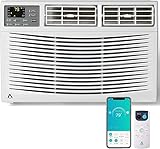
Overview: This 12,000 BTU WiFi-enabled AC cools spaces up to 550 sq ft, targeting apartments and medium rooms. It offers app/remote control, sleep mode, humidity removal, and fits windows 26"-36" wide, emphasizing ease of setup and maintenance with a slide-out filter. What Makes It Stand Out: Its strong value proposition lies in versatile 3-in-1 functionality (cooling, fan, dehumidification) and accessible smart controls at a competitive price point. The sleep mode operates at 56 dB with a 24-hour timer, balancing quiet nighttime operation and energy savings without ultra-premium costs. Value for Money: Positioned as a budget-friendly smart AC, it delivers essential features (app control, dehumidification, sleep mode) effectively for medium rooms. While not as quiet or efficient as GE Profile inverter models, it offers significant convenience and performance for its lower price. Strengths and Weaknesses: Strengths: Affordable smart connectivity; effective dehumidification (3.6 pints/hr); straightforward installation for standard windows; practical sleep mode. Weaknesses: Noise level (56 dB) is higher than premium quiet models; lacks inverter efficiency; build quality may feel less robust. Bottom Line: An excellent budget-conscious pick for apartments needing reliable, app-controlled cooling. It covers core functionalities well for medium spaces, though compromises on noise and peak efficiency compared to higher-end models.
10. Frigidaire 6,000 BTU Window Air Conditioner with Remote Control, Cools Up to 250 Sq. Ft., Quiet Operation, Eco Mode, 3 Fan Speeds, Auto Restart, White

Overview: Frigidaire’s compact 6,000 BTU unit cools small spaces up to 250 sq ft quietly (52 dBA), featuring Eco Mode, a remote, and auto restart. It prioritizes simplicity with customizable airflow, a washable filter, and a 24-hour timer for bedrooms or tiny rooms. What Makes It Stand Out: Its focus on no-frills reliability and bedroom-friendly quietness stands out. The Eco Mode gradually raises the temperature overnight to save energy, while Dry Mode tackles humidity—practical features absent in some smart-only competitors, all without requiring WiFi complexity. Value for Money: As a non-smart, entry-level unit, it offers exceptional value for small rooms. The low purchase price, energy savings from Eco Mode, and durable construction provide solid ROI versus similarly sized models, especially for users avoiding app dependencies. Strengths and Weaknesses: Strengths: Very quiet (52 dBA) for serene sleep; intuitive Eco and Dry modes; reliable auto restart; affordable and energy-efficient. Weaknesses: Lacks WiFi/smart features; limited to very small rooms; fewer advanced customization options. Bottom Line: The top recommendation for small bedrooms or offices needing quiet, fuss-free cooling. Its simplicity, energy features, and reliability make it a cost-effective staple where smart tech isn’t essential.
Why Energy Efficiency Matters More Than Ever in 2026
Understanding the True Cost of Cooling
The initial purchase price is often just the tip of the iceberg. Modern energy-efficient units significantly reduce the largest ongoing expense: electricity consumption. In regions with high cooling demands or rising utility rates, a unit with a superior efficiency rating can save hundreds of dollars over its lifespan compared to a less efficient model. It’s an investment that actively pays dividends on your monthly statement.
Environmental Impact and Your Carbon Footprint
Choosing an energy-efficient air conditioner directly translates to reduced greenhouse gas emissions from power plants. As grid electricity gradually incorporates more renewable sources, efficient appliances maximize the benefit of that cleaner energy. Opting for high-efficiency cooling is a tangible step towards responsible energy consumption in an era of heightened climate awareness.
The Evolving Standards Landscape
Regulatory bodies continuously tighten minimum efficiency requirements. Units meeting today’s top-tier standards (like ENERGY STAR® certifications, where applicable) not only outperform older models but also future-proof your purchase against upcoming regulations. Understanding current benchmarks ensures you select technology aligned with the direction of the industry.
Decoding Efficiency Metrics: EER, CEER, and What They Mean for You
EER: The Foundational Efficiency Measure
The Energy Efficiency Ratio (EER) has long been the standard metric, calculated as the cooling output (in BTUs) divided by the electrical energy input (in watts) under specific, controlled conditions (usually 95°F outdoor temperature). A higher EER signifies more cooling per watt of electricity used. While crucial, EER represents peak performance under ideal lab settings.
CEER: The Real-World Efficiency Indicator
The Combined Energy Efficiency Ratio (CEER) is now the more comprehensive and relevant metric for modern units. CEER factors in not just active cooling efficiency but also the energy consumed during standby/off modes and during the cycling on and off that occurs in typical home use. Since units aren’t constantly running at full blast, CEER provides a much more accurate picture of actual annual energy consumption and cost.
Why CEER Should Be Your Primary Comparison Tool
When comparing models, prioritizing CEER over EER gives you a truer sense of long-term operating costs. A unit with a slightly lower EER but a significantly higher CEER will often cost less to run annually because it manages energy use more intelligently during the frequent periods when full cooling power isn’t needed. Always check the yellow EnergyGuide label for the official CEER rating.
Sizing Your Unit Correctly: The Overlooked Key to Efficiency
The Perils of Undersizing
An air conditioner that’s too small for your space will run continuously, struggling to reach the desired temperature. This constant operation not only fails to cool effectively but also consumes far more energy than a correctly sized unit working efficiently in cycles. The result is higher bills, excessive wear and tear, and persistent discomfort.
The Hidden Waste of Oversizing
Conversely, an oversized unit cools the space too rapidly, leading to very short run cycles. This prevents the unit from effectively dehumidifying the air, leaving you feeling clammy despite the low temperature. More critically, the frequent start-up surges (when energy draw is highest) significantly increase overall energy consumption compared to a unit that runs steadily for longer periods.
Calculating Your Ideal BTU Capacity
The right BTU (British Thermal Unit) capacity depends primarily on room size (length x width x average height), but also on factors like window exposure (south/west-facing rooms need more cooling), ceiling height, local climate intensity, and the number of occupants or heat-generating appliances (like ovens or computers). Manufacturer sizing charts are a starting point, but consider consulting an HVAC professional for complex spaces or high-heat environments to avoid costly sizing errors.
Essential Features That Deliver Genuine Value
Advanced Thermostat and Temperature Control
Precise digital thermostats with tight temperature tolerances (±0.5°F) prevent unnecessary cycling. Look for models offering adjustable fan speeds and multiple cooling modes (like “Energy Saver” or “Eco”) that intelligently modulate operation based on the current room temperature versus the set point, optimizing energy use without sacrificing comfort.
Smart Energy-Saving Modes Beyond the Basics
Features like programmable timers allow you to schedule cooling only when needed (e.g., turning on 30 minutes before you get home). “Sleep Mode” gradually raises the set temperature through the night as your body’s needs change, reducing energy use during the longest stretch of operation. Some advanced models offer adaptive recovery, learning how long it takes to cool your space and starting early enough to hit the target temp right on schedule, minimizing runtime.
Fan-Only and Ventilation Options
The ability to run the fan independently of the compressor provides air circulation on milder days, using a fraction of the energy. A dedicated fresh air intake vent (with proper sealing when not in use) can bring in cooler outside air during evenings, reducing reliance on mechanical cooling and improving indoor air quality.
Installation and Placement: Maximizing Efficiency from Day One
The Critical Importance of a Tight Seal
Air leaks around the unit are a major source of energy waste, allowing cooled air to escape and hot, humid air to infiltrate. High-quality, flexible foam insulation kits designed specifically for your unit’s size are essential. Properly sealing all gaps between the unit and the window frame ensures the cooled air stays inside where it belongs.
Optimal Placement for Performance and Longevity
Position the unit slightly tilted back (as per manufacturer specs, usually 1/4 inch) to ensure proper condensate drainage. Avoid placing it in direct, intense sunlight if possible, as this forces the unit to work harder. Ensure unobstructed airflow on both the indoor (return air) and outdoor (condenser exhaust) sides – keep vents clear of furniture, curtains, or shrubs.
Professional Installation vs. DIY Considerations
While many window units are designed for homeowner installation, a complex window setup, heavy unit, or uncertainty about sealing can lead to inefficiencies and safety risks. Professional installation, though adding initial cost, guarantees optimal positioning, sealing, and electrical safety, directly contributing to long-term efficiency and performance. Weigh the complexity against potential energy savings.
Noise Levels: Efficiency Shouldn’t Mean Disruption
Understanding Decibel Ratings
Noise output, measured in decibels (dB), significantly impacts comfort, especially in bedrooms or quiet living spaces. Efficient units often incorporate better insulation and fan designs to minimize sound. Pay attention to the “quiet” or “sleep” mode dB rating, as this is often the most relevant for nighttime use.
Quieter Operation as a Sign of Advanced Engineering
Lower noise levels frequently correlate with higher-quality components and thoughtful engineering – aspects that often contribute to overall durability and efficiency. A unit that operates smoothly and quietly is less likely to have components straining unnecessarily, which can be an indirect indicator of good energy management.
Balancing Quietness with Airflow Needs
Be mindful that extremely quiet operation sometimes comes at the cost of slightly reduced maximum airflow. Ensure the unit still provides adequate cooling capacity for your room size, even if you primarily use its quieter settings. Read reviews focusing on real-world noise performance in typical home environments.
Durability and Warranty: Protecting Your Long-Term Investment
Build Quality Indicators for Efficiency Longevity
Look for units constructed with durable, UV-resistant plastics and corrosion-resistant metals (especially in the condenser coil). Well-built units maintain their efficiency over time; components like a robust compressor and properly sealed electrical connections are less likely to degrade performance or fail prematurely, ensuring consistent energy savings year after year.
Deciphering Warranty Coverage for Value
A comprehensive warranty is a strong signal of manufacturer confidence. Pay close attention to the coverage period for the compressor (the most expensive component) and sealed refrigerant system. A longer parts and labor warranty (e.g., 5 years vs. 1 year) provides significant peace of mind and protects the long-term value proposition of your efficient unit.
Maintenance Requirements and Their Impact on Efficiency
Even the most efficient unit loses performance if neglected. Features like easily removable, dishwasher-safe air filters encourage regular cleaning. Consider the accessibility of the condenser coils for occasional vacuuming. Units designed for simple maintenance help you sustain peak efficiency, directly impacting your ongoing energy costs and comfort.
Smart Features: Do They Truly Enhance Value?
Remote Control and App Connectivity Benefits
Convenience features like remote controls or smartphone apps prevent wasted cooling when you’re unexpectedly away. The ability to adjust settings remotely ensures you’re only using energy when and where it’s needed, directly contributing to efficiency. However, the baseline energy draw of Wi-Fi modules should be minimal (check specs).
Voice Assistant Integration: Convenience vs. Constant Draw
While voice control (via Alexa or Google Assistant) adds convenience, ensure the unit has a very low standby power consumption. Some early smart models had high “vampire” drain; look for ENERGY STAR® certified smart features or check independent reviews for verified low standby wattage to ensure the convenience doesn’t negate cooling savings.
Auto-Diagnostics and Performance Monitoring
Advanced units may offer system diagnostics via an app, alerting you to issues like a dirty filter before efficiency drops significantly. This proactive maintenance feature helps sustain optimal performance and energy use, adding tangible value by preventing minor issues from becoming major efficiency drains.
Maximizing Efficiency Through Smart Usage Habits
Strategic Temperature Setting for Savings
Raising the thermostat setting by just 7°-10°F (4°-6°C) while you’re away or asleep can yield significant energy savings (up to 10% annually). Avoid setting the thermostat extremely low; the unit won’t cool faster and will waste energy. Find the highest comfortable setting for active periods.
Leveraging Fans to Reduce AC Load
Using ceiling fans or portable fans allows you to set the thermostat a few degrees higher while maintaining the same perceived comfort level. Fans move air over your skin, enhancing evaporation and cooling you, not the entire room. Remember to turn fans off when you leave the room, as they cool people, not spaces.
Minimizing Heat Gain Proactively
Block direct sunlight with curtains, blinds, or reflective window film during the hottest parts of the day. Run heat-generating appliances (ovens, dryers, dishwashers) during cooler mornings or evenings. Ensure your home is well-insulated and sealed to prevent cool air loss. These steps reduce the cooling load, allowing your efficient AC to work less.
Frequently Asked Questions
What’s the single most important number to check for energy savings?
Focus on the CEER (Combined Energy Efficiency Ratio) rating. It provides the most realistic estimate of actual yearly energy consumption by factoring in not just cooling power but also standby and cycling losses, unlike the older EER standard.
Does a higher BTU rating always mean higher energy use?
Not necessarily. A correctly sized unit (right BTU for your room) running efficiently will use less energy than an undersized unit struggling constantly. An oversized unit wastes energy through excessive cycling. Correct sizing is paramount for efficiency.
How much more should I expect to pay for a truly energy-efficient model?
While efficient models often have a higher upfront cost, the premium typically ranges from 10-25% over basic models. Crucially, this difference is frequently recouped through lower energy bills within 1-3 cooling seasons, depending on usage and local electricity rates.
Can smart features actually save me money on energy?
Yes, but only if used effectively. Remote scheduling and geofencing prevent cooling an empty house. However, ensure the smart module itself has very low standby power consumption (look for ENERGY STAR® certification on the smart feature) to avoid negating savings.
Is it worth paying more for a lower noise rating?
For bedrooms or quiet living areas, absolutely. Consistent, quiet operation enhances comfort significantly. Quieter units often use better engineering that also contributes to durability and sustained efficiency, adding long-term value beyond just sound levels.
How does proper installation impact energy efficiency?
Poor installation, especially inadequate sealing around the unit, is a major source of energy waste (up to 30% loss). Hot, humid air infiltrates, and cooled air escapes, forcing the unit to work much harder. Professional installation or meticulous DIY sealing is critical for realizing advertised efficiency.
Do energy-efficient models cool as quickly as standard ones?
A correctly sized, high-efficiency unit cools just as effectively as a standard unit of the same BTU rating. The difference lies in how it achieves the cooling – using less energy per unit of cooling delivered, often through smarter operation and better components, not slower performance.
How often should I clean the filter to maintain efficiency?
Check the air filter monthly during peak cooling season. Clean or replace it whenever it looks visibly dirty (often every 2-4 weeks). A clogged filter restricts airflow, making the unit work harder and significantly reducing efficiency and cooling capacity.
Are inverter compressors worth the extra cost in window units?
Inverter technology, increasingly available in higher-end window units, provides variable cooling output instead of simple on/off cycling. This leads to more precise temperature control, quieter operation, reduced energy consumption (especially in moderate conditions), and less wear and tear, often justifying the premium for frequent users.
Can I improve the efficiency of my existing window AC unit?
Yes! Ensure perfect sealing around the unit, keep filters meticulously clean, provide shade for the outdoor condenser section if possible, use ceiling fans to allow higher thermostat settings, and avoid heat-generating activities during peak sun hours. These habits maximize your current unit’s potential.
See Also
- 10 Best Value Energy Star Window Air Conditioners for Families in 2026
- The 10 Best Energy Star Window Air Conditioners for Lower Electric Bills in 2026
- 10 Best Value Inverter Wall Air Conditioners for Reducing Energy Bills in 2026
- 10 Essential Tips for Maximizing Efficiency in Window Air Conditioners This Summer
- 10 Affordable Energy Star Window Air Conditioners That Don’t Sacrifice Quality in 2026