Table of Contents
As temperatures swing from scorching summers to frigid winters, finding a single appliance that can handle both extremes feels like discovering climate control gold. Year-round heating and cooling fans have revolutionized home comfort by eliminating the need to store separate devices season after season. These versatile units not only save valuable closet space but also offer a cost-effective alternative to running central HVAC systems for zone-specific temperature management.
Understanding what makes these dual-function devices truly valuable requires looking beyond marketing claims to assess real-world performance, energy efficiency, and longevity. The landscape of heating and cooling technology continues evolving rapidly, with 2026 bringing even smarter features and more refined engineering to the consumer market. Whether you’re outfitting a drafty home office or seeking supplemental comfort for a bedroom, knowing which features matter most will help you invest wisely in a solution that delivers consistent performance through every season.
Top 10 Heating & Cooling Fans for Year-Round Use
Detailed Product Reviews
1. Shark TurboBlade Cool + Heat – 2-in-1 Bladeless Tower Fan & Space Heater for Customizable Year-Round Indoor Use, Bedroom, Living Room, & Office | Powerful Cooling + Rapid Room Heating, Charcoal, TH202
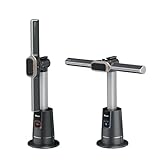
Overview: The Shark TurboBlade TH202 delivers year-round climate control in a sleek charcoal bladeless design. This 2-in-1 tower unit combines ten cooling speeds with three intelligent heating modes, pivoting between vertical tower and horizontal air blanket configurations to distribute airflow throughout bedrooms, living rooms, or offices. The bladeless technology ensures safe operation around children and pets while simplifying maintenance.
What Makes It Stand Out: Shark’s Thermo IQ auto-temperature control intelligently maintains your desired warmth without manual adjustment, while the unique pivoting airflow system offers directional versatility competitors lack. The magnetic remote docking prevents the common frustration of misplaced controllers—a thoughtful detail that enhances daily usability. Combined with a Dust Defense filter and wipe-clean surfaces, this unit prioritizes convenience alongside performance.
Value for Money: Positioned at the premium end, the Shark justifies its price through genuine year-round functionality. Instead of purchasing separate seasonal appliances, you’re investing in one engineered solution with intelligent features that cheaper alternatives simply don’t offer. The build quality and Shark’s reputation for durability make this a cost-effective long-term investment.
Strengths and Weaknesses: Pros include exceptional versatility, true bladeless safety, smart temperature management, and effortless cleaning. The magnetic remote dock is genuinely practical. Cons are the premium price point and unspecified oscillation angle, which may limit coverage compared to wider-rotating competitors. Some users might find ten cooling speeds excessive for basic needs.
Bottom Line: For those prioritizing safety, smart features, and seamless year-round operation, the Shark TurboBlade TH202 is a top-tier choice worth the investment. Its thoughtful engineering elevates it above budget alternatives.
2. Shark TurboBlade Cool + Heat – 2-in-1 Bladeless Tower Fan & Space Heater for Customizable Year-Round Indoor Use, Bedroom, Living Room, & Office | Powerful Cooling + Rapid Room Heating, White, TH205CO

Overview: The Shark TurboBlade TH205CO offers identical performance to its charcoal counterpart in a crisp white finish that blends seamlessly with modern, minimalist décor. This versatile 2-in-1 bladeless unit provides ten cooling speeds and three heating modes, pivoting between vertical tower and horizontal air blanket configurations for comprehensive room coverage. The bladeless design ensures family-safe operation while eliminating dust-collecting grilles.
What Makes It Stand Out: Beyond the aesthetic flexibility, this model shares the standout Thermo IQ auto-temperature control that intelligently maintains comfort without constant adjustment. The pivoting airflow system and magnetic remote docking remain unique advantages in the market. The white housing may show less dust than darker finishes, potentially reducing cleaning frequency—a subtle but practical benefit for busy households.
Value for Money: Matching the premium pricing of the charcoal version, this model delivers identical engineering and feature sets. The color choice doesn’t affect performance but offers décor flexibility that may justify the investment for design-conscious buyers. You’re still getting a dual-function appliance that replaces two separate devices with intelligent automation.
Strengths and Weaknesses: Pros mirror the charcoal model: year-round versatility, genuine bladeless safety, smart temperature management, and the invaluable magnetic remote dock. The white finish offers superior aesthetic integration for many spaces. Cons include the premium cost and unspecified oscillation range. The model number variation (TH205CO) suggests a newer production run but no functional differences.
Bottom Line: Choose the white TH205CO if you want Shark’s premium features with brighter aesthetic appeal. It delivers the same excellent performance and safety as the charcoal version, making it ideal for style-conscious consumers.
3. Hiluce All Season Bladeless Fan, 1400W Space Heater & 40W Tower Fan Combo with Remote,25dB Quiet Heater Fan Combo for Indoor Use,Tip Over and Overheat Protection 80°Oscillation,8Levels, 9H Timer,22"

Overview: The Hiluce 22-inch bladeless combo unit presents a compact, budget-conscious solution for year-round comfort. Delivering 1400W of heating power and 40W of cooling across eight fan levels, this device targets small to medium spaces like bedrooms, studies, and nurseries. The bladeless design prioritizes safety for families with children and pets while keeping operational noise under 25dB for undisturbed sleep.
What Makes It Stand Out: Remarkable quiet operation at 25dB makes this ideal for bedrooms, while the automatic LED shutoff after 30 seconds ensures darkness for sleep. The combination of tip-over and overheat protections provides comprehensive safety at this price point. Nine-hour timer functionality exceeds many competitors, offering extended overnight operation without intervention.
Value for Money: This is where Hiluce shines—delivering essential dual-function performance at a fraction of premium brand prices. While lacking advanced features like auto-temperature control, it covers the basics exceptionally well. For budget-minded consumers wanting safe, quiet year-round comfort, the value proposition is compelling.
Strengths and Weaknesses: Pros include whisper-quiet operation, robust safety protections, compact 22-inch footprint, and excellent timer functionality. The LED auto-off feature is thoughtfully designed for bedrooms. Cons are limited 80° oscillation, absence of intelligent temperature control, and less powerful airflow than larger units. The three heating modes (H1-H3) are basic compared to thermostatic alternatives.
Bottom Line: The Hiluce is a stellar budget pick for bedrooms and small spaces where quiet operation and safety trump advanced features. It delivers reliable year-round comfort without breaking the bank.
4. DREO Tower Fan and Heater Combo, 29.2ft/s Standing Fans for Bedroom, 17 Levels, 6 Modes, 120° Oscillation, 42 Inch, 12H Timer, 25dB Quiet, with Remote, for Office, Large Room, Silver

Overview: The DREO MC706 stands tall at 42 inches as a powerhouse 2-in-1 solution designed for large spaces. Integrating a 1500W PTC heater with twelve cooling speeds (five heating levels + twelve cooling = seventeen total levels), this unit delivers exceptional airflow reaching 29.2 feet per second. Engineered for offices and expansive living areas, it combines rapid heating with widespread cooling through 120° oscillation.
What Makes It Stand Out: DREO’s eight-layer safety system, including patented FortPlug technology and V-0 flame retardant materials, sets a new standard for peace of mind. The ETL certification and child lock make it uniquely suitable for families. The Hyperamics PTC element delivers instant 2-second heat with precise ±1.5°F temperature control through advanced ECO mode—features rarely seen at this price tier.
Value for Money: Mid-to-high range pricing is justified by superior safety engineering and performance specifications. The 120° oscillation and 29.2ft/s airflow outperform most competitors, while the comprehensive safety suite protects your investment. For large rooms, this eliminates the need for multiple appliances.
Strengths and Weaknesses: Pros include exceptional airflow velocity, widest-in-class oscillation, eight-layer safety protection, ETL certification, and precise temperature control. The 25dB operation is impressively quiet for its power. Cons are the substantial 42-inch footprint requiring more floor space and a higher price point that may exceed small-room needs. The complexity of seventeen levels might overwhelm some users.
Bottom Line: For large rooms and safety-conscious buyers, the DREO MC706 is unmatched. Its powerful performance and comprehensive protections make it the smart choice for families and offices.
5. Bladeless Heater and Fan Combo, 1400 Watt Electric Heater and 40 Watt Cooling Fan, 80° Oscillation, All the Season Use, Remote and Touch Control, Office Room, Bedroom Indoor Use, Silver White

Overview: This generic bladeless combo unit delivers fundamental year-round comfort with a 1400W heater and 40W cooling fan in an unbranded silver-white package. Designed for no-frills operation, it offers three basic modes—low heat, high heat, and fan-only—making it accessible for users wanting simple functionality without complex menus. The 80° oscillation provides adequate coverage for small offices and bedrooms.
What Makes It Stand Out: The straightforward three-mode operation eliminates learning curves, while the 25-40dB noise range remains reasonably quiet. Safety features including tip-over, over-current, and overheat protections are commendable for a budget-tier unit. The automatic LED shutoff after 30 seconds demonstrates thoughtful attention to bedroom usability, a feature often omitted in generic models.
Value for Money: As one of the most affordable options in the bladeless combo category, this unit delivers essential dual-function heating and cooling without premium pricing. While lacking advanced features like auto-temperature control or wide oscillation, it provides reliable basics for cost-conscious consumers. The value lies in functional simplicity rather than technological innovation.
Strengths and Weaknesses: Pros include simple operation, adequate safety protections, quiet performance, and attractive silver-white aesthetic. The remote and touch controls offer convenient dual control methods. Cons are the generic brand raising durability questions, limited 80° oscillation, absence of thermostat precision, and basic three-mode functionality that lacks customization. Build quality may not match name-brand alternatives.
Bottom Line: This is a solid entry-level choice for those prioritizing affordability over advanced features. It safely delivers year-round basics for small spaces without unnecessary complexity.
6. Lasko Oscillating Hybrid Fan and Space Heater for Home, All Season High Velocity Hybrid with Tip-Over Switch, Remote Control, Timer and Thermostat, 37.5 Inches, White, 1500W, FHV820

Overview: The Lasko FHV820 delivers year-round climate control by merging a 1500W ceramic heater with a high-velocity fan in a compact 37.5-inch tower. Designed for bedrooms, living rooms, and home offices, this hybrid unit eliminates the need for separate seasonal appliances while maintaining a slim, modern profile that integrates seamlessly into any décor.
What Makes It Stand Out: The AutoEco thermostat intelligently adjusts heat output to sustain your desired temperature while minimizing energy consumption—a feature rarely found in this price tier. The dedicated High Velocity fan mode provides superior cooling airflow compared to standard tower fans, while digital touch controls and a large display offer intuitive operation. Remote storage onboard prevents the common frustration of misplaced controllers.
Value for Money: Priced equivalently to mid-range space heaters alone, you’re acquiring a premium fan at no additional cost. The AutoEco mode can reduce heating expenses by 15-20% compared to conventional units, potentially recovering the purchase price within one winter season. Separate devices would require 40-60% greater investment and double the storage space.
Strengths and Weaknesses: Strengths include comprehensive safety features (tip-over switch, overheat protection, cool-touch housing), widespread oscillation, and a versatile 8-hour timer with 30-minute increments. The four-speed fan offers exceptional cooling flexibility. Weaknesses include the 37.5-inch height, which may limit air distribution in larger rooms, and the absence of specific temperature presets beyond the adjustable thermostat.
Bottom Line: The FHV820 excels in small to medium spaces where versatility and safety are paramount. Its intelligent energy management and robust feature set make it an outstanding value for families, renters, and cost-conscious consumers seeking reliable year-round comfort without sacrificing floor space or budget.
7. Oylus Heater and Fan Combo for Indoor Use, 2-in-1 1500W Portable Desk Heating & Cooling Fan, Oscillating with Adjustable Thermostat, 2 Heat & Fan Modes, Tip-Over Protection, Quiet Space Heater
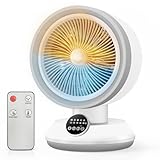
Overview: The Oylus 2-in-1 is a compact, portable climate solution delivering 1500W of rapid heating and dual fan speeds in a lightweight frame. Engineered for desk or floor placement, this unit operates at a whisper-quiet 35dB, making it ideal for bedrooms, home offices, and personal spaces where discretion and immediate comfort are essential.
What Makes It Stand Out: Four precise temperature settings (70°F, 75°F, 80°F, 85°F) eliminate the guesswork of traditional low/medium/high controls, ensuring exact comfort levels. The dual fan system accelerates heating efficiency while maintaining gentle, consistent airflow. At just 35dB, it’s quieter than library standards, allowing undisturbed sleep and focused work.
Value for Money: This unit delivers smart thermostat functionality typically reserved for premium models at a competitive mid-range price. Its portable design eliminates installation costs and provides flexibility for renters or multi-room use. For spot heating and cooling, it removes the necessity of purchasing separate devices, offering immediate utility and long-term savings.
Strengths and Weaknesses: Strengths include ultra-quiet operation, precise temperature control, dual control interfaces, and comprehensive safety protections. The 40° oscillation adequately covers personal zones. Weaknesses encompass limited oscillation range compared to tower models and a compact form that may underperform in heating large areas. The aesthetic is functional but less refined than premium alternatives.
Bottom Line: Perfect for office professionals, students, and light sleepers requiring discreet, accurate climate control. The Oylus shines in bedrooms and workspaces where silence equals productivity. If you prioritize precise temperatures and quiet operation over wide-area coverage, this is your optimal choice.
8. Eduzita TP09Plus Bladeless Tower Fan, 2-in-1 Space Heater & Cooling Fan with Remote & Touch Control, 10 Cooling + 3 Heating Modes, Ultra-Quiet DC Motor for Bedroom & Home Office

Overview: The Eduzita TP09Plus revolutionizes household climate control with its bladeless architecture, combining a powerful cooling fan and efficient heater in a sleek, modern tower. Offering 10 cooling and 3 heating modes while operating at 35-51 dB, this unit prioritizes safety and serenity for year-round bedroom and office comfort.
What Makes It Stand Out: Bladeless technology eliminates injury risks for children and pets—an invaluable feature for family households. The brushless DC motor delivers exceptional energy efficiency and noise reduction. With 10 distinct cooling levels, it provides granular control unmatched by conventional 3-4 speed fans, while 80° oscillation ensures comprehensive room coverage from a stable, well-balanced base.
Value for Money: While commanding a premium over bladed alternatives, the safety dividend justifies the investment for parents and pet owners. The DC motor’s energy savings and extended durability provide long-term value. You’re purchasing peace of mind and contemporary aesthetics alongside versatile functionality, representing strong value for safety-conscious consumers.
Strengths and Weaknesses: Strengths include unparalleled child/pet safety, ultra-quiet operation, extensive cooling customization, and elegant minimalist design. Remote and touch controls enhance usability. Weaknesses involve unspecified heating wattage (likely below 1500W), potentially limiting performance in larger spaces, and a premium price that may deter budget shoppers. Brand recognition lags behind established competitors.
Bottom Line: An ideal solution for families prioritizing safety without compromising performance. The TP09Plus excels in bedrooms and home offices where quiet operation and child-safe design are non-negotiable. For those prepared to invest in premium features and peace of mind, it’s a compelling, forward-thinking choice.
9. Lasko Oscillating All Season Tower Fan and Space Heater in One for Home with Adjustable Thermostat, Overheat Protection, 4 Fan Speeds, 3 Heat Settings and Remote, 42 Inches, 1500W, White, FH500

Overview: The Lasko FH500 stands tall at 42 inches, merging a 1500W ceramic heater with a high-performance fan in a commanding tower design. Its elevated profile reaches above furniture for superior air circulation, making it perfect for larger living spaces, apartments, and dorm rooms where effective climate distribution is critical.
What Makes It Stand Out: ETL-listing provides verified safety assurance exceeding basic requirements. The 42-inch height delivers enhanced airflow projection compared to shorter units, while the slim 13" x 13" footprint conserves valuable floor space. Auto Eco mode intelligently balances comfort and energy consumption, automatically adapting to room conditions for optimal efficiency.
Value for Money: This model combines Lasko’s proven reliability with premium features typically requiring separate purchases. The taller design eliminates need for pedestals while improving performance, providing inherent value through better air distribution. Energy-efficient operation and durable construction ensure strong ROI across multiple seasons, justifying the modest price premium over shorter models.
Strengths and Weaknesses: Strengths include superior height for air circulation, comprehensive safety certification, widespread oscillation, and an 8-hour timer. The remote with onboard storage adds practical convenience. Weaknesses include limited temperature preset options and a tower height that may dominate visually in very small rooms. Feature similarity to the FHV820 could create decision confusion.
Bottom Line: The FH500 is ideal for medium to large rooms where air circulation proves challenging. Its certified safety and effective design make it a trustworthy workhorse for families and renters. If you require maximum coverage from a single unit, the extra height makes this the superior Lasko option.
10. Bladeless Tower Fan, 1400W Space Heater & 40W Cooler Fan Combo with Remote, 80°Oscillation, 8 Speeds and 3 Heating Modes, 9H Timer, LED Display, Fast Safety Heat and Quiet for Bedroom, Kitchen, Office

Overview: This bladeless tower fan provides an affordable entry into safe, year-round climate control. Combining a 1400W heater with 40W cooling, it promises three-second rapid heating and gentle airflow across eight speeds. The modern bladeless architecture prioritizes household safety while maintaining contemporary aesthetics for bedrooms, kitchens, and offices.
What Makes It Stand Out: The three-second heating claim surpasses many conventional ceramic heaters, delivering near-instant comfort. Eight fan speeds and three heating modes offer exceptional customization for the category. The bladeless structure ensures child and pet safety without the typical premium price penalty, democratizing this advanced technology.
Value for Money: Among the most affordable bladeless heater-fan combos available, it makes safety-focused design accessible. The 1400W output adequately heats small to medium rooms while consuming less energy than full 1500W units. For budget-conscious families, it delivers essential features and modern design without financial strain.
Strengths and Weaknesses: Strengths include rapid heating, ultra-quiet 40-50dB operation, wide oscillation, and a flexible 9-hour timer. The LED display with auto-dimming enhances nighttime usability. Weaknesses include a generic brand with unproven long-term reliability, slightly reduced heat output versus standard models, and potentially less robust construction. The 40W cooling may prove insufficient in hot climates.
Bottom Line: An excellent value proposition for first-time buyers and families seeking bladeless safety on a budget. While lacking brand pedigree, its performance and features impress at this price point. Perfect for bedrooms, kitchens, and offices where safety and quiet operation matter without premium cost.
Understanding Year-Round Climate Control Solutions
The Evolution of Combined Heating and Cooling
The concept of a single appliance that both heats and cools isn’t entirely new, but recent engineering breakthroughs have transformed these units from noisy, inefficient novelties into sophisticated climate management tools. Early dual-function fans struggled with weak heating elements that couldn’t compete with dedicated space heaters, while cooling functions often amounted to little more than standard fan blades pushing ambient air. Today’s models integrate ceramic heating technology, advanced blade designs, and intelligent thermostats that create genuinely comfortable environments regardless of external conditions.
Modern manufacturing has miniaturized components without sacrificing power, allowing manufacturers to pack impressive thermal output into sleek, compact housings. The integration of digital sensors and microprocessors means these units can now maintain temperature within a degree of your target, automatically switching between heating and cooling modes as room conditions change. This represents a fundamental shift from manual operation to true set-and-forget convenience.
How Dual-Function Fans Work
At their core, year-round fans operate through two distinct systems housed within a single chassis. The cooling function typically relies on high-velocity air movement generated by aerodynamically optimized blades or impellers. Some advanced models incorporate evaporative cooling elements or even thermoelectric cooling chips for enhanced temperature reduction, though these remain less common in budget-friendly units.
The heating component generally uses either ceramic plates or infrared quartz elements. Ceramic heaters warm up quickly and distribute heat through forced air convection, making them ideal for raising ambient room temperature. Infrared technology works differently by heating objects and people directly rather than the air itself, creating immediate warmth in a targeted zone. Premium models may combine both approaches, offering rapid infrared heating for quick comfort followed by ceramic heating to maintain stable room temperature.
Benefits of Investing in Multi-Season Fans
The primary advantage of owning a dual-function fan lies in its year-round utility. Instead of purchasing a separate heater for winter and air circulator for summer, a single investment covers both needs. This consolidation typically costs 30-40% less than buying two dedicated appliances of comparable quality. Storage becomes simpler too—one device that stays in place rather than two units rotating in and out of closets.
Energy efficiency represents another significant benefit. These units allow you to heat or cool only the spaces you’re actively using rather than adjusting your entire home’s thermostat. For home offices, bedrooms, or other frequently occupied zones, this zonal approach can reduce overall HVAC costs substantially. Many users report utility bill reductions of 15-25% after incorporating strategic fan placement into their climate control routine.
Key Features to Evaluate Before Buying
Heating Technology Types Explained
Ceramic heating elements dominate the market for good reason—they provide consistent, safe warmth with rapid heat-up times. Look for units with multiple ceramic plates rather than single-element designs, as this distributes heat more evenly and reduces strain on individual components. Oscillation becomes particularly important with ceramic heaters, preventing hot spots and ensuring whole-room comfort.
Infrared heating offers an alternative approach that excels in specific scenarios. Since infrared warms objects directly, these units work exceptionally well in poorly insulated spaces or rooms with high ceilings where heating the entire air volume proves inefficient. However, infrared heating stops the moment you turn off the unit, while ceramic heaters leave residual warmth in the room’s air mass. Some premium models offer hybrid modes that start with infrared for immediate comfort then transition to ceramic for sustained temperature maintenance.
Cooling Mechanisms and Airflow Design
Standard fan blades create cooling through wind-chill effect alone—the movement of air across skin accelerates evaporative cooling from your body. Blade design dramatically impacts effectiveness; look for deeply pitched blades with aerodynamic curves that move more air with less noise. Blade count matters too—five or seven blades typically operate quieter than three-blade designs while maintaining strong airflow.
Advanced cooling fans incorporate additional technologies. Some feature evaporative cooling pads that add moisture to dry air, creating genuine temperature reduction through water’s natural cooling properties. Others use vortex air circulation, creating a concentrated column of air that projects across entire rooms rather than just creating a localized breeze. Understanding your climate helps determine which approach makes sense—evaporative cooling excels in dry regions but adds unwanted humidity in already moist environments.
Energy Efficiency Ratings and What They Mean
The EnergyGuide label provides crucial insights into operating costs, displaying estimated annual electricity consumption based on typical usage patterns. For heating functions, look for units with adjustable thermostats and eco-modes that cycle the heating element on and off to maintain temperature rather than running continuously. This cycling can reduce power consumption by 40-50% compared to constant operation.
Cooling efficiency relates more to airflow efficiency—the amount of air moved per watt of electricity consumed. Check for CFM (cubic feet per minute) ratings divided by wattage; higher numbers indicate better efficiency. Some manufacturers now include smart sensors that adjust fan speed based on room occupancy or ambient temperature, further optimizing energy use. Programmable timers allow you to run the unit only when needed, preventing waste from forgotten devices left running in empty rooms.
Noise Levels and Operational Quietness
Decibel ratings provide objective measurements, but real-world quietness depends on frequency as much as volume. Low-pitched hums prove less intrusive than high-pitched whines, even at identical decibel levels. Manufacturers increasingly specify “sleep mode” operation, typically under 45 decibels—roughly the sound level of a quiet library. For bedroom use, prioritize units with brushless DC motors, which operate significantly quieter than traditional AC motors.
Vibration contributes substantially to perceived noise. Well-engineered fans isolate the motor assembly from the housing using rubber mounts or suspended designs. Check for solid construction without rattling grills or loose components. Oscillation mechanisms should operate smoothly without clicking or grinding sounds that become maddening during quiet moments.
Safety Features and Certifications
Overheat protection represents non-negotiable safety technology. Quality units include thermal cutoff switches that automatically shut down the heating element if internal temperatures exceed safe thresholds. Tip-over switches add another layer of protection, instantly cutting power if the unit falls or tilts beyond a certain angle. For households with children or pets, cool-touch housings prevent accidental burns even during extended heating operation.
Certification from recognized testing laboratories validates safety claims. UL (Underwriters Laboratories) and ETL (Intertek) listings indicate the unit has undergone rigorous testing for electrical safety and fire hazards. For energy efficiency claims, Energy Star certification provides third-party verification. Be wary of units lacking these certifications, especially when purchasing from lesser-known brands through online marketplaces.
Types of Heating & Cooling Fans for Different Spaces
Tower-Style Units for Room-to-Room Mobility
Slim tower designs dominate the dual-function market due to their small footprint and easy portability. Standing typically 24 to 36 inches tall, these units tuck neatly into corners or alongside furniture without dominating visual space. Their height allows for effective oscillation that distributes air at multiple levels, preventing temperature stratification where hot air rises and cool air settles near the floor.
Mobility features make towers particularly versatile. Integrated carry handles and manageable weight (usually under 10 pounds) let you move the unit from living room to bedroom as daily routines change. Cord storage systems prevent tripping hazards during transport. Some models include battery backup that maintains settings during moves between outlets, eliminating the need to reprogram preferences each time you relocate the unit.
Desktop and Personal Models for Targeted Comfort
Compact units designed for close proximity use prioritize direct airflow over whole-room coverage. These typically sit on desks, nightstands, or work surfaces, creating a personal comfort zone within a larger space. Heating capacity generally ranges from 750 to 1000 watts—sufficient for warming an individual without dramatically affecting room temperature. Cooling functions focus on narrow, concentrated airflow patterns that provide relief without disturbing papers or creating uncomfortable drafts.
Personal models excel in office environments where building HVAC systems leave some individuals too hot or cold. Their small size and quiet operation make them unobtrusive desk mates. Many include USB charging ports, turning the climate control device into a functional workspace accessory. However, their limited range means they’re unsuitable for whole-room heating or cooling, functioning best as supplemental comfort rather than primary climate control.
Whole-Room Air Circulators
Unlike directional fans that blast air in a straight line, whole-room circulators create continuous airflow patterns that eliminate hot and cold pockets. These units typically feature powerful motors (up to 100 watts for cooling) and specially designed housings that pull air in from multiple directions before expelling it in a 360-degree pattern. The result is gentle but thorough air mixing that maintains consistent temperature throughout the space.
When heating, circulators prevent the common problem of hot air pooling near ceilings while floors remain cold. By continuously moving air, they distribute warmth evenly from floor to ceiling, often allowing you to lower thermostat settings by 2-3 degrees while maintaining the same comfort level. The continuous circulation also reduces stuffiness and prevents stagnant air pockets where dust and allergens accumulate.
Wall-Mounted and Space-Saving Options
For permanent installations in frequently used rooms, wall-mounted units free up floor space while providing consistent climate control exactly where needed. These typically install at outlet height and include directional vanes that allow precise airflow aiming. Hardwired models eliminate cord clutter entirely, while plug-in versions offer easier installation with slightly less aesthetic integration.
Wall-mounted units particularly suit rooms with limited floor space, such as small bedrooms, bathrooms, or home offices where every square foot matters. Their elevated position improves heating efficiency by allowing warm air to cascade downward naturally, while cooling benefits from the higher vantage point that creates room-wide circulation. Many include remote controls or smartphone app integration, since physical controls mounted on the wall prove inconvenient to access regularly.
Smart Units with App Integration
WiFi-enabled fans represent the cutting edge of convenience, allowing smartphone control from anywhere. These units connect to home networks and provide features like scheduling, voice control through smart home assistants, and energy usage tracking. Geofencing capabilities can automatically activate heating as you approach home or shut down cooling when you leave, optimizing both comfort and efficiency.
Advanced smart features include learning algorithms that adapt to your preferences over time, automatically adjusting temperature and fan speed based on historical usage patterns. Some models integrate with home security systems, using motion sensors to determine room occupancy and adjust operation accordingly. While smart features add cost, they often pay for themselves through reduced energy waste and enhanced convenience, particularly for tech-savvy users who appreciate granular control.
Sizing and Capacity Considerations
Understanding BTU and CFM Ratings
BTU (British Thermal Unit) ratings quantify heating power, with higher numbers indicating greater warmth output. For supplemental heating, you’ll want approximately 20-30 BTUs per square foot of space. A 150-square-foot bedroom requires roughly 3,000-4,500 BTUs for comfortable heating. Be wary of units claiming excessive BTU output for their size—compact fans physically cannot safely generate 10,000+ BTUs without overheating risks.
CFM (cubic feet per minute) measures cooling airflow effectiveness. Effective room cooling requires circulating the entire room’s air volume 3-5 times per hour. Calculate your room’s cubic footage (length × width × height), then multiply by 4 for ideal CFM. A 200-square-foot room with 8-foot ceilings (1,600 cubic feet) needs approximately 6,400 CFM for thorough cooling. However, personal comfort often requires less circulation, especially when using directional airflow for spot cooling.
Matching Unit Size to Room Dimensions
Oversized units waste energy and create uncomfortable temperature swings, while undersized models run continuously without achieving desired comfort. For rooms up to 150 square feet, compact tower or desktop units typically suffice. Medium spaces of 150-300 square feet benefit from full-size tower units or small whole-room circulators. Larger areas over 300 square feet may require multiple units or more powerful floor-standing models.
Consider room usage patterns too. Bedrooms need quieter operation, often favoring lower-powered units that run continuously at minimal noise. Living rooms and family spaces can accommodate more powerful units since conversation and activity mask operational sounds. Home offices strike a balance—sufficient power for comfort without distracting noise that disrupts concentration or video calls.
Ceiling Height and Airflow Implications
Standard 8-foot ceilings work well with most fan designs, but higher ceilings challenge effective heating and cooling. Warm air naturally rises, making heating difficult in rooms with 10-foot or vaulted ceilings. For these spaces, prioritize units with strong vertical airflow projection or consider pairing a dual-function fan with a slow-turning ceiling fan that pushes warm air back down during winter.
Cooling high-ceiling rooms presents the opposite challenge—cool air settles near the floor while heat accumulates above. Oscillating tower units help by creating vertical air mixing, but you may need more powerful circulation than the square footage alone suggests. Some manufacturers specify “high-ceiling mode” settings that optimize fan speed and oscillation patterns for enhanced vertical air movement.
Installation and Placement Strategies
Optimal Positioning for Heating Mode
Effective heating placement differs significantly from cooling positioning. For maximum heating efficiency, place the unit near cold air sources like windows or exterior walls, allowing it to intercept drafts and warm incoming air before it circulates through the room. Avoid placing heaters directly against walls—maintain at least 6 inches of clearance to allow proper air intake and prevent heat buildup that could trigger safety shutoffs.
Corner placement often works well for heating, as it allows the unit to project warmth across the longest diagonal of the room. If using oscillation, position the fan so it sweeps across primary seating areas rather than pointing directly at them. Direct prolonged heat exposure causes discomfort, while gentle sweeping warmth creates more natural, comfortable temperature distribution.
Best Placement for Cooling Efficiency
Cooling fans perform best when positioned to create cross-ventilation pathways. Place the unit across from windows or doorways to pull cooler air through the space, or position it to blow air out of the room during evening hours when outside temperatures drop. For bedrooms, locate the fan to create airflow across the bed without blowing directly on sleeping faces, which can cause dryness and discomfort.
Elevation matters for cooling—placing fans on low surfaces blows cooler floor-level air upward, while elevated positions create more effective whole-room circulation. Tower units naturally provide mid-level airflow, but you can enhance desktop units by placing them on sturdy stands. Avoid placing cooling fans behind furniture or curtains that block airflow and force motors to work harder, reducing both effectiveness and lifespan.
Avoiding Common Setup Mistakes
Never place heating fans on soft surfaces like beds or upholstered furniture, which can block air intakes and cause overheating. Similarly, avoid positioning units where pets might block vents by sitting or sleeping against them. For cooling, resist the temptation to point fans directly at electronics—the constant airflow can accelerate dust accumulation inside devices and potentially cause thermal stress from rapid temperature fluctuations.
Extension cords create another common pitfall. Heating elements draw substantial power, often approaching the maximum safe load for standard extension cords. If you must use an extension, select a heavy-duty 14-gauge cord rated for at least 15 amps, and never run it under rugs where heat can build up undetected. Ideally, position the unit within reach of a wall outlet, preferably one on a dedicated circuit if you plan to run the heater at maximum output regularly.
Operating Costs and Energy Consumption
Calculating Daily and Monthly Expenses
Determine operating costs by multiplying wattage by hours of use, then dividing by 1,000 to find kilowatt-hours (kWh). Multiply kWh by your local electricity rate (typically $0.10-$0.15 per kWh) for daily cost. A 1,500-watt heater running 4 hours daily consumes 6 kWh, costing $0.60-$0.90 per day or $18-$27 monthly. Cooling fans use far less power—most operate between 30-60 watts, costing mere pennies per day even with continuous operation.
Variable settings dramatically impact costs. Running a heater on medium (1,000 watts) instead of high (1,500 watts) reduces consumption by one-third while often maintaining adequate comfort. Eco-modes that cycle power on and off can cut heating costs in half compared to continuous high-power operation. Track your actual usage patterns for a week to calculate realistic estimates rather than relying on manufacturer projections that assume ideal conditions.
Programmable Features That Save Money
Digital thermostats prevent the most common energy waste—running the unit after the room reaches comfortable temperature. Set your desired temperature and let the unit cycle automatically. Programmable timers allow pre-heating a bathroom before morning showers or cooling a bedroom before sleep without running the unit all day. Look for models with 7-day programming that accommodates different weekday and weekend schedules.
Smart home integration takes programming further by adding occupancy sensing and geofencing. These features ensure you never waste energy heating or cooling an empty room. Some units even learn your routines, automatically adjusting settings based on when you typically enter or leave specific rooms. While smart features add upfront cost, they often pay for themselves within one or two heating/cooling seasons through reduced energy consumption.
Seasonal Maintenance for Peak Efficiency
Monthly filter cleaning prevents dust buildup that restricts airflow and forces motors to work harder. Most units feature washable foam or mesh filters that rinse clean under running water. Allow filters to dry completely before reinstalling to prevent mold growth. For evaporative cooling models, replace cooling pads according to manufacturer schedules—typically every 3-6 months depending on water hardness and usage frequency.
Deep cleaning before seasonal storage extends lifespan significantly. Use compressed air to blow dust from internal components, paying special attention to heating elements where accumulated debris poses fire hazards. Wipe down housings with damp cloths, avoiding harsh chemicals that can damage plastic finishes. Store units in original packaging if possible, protecting them from dust and impact damage during off-season months.
Design and Aesthetic Integration
Modern Finishes and Material Options
Contemporary dual-function fans eschew the utilitarian appearance of older space heaters, embracing design languages that complement modern interiors. Matte black and white finishes dominate, with some manufacturers offering brushed metal accents that evoke premium appliance aesthetics. Textured surfaces resist fingerprints and dust visibility better than glossy finishes, maintaining cleaner appearances with less frequent wiping.
Material choice affects both durability and safety. High-quality ABS plastic resists cracking and discoloration while remaining cool to the touch during operation. Metal housings offer superior durability but can become hot during extended heating use—look for metal units with insulated handles and control panels. Some premium models feature woodgrain or fabric accents that help the unit blend with furniture and décor.
Display Types and Control Interfaces
LED displays provide clear visibility of temperature settings, fan speed, and mode selection. However, bright displays can disrupt sleep in dark bedrooms. The best units include dimming functions or auto-dimming features that reduce brightness after several seconds of inactivity. Some offer display-off modes that turn the screen completely dark while maintaining operation—ideal for light-sensitive sleepers.
Control interfaces range from simple mechanical dials to sophisticated touch panels with haptic feedback. Physical buttons offer reliability and tactile confirmation of inputs, while touch panels provide sleeker appearance and easier cleaning. Remote controls add convenience, particularly for wall-mounted units or when adjusting settings from bed. Smartphone app controls offer the ultimate flexibility but require stable WiFi and may frustrate users preferring simple, immediate adjustments.
Cord Management and Storage Solutions
Integrated cord wraps keep excess cable neatly coiled when the unit sits near outlets, preventing tripping hazards and maintaining tidy appearances. Some models feature retractable cords that wind into the base with a button press—particularly useful for portable units moved between rooms. Cord length varies significantly; measure your intended placement distance from outlets before purchasing to avoid reliance on extension cords.
For seasonal storage, cord management becomes crucial for preventing damage. Wrap cords loosely rather than tightly coiling them, which can stress internal wires. Secure plugs to the wrapped cord with Velcro straps rather than rubber bands that degrade over time. Store the entire unit in a dust bag or original packaging to protect the cord and plug from moisture and pests during off-season months.
Troubleshooting Common Issues
Addressing Uneven Heating or Cooling
If one area of your room feels significantly different from another, first check for blocked vents or obstructed oscillation. Furniture, curtains, or accumulated dust can redirect airflow in unintended ways. Clean all intake and exhaust grills thoroughly, and ensure the unit has adequate clearance on all sides. For persistent hot or cold spots, consider adding a small supplemental fan to help circulate air more thoroughly.
Improper sizing often causes uneven temperature distribution. An undersized unit runs continuously but cannot generate enough airflow to reach distant corners. Conversely, oversized units heat or cool too quickly, causing thermostats to cycle off before air mixes thoroughly. Experiment with fan placement and oscillation settings before concluding the unit is improperly sized—sometimes simply elevating the fan or adjusting its angle solves distribution problems.
Resolving Unusual Noises or Vibrations
Rattling sounds usually indicate loose components or debris inside the housing. Power down and unplug the unit, then inspect grills and blade assemblies for tightness. Remove any visible dust or debris, and check that oscillation mechanisms haven’t loosened over time. High-pitched whining often signals bearing wear in the motor—while some units allow bearing lubrication, most sealed motors require professional service or replacement.
Clicking during heating mode typically results from thermal expansion as components heat and cool. Some clicking is normal, but loud or persistent clicking may indicate loose heating element mounts. If the unit clicks but doesn’t heat, the thermal cutoff switch may have tripped—allow the unit to cool completely and check for blocked vents that caused overheating. Persistent issues despite troubleshooting warrant professional inspection to prevent safety hazards.
When to Reset vs. When to Service
Most electronic control issues resolve with a simple reset. Unplug the unit for 5-10 minutes to allow capacitors to fully discharge, then reconnect power. This clears temporary glitches in the control board and often restores normal operation. Check your manual for specific reset procedures—some units have dedicated reset buttons, while others require holding multiple buttons simultaneously during power-up.
Repeated safety shutoffs, burning smells, or visible damage to cords or plugs require immediate professional service or replacement. Never bypass safety features or continue operating a unit that trips circuits or emits unusual odors. For units still under warranty, contact the manufacturer before attempting repairs yourself, as unauthorized service often voids coverage. Out-of-warranty units with major issues usually cost more to repair than replace, particularly for models under $100.
Making Your Final Decision
Creating a Comparison Checklist
Develop a personalized checklist prioritizing features that matter most for your specific situation. Start with non-negotiables like safety certifications and appropriate heating/cooling capacity for your space. Add high-priority features like noise level requirements for bedrooms or smart home integration for tech-forward households. Finally, list nice-to-have elements like remote controls or specific aesthetic finishes.
Score each potential unit against your checklist, weighting criteria by importance. A unit scoring perfectly on low noise but poorly on heating capacity shouldn’t win if warmth is your primary need. Avoid getting swayed by flashy features you’ll never use—focus on core functionality that delivers daily value. Keep your checklist for future reference, noting which features you actually use versus those that seemed important during research but proved irrelevant in practice.
Warranty and Support Considerations
Standard warranties range from one to three years for dual-function fans, with premium models sometimes offering five-year coverage. Read warranty terms carefully—some cover only the heating element while excluding the fan motor, or vice versa. Look for warranties that cover both functions comprehensively, as integrated units become useless if either heating or cooling fails.
Customer support quality varies dramatically between manufacturers. Research response times and support availability before purchasing. Companies offering phone support during extended hours often provide better service than email-only support systems with 48-hour response times. Check if the manufacturer maintains a network of authorized service centers nearby, as shipping large units for repair proves expensive and inconvenient.
Where to Shop for the Best Value
Big-box retailers offer the advantage of in-person inspection—you can assess build quality, test noise levels, and evaluate controls before buying. However, their selection often focuses on mainstream models, potentially missing niche products that better suit specific needs. Online retailers provide vastly broader selection and competitive pricing, but require careful research since you can’t physically examine the product.
Specialty appliance stores sometimes stock higher-quality models not available through mass-market channels, with knowledgeable staff who can answer technical questions. Consider purchasing from retailers with generous return policies, allowing you to test the unit in your actual space for several weeks. Keep all packaging during the trial period, as many retailers require original boxes for returns. Price-match guarantees can secure online pricing while retaining in-store purchase benefits.
Frequently Asked Questions
How much electricity does a typical heating and cooling fan consume?
Heating mode typically draws 750-1500 watts depending on the setting, while cooling uses 30-60 watts. Running a heater for 4 hours daily might cost $20-30 monthly, whereas cooling costs only $2-5 monthly for continuous operation.
Can these units replace my central HVAC system?
They work best as supplements for zone heating/cooling rather than whole-home replacements. Use them to maintain comfort in occupied rooms while setting the main thermostat to more economical temperatures, potentially reducing overall energy costs by 15-25%.
What’s the lifespan of a quality dual-function fan?
With proper maintenance, expect 5-8 years of reliable service. Heating elements typically last longer than fan motors, which may require replacement after 5 years of heavy use. Regular filter cleaning and seasonal storage significantly extend lifespan.
Are these safe to run overnight or while away from home?
Modern units include multiple safety features making them safer than older space heaters. However, it’s best practice to run them at lower settings when unattended and ensure adequate clearance from combustibles. Smart models with auto-shutoff provide additional peace of mind.
How do I know if I need a ceramic or infrared heating element?
Choose ceramic for maintaining consistent room temperature in enclosed spaces. Opt for infrared if you need immediate personal warmth in drafty or poorly insulated areas, understanding that warmth disappears quickly when the unit turns off.
Will these fans help reduce my allergy symptoms?
Many include basic dust filters that capture larger particles, but they’re not HEPA-grade air purifiers. The air circulation can actually stir up settled allergens, so run them on low initially and consider dedicated air purification for significant allergy concerns.
Can I use these in bathrooms or other humid environments?
Only if specifically rated for bathroom use with appropriate moisture protection. Standard units risk electrical hazards and premature component failure in humid conditions. Look for IPX4 or higher moisture resistance ratings for bathroom applications.
How often should I clean or maintain my unit?
Clean filters monthly during heavy use seasons. Perform deep cleaning before seasonal storage. Check for dust accumulation on heating elements quarterly. Annual professional inspection isn’t necessary for most residential units unless you notice performance issues.
Do smart features really save money or are they just gimmicks?
Geofencing and occupancy sensing typically provide 10-15% energy savings by preventing operation in empty rooms. Learning algorithms add convenience but marginal additional savings. Basic programmable timers offer most efficiency benefits at lower cost.
What should I do if my unit stops oscillating?
First check for obstructions in the oscillation path. Clean the base and ensure the unit sits level. Many models have reset procedures for the oscillation mechanism—consult your manual. If problems persist, the oscillation motor may need replacement, which often costs nearly as much as a new unit for budget models.
See Also
- 10 Best Value Cooling and Heating Wall AC Units for All-Season Use in 2026
- The 10 Best Heating & Cooling Fans for Seniors This Year
- 10 Best Cooling Fans for Bedroom Use This Year
- 10 Best Heating Fans for Cold Bedrooms This Year
- We Tested 50 Cooling Fans with Air Conditioning - Here are the 10 Best for Home Use