Table of Contents
There’s nothing quite like that first icy morning when you shuffle into a room that feels like a walk-in refrigerator. You reach for the heater switch, fingers trembling, only to wait what feels like an eternity for warmth to finally creep into your bones. In those moments, a standard radiator or oil-filled unit just won’t cut it – you need heat now. Fan-forced heaters have become the unsung heroes for instant comfort, blasting warm air precisely where you need it, transforming frigid spaces into cozy havens in minutes. They’re the practical, often portable solution for targeted warmth without waiting around.
But navigating the sea of options can feel overwhelming. Terms like “ceramic,” “PTC,” “wattage,” and “oscillation” buzz around, promising efficiency and speed, yet it’s hard to know what truly delivers value beyond the initial price tag. Is the cheapest model a false economy? Does higher wattage always mean better performance? This guide cuts through the marketing noise. We’ll focus squarely on what makes a fan-forced heater a genuinely smart investment – prioritizing features that ensure rapid, safe, efficient warmth without draining your wallet year after year. Forget fleeting rankings; let’s build your knowledge to find the right heater for your unique needs.
Top 10 Fan-Forced Heaters
Detailed Product Reviews
1. Comfort Zone Personal Space Heater, 750/1500W Fan-Forced Electric Heater, Adjustable Thermostat, Tip-Over & Overheat Protection, Cool-Touch, Portable Indoor Heater for Home & Office
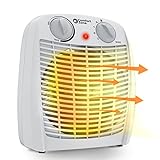
Overview: This compact 750/1500W fan-forced heater targets small indoor spaces like bedrooms, offices, or dorms, prioritizing safety and energy efficiency for personal use. It delivers rapid warmth via forced-air technology while integrating critical safeguards for everyday environments.
What Makes It Stand Out: Its dual heat settings (750W/1500W) plus fan-only mode offer year-round utility, while Energy Save technology claims 30% reduced consumption without sacrificing output. The cool-touch housing and automatic tip-over/overheat shutoffs make it exceptionally safe for homes with children or pets.
Value for Money: Priced competitively for entry-level heaters, it justifies cost through versatile functionality and energy savings. Though lacking premium features like oscillation, its safety focus and efficiency outperform cheaper models that omit critical protections, making it ideal for budget-conscious users needing reliable spot heating.
Strengths and Weaknesses:
Strengths: Energy-efficient operation; intuitive adjustable thermostat; excellent safety suite; quiet fan-forced heat; truly cool exterior.
Weaknesses: Limited to small rooms (under 150 sq. ft.); no timer or remote control; basic design lacks modern aesthetics.
Bottom Line: A superb value for safe, efficient personal heating in compact spaces. Highly recommended for dorms, offices, or nurseries where safety and simplicity outweigh advanced features.
2. Comfort Zone Electric Fan-Forced Portable Space Heater with Adjustable Thermostat, Overheat Sensor, Tip-Over Switch, & Heat Resistant Housing, Ideal for Home, Bedroom, & Office, 1,500W, CZ40EBK

Overview: This 1,500W portable heater delivers targeted warmth for bedrooms or offices, emphasizing energy savings and user-friendly operation through adjustable settings and robust safety mechanisms in a compact form.
What Makes It Stand Out: The tri-mode heat settings (low/high/fan-only) and precise thermostat enable customized comfort, while its “30% less energy” claim (via optimized cycling) stands out for eco-conscious users. The cool-touch housing and dual safety sensors (tip-over + overheat) ensure secure use in busy households.
Value for Money: Matches Product 1’s price point but refines usability with smoother thermostat control and a slightly sleeker profile. It offers better value than bare-bones heaters due to superior energy management, though premium models with Wi-Fi justify higher costs for tech-focused buyers.
Strengths and Weaknesses:
Strengths: Effective energy-saving mode; responsive temperature control; lightweight portability; reliable safety features; quiet operation.
Weaknesses: No oscillation for wider heat spread; prone to slight thermostat lag; minimal BTU output for larger rooms.
Bottom Line: An excellent upgrade over basic heaters, balancing efficiency, safety, and ease of use. Ideal for bedrooms or desks—choose this over Product 1 if refined controls matter more than dual wattage options.
3. Comfort Zone Hard-Wired Ceiling Mount Garage Electric Space Heater, Fan-Forced, 5,000 watt, 240 volt, Overheat Protection, Thermal Cut-Out Switch, Ideal for Workshop & Garage, ETL Compliant, CZ220

Overview: A heavy-duty 5,000W (17,000 BTU) ceiling-mounted heater designed for garages, workshops, or warehouses, eliminating floor clutter while providing industrial-strength heat in uninsulated spaces.
What Makes It Stand Out: Its hardwired 240V installation and ceiling-mount design maximize floor space—ideal for cramped workshops. Heavy-gauge steel construction withstands harsh environments, while adjustable louvers and mounting angles enable precise heat direction. The thermal cut-off switch adds critical safety for unattended operation.
Value for Money: Higher upfront cost (requires professional installation) is justified for permanent workshop solutions. It outperforms portable garage heaters in coverage and durability, though DIYers should budget for electrician fees. Cheaper plug-in models can’t match its 5,000W output for large, drafty areas.
Strengths and Weaknesses:
Strengths: Space-saving ceiling mount; exceptional build quality; powerful even heat distribution; reliable overheat protection; ETL-certified for commercial use.
Weaknesses: Complex hardwired setup; unsuitable for renters; noisy fan at full power; no thermostat beyond manual knobs.
Bottom Line: The top choice for permanent garage or workshop heating where floor space is limited. Only invest if you own the space and need robust, wide-area warmth—avoid for temporary or residential rooms.
4. Dura Heat EUH1465 Electric Forced Air Heater with Pivoting Base 5,120 BTU, Yellow

Overview: A rugged 1,500W PTC ceramic heater built for durability in workshops or garages, featuring a pivoting base for directional airflow and straightforward operation in demanding environments.
What Makes It Stand Out: Its bright yellow steel casing resists dents and corrosion, while the pivoting base (uncommon in budget heaters) allows 90-degree angle adjustments for targeted heating. PTC ceramic elements ensure efficient, even warmth without glowing coils, ideal for dusty workshops.
Value for Money: Priced below $50, it’s a steal for commercial-grade durability. While lacking smart features, its steel build and pivoting function outclass flimsier plastic competitors. However, comparable models like Comfort Zone’s CZ50 offer more safety features at similar prices.
Strengths and Weaknesses:
Strengths: Ultra-durable steel housing; pivoting base enhances versatility; PTC ceramic for efficient heat; simple thermostat control; affordable.
Weaknesses: Only basic overheat protection (no tip-over switch); loud fan noise; limited to small workspaces; no cool-touch housing.
Bottom Line: A no-nonsense workhorse for garages or sheds where toughness matters most. Skip if safety is paramount; choose for tool sheds or greenhouses where portability and pivoting airflow are essential.
5. Comfort Zone CZ50 750/1500-Watt Fan-Forced Oscillating Electric Portable Heater with Adjustable Thermostat, Built-in Overheat Sensor, Safety Tip-Over Switch, and Heat Resistant Housing, White
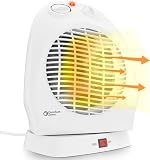
Overview: This 750/1500W oscillating heater combines portability with even heat distribution for living rooms or larger bedrooms, featuring user-friendly controls and comprehensive safety in a modern white design.
What Makes It Stand Out: Oscillation is its crown jewel—rotating 70 degrees to disperse warmth 360 degrees, eliminating “cold spots” in medium rooms. The dual wattage settings, intuitive knobs, and cool-touch housing make it exceptionally user-friendly, while the molded handle enhances portability.
Value for Money: Priced moderately higher than non-oscillating models, it’s worth the premium for superior heat coverage. Outperforms Products 1–2 in room-filling efficiency, though the Dura Heat EUH1465 may suit workshops better. Ideal for those prioritizing even warmth over energy claims.
Strengths and Weaknesses:
Strengths: Effective oscillation for uniform heating; lightweight and easy to move; precise thermostat; excellent safety suite; quiet on low setting.
Weaknesses: Oscillation slightly increases noise; thermostat accuracy inconsistent at high heat; limited range beyond 200 sq. ft.
Bottom Line: The best portable pick for consistent, room-wide warmth in living areas. Buy if oscillation is non-negotiable—skip only if you need garage-grade durability or hardwired installation.
6. Comfort Zone Indoor Space Heater, Portable, Fan Forced, Electric, Adjustable Thermostat, Overheat Sensor, Safety Tip-Over Switch, & Stay Cool Housing, Ideal for Home, Bedroom, Office, 1,500W, CZ35EBK

Overview: This 1,500W portable electric heater delivers targeted warmth for small spaces like bedrooms or offices. Its fan-forced ceramic design promises quick, efficient heating with essential safety features integrated into a compact chassis.
What Makes It Stand Out: The standout feature is its “Energy Save Technology,” claiming 30% greater efficiency than prior models—potentially lowering bills while maintaining warmth. The adjustable thermostat and three heat settings (600W/900W/1,500W) allow precise comfort control, complemented by cool-touch housing and automatic safety shutoffs.
Value for Money: Priced competitively for entry-level heaters, it offers excellent value by reducing long-term energy costs. It outperforms basic radiant heaters in efficiency and safety but lacks oscillation found in pricier alternatives like Product 7. Ideal for budget-conscious users needing reliable spot heating.
Strengths and Weaknesses: Strengths include energy savings, robust safety suite (tip-over/overheat protection), portability, and quiet operation. Weaknesses are the absence of oscillation for even heat distribution and a slightly dated control layout compared to newer models.
Bottom Line: A practical, cost-effective choice for small rooms where safety and energy efficiency matter most. Recommended for users prioritizing affordability and reliability over advanced airflow features.
7. Comfort Zone Oscillating Space Heater with Adjustable Thermostat, Desktop, Fan-Forced, Portable, Overheat Sensor, Tip-Over Switch, Stay-Cool Housing, Ideal for Home, Bedroom, Office, 1,500W, CZ50BK

Overview: This 1,500W oscillating heater combines fan-forced warmth with a 70-degree oscillation range to evenly heat small-to-medium rooms. Designed for home or office use, it emphasizes even heat distribution and year-round versatility.
What Makes It Stand Out: The oscillation feature is its key differentiator, eliminating cold spots by circulating warmth broadly—unlike non-oscillating models (e.g., Product 6). The added fan-only mode for summer use and intuitive knob controls enhance its multi-season appeal.
Value for Money: Slightly pricier than basic models, it justifies the cost through superior heat dispersion and dual heating/cooling functionality. While industrial units (Product 8) offer more power, this hits a sweet spot for personal spaces seeking consistent comfort without overspending.
Strengths and Weaknesses: Strengths are effective oscillation, fan-only setting, cool-touch housing, and easy portability. Weaknesses include only two heat settings (versus three in Product 6) and a less powerful output for larger areas.
Bottom Line: Highly recommended for those needing uniform room heating and seasonal flexibility. Its oscillation makes it a top pick for offices or bedrooms where even warmth is critical.
8. Comfort Zone CZ290 NEMA 6-30P 4,800-Watt Fan-Forced Industrial Heater, Integrated Thermostat Control, Heavy Gauge Steel, Carry Handle with Rubber Feet and Overheat Protection, Red

Overview: A heavy-duty 4,800W industrial heater built for large, drafty spaces like workshops or garages. Its robust steel construction and high-wattage output target commercial or demanding residential use beyond typical room heaters.
What Makes It Stand Out: Exceptional power (4,800W) and industrial-grade durability set it apart. The NEMA 6-30P plug ensures secure high-voltage connections, while the wrap-around power cord and rubber feet enhance portability in rugged environments—features absent in consumer models.
Value for Money: Premium-priced but invaluable for large spaces where standard heaters fail. It costs more than home units (Products 6–7) but delivers unmatched coverage and longevity, avoiding the need for multiple cheaper units. Justified for workshops or warehouses.
Strengths and Weaknesses: Strengths include massive heating capacity, rugged build, and overheat protection. Weaknesses are limited home compatibility (requires 240V outlet), bulkiness, and no thermostat precision for delicate temperature control.
Bottom Line: The go-to solution for industrial or large-space heating. Only recommended for users with compatible wiring and high-power needs—not suitable for standard bedrooms or offices.
9. Comfort Zone Indoor Space Heater with Adjustable Thermostat, Fan Forced, Electric, Overheat Protection, Safety Tip-Over Switch, Energy Efficient, Ideal for Home, Bedroom, & Office, 1,500W, CZ45EBK
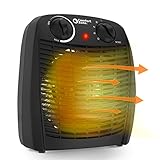
Overview: A versatile 1,500W ceramic heater optimized for home/office use, featuring ETL safety certification and energy-saving tech. It targets eco-conscious users seeking reliable, safe spot heating for personal spaces.
What Makes It Stand Out: ETL certification and explicit 30% energy savings claim (via “Energy Save Technology”) differentiate it. The three heat settings plus fan-only mode offer exceptional adaptability, while safety features like tip-over shutoff are rigorously validated.
Value for Money: Comparable in price to Product 6 but adds verified safety credentials and stronger energy-efficiency marketing. Better value than non-ETL models for families or pet owners prioritizing certified safety, though oscillation (Product 7) may justify a slight premium.
Strengths and Weaknesses: Strengths are certified safety, energy efficiency, quiet operation, and flexible settings. Weaknesses include no oscillation and a design nearly identical to Product 6—offering few functional upgrades beyond certification.
Bottom Line: An excellent, safety-focused choice for risk-averse users. Recommended if ETL validation is a priority; otherwise, Product 6 offers similar performance at potentially lower cost.
10. Comfort Zone Compact Electric Space Heater for Indoor Use – 1500W Fan-Forced PTC Ceramic Heater with Adjustable Thermostat, 3 Heat Settings, Tip-Over & Overheat Protection, ETL Listed – Black

Overview: This ultra-compact 1,500W PTC ceramic heater emphasizes safety and efficiency for tight spaces. Its advanced heating element and triple safety systems cater to modern homes demanding sleek, secure warmth.
What Makes It Stand Out: PTC (Positive Temperature Coefficient) ceramic technology ensures self-regulating heat—preventing overheating inherently—while maintaining energy efficiency. Combined with ETL listing and three distinct modes (including fan-only), it delivers cutting-edge safety and precision.
Value for Money: Mid-range pricing is justified by PTC’s longevity and safety advantages over standard ceramic heaters (Products 6/9). Though slightly costlier than basic models, reduced fire risk and consistent output offer long-term peace of mind worth the investment.
Strengths and Weaknesses: Strengths are superior PTC safety, rapid heating, ETL certification, and quiet fan operation. Weaknesses include minimal design differentiation from competitors and no oscillation for wider coverage.
Bottom Line: A top-tier pick for safety-conscious buyers in small rooms. Its PTC technology makes it the most secure option reviewed—highly recommended for nurseries, dorms, or offices.
Understanding Fan-Forced Heater Basics
What Exactly is a Fan-Forced Heater?
At its core, a fan-forced heater uses an electric heating element combined with a built-in fan. The element (often ceramic or metal coil) generates heat, and the fan actively blows air across it, rapidly distributing that warmth into the room. This forced air circulation is the key difference from radiant or convection heaters, making fan-forced models uniquely effective for quick temperature rises in the immediate area.
How Fan-Forced Heating Differs from Other Types
Unlike radiant heaters that primarily warm objects and people directly in their line of sight (like the sun), or oil-filled radiators that slowly heat the surrounding air through convection, fan-forced units actively push heated air. This makes them significantly faster at warming a specific zone but generally less effective for maintaining whole-room warmth over long periods compared to convection-based systems. They excel in “spot heating” scenarios.
The Core Benefit: Speed of Warmth
This active air movement is the magic ingredient. While other heaters rely on natural air currents (which are slow), the fan forces heated air into circulation immediately. You feel the warmth within seconds or minutes, not 15-30 minutes. This speed is the primary reason people seek them out for drafty rooms, home offices, bathrooms, or garages where instant comfort is non-negotiable.
Key Performance Factors for Quick Warm-Up
Wattage: Powering Up the Warmth
Wattage directly correlates to heating capacity and speed. Higher wattage (typically 1500W being the standard maximum for standard household circuits) means more heat output and faster warm-up times. However, matching wattage to your room size is critical; too low and it struggles, too high wastes energy. Consider 10 watts per square foot as a starting baseline for adequate heating power.
Heating Element Technology: Ceramic vs. Coil
Most modern value heaters use Positive Temperature Coefficient (PTC) ceramic elements. These self-regulate temperature, becoming less conductive as they heat up, enhancing safety and energy efficiency. They heat up incredibly fast. Older coil (quartz) elements can be cheaper but often take slightly longer to reach peak output, pose higher surface temperatures, and may have a shorter lifespan. Ceramic generally offers the best balance for rapid, safe warmth.
Airflow Design and Fan Efficiency
It’s not just about the fan’s presence, but its design. Look for models with well-engineered vents and fan blades that maximize airflow volume (measured in CFM – cubic feet per minute) while minimizing turbulence and noise. Efficient airflow ensures the heat generated is effectively pushed into the room, not wasted circulating internally or creating excessive noise.
Coverage Area vs. Room Size Reality
Manufacturer claims about “heating up to 150 sq ft” are often optimistic, especially for rapid warm-up. For truly quick results in a cold room, it’s wise to select a heater rated for at least the actual square footage you intend to heat, or even slightly larger. Undersizing leads to the heater running constantly at max power, slowing warm-up and increasing energy use.
Safety Features: Non-Negotiable for Value
Tip-Over Switch: Essential Protection
This is a mandatory safety feature on any reputable heater. If the unit is accidentally knocked over, the switch immediately cuts power to the heating element. Without this, a fallen heater poses a severe fire hazard. Ensure the switch is sensitive and reliable – it’s not a feature to compromise on for a lower price.
Overheat Protection: Preventing Danger
An overheat protection sensor automatically shuts off the heater if internal components reach unsafe temperatures, such as if vents are blocked by furniture, curtains, or dust buildup. This is crucial for preventing fire risks and extends the heater’s lifespan by avoiding thermal stress on components.
Cool-to-Touch Housing: Safety for All
Especially important in homes with children or pets, cool-to-touch exteriors (often achieved with plastic casings surrounding the hot element compartment) prevent accidental burns. While the front grill will get warm, the main body should remain safe to touch. Don’t mistake a slightly warm casing for unsafe – genuine cool-touch design is a significant safety and value indicator.
Certifications: The Seal of Safety Compliance
Always look for independent safety certifications like ETL, UL, or CSA. These indicate the heater has undergone rigorous testing to meet strict electrical and fire safety standards. Avoid uncertified models, no matter how inexpensive; the potential risks far outweigh any initial savings. This certification is a fundamental part of true value.
Maximizing Value: Beyond the Purchase Price
Energy Efficiency Considerations
While all electric resistance heaters are 100% efficient at converting electricity to heat (the energy is all used), “efficiency” here means using less energy to achieve the desired comfort level. Features like precise thermostats, eco-modes, timers, and good airflow design prevent the heater from running unnecessarily, saving you money on your electricity bill over the season. True value lies in lower operating costs.
Thermostat Accuracy and Control
A precise thermostat is vital for value. A basic on/off thermostat causes wide temperature swings – the heater blasts heat until it’s too hot, then shuts off until it’s too cold, wasting energy. Look for models with adjustable thermostats that maintain a more consistent temperature, reducing cycling and energy consumption. Digital controls often offer finer adjustment than dials.
Timer Functions: Convenience and Savings
Built-in timers allow you to schedule the heater to turn on just before you wake up or arrive home, ensuring warmth on demand without leaving it running all day. More importantly, a timer can automatically shut the heater off after a set period (e.g., 1-8 hours), preventing accidental all-night operation and saving energy. This simple feature directly impacts long-term cost.
Portability and Maneuverability
Value includes convenience. Lightweight designs (under 10 lbs is ideal), integrated carry handles, and swivel bases or caster wheels make it easy to move the heater between rooms as your needs change – warming the home office during the day and the living room in the evening. Avoid cumbersome models that you won’t bother relocating.
Practical Usage Tips for Optimal Performance
Strategic Placement for Maximum Impact
Position the heater where airflow won’t be blocked (at least 3 feet from walls/furniture) and where the warm air can circulate effectively – often near the center of the area you want to heat, or pointing towards the coldest spot (like a drafty window). Avoid placing it directly under a window where cold air constantly sinks, as this fights the heater’s output.
Avoiding Common Performance Pitfalls
Don’t place the heater behind furniture or curtains, as this blocks airflow and triggers overheat protection. Ensure intake and exhaust vents are completely clear of dust and obstructions. Using it in a room significantly larger than its capacity will result in slow, inadequate heating and higher energy bills. Match the tool to the task.
Maintenance for Longevity and Efficiency
Dust buildup on the intake grill and heating element drastically reduces airflow and efficiency, forcing the heater to work harder and longer. Unplug the unit and gently vacuum the vents and internal components (following the manual) at least once a season. A clean heater performs better, heats faster, uses less energy, and lasts longer – a direct value boost.
Noise Levels: Balancing Warmth and Quiet
Understanding Fan Noise Expectations
Fan-forced heaters inherently make noise – it’s the sound of the fan moving air. However, noise levels vary significantly. Basic models can be quite loud (50-60+ dB), comparable to a conversation, which might be disruptive in a bedroom or quiet office. Higher-quality models often incorporate noise-reduction features for quieter operation (40-50 dB), closer to background office hum.
Finding the Right Noise Balance for Your Space
Consider where you’ll use the heater most. For bedrooms or study areas, prioritize models marketed as “quiet” or with lower decibel ratings. For garages, workshops, or living rooms with background noise, moderate fan noise might be perfectly acceptable. Read reviews specifically mentioning noise levels – this is a highly subjective factor impacting perceived value and comfort.
Features that Reduce Audible Disturbance
Look for models offering multiple fan speed settings. Running on a lower speed (often paired with a lower heat setting) significantly reduces noise, though it may slightly slow the initial warm-up. Some advanced models have “sleep mode” which automatically reduces fan speed after the room reaches temperature. Efficient airflow design also minimizes turbulent, noisy air movement.
Making Your Value-Centric Decision
Defining “Value” for Your Specific Needs
True value isn’t just the lowest sticker price. It’s the optimal balance of initial cost, safety, speed of warm-up, energy efficiency, noise level, durability, and features that matter to you. A slightly more expensive heater with a precise thermostat and quiet operation that you actually use effectively might save you money and provide more comfort than a cheap, noisy, inefficient model you rarely use.
Prioritizing Must-Have Features
Before shopping, list your non-negotiables. Is rapid warm-up in a small bathroom the top priority (prioritize wattage and ceramic element)? Is safety for kids paramount (prioritize cool-touch housing and robust tip-over switch)? Is quiet operation essential for your bedroom (prioritize noise levels and low-speed fan)? Knowing your top 2-3 requirements helps filter options and avoid paying for unnecessary bells and whistles.
Considering Long-Term Ownership Costs
Factor in potential electricity costs. A heater with poor thermostat control or no timer might cost significantly more to run over a winter than a more efficient model, erasing any initial price savings. Also, consider build quality – a flimsy heater might break in 1-2 seasons, requiring replacement, while a sturdier one could last 5+ years. Warranty length (1 year minimum, 3+ is better) is also an indicator of expected durability.
Frequently Asked Questions
Can fan-forced heaters really warm a room that quickly?
Yes, they are specifically designed for rapid spot heating. By actively blowing air over the heating element, they deliver warm air into the space much faster than heaters relying on passive convection or radiation. You’ll typically feel noticeable warmth within minutes, especially in the immediate vicinity of the unit, making them ideal for taking the chill off a room quickly.
Are fan-forced heaters expensive to run compared to other types?
All electric space heaters consume significant electricity when running at full power. However, fan-forced heaters can be more cost-effective for short-term, targeted heating because they reach your desired comfort level faster, allowing you to potentially use them for shorter durations. Their efficiency comes from heating you quickly, not necessarily the entire room slowly. Using features like thermostats and timers is key to minimizing costs.
What size room can a typical fan-forced heater handle for quick warm-up?
For genuinely rapid warm-up in a cold room, choose a heater rated for the actual square footage you need to heat. A standard 1500W model is generally effective for spaces up to 150 square feet for quick results. Trying to heat a much larger area will result in slow, inadequate warming and the heater running continuously, increasing costs. Don’t rely solely on optimistic manufacturer claims.
Do all fan-forced heaters have a noticeable burning smell when new?
Many new heaters, especially those with ceramic elements, emit a slight “burning dust” smell during the first few uses as residual manufacturing oils and dust on the element burn off. This is normal and should dissipate within a few hours of operation. However, a persistent, strong burning odor later on usually indicates a problem (like dust buildup or internal issue) and requires stopping use and inspection.
How important is oscillation for a fan-forced heater?
Oscillation (side-to-side movement) helps distribute warm air more evenly across a wider area, preventing intense heat in one spot and cold spots elsewhere. For warming a broader zone quickly and comfortably, it’s a valuable feature. However, if you only need focused heat directly in front of the heater (e.g., at a desk), oscillation might be less critical, and a fixed-direction model could suffice.
Can I leave a fan-forced heater running unattended?
Safety guidelines strongly advise against leaving any space heater unattended or while sleeping. While modern units have vital safety features like tip-over and overheat protection, malfunctions can still occur. Always turn off and unplug the heater when leaving the room or going to sleep. Never use it as a primary overnight heating source.
Why do fan-forced heaters sometimes shut off unexpectedly?
This is usually a safety feature kicking in. Common causes include the unit tipping over (triggering the tip-over switch), blocked air vents causing overheating (triggering overheat protection), or the room reaching the set thermostat temperature. Ensure the heater is on a level surface, vents are completely clear, and the thermostat setting is appropriate for the desired warmth.
Are ceramic fan heaters better than coil fan heaters?
Ceramic (PTC) elements are generally preferred for modern value heaters. They heat up almost instantly, are more energy-efficient (self-regulating), run cooler on the exterior housing, and often have a longer lifespan than traditional metal coil (quartz) elements, which can take slightly longer to peak, get much hotter on the surface, and may degrade faster. Ceramic offers better safety and performance for rapid warm-up.
Do fan-forced heaters dry out the air like other electric heaters?
All electric resistance heaters, including fan-forced models, do not remove moisture from the air. However, warming the air lowers its relative humidity, which can make the air feel drier and potentially cause dry skin or irritated sinuses. This is a result of the physics of warm air holding more moisture, not the heater actively drying the air. Using a humidifier can counteract this effect if needed.
What’s the most important feature to look for in a budget-friendly fan heater?
While price is a factor, the absolute non-negotiables for any fan-forced heater, regardless of cost, are certified safety features: a reliable tip-over switch and overheat protection, backed by a recognized safety certification (UL, ETL, CSA). Never compromise on these for a lower price. Beyond safety, a basic adjustable thermostat is crucial for managing energy use and comfort, adding significant value.
See Also
- 10 Best Value Line Voltage Baseboard Heaters for Quick Warm-Up in 2026
- 10 Best Oil Radiator Heaters with Fan for Faster Warm-Up in 2026
- 10 Expert-Recommended Fan-Forced Heaters for Quick Room Heating in 2026
- 10 Game-Changing Infrared Garage Heaters for Fast Warm-Up in 2026
- 10 Best Value Ceramic Fan Heaters for Energy Efficiency in 2026