Table of Contents
Ever woken up in your studio apartment or home office only to feel that distinctive chill seeping through the walls? When square footage is precious and every inch counts, hauling out a bulky heater isn’t just inconvenient—it’s practically impossible. Compact spaces demand compact solutions, but finding a heater that delivers genuine warmth without breaking the bank or compromising safety feels like searching for a needle in a haystack. You need something powerful enough to cut through the cold, small enough to tuck beside your bookshelf, and smart enough not to turn your cozy nook into a fire hazard. It’s a balancing act where “value” means far more than just the price tag.
The market is flooded with promises of “perfect portable warmth,” but many compact heaters fall short when it matters most. Some sputter weakly, barely warming a 3-foot radius. Others guzzle electricity, turning your modest heating solution into a budget-busting nightmare. And let’s not forget the anxiety of leaving any heater running while you work or sleep in tight quarters. True value in a compact heater lies at the intersection of intelligent design, reliable performance, and thoughtful safety—without demanding a premium price. This guide cuts through the noise, focusing squarely on the features and considerations that actually matter when heating cramped spaces efficiently and affordably.
Top 10 Compact Space Heaters
Detailed Product Reviews
1. BLACK+DECKER Portable Space Heater, Room Space Heater with Carry Handle for Easy Transport

Overview: This compact 1500W floor/tabletop heater targets small-to-medium rooms like bedrooms or offices. Its 2.8 lb weight and integrated handle emphasize portability, while dual mounting options offer flexible placement.
What Makes It Stand Out: The heater’s versatility shines with three distinct modes (Fan, 750W Low, 1500W High), a manual thermostat for precise temperature control, and essential safety features like tip-over shutoff and overheat protection. The power indicator light adds user convenience.
Value for Money: Priced competitively for its wattage range, it outperforms basic fan heaters but lacks advanced automation like auto-thermostats found in pricier models. Ideal for budget-conscious buyers needing reliable, portable spot heating without smart features.
Strengths and Weaknesses: Pros: Extremely portable, intuitive controls, robust safety suite, dual mounting. Cons: No auto-thermostat (requires manual adjustment), higher noise during high-heat operation, limited to dry indoor spaces.
Bottom Line: A dependable, no-frills heater for quick room warming; excellent for renters or supplemental heating but lacks premium automation. Recommended for basic, safe, and mobile heating needs under $40.
2. Amazon Basics Ceramic Space Heater, Portable Indoor Heating Solution, With Overheat and Tip-Over Protection, Thermostat, Non-Oscillating, 1500W, 7.52"D x 6.34"W x 9.45"H, Silver

Overview: This 1500W ceramic heater delivers rapid, efficient warmth for personal spaces using ceramic heating technology. Compact (3 lbs) and straightforward, it prioritizes safety and quiet operation for homes or offices.
What Makes It Stand Out: Its 43 dB noise level—quieter than conversation—is exceptional for ceramic heaters. Rapid ceramic heating warms spaces quickly, while the adjustable thermostat maintains consistent temperatures without manual tweaking, enhancing comfort.
Value for Money: An affordable entry into ceramic heating, it undercuts premium brands while matching core functionality. The thermostat adds value over basic models, though wattage options (1500W/900W/Fan) are standard. Avoids bathroom use, limiting versatility.
Strengths and Weaknesses: Pros: Very quiet operation, fast ceramic heating, reliable thermostat, strong safety protections. Cons: No oscillation, not moisture-resistant (unsuitable for bathrooms), basic design lacks premium feel.
Bottom Line: A superb budget ceramic heater for noise-sensitive environments like bedrooms. Its efficiency and thermostat justify the price, though its single-room focus and moisture limitations narrow ideal use cases. Highly recommended for quiet, safe personal heating.
3. GiveBest Portable Electric Space Heater with Thermostat, 1500W/750W Safe and Quiet Ceramic Heater Fan, Heat Up 200 Square Feet for Office Room Desk Indoor Use, Silver

Overview: This 1500W ceramic heater combines heating and fan functions with auto-thermostat control, targeting spaces up to 200 sq. ft. Its portability and safety focus suit offices, bedrooms, or small living areas.
What Makes It Stand Out: The standout feature is its automatic thermostat: it cycles on/off to maintain your set temperature without intervention. Enhanced V0 flame-retardant material and a loud tip-over alert (with auto-restart) elevate safety beyond competitors.
Value for Money: Justifies a mid-tier price with smart thermostat functionality typically seen in costlier units. The 200 sq. ft. coverage and dual heating modes offer broad utility, though noise at 43 dB matches industry standards, not exceeding expectations.
Strengths and Weaknesses: Pros: True auto-thermostat convenience, exceptional safety certifications, quiet enough for sleep, heats efficiently. Cons: No oscillation, cord storage is basic, “2-second heat” claim is marketing exaggeration.
Bottom Line: A top pick for hands-off temperature control and safety. The auto-thermostat makes it worth the slight premium over basic models, especially for bedrooms or home offices. Highly recommended for those prioritizing automation and peace of mind.
4. Amazon Basics Ceramic Space Heater, Mini Heater for Office Desk, Portable Tent Heater (Indoor Use), 500 W, With Tip-Over Protection, Lightweight (1.4 LBS), Black, 5.87”D x 3.15”W x 5.95”H

Overview: This ultra-compact 500W heater is designed for personal, close-range warmth on desks or small tables. Weighing just 1.4 lbs, it’s the smallest option here, ideal for minimal-space heating like dorms or under-desk use.
What Makes It Stand Out: Its minuscule size (5.87”D x 3.15”W x 5.95”H) and featherlight weight make it unrivaled for portability. The 500W output ensures low energy use, perfect for targeted warmth without overheating a room.
Value for Money: Exceptional for its niche: it’s the most affordable for personal heating needs. While wattage is low (unsuitable for whole rooms), it excels as a supplemental heater where central heating falls short, saving energy versus larger units.
Strengths and Weaknesses: Pros: Unbeatable portability, energy-efficient for personal use, simple operation, quiet (48 dB). Cons: Very limited coverage (only immediate vicinity), no thermostat, low max heat output.
Bottom Line: The go-to choice for desk-side or personal spot heating. Not for room warming, but perfect for chilly office chairs or bedside use. Highly recommended for minimalists or energy savers needing focused warmth under $25.
5. Gaiatop Mini Space Heater, Lightweight PTC Ceramic Fast Heating 500W Energy Efficient for Indoor Use, Overheating & 45° Tip-Over Protection, Portable Desk Electric Heaters for Office Home Black

Overview: This 500W PTC ceramic heater emphasizes rapid, quiet heating for small spaces like desks or dorms. Its compact black design and 45° tip-over sensitivity target safety-conscious users needing efficient personal warmth.
What Makes It Stand Out: The “2-second heat” claim leverages PTC ceramic tech for near-instant warmth, while a 45° tip-over threshold (steeper than standard 30°) offers nuanced safety. The V0 fireproof material and LED status indicator enhance reliability.
Value for Money: Competitively priced for its niche, matching Amazon Basics’ mini heater but adding a steeper tip-over angle and LED light. The energy efficiency suits budget users, though wattage limits it to personal use only.
Strengths and Weaknesses: Pros: Very fast initial heat, quiet operation, compact, enhanced tip-over sensitivity, clear LED status. Cons: 500W too weak for rooms, no thermostat, minimal noise reduction beyond competitors.
Bottom Line: An excellent ultra-portable option for immediate personal warmth, especially where space is tight. The faster heat-up and safety tweaks edge out similar mini heaters. Recommended for desks or small workspaces needing quick, quiet spot heating.
6. Space Heater, Portable Heater for Indoor Use, Small Electric Heaters with Overheat & Tip-Over Protection, Mini Desk Heaters for Office Bedroom Bathroom, Compact & Efficient Heating, White

Overview:
This compact white KIDEE space heater targets small personal spaces like desks, bedrooms, or bathrooms. Using PTC ceramic technology, it promises rapid 2-second heating, quiet operation, and essential safety features for indoor use in confined areas.
What Makes It Stand Out:
Its ultra-portable design (5.28 x 4.45 x 8.5 inches) with a carry handle and 4ft cord makes it ideal for tight spots. Dual heat modes (1000W/700W) offer flexibility, while UL-listed overheat and tip-over protection ensure safety in sensitive environments like children’s rooms. The near-silent operation (40dB) is perfect for offices or sleep spaces.
Value for Money:
Priced affordably for a safety-certified mini heater, it outperforms basic fan heaters in efficiency. While less powerful than larger models, it’s cost-effective for personal zones under 200 sq ft, avoiding wasted energy on unused rooms. Budget-friendly but lacks advanced features like thermostats.
Strengths and Weaknesses:
Strengths: Exceptionally portable, near-silent, strong safety certifications, rapid heat-up.
Weaknesses: Short power cord limits placement, no thermostat for precise temp control, modest coverage area. Not suitable for large rooms.
Bottom Line:
An excellent budget choice for personal, small-space heating where portability and quiet safety are priorities. Avoid for larger areas, but ideal for desks, dorms, or bathrooms. Highly recommended for targeted warmth.
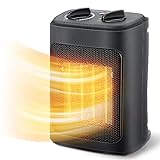
7. Space Heater, 1500W Electric Heaters Indoor Portable with Thermostat, PTC Fast Heating Ceramic Room Small Heater with Heating and Fan Modes for Bedroom, Office and Indoor Use
Overview:
This 1500W KIDEE heater combines PTC ceramic heating with a fan for faster, even warmth in rooms up to 150 sq ft. It includes a thermostat, three heat settings, and fan-only mode, targeting energy-conscious users in bedrooms or offices.
What Makes It Stand Out:
The adjustable thermostat maintains precise room temperatures, while the three-tiered heat settings (plus fan mode) optimize energy use. Its compact build with an ergonomic handle enhances portability. Safety features like tip-over and overheat shutoff provide peace of mind.
Value for Money:
Competitively priced for a thermostat-equipped model, it slashes energy costs by heating only occupied spaces. Outperforms non-thermostat heaters in efficiency but lacks oscillation. A smart buy for those prioritizing controlled heating without premium extras.
Strengths and Weaknesses:
Strengths: Energy-saving thermostat, versatile heat/fan modes, robust safety, effective for medium rooms.
Weaknesses: No oscillation limits heat distribution, slightly louder than mini heaters (45dB), basic design.
Bottom Line:
A practical, cost-efficient heater for consistent room warming. Ideal for offices or bedrooms where temperature control matters. Recommended for energy savers, though those needing wide coverage may prefer oscillating models.
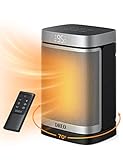
8. DREO Space Heater, 1500W Portable Electric Heaters for Indoor Use, PTC Ceramic Heater for Office with Remote, Thermostat, 70°Oscillation, 12H Timer, 5 Modes, Safe Quiet Room Heater for Bedroom
Overview:
DREO’s Atom One is a premium 1500W ceramic heater featuring Hyperamics Technology for rapid heating, 70° oscillation, and smart controls like a remote, 12H timer, and ECO mode. Designed for whole-room comfort in bedrooms or offices.
What Makes It Stand Out:
Its standout features include whisper-quiet operation (37.5dB), precise 1°F thermostat adjustments, and wide 70° oscillation for even heat distribution. The ECO mode auto-adjusts to save energy, while Shield360° safety (UL94 V-0 materials) ensures reliability. Remote access elevates convenience.
Value for Money:
Priced higher than basics, it justifies cost with advanced tech: oscillation and ECO mode improve efficiency, while the remote/timer add luxury. Beats non-oscillating 1500W heaters in performance. Worth the investment for tech-savvy users seeking comfort and savings.
Strengths and Weaknesses:
Strengths: Ultra-quiet, wide oscillation, energy-smart ECO mode, comprehensive safety, remote control.
Weaknesses: Premium price, slightly bulkier than mini heaters, no fan-only mode.
Bottom Line:
A top-tier heater for those valuing precision, quiet operation, and smart features. Excellent for bedrooms or home offices. Highly recommended despite the cost—superior efficiency and comfort deliver long-term value.
9. Space Heater, Portable Small Heaters for Indoor Use, Electric Desk Heater with Overheat and Tip-Over Protection, Mini Personal Heaters for Home Office Workspace, Blue

Overview:
This compact blue desk heater delivers targeted warmth for personal spaces up to 200 sq ft. With PTC ceramic tech, dual heat modes (1000W/700W), and UL safety certifications, it’s tailored for home offices, dorms, or bedside use.
What Makes It Stand Out:
Its near-silent 40dB operation ensures distraction-free warmth, while the slim 5.28" profile fits discreetly under desks. Safety features include automatic shutoff at 45° tilt and overheating protection. The energy-saving Eco mode maintains humidity, ideal for dry workspaces.
Value for Money:
An affordable specialist for micro-zones, outperforming larger heaters in personal efficiency. Lacks a thermostat but offers solid value for quiet, safe spot heating. Cheaper than oscillating models yet perfect for single-person areas.
Strengths and Weaknesses:
Strengths: Extremely quiet, compact for desks, reliable safety, humidity-friendly Eco mode.
Weaknesses: No thermostat, limited to small areas, short 4ft cord restricts placement.
Bottom Line:
The go-to mini heater for focused, silent warmth in workspaces or bedrooms. Best for individuals needing reliable personal heating without frills. Recommended for desk-bound users prioritizing safety and quiet.
10. Amazon Basics Ceramic Space Heater, Portable Indoor Heating Solution, With Overheat and Tip-Over Protection, Thermostat, Non-Oscillating, 1500W, 7.52"D x 6.34"W x 9.45"H, Black

Overview:
Amazon Basics’ no-frills 1500W ceramic heater offers essential heating for small rooms. It includes a thermostat, three settings (High/Low/Fan), and core safety features in a lightweight, portable black chassis.
What Makes It Stand Out:
Its simplicity is key: a reliable thermostat maintains set temperatures, while the 43dB noise level ensures moderate quietness. Built-in tip-over and overheat protection meet safety basics. The 3lb weight and compact size (7.52"D) make it easy to relocate.
Value for Money:
The most budget-friendly 1500W option here, ideal for cost-conscious buyers needing fundamental heating. Lacks oscillation or remotes but excels in core functionality. Beats pricier models for basic spot heating in dry areas under 150 sq ft.
Strengths and Weaknesses:
Strengths: Affordable, thermostat for temp control, lightweight, quiet enough for background use.
Weaknesses: Non-oscillating (uneven heat), not for humid areas, minimal features, basic aesthetics.
Bottom Line:
A dependable entry-level heater for dry indoor spaces like bedrooms or studies. Perfect if you want thermostat-controlled warmth without extras. Recommended for simple, economical heating—avoid in bathrooms or large rooms.
Understanding Your Compact Heating Needs
Before diving into specs, honestly assess where and how you’ll use your heater. A drafty bathroom requires different considerations than a sealed home office nook. Measure the space accurately—both floor area and ceiling height—as heat rises and impacts required wattage. Consider your primary goal: is it supplemental warmth on top of central heating, or is this your main heat source for the room? Your answers dictate the technology and power level you truly need, preventing overspending on features you won’t use or underestimating the wattage required for comfort.
Defining “Tight Space” Realistically
“Tight space” means different things to different people. A cramped closet office under 50 square feet has vastly different heating dynamics than a 150-square-foot studio apartment. Focus on the actual cubic footage you need to warm, not just the floor plan. Account for factors like large windows, poor insulation, or frequent door openings, which significantly increase the heating load. A heater perfect for a well-insulated sunroom might struggle in a drafty basement studio. Be brutally honest about your space’s challenges to select the right tool.
The Critical Role of Wattage vs. Room Size
Wattage is the engine of your heater, but more isn’t always better in tight quarters. General guidance suggests 10 watts per square foot for standard ceiling heights, but this is a starting point. Insufficient wattage (e.g., a 750W heater for 150 sq ft) leads to constant running, higher energy bills, and frustration. Excessive wattage in a tiny space (e.g., 1500W for 50 sq ft) causes uncomfortable temperature swings and wastes energy. Match wattage precisely to your measured space and insulation quality—this is fundamental to achieving true value through efficiency.
Safety First: Non-Negotiables for Small Areas
Safety isn’t a feature; it’s the foundation, especially where furniture, curtains, and people are inches from the heater. Compact spaces amplify risks, making robust safety mechanisms essential, not optional. Prioritize models where these features are standard and rigorously tested, not afterthoughts. Your peace of mind while sleeping or working nearby is paramount and directly contributes to the heater’s long-term value by preventing disasters.
Essential Overheat Protection Systems
Look for dual-layer overheat protection. The primary sensor should automatically shut off the heater if internal components exceed safe temperatures, crucial if vents get blocked by laundry or papers. A secondary, independent thermal fuse acts as a final failsafe, permanently cutting power if the first system fails—a vital redundancy in confined spaces where fire risk escalates quickly. Don’t settle for vague claims; verify specific safety certifications.
The Importance of Tip-Over Switches
A reliable tip-over switch is non-negotiable. In tight spaces, accidental bumps from feet, pets, or furniture are inevitable. The switch must instantly cut power the moment the heater tilts beyond a few degrees. Test reviews for responsiveness—some cheaper models have delayed or faulty switches. This simple mechanism is your last line of defense against a heater landing on flammable carpet or bedding.
Cool-Touch Exteriors: A Must-Have Feature
When your heater sits mere feet from your chair or bed, a cool-to-the-touch housing isn’t just comfortable—it’s critical. Look for models where the entire outer casing, especially the front grille and sides, remains safe to touch even after hours of operation. This prevents accidental burns, particularly important in homes with children or pets navigating narrow pathways. Avoid heaters with significant hot zones on the exterior.
Maximizing Value Through Smart Features
Value transcends the initial purchase price. It’s about long-term ownership costs, convenience, and how well the heater integrates into your daily life within spatial constraints. Features that enhance efficiency, usability, and control directly impact your wallet and comfort over months or years. Prioritize functionalities that solve specific problems inherent to heating small areas effectively.
Precision Thermostats for Stable Comfort
A basic on/off switch is inadequate for consistent warmth in a compact zone. A high-quality adjustable thermostat allows you to set a precise desired temperature. The heater cycles on only when needed, maintaining comfort without wild fluctuations or constant noise. Look for models with clear, easy-to-read dials or digital displays—accuracy matters more than fancy presets in a value-focused heater.
Energy-Saving Modes That Actually Work
Seek heaters with genuine energy-conscious modes, not just marketing fluff. A true “Eco Mode” intelligently modulates heat output based on the room’s proximity to the set temperature, reducing runtime and electricity consumption. Some offer lower wattage settings (e.g., 750W instead of 1500W) for milder days, providing significant savings over time. Verify user reports on real-world energy impact before assuming a mode delivers.
Noise Levels: The Quiet Factor in Close Quarters
In a small space, heater noise is unavoidable—but it shouldn’t be disruptive. Convection heaters (oil-filled, some ceramic) are generally quieter than fan-forced models, as they rely on natural air circulation. If you need fan heat, look for units specifically advertising “whisper-quiet” operation with multiple low-speed fan settings. Testimonials mentioning suitability for bedrooms or home offices are valuable indicators of acceptable noise levels.
Choosing the Right Heating Technology
Not all compact heaters work the same way. The core technology dictates heat distribution, speed, noise, and suitability for your specific tight space. Understanding these differences helps you select the type that aligns with your priorities for warmth, ambiance, and integration into a small environment.
Ceramic Heating Elements: Fast, Focused Warmth
Ceramic heaters use a fan to blow air over heated ceramic plates. They warm up almost instantly and provide direct, targeted warmth—ideal for quickly taking the edge off a chilly desk area. Their compact size suits tight spots, but the fan noise can be noticeable. Best for: spot heating in offices or under desks where immediate warmth is key, and slight fan noise is tolerable.
Oil-Filled Radiators: Silent, Gentle, Whole-Room Heat
These heaters warm thermal oil inside sealed columns, which then radiates heat slowly and silently into the room. They take longer to heat up but provide consistent, gentle warmth that lingers after turning off. Excellent for bedrooms or living nooks where quiet operation and even heat distribution are priorities, though they tend to be slightly bulkier than ceramic fans.
Infrared Heaters: Direct Radiant Comfort
Infrared heaters emit invisible light waves that warm objects and people directly, not the air—like sunshine. They feel instantly warm where the beam hits, making them efficient for personal heating in drafty spots. Often very compact and quiet (no fan needed for basic models), but heat is directional. Ideal for: warming a specific chair or workstation without heating the entire small room.
Portability and Space-Saving Design Essentials
In cramped environments, how the heater fits is as crucial as how it heats. Consider its footprint, weight, maneuverability, and storage. A heater that slides effortlessly under a desk or tucks into a narrow corner without blocking pathways offers inherent value by not adding to your spatial woes.
Minimalist Footprints and Low Profiles
Measure the available space where the heater will live—not just the floor area, but height restrictions too (e.g., under a desk). Prioritize models with the smallest possible base footprint and low height. Some ultra-compact designs are barely wider than a laptop. Avoid units with large, protruding bases or tall grilles that dominate your limited floor space.
Integrated Handles and Lightweight Construction
True portability in tight quarters means effortless repositioning. An integrated, sturdy handle is essential for carrying the heater from room to room. Combined with lightweight construction (aim for under 10 lbs for easy handling), this feature ensures you can move warmth exactly where it’s needed without strain, maximizing the heater’s utility across your small space.
Cord Storage Solutions
A tangled, dragging power cord is a tripping hazard and visual clutter in any space, but especially problematic in tight areas. Look for models with built-in cord wraps or recessed storage compartments. This keeps the cord neatly secured during transport and storage, preventing snags and maintaining a tidy appearance—a small detail that significantly enhances usability and safety.
Energy Efficiency: Calculating True Long-Term Value
The sticker price is just the beginning. A slightly more expensive heater with superior efficiency can save you substantial money over a single heating season through lower electricity bills. Understanding how heaters consume power and identifying genuine efficiency features is key to identifying real value.
Decoding Wattage Settings and Their Impact
Most quality compact heaters offer multiple heat settings (e.g., 750W / 1500W). Using the lower setting when full power isn’t needed (milder days, smaller warm-up tasks) directly reduces energy consumption. A heater lacking this flexibility forces you to run at full blast unnecessarily, inflating costs. Ensure easy, reliable switching between settings.
The Real Cost of “Always On” Operation
Heaters without accurate thermostats or eco-modes often run continuously, cycling on and off inefficiently. Calculate potential costs: a 1500W heater running 8 hours nightly at $0.15/kWh costs over $50 monthly. Features promoting shorter, smarter runtime are investments that pay for themselves quickly through reduced bills—true value defined.
Looking Beyond the Label: Independent Efficiency Insights
While ENERGY STAR ratings are less common for space heaters, seek out independent testing data or detailed user reviews focusing on real-world energy use. Phrases like “noticeably lower bill” or “stays warm longer on low setting” are strong indicators of efficiency. Manufacturer claims alone are often optimistic; third-party validation is crucial.
Installation and Setup Simplicity
A heater that’s a hassle to set up or position defeats the purpose of a compact solution. Value includes the ease of getting it operational and placed correctly within your constrained environment, without complex tools or permanent modifications.
Plug-and-Play Simplicity
True compact heaters should require zero installation—just plug into a standard wall outlet. Avoid models needing special wiring or hardwiring, which are impractical and unsafe for renters or temporary setups common in tight spaces. Ensure the power cord length is sufficient to reach an outlet without risky extension cords.
Intuitive Controls for Daily Use
Controls should be straightforward and accessible, even in dim light. Large, tactile dials or well-lit digital buttons beat tiny, recessed touch controls that are fiddly in a small space. You shouldn’t need an instruction manual every time you adjust the temperature. Simplicity reduces frustration and enhances daily usability.
Positioning for Optimal Airflow
Even compact heaters need clearance (usually 3 feet) from walls and furniture for safe, efficient operation. Consider the heater’s airflow direction—front-facing vents might need more open space, while rear or side vents could tuck closer to a wall. Factor this clearance requirement into your space planning; a heater that fits only when violating safety rules has zero value.
Durability and Longevity Considerations
A cheap heater that breaks after one season is the worst value. Investing a bit more in robust construction and quality components pays off through years of reliable service, avoiding replacement costs and inconvenience. Look for signs of durability that matter for a device working hard in a confined space.
Build Quality: Beyond the Price Tag
Examine materials: sturdy plastics or metal housings resist cracks and warping better than flimsy, thin plastics. Check for solid-feeling switches and dials that don’t wobble. Tight seams and a stable base that doesn’t rock indicate better manufacturing. These elements prevent premature failure, extending the heater’s useful life significantly.
Warranty Coverage as a Confidence Indicator
A manufacturer willing to back their product with a multi-year warranty (2+ years is good) signals confidence in durability. Read the fine print—warranties covering internal components and accidental damage (like tip-overs) are rare but valuable. A long warranty reduces the risk of your “value” purchase becoming a costly mistake.
Frequently Asked Questions
Frequently Asked Questions
Can I safely leave a compact space heater running overnight in my bedroom? Yes, but only if it has essential safety features: a reliable tip-over switch, overheat protection, and a cool-touch exterior. Choose a radiant or oil-filled model for quieter operation, ensure it’s placed well away from bedding and curtains, and verify it has an accurate thermostat to prevent overheating. Never use older or uncertified models unattended.
Do compact space heaters significantly increase my electric bill? They can, depending on usage and efficiency. A 1500W heater running 8 hours daily can add $30-$50+ monthly. Maximize value by using only when needed, setting thermostats accurately, utilizing lower wattage settings, and ensuring your space is well-sealed. Efficient models with eco-modes minimize this impact.
What’s the safest type of heater for a small apartment or studio? Oil-filled radiators and ceramic heaters with robust safety certifications (UL, ETL) are generally safest for small dwellings. They offer strong overheat protection and tip-over switches. Oil radiators provide silent, even heat ideal for sleeping areas, while modern ceramic heaters offer quick spot warmth with cool exteriors.
How do I prevent my compact heater from drying out the air? All electric heaters reduce humidity slightly. Combat dryness by placing a shallow water basin near (not on) the heater, using a standalone humidifier, or keeping a pot of water simmering on the stove nearby. Staying hydrated also helps mitigate personal discomfort from drier air.
Can a compact heater effectively heat a drafty room? It can compensate for mild drafts, but severe drafts drastically reduce efficiency. Prioritize sealing windows and doors with weatherstripping first. Then, choose a heater with sufficient wattage for the space plus draft impact (add 10-25% more wattage). Position the heater to counteract the draft, not directly in its path.
Is 750 watts enough to heat a small room? It depends on the room size and insulation. 750W is generally sufficient for very small, well-insulated spaces under 75 sq ft (like a home office nook). For standard small rooms (100-150 sq ft), 1500W is typically needed as the primary heat source. Use 750W for supplemental heat in larger small rooms.
Why does my compact heater keep shutting off? This is usually a safety feature activating. Causes include blocked air intakes/exhausts (check for dust or nearby objects), the room reaching the set temperature (thermostat working), or the heater overheating due to insufficient clearance. Ensure proper placement, clean vents regularly, and verify it’s not on a carpet blocking bottom vents.
Are newer compact heaters significantly more efficient than older models? Yes, modern heaters often incorporate better insulation, more precise thermostats, and true energy-saving modes absent in older units. They heat more efficiently and maintain temperature with less cycling. Upgrading an old heater (5+ years) can yield noticeable energy savings and improved safety.
Can I use a compact heater in a bathroom? Only if it’s explicitly rated for bathroom use (typically with a high IPX rating for moisture resistance) and plugged into a GFCI-protected outlet. Most standard compact heaters are not safe for bathrooms due to electrocution risk. Look for models specifically marketed as “bathroom-safe” with appropriate safety certifications.
What’s the most common mistake people make with compact space heaters? Placing them too close to combustibles like curtains, furniture, or bedding—violating the critical 3-foot safety rule. This is the leading cause of space heater fires. Always ensure ample clearance on all sides, especially in tight spaces where furniture is unavoidable, and never leave them unattended near flammables.
See Also
- The 10 Ultimate Best Compact Baseboard Heaters for Tight Spaces in 2026
- 10 Best Compact Garage Heaters for Tight Spaces in 2026
- 10 Expert-Recommended Compact Garage Heaters for Tight Spaces in 2026
- 10 Best Compact Baseboard Heaters for Tight Spaces in 2026
- 10 Best Value Low Profile Garage Heaters for Limited Ceiling Space in 2026