Table of Contents
Winter’s icy grip can turn spacious living areas into chilly battlegrounds, leaving you constantly adjusting blankets and layering sweaters just to feel comfortable. If you’ve ever found yourself huddled near a windowless corner in a large living room or dining area, you know the frustration of conventional heating falling short. Tower ceramic heaters have emerged as a popular solution for these expansive spaces, promising efficient, targeted warmth without the bulk of traditional units. But navigating the sea of options requires more than just grabbing the tallest model off the shelf—it demands understanding what truly makes a heater effective for square footage that demands respect.
Ditching the guesswork is crucial when investing in supplemental heat for large rooms. While the allure of a simple “best of” list is strong, the reality is that the perfect heater depends entirely on your unique space, lifestyle, and specific heating challenges. Is your room cathedral-ceilinged and drafty? Do you need quiet operation for a home office within an open floor plan? Prioritizing the right features—like adequate wattage, smart airflow design, and precise temperature control—matters infinitely more than chasing a numbered ranking. This guide cuts through the marketing noise, focusing squarely on the engineering and practical considerations that transform a simple appliance into your winter sanctuary’s secret weapon.
Top 10 Tower Ceramic Heaters for Large Rooms
Detailed Product Reviews
1. PELONIS 30” Ceramic Tower Space Heater with Adjustable Thermostat for Large Room, 75° Oscillation, Remote Control & 12H Timer, Tip-Over Switch & Overheating Protection, 1500W, PHF15RSAPH30, Black

Overview:
This 30-inch PELONIS tower heater delivers powerful 1500W ceramic heating for spaces up to 280 sq. ft. It features rapid 3-second warm-up, 75° oscillation, and comprehensive safety protections, targeting large bedrooms or living rooms needing efficient, quiet warmth.
What Makes It Stand Out:
Its standout features include 26% more hot air vents for faster heating, precise 1°F thermostat adjustments, and four quiet settings (<55dB) including ECO mode for efficiency. The 12-hour timer and included remote control enhance usability, while V0 flame-retardant materials and tip-over/overheat safeguards ensure safety without adapters.
Value for Money:
Competitively priced for its 30-inch size and 280 sq. ft. coverage, it outperforms smaller heaters in large spaces. The ECO mode reduces long-term energy costs, and the robust safety suite justifies the cost compared to basic models lacking oscillation or precise temperature control.
Strengths and Weaknesses:
Strengths: Rapid, even heating; excellent oscillation coverage; intuitive digital panel; strong safety features; quiet operation.
Weaknesses: 12-hour timer is shorter than some competitors; ECO mode efficiency claims lack independent verification; remote lacks storage slot.
Bottom Line:
Ideal for large rooms needing reliable, quiet heat, this PELONIS heater offers robust performance and safety. Its superior coverage and user-friendly features make it a top-value choice for efficient winter warmth.
2. DREO Space Heater for Large Room, 23 Inch Electric Heaters for Indoor Use, 8 Safe Protection Tower, 70° Oscillation, PTC Ceramic with Thermostat and Remote, Quiet, 12H Timer, Bedroom, Office

Overview:
The DREO 23-inch tower heater targets rooms up to 250 sq. ft. with dual DC motors for rapid 2-second heating, 70° oscillation, and ETL-listed safety. It emphasizes energy efficiency and whisper-quiet operation (34dB) for bedrooms or offices.
What Makes It Stand Out:
Dual DC motors double airflow (10ft/s), while a 25% larger heating plate and ECO mode promise 40% energy savings. Unique child-lock and cool-touch housing enhance safety. The precise 1°F thermostat range (41–95°F) and ultra-quiet 34dB operation differentiate it from noisier rivals.
Value for Money:
Its energy-saving ECO mode offers long-term cost benefits, justifying a slight premium over basic heaters. Safety features rival pricier models, though coverage (250 sq. ft.) is modest for its size. Best for noise-sensitive users prioritizing efficiency.
Strengths and Weaknesses:
Strengths: Exceptionally quiet (34dB); strong energy savings; child-lock safety; precise thermostat; cool-touch housing.
Weaknesses: Smaller coverage than taller competitors; no fan-only mode specification; remote storage not mentioned; timer limited to 12 hours.
Bottom Line:
A superb choice for small-to-medium rooms where silence and efficiency are critical. Its safety focus and energy savings deliver excellent value, though larger spaces may need more powerful alternatives.
3. PELONIS Oscillating Ceramic Tower Indoor Space Heater for Home with Oscillation, Programmable Thermostat & ECO Mode, 12H Timer & Remote Control, Safety Protection, 23 Inches, 1500W, PHF15RSAPH23

Overview:
This compact 23-inch PELONIS heater serves spaces up to 220 sq. ft. with 1500W ceramic heating, 75° oscillation, and ECO mode. It prioritizes quiet operation (<55dB) and safety for bedrooms or home offices.
What Makes It Stand Out:
Despite its smaller size, it matches the 30-inch model’s rapid 3-second warm-up and 26% extra vents. The 1°F thermostat precision, 4 quiet settings (including fan-only), and 12-hour timer with remote control offer versatility. V0 flame-retardant build and tip-over protection enhance reliability.
Value for Money:
Priced lower than the 30-inch variant, it’s ideal for medium rooms where space is limited. The ECO mode reduces running costs, and its feature parity with larger models (minus coverage) makes it a cost-effective, space-saving solution.
Strengths and Weaknesses:
Strengths: Compact yet powerful; consistent temperature control; user-friendly remote; strong safety suite; quiet for bedroom use.
Weaknesses: Limited to 220 sq. ft. coverage; no extended timer beyond 12 hours; remote lacks dedicated storage; ECO savings unverified.
Bottom Line:
A reliable, space-efficient heater for medium rooms. Its balance of performance, safety, and quiet operation offers solid value, though larger areas require the 30-inch model.
4. Lasko Oscillating Digital Ceramic Tower Heater for Home with Adjustable Thermostat, Timer and Remote Control, 23 Inches, 1500W, Silver, 755320

Overview:
Lasko’s 23-inch heater provides 1500W ceramic warmth for medium rooms, featuring oscillation, a timer, and remote control. It emphasizes simplicity, safety, and portability with a built-in handle and cool-touch exterior.
What Makes It Stand Out:
The integrated remote storage slot prevents loss, while the 1–8 hour timer offers flexible scheduling. Cool-touch housing and ETL listing ensure safety, and the lightweight (7.29 lbs), handle-equipped design enables effortless room-to-room movement—uncommon in competitors.
Value for Money:
Budget-friendly with essential features, it lacks ECO mode or precise 1°F adjustments but excels in usability. The fully assembled design and portability justify its lower price for users seeking no-frills, reliable heat without energy-saving frills.
Strengths and Weaknesses:
Strengths: Remote storage slot; cool-touch safety; portable lightweight design; simple 1–8 hour timer; quick setup.
Weaknesses: Only two heat settings; no ECO/fan-only modes; timer maxes at 8 hours (less than 12H+ rivals); basic thermostat control.
Bottom Line:
Perfect for renters or secondary rooms needing straightforward, safe heating. Its portability and ease of use deliver great value, though advanced features are sacrificed for affordability.
5. PELONIS 30’’ Ceramic Tower Space Heater with Adjustable Thermostat for Large Room, 4 Heat Settings, ECO Mode, Remote Control & 24H Timer, Overheat Protection, Oscillating Tower Heaters for Indoor Use

Overview:
This 30-inch PELONIS heater boasts 1500W PTC ceramic tech for rooms up to 300 sq. ft., featuring a 24-hour timer, 5 heating settings, and enhanced safety. It targets large spaces needing extended, customizable warmth.
What Makes It Stand Out:
A standout 24-hour timer surpasses most competitors’ 12-hour limits. Five modes (H1/H2/H3/ECO/Fan) offer granular control, while 33% more vents enable 2-second 70°F heating. ETL listing and an enhanced safety plug add reliability for unattended use.
Value for Money:
The extended timer and extra heat settings justify a mid-range price for large rooms. Coverage (300 sq. ft.) exceeds rivals, and ECO mode promises savings. Ideal for those needing longer scheduling or multi-level heat customization.
Strengths and Weaknesses:
Strengths: Industry-leading 24-hour timer; versatile 5 settings; widest coverage (300 sq. ft.); rapid 2s heating; robust safety certifications.
Weaknesses: No noise level specified (likely louder than DREO); remote storage not mentioned; ECO savings lack data; premium features may inflate cost.
Bottom Line:
A top pick for large spaces requiring extended, customizable heating. The 24-hour timer and expansive coverage make it worth the investment for demanding environments.
6. Lasko Ellipse Ceramic Tower Heater for Home with Tipover Switch, Child Lock, Digital Display, Thermostat, Wide Oscillation, Remote, Timer, For Bedroom, Office, Living Room, Den, 1500W, Black, CT18950

Overview: The Lasko Ellipse CT18950 is a premium 1500W ceramic tower heater designed for medium to large rooms, blending safety, energy efficiency, and user-friendly operation for home or office use.
What Makes It Stand Out: Its standout feature is the 120° oscillation for exceptional heat distribution, surpassing typical 90° models. Auto ECO Mode reduces energy use by 50% by dynamically adjusting output, while the child lock, tip-over switch, and cool-touch housing prioritize safety. The intuitive touch controls, auto-dimming display, and full-function remote add convenience.
Value for Money: Priced mid-range, it justifies cost through superior coverage (ideal for living rooms) and energy savings via ECO Mode. Competitors often lack this oscillation range or comprehensive safety suite at similar prices.
Strengths and Weaknesses: Strengths: Wide 120° heat spread; effective ECO Mode; robust safety features; easy remote operation. Weaknesses: Remote requires separate batteries; oscillation might be excessive for very small rooms.
Bottom Line: Highly recommended for those needing even heating in larger spaces, especially families prioritizing safety and energy efficiency without sacrificing comfort.
7. Honeywell Digital Ceramic Tower Heater, 1500 Watt, Black – Oscillating Ceramic Heater – Space Heater with Two Heat Settings, Medium Room

Overview: Honeywell’s 1500W ceramic tower heater delivers reliable supplemental heating for medium rooms, emphasizing energy efficiency and safety with straightforward operation.
What Makes It Stand Out: Its dual-motor oscillation ensures consistent whole-room warmth, while the Low heat setting significantly cuts energy use—ideal for mild chills. Key safety includes tip-over/overheat protection and a permanent dust filter, reducing maintenance. The programmable thermostat maintains set temps efficiently.
Value for Money: Positioned affordably, it offers Honeywell’s trusted reliability. Though lacking a remote or multiple heat levels (only two settings), its energy-conscious Low mode and durability provide solid long-term savings versus basic heaters.
Strengths and Weaknesses: Strengths: Energy-efficient Low setting; excellent oscillation; durable build; essential safety features. Weaknesses: No remote control; limited to two heat settings; basic thermostat without advanced ECO modes.
Bottom Line: A dependable, no-frills choice for medium rooms where budget-friendliness and Honeywell’s safety reputation outweigh desires for premium features like remotes.
8. Ceramic Space Heater, Portable Indoor Heater with Remote Control, Three Heating Modes, Overheat and Tip-Over Protection, Suitable for Home, Bedroom, and Office Indoor Use

Overview: This versatile 1500W ceramic heater offers customizable heating for small to medium spaces with three power settings, smart thermostat tech, and extensive safety certifications.
What Makes It Stand Out: The triple power options (700W/1000W/1500W) allow precise energy control, while the intelligent thermostat auto-adjusts output. ETL certification and 24-hour auto-shutoff exceed standard safety, and the remote (batteries not included) adds convenience. PTC ceramic ensures 3-second heat-up.
Value for Money: Exceptional at its price point, matching premium heaters’ safety and flexibility. The three heat modes provide greater energy savings than fixed 1500W models, especially for smaller rooms or milder weather.
Strengths and Weaknesses: Strengths: Flexible 700W–1500W settings; robust ETL safety suite; rapid PTC heating; 24-hour auto-off. Weaknesses: Remote requires batteries; digital display may lack auto-dimming; oscillation range unspecified.
Bottom Line: Highly recommended for budget-conscious buyers needing adaptable heating and top-tier safety in bedrooms or offices, though verify room size compatibility.
9. Portable Electric Space Heater for Large Room 37" Ceramic Tower Heater with 3D Flame for Room Heating,Oscillating,Remote Control,Tipover &overheating protection for Indoor Use(Black-I)

Overview: This 37-inch tower heater combines functional heating with ambiance via a simulated 3D flame effect, targeting large rooms with 1500W power and oscillation.
What Makes It Stand Out: The unique 3D flame feature creates a cozy aesthetic, doubling as decor. At 37" tall with 90° oscillation, it covers expansive areas effectively. Three modes (including thermostat control) and rapid PTC heating enhance utility, while top-mounted controls and remote improve accessibility.
Value for Money: Priced higher due to the flame feature, which adds novelty but limited practical heating benefit. Core performance (1500W, safety) matches competitors, but flame may justify cost for ambiance-focused buyers.
Strengths and Weaknesses: Strengths: Striking 3D flame effect; strong coverage for large rooms; thermostat mode; comprehensive safety. Weaknesses: Flame is purely decorative; bulky height may not suit all spaces; remote batteries not included.
Bottom Line: Ideal for living rooms where ambiance matters, but prioritize pure heating efficiency elsewhere—recommended only if the flame feature is essential to your needs.
10. Space Heater for Indoor Use with Remote - 70° Oscillating Tower Electric Heater, 24 Inchs, 12H Timer, 1500W Quiet PTC Ceramic Heating with Thermostat, Fast Safety Heat for Office, Home, Bedroom
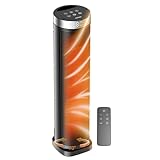
Overview: A compact 24-inch tower heater optimized for quiet, energy-efficient heating in spaces up to 200 sq. ft., featuring whisper-quiet operation and precise temperature control.
What Makes It Stand Out: Its standout trait is 32dB noise level (“library-quiet”) via Oblique Airflow tech, perfect for bedrooms. ECO mode auto-adjusts between H2/H3 settings to maintain temps efficiently, while 70° oscillation boosts coverage by 20%. ETL safety and a hidden handle enhance portability.
Value for Money: Excellent for its niche—silent operation in small-medium rooms. Though similarly priced to others, the noise reduction and smart ECO mode offer superior value for light sleepers or offices versus louder alternatives.
Strengths and Weaknesses: Strengths: Exceptionally quiet (32dB); effective ECO energy savings; space-saving 24" design; strong safety suite. Weaknesses: Limited to 200 sq. ft.; remote batteries not included; oscillation narrower than some competitors.
Bottom Line: Top pick for bedrooms or offices needing silent, efficient heat; avoid for larger rooms but highly recommended where quiet operation is non-negotiable.
Understanding Ceramic Heating Technology for Spacious Areas
Ceramic heating elements represent a significant advancement over basic coil-based space heaters, particularly for larger environments. Unlike exposed coils that primarily radiate heat in a narrow beam, ceramic plates heat up rapidly when electricity passes through them. This heat is then efficiently transferred to the surrounding air as it’s pulled over the hot ceramic surface by a fan. The key advantage for big rooms lies in the combination of fast warm-up times and the ability to distribute that warmth more evenly throughout the space via forced convection.
How Ceramic Elements Enhance Efficiency
The ceramic material itself acts as a thermal conductor and insulator, reaching optimal operating temperature quickly while preventing the element from becoming dangerously hot to the touch. This inherent safety feature allows the heater to run longer and more consistently, maintaining a steady stream of warm air rather than cycling on and off violently like some less efficient models. For large rooms, this consistent output is vital to combat heat loss from walls, windows, and high ceilings.
Forced Air vs. Radiant Heat Dynamics
While radiant heaters excel at warming objects and people directly in their line of sight (ideal for spot heating a single chair), they struggle to elevate the ambient temperature of an entire large room. Tower ceramic heaters primarily utilize forced air convection. The integrated fan actively circulates the warmed air, pushing it further into the room and mixing it with cooler ambient air. This continuous circulation is essential for achieving uniform warmth across expansive floor plans, preventing cold spots that plague radiant-only solutions in big spaces.
Critical Features for Effective Large Room Heating
Selecting a heater capable of tackling substantial square footage requires careful evaluation of core performance characteristics. Simply choosing the highest wattage option isn’t always the optimal solution; understanding how different features interact is key to achieving efficient and comfortable results.
Wattage and BTU Requirements Demystified
Wattage directly correlates to heating power. For large rooms (typically 300+ square feet), a minimum of 1500 watts (approximately 5,100 BTUs) is generally necessary as a starting point. However, factors like poor insulation, high ceilings (over 9 feet), or significant draftiness may necessitate models approaching or exceeding 2000 watts. Crucially, ensure your home’s electrical circuit can safely handle the load, especially if other appliances are on the same circuit. Undersized wattage leads to constant operation without ever reaching the desired temperature, wasting energy.
Airflow Design and Coverage Patterns
The effectiveness of a tower heater hinges on its ability to project warm air where it’s needed. Look for models with optimized fan blade designs and directional vents (often oscillating 60-90 degrees) that can push air horizontally across greater distances. Some advanced units feature multi-fan systems or specialized grilles that create a wider, more diffused airflow pattern, preventing the “hot spot under the heater” syndrome and ensuring warmth reaches the far corners of your room. Consider the room’s layout—long, narrow spaces might benefit from a stronger horizontal throw, while square rooms need wider oscillation.
Thermostat Precision and Responsiveness
A basic on/off thermostat is insufficient for large rooms. Opt for heaters with adjustable thermostats offering precise temperature settings (e.g., 65°F to 85°F in 1-degree increments). More importantly, the thermostat sensor must be responsive and accurately placed within the unit to detect the actual room temperature, not just the heat escaping the heater’s vents. This prevents constant short-cycling (rapid on/off) or the heater running unnecessarily once the target temperature is reached, significantly improving comfort and energy efficiency over hours of operation.
Optimizing Placement and Operation in Expansive Spaces
Strategic positioning and understanding operational nuances are just as critical as the heater’s specifications when dealing with large volumes of air.
Strategic Positioning for Maximum Circulation
Place the heater centrally within the area you need to warm, ideally away from obstructions like furniture or curtains that block airflow. Avoid corners, as this traps the warm air output. Positioning near a frequently used entrance can help combat drafts, but ensure it’s not directly in a high-traffic walkway for safety. For open floor plans, placing the heater midway between the main living zones often provides the most balanced distribution. Elevating the unit slightly (if designed for it) can also improve airflow over low furniture.
Managing High Ceilings and Drafty Environments
Rooms with vaulted ceilings present a unique challenge, as warm air naturally rises and pools near the top. Look for heaters with adjustable fan speeds; using a higher speed setting helps push the warmed air further down into the living space before it rises. Addressing drafts from windows or doors is paramount—seal gaps where possible. Some heaters include features like “cool shot” settings to temporarily boost airflow intensity, aiding in mixing stratified air layers in tall rooms.
Combating Dead Zones Effectively
Even with good airflow, large rooms can develop cold spots. If you consistently notice one area remains chilly, consider the heater’s oscillation range. Adjust it to spend more time directing air towards that zone. Alternatively, a second, smaller supplemental heater might be necessary for truly isolated corners, though optimizing the primary heater’s placement and settings should be the first step. Remember, air circulation is key—sometimes simply running the heater on fan-only mode (without heat) for a period before activating heating helps mix the room’s air temperature.
Essential Safety Mechanisms for Peace of Mind
Safety cannot be compromised, especially when heaters run for extended periods in living areas, potentially unattended.
Overheat Protection Systems Explained
This is non-negotiable. A robust thermal cutoff switch automatically shuts off the heater if internal components exceed safe temperatures, typically due to blocked vents, placement near flammable materials, or internal malfunction. Ensure the heater has this feature certified by a recognized testing laboratory (like ETL or UL). It’s your primary defense against fire hazards, particularly important in large rooms where the heater might be positioned farther from immediate supervision.
Tip-Over Switch Reliability
A sensitive, well-designed tip-over switch instantly cuts power if the heater is knocked over. Given the taller profile of tower units, this mechanism is crucial. Test this feature upon purchase (gently!) to ensure it functions correctly. Look for models where the switch is integrated close to the base for maximum responsiveness. This feature provides critical protection, especially in homes with children or pets where accidental bumps are more likely.
Cool-to-Touch Housing Standards
While ceramic elements get hot internally, the external casing of a quality tower heater should remain safe to the touch, even during prolonged operation. This is vital for family safety, preventing accidental burns if someone brushes against the unit. Verify the manufacturer specifies cool-touch exterior surfaces, particularly on the front and sides where contact is most probable. Avoid units where the top grille or front panel becomes uncomfortably hot.
Enhancing Comfort and Usability Beyond Basic Heating
Modern tower heaters offer features designed to make them seamless, quiet companions throughout the colder months.
Noise Levels and Operation Modes
Fan noise is inherent in forced-air heaters, but quality varies significantly. Look for units specifically advertising “quiet” or “whisper-quiet” operation, often achieved through optimized fan blade design and vibration-dampening materials. Many offer multiple fan speeds; a low setting for maintenance heating can be remarkably quiet, suitable for bedrooms or home offices within large open areas. Avoid units with loud motor whines or excessive airflow noise that becomes disruptive in serene environments.
Remote Control and Digital Interface Benefits
For large rooms, adjusting settings from across the space is a major convenience. A well-designed remote control (often with backlighting) eliminates the need to walk to the unit. Equally important is an intuitive, clearly lit digital display on the heater itself, showing current temperature, set point, and active modes. Touch-sensitive or responsive physical controls are preferable to flimsy buttons, especially when you might be operating them in low light.
Programmability and Smart Features Integration
Advanced models offer programmable timers (e.g., turn on 30 minutes before you wake up) or adjustable thermostats that can maintain different temperatures at different times. While full smart home integration (Wi-Fi/app control) is becoming more common, assess if it genuinely adds value for your needs versus potential complexity. For large rooms, the ability to schedule the heater to run efficiently during occupied hours and scale back when the space is empty can contribute meaningfully to comfort and energy savings.
Energy Efficiency Considerations for Cost-Effective Warmth
Running a heater in a large space can impact your energy bill; smart choices mitigate this.
Understanding True Energy Consumption
All electric resistance heaters (including ceramic) convert 100% of the electricity they consume into heat—there is no “more efficient” heater in terms of energy conversion. However, how effectively that heat is delivered and maintained in your specific large room determines overall energy use. A heater with precise thermostat control, good airflow for the space, and appropriate wattage will cycle less frequently and run only as long as needed, using less total energy than an undersized or poorly controlled unit struggling to keep up.
Maximizing Thermostat Efficiency
Set the thermostat to the lowest comfortable temperature (e.g., 68°F instead of 72°F). This small reduction significantly decreases runtime and energy consumption. Pairing the heater with a good programmable thermostat setting ensures it only runs when necessary. Avoid using the heater as a primary heat source for the whole house if your central system is more efficient; reserve it for zone heating the specific large room you’re using.
Complementing Existing Heating Systems
Tower ceramic heaters shine as supplemental zone heaters. Use them to take the chill off a large living area while keeping your central thermostat set lower (e.g., 62°F). This targeted approach heats only the occupied space, often leading to net energy savings compared to cranking up the whole-house system. Ensure your central system and supplemental heater aren’t working against each other (e.g., central heat kicking on while the space heater is already maintaining temp).
Maintenance Practices for Longevity and Performance
Regular care ensures your heater operates safely and effectively year after year.
Dust Management and Filter Cleaning
Dust accumulation inside the heater is the enemy of efficiency and safety. It insulates heating elements, causing overheating, and clogs air intakes, reducing airflow and output. Most tower heaters have easily accessible front grilles or filters. Make it a habit to gently vacuum the intake and output vents and wipe internal components (with the unit unplugged and completely cool) every few weeks during heavy use. If a filter is present, rinse it according to the manual.
Seasonal Storage Preparation
Before storing your heater at the end of the season, give it a thorough cleaning as described. Ensure it’s completely dry to prevent mold or corrosion. Wrap the power cord neatly (avoid tight bends) and store the unit in a cool, dry place, preferably in its original box or a breathable fabric bag. Avoid placing heavy items on top. Proper storage prevents damage and ensures it’s ready and safe for use next winter.
Performance Check Before First Use
At the start of each heating season, plug in the heater (in a safe, open area) and run it on all settings for 15-20 minutes. Listen for unusual noises (grinding, loud rattles), watch for error codes, and verify the thermostat and oscillation function correctly. Smell for any burning odors beyond the initial faint “new heater” scent that should dissipate quickly. This pre-season check catches potential issues before relying on it in cold weather.
Adapting to Different Large Room Scenarios
The “best” heater features can shift based on your room’s specific architecture and usage.
Open Floor Plans and Multi-Zone Challenges
Heating a large open-concept space (kitchen/living/dining) requires powerful, directional airflow. Prioritize high wattage (1500W+), strong oscillation (90 degrees+), and a fan capable of projecting air 15+ feet. Consider if placing the heater centrally allows its airflow to cover the main activity zones. Programmable timers can be useful to heat common areas during evening hours and scale back overnight.
Rooms with Significant Windows or Poor Insulation
Drafty rooms demand a heater that can overcome constant heat loss. Focus on models with the highest suitable wattage for your circuit and robust airflow to combat cold spots near windows. Pair heater use with thermal curtains closed at night. A precise thermostat is crucial here to prevent the heater from running non-stop trying (and failing) to reach an unrealistic temperature set point in a leaky space.
Home Offices or Quiet Spaces Within Large Rooms
If you need heat for a desk area within a bigger room but require silence, prioritize ultra-quiet operation on low fan speed. Look for noise ratings below 40 dB on the lowest setting. A heater with a focused directional vent (less oscillation) can target warmth specifically at your workspace without disturbing the entire room’s airflow or generating unnecessary noise elsewhere.
Frequently Asked Questions
Frequently Asked Questions
Can a single tower ceramic heater effectively warm my entire large living room (approx. 400 sq ft)? Yes, but only if it has sufficient power (typically 1500 watts minimum, potentially 2000W for poor insulation or high ceilings) and effective airflow designed to circulate heat across that distance. Placement and room layout are equally critical factors.
Why does my heater keep turning on and off constantly in my big room? This usually indicates the thermostat is set too high for the heater’s capacity to maintain against the room’s heat loss, or the thermostat sensor isn’t accurately reading the room temperature. Try lowering the set point by a few degrees or ensuring the heater isn’t placed near drafts or heat sources confusing the sensor.
Are tower heaters safe to leave on overnight in a large bedroom? While modern units have essential safety features (tip-over, overheat protection), it’s generally recommended not to leave any space heater unattended or running while sleeping due to inherent risks. If absolutely necessary, choose a model with all safety certifications, place it well away from bedding, and ensure nothing can block airflow.
How do I know if the wattage is high enough for my large, drafty room? Start with 1500W for 300-400 sq ft as a baseline. Add 10-15% more wattage for each significant challenge: single-pane windows, poor wall/attic insulation, ceilings over 9 feet, or very cold climate. If the heater runs continuously without reaching the set temperature, it’s likely undersized.
Do oscillating heaters really heat a large room better than non-oscillating ones? Yes, oscillation is highly beneficial for large rooms. It actively distributes warm air across a wider area (typically 60-90 degrees), preventing stagnant hot spots directly in front of the heater and promoting more even temperature throughout the space.
Is “ceramic” heating actually more efficient than other space heater types for big areas? Ceramic elements themselves don’t make the heater more energy-efficient (all electric resistance heat is 100% efficient at point of use). However, ceramic heaters often incorporate better fan systems and thermostats, leading to more effective heat distribution and temperature maintenance in large rooms, which can reduce overall runtime.
Can I use a tower heater to reduce my main heating bill in a large house? Absolutely. This is zone heating. Use the tower heater to warm only the large room you’re actively using (e.g., living room in the evening), while lowering your central thermostat significantly (e.g., to 60-62°F). This targeted approach often saves more energy than heating the whole house uniformly.
Why is my large room still cold even with the heater running on high? Check for major drafts (windows, doors), insufficient wattage for the space/insulation level, poor heater placement (e.g., blocked vents, wrong corner), or the heater struggling against extremely cold outdoor temperatures. High ceilings also cause warm air to rise away from the living zone.
Are smart features worth it for a large room heater? Smart features (app control, scheduling) offer convenience for adjusting settings remotely or automating operation, which can enhance comfort and potentially optimize runtime in large, frequently used spaces. However, they add cost; prioritize core heating performance and safety first.
How often should I clean my tower heater when using it daily in a big room? Vacuum external vents and wipe accessible internal dust weekly during heavy use. Perform a more thorough cleaning (removing front grille, cleaning filter if present, gently vacuuming internal components) every 2-4 weeks. Always unplug and let the unit cool completely first.