Table of Contents
Imagine coming home on a sweltering summer day to find your living space already cool and comfortable, perfectly tailored to your preference, without lifting a finger. Or picture effortlessly adjusting the temperature in your bedroom from bed using just your voice, or receiving an alert that your unit is working harder than usual—potentially signaling a maintenance need—while you’re away at work. This isn’t science fiction; it’s the tangible reality smart window air conditioners bring to modern home automation. They seamlessly bridge the gap between essential climate control and the intelligent, interconnected ecosystem many of us are building within our homes, transforming a once purely functional appliance into a responsive, integrated component of daily comfort.
Gone are the days when window AC units were merely about blasting cold air. Today’s smart models represent a significant evolution, offering unprecedented control, energy insights, and harmony with the broader smart home landscape. They move beyond the limitations of basic remotes and clunky thermostats, empowering homeowners with features that enhance convenience, potentially lower energy bills, and contribute to a more personalized living environment. Understanding what truly makes a window unit “smart” in the context of home automation—and what features genuinely deliver value—is crucial for navigating the market and making an investment that integrates smoothly into your life, both now and as your smart home evolves.
Top 10 Smart Window Air Conditioners
Detailed Product Reviews
1. Midea 10,000 BTU U Shaped Smart Inverter Window Air Conditioner - Cools 450 Sq Ft, Ultra Quiet with Open Window Flexibility - Alexa/Google Assistant Compatible - 35% Energy Savings, Remote (Updated)
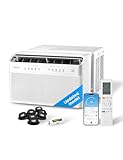
Overview: The Midea 10,000 BTU U Shaped Smart Inverter AC is a premium window unit designed for rooms up to 450 sq. ft., prioritizing quiet operation, energy efficiency, and modern smart integration. Its unique U-shaped chassis redefines traditional window AC installation.
What Makes It Stand Out: The revolutionary U-design enables windows to remain partially open for fresh air and unobstructed views, while the inverter technology slashes noise to 32 dBA (10x quieter than conventional units) and delivers over 35% energy savings—earning ENERGY STAR certification. Full smart control via app, voice commands (Alexa/Google), and remote, plus an anti-theft window lock, solidify its premium edge.
Value for Money: Priced higher than basic models, it justifies cost through significant long-term energy savings (35%+) and unmatched quietness. The smart features and open-window flexibility offer convenience absent in competitors, making it ideal for tech-savvy users prioritizing comfort and efficiency in medium to large rooms.
Strengths and Weaknesses: Strengths: Exceptionally quiet (32 dBA); substantial energy savings; window-open functionality; robust smart controls; ENERGY STAR certified. Weaknesses: Premium price point; complex installation vs. basic units; limited to windows 22"-36" wide.
Bottom Line: A top-tier choice for those seeking ultra-quiet, energy-efficient cooling with smart features and open-window versatility in 450 sq. ft. spaces. Worth the investment for long-term savings and comfort.
2. Amazon Basics 6000-BTU Window Air Conditioner, Up to 250 Sqf, Window AC Units with Cool and Fan Functions, Washable Filter, Adjustable Window Kit, Digital Temperature Display, Remote Control, White

Overview: This Amazon Basics 6000-BTU unit targets small to medium rooms (up to 250 sq. ft.), offering essential cooling and fan functions at an accessible price point. It’s a no-frills solution for bedrooms or home offices needing straightforward temperature control.
What Makes It Stand Out: Its affordability and simplicity shine, featuring a washable filter for easy maintenance, precise 7-temperature settings, and dual-speed airflow. The adjustable window kit ensures broad compatibility (23"-36" windows), while the digital display and remote enhance user convenience without smart complexities.
Value for Money: An excellent budget option under $200. It delivers reliable cooling for smaller spaces at a fraction of premium inverter models’ cost. While lacking advanced features, its core functionality, washable filter, and included mounting kit provide solid utility for price-conscious buyers.
Strengths and Weaknesses: Strengths: Very affordable; simple installation; washable filter; quiet for class (56 dB); digital controls. Weaknesses: Basic cooling (no inverter tech); higher energy use vs. inverters; no smart features; limited to smaller rooms.
Bottom Line: Highly recommended for cooling compact rooms affordably and effectively. Choose this if you prioritize cost savings over smart features or ultra-quiet operation.
3. Midea 8,000 BTU U Shaped Smart Inverter Window Air Conditioner - Cools 350 Sq Ft, Ultra Quiet with Open Window Flexibility - Alexa/Google Assistant Compatible - 37% Energy Savings, Remote (Updated)
Overview: Midea’s 8,000 BTU U Shaped Smart Inverter AC cools spaces up to 350 sq. ft. with exceptional quietness and energy efficiency. It shares the innovative U-design of its larger sibling but tailored for mid-sized rooms, merging smart tech with practical comfort.
What Makes It Stand Out: The U-shape enables open-window ventilation and view preservation, while inverter tech achieves 37%+ energy savings and near-silent operation (32 dBA). ENERGY STAR certification, anti-theft window locking, and full smart control (app/voice) differentiate it from standard window units.
Value for Money: Positioned as a premium mid-range option, its higher upfront cost is offset by superior energy efficiency and longevity. The smart features and open-window benefit add value for tech users, though budget buyers may prefer simpler alternatives for similar coverage.
Strengths and Weaknesses: Strengths: Industry-leading quietness; exceptional energy savings; open-window flexibility; comprehensive smart integration; compact for 350 sq. ft. Weaknesses: Expensive vs. non-inverter models; installation requires precision; window width restrictions (22"-36").
Bottom Line: The best-in-class choice for 350 sq. ft. rooms where quiet, efficiency, and modern features matter. Ideal for urban dwellers valuing fresh air access and smart home compatibility.
4. Midea 12,000 BTU U Shaped Smart Inverter Window Air Conditioner - Cools 550 Sq Ft, Ultra Quiet with Open Window Flexibility - Alexa/Google Assistant Compatible - 35% Energy Savings, Remote (Updated)
Overview: Midea’s 12,000 BTU U Shaped model targets larger rooms (up to 550 sq. ft.), leveraging inverter technology for powerful yet efficient cooling. It retains the signature U-design benefits while scaling up capacity for spacious areas like living rooms or master bedrooms.
What Makes It Stand Out: Despite its high capacity, it maintains ultra-quiet operation (32 dBA) and 35%+ energy savings via inverter tech—rare for units this size. The U-shape allows open windows for airflow/safety, and smart controls (app/voice) plus ENERGY STAR certification enhance its premium appeal.
Value for Money: A high-value investment for large spaces, as traditional 12k BTU units consume significantly more power and noise. Long-term savings from efficiency and durability justify the cost, especially vs. non-inverter competitors lacking smart features or open-window capability.
Strengths and Weaknesses: Strengths: Powerful yet quiet cooling; major energy savings; window-open functionality; robust smart ecosystem; theft-resistant lock. Weaknesses: Highest price in the lineup; heavier unit requires secure mounting; window size constraints apply.
Bottom Line: Unmatched for efficiently cooling large rooms without sacrificing quietness or modern convenience. A must-consider for those needing 550 sq. ft. coverage with premium features.
5. Amazon Basics 5000-BTU Small Window Air Conditioner, Up to 150 Sqf, Window AC Units with Cool and Fan Functions, Washable Filter, Adjustable Window Kit, Intuitive Mechanical Controls, White

Overview: This Amazon Basics 5000-BTU unit is engineered for very small spaces (up to 150 sq. ft.), like tiny bedrooms or home offices. It delivers basic cooling and fan functions with mechanical simplicity, targeting users needing affordable, no-fuss temperature control.
What Makes It Stand Out: Its minimalist design focuses on core functionality: a washable filter, 2-speed airflow, and mechanical dials for intuitive use. The compact size and adjustable window kit (fits 23"-36" windows) ensure hassle-free setup in cramped spaces where smart features are unnecessary.
Value for Money: Exceptional for ultra-budget cooling under $150. It reliably handles micro-spaces without the cost or complexity of smart/inverter models. The washable filter and included hardware maximize utility, making it perfect for renters or secondary rooms.
Strengths and Weaknesses: Strengths: Extremely affordable; simple mechanical controls; easy installation; low noise (56 dB); space-efficient. Weaknesses: No smart/energy-saving tech; limited to very small rooms; basic temperature control; higher long-term energy costs.
Bottom Line: The go-to solution for cooling compact areas economically. Choose this for dorms, closets, or small bedrooms where frills aren’t needed, but reliable cooling is essential.
6. Smart 6000 BTU Window Air Conditioner with WiFi, Window AC Unit with Remote & App Control, Timer Function & Easy Install Kit, for Rooms Up to 350 Square Feet, 115V/60Hz, White

Overview: This 6000 BTU smart window AC unit offers app and voice control for cooling spaces up to 350 sq ft. Designed for bedrooms or small living areas, it combines WiFi connectivity, quiet operation, and multi-functional modes including cooling, dehumidification, and fan settings. Its streamlined installation targets DIY users seeking modern convenience. What Makes It Stand Out: The standout feature is robust smart integration via the Smarthq app, compatible with Alexa and Google Assistant, enabling remote temperature adjustments and monitoring. The ultra-quiet operation (50 dB) and Sleep Mode—which gradually raises temperature overnight—enhance comfort. The slide-out washable filter simplifies maintenance significantly compared to units requiring disassembly. Value for Money: Priced competitively for a smart AC, it delivers strong value with its expansive 350 sq ft coverage (uncommon at this BTU level) and comprehensive feature set. While slightly pricier than basic models, the energy-efficient operation, app control, and included installation kit justify the cost for tech-savvy users prioritizing convenience and long-term savings. Strengths and Weaknesses: Strengths: Excellent smart-home integration; very quiet performance; large room coverage; effortless filter access; simple installation kit. Weaknesses: App connectivity may occasionally lag; dehumidification mode is less powerful than dedicated units; 350 sq ft claim might be optimistic for very hot climates. Bottom Line: An excellent choice for those wanting smart, quiet cooling for medium rooms. Its user-friendly design, strong connectivity, and easy maintenance make it a top-tier 6000 BTU option, highly recommended for modern households.
7. LG 6000 BTU Window Air Conditioner[2024 New] Remote Control, WiFi Enabled works with LG ThinQ, Alexa, Hey Google, Washable Filer Ultra-Quiet Cools Small Room up to 250 Sq.Ft AC Unit White LW6024RSMX
![LG 6000 BTU Window Air Conditioner[2024 New] Remote Control, WiFi Enabled works with LG ThinQ, Alexa, Hey Google, Washable Filer Ultra-Quiet Cools Small Room up to 250 Sq.Ft AC Unit White LW6024RSMX](https://m.media-amazon.com/images/I/413TfrPt3wL._SL160_.jpg)
Overview: LG’s 2024 6000 BTU window AC targets small rooms up to 250 sq ft, emphasizing smart connectivity via LG ThinQ, Alexa, and Google Assistant. It features remote control, an intuitive LCD panel, and a focus on quiet operation and easy maintenance, making it suitable for bedrooms or compact offices. What Makes It Stand Out: Its seamless integration with LG’s ThinQ ecosystem and major voice assistants provides reliable remote control. The inclusion of eco-friendly R32 refrigerant is a notable environmental plus. The slide-out washable filter and “Check Filter” alert promote consistent efficiency, while the fixed chassis design simplifies installation in standard double-hung windows. Value for Money: Offers solid value for a premium smart AC, especially for LG ecosystem users. While its 250 sq ft coverage is modest for 6000 BTU (suggesting less aggressive cooling than competitors), the build quality, R32 refrigerant, and user-friendly interface justify the price against basic non-smart units, though budget buyers may find it steep. Strengths and Weaknesses: Strengths: Reliable LG ThinQ/app integration; eco-friendly R32 refrigerant; clear LCD/remote controls; straightforward installation; effective washable filter. Weaknesses: Smaller coverage area (250 sq ft) limits room size suitability; app functionality can be less intuitive than competitors; lacks dehumidification mode beyond basic cooling. Bottom Line: A dependable, well-built smart AC ideal for small spaces and LG loyalists. Its eco-credentials and strong connectivity are wins, but the limited coverage makes it less versatile; best for rooms under 250 sq ft.
8. Windmill Window Air Conditioner - Quiet & Smart, Easy Install, Voice-Enabled, Remote & App Control AC Unit - 6,000 BTU

Overview: Windmill’s 6000 BTU AC unit prioritizes quiet, efficient cooling for rooms up to 350 sq ft, featuring a unique angled design, smart app control, and tool-free installation. It targets users seeking minimalist aesthetics, energy savings, and seamless smart home integration without complex setup. What Makes It Stand Out: The innovative 45° airflow design promises faster, room-wide cooling and reduced noise (advertised as ultra-quiet). Double-insulating side panels minimize cool air leakage and external noise, boosting energy efficiency. The top-rated app offers precise scheduling, and dual-filtration (including optional carbon filter) enhances air quality beyond standard models. Value for Money: Positioned at a premium price, it delivers value through significant energy savings potential and superior quietness. The pre-assembled install kit and robust smart features reduce long-term costs and hassle, making it worthwhile for those prioritizing comfort and efficiency over upfront savings, especially compared to louder, less insulated units. Strengths and Weaknesses: Strengths: Exceptionally quiet operation; energy-efficient insulation; innovative angled cooling; superb app/voice control; dual-filter system; remarkably easy installation. Weaknesses: Premium pricing; carbon filter is an extra-cost accessory; limited retailer availability may complicate support. Bottom Line: A top-tier investment for quiet, efficient cooling. Its unique design and smart features justify the cost for noise-sensitive environments, highly recommended despite the higher price for discerning users.
9. Hisense 6,000 BTU Smart Inverter Window Air Conditioner, 3 modes (Cooling, Fan, Dehumidifier), Easy Installation,Ultra Quiet, 24.5% more Energy Saving, 2 Years Warranty

Overview: Hisense leverages inverter technology in this ENERGY STAR-certified 6000 BTU smart AC, promising up to 24.5% energy savings, quiet operation, and versatile cooling/dehumidifying for rooms up to 250 sq ft. It targets eco-conscious consumers seeking long-term cost savings and reliable performance. What Makes It Stand Out: The core differentiator is the inverter compressor, which dynamically adjusts power (unlike standard on/off units), enabling precise temperature control, quieter operation, and verified energy savings. ENERGY STAR certification and a substantial 2-year warranty add credibility. The easy-install kit and removable filter further enhance user-friendliness. Value for Money: Excellent value for an inverter AC. The significant energy savings (24.5%+) offset the slightly higher initial cost over time, especially in regions with high cooling demands. Compared to non-inverter models, the long-term electricity bill reduction and extended warranty make it a financially sound, eco-friendly choice. Strengths and Weaknesses: Strengths: Proven energy efficiency via inverter tech; very quiet operation; ENERGY STAR certified; straightforward installation; comprehensive 2-year warranty; effective dehumidifier mode. Weaknesses: Slightly higher upfront cost; coverage limited to 250 sq ft; app interface less polished than dedicated smart brands. Bottom Line: The smartest pick for energy savings and quiet comfort. Its inverter technology delivers tangible long-term benefits, making it a highly recommended, future-proof investment for small to medium rooms.
10. Midea 5,000 BTU 150 Sq ft Mechanical Window Air Conditioner, Black (Renewed)

Overview: This renewed Midea unit is a no-frills, 5,000 BTU mechanical AC designed for very small spaces up to 150 sq ft. It relies on physical dials and levers instead of digital controls or smart features, focusing purely on basic cooling functionality at an accessible price point. What Makes It Stand Out: Its simplicity is the key feature—fully mechanical operation with no reliance on apps, remotes, or electricity for controls ensures reliability during power fluctuations and eliminates connectivity hassles. The renewed status offers significant cost savings, appealing to budget-focused buyers needing essential cooling for tiny rooms or closets. Value for Money: Exceptional value for ultra-budget cooling. As a renewed model, it’s drastically cheaper than new equivalents, ideal for temporary use, low-usage scenarios, or tight budgets. While lacking modern features, it fulfills the core function reliably for its intended small-space use, offering the lowest entry point into window AC ownership. Strengths and Weaknesses: Strengths: Extremely affordable (renewed); ultra-simple, reliable mechanical controls; low energy consumption for its size; fits narrow windows (23" min width). Weaknesses: Very limited coverage (150 sq ft); no smart features, remote, or timer; basic cooling only (no dedicated dehumidify mode); renewed status carries inherent warranty/performance variability. Bottom Line: The perfect bare-bones solution for cooling tiny spaces on a strict budget. Ideal for closets, home offices, or as a secondary unit where smart features are unnecessary; recommended only for very small areas with minimal cooling demands.
Understanding Smart Window AC Fundamentals
What Defines a “Smart” Window Air Conditioner
A smart window air conditioner transcends basic cooling by incorporating connectivity features that enable remote control, automation, and data exchange. The core differentiator is its ability to connect to your home Wi-Fi network, acting as a node within your broader home automation system. This connectivity unlocks capabilities like scheduling via smartphone apps, integration with voice assistants, and the potential for energy usage monitoring. It’s not just about convenience; it’s about transforming the unit from a standalone appliance into an intelligent participant in your home’s ecosystem, responding to your habits and environmental conditions.
Key Connectivity Protocols Explained
Understanding the communication languages your smart AC uses is vital for seamless integration. Wi-Fi is the most common and essential protocol, providing the direct link to your home network and enabling remote access via the internet. However, deeper integration often relies on secondary protocols. Zigbee and Z-Wave are popular low-power mesh networking standards used by many smart home hubs; units supporting these can connect directly to hubs like Samsung SmartThings or Hubitat, often leading to more reliable automation and faster response times than relying solely on cloud-based Wi-Fi commands. Bluetooth is sometimes used for initial setup or very close-range control but lacks the range and remote access capability of Wi-Fi.
The Critical Role of Mobile Applications
The companion smartphone app is the central nervous system for managing your smart window AC. A well-designed app provides intuitive interfaces for adjusting temperature, fan speed, and operating modes (cool, fan, dry) from anywhere. Beyond basic control, robust apps offer scheduling features to align cooling with your routine, detailed energy consumption tracking to identify usage patterns, and crucially, the ability to create and manage automations. Look for apps that are regularly updated, have a clean user experience, and provide timely notifications about unit status or potential issues. The app’s quality often dictates the overall user satisfaction with the “smart” aspect.
Essential Features for Home Automation Integration
Deep Voice Assistant Compatibility
True smart home integration means effortless voice control. Look for units that offer native, certified support for major platforms like Amazon Alexa, Google Assistant, and Apple HomeKit/Siri. This goes beyond simple “on/off” commands; deep integration allows for nuanced control like “Alexa, set the living room AC to 72 degrees,” or “Hey Google, turn on fan mode in the bedroom.” Verify the specific commands supported and whether the integration requires a separate hub or works directly. Seamless voice control is a cornerstone of a frictionless smart home experience.
Robust Automation and Scene Building Capabilities
The real power of smart ACs lies in automation—having the unit act based on triggers without manual input. This includes simple schedules (cooling the house 30 minutes before you wake up) but extends to sophisticated rules. Can the unit adjust based on geofencing (turning on as you approach home)? Does it integrate with other smart devices, like lowering the thermostat when connected smart window shades detect intense sunlight, or turning off the AC when a smart door/window sensor is opened? The ability to create these custom “if this, then that” scenarios within your smart home platform is what transforms convenience into true intelligence.
Energy Monitoring and Management Tools
Smart window units increasingly provide valuable insights into energy consumption, a critical factor for both cost savings and environmental awareness. Advanced models track real-time and historical energy usage (often in kilowatt-hours), allowing you to see exactly how much cooling costs you. More importantly, some integrate with utility demand-response programs or offer features like adaptive recovery (gradually reaching the set temperature to avoid massive energy spikes) and eco-modes that optimize performance for efficiency. Understanding your unit’s energy profile empowers smarter usage decisions and potential cost reduction.
Installation and Compatibility Considerations
Physical Fit and Window Requirements
Smart functionality doesn’t negate the fundamental need for a physically compatible unit. Precise measurements of your window opening (width and height) are non-negotiable. Ensure the unit’s dimensions, including necessary clearance for installation kits and airflow, match your specific window type (double-hung, sliding, casement). Consider weight limitations of your window frame and the structural ability to support the unit securely. A smart AC that doesn’t fit properly or risks falling is a safety hazard, rendering all advanced features irrelevant. Always consult installation guides specific to window types before purchasing.
Power and Circuit Needs for Smart Features
While the core cooling function demands adequate power (typically a dedicated 115V circuit for standard 5,000-8,000 BTU units), the smart components add another layer. Ensure your home’s Wi-Fi signal is strong and stable at the window unit’s location; weak signals cause connectivity drops and unreliable control. Consider the unit’s specific voltage requirements and whether it needs a dedicated circuit—older homes might require electrical upgrades. Don’t overlook the need for a reliable, always-on home internet connection; without it, remote features become unavailable, and some automations may fail.
Pre-Purchase Smart Ecosystem Verification
Before committing, meticulously check compatibility with your existing smart home infrastructure. Which hub platforms (if any) does the unit officially support? Does it use Wi-Fi alone, or require Zigbee/Z-Wave? Crucially, confirm it works with your primary voice assistant platform (Alexa, Google, Apple Home) and your chosen smart home app (like Apple Home, Google Home, or a specific hub app). Check user reviews specifically mentioning integration issues with systems similar to yours. A unit that doesn’t play well with your current setup will frustrate more than it helps, negating the intended benefits.
Maximizing Value and Long-Term Use
Evaluating True Cost Beyond the Purchase Price
The initial sticker price is just the beginning. Factor in potential installation costs, especially if electrical work is needed. Consider the unit’s estimated annual energy consumption (look for the EER or CEER rating) – a more efficient smart model might have a higher upfront cost but save significantly on electricity bills over its lifespan, particularly if you leverage its scheduling and energy management features effectively. Also, weigh the value of features you’ll genuinely use; paying for advanced automation you won’t implement is wasted money. Calculate the total cost of ownership for a realistic comparison.
Security and Privacy Implications of Connected ACs
Connecting any device to your home network introduces potential security considerations. Research the manufacturer’s reputation for security: do they provide regular firmware updates to patch vulnerabilities? What data does the unit collect (temperature settings, usage patterns, potentially location via geofencing), and how is it stored and used? Ensure your home Wi-Fi network uses strong encryption (WPA2/WPA3) and consider placing IoT devices like smart ACs on a separate network segment if your router supports it. Prioritize manufacturers transparent about their security practices and data handling policies.
Future-Proofing Your Investment
Technology evolves rapidly. When choosing a smart window AC, consider its longevity. Does the manufacturer have a history of providing long-term software and security updates? Is the unit compatible with emerging smart home standards? While predicting the future is impossible, opting for models supporting established, open protocols (like Matter over Thread, as it gains traction) rather than proprietary, closed systems increases the likelihood your unit will remain functional and integrable as your smart home expands over the next several years. Avoid units reliant on a company’s specific, unsupported cloud service that could vanish.
Installation, Setup, and Ongoing Management
Step-by-Step Smart Setup Process
Getting your smart window AC online involves more than just plugging it in. The typical process includes physically installing the unit securely in the window, plugging it into a power source, downloading the companion app, creating an account, putting the unit into pairing mode (often via a specific button sequence), connecting the app to your home Wi-Fi network (ensuring 2.4 GHz band compatibility, as most smart devices don’t support 5 GHz), and finally, verifying the connection within the app. Carefully following the manufacturer’s specific setup guide is crucial to avoid common pitfalls like incorrect network selection or failed pairing.
Troubleshooting Common Connectivity Issues
Connectivity hiccups are the most frequent smart AC complaint. If the unit disconnects, first check your home Wi-Fi—restart the router and ensure other devices are connected. Verify the unit is on the correct 2.4 GHz network (not 5 GHz). Move the unit closer to the router if possible, or consider a Wi-Fi extender. Within the app, try restarting the unit (power cycle) or removing and re-adding the device. Ensure the unit’s firmware is up-to-date via the app. Persistent issues might require checking for interference from other electronics or consulting the manufacturer’s support resources for model-specific solutions.
Maintaining Optimal Performance and Efficiency
Smart features enhance control, but regular physical maintenance is non-negotiable for efficiency and longevity. Clean or replace air filters monthly during peak season—clogged filters drastically reduce airflow and cooling capacity, forcing the unit to work harder and consume more energy, negating smart energy savings. Annually, inspect and gently clean the condenser coils (located on the exterior side) and ensure the drainage channels are clear to prevent water leaks. Keep the area around the outdoor portion of the unit free of obstructions for proper airflow. A well-maintained unit performs smarter and lasts longer.
Frequently Asked Questions
What is the most crucial factor when choosing a smart window AC for home automation?
The absolute most critical factor is seamless compatibility with your existing smart home ecosystem (hub, voice assistant, primary app). A unit packed with features is useless if it doesn’t integrate smoothly with the systems you already use daily. Always verify specific platform support before purchasing.
Do smart window ACs significantly increase my electricity bill due to their connectivity?
The connectivity features themselves consume minimal power (typically just a few watts). Any potential increase is negligible compared to the unit’s cooling load. The real opportunity is using smart features like scheduling, geofencing, and energy monitoring to reduce overall consumption by avoiding unnecessary runtime and optimizing efficiency.
Can I control a smart window AC when I’m not at home?
Yes, this is a primary benefit. As long as the unit is connected to your home Wi-Fi and your home has an active internet connection, you can control it remotely via the companion smartphone app from anywhere with cellular data or internet access.
Are smart window ACs difficult to install compared to traditional models?
The physical installation process for the window unit itself is generally identical to non-smart models. The added complexity comes solely from the initial Wi-Fi setup and app configuration, which follows a guided process similar to setting up other smart home devices like plugs or lights.
What does “geofencing” mean for a smart AC, and is it reliable?
Geofencing uses your smartphone’s location to trigger actions (like turning on the AC) when you leave or approach home. Reliability depends heavily on your phone’s location services accuracy and settings. Battery optimization features on phones can sometimes delay geofence triggers, making it less precise than scheduled automations for critical cooling needs.
Do I need a separate smart home hub to use a smart window AC?
It depends on the unit. Many modern smart window ACs connect directly via Wi-Fi to your router and work with voice assistants without a hub. However, units using Zigbee or Z-Wave do require a compatible hub (like Samsung SmartThings or Hubitat) to function and integrate with other smart devices on those protocols.
How secure are smart window air conditioners from hacking?
Security varies by manufacturer. Prioritize brands known for strong security practices, regular firmware updates, and transparency about data handling. Use strong, unique passwords for your Wi-Fi and the AC app account, keep your router firmware updated, and consider network segmentation for IoT devices to enhance security.
Can smart window ACs work with smart thermostats?
Typically, no. Smart window units are self-contained systems with their own thermostats and controls. They are not designed to be wired into or controlled by whole-home smart thermostats like those used with central HVAC systems. Their “smart” features operate independently or via their app/hub integration.
What is the typical lifespan of a smart window air conditioner?
The average lifespan is 8-10 years with proper maintenance, similar to non-smart models. The smart components (Wi-Fi module, firmware) might become outdated or unsupported before the cooling mechanism fails, potentially limiting advanced features later in the unit’s life, though basic cooling should remain functional.
Are there significant differences in smart features between budget and premium smart window AC models?
Yes. Premium models often offer more robust energy monitoring, deeper automation capabilities (like integration with more smart home sensors), support for multiple connectivity protocols (Wi-Fi + Zigbee/Z-Wave), better app experiences, and potentially longer firmware support. Budget models may offer basic remote control and voice commands but lack advanced automation or detailed insights.
See Also
- The 10 Ultimate Best Smart Window Air Conditioners for Home Automation in 2026
- 10 Must-Have Smart Portable Air Conditioners for Home Automation in 2026
- The 10 Best Smart Portable Air Conditioners for Home Automation in 2026
- The 10 Ultimate Best Smart Wall Air Conditioners for Home Automation in 2026
- The 10 Most Revolutionary Smart Window Air Conditioners of 2026