Table of Contents
Living in a compact studio apartment means every square foot counts, and your comfort system is no exception. When the summer heat turns your open-concept space into a sauna or winter drafts make your minimalist haven feel chilly, a traditional window unit’s noise and bulk can shatter the calm you’ve carefully curated. Central air is rarely an option in these layouts, leaving many urban dwellers frustrated. But what if you could have whisper-quiet, efficient climate control that blends seamlessly into your aesthetic without sacrificing precious floor space or peace of mind? Single zone mini split systems have quietly revolutionized how studio residents manage their environment, offering a tailored solution where one size definitely doesn’t fit all.
Forget the limitations of portable units that hog outlets and rattle like a freight train, or the impracticality of ducted systems in spaces designed for simplicity. Modern single zone mini splits are engineered for precisely this scenario: a single, unified living area requiring focused heating and cooling. They operate on a simple principle – one discreet indoor air-handling unit connected to an outdoor compressor – eliminating the need for extensive renovations. The real magic lies in their adaptability; these systems can deliver consistent comfort while consuming significantly less energy than older alternatives, all without obstructing your view or your lifestyle. Choosing the right one, however, hinges on understanding the unique demands of your studio and the specific features that transform a good system into the perfect partner for your compact sanctuary.
Top 10 Single Zone Mini Splits
Detailed Product Reviews
1. Cooper & Hunter 9,000 BTU 115V Single Zone Wall Mount Ductless Mini Split Air Conditioner & Heat Pump – 21.5 SEER2 – 16FT Installation Kit – R-410A Refrigerant Pre-Charged – Inverter

Overview:
This Cooper & Hunter MIA Series mini-split delivers 9,000 BTU cooling and heating for spaces up to 400 sq. ft., like bedrooms or offices. Operating on standard 115V power, it includes a pre-charged refrigerant system and a full 16FT installation kit, supporting year-round climate control down to 5°F ambient temperature.
What Makes It Stand Out:
Its 21.5 SEER2 rating ensures strong energy efficiency, while integrated smart controls via app or remote enable precise adjustments for temperature, fan speed, and modes. The whisper-quiet operation and ability to function in sub-freezing conditions (5°F) make it ideal for sleeping areas or sensitive environments like server rooms.
Value for Money:
Priced competitively for a pre-charged, AHRI-certified system, it includes all critical installation components, reducing hidden costs. Though professional installation is mandatory, the higher SEER2 than budget alternatives justifies the investment through long-term energy savings, especially in moderate climates.
Strengths and Weaknesses:
Strengths: Reliable 115V compatibility; excellent low-temperature heating; comprehensive kit; smart functionality; UL/AHRI certified.
Weaknesses: Requires professional install (added cost); freight delivery limits accessibility; slightly lower SEER2 than newer Olivia Series models.
Bottom Line:
A robust, efficient choice for 115V applications needing dependable heating in cold snaps. Ideal for homeowners prioritizing certified performance and smart features, though Olivia Series offers marginal efficiency gains.
2. Cooper & Hunter Olivia Series, 9,000 BTU, 115V, 23 SEER, Single Zone Mini Split AC/Heating Ductless Inverter System, Including Installation kit

Overview:
The 2022-release Olivia Series provides 9,000 BTU cooling/heating on 115V power, targeting rooms up to 400 sq. ft. This AHRI-certified system includes a 16FT installation kit with pre-flared lines and drainage, supporting operation down to 5°F for versatile residential or light commercial use.
What Makes It Stand Out:
Boasting a top-tier 23 SEER rating, it leads in energy efficiency among comparable 115V models. The inclusion of U.S.-based technical support and ETL certification enhances reliability. Its optimized inverter technology ensures rapid, stable temperature control with minimal energy waste.
Value for Money:
The premium 23 SEER rating translates to significant electricity savings versus older or lower-SEER units, offsetting its higher upfront cost over time. The bundled installation kit and manufacturer support add tangible value, though professional installation remains an extra expense.
Strengths and Weaknesses:
Strengths: Industry-leading 23 SEER efficiency; expert U.S. support; complete installation kit; quiet operation; AHRI/ETL certified.
Weaknesses: Professional installation mandatory; freight delivery only; heating limit of 5°F (less capable than Olivia 6k model in extreme cold).
Bottom Line:
An outstanding pick for eco-conscious buyers seeking maximum efficiency in a 115V mini-split. The Olivia Series justifies its cost through superior energy savings and support—opt for this over older MIA models if budget allows.
3. Cooper & Hunter 9,000 BTU 230V Single Zone Wall Mount Ductless Mini Split Air Conditioner & Heat Pump – 21.2 SEER2 – 16FT Installation Kit – Refrigerant Pre-Charged – Inverter

Overview:
This MIA Series 230V mini-split offers 9,000 BTU cooling/heating for larger rooms or garages, featuring 21.2 SEER2 efficiency and operation down to 5°F. It includes a 16FT installation kit and smart app control via the C&H app for remote management.
What Makes It Stand Out:
The 230V compatibility allows for higher power capacity in spaces lacking 115V circuits, while “Whisper Technology” ensures near-silent operation—critical for bedrooms. Full smartphone integration (on/off, temp, modes) provides unmatched convenience compared to basic remote-only systems.
Value for Money:
Though 230V installation may incur higher electrical setup costs, the 21.2 SEER2 rating ensures operational savings. The pre-charged system and included kit streamline professional installation, offering better long-term value than DIY-unfriendly competitors with similar specs.
Strengths and Weaknesses:
Strengths: Quiet performance; robust 230V capability; comprehensive smart app control; pre-charged refrigerant; ideal for commercial use.
Weaknesses: Requires 230V circuit (not standard in all homes); freight delivery; professional install essential; slightly lower SEER2 than Olivia Series.
Bottom Line:
A compelling solution for workshops, garages, or homes with 230V access. Choose this for superior connectivity and quiet operation, but verify voltage compatibility first—Olivia Series is preferable for pure 115V needs.
4. Cooper & Hunter Olivia Series, 6,000 BTU, 115V, 23 SEER2, Single Zone Mini Split AC/Heating Ductless Inverter System, Including Installation kit

Overview:
This compact Olivia Series unit delivers 6,000 BTU cooling/heating for small spaces (up to 250 sq. ft.) on standard 115V power. Certified to operate in extreme cold down to -13°F, it includes a full 16FT installation kit and smartphone control via the C&H app.
What Makes It Stand Out:
The standout feature is exceptional cold-climate heating (-13°F capability), far exceeding competitors. Combined with a 23 SEER2 rating and whisper-quiet design, it’s perfect for drafty bedrooms, sunrooms, or converted attics where central HVAC falls short.
Value for Money:
Despite its smaller capacity, the ultra-high efficiency and extreme cold tolerance provide exceptional value for niche applications. The included kit and U.S. technical support reduce ownership risks, making it cost-effective versus multiple portable heaters or less capable mini-splits.
Strengths and Weaknesses:
Strengths: Unmatched -13°F heating; 23 SEER2 efficiency; ultra-quiet; app control; AHRI/UL certified.
Weaknesses: Lower BTU (6k) limits room size; professional install required; freight delivery; app setup may challenge non-tech users.
Bottom Line:
The definitive choice for freezing climates or tiny spaces needing reliable, efficient heating. If your zone is under 250 sq. ft. and faces harsh winters, this Olivia model is indispensable—just confirm room size suitability.
5. OLMO 9,000 BTU 230V Ductless Mini Split Air Conditioner & Heat Pump – 18.5 SEER2 Inverter System – Wall Mount Single Zone Cooling & Heating – Pre-Charged

Overview:
OLMO’s budget-friendly 9,000 BTU mini-split offers 230V cooling/heating for 400 sq. ft. spaces like offices or basements. With 18.5 SEER2 efficiency and included 16FT installation kit, it targets cost-conscious buyers needing basic ductless climate control.
What Makes It Stand Out:
As a value-focused alternative to Cooper & Hunter, it provides pre-charged refrigerant and essential accessories at a lower price point. The modern design and quiet operation cater to aesthetics, while free U.S. technical support adds peace of mind for first-time buyers.
Value for Money:
The standout is affordability—ideal for those prioritizing upfront savings over peak efficiency. However, the lower 18.5 SEER2 rating means higher long-term energy costs versus Cooper & Hunter’s 21.5+ SEER2 models, narrowing the value gap for frequent users.
Strengths and Weaknesses:
Strengths: Competitive entry price; complete installation kit; quiet indoor unit; U.S. support; modern look.
Weaknesses: Lower energy efficiency (18.5 SEER2); no smart app control; freight delivery; limited cold-weather heating data; lesser-known brand reliability.
Bottom Line:
A functional budget option for moderate climates or occasional use, but Cooper & Hunter models offer better efficiency and features for long-term ownership. Only choose OLMO if upfront cost is the absolute priority.
6. 12K BTU Single Zone Mini Split Air Conditioner, 24 SEER2 Wifi Ductless Heat Pump, 208-230V Pre-Charged Cools Up to 750 Sq.ft

Overview: This 12K BTU ductless mini-split system delivers year-round climate control for spaces up to 750 sq. ft., combining high-efficiency cooling and heating in a pre-charged, WiFi-enabled package ideal for single-room applications.
What Makes It Stand Out: Boasting an industry-leading 24 SEER2 rating, it significantly outperforms standard HVAC units in energy savings. The integrated WiFi allows seamless smartphone control for remote scheduling and temperature adjustments, while the pre-charged design simplifies professional installation by eliminating complex refrigerant handling.
Value for Money: Priced competitively for its tier, the exceptional efficiency translates to substantial long-term electricity bill reductions, especially in regions with high cooling/heating demands. It surpasses older mini-splits (typically 18-20 SEER2) in operational savings, justifying a modest upfront premium over entry-level models.
Strengths and Weaknesses:
Strengths: Top-tier 24 SEER2 efficiency; intuitive WiFi app control; effective 750 sq. ft. coverage; easy-maintenance washable filter; dual cooling/heating functionality.
Weaknesses: Requires professional installation (no DIY option); 208-230V limits compatibility with standard 115V outlets; initial cost higher than window units.
Bottom Line: An excellent investment for energy-conscious homeowners needing reliable, smart-controlled comfort in medium-sized rooms, offering compelling long-term savings despite professional installation requirements.
7. Cooper & Hunter 12,000 BTU 115V Black Single Zone Wall Mount Ductless Mini Split Air Conditioner & Heat Pump – 23.2 SEER Inverter – Smart Kit & 16FT Installation Kit – Pre-Charged

Overview: The Cooper & Hunter Olivia Midnight Edition is a stylish, 115V-compatible 12K BTU mini-split heat pump designed for spaces up to 550 sq. ft., featuring inverter technology, smart controls, and a distinctive black indoor unit.
What Makes It Stand Out: Its sleek black “Midnight Edition” design elevates aesthetics beyond typical white units, while 115V compatibility broadens installation flexibility in standard outlets. The included Smart Kit enables app-based control, and the 23.2 SEER2 rating ensures quiet, efficient operation even in extreme temperatures down to -13°F.
Value for Money: Though premium-priced, the bundled 16-ft installation kit (line sets, cables, drain) reduces setup costs. The high SEER2 rating and cold-climate heating capability deliver strong energy savings, making it cost-effective versus less efficient or non-heat-pump alternatives for year-round use.
Strengths and Weaknesses:
Strengths: Unique black finish; 115V compatibility; excellent cold-weather heating (-13°F); comprehensive installation kit included; ultra-quiet inverter operation.
Weaknesses: Strictly requires professional installation; freight shipping complicates delivery; coverage slightly less (550 sq. ft.) than comparable 230V models.
Bottom Line: Highly recommended for users prioritizing modern aesthetics, 115V convenience, and reliable heating in colder climates, provided professional installation is accessible.
8. Daikin 9,000 Btu 18 SEER2 Single Zone Ductless Mini Split Heat Pump System (R-32) - RXC09AXVJU, FTXC09AXVJU

Overview: This compact Daikin mini-split system offers efficient cooling for spaces up to 350 sq. ft. and heating up to 300 sq. ft., featuring R-32 refrigerant and whisper-quiet operation in a minimalist design.
What Makes It Stand Out: Exceptional 19 dB noise levels make it ideal for bedrooms or quiet spaces, while the eco-friendly R-32 refrigerant provides better thermal efficiency than older R-410A. Pre-charged 16.4/24.6-ft linesets streamline installation, and the slim indoor unit blends discreetly into decor.
Value for Money: Positioned as a premium entry-level unit, its 18 SEER2 rating is solid (though not class-leading). The inclusion of two line set lengths adds installation versatility, offering fair value for small-room applications where silence and reliability are paramount over max efficiency.
Strengths and Weaknesses:
Strengths: Near-silent operation (19 dB); compact, unobtrusive design; eco-conscious R-32 refrigerant; dual pre-charged line sets included; reliable Daikin build quality.
Weaknesses: Lower SEER2 (18) vs. newer models (23+); modest heating capacity (300 sq. ft.); no smart/WiFi features; limited coverage for larger areas.
Bottom Line: A superb choice for small rooms demanding whisper-quiet performance and eco-friendly operation, though less suitable for larger spaces or those seeking smart controls.
9. Cooper & Hunter Olivia Series, 24,000 BTU, 230V, 21 SEER2, Single Zone Mini Split AC/Heating Ductless Inverter System, Including Installation Kit & Smart Kit
Overview: This powerful 24K BTU (2-ton) Cooper & Hunter system delivers robust heating and cooling for large areas up to 1,500 sq. ft., featuring smart controls, cold-climate operation, and a comprehensive installation kit.
What Makes It Stand Out: Its high-capacity 24K BTU output tackles large rooms, garages, or open-plan spaces efficiently. The ability to heat down to -13°F and 21 SEER2 efficiency provide year-round reliability in harsh climates, while the included Smart Kit enables app-based remote management.
Value for Money: Justifies its higher price through significant coverage and durability. The bundled installation kit offsets setup costs, and the SEER2 rating ensures operational savings in large spaces where multiple smaller units would be less efficient and more expensive long-term.
Strengths and Weaknesses:
Strengths: High-capacity coverage (1,500 sq. ft.); exceptional cold-weather heating (-13°F); comprehensive installation kit; smart app control; commercial-grade durability.
Weaknesses: Requires 230V power; professional installation mandatory; slightly lower SEER2 (21) vs. top-tier models; freight shipping adds delivery complexity.
Bottom Line: The top pick for large residential or light commercial spaces needing powerful, reliable climate control in extreme temperatures, despite the need for professional setup.
10. Cooper & Hunter 12,000 BTU Single Zone Floor Mounted Console Mini Split Air Conditioner & Heat Pump – 24.6 SEER2 – 16FT Installation Kit – 230V
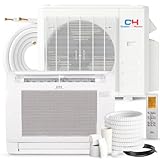
Overview: This unique Cooper & Hunter system features a floor-mounted console indoor unit instead of a wall-mount, providing 12K BTU cooling/heating for 550 sq. ft. with 24.6 SEER2 efficiency and smart controls.
What Makes It Stand Out: The floor-mounted design offers flexible placement where wall mounting isn’t feasible (e.g., rental properties, rooms with high windows), while the class-leading 24.6 SEER2 rating maximizes energy savings. Smart app control and heating to -13°F ensure year-round versatility.
Value for Money: Its niche floor-mount solution commands a slight premium but offers excellent value for specific installation constraints. The ultra-high efficiency and included installation kit ensure rapid payback through reduced energy costs, especially in frequently used spaces.
Strengths and Weaknesses:
Strengths: Innovative floor-mounted console; industry-best 24.6 SEER2 efficiency; effective cold-weather heating (-13°F); quiet “Whisper Technology”; comprehensive installation kit.
Weaknesses: Limited to 230V circuits; professional installation required; console unit occupies floor space; freight delivery logistics.
Bottom Line: An exceptional solution for users needing ductless AC where wall mounting is impossible, delivering top efficiency and smart features in a versatile form factor.
Understanding Studio Apartment Climate Control Challenges
Studio living presents distinct environmental hurdles that demand a thoughtful HVAC approach. The open layout means temperature fluctuations are immediately felt everywhere, with no walls to buffer hot or cold spots. Sun exposure through large windows can create intense localized heat, while poorly insulated older buildings might struggle with winter warmth retention. Furthermore, noise sensitivity is amplified; a loud compressor can disrupt work, sleep, or relaxation in a space where there’s literally nowhere to escape the sound. Limited wall and floor space also restricts installation options, making bulky solutions impractical. Recognizing these inherent challenges is the crucial first step in selecting a system that integrates smoothly rather than fights against your living situation.
The Open-Plan Temperature Conundrum
Without internal walls to segment airflow, maintaining a uniform temperature throughout a studio is notoriously difficult. Heat naturally rises, potentially leaving your sleeping nook chilly while the kitchen area feels warm, or strong afternoon sun baking one corner into an oven. Traditional forced-air systems often exacerbate this by creating drafts or uneven circulation. A well-chosen single zone mini split combats this by providing targeted, consistent airflow designed to gently mix the air in the entire space, minimizing stratification and hot/cold zones through strategic fan speed control and airflow direction.
Noise: The Critical Studio Disruptor
In a studio, ambient noise isn’t just annoying—it’s inescapable. A humming or clattering HVAC unit can dominate the soundscape, interfering with video calls, meditation, or simply enjoying quiet time. This makes the decibel rating of both the indoor and outdoor units paramount. Look beyond the basic “quiet” marketing claims; focus on specific dB(A) levels at the lowest fan setting, as this is often the setting used during sleep or quiet hours. Advanced inverter technology and well-designed fan motors are key indicators of genuinely low operational noise.
Space Constraints and Aesthetic Integration
Every inch matters when your bedroom, living room, and kitchen share a footprint. Bulky units mounted low on a wall can visually shrink the space and impede furniture placement. The ideal studio mini split features a slim, low-profile indoor unit that can be mounted high on a wall or even in a ceiling cassette configuration (if structural allowances exist), preserving valuable floor area and maintaining clean sightlines. Consider the visual impact – neutral colors and minimalist designs help the unit disappear into your decor rather than clash with it.
Key Features to Prioritize for Studio Living
Selecting the right single zone mini split isn’t just about cooling capacity; it’s about finding a harmonious blend of performance, efficiency, and user experience that complements the studio lifestyle. Prioritizing features that address noise, precise temperature control, ease of use, and energy consumption will yield far greater long-term satisfaction than chasing the highest BTU rating alone. This is where understanding the nuances of modern mini split technology becomes essential for making a truly informed decision.
Calculating the Perfect Cooling Capacity (BTU)
Oversizing is the cardinal sin for studio mini splits. A unit too powerful for your space will short-cycle – turning on and off repeatedly – failing to properly dehumidify the air, leading to a clammy, uncomfortable feeling and increased wear on the system. Undersizing means it runs constantly, struggling to reach the desired temperature and wasting energy. Accurately determining your required BTU involves more than just square footage; factor in ceiling height, number and size of windows, window orientation (south/west-facing gets hotter), insulation quality, and local climate extremes. Reputable HVAC professionals use Manual J load calculations for precision, but online BTU calculators incorporating these variables offer a solid starting point.
The Non-Negotiables: Noise Levels and Fan Settings
As emphasized earlier, noise is critical. Scrutinize the manufacturer’s noise specifications measured in decibels (dB(A)). Pay particular attention to the rating at the lowest fan speed, as this is typically used during nighttime or quiet periods. Aim for indoor units consistently rated below 22-25 dB(A) on low speed for true bedroom-level quiet. Multiple fan speed settings (often 3-5) are essential, allowing you to balance airflow strength with noise output depending on the time of day or activity. Look for models specifically marketed as “whisper quiet” or “ultra-quiet” and verify the dB(A) claims.
Inverter Technology: Efficiency and Comfort Engine
The heart of a modern, efficient mini split is its inverter-driven compressor. Unlike old on/off compressors that blast full power then shut down, inverters continuously adjust their speed to precisely match the heating or cooling demand. This delivers three major studio benefits: significantly lower energy consumption (especially crucial with rising utility costs), remarkably stable temperatures without swings, and drastically reduced noise levels as the compressor rarely runs at full blast. While inverter systems have a slightly higher upfront cost, the energy savings and comfort improvements make them indispensable for efficient, comfortable studio living.
Heating Performance in Cold Climates
Don’t assume a mini split is only for summer! Many modern cold-climate models provide effective, efficient heating well below freezing, often down to -15°F or lower. Check the Heating Seasonal Performance Factor (HSPF) rating – a higher number indicates better heating efficiency. Crucially, verify the unit’s rated heating capacity (in BTU) at the lowest expected temperature in your area, not just at 47°F. Some units see a significant drop-off in output as temperatures plummet; ensure it can still deliver sufficient warmth for your studio during your coldest snaps.
Smart Features for Seamless Integration
Smart functionality transforms convenience. Wi-Fi connectivity allows control via smartphone app from anywhere – perfect for adjusting the temperature before heading home on a sweltering day or ensuring your space is cozy upon waking. Voice control compatibility (Alexa, Google Assistant) enables hands-free adjustments. Look for features like programmable schedules that adapt to your routine, geofencing that activates based on your phone’s location, and energy usage monitoring to track consumption. Ensure the app is user-friendly and reliable, as a clunky interface negates the benefit.
Air Filtration and Purification Capabilities
In a compact space, indoor air quality directly impacts well-being. Basic washable filters capture large dust particles, but studios often benefit from enhanced filtration. Look for units with multi-stage filtration, potentially including activated carbon filters to reduce odors (from cooking or city living) and true HEPA or high-efficiency particulate filters to trap allergens, pet dander, and fine dust. Some advanced models even incorporate antimicrobial treatments or ionizers. Consider your specific needs – allergies, pets, or urban pollution exposure might make superior filtration a top priority.
Installation Considerations for Tight Spaces
Getting the installation right is arguably more critical than the unit itself, especially in a studio where mistakes are impossible to hide. The placement of both the indoor and outdoor units, the routing of the refrigerant lines and electrical conduit, and the quality of the mounting all significantly impact performance, noise, aesthetics, and longevity. Cutting corners here can undermine even the best equipment.
Optimal Indoor Unit Placement Strategy
The location of the indoor air handler dramatically affects airflow and comfort. Mounting it too low risks blowing cold air directly onto seating or sleeping areas, creating discomfort. The ideal spot is high on a wall (typically 7-8 feet), opposite the main source of heat (like large windows), allowing cool air to gently descend and mix throughout the room. Avoid mounting directly above heat-generating appliances like TVs or stoves. Ensure there’s adequate clearance above and around the unit as specified by the manufacturer for proper air intake and exhaust. In some studios, a ceiling-mounted cassette unit might be the optimal aesthetic and airflow solution if the ceiling structure allows.
Outdoor Unit Siting Within Urban Constraints
Finding space for the condenser in an urban studio setting can be tricky. It needs adequate airflow (clearance on all sides per manufacturer specs), protection from direct weather extremes if possible, and must be mounted securely. Common locations include balconies, rooftops (with proper permits and structural support), ground-level alcoves, or even specialized wall brackets. Crucially, the distance between indoor and outdoor units should be minimized (ideally under 25 feet, though longer runs are possible) to maintain efficiency and reduce refrigerant line visibility. Shorter line sets also mean less potential for leaks and lower installation complexity.
Refrigerant Line and Electrical Routing Aesthetics
The path of the refrigerant lines and electrical conduit connecting the two units is a major aesthetic concern in a studio. Running them through interior walls is ideal but often disruptive. Alternatives include using discrete surface-mounted channels painted to match the wall, routing through closets or under baseboards (if feasible), or utilizing existing utility chases. Work closely with your installer to plan the least obtrusive route. Concealing these lines effectively is key to maintaining your studio’s clean, uncluttered look. Poorly routed lines are an eyesore that detracts from even the most stylish space.
Permitting and Professional Installation Imperatives
Never attempt a DIY installation on a mini split. Refrigerant handling requires EPA certification, electrical work must meet code, and improper installation voids warranties and risks system failure or safety hazards. Reputable contractors understand local building and electrical codes and will pull necessary permits. Verify their experience with mini splits specifically, particularly in multi-unit or constrained urban buildings. A professional installation ensures optimal performance, efficiency, safety, and compliance – well worth the investment to protect your comfort and your apartment.
Maximizing Efficiency and Long-Term Value
A single zone mini split is a significant investment in your comfort and quality of life. Choosing a system focused on long-term efficiency and ease of maintenance ensures that investment pays off through lower utility bills, reliable operation for many years, and minimal hassle. It’s not just about the upfront purchase price; it’s about the total cost of ownership and the consistent comfort delivered over the system’s lifespan.
Decoding SEER2 and HSPF2 Ratings
Since 2023, the US uses updated efficiency metrics: SEER2 for cooling and HSPF2 for heating. These ratings reflect more realistic field conditions compared to the older SEER/HSPF standards. A higher SEER2 number means greater cooling efficiency; look for units rated 18 SEER2 or higher for optimal energy savings in most climates. Similarly, a higher HSPF2 indicates better heating efficiency – aim for 10 HSPF2 or above, especially if heating is a primary need. While higher-rated units cost more initially, the energy savings over the system’s 15-20 year lifespan often justify the premium, particularly in areas with high electricity costs or extreme seasons.
The Longevity Factor: Quality Components Matter
Studio mini splits endure constant cycling in a demanding environment. Units built with higher-grade components – robust compressors, durable fan motors, quality heat exchangers, and reliable electronic controls – will last significantly longer and require fewer repairs. Research brand reputations for reliability (focusing on general trends, not specific models), but also consider the installer’s impact; even the best unit can fail prematurely if installed poorly. Look for comprehensive warranties covering the compressor (typically 10+ years) and full parts (5-12 years), as this often reflects the manufacturer’s confidence in component durability.
Simplifying Maintenance for Busy Residents
Regular maintenance is non-negotiable for efficiency and longevity, but studio dwellers need hassle-free routines. Prioritize units with easily accessible, slide-out air filters that can be cleaned monthly without tools. Consider models where the indoor unit’s front panel snaps open effortlessly. While professional servicing (annual check-ups for refrigerant levels, coil cleaning, electrical checks) is still essential, user-friendly design makes the routine homeowner tasks simple and quick, increasing the likelihood they’ll actually be done. Avoid units where filter access requires climbing a ladder or disassembling parts.
Understanding Real-World Energy Consumption
Manufacturer efficiency ratings (SEER2/HSPF2) are lab-tested under ideal conditions. Real-world savings depend heavily on your climate, usage patterns, thermostat settings, and installation quality. However, even with these variables, a high-efficiency inverter mini split will almost always outperform a standard window unit or older ducted system in a studio. Use the unit’s energy monitoring features (if equipped) or track your overall electricity bill changes after installation to gauge your personal savings. Every degree you adjust your thermostat setting (within comfort limits) also yields noticeable energy reductions.
Making Your Final Selection with Confidence
Armed with knowledge about studio-specific challenges and critical features, you’re now positioned to have informed conversations with HVAC professionals. The goal is to move beyond sales pitches and focus on finding the precise technical solution that aligns with your space, comfort needs, budget, and aesthetic vision. This isn’t about picking the “best” unit overall, but the right unit for your unique studio environment.
Consulting with the Right HVAC Professional
Seek out contractors who specialize in ductless mini splits and have extensive experience in multi-family or urban residential installations. Ask specific questions: How do they calculate the correct BTU for a studio? What’s their strategy for minimizing noise and optimizing indoor unit placement in tight spaces? Can they provide references for similar studio apartment projects? Avoid contractors who push oversized units or seem unfamiliar with the unique constraints of small, open layouts. A good consultant will listen to your concerns and tailor their recommendations.
Balancing Budget with Long-Term Benefits
While upfront cost is a factor, view it through the lens of total value. A slightly more expensive unit with a higher SEER2 rating, superior noise performance, and robust warranty might cost $200-$400 more initially but could save $100-$200 annually on energy bills and avoid costly repairs down the line. Factor in potential utility rebates for high-efficiency models, which can significantly offset the initial investment. Never sacrifice critical features like adequate BTU sizing or low noise levels for a minimal upfront savings; the comfort trade-offs in a studio are too significant.
Trusting the Process Over Marketing Hype
Manufacturers bombard consumers with claims about “smartest” or “quietest” technology. Cut through the noise by focusing on verifiable specifications: actual dB(A) levels at low fan speed, SEER2/HSPF2 ratings, cold-climate heating capacity at low temperatures, and warranty details. Independent reviews from trusted consumer or HVAC industry sources can offer balanced perspectives on real-world performance and reliability trends across brands. Remember, the perfect unit for your neighbor’s studio might be wrong for yours; your specific room layout, sun exposure, and personal noise tolerance are paramount.
Frequently Asked Questions
Frequently Asked Questions
How do I know if a mini split is the right size for my studio? Accurate sizing requires calculating heat gain/loss based on your studio’s square footage, ceiling height, window size/orientation, insulation, and local climate. Avoid relying solely on square footage; a professional HVAC load calculation (Manual J) is the gold standard to prevent uncomfortable short-cycling or inadequate cooling.
Will a mini split make my studio apartment too noisy to sleep? Not if you choose wisely. Focus on models with indoor noise ratings below 22-25 dB(A) on the lowest fan setting – comparable to a whisper. Inverter technology significantly reduces compressor noise. Proper installation, including secure mounting and vibration isolation, is also critical for minimizing operational sound.
Can a single mini split effectively heat my studio during freezing winters? Yes, many modern “cold climate” models provide efficient heating down to -15°F or lower. Check the unit’s heating capacity (BTU) specifically at the lowest temperature you expect, not just its rating at 47°F. Look for a high HSPF2 rating (10+) for optimal heating efficiency.
How noticeable will the refrigerant lines be inside my apartment? Professional installers use discreet methods: painting surface-mounted channels to match walls, routing lines through closets or existing chases, or using baseboard trim covers. While some minor visibility is usually unavoidable, skilled installation minimizes visual impact significantly.
Are there significant installation hurdles in older studio buildings? Common challenges include finding space for the outdoor unit on balconies or rooftops, routing lines through thick masonry walls, and meeting electrical code requirements. A qualified installer experienced in older urban structures will have solutions for these constraints.
Do I really need professional installation, or can I save money by doing it myself? Professional installation is absolutely mandatory. Handling refrigerant requires EPA certification, electrical work must meet code, and improper installation voids warranties, causes leaks, reduces efficiency, and creates safety hazards. The risks far outweigh any perceived savings.
How much can I realistically expect to save on energy bills compared to a window unit? High-efficiency mini splits typically use 30-50% less energy than comparable window units due to inverter technology and superior SEER2 ratings. Actual savings depend on your climate, usage, and the efficiency of your old unit, but reductions of $100-$200 annually are common in moderate climates.
How often does a studio apartment mini split require maintenance? Basic homeowner maintenance (cleaning or replacing the air filter) should be done monthly. A professional tune-up, including coil cleaning, refrigerant check, and electrical inspection, is recommended annually to ensure peak efficiency, longevity, and indoor air quality.
Will a mini split dehumidify my studio effectively during humid summers? Yes, properly sized inverter mini splits excel at dehumidification. Unlike window units that often short-cycle when oversized, causing poor moisture removal, a correctly sized mini split runs longer at lower capacities, extracting more humidity and providing a more comfortable, less clammy environment.
Can I control the mini split without always using my phone? Absolutely. All units come with a physical remote control. Many also offer basic thermostat-like wall controllers. Smart features (app/voice control) are convenient extras, but fundamental operation via remote or wall control is standard and reliable, even without Wi-Fi.
See Also
- 10 Best Single Zone Mini Splits for Apartments in 2026
- 10 Best Single Zone Mini Splits for Small Apartments in 2026
- 10 Affordable Single Zone Mini Splits That Don’t Sacrifice Quality in 2026
- How to Solve High Energy Bills with the 10 Best Single Zone Mini Splits in 2026
- 10 Best Budget Single Zone Mini Splits Under $1500 for Bedrooms