Table of Contents
Living in an apartment often means wrestling with inadequate heating and cooling systems – think drafty windows, noisy central units that blast air unevenly, or sky-high utility bills from inefficient window ACs. If you’ve ever sat shivering in one corner of your living room while breaking a sweat near the thermostat, you know the frustration all too well. The good news? Single zone mini split systems have quietly revolutionized apartment climate control, offering a powerful, efficient, and surprisingly tenant-friendly solution that avoids the pitfalls of traditional options. They deliver targeted comfort exactly where you need it, without the commitment of major renovations or the noise pollution of clunky alternatives.
But navigating the world of mini splits as a renter presents unique challenges. Landlord approval is often the first hurdle, followed by concerns about installation restrictions, potential damage to property, and the fear of losing your investment when you move out. You need a system that’s not only energy-efficient and quiet but also designed with the realities of apartment living in mind – compact, minimally invasive, and potentially portable. Understanding the specific features that matter most for your situation transforms the search from overwhelming to empowering. This guide cuts through the noise, focusing squarely on the critical factors that make a single zone mini split truly work for your apartment, ensuring you invest wisely in long-term comfort without landlord drama.
Top 10 Single Zone Mini Splits
Detailed Product Reviews
1. Cooper & Hunter 9,000 BTU 115V Single Zone Wall Mount Ductless Mini Split Air Conditioner & Heat Pump – 21.5 SEER2 – 16FT Installation Kit – R-410A Refrigerant Pre-Charged – Inverter

Overview: This Cooper & Hunter MIA Series mini-split delivers efficient cooling and heating for spaces up to 400 sq. ft., ideal for bedrooms or offices. Operating on standard 115V, it includes a pre-charged refrigerant system and a full 16ft installation kit, requiring professional setup. It functions as both an air conditioner and heat pump, effective down to 5°F ambient temperatures.
What Makes It Stand Out: Its 21.5 SEER2 rating ensures high energy efficiency, while the integrated smart kit enables app-based control for temperature, fan speed, and mode adjustments. The whisper-quiet operation and year-round climate stability—reducing humidity and providing rapid response—make it suitable for sensitive environments like bedrooms or server rooms.
Value for Money: Priced competitively for its efficiency tier, the included installation kit and smart features eliminate extra costs. While professional installation adds expense, the long-term energy savings from its inverter technology and reliable dual-season performance justify the investment over less efficient alternatives.
Strengths and Weaknesses:
Strengths: High SEER2 rating, comprehensive kit, smart app control, effective heating to 5°F, quiet operation.
Weaknesses: 115V limits placement flexibility, professional installation mandatory (increasing total cost), freight delivery only.
Bottom Line: An excellent choice for smaller spaces needing reliable, efficient year-round comfort with smart convenience; ideal if 115V power is accessible and professional installation is feasible.
2. Cooper & Hunter Olivia Series, 9,000 BTU, 115V, 23 SEER, Single Zone Mini Split AC/Heating Ductless Inverter System, Including Installation kit

Overview: The 2022 Olivia Series offers 9,000 BTU cooling/heating capacity on 115V, targeting compact areas like bedrooms or garages. It arrives pre-charged with refrigerant and includes a complete 16ft installation kit, though professional setup is non-negotiable. AHRI certification and ETL approval underscore its reliability.
What Makes It Stand Out: Boasting a top-tier 23 SEER rating, it leads in energy efficiency among 115V mini-splits. The inclusion of US-based technician support provides peace of mind, and its optimized inverter technology ensures quiet, precise climate control while reducing long-term energy bills.
Value for Money: The premium 23 SEER efficiency translates to significant operational savings, offsetting the initial cost over time. The bundled installation kit adds value, but the mandatory professional install and freight delivery fees mean total ownership costs require careful budgeting versus lower-SEER models.
Strengths and Weaknesses:
Strengths: Industry-leading 23 SEER efficiency, US technical support, AHRI/ETL certified, full installation kit included.
Weaknesses: Highest upfront cost in its class, professional installation essential, freight delivery limitations.
Bottom Line: A premium, ultra-efficient solution for eco-conscious users prioritizing long-term savings; best suited for those willing to invest upfront for maximum efficiency and reliability.
3. Cooper & Hunter 9,000 BTU 230V Single Zone Wall Mount Ductless Mini Split Air Conditioner & Heat Pump – 21.2 SEER2 – 16FT Installation Kit – Refrigerant Pre-Charged – Inverter

Overview: This MIA Series 230V mini-split provides 9,000 BTU cooling and heating for medium-sized rooms, featuring a 21.2 SEER2 rating and pre-charged refrigerant. It includes a 16ft installation kit and requires professional installation, with freight delivery standard due to its weight.
What Makes It Stand Out: The smart C&H app enables full remote control (on/off, temp, modes), while “Whisper Technology” ensures near-silent operation—critical for bedrooms. It maintains heating functionality down to 5°F and suits both residential and commercial spaces needing unobtrusive climate control.
Value for Money: The 230V requirement may necessitate electrical upgrades, adding initial expense, but the high SEER2 rating and app convenience deliver strong operational savings and usability. It competes well against similar-voltage systems, though the 115V models offer easier electrical integration for some users.
Strengths and Weaknesses:
Strengths: Smart app integration, very quiet operation, robust 21.2 SEER2 efficiency, versatile commercial/residential use.
Weaknesses: 230V installation complexity, professional setup required, freight delivery logistics.
Bottom Line: A top pick for users with 230V access seeking quiet, app-controlled comfort; prioritize this if electrical compatibility exists and smart features are essential.
4. Cooper & Hunter Olivia Series, 6,000 BTU, 115V, 23 SEER2, Single Zone Mini Split AC/Heating Ductless Inverter System, Including Installation kit

Overview: This compact Olivia Series unit delivers 6,000 BTU cooling/heating on standard 115V, designed for small spaces like studios or home offices (up to 250 sq. ft.). It includes a 16ft installation kit, requires professional setup, and features AHRI certification and UL listing for safety.
What Makes It Stand Out: Its exceptional -13°F heating capability outperforms most competitors, making it ideal for colder climates. The 23 SEER2 rating ensures peak efficiency, while the C&H app provides remote smartphone control—uncommon at this smaller capacity.
Value for Money: The ultra-high efficiency and extreme cold-weather performance justify its price for appropriately sized spaces. The included kit avoids add-on costs, but professional installation remains a fixed expense. It offers superior value over larger units in small rooms where oversizing would waste energy.
Strengths and Weaknesses:
Strengths: Best-in-class -13°F heating, 23 SEER2 efficiency, app control, quiet “Whisper Technology,” perfect for small areas.
Weaknesses: Limited to very small spaces, professional install mandatory, freight delivery constraints.
Bottom Line: The definitive choice for tiny rooms in frigid climates needing whisper-quiet, hyper-efficient comfort; avoid if your space exceeds 250 sq. ft.
5. OLMO 9,000 BTU 230V Ductless Mini Split Air Conditioner & Heat Pump – 18.5 SEER2 Inverter System – Wall Mount Single Zone Cooling & Heating – Pre-Charged

Overview: The OLMO 9,000 BTU mini-split offers 230V cooling and heating for areas up to 400 sq. ft., featuring an 18.5 SEER2 rating and pre-charged refrigerant. It comes with a full 16ft installation kit but mandates professional setup and freight delivery.
What Makes It Stand Out: Its streamlined design focuses on core performance—reliable all-season operation and notably quiet indoor function. Free US-based technical support adds accessibility, while the included installation kit simplifies procurement versus competitors requiring separate purchases.
Value for Money: Positioned as a budget-friendly option, its lower SEER2 rating means higher long-term energy costs versus premium brands. However, the upfront price and included kit provide solid value for users prioritizing simplicity and lower initial investment over maximum efficiency.
Strengths and Weaknesses:
Strengths: Competitive entry price, quiet operation, sleek aesthetics, free US tech support, comprehensive kit included.
Weaknesses: Lower 18.5 SEER2 efficiency, no smart/app features, 230V electrical requirement, freight delivery only.
Bottom Line: A practical, no-frills solution for cost-conscious buyers needing basic, quiet cooling/heating; choose this if upfront savings outweigh desires for smart features or peak efficiency.
6. 12K BTU Single Zone Mini Split Air Conditioner, 24 SEER2 Wifi Ductless Heat Pump, 208-230V Pre-Charged Cools Up to 750 Sq.ft

Overview: This 12K BTU ductless mini-split offers year-round climate control for spaces up to 750 sq. ft., combining high-efficiency cooling and heating in a pre-charged, Wi-Fi-enabled package designed for single-zone applications like bedrooms or home offices. What Makes It Stand Out: Its exceptional 24 SEER2 rating leads the market in energy efficiency, significantly lowering operating costs. The integrated Wi-Fi app control allows remote temperature adjustments and scheduling, while the pre-charged 16.4/24.6 ft. line sets simplify professional installation versus field-charged systems. Value for Money: Positioned as a premium efficiency model, the higher upfront cost is justified by substantial long-term energy savings, especially in regions with high cooling/heating demands. It outperforms lower-SEER alternatives (typically 18-22 SEER) on utility bills, making it a smart investment for eco-conscious users. Strengths and Weaknesses: Strengths: Industry-leading 24 SEER2 efficiency; seamless smartphone control; covers up to 750 sq. ft.; washable filter reduces maintenance costs. Weaknesses: Requires professional installation (no DIY option); 208-230V voltage limits outlet compatibility; app connectivity may demand stable home Wi-Fi. Bottom Line: An excellent choice for energy-savvy homeowners needing reliable, app-controlled comfort in medium-sized rooms, where its top-tier efficiency delivers tangible cost savings over time despite the premium price.
7. Cooper & Hunter 12,000 BTU 115V Black Single Zone Wall Mount Ductless Mini Split Air Conditioner & Heat Pump – 23.2 SEER Inverter – Smart Kit & 16FT Installation Kit – Pre-Charged

Overview: Cooper & Hunter’s Olivia Series Midnight Edition provides 12K BTU cooling/heating for up to 550 sq. ft. with distinctive black styling, 115V compatibility, and smart features, targeting users seeking aesthetics and efficiency in a professional-install system. What Makes It Stand Out: The bold black indoor unit elevates room decor beyond standard white models. Its 115V operation is rare for 12K BTU units, enabling use in standard outlets (unlike 208-230V competitors), while the included Smart Kit enables app control and inverter-driven quiet operation down to 19 dB. Value for Money: The 115V compatibility avoids electrical upgrades, potentially saving installation costs. Though SEER2 (23.2) trails Product 6 slightly, the aesthetic premium and voltage flexibility offer solid value for style-focused buyers in smaller spaces (up to 550 sq. ft.). Strengths and Weaknesses: Strengths: Unique midnight-black design; 115V operation simplifies electrical needs; ultra-quiet inverter compressor; includes full 16-ft installation kit. Weaknesses: Lower coverage (550 vs. 750 sq. ft.); freight delivery adds complexity; professional installation mandatory increases total cost. Bottom Line: Ideal for style-conscious users in apartments or rooms under 550 sq. ft. needing 115V convenience, though those prioritizing maximum coverage or efficiency should consider higher-voltage alternatives.
8. Daikin 9,000 Btu 18 SEER2 Single Zone Ductless Mini Split Heat Pump System (R-32) - RXC09AXVJU, FTXC09AXVJU

Overview: Daikin’s compact 9K BTU mini-split delivers efficient cooling for 350 sq. ft. and heating for 300 sq. ft., featuring R-32 refrigerant and whisper-quiet operation, suited for small bedrooms or offices where space is limited. What Makes It Stand Out: Industry-leading quietness (as low as 19 dB) makes it perfect for noise-sensitive areas. The eco-friendly R-32 refrigerant offers lower global warming potential than traditional R-410A, and dual pre-charged line sets (16.4/24.6 ft.) streamline installation flexibility. Value for Money: At 18 SEER2, it’s less efficient than higher-SEER competitors but benefits from Daikin’s renowned reliability. The included line sets reduce installation hassles, offering fair value for small-space applications where ultra-quiet operation is a priority over max efficiency. Strengths and Weaknesses: Strengths: Exceptionally quiet performance; modern R-32 refrigerant; dual-length pre-charged line sets; sleek, unobtrusive design. Weaknesses: Lower SEER2 rating increases long-term energy costs; limited heating/cooling coverage (300/350 sq. ft.); no built-in Wi-Fi (requires add-on). Bottom Line: A dependable, silent solution for small rooms prioritizing noise reduction over cutting-edge efficiency, though budget buyers may find comparable SEER in non-R-32 models.
9. Cooper & Hunter Olivia Series, 24,000 BTU, 230V, 21 SEER2, Single Zone Mini Split AC/Heating Ductless Inverter System, Including Installation Kit & Smart Kit
Overview: This robust 24K BTU (2-ton) system delivers powerful year-round climate control for large spaces up to 1,500 sq. ft., featuring cold-climate heating down to -13°F and smartphone integration via the included Smart Kit. What Makes It Stand Out: Its high capacity handles expansive areas like garages or open-plan living spaces. The -13°F heating capability surpasses many competitors, and the pre-charged system with full 16-ft installation kit ensures professional-ready setup for demanding environments. Value for Money: While the highest upfront cost among these models, its commercial-grade capacity justifies expense for large or high-heat-load areas. The 21 SEER2 rating balances efficiency with raw power, outperforming older 16-18 SEER systems in operational savings for sizable spaces. Strengths and Weaknesses: Strengths: Exceptional coverage for large rooms; reliable sub-zero heating; includes comprehensive installation kit; UL/AHRI certified for quality. Weaknesses: Overkill for small spaces; 230V requirement limits installation locations; freight shipping complicates delivery. Bottom Line: The top pick for large residential or light commercial spaces needing heavy-duty, all-season performance, despite the premium price and electrical requirements.
10. Cooper & Hunter 12,000 BTU Single Zone Floor Mounted Console Mini Split Air Conditioner & Heat Pump – 24.6 SEER2 – 16FT Installation Kit – 230V
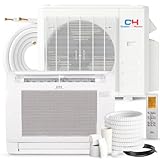
Overview: This unique 12K BTU system features a floor-mounted console indoor unit instead of wall mounting, providing flexible placement for spaces where wall installation isn’t feasible, with 24.6 SEER2 efficiency and -13°F heating capability. What Makes It Stand Out: The floor console design is ideal for rooms with limited wall space, high ceilings, or retrofit scenarios. Its industry-leading 24.6 SEER2 rating maximizes energy savings, and the whisper-quiet operation suits bedrooms or living areas. Value for Money: The premium SEER2 rating ensures the lowest operating costs in its class, offsetting the slightly higher price. The included installation kit and suitability for challenging layouts add value where traditional wall units can’t be installed. Strengths and Weaknesses: Strengths: Versatile floor-mount design; class-leading 24.6 SEER2 efficiency; effective down to -13°F; quiet performance. Weaknesses: Floor unit occupies usable space; 230V requirement; freight delivery logistics; professional installation mandatory. Bottom Line: An outstanding solution for unconventional room layouts needing maximum efficiency, though the floor unit’s space trade-off may deter some users.
Understanding Single Zone Mini Splits for Apartment Living
Why Mini Splits Outperform Traditional Apartment Cooling
Traditional window units often struggle with uneven temperatures, excessive noise, and significant energy waste as they fight against the elements through a single opening. Central HVAC in older buildings can be inefficient and impossible to control room-by-room. Single zone mini splits solve these issues by separating the noisy compressor (placed discreetly outside) from the sleek indoor air handler, which mounts high on a wall. This split design allows for precise temperature control in your specific living space, dramatically reduces indoor noise levels, and operates far more efficiently than window units, translating directly to lower energy costs – a major win for both you and your wallet in a rental.
Key Advantages Over Window Units for Renters
Beyond superior comfort and efficiency, mini splits offer distinct advantages crucial for apartment dwellers. They eliminate the security risks and aesthetic blight of window units, which can block escape routes and detract from building appearance. They don’t require modifying windows, making landlord approval significantly easier to obtain. Crucially, many modern systems are designed with relatively simple installation that minimizes permanent alterations, and some components can potentially be taken with you when you move (depending on the setup and lease agreement), protecting your investment. The absence of a bulky unit jutting out the window also preserves your view and natural light.
Critical Features to Prioritize for Apartment Use
Sizing Your System Correctly: Avoiding Costly Mistakes
Choosing the right capacity (measured in BTUs) is non-negotiable for efficiency and comfort. An undersized unit will run constantly, failing to cool or heat adequately and driving up energy use. An oversized unit will short-cycle (turn on and off frequently), leading to poor humidity control, temperature swings, and premature wear. Forget simplistic “square footage per BTU” charts; accurate sizing requires considering your apartment’s specific characteristics: window size and direction (south-facing gets hotter), ceiling height, insulation quality, number of occupants, and even heat-generating appliances. Consulting a qualified installer who performs a proper Manual J load calculation is the only reliable way to ensure optimal performance and avoid wasting money.
Noise Levels: The Non-Negotiable Factor for Quiet Living
Peace and quiet are precious in close-quarter apartment living. Excessive noise from either the indoor air handler or the outdoor condenser can be a major source of friction with neighbors and landlords. Pay meticulous attention to the decibel (dB) ratings for both components, especially the indoor unit. Look for indoor air handlers rated at 20-25 dB or lower on their quietest setting – comparable to a whisper or rustling leaves. The outdoor unit should also be designed for quiet operation (typically 45-55 dB), and its placement location (discussed with your landlord) is critical to minimize disturbance. Don’t rely solely on manufacturer “quiet mode” claims; seek independent reviews focusing on real-world noise performance.
SEER and HSPF Ratings: Decoding Energy Efficiency
Energy efficiency directly impacts your monthly utility bills and environmental footprint. The Seasonal Energy Efficiency Ratio (SEER) measures cooling efficiency, while the Heating Seasonal Performance Factor (HSPF) measures heating efficiency (for heat pump models, which most single zone units are). Higher ratings mean more cooling or heating output per unit of electricity consumed. For 2026, expect minimum standards to be higher, but aim significantly above the baseline. Look for SEER ratings of 20+ and HSPF ratings of 10+ for the best long-term savings, especially important in regions with long cooling or heating seasons. The higher upfront cost is often offset by substantial energy savings over the system’s lifespan.
Navigating Installation Challenges in Rentals
Landlord Approval: Building a Compelling Case
Securing landlord permission is the essential first step. Approach the conversation strategically, emphasizing benefits for them: increased property appeal for future tenants, potential for slightly higher rent due to added amenity, and the system’s reversibility/minimal impact compared to permanent alterations. Provide clear, professional installation plans from a licensed contractor showing exactly where the small (typically 3-inch) conduit line will pass through the wall and how the outdoor unit will be mounted (often on a balcony, patio, or designated exterior area). Highlight energy efficiency as a potential reduction in overall building energy strain. Be prepared to offer a security deposit specifically for potential restoration costs.
Minimizing Permanent Modifications: Tenant-Friendly Install Techniques
The goal is installation that leaves little to no trace when you move out. Reputable installers experienced with rentals use techniques like drilling a small, precise hole through a wall (often near the ceiling or behind furniture) for the conduit line, which can be neatly patched and painted later. They avoid mounting the outdoor unit on the building facade with permanent brackets if possible, opting instead for secure placement on a balcony floor or patio. Discuss “restoration clauses” with your landlord upfront – agree on the exact standard for patching the wall hole and cleaning the area where the outdoor unit sat. Document the apartment’s condition before and after installation with photos.
Outdoor Unit Placement Solutions for Limited Spaces
Apartments often lack dedicated ground space for condensers. Creative, tenant-approved solutions are key. Balconies and patios are prime locations, but ensure there’s adequate clearance (typically 12-24 inches) around the unit for airflow and maintenance access. Some buildings have designated mechanical shelves or alcoves. If ground-level space is unavailable, explore mounting the condenser on a sturdy, landlord-approved wall bracket (using appropriate hardware that minimizes drilling). Crucially, the location must allow for proper drainage of condensation and access for servicing. Never block fire escapes or common pathways.
Essential Performance and Convenience Features
Inverter Technology: The Heart of Efficiency and Comfort
Inverter-driven compressors are a game-changer, especially for apartment living. Unlike traditional systems that simply turn the compressor on and off (causing temperature swings and noise), inverters continuously adjust their speed to match the exact heating or cooling demand. This delivers remarkably stable temperatures, near-silent operation at low speeds, and significantly higher energy efficiency – particularly during milder weather when full power isn’t needed. The result is consistent comfort without the disruptive cycling noise that can annoy neighbors and the substantial energy savings that benefit your wallet. It’s arguably the single most important technological feature to prioritize.
Advanced Air Filtration: Health and Air Quality Benefits
Beyond temperature control, indoor air quality matters significantly in enclosed apartment spaces. Look for systems with multi-stage filtration, starting with a basic washable pre-filter to catch large dust and pet hair. The most valuable addition is a high-efficiency particulate air (HEPA) filter or a multi-layer antimicrobial filter capable of capturing fine allergens (pollen, mold spores, dust mites), smoke particles, and even some bacteria and viruses. Some units also incorporate features like photocatalytic oxidation or ionizers for additional air cleaning. This is especially beneficial for allergy sufferers or those in urban environments with higher pollution levels.
Smart Connectivity and Control Options
Modern mini splits offer sophisticated control beyond a basic remote. Integrated Wi-Fi allows you to adjust temperatures, set schedules, monitor energy usage, and receive maintenance alerts from your smartphone – perfect for optimizing comfort and efficiency whether you’re home, at work, or away for the weekend. Look for compatibility with popular smart home ecosystems (like Google Home or Amazon Alexa) for voice control. Programmable 7-day schedules let you automate settings based on your routine (e.g., cooler while you sleep, warmer when you wake up), maximizing comfort and minimizing wasted energy when you’re not home.
Dehumidification Capabilities: Comfort Beyond Temperature
Especially in humid climates, simply cooling the air isn’t enough; removing excess moisture is vital for true comfort. Many advanced mini splits offer dedicated “Dry Mode” or “Dehumidify Mode” settings. Unlike standard cooling which lowers temperature and humidity simultaneously, these modes prioritize moisture removal while keeping temperature relatively stable. This prevents that clammy, sticky feeling without overcooling the space, making the air feel fresher and more comfortable at a slightly higher, energy-saving temperature setting. It’s a crucial feature for maintaining a healthy indoor environment and preventing mold growth.
Long-Term Value and Practical Considerations
Warranty Coverage: Protecting Your Investment
Given the significant investment, understanding the warranty is critical. Look for comprehensive coverage: a standard 10-12 year warranty on the sealed refrigerant system (compressor and coils) is typical for reputable brands, but some offer extended terms. The parts warranty (covering components like fans, controls, PCBs) is usually shorter, often 5-7 years. Crucially, ensure the warranty is valid for residential rental properties – some standard warranties exclude rentals, so verify this explicitly with the manufacturer or installer. Labor warranties are often separate (1-5 years) and may vary by installer; clarify what’s included.
Ease of Maintenance: Keeping Costs Down
Regular maintenance is essential for efficiency, longevity, and air quality, and it’s usually the tenant’s responsibility in a rental. Prioritize systems designed for easy user maintenance. Easily accessible, slide-out air filters that can be vacuumed or rinsed monthly are a must. Consider how simple it is to clean the indoor unit’s evaporator coils (some have removable front panels) and check the outdoor condenser unit for debris. Systems with self-cleaning functions or anti-dust coatings can reduce maintenance frequency. Factor in the availability and cost of professional servicing in your area for annual check-ups.
Potential for Future Relocation: Portability Factors
While true “portability” is limited (refrigerant lines must be evacuated and recharged by a pro), some aspects make moving the system more feasible. Systems using smaller diameter, flexible refrigerant lines can be easier to route in a new space. Modular designs where the indoor and outdoor units are clearly separate might have an advantage. Crucially, discuss the possibility of relocation with your landlord before installation – some may allow it if you cover the cost of professional uninstallation and reinstallation and leave the original apartment restored. The cost-effectiveness depends heavily on the new apartment’s suitability and local labor rates.
Cost Analysis: Beyond the Initial Price Tag
The upfront cost includes the unit itself, installation, and potentially electrical upgrades. While tempting, the absolute cheapest option often leads to higher long-term costs through poor efficiency, frequent repairs, or premature failure. Calculate the total cost of ownership: factor in the expected annual energy costs (based on SEER/HSPF and local rates), estimated maintenance costs, and potential repair costs over 10-15 years. A higher-efficiency model with a robust warranty might cost more initially but save hundreds annually on utilities and provide greater peace of mind. Always get multiple detailed quotes from licensed installers.
Environmental Impact and Refrigerant Types
Environmental regulations are phasing out older refrigerants with high Global Warming Potential (GWP). For 2026 systems, R-32 is becoming the dominant, more environmentally friendly standard, offering lower GWP than the previously common R-410A while maintaining good efficiency. Some cutting-edge systems might utilize even newer, ultra-low-GWP refrigerants. Choosing a system with a modern, responsible refrigerant future-proofs your investment against potential phase-outs and aligns with growing environmental consciousness – a point that might resonate positively with eco-minded landlords.
Frequently Asked Questions
How do I convince my landlord to allow a mini split installation?
Focus on mutual benefits: emphasize the system’s reversibility with minimal restoration, potential for attracting higher-quality tenants, increased property value as an amenity, and the energy efficiency that benefits the building overall. Provide a detailed, professional installation plan from a licensed contractor showing minimal impact, and offer a specific security deposit for restoration costs. Be prepared to cover installation and any required electrical work.
Will a mini split damage my apartment walls when installed?
Professional installation minimizes damage. Installers drill one small hole (typically 2.5-3 inches) for the conduit line, which can be neatly patched and painted later. They avoid major structural modifications. Document the apartment’s condition before installation with photos, and agree with your landlord on the restoration standard (e.g., patching the hole, touch-up paint) in your lease addendum.
Can I take the mini split with me when I move to a new apartment?
It’s possible but complex. The refrigerant must be professionally recovered, and the lines disconnected. Relocation requires professional uninstallation at the old place and full reinstallation (including potential new hole drilling, refrigerant recharge) at the new place. Factor in these significant labor costs. Discuss relocation possibilities with your landlord before initial installation and get any agreement in writing.
Are mini splits noisy enough to bother my neighbors?
Modern single-zone mini splits, especially those with inverter technology, are remarkably quiet indoors (as low as 20-25 dB). The outdoor unit is the primary noise source. Proper placement (away from neighboring windows/doors, on a stable surface, with adequate clearance) and choosing a model with a quiet-rated condenser are crucial. Discuss placement with your landlord to minimize neighbor impact, often a key condition for approval.
How much can I really save on energy bills compared to a window AC?
Savings vary based on climate, usage, and unit efficiency, but high-efficiency mini splits (SEER 20+) typically use 30-50% less energy than standard window units for the same cooling output. This translates to significant monthly savings, especially in regions with long cooling seasons. The higher the SEER/HSPF rating, the greater the potential savings over the system’s lifespan, often offsetting the higher initial cost.
Do I need a separate electrical circuit for a mini split?
Often, yes. Most single-zone mini splits require a dedicated 15-20 amp, 240-volt circuit. Older apartment buildings may need an electrical panel upgrade, which can add cost and complexity. A licensed installer must assess your apartment’s existing electrical capacity during the site survey. Factor potential electrical work costs into your budget and discuss feasibility with your landlord.
What’s the typical lifespan of a mini split in an apartment setting?
With proper installation, regular maintenance (cleaning filters, annual professional check-ups), and responsible usage, a quality single-zone mini split can last 15-20 years. The controlled indoor environment of an apartment (vs. harsh outdoor exposure for window units) can sometimes contribute to longevity. Warranties on key components (compressor 10-12+ years) are a good indicator of expected lifespan.
Can a mini split effectively heat my apartment in cold climates?
Yes, modern cold-climate heat pump mini splits (designed for operation down to -15°F or lower) provide highly efficient heating, often outperforming electric resistance heaters (like baseboards) by 200-300% in efficiency. They extract heat from the outside air even in freezing temperatures. Ensure you select a model specifically rated for the lowest temperatures in your region; standard heat pumps lose efficiency below freezing.
Are there any hidden costs I should be aware of?
Beyond the unit and installation, potential costs include: electrical upgrades, landlord-mandated professional restoration upon move-out, annual professional maintenance ($100-$200), higher-tier filter replacements, refrigerant recharge if a leak occurs (costly), and potential rental insurance rider. Get detailed quotes covering all potential line items from installers.
How difficult is routine maintenance for an apartment tenant?
Basic maintenance is very tenant-friendly: cleaning or replacing the air filter every 1-3 months takes minutes and requires no tools. Checking the outdoor unit for debris (leaves, snow) is simple. However, an annual professional service is recommended for tasks like coil cleaning, refrigerant check, and electrical inspection to ensure peak efficiency, safety, and longevity – this is a modest recurring cost but essential.
See Also
- 10 Best Single Zone Mini Splits for Studio Apartments in 2026
- 10 Best Single Zone Mini Splits for Small Apartments in 2026
- 10 Affordable Single Zone Mini Splits That Don’t Sacrifice Quality in 2026
- How to Solve High Energy Bills with the 10 Best Single Zone Mini Splits in 2026
- 10 Best Budget Single Zone Mini Splits Under $1500 for Bedrooms