Table of Contents
Imagine walking into your home on a sweltering summer afternoon to find it already cooled to your perfect temperature—without leaving your air conditioner running all day. Or picture adjusting your heating system from your office desk when an unexpected cold front rolls in, ensuring your family stays cozy without wasting energy. This isn’t futuristic fantasy; it’s the everyday reality that modern remote thermostat controls deliver in 2026. These intelligent devices have transformed temperature management from a manual, often-forgotten chore into a seamless, automated experience that adapts to your lifestyle while slashing utility bills.
As we navigate an era of increasingly sophisticated smart home technology, choosing the right remote control for your thermostat can feel overwhelming. The market offers countless options with varying features, connectivity standards, and compatibility requirements. Rather than presenting a rigid ranking that might be outdated tomorrow, this comprehensive guide explores the essential features, emerging technologies, and practical considerations you need to make an informed decision for your specific home and heating/c cooling system. We’ll dive deep into what separates exceptional remote controls from mediocre ones, helping you understand the capabilities that truly matter for effortless temperature management.
Top 10 Remote Controls for Thermostats


Detailed Product Reviews
6. DIGITEN Wireless Thermostat WTC100 Pro Temperature Controller for Cooling & Heating, Remote Controlled Outlet, Easy-to-Use and Non-Programmable Plug in Thermostats for Home

Overview: The DIGITEN WTC100 Pro is a versatile wireless thermostat designed for plug-and-play temperature control of heating and cooling devices. This non-programmable unit prioritizes simplicity with its three-button operation, making it ideal for users who want straightforward climate management without complex scheduling. The system consists of a remote controller with built-in temperature sensor and a receiver outlet that switches your appliances on and off based on your target temperature.
What Makes It Stand Out: The WTC100 Pro distinguishes itself through its deliberate simplicity. Unlike smart thermostats requiring apps and WiFi, this device offers immediate functionality with zero learning curve. The remote’s integrated sensor provides accurate ambient readings, eliminating the need for hardwired sensors. Its dual-mode capability seamlessly handles both heating and cooling applications, from air conditioners to space heaters. The large backlit LCD display ensures visibility in dim conditions, while the ℃/℉ switch accommodates user preference.
Value for Money: Priced competitively in the mid-range segment, this thermostat delivers excellent value for specialized applications. It effectively replaces multiple dedicated thermostats for greenhouses, reptile enclosures, wine cellars, and other targeted climate zones. The energy savings from precise temperature cycling quickly offset the initial investment, particularly for continuously running appliances. Compared to hardwired alternatives, the wireless design eliminates installation costs.
Strengths and Weaknesses: Strengths include extreme ease of use, accurate temperature sensing, versatile application range, and reliable wireless performance. The non-programmable design is actually a strength for technophobic users. Weaknesses involve limited remote range, battery dependency, lack of smart features, and no scheduling capability. The absence of programmability may frustrate users wanting automated temperature profiles.
Bottom Line: The DIGITEN WTC100 Pro excels as a specialized temperature controller for specific zones rather than whole-home climate management. Its simplicity is its greatest asset, making it perfect for greenhouses, pet enclosures, and wine storage where basic set-and-forget operation suffices. While not suitable for primary HVAC control, it’s an invaluable tool for targeted heating and cooling needs.
7. DIGITEN Gas Fireplace Remote Control Kit, Thermostat with Timer Kit for Millivolt Valve Gas Fireplaces, Large LCD Display, Wireless Thermostat Switch System On/Off/AUTO Control with Safety Lock

Overview: This DIGITEN kit specifically targets millivolt gas fireplace owners seeking wireless convenience without professional retrofitting. Designed as a universal replacement for manual switches and competing brands like Skytech, it transforms your fireplace into a remotely controlled, thermostat-regulated heating source. The system operates in three modes—ON, AUTO, and OFF—giving you flexible control over flame activation and room temperature maintenance.
What Makes It Stand Out: Safety takes center stage with this fireplace kit. The child lock prevents accidental activation, while the AUTO mode uses the remote’s built-in sensor to cycle the fireplace intelligently, maintaining comfort without wasteful overheating. Its broad compatibility spans most millivolt valve systems from major brands, enabling true plug-and-play installation. The 65-foot signal range provides reliable control throughout typical living spaces, and the large backlit LCD clearly displays both set and room temperatures.
Value for Money: For millivolt fireplace owners, this kit offers substantial value at a fraction of professional automation costs. It eliminates the inconvenience of manual valve operation while adding thermostat intelligence and timer functionality. The energy savings from automated temperature management provide ongoing returns. Compared to brand-specific replacements, its universal design ensures compatibility across multiple fireplace manufacturers.
Strengths and Weaknesses: Key strengths include robust safety features, straightforward installation, clear display, and reliable wireless performance. The three-mode operation provides excellent flexibility. Notable weaknesses are the lack of included batteries, installation restrictions near high heat (above 130°F), and limitation to millivolt systems only. Users must remember manual gas valve shutoff during extended absences for maximum safety.
Bottom Line: The DIGITEN Gas Fireplace Remote Kit is an excellent upgrade for manual millivolt fireplaces, delivering convenience, safety, and energy efficiency in one package. While requiring careful placement away from extreme heat and battery purchases, it provides reliable wireless control that enhances both comfort and peace of mind. Ideal for homeowners wanting fireplace automation without complex wiring or professional installation costs.
8. meross Smart Thermostat for Home, WiFi Thermostat Works with Matter, Alexa, Apple Home, Google Assistant, App & Voice Control, 7x24h Scheduling, Energy Saving, C-Wire Required

Overview: The meross Smart Thermostat represents the next generation of home climate control, integrating seamlessly with modern smart home ecosystems through Matter certification. Designed for 95% of HVAC systems including heat pumps, furnaces, and boilers, this device replaces traditional thermostats with intelligent, app-driven automation. It requires a C-wire for most installations and supports comprehensive scheduling, voice control, and energy monitoring.
What Makes It Stand Out: Matter compatibility is the headline feature, ensuring local, reliable connectivity across Apple Home, Amazon Alexa, Google Home, and SmartThings without cloud dependency. The 24/7 scheduling adapts to your lifestyle automatically, while smart alerts notify you of filter changes and system malfunctions before they become costly problems. Real-time energy tracking helps optimize consumption patterns, and the intuitive app provides remote access from anywhere.
Value for Money: Positioned competitively against premium smart thermostats, the meross delivers exceptional value through Matter integration alone—future-proofing your smart home investment. Energy savings from intelligent scheduling typically recoup costs within 12-18 months. The elimination of multiple proprietary apps streamlines your digital life, while proactive maintenance alerts prevent expensive HVAC repairs, adding long-term financial benefits.
Strengths and Weaknesses: Major strengths include broad platform support, sophisticated scheduling, energy monitoring, and smart alerts. The Matter certification ensures longevity. Critical weaknesses involve the C-wire requirement, incompatibility with millivolt and high-voltage systems, and potential complexity for non-technical users. Setup demands careful compatibility checking and possibly professional installation.
Bottom Line: For smart home enthusiasts with compatible HVAC systems, the meross Smart Thermostat is a compelling choice that balances advanced features with user-friendly operation. Its Matter support provides unparalleled ecosystem flexibility, while energy management tools deliver tangible savings. Though requiring a C-wire and pre-purchase compatibility verification, it stands as a forward-thinking investment for modern climate control.
9. Fireplace Thermostat Remote Control Kit, for Millivolt Gas Valve & Electronic Ignition Systems, 65ft Range, LCD Display, ON/AUTO/Off Modes, Timer & Child Lock Function
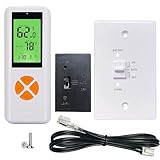
Overview: This universal fireplace remote kit combines digital thermostat precision with wireless convenience for both millivolt gas valves and electronic ignition systems. The WTC401 model replaces manual wall switches with handheld control, offering ON, AUTO, and OFF modes plus a programmable timer. With a 65-foot range and clear LCD display, it brings modern functionality to traditional fireplaces without requiring extensive modifications.
What Makes It Stand Out: Versatility defines this kit, working with both millivolt valves (TH/TP terminals) and 24VAC electronic ignition systems through an included plug-in harness. The nine-hour countdown timer provides automated shutoff for peace of mind, while the child lock ensures family safety. The remote’s integrated temperature sensor enables precise AUTO mode operation, cycling your fireplace to maintain set temperatures efficiently. The backlit LCD comprehensively displays room temp, set temp, mode, timer, and battery status.
Value for Money: Offering dual-system compatibility at a competitive price point, this kit delivers strong value for fireplace owners with either millivolt or electronic ignition. The timer function adds energy savings and safety that basic remotes lack. While professional installation is recommended, the included harness reduces labor costs compared to hardwired alternatives. It effectively modernizes older fireplaces without replacement.
Strengths and Weaknesses: Strengths include broad compatibility, useful timer function, clear display, safety lock, and decent wireless range. The all-in-one design simplifies operation. Weaknesses involve recommended professional installation, battery dependency, and potential signal interference in larger homes. The nine-hour timer maximum may be insufficient for some users wanting longer automated cycles.
Bottom Line: This fireplace remote kit successfully bridges old and new fireplace technologies, providing intelligent control for both millivolt and electronic ignition systems. Its timer and safety features make it particularly attractive for families, while the universal compatibility ensures wide applicability. Though requiring professional installation for optimal safety, it represents a worthwhile upgrade for anyone seeking convenient, automated fireplace operation without replacing their existing unit.
10. WTC100 Wireless Temperature Controller Digital Plug-in Thermostat Outlet Remote Control Heating Cooling Mode for Window A/C Fan Heater Greenhouse Homebrewing Reptile (Built-in Temp Sensor)

Overview: The WTC100 Wireless Temperature Controller is a flexible remote thermostat solution for controlling heating and cooling devices via a standard outlet. This plug-and-play system automatically manages appliances like window A/C units, space heaters, fans, and specialized equipment for greenhouses, reptile habitats, and homebrewing. With a built-in temperature sensor and both heating and cooling modes, it maintains stable temperatures through simple two-step programming.
What Makes It Stand Out: Exceptional wireless range sets this unit apart, reaching up to 100 meters in open space—significantly exceeding typical remote thermostats. The high and low temperature alarms provide critical alerts for sensitive applications like fermentation or reptile care. A manual ON/OFF button on the outlet itself offers backup control when the remote isn’t handy. The three-prong grounded socket ensures safe operation with higher-wattage appliances, while power-failure memory retention preserves settings during outages.
Value for Money: This controller offers outstanding value for specialized climate management needs. Its versatility eliminates the cost of multiple dedicated controllers for different applications. The extended range reduces the need for additional repeaters in large spaces like greenhouses or garages. Energy savings from precise temperature cycling provide rapid payback, particularly for continuously running equipment. The durable construction suggests longevity, maximizing return on investment.
Strengths and Weaknesses: Strengths include remarkable wireless range, comprehensive alarms, manual outlet control, wide device compatibility, and reliable memory retention. The simple programming appeals to non-technical users. Weaknesses involve potential brand confusion with similar WTC100 Pro models, basic display compared to smart alternatives, and no scheduling capabilities. Battery life may vary with frequent use.
Bottom Line: The WTC100 Wireless Temperature Controller excels in applications requiring remote temperature management across large distances. Its extended range and alarm features make it ideal for greenhouses, workshops, and animal habitats where precise climate control is essential. While lacking smart features, its reliability, safety design, and versatility provide excellent value for both hobbyists and homeowners needing targeted heating and cooling automation.
Understanding Remote Thermostat Controls
What Makes a Remote Control “Smart” in 2026
The term “smart” has evolved far beyond basic Wi-Fi connectivity. Today’s intelligent remote thermostat controls leverage artificial learning algorithms that study your household patterns over approximately 7-10 days, automatically creating personalized heating and cooling schedules. These systems now integrate predictive weather data, humidity sensors, and even air quality monitors to make proactive adjustments before you notice discomfort. Advanced models feature machine learning that recognizes when you’re home early on a Friday or sleeping in on Sunday, adjusting temperatures accordingly without manual programming.
The Evolution from Manual to Remote Temperature Management
We’ve come a long way from the mercury thermostats of the 1950s and programmable models of the 1990s. The real revolution began around 2010 with Wi-Fi connectivity, but 2026 represents a quantum leap forward. Modern remote controls now function as comprehensive climate command centers, managing not just temperature but also humidity, ventilation, and air purification systems. They communicate with window sensors, door contacts, and occupancy detectors throughout your home, creating a holistic environmental ecosystem rather than simply turning heating or cooling on and off.
Key Benefits of Remote Thermostat Controls
Energy Efficiency and Cost Savings
Remote access fundamentally changes how you interact with your HVAC system, typically reducing energy consumption by 15-23% annually. The ability to make real-time adjustments means no more heating an empty house because your schedule changed unexpectedly. Advanced energy reporting features show exactly when and where you’re using the most power, identifying inefficiencies like that guest room you didn’t realize was being heated. Many systems now integrate with utility company demand-response programs, automatically reducing consumption during peak pricing periods and earning you rebates.
Enhanced Comfort and Convenience
Beyond simple temperature adjustments, premium remote controls offer multi-zone management that eliminates the classic thermostat wars. You can maintain a cool 68°F in your home office while keeping the nursery at a comfortable 72°F. Mobile apps provide granular control over fan speeds, humidity levels, and even air circulation patterns. Voice integration means you can adjust settings while cooking with messy hands or from the comfort of your bed on a chilly morning.
Climate Control from Anywhere
True remote access extends beyond your home Wi-Fi network. Whether you’re across town or across the country, cellular backup connectivity ensures you can monitor and adjust your home’s climate. This capability proves invaluable for vacation homeowners, frequent travelers, or anyone managing properties remotely. Receive instant alerts if temperatures drop dangerously low to prevent pipe freezing, or if your system malfunctions while you’re away. Some advanced systems even allow you to set temporary access codes for house sitters or maintenance workers.
Essential Features to Consider
Connectivity Options: Wi-Fi, Bluetooth, and Beyond
Wi-Fi 6E support has become the gold standard in 2026, offering faster response times and better performance in congested network environments. However, Bluetooth Low Energy (BLE) 5.3 provides reliable local control when internet service is disrupted. The most robust systems employ hybrid connectivity, automatically switching between protocols based on availability. Thread and Matter compatibility represent the future of smart home interoperability, ensuring your thermostat remote works seamlessly with devices from different manufacturers. Look for systems with dual-band support (2.4GHz and 5GHz) to avoid common connection issues.
User Interface and Mobile App Experience
A sleek physical remote means nothing without an intuitive mobile application. The best apps feature customizable dashboards that prioritize the controls you use most. Evaluate the app’s offline capabilities—can you make basic adjustments without internet? Check user reviews focusing specifically on app stability and update frequency. Premium interfaces offer widget support for quick adjustments from your phone’s home screen and Apple Watch or Wear OS integration for truly convenient control. Dark mode, accessibility features for visually impaired users, and multi-language support indicate thoughtful design.
Scheduling and Automation Capabilities
Beyond simple 7-day programming, advanced systems offer adaptive scheduling that modifies itself based on your actual behavior patterns. Look for unlimited scheduling slots, vacation modes that automatically resume normal operation upon your return, and temporary hold features that don’t disrupt your underlying schedule. The ability to create different schedules for heating and cooling seasons separately saves significant reprogramming effort. Some systems even factor in solar gain, automatically adjusting for rooms that get afternoon sun.
Sensor Integration and Zoning Support
Individual room sensors have become game-changers for whole-home comfort. These wireless devices measure temperature, humidity, and occupancy in specific spaces, allowing your system to heat or cool based on where you actually are rather than just the thermostat’s location. A quality remote control system supports at least 8-12 sensors and lets you prioritize different rooms at different times. For example, focus on the bedrooms at night and living areas during the day. Motion and proximity sensors help the system understand true occupancy versus scheduled assumptions.
Voice Control and Smart Home Compatibility
Native integration with Alexa, Google Assistant, and Siri (via HomeKit) is now standard, but the depth of integration varies significantly. The best systems allow natural language commands like “make it cooler in here” without specifying exact temperatures. Check for support of smart home routines—can your thermostat automatically adjust when you say “goodnight” or “I’m leaving”? Matter certification ensures compatibility with emerging smart home standards, protecting your investment as technology evolves. Some advanced systems even integrate with smart window shades and ceiling fans for coordinated climate management.
Geofencing and Location-Based Controls
Geofencing uses your smartphone’s location to automatically adjust temperatures when you leave or approach home. The most sophisticated systems allow multiple user geofences, so the house doesn’t cool down prematurely when one person leaves but others remain. Adjustable radius settings let you fine-tune how far from home the system should begin preparing for your arrival. Privacy-conscious users should look for systems that process location data locally on the device rather than in the cloud, and that allow easy geofencing disabling for guests or family members without the app.
Energy Reporting and Usage Insights
Comprehensive energy dashboards transform abstract consumption into actionable insights. Look for systems that provide daily, weekly, and monthly usage reports with comparative analysis against similar homes in your area. The best platforms identify specific opportunities for savings, like suggesting a 2-degree adjustment that could save $150 annually. Real-time energy monitoring shows exactly how much each degree change costs, helping you make informed decisions. Some systems now integrate with solar panel data, automatically maximizing HVAC usage during peak solar production hours.
Security and Privacy Features
Your thermostat remote knows when you’re home and your preferred temperatures—a privacy goldmine if compromised. Ensure any system uses end-to-end encryption for all communications and offers two-factor authentication for app access. Local processing capabilities mean your data stays in your home rather than cloud servers. Regular security updates and a clear privacy policy that explicitly states data usage are non-negotiable. Advanced systems include tamper detection alerts and automatic lockout after failed login attempts.
Types of Remote Thermostat Systems
Standalone Remote Controls vs. Integrated Systems
Standalone remotes function as dedicated devices, often with physical buttons and displays, communicating directly with your thermostat. These appeal to users wanting simple, reliable control without smartphone dependency. Integrated systems treat the remote as one component in a broader ecosystem, where your phone, tablet, and wall unit all provide equal control. Integrated solutions offer more features but require greater comfort with technology. Consider your household’s tech-savviness and whether you prefer centralized control or multiple access points.
Battery-Powered vs. Hardwired Solutions
Battery-powered remotes offer installation flexibility, allowing placement anywhere within range. Modern units using lithium batteries typically last 18-24 months, but remember to check battery levels periodically. Hardwired remotes eliminate battery concerns but require low-voltage wiring, limiting placement options. Some innovative systems use energy harvesting, converting ambient light or temperature differences into power, essentially creating maintenance-free operation. For rental properties or temporary installations, battery-powered units provide non-invasive solutions.
Single-Zone vs. Multi-Zone Configurations
Single-zone systems control your entire home as one unit, suitable for smaller homes or open floor plans. Multi-zone configurations let you independently manage different areas, essential for multi-story homes or those with significant temperature variations. When evaluating multi-zone support, check how many distinct zones the system can handle—premium systems manage 8-12 zones. Consider whether zones can be easily reconfigured as your needs change, such as converting a guest room into a home office with different climate requirements.
Installation and Setup Considerations
DIY-Friendly vs. Professional Installation
Many remote thermostat controls advertise DIY installation, but complexity varies dramatically based on your HVAC system type. Standard central air systems with a C-wire typically support straightforward installation taking 30-45 minutes. However, heat pumps, multi-stage systems, or homes lacking a common wire may require professional help. Before purchasing, verify compatibility with your specific HVAC equipment—some systems work only with certain voltage ranges or heating types. Factor potential installation costs into your budget, which typically range from $100-300 for professional setup.
Wiring Requirements and Compatibility
The presence of a C-wire (common wire) has become the primary compatibility issue. This wire provides continuous power to smart thermostats, and many older homes lack it. While some systems include power adapters or battery backup, these solutions may limit advanced features. Before buying, turn off power to your thermostat and inspect the wiring bundle. If you have only two wires, you’ll need a system designed for low-power operation or budget for adding a C-wire. Some cutting-edge systems now support wireless power bridges that eliminate wiring concerns entirely.
Network Setup and Troubleshooting
Even the most advanced remote is useless without reliable connectivity. Look for systems with guided setup using QR codes and step-by-step video tutorials. Mesh network support ensures signals reach distant thermostats in large homes. Consider systems with built-in network diagnostics that alert you to connectivity issues before they cause problems. For tech novices, prioritize platforms with robust customer support including chat, phone, and video call assistance. Some premium services even offer remote technical support where agents can temporarily access your system to resolve issues.
Making the Right Choice for Your Home
Assessing Your Home’s Size and Layout
A 600-square-foot apartment has vastly different needs than a 4,000-square-foot multi-story home. For smaller spaces, focus on systems with excellent scheduling and energy reporting. Larger homes require robust multi-zone support and sensor compatibility. Consider ceiling heights, window placement, and insulation quality—all affect how evenly temperatures distribute. Homes with radiant floor heating need thermostats specifically designed for slow-response systems, while forced-air systems benefit from smart fan control features that continue circulating air after heating/cooling cycles.
Evaluating Your Existing HVAC System
Your current heating and cooling equipment dramatically influences which remote controls will work effectively. High-efficiency variable-speed systems require thermostats capable of communicating complex commands, while basic single-stage systems work with most smart thermostats. Heat pumps need specialized algorithms to manage auxiliary heat efficiently. If you have separate heating and cooling systems, ensure the remote can manage both simultaneously. Some advanced systems now support hybrid configurations, coordinating between a heat pump and gas furnace for optimal efficiency.
Budget Considerations and Value Analysis
Remote thermostat controls range from budget-friendly basic models to premium systems with extensive sensor networks. However, the true cost includes potential installation fees, subscription services for advanced features, and sensor purchases. A $250 system requiring no subscription may offer better long-term value than a $150 model with a $5/month fee. Calculate potential energy savings—most households save 10-15% on heating and cooling costs, meaning a $200 system pays for itself in 12-18 months. Consider warranty length and what’s covered; premium systems often include 3-5 year warranties versus 1-2 years for budget options.
Frequently Asked Questions
How difficult is it to install a remote thermostat control myself?
Installation complexity depends entirely on your existing HVAC wiring and system type. If your current thermostat has a C-wire and you’re comfortable turning off circuit breakers and following wiring diagrams, most installations take 30-45 minutes. However, homes without a C-wire, heat pump systems, or multi-stage equipment often benefit from professional installation to ensure proper configuration and avoid damaging expensive HVAC components.
Will a remote thermostat work during internet outages?
Most systems retain basic scheduling and manual adjustment capabilities during internet outages, but remote access from outside your home network becomes unavailable. Premium models with Bluetooth backup or local network control allow smartphone adjustments when you’re home even without internet. Some advanced systems include cellular connectivity as a backup, ensuring continuous remote access regardless of Wi-Fi status.
Do I need multiple remotes for a multi-story home?
Not necessarily. A single remote control system can manage multiple thermostats or zones throughout your home through one mobile app or wall-mounted interface. However, many homeowners install secondary remotes on each floor for convenience. These secondary units typically mirror the primary control rather than operating independently, providing easy access without carrying your phone.
What happens to my settings if the power goes out?
Quality remote thermostat systems include non-volatile memory that preserves all your schedules, preferences, and learning data during power outages. Upon restoration, the system resumes normal operation automatically. Most units also include a small internal battery or capacitor to maintain clock time briefly during short outages. However, if power is out for extended periods, you may need to reconnect to Wi-Fi and resync the time.
Can remote thermostats really save money on energy bills?
Independent studies consistently show 15-23% savings on heating and cooling costs when using smart remote controls effectively. The key is actively using scheduling, geofencing, and energy reports to optimize usage. Homes that simply install the device without customizing settings see minimal savings. The most significant reductions come from avoiding heating/cooling empty homes and making small temperature adjustments based on detailed usage insights.
Are remote thermostat controls secure from hackers?
Reputable manufacturers implement bank-level encryption and regular security updates. The biggest vulnerability is typically weak user passwords. Always enable two-factor authentication, use unique strong passwords, and keep firmware updated. Systems processing data locally rather than in the cloud offer additional privacy protection. Avoid generic or little-known brands that may not prioritize security updates.
How many sensors should I add to my system?
Start with sensors in rooms where temperature consistency matters most—typically bedrooms and main living areas. For optimal comfort, aim for one sensor per 500-750 square feet or per distinct zone. A 2,000 square foot home usually benefits from 3-4 sensors. You can always add more later; focus first on areas with temperature variations due to sun exposure, high ceilings, or distance from the central thermostat.
Will these systems work with older HVAC equipment?
Most remote controls work with standard 24V HVAC systems manufactured after 1980. However, compatibility becomes questionable with millivolt systems (common in older gas heaters), high-voltage baseboard heaters, or proprietary communicating systems from certain manufacturers. Always verify compatibility with your specific HVAC model before purchasing. Many manufacturers offer online compatibility checkers where you input your system details.
Do I need to pay a monthly subscription for full functionality?
Many premium features like advanced energy reporting, geofencing, and remote access historically required subscriptions. However, the industry is shifting toward subscription-free models, with most 2026 systems including core features at no extra cost. Some manufacturers still charge for premium services like professional monitoring or extended cloud storage of usage data. Read the fine print carefully to understand what’s included free versus what requires ongoing payment.
How long do remote thermostat controls typically last?
Quality remote thermostat systems typically last 8-12 years, comparable to traditional thermostats. However, technology advances may make them feel outdated sooner. Manufacturers generally provide firmware updates for 5-7 years after release. Battery-powered remotes may need battery replacement every 18-24 months. Hardwired units with minimal moving parts often last the full lifespan. Consider warranty length—premium systems offer 3-5 year warranties—as an indicator of expected durability.
See Also
- Top 10 Best Remote Controls for Thermostats for Easy Home Climate Management in 2026
- 10 Best Remote Controls for Thermostats for Seniors with Easy-to-Use Interfaces in 2026
- The 10 Best Remote Controls for Thermostats Every First-Time Homeowner Needs This Year
- 10 Premium Remote Controls for Thermostats (Worth the Investment) for Luxury Homes
- 10 Best Remote Controls for Thermostats for Multi-Room Comfort in 2026